July 23, 2026

If your AC is running but no air is coming through the vents, the problem almost always traces back to one of three causes: restricted airflow (clogged filter, failed blower motor, or blocked ductwork), a refrigerant leak, or a failed electrical component like a start capacitor or contactor. The fix depends entirely on your specific symptom (warm air, no air, or icing), so identify what you're experiencing first, then work through the steps below.
Restricted Airflow: Check for a clogged air filter, blocked ductwork, or a malfunctioning blower motor as these are common culprits.
Refrigerant Issues: Low refrigerant levels or leaks can prevent your AC from cooling properly; these usually require professional attention to resolve.
Electrical Failures: A faulty start capacitor or contactor can disrupt your AC's functionality. Inspect these components if airflow issues persist.
Troubleshooting: Always start by identifying the specific symptom and work systematically through possible causes before calling a technician.
Maintenance Reminder: Regular maintenance, such as changing air filters and inspecting your AC system, can prevent many common issues.
Quick Diagnostic Table: What's Your Symptom?
| What You Notice | Most Likely Cause | Fix | DIY or Pro? |
|---|---|---|---|
| Symptom Vents blowing, but air is warm | Likely Cause Low refrigerant or dirty condenser coil | Fix Clean coil; recharge is pro-only | DIY or Pro? Pro for refrigerant |
| Symptom Little or no air from vents at all | Likely Cause Clogged filter, failed blower motor, or blocked ductwork | Fix Replace filter; inspect ducts | DIY or Pro? DIY filter Pro for motor |
| Symptom Ice on the copper refrigerant line | Likely Cause Airflow restriction OR refrigerant leak | Fix Thaw with Fan Only; find root cause | DIY or Pro? DIY thaw Pro for leak |
| Symptom AC runs, then shuts off quickly | Likely Cause Short-cycling due to overheating or refrigerant issue | Fix Check filter and coil first | DIY or Pro? DIY first Pro if it continues |
| Symptom Outdoor unit on, indoor vents silent | Likely Cause Failed start capacitor or contactor | Fix Listen for humming near indoor unit | DIY or Pro? Pro |
Ready to fix it? Shop Replacement Filters or Find My Filter Size and get the right filter delivered fast.
Handle it yourself — no technician needed:
Routine: Replace a clogged air filter
Routine: Clear blocked or closed supply/return registers
Routine: Verify thermostat settings and replace batteries
Routine: Rinse condenser fins with a garden hose (unit off first)
Routine: Thaw a frozen coil by switching to Fan Only for two hours
Call a licensed HVAC technician:
Soon: Ice returns after thawing and filter replacement (likely refrigerant leak)
Soon: Airflow is dead even with a fresh filter and clear registers (possible blower or capacitor failure)
Urgent: You smell chemicals or hear hissing near refrigerant lines (active refrigerant leak)
Urgent: The AC circuit breaker trips more than once (electrical fault -- stop using the system)
Urgent: The outdoor unit hums loudly but the compressor never kicks on (failed contactor or compressor)
Match what you notice to the likely cause — and know when to DIY vs. call a pro
"I feel airflow, but it's warm"
Cause: Dirty Condenser Coil
Clogged outdoor fins trap heat that can't escape, so the system can't cool.
Cause: Low Refrigerant
Almost always means a leak — refrigerant doesn't just run out. Watch for frost on the thin copper line or a faint hiss.
Check First: Thermostat
Confirm it's set to Cool, at least 5°F below room temp. Swap batteries if the display looks dim.
"Little to no air is coming out"
Cause: Clogged Filter
The most overlooked culprit. A badly restricted filter can freeze the evaporator coil, blocking airflow entirely. Hold it to a light — can't see through it? Replace it.
Cause: Blower Motor / Capacitor
Compressor runs outside but vents feel dead? The start capacitor may be worn, or the blower motor may have failed.
Cause: Duct Leaks or Blocked Registers
Strong in one room, nothing in another? Check for gaps, separated joints, or furniture blocking a vent.
"I see ice on the refrigerant line"
Two Possible Causes, One Fix Sequence
Airflow restriction (dirty filter, blocked vent) or a refrigerant leak — both look identical on the line.
Understanding the mechanics helps you ask better questions and avoid being oversold on repairs.
Your AC system moves air in a closed loop. The blower motor pulls warm indoor air through the return vent and across the evaporator coil, a series of refrigerant-filled tubes that absorb heat from the air. The now-cooled air is pushed out through supply ducts and into your rooms. Meanwhile, the absorbed heat is carried by the refrigerant to the outdoor condenser coil, where it's expelled. The compressor drives this refrigerant cycle under pressure.
If any link in this chain breaks (the blower can't spin, the filter blocks airflow, refrigerant leaks out, the expansion valve malfunctions, or the compressor fails), you'll feel the effect at the vents. Pinpointing where the chain broke determines whether you need a $15 filter or a $1,500 compressor repair.
Most AC airflow failures are predictable. The two biggest preventable causes are dirty filters and neglected annual maintenance.
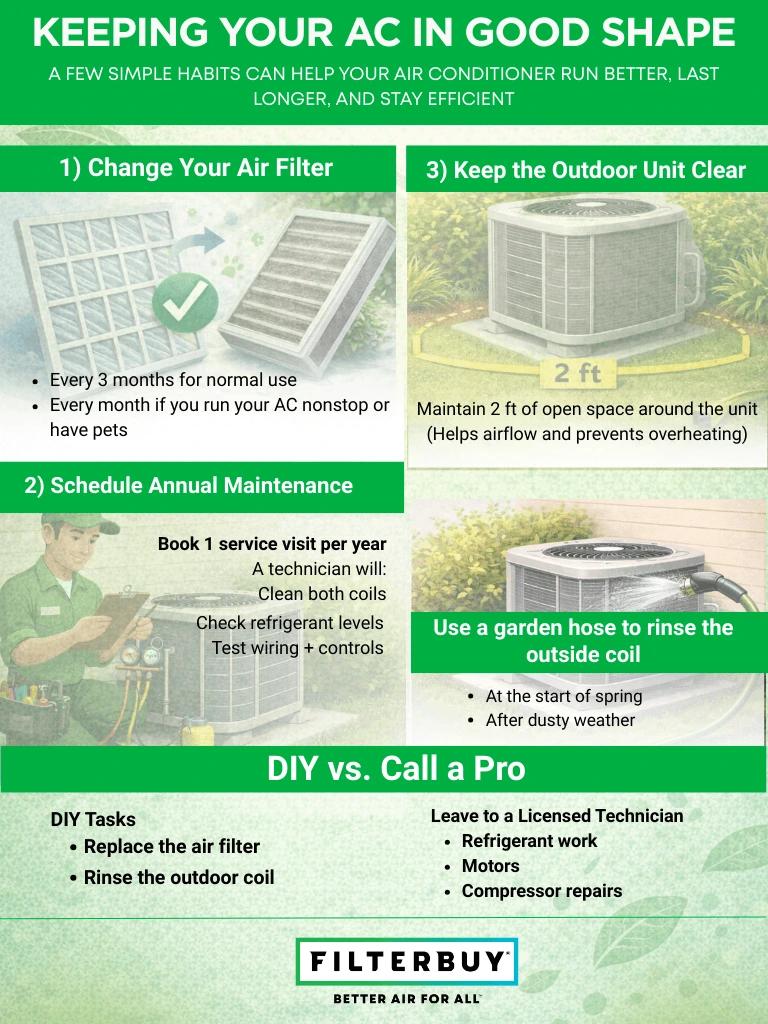
Filter replacement schedule:
Every 1–3 months for standard homes
Monthly if you have pets, allergy sufferers, or run the AC daily in summer
Peak summer heat accelerates filter loading. A filter that lasts three months in spring may need monthly replacement during a July heatwave, when the system runs nearly continuously.
Set up auto-delivery with Filterbuy and get the right filter delivered on your schedule, before a clogged filter becomes a costly repair.
Annual professional maintenance: A once-yearly service visit covers coil cleaning, refrigerant level verification, capacitor testing, and electrical inspection. Scheduling in early spring, before peak season demand, typically means shorter wait times and lower service call fees.
Get our free Seasonal AC Maintenance Checklist, a quick-reference guide to prepping your system before summer demand peaks.
Keep two feet of clear space around the outdoor unit and rinse the condenser coil at the start of each cooling season. These two habits alone prevent a significant percentage of summertime service calls.

The most common causes are a severely clogged air filter, a failed blower motor, or a dead start capacitor. Check and replace your air filter first. If the problem persists, you will need a professional diagnosis.
Yes. A heavily clogged filter restricts airflow to near-zero and can cause the evaporator coil to freeze solid, physically blocking all air movement. Replace the filter immediately.
No. Running your system with no airflow can overheat and permanently damage the compressor, leading to incredibly expensive repairs. Turn the system off immediately.
If you hear the outdoor unit running but feel absolutely no air at your indoor vents, and your filter is clean, the blower motor or its capacitor has likely failed. A humming sound from the indoor unit is another classic indicator.
Ice indicates either severely restricted airflow (usually a clogged filter) or a refrigerant leak. Switch your system to "Fan Only" to melt the ice and replace the filter. If the ice returns, call a technician to check for leaks.
Costs vary by cause. A new filter is under $30. Replacing an electrical component like a start capacitor is a moderate expense, while replacing a blower motor or repairing a refrigerant leak will be more costly. A total compressor replacement is the most expensive scenario.
Yes. Extreme heat forces your system to run continuously, which clogs filters faster and puts immense strain on the blower motor and capacitor, causing existing weaknesses to fail.
Yes. When the coil ices over, it forms a physical barrier that blocks all air. Switch your system to "Fan Only" for two hours to let it thaw, replace your air filter, and restart. If it freezes again, you likely have a refrigerant leak.
Typically no, but a faulty thermostat can prevent the blower motor from starting. Ensure your thermostat is set to "Cool," the target temperature is below the room temperature, and replace the batteries.
This means the issue is inside your indoor air handler. The most likely causes are a clogged air filter triggering a safety shutoff, a dead blower motor start capacitor, or a completely failed blower motor.