How to Heat a Garage in 2026: Best Methods & Mini Split Options
April 8, 2026
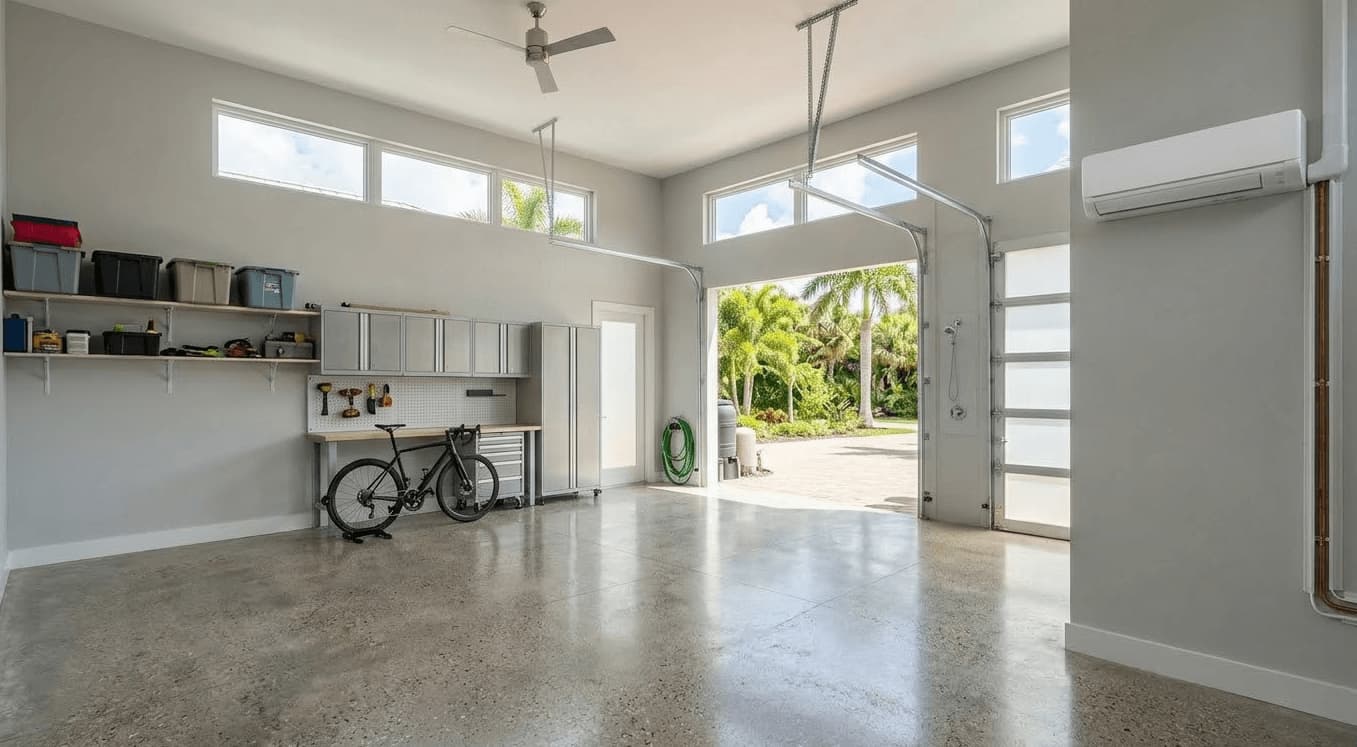
To heat a garage, insulate it first, then add a heat source sized to the space — and for a garage you'll use year-round, a ductless mini split is the one system that both heats and cools. Mini splits work as two-way heat pumps, drawing warmth from the outside air even in sub-freezing weather. Here's how the common options compare:
Electric space heater — low to buy, but costly to run for long stretches.
Propane or gas heater — strong, fast heat; needs proper ventilation.
Radiant floor heat — even, comfortable warmth; best for new builds or remodels.
Ductless mini split — heats and cools in one quiet, energy-efficient system.
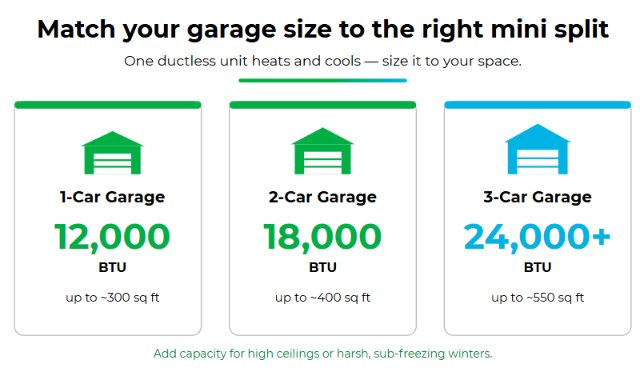
The right pick comes down to your garage's size, insulation, and how often you use it — and getting the size right matters most. Match your garage to the right mini split below.
Not sure which size fits your garage? Answer 3 quick questions and we'll match you to the right mini split.
Prefer to browse first? Shop Filterbuy mini split systems →
How to Heat a Garage?
During winter, most garages become giant iceboxes. Poor insulation and exposure to the cold can make them unusable for much of the year. Heating your garage solves this problem, unlocking valuable extra space in your home.
A heated garage offers a comfortable, year-round workshop and protects tools, equipment, and vehicles from the damaging effects of cold temperatures. Many homeowners also convert this space into a home gym, hobby room, or office.
The best way to heat your garage depends on its size, insulation, and how you plan to use it. Many find that ductless mini split systems offer the greatest value by providing both heating and cooling. Before choosing, it's crucial to understand your garage's specific needs.
Key Takeaways
Assess the size, insulation, and intended use of your garage before selecting a heating solution.
Ductless mini split systems are a versatile and efficient option for both heating and cooling.
Properly understanding your garage's unique needs ensures the most effective and cost-efficient heating solution.
Step 1: Insulate Your Garage Before Adding Heat
HVAC professionals typically recommend calculating your heating needs only after addressing insulation. Adding a heat source to an uninsulated garage is like pouring water into a leaky bucket. Proper insulation traps the heat inside, which can reduce your overall heating demand by 20 to 50 percent. This dramatically lowers your energy bills and prevents your heating equipment from overworking.
Key Areas to Insulate
Walls: Standard fiberglass batts or spray foam insulation between the wall studs will block cold air from radiating inward.
Ceiling: Heat rises, so an uninsulated ceiling allows warmth to escape rapidly. Adding blown-in insulation or batts above the ceiling drywall keeps the warm air down where you need it.
Garage door: The large metal door is the biggest source of heat loss. Install rigid foam panels or a reflective insulation kit specifically designed for garage doors.
Air leaks and weather stripping: Check the perimeter of your doors and windows. Apply weather stripping to the bottom of the garage door and use caulking to seal any visible gaps along the walls.
Step 2: How Many BTU Do You Need to Heat a Garage?
Heaters are measured in British Thermal Units (BTU). One BTU represents the amount of energy required to heat one pound of water by one degree Fahrenheit. Finding out how many BTU to heat a garage effectively requires a bit of basic math. Your exact requirements depend on the total square footage, the level of insulation, the ceiling height, and your local winter climate.
Quick BTU Formula
To get an accurate estimate, use this standard calculation:
BTU = Garage Volume × 0.133 × Temperature Difference
(Note: Volume is Length × Width × Height.)
Temperature Difference is your desired indoor temperature minus the average outdoor winter temperature.
Garage Heater Size Chart
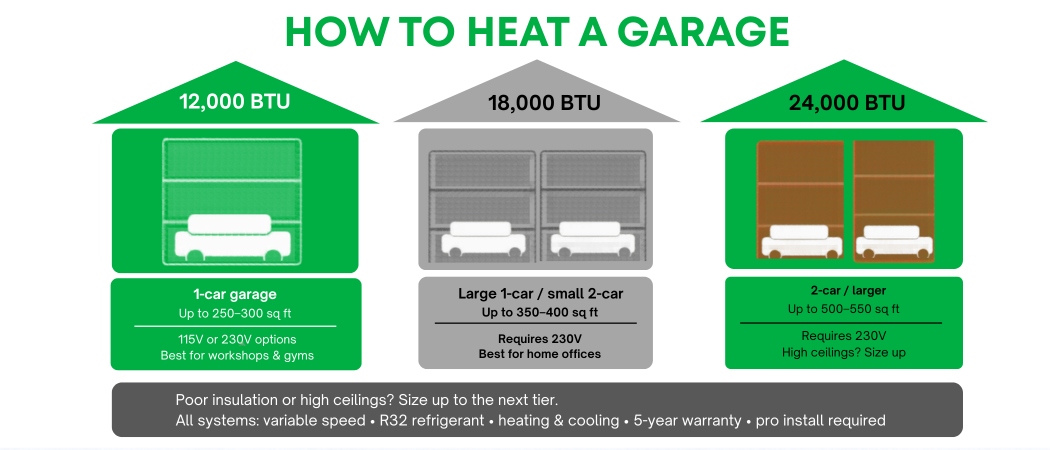
For a quick reference, here’s how common mini split sizes correspond to typical garage layouts:
12,000 BTU: Covers up to 250–300 sq ft. Best for 1-car garages. (Available in 115V or 230V)
18,000 BTU: Covers up to 350–400 sq ft. Best for large 1-car or small 2-car garages. (Requires 230V)
24,000 BTU: Covers up to 500–550 sq ft. Best for 2-car garages or larger spaces. (Requires 230V)
You should adjust these baseline numbers based on your specific layout. Add 10 to 50 percent more BTU capacity if you have vaulted or exceptionally high ceilings. You should also add an extra 10 to 30 percent if you live in a region that experiences harsh, sub-freezing winters.
Best Ways to Heat a Garage
Homeowners have several options for keeping their garages warm. The right choice depends on your budget, your fuel preferences, and how often you occupy the room.
Electric Space Heaters
Pros:
Very low upfront cost
Highly portable and easy to plug in anywhere
Cons:
Expensive to run for long periods
Limited heating capacity for large spaces
Best for: Occasional garage use where you only need localized warmth for short periods.
Propane or Gas Garage Heaters
Pros:
Powerful, rapid heating capabilities
Great for warming up large, drafty spaces quickly
Cons:
Requires proper ventilation to prevent dangerous gas buildup
Higher safety considerations due to combustible fuels
Best for: Large detached garages or professional workshops where massive heat output is necessary.
Radiant Floor Heating
Pros:
Provides perfectly even, rising heat
Creates a highly comfortable workspace without blowing dust around
Cons:
Very expensive installation process
Requires tearing up the concrete slab
Best for: New constructions or total garage remodels where the concrete floor is already being poured.
Mini Split AC for Garage (Best Overall Option)
Pros:
Delivers both heating and cooling in a single system
Extremely energy efficient (many reach SEER 20+)
Quiet operation
No extensive ductwork required
A mini split AC for a garage stands out because modern heat pump technology can efficiently extract heat from the outside air, even in sub-freezing temperatures. If you're looking for an efficient system that heats and cools your garage, a ductless mini split can be a great solution.
Why a Mini Split AC is the Best Way to Heat a Garage
HVAC professionals and organizations like the U.S. Department of Energy consistently highlight heat pumps for their exceptional performance. Using a garage heat pump provides distinct advantages over traditional combustion or electric resistance heaters.
Year-Round Comfort
Mini splits are not just winter appliances. Because they operate as two-way heat pumps, they provide powerful winter heating and refreshing summer cooling. This makes them ideal for environments that see daily use, such as dedicated workshops, home gyms, and hobby rooms.
Energy Efficiency
Standard heaters consume electricity or gas to create heat. Heat pumps move existing heat from one place to another. According to Energy Star standards, this transfer process allows modern mini splits to operate at 300 to 400 percent efficiency. They produce significantly more heat energy than the electrical energy they consume, making them far cheaper to run than standard space heaters.
Quick Heating Performance
A properly sized mini split for garage spaces provides rapid temperature control. A quality unit can elevate an insulated garage from freezing to a comfortable 70°F in approximately 10 to 15 minutes, allowing you to start working or working out almost immediately.
Recommended Mini Split Size for Garages
Choosing the right size prevents the unit from short-cycling or constantly running without reaching the target temperature. A common mistake homeowners make is undersizing their units to save money, which leads to poor performance and higher energy bills.
Typical recommendations align closely with our earlier sizing chart:
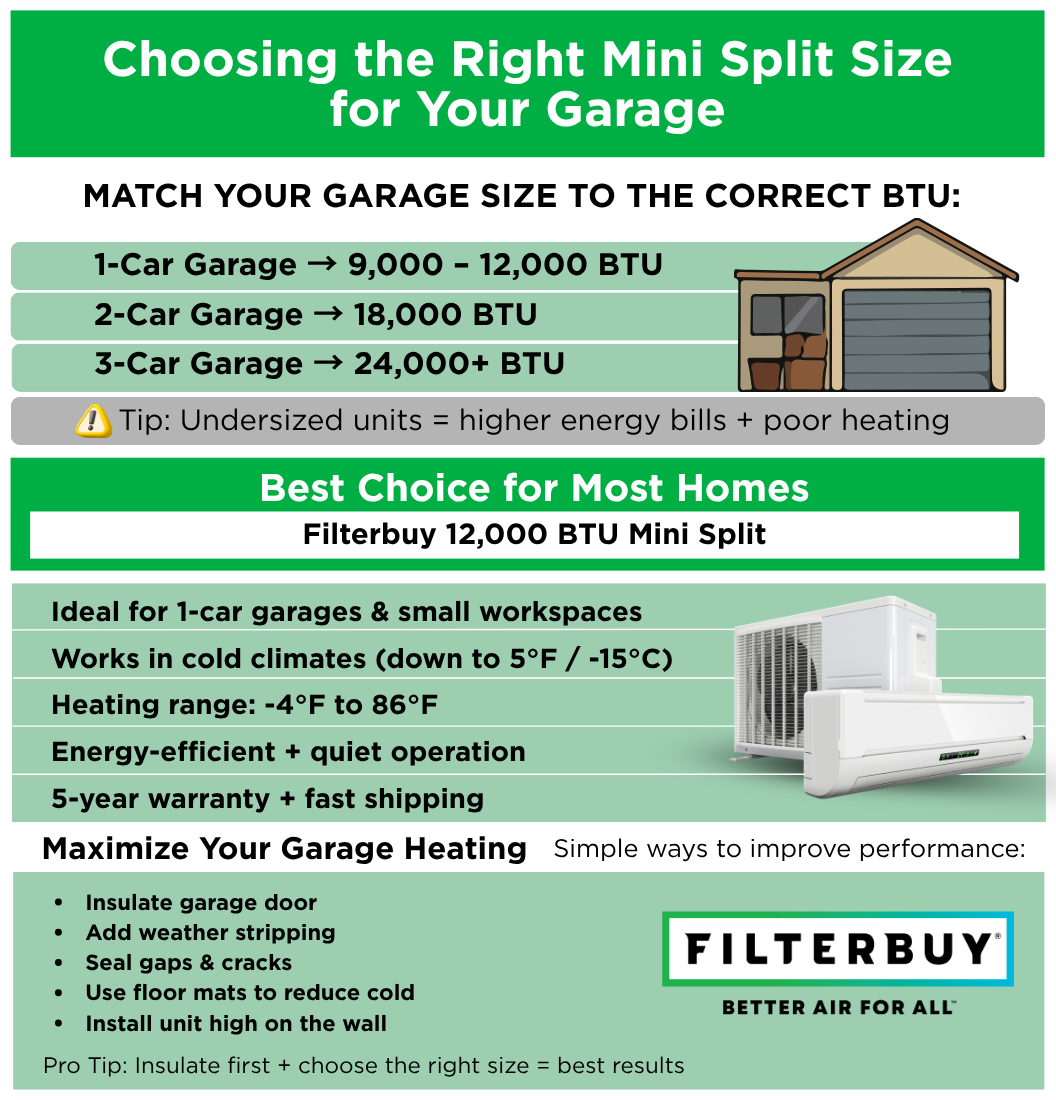
Small garage (1-car): 9,000 to 12,000 BTU
Two-car garage: 18,000 BTU
Large garage (3-car): 24,000+ BTU
Recommended System: Filterbuy 12,000 BTU Mini Split
For most single-car garages and insulated standard workspaces, the Filterbuy 12,000 BTU Mini Split offers the perfect balance of power and efficiency.
This specific model is engineered to handle challenging environments. It reliably heats down to 5°F (-15°C) thanks to an intelligent defrost system and a built-in chassis heating belt designed for cold climates. With an impressive total heating range of -4°F to 86°F, it keeps your space comfortable regardless of the weather outside. Every unit includes fast free shipping and is backed by a robust 5-year warranty.
Explore the Filterbuy 12,000 BTU Mini Split, which is designed for year-round garage comfort. It is an ideal fit for 1-car garages, heavily insulated workshops, and custom home gyms.
Garage Heating Tips for Maximum Efficiency
Even with the best mini split system, a few practical adjustments will maximize your energy efficiency and lower your monthly bills.
Insulate door panels: Add foam inserts to your existing metal garage doors.
Install weather stripping: Replace any cracked or missing rubber seals along the bottom edge of the main door.
Seal wall gaps: Apply expanding foam to holes where pipes or wires enter the garage.
Add floor mats: Place interlocking foam mats or apply an epoxy coating to reduce the cold radiating from the concrete slab.
Optimize unit placement: Install your indoor mini split air handler high on the wall so it can distribute warm air evenly across the entire room.
The Most Efficient Way to Heat a Garage With Filterbuy
Transforming your freezing garage into a functional space requires a strategic approach. Start by calculating your exact BTU requirements based on the room's volume and climate. Next, improve your insulation to ensure the heat actually stays inside the building. Finally, select a reliable heating system capable of meeting your specific demands.
For homeowners who want efficient, year-round climate control, a mini split AC for garages is usually the best long-term solution. It provides unmatched energy efficiency, quiet operation, and the flexibility to cool the space during the summer months. Find the right mini split system from Filterbuy for your garage and start enjoying a comfortable workspace all year long.
Frequently Asked Questions
Why should I choose a mini split AC for my garage?
A mini split AC system offers superior energy efficiency, quiet operation, and year-round climate control. It can efficiently heat your garage during the winter and cool it during the summer without the need for extensive ductwork.
Can a mini split AC handle extreme temperatures?
Yes, most modern mini split AC systems are designed to operate efficiently even in extreme weather conditions. Be sure to select a system with the appropriate capacity for your region's climate.
How do I determine the right size mini split system for my garage?
The size of the mini split system you'll need depends on factors like the garage's square footage, insulation quality, and the local climate. Professional HVAC technicians or size calculators provided by manufacturers can help you determine the best system for your space.
Is professional installation necessary for a mini split system?
Yes, it is highly recommended to have a mini split AC professionally installed to ensure it operates efficiently and safely. Proper installation reduces the risk of system inefficiencies or damage.
How often should I maintain a mini split AC unit?
To ensure optimal performance and longevity, it's important to clean filters regularly and schedule professional maintenance at least once a year. Regular maintenance will help your system run efficiently and prevent costly repairs.