July 9, 2026

That first rush of cool air from your mini split should feel like relief, not a whiff of a gym locker. At Filterbuy, we make air filters for a living, so we spend our days looking at what actually collects inside home cooling systems, and a musty ductless unit is one of the complaints we hear most. When a mini split starts smelling musty, sour, or worse, it is telling you something about what is growing or going wrong inside the indoor unit. Most odors trace back to moisture and buildup you cannot see, and the most common one is something you can usually clear yourself in an afternoon. A few, though, are your system waving a red flag. We will walk through every smell, what is really causing it, which fixes are safe to do at home, and how a simple filter routine keeps most odors from ever starting.
A bad smell from your mini split almost always comes from moisture and organic buildup inside the indoor unit, most often mold and bacteria on the evaporator coil, in the drain pan, or on a dirty filter. A musty or sour “dirty sock” smell is usually safe to handle yourself by cleaning the filter, running fan-only mode to dry the coil, and clearing the drain line. A burning, electrical, fishy, chemical, or rotten-egg smell is different and calls for shutting the unit off and bringing in a licensed professional. Cleaning or changing the filter on schedule is the single most effective way to keep the everyday musty odors from coming back.
A musty, mildewy, dirty-sock smell means mold and bacteria are growing on the damp evaporator coil, in the drain pan, or on the filter inside your indoor unit. This is the most common mini split odor, and it tends to hit hardest when the system first switches on. Cleaning the filter and drying the coil usually clears it, and a deep coil cleaning fixes the stubborn cases.
Most mini split smells are unpleasant rather than dangerous, but they are not all equal. A musty odor mainly signals mold and bacteria that can irritate allergies and asthma. A burning, electrical, fishy, chemical, or rotten-egg smell is a safety concern. Turn the unit off and call a licensed professional if you notice any of those.
You can fix most musty and sour odors yourself. Clean or replace the filter, run the system in fan-only mode for an hour or two to dry the coil, and clear the condensate drain line. If the smell returns quickly or you notice burning, chemical, or electrical odors, stop there and schedule a professional cleaning or inspection.
The most common mini split odor is “dirty sock syndrome,” a musty smell caused by mold and bacteria growing on the moist evaporator coil, drain pan, or filter inside the indoor unit.
Musty and sour smells are usually a do-it-yourself fix: clean the filter, run fan-only mode to dry the coil, and clear the drain line.
Burning, fishy, chemical, or rotten-egg smells are warning signs that call for shutting the unit off and contacting a licensed HVAC professional or electrician.
Mini split indoor units usually have a washable mesh filter that should be cleaned every two to four weeks, plus a professional deep cleaning every one to three years.
Keeping indoor humidity between 30 and 50 percent and keeping the filter clean are the two most effective habits for preventing mold-related odors.
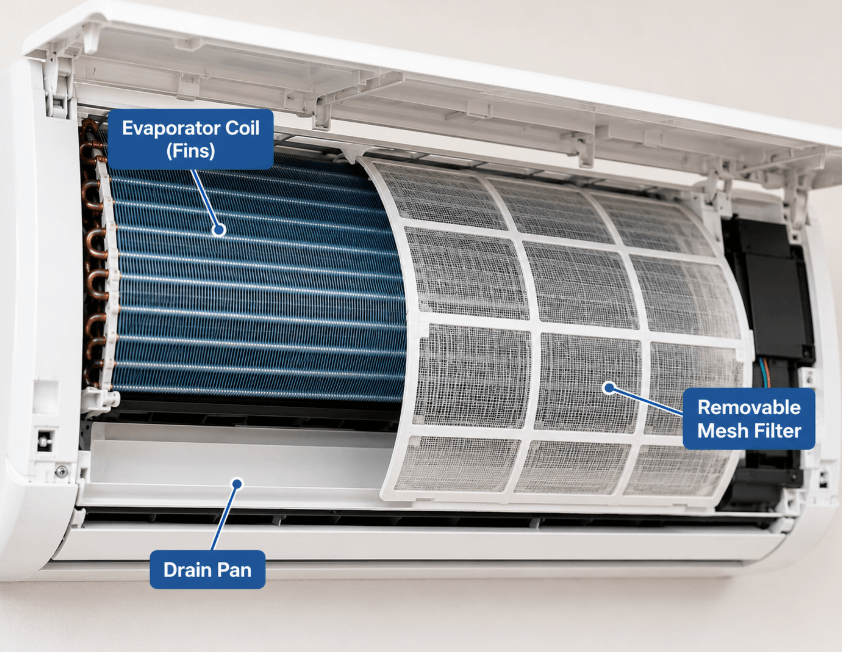
Mini split odors come from what collects inside the wall-mounted indoor unit. As the system cools, it pulls humidity from the air, and that moisture lands on the cold evaporator coil and drips into the drain pan. Dust, skin cells, and pet dander slip past the filter and stick to the damp coil, feeding mold and bacteria. When the fan kicks back on, it blows that smell into the room, which is one reason the indoor unit has such a direct effect on how a mini split shapes your indoor air quality.
The compact design of a ductless head makes this worse. The coil, fan wheel, and drain pan sit close together with little room to dry out, so moisture lingers between cycles. Running the fan on a low or auto setting keeps things quiet, but it also leaves the coil damp longer. A clogged or pinched condensate drain adds standing water, which is exactly the environment mold and bacteria need. The EPA identifies cooling coils and condensate drain pans as a leading source of moisture and mold inside cooling equipment.
The musty, locker-room smell even has a name that HVAC technicians use without blinking, dirty sock syndrome. It is the odor of mold and bacteria growing on a damp coil, drain pan, or filter, and it is most noticeable at startup and during season changes. Because a mini split heat pump swaps between cooling and heating, the smell can appear in both spring and fall. High-efficiency coils, with their tight fin spacing, trap moisture and organic material easily, which is one reason ductless systems are especially prone to it.
Here is the part most guides skip, and it is the thing we notice as the people who make air filters. The mesh filter in a mini split is built to protect airflow and the coil, not to purify your air. It catches the big debris, but the fine dust that feeds coil mold slips right past it. So the coil, not the filter, is usually where the smell is born. Keeping that mesh clean still matters, mostly because it helps the coil dry and keeps air moving the way the system was designed to.
A sour or vinegary smell is a close cousin of the dirty-sock odor. It usually points to bacteria and standing condensate, often paired with low airflow that keeps the coil wet. Cleaning the filter and drain pan, raising the fan speed for a while, and drying the coil typically clears it.
There are two very different burning smells. The first is a faint, dusty burning odor the first time you run heat mode for the season. That is usually dust burning off the heat exchanger, and it fades within a short time. The second is a sharp, plastic, or acrid electrical smell that lingers. That one is a safety concern. It can mean an overheating motor, wiring, or component. Turn the unit off at the remote and the breaker, and call a professional. The Consumer Product Safety Commission treats the smell of burning plastic at electrical components as a sign of a problem that needs a qualified professional.
A fishy odor from a mini split often means electrical wiring or insulation is overheating before it fails. Treat it like the sharp burning smell above. Shut the unit off and bring in a licensed electrician or HVAC professional rather than waiting to see if it clears.
A chemical or sweet smell can signal a refrigerant leak, and a paint-like smell can be simple off-gassing from a new unit or a freshly finished room. Refrigerant is regulated and needs trained hands, so ventilate the area, turn the unit off, and call a licensed HVAC professional. Do not ignore a chemical smell that keeps returning.
A mini split runs on electricity, not gas, so a rotten-egg or sulfur smell often means a dead pest or insect has ended up inside the unit or nearby. There is one important exception. If your home has any natural gas appliances, a rotten-egg smell can indicate a gas leak. In that case, leave the house right away and call your gas utility or 911 from outside before doing anything else.
Filters and coils absorb the odors around them, from cigarette smoke to last night’s dinner to a busy household with pets. When the source is absorbed odor rather than active growth, cleaning or replacing the filter and cleaning the coil usually refreshes the air.
Use this chart to match your smell to its likely cause, the right fix, and how urgently to act.
Turn the unit off before cleaning. When a smell points to burning, electrical, chemical, or gas, stop and call a licensed professional instead of trying a DIY fix.
For a musty or sour smell, this routine clears most cases and helps keep them from returning. For a deeper seasonal clean, follow our full mini split cleaning and maintenance guide.
Turn the unit off. Power it down at the remote, and for cleaning, switch it off at the breaker.
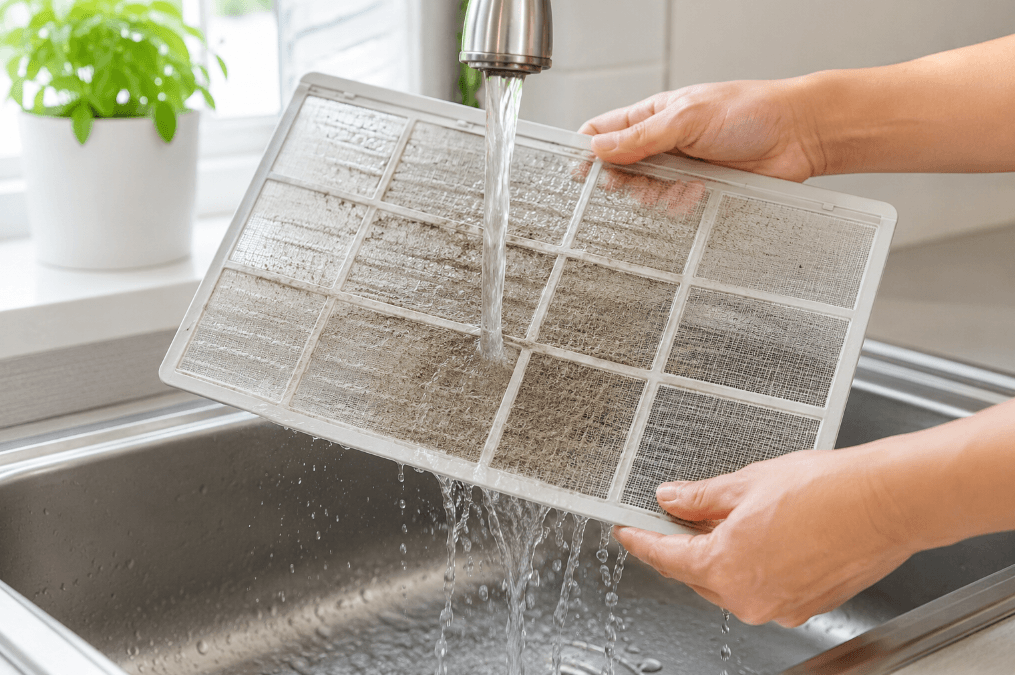
Open the front panel and remove the filters. Most mini splits have washable mesh filters that lift right out.
Clean the filters. Rinse washable filters in lukewarm water and let them dry fully before reinstalling. Replace disposable filters if your model uses them.
Wipe the accessible interior. Gently wipe reachable surfaces with a soft cloth, taking care not to bend the delicate aluminum fins.
Clear the condensate drain line. Standing water in the pan means a clogged or pinched drain, so clear the line until it flows freely.
Run fan-only mode. After each cooling cycle, run the fan for an hour or two to dry the coil and discourage regrowth.
Call a pro for a deep clean if the smell lingers. A technician can safely clean the coil and blower wheel with cleaners made for the job. Manufacturers generally recommend leaving deep coil cleaning to a professional.
A few common reactions to a bad smell can actually set your mini split back.
Masking the smell with sprays or plug-ins. A scent on top of a musty unit hides the mold for a day, then the odor comes back stronger.
Flooding the coil or electronics with cleaner. Heavy spraying can bend the thin aluminum fins or reach parts that are meant to stay dry.
Using bleach on the filter or coil. It can damage the material and irritate your lungs, so a mild soap and water rinse is the safer choice.
Leaving the fan on its lowest speed all the time. Low airflow feels quiet, but it lets the coil stay damp between cycles, which is exactly what mold wants.
Waiting until you can see the dust to clean the filter. By then airflow is already down and the coil has been wet longer than it should be.
Filters are what we do at Filterbuy, so this is the part we can speak to with real confidence. The single most effective way to prevent musty mini split odors is to keep the filter clean. The filter is the first thing the incoming air passes through. A clogged filter both restricts airflow, which leaves the coil damp longer, and lets more dust reach the coil, which is exactly what mold and bacteria feed on. Stay ahead of the filter and you stay ahead of most smells. In our experience, the best predictor of a fresh-smelling mini split is not the brand or the price, it is whether anyone has looked at the filter in the last month.
For the ductless unit itself, that usually means cleaning the washable mesh filter on a schedule and replacing it once it is worn. For the rest of your home’s air, a MERV 13 filter for your central system keeps dust from circulating back through every room. The Department of Energy recommends a professional deep cleaning of the indoor and outdoor units every one to three years, with more frequent service in humid climates or homes with pets.
Adjust to your home. Rinse more often during heavy cooling season, and replace a washable filter once it is torn or misshapen.
Whatever your situation, pair filter care with two humidity habits: keep indoor humidity between 30 and 50 percent, and run fan-only mode after cooling to dry the coil. Those small routines do more to keep your air fresh than any spray or deodorizer.
Two settings on the unit itself help more than most owners realize. If your mini split has a dry or dehumidify mode, running it in humid weather pulls moisture from the room without overcooling, which leaves less water sitting on the coil. If your model has a self-clean or coil-dry function, turn it on, since it runs the fan after each cycle to dry the coil and starve mold of the moisture it needs.
“People blame the smell on the machine, but from where we sit in the filter business, it is almost always about moisture and maintenance, not a defect,” says David Heacock, Founder and CEO of Filterbuy. “That odor is the invisible made visible. After manufacturing filters for over a decade and serving more than two million households, we have seen the same pattern again and again. The homes that stay fresh are the ones where someone keeps the filter clean and the coil dry. It is the simplest habit with the biggest payoff for your air.”
Source: EPA guidance on cooling coils, condensate pans, and moisture in cooling systems
Source: Department of Energy overview of ductless mini-split systems
Source: ENERGY STAR guide to ductless heating and cooling
Source: CDC on the health effects of mold and damp indoor spaces
Source: American Lung Association on mold, moisture, and indoor air
Source: Consumer Product Safety Commission on electrical warning signs and burning smells
Source: Asthma and Allergy Foundation of America on mold allergy and humidity control
A few numbers show why mini split odors are so common.
1. Nearly 90 percent of U.S. homes used air conditioning in 2020, and individual units like mini splits lead across much of the Northeast.
Source: U.S. Energy Information Administration household air conditioning data
2. In one year, 3.8 million U.S. homes reported mold and 11.4 million reported water leaks from outside. That moisture is what feeds mini split odors.
Source: U.S. Census Bureau American Housing Survey data on mold and water leaks in homes
3. More than half of homes carry at least six indoor allergens, and mold is one of them.
Source: American Academy of Allergy, Asthma and Immunology on managing indoor allergens
A smelly mini split is almost always a maintenance signal, not a mystery. Across the odor questions homeowners bring to Filterbuy, the fix is rarely exotic. Our honest take is that the worst thing you can do is mask it. Spraying a scent over a musty unit hides the mold and bacteria that are still growing on the coil, and the smell comes right back, usually stronger. The far easier path is to stay ahead of it. A clean filter, a dry coil, and a clear drain line handle the everyday odors, and they cost you a few minutes rather than a service call.
The one place we want you to slow down is the safety smells. Learn the difference between “clean it yourself” and “turn it off and call now.” Musty and sour are yours to fix. Burning, fishy, chemical, and rotten-egg are not. Knowing which is which is what keeps a small annoyance from becoming a real problem.
Match your smell to its cause using the diagnostic chart above.
If it is musty or sour, run the step-by-step DIY fix this week.
If it is burning, fishy, chemical, or rotten-egg, turn the unit off and call a licensed professional today.
Set a recurring reminder to clean your mini split filter on the schedule that fits your home.
Keep a fresh filter on hand for your central system so clean air keeps circulating, and find or build your exact filter size if you are not sure what fits.
Ductless Mini Split. A ductless heating and cooling system with an outdoor compressor connected to one or more wall-, floor-, or ceiling-mounted indoor units that condition each room directly, without ductwork.
Evaporator Coil. The cold coil inside the indoor unit that absorbs heat and humidity from the room. Moisture condenses on it, which is why it is the most common site of mold and odor.
Condensate Drain Pan And Line. The tray and tube that catch and carry away the water that condenses on the coil. A clogged pan or line leaves standing water that breeds mold and bacteria.
Dirty Sock Syndrome. The common name for the musty, mildew-like odor produced by mold and bacteria growing on a damp evaporator coil, drain pan, or filter.
Washable Mesh Filter. The reusable filter in most mini split indoor units that traps dust and is rinsed clean rather than thrown away.
MERV. Minimum Efficiency Reporting Value, the scale that rates how effectively a filter captures airborne particles. Higher numbers capture smaller particles.
Fan-Only Mode. A setting that runs the indoor fan without cooling, used to dry the coil and reduce the moisture that mold and bacteria need.
Refrigerant. The chemical that carries heat between the indoor and outdoor units. A chemical or sweet smell can signal a refrigerant leak, which a licensed technician must handle.
A musty or sour smell will not clear on its own, because the mold and bacteria causing it keep growing until you remove the moisture and buildup they feed on. The one exception is the faint, dusty smell the first time you run heat for the season, which is dust burning off and usually fades within a day. If a musty smell lingers, clean the filter, dry the coil, and clear the drain line rather than waiting it out.
The smell is strongest at startup because moisture and microbial growth sit undisturbed on the coil while the unit is off. When the fan kicks on, it pushes that stale, damp air into the room before normal airflow dries things out. Cleaning the filter and running fan-only mode after each cooling cycle reduces the buildup that causes it.
A musty smell usually points to mold and bacteria inside the indoor unit rather than throughout your home. It is still worth acting on. The CDC links damp, moldy environments to allergy and asthma symptoms, so cleaning the source and keeping indoor humidity between 30 and 50 percent protects both your air and your system.
A mild solution can help on removable, washable parts like the filter and accessible plastic surfaces, rinsed and dried well. Do not pour liquids into the electronics or spray the coil aggressively, since that can damage the delicate fins or components. For coil and blower cleaning, a professional uses cleaners made for the job.
The Department of Energy recommends a professional deep cleaning of the indoor and outdoor units every one to three years, and more often in humid climates or homes with pets. Regular filter cleaning between visits keeps odors and buildup from getting ahead of you.
A faint, dusty burning smell on the first heat-mode use of the season is usually dust burning off, and it fades quickly. A sharp, plastic, or electrical burning smell that lingers is a safety concern. Turn the unit off at the breaker and call a licensed professional, since it can point to overheating wiring or components.
You do not have to live with a mini split that smells like a locker room. Clean the filter, dry the coil, and you will clear most odors before they start. For the everyday cooking, pet, and musty smells that move through your home’s central system, the odor-eliminating carbon filters we make at Filterbuy add an extra layer of protection so every room stays fresh.
