July 9, 2026
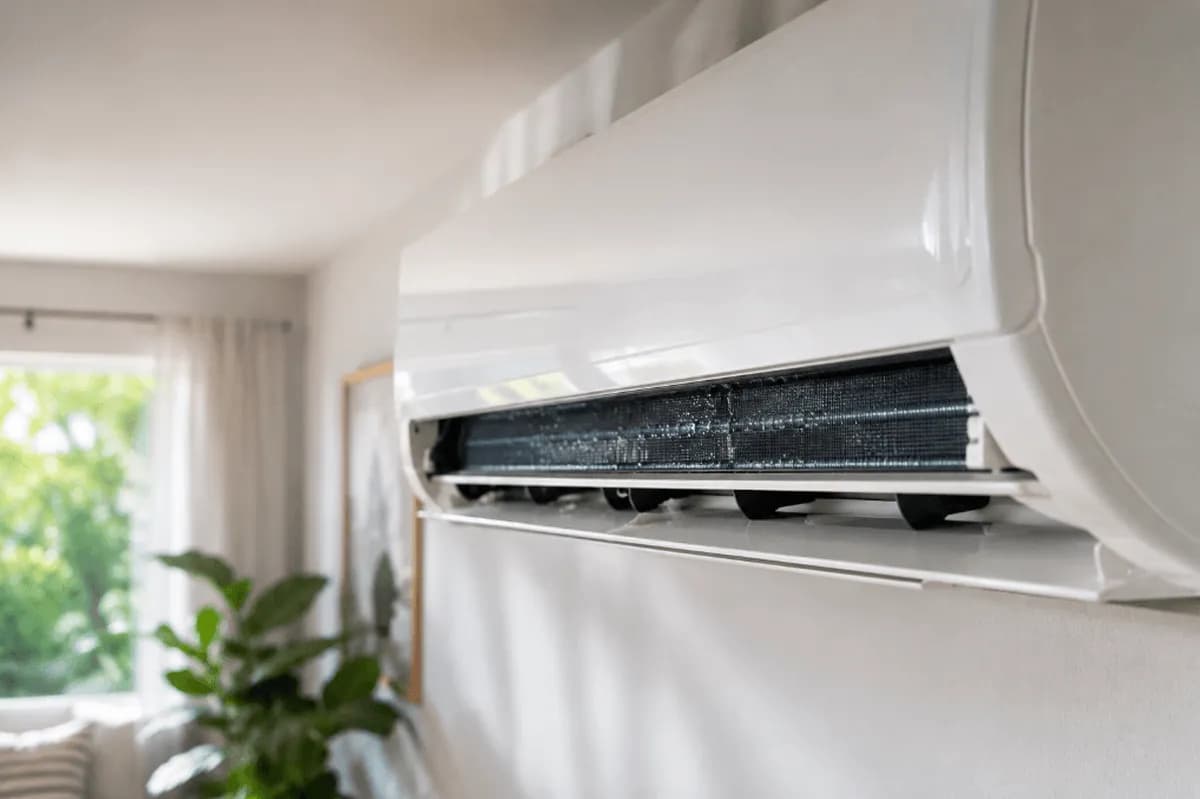
When your ductless mini split kicks on and the room fills with a stale, dirty-sock smell, mold is the most likely reason. Mini splits cool a room by pulling warm air across a cold coil, and that coil sweats as it runs. The moisture mixes with the dust and pet hair that collect inside the unit, and mold gets the three things it needs to grow: water, a food source, and a dark, still space to spread. That combination is what turns a normal ductless AC mold smell into a real problem. The good news is that you can catch mold in a mini split early, clean it safely, and keep it from returning. Because we at Filterbuy spend our days thinking about what is in the air you breathe, this is a question we hear all the time once cooling season starts, and the fix that actually works is rarely the one people reach for first. Here is how we would walk a family member through it.
A musty, dirty-sock odor from a ductless mini split almost always means mold is growing on the cold evaporator coil, the blower wheel, or the drip pan inside the indoor unit. You can safely clean small amounts of surface mold on the filter and accessible housing yourself with a mask, gloves, and goggles, but coil and blower cleaning, or any mold larger than about 10 square feet, calls for a licensed HVAC technician. The lasting fix is moisture control: keep indoor humidity between 30 and 50 percent, run the unit's dry or fan mode to dry the coil, and keep the filter and condensate drain clean.
A persistent musty or dirty-sock smell when the mini split runs is the most common early sign of mold inside the indoor unit.
Mold grows in mini splits because the cold evaporator coil produces condensation, and dust trapped on the coil and blower wheel gives that moisture something to feed on.
The EPA advises that homeowners can clean mold covering less than about 10 square feet themselves, while larger contamination should be handled by a professional.
The CDC links damp, moldy indoor spaces to coughing, wheezing, congestion, eye and throat irritation, and worsened asthma, with stronger reactions in people who have allergies, asthma, or weakened immune systems.
Keeping indoor humidity between 30 and 50 percent and letting the mini split dry its own coil after cooling are the two habits that prevent mold from coming back.
Clean filters and a clear condensate drain reduce the dust and standing water that mold needs, which makes filter maintenance a frontline defense.
The clearest sign of mold in a mini split is a musty, dirty-sock odor that appears the moment the unit turns on and fades when it shuts off. Alongside the smell, you may see black, green, or gray specks on the filter, vents, or coil fins, or notice allergy-like symptoms that ease when you leave the room. Any one of these is a reason to look inside.
The smell test. A stale, musty, or dirty-sock odor when the fan starts is the signal HVAC pros call dirty sock syndrome, and it points to microbial growth on the coil or blower.
The visual test. Shine a flashlight across the washable filter and the metal coil fins. Dark speckles, fuzzy patches, or a slimy film are all warning signs.
The symptom test. Sneezing, congestion, itchy eyes, or a cough that gets better once you step out of the room can trace back to spores the unit is circulating.
The moisture test. Water pooling under the indoor unit, dripping down the wall, or a slow drain often means the condensate line is clogged and moisture is sitting where mold thrives.
Do the flashlight check with the unit switched off and unplugged, and never reach into the coil with the power on.
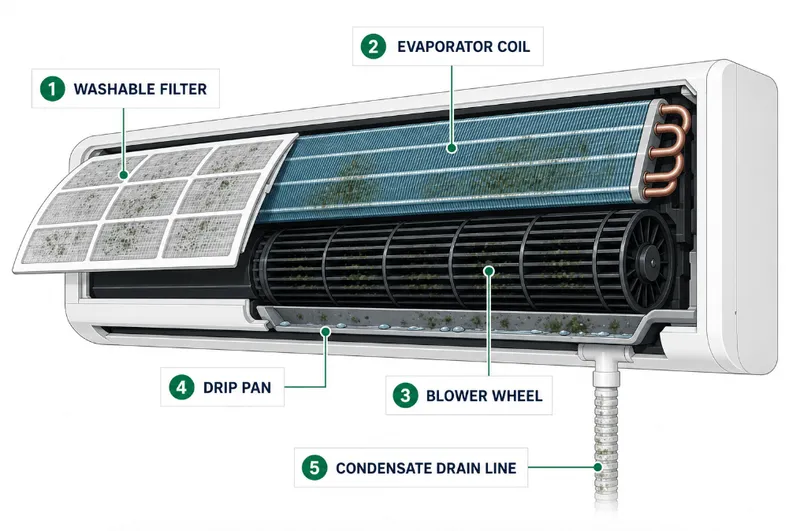
Mold grows inside a ductless mini split because the cooling process creates constant condensation, and the dust that slips past the filter settles on wet surfaces where mold can feed. The indoor unit is dark, still between cycles, and rarely opened, so a small colony can spread for weeks before anyone notices the smell.
Evaporator coil. This is the cold surface that pulls heat from the air. It stays damp with condensation whenever the unit cools, which makes it the number-one spot for growth.
Blower wheel. The spinning fan behind the coil catches a film of dust and moisture. Technicians point to the blower wheel as the most common source of a smell that keeps returning.
Drip pan and drain line. Condensation drains through a narrow line to the outdoors. A clog, a sag, or an install that is not tilted correctly lets water pool, and standing water breeds mold.
Filter. The washable mesh filter is the first thing dust hits. When it is not cleaned, it holds moisture and debris that mold uses as a starter home.
The pattern we see behind most musty mini splits comes down to one everyday habit. People switch the unit off the second the room feels comfortable, and a mini split only dries its coil while it runs, so cutting the power early leaves that coil wet inside a closed box. Humid climates speed this up, which is why the mini split mold questions we field cluster in the Southeast and in coastal and vacation homes that sit shut up for stretches at a time.
Yes, mold in a mini split can affect your health, though reactions vary from person to person. According to the CDC, damp and moldy indoor spaces can cause a stuffy nose, sore throat, coughing or wheezing, burning eyes, and skin rash, and people with asthma or a mold allergy may have severe reactions. The unit makes this worse than mold sitting on a wall because it blows spores straight into the air you breathe.
The health consensus is well established. A 2004 Institute of Medicine review and the World Health Organization's 2009 dampness and mould guidelines both link damp indoor environments to upper respiratory symptoms, cough, wheeze, and worsened asthma. The American Lung Association notes that even people without a mold allergy can feel eye, nose, throat, and lung irritation from airborne mold. People with weakened immune systems or chronic lung disease face a higher risk of more serious lung infections.
A useful clue is timing. If congestion, headaches, or a cough improve when you leave the room and return when the mini split runs, the unit is worth inspecting. If symptoms are ongoing or severe, see a healthcare professional, since mold reactions can look a lot like a cold or seasonal allergies.
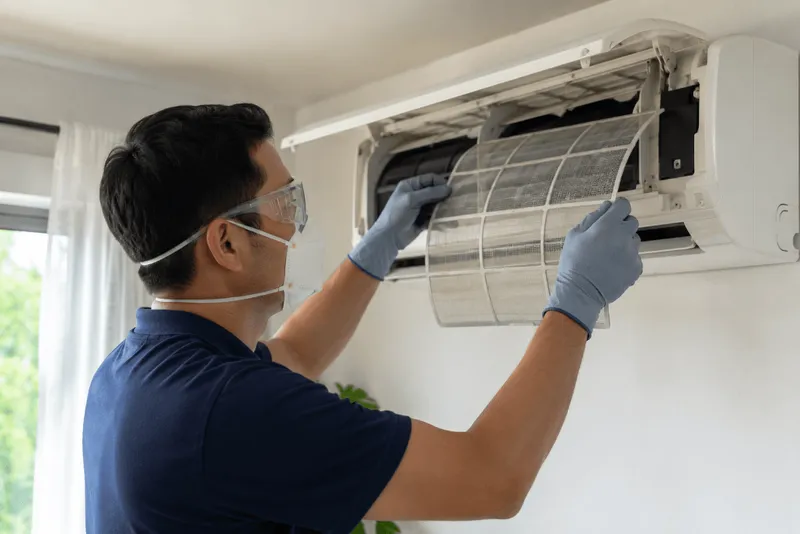
To remove mold from a mini split safely, clean the parts you can reach yourself and hand the internal coil and blower to a professional. You can wash the filter and wipe accessible housing, but always cut the power first, wear protection, and stop if the smell returns after cleaning, since that means the coil is involved. The EPA advises hiring a professional for any moldy area larger than about 10 square feet.
Cut the power. Turn the unit off and switch off the breaker. Ductless units carry a real shock risk, so confirm the power is off before opening the cover.
Gear up. Put on an N-95 respirator, gloves, and goggles. The EPA recommends this basic protection any time you clean mold.
Wash the filter. Remove the mesh filter and wash it with warm water and a mild detergent. Let it dry completely before it goes back in, because a damp filter restarts the cycle.
Wipe the housing. Clean the accessible plastic cover and vanes with detergent and water, then dry them. The EPA does not recommend bleach or biocides as a routine step, so plain detergent and water is the standard.
Clear the drain. Check the drip pan and flush the condensate line so water drains freely. A clogged line keeps the interior wet.
Dry it out. Run fan-only or dry mode for a while before you resume cooling, so the interior is dry when the unit restarts.
For the parts you can safely reach, plain warm water and a mild detergent do the job, and the EPA recommends that over bleach for routine mold cleanup. The metal coil and the internal parts are a different story, and this is where a lot of online advice steers people wrong.
Skip bleach and vinegar on the coil and internal parts. Both are harsh enough to corrode the thin aluminum coil fins and wear on components over time, which trades a smell for a repair bill.
Go easy on alcohol and store-bought sprays. Alcohol can kill surface mold but dries out the seals inside the unit, and pressurized sprays can bend the fins or push moisture into the electronics.
Leave the coil and blower to a pro with the right product. Technicians use no-rinse cleaners made for HVAC coils, applied with tools that will not damage the unit.
Never mix cleaning products. Bleach combined with other household cleaners can release dangerous fumes, so stick to one mild detergent and water.
Call a professional when any of these are true, and do not run the system in the meantime, because running it can spread spores through the room:
The musty smell comes back within days of washing the filter.
You see mold on the coil fins or blower wheel, which sit past the parts you can safely reach.
There has been water damage, or the moldy area is larger than about 10 square feet.
Someone in the home has asthma, a mold allergy, or a weakened immune system.
Use this quick reference to decide whether to clean it yourself or bring in a technician.
Note: The EPA recommends hiring a professional for any moldy area larger than about 10 square feet, and for any mold you cannot fully reach or that returns after cleaning.
Mini split mold prevention comes down to one idea, and it is moisture control. Keep indoor humidity between 30 and 50 percent, let the unit dry its own coil after each cooling cycle, and stay on top of the filter and drain. The homeowners who build those habits rarely deal with a musty unit at all.
The EPA recommends keeping indoor relative humidity between 30 and 50 percent, and the CDC advises no higher than 50 percent, because mold thrives once the air gets damper than that. A ten-dollar hygrometer tells you where you stand. In humid regions, a dehumidifier pulls the room below the mold line, and an ENERGY STAR certified model does it while using less energy than a standard unit.
Run the mini split in dry or dehumidify mode during muggy weather, and resist the urge to snap the power off the instant the room feels cool. Letting the fan run afterward, or using a self-clean or blow-dry cycle if your unit has one, dries the coil so moisture does not sit overnight. This single habit prevents more mold than any product.
Wash the mesh filter about once a month, and more often with pets or heavy use. A clean filter means less dust reaching the wet coil.
Flush the condensate drain line each season so water leaves the unit instead of pooling in the pan.
Book an annual professional cleaning of the coil and blower, the two areas you cannot fully reach on your own.
When the smell returns within days of a good cleaning, the surface was never the real problem. A few root causes are worth ruling out before you clean again.
The coil or blower is still contaminated. Surface cleaning cannot reach growth deep in the fins or on the blower wheel, so a smell that keeps returning usually means it is time for a professional teardown.
The unit may be oversized for the room. An oversized mini split cools fast, then shuts off before it runs long enough to dry its own coil, which leaves moisture behind after every cycle.
The condensate drain is clogged or poorly sloped. Standing water in the pan, or a line that does not drain, keeps feeding mold no matter how often you wipe the unit down.
Something else in the room is adding moisture. A nearby bathroom, an unvented dryer, or a damp basement can push humidity past the mold line even when the mini split itself is clean.
A filter's job in this fight is to cut the dust that mold feeds on, so keeping filtration clean and effective is a real part of prevention. The cleaner the air moving through your home, the less debris lands on that wet mini split coil to become mold food.
Here is the honest point most guides skip, and it is the one we end up correcting most often. Most ductless mini splits use a proprietary washable mesh pre-filter and are not built to accept a standard boxed pleated filter, so please do not try to force one in. The best move for the unit itself is to keep its own filter spotless and bone dry.
Where higher-efficiency filtration helps is the rest of the house. If you have central HVAC, running a quality pleated filter cuts the whole-home dust load that eventually drifts to the mini split. The Asthma and Allergy Foundation of America recommends using central air conditioning with an allergy-friendly filter to trap mold spores throughout the home, and a HEPA room air cleaner captures spores the mini split stirs up. This is exactly why we are air-obsessed at Filterbuy, and why we make filters in over 600 sizes, plus custom sizes, so the whole-home side of the equation is easy to keep clean. If you want help matching a filter to your central system, see our guide to choosing the right MERV rating.
Authoritative guidance on mold, moisture, and indoor air quality, verified live at article level. Each source uses a distinct root domain.
Source: EPA – A Brief Guide to Mold, Moisture and Your Home
Source: CDC – Mold: About (Health Effects and Cleanup Basics)
Source: World Health Organization – Guidelines for Indoor Air Quality: Dampness and Mould
Source: Asthma and Allergy Foundation of America – Mold Allergy: Symptoms, Prevention, and Treatment
Source: Mayo Clinic – Mold Allergy: Symptoms and Causes
Source: American Academy of Allergy, Asthma & Immunology – Mold Allergy
Source: Cleveland Clinic – Mold Allergy: Causes, Symptoms, Treatment & Prevention
Three numbers worth knowing:
About 47 percent of U.S. homes have dampness or mold. The biggest single study puts it at 50 percent. A condensation-prone mini split is worth a regular look.
Source: Lawrence Berkeley National Laboratory – Prevalence of Building Dampness
Around 21 percent of U.S. asthma cases trace back to home dampness and mold. The same research links dampness and mold to a 30 to 50 percent rise in respiratory problems.
Source: National Institutes of Health (PMC) – Inhalational Health Effects of Mold
Mold slows down when indoor humidity stays between 30 and 50 percent. Above that range, growth takes off. ENERGY STAR dehumidifiers hold that line using about 20 percent less energy.
Source: ENERGY STAR – Dehumidifiers
Ductless mini split: A heating and cooling system with an outdoor compressor connected to one or more wall, ceiling, or floor indoor units. It conditions a room without ductwork.
Evaporator coil: The cold metal coil inside the indoor unit that absorbs heat from room air. It produces condensation whenever the system cools, which is why it is a prime spot for mold.
Blower wheel: The rotating fan behind the coil that pushes conditioned air into the room. Dust and moisture collect on its blades, making it a frequent source of recurring odors.
Condensate drain line: The narrow tube that carries condensation from the drip pan to the outdoors. A clog or improper slope lets water back up and mold grow.
Dirty sock syndrome: An HVAC term for the musty, dirty-sock odor caused by mold and bacteria growing on a damp coil or blower.
Relative humidity (RH): The amount of water vapor in the air compared with the maximum it can hold at that temperature, shown as a percentage. Keeping indoor RH at 30 to 50 percent discourages mold.
Dry mode: A mini split setting that removes moisture from the air with minimal cooling. Running it in humid weather helps keep the coil and room dry.
MERV: Minimum Efficiency Reporting Value, a scale that rates how well a filter captures particles. Higher numbers capture smaller particles, within the airflow limits a system allows.
HEPA: High-Efficiency Particulate Air, a filtration standard that captures at least 99.97 percent of particles at 0.3 microns. HEPA room air cleaners can capture airborne mold spores.
Mold spore: A microscopic reproductive particle that mold releases into the air. Spores are always present indoors and grow into mold when they land on a wet surface.
Mold remediation: The professional process of containing, removing, and preventing mold, typically recommended for contamination larger than about 10 square feet.
Mold in a mini split is a moisture problem first and a cleaning problem second. You can scrub the filter every week, but if the coil stays wet in a closed box, the smell comes back every time. In our years at Filterbuy helping families chase down bad air, the ones who beat mini split mold for good are the ones who treat moisture as the enemy. They watch their humidity, they let the unit dry itself, and they keep dust out of the system in the first place. That is where good filtration earns its keep, holding the dust down so the moisture has less to feed.
Do the smell and flashlight check today, with the unit powered off, to see whether mold is already present.
Set a humidity target of 30 to 50 percent and pick up an inexpensive hygrometer to track it.
Put a monthly filter-cleaning reminder on your calendar, and add dry mode to your hot-weather habits.
Schedule an annual professional cleaning of the coil and blower before peak cooling season, and follow our mini split care checklist for the month-to-month routine.
If anyone at home has ongoing symptoms, talk with a healthcare professional about whether mold could be a trigger.
A musty or dirty-sock smell that appears when the fan starts is the classic sign of mold or bacteria growing on the damp evaporator coil or blower wheel. The moving air carries the odor into the room, so you notice it most in the first minutes of a cooling cycle.
You can safely clean small amounts of surface mold on the washable filter and the accessible housing using a mask, gloves, goggles, and plain detergent and water. Cut the power first. Leave the coil, the blower wheel, and any moldy area larger than about 10 square feet to a licensed HVAC technician.
A basic professional cleaning usually runs about $100 to $200 per indoor unit. A deep clean that pulls and washes the blower wheel and treats the coil typically runs about $200 to $450 per unit, and heavy mold that needs containment or an air scrubber can cost more. Multi-zone systems cost more because each indoor head is cleaned separately, so ask whether a quote is per system or per head and have the scope itemized. Prices vary with your region, how easy the unit is to reach, and how much buildup there is.
It is best to avoid running a moldy mini split in a bedroom, since it blows spores into the air you breathe all night. The CDC notes that damp, moldy spaces can cause congestion, coughing, and eye irritation, with stronger reactions for people who have asthma or allergies. Clean or service the unit before regular use, and see a healthcare professional if symptoms persist.
Wash the mesh filter about once a month, and more often if you have pets or run the unit heavily. Let it dry completely before reinserting it, because a damp filter gives mold a place to start.
Keep indoor relative humidity between 30 and 50 percent. The EPA recommends this range, and the CDC advises staying no higher than 50 percent, because mold thrives once the air gets damper. A hygrometer or a dehumidifier helps you hold the line.
A: Running dry mode in humid weather helps a great deal, because it pulls moisture from the air and keeps the coil from staying wet. Pairing dry mode with a fan-only or self-clean cycle after cooling dries the interior so mold cannot take hold overnight.
A: Usually not. Most ductless mini splits are designed for their own washable mesh pre-filter and cannot accept a standard boxed pleated filter. To cut the dust that feeds mold, keep the mini split filter clean, run a quality pleated filter in your central HVAC if you have one, and consider a HEPA room air cleaner.
You are the one protecting your home's air, and mold in a mini split is a problem you can absolutely stay ahead of. Start with the moisture habits above, keep your filtration clean, and let Filterbuy handle the dust side of the equation. When you are ready to keep whole-home dust down with a filter sized right for your system, explore our air filters built for cleaner home air. Cleaner air, less mold food, and a mini split that smells the way it should.
