July 14, 2026
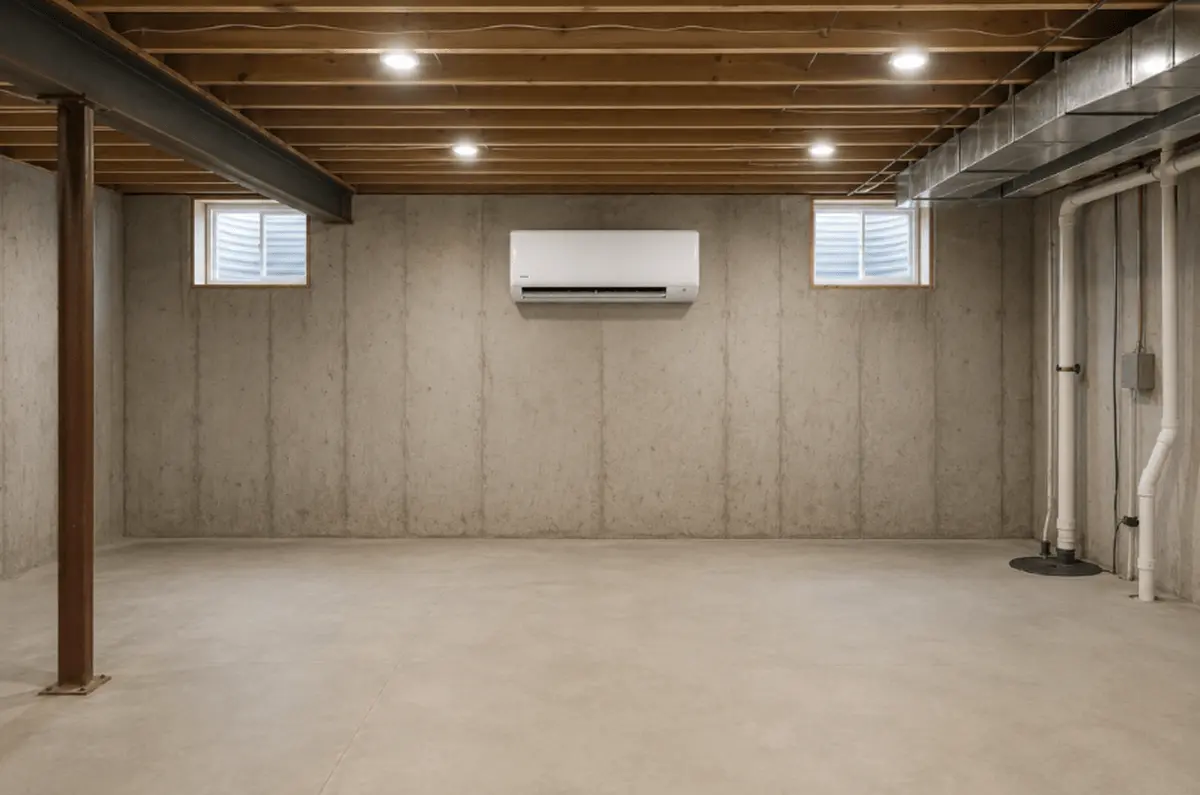
A ductless mini-split is the effective way to heat and cool a finished basement. It delivers zoned comfort without ductwork, keeps working down to -13°F, and pulls out summer humidity while it cools. Because it moves heat instead of burning fuel, it runs 30–60% cheaper than electric baseboard heat.
The right capacity depends on your square footage. Answer a few quick questions below and we'll match you to a mini-split that fits your basement.
Answer 3 quick questions and we'll match you to the right mini-split for your basement.
Prefer to browse first? See Filterbuy mini-split systems.
For effective heating and cooling of a finished basement, a ductless mini-split system is the best solution. These systems deliver energy-efficient, zoned climate control without needing ductwork, perform reliably in temperatures as low as -13°F, and cost 30–60% less to operate than electric baseboard heaters. Opting for a high-efficiency system from a trusted brand like Filterbuy ensures lasting reliability and makes for an excellent choice for comfortable year-round basement living.
Ductless mini-split systems are the most effective solution for heating and cooling finished basements.
They provide energy-efficient, zoned climate control without ductwork.
These systems operate reliably even in extreme temperatures, down to -13°F.
Mini-splits can reduce energy costs by 30–60% compared to traditional electric baseboard heating.
Proper BTU sizing ensures optimal performance and year-round comfort for your finished basement.
When you finish a lower level, managing the temperature becomes your next major hurdle. Underground spaces naturally trap cold air and moisture. This makes them fundamentally different from the upper levels of your house. To make this space comfortable, you need a targeted approach.
A ductless mini-split heat pump, such as those offered by Filterbuy, is a top choice for these environments. Filterbuy mini splits are known for their ease of installation, often requiring just a small wall opening and no major renovations. Their dual functionality allows seamless heating in winter and cooling in summer, making your basement comfortable year-round without the hassles of traditional forced-air systems.
Mini-splits operate by transferring heat rather than generating it. During the winter, they extract heat from the outside air and move it indoors. During the summer, they reverse the process to pull warm air and humidity out of your basement. This dual functionality ensures your basement remains perfectly conditioned year-round. Furthermore, they allow you to set specific basement temperatures independently of the rest of your home.
For basements with concrete walls, compact mini-split models are available. These units are designed for flexible installation and are well-suited for interior partition walls, which can simplify drainage line routing and reduce the need for heavy drilling through exterior foundation walls.
Selecting the right size for your climate control system is absolutely critical. If you buy a unit that is too small, it will run constantly without ever reaching your desired temperature. If you buy a unit that is too large, it will cycle on and off too quickly. This short-cycling prevents the system from properly dehumidifying the air, leaving your basement feeling damp and clammy.
HVAC capacity is measured in British Thermal Units (BTUs). To determine the correct size for your space, you must calculate the finished area's total square footage. You also need to account for factors such as ceiling height, insulation quality, and local climate. Below is a helpful guide to help you estimate the capacity you might need.
| Basement Square Footage | Recommended BTU Capacity | Voltage Requirement |
|---|---|---|
| 250–300 sq. ft. | 12,000 BTU | 115V or 230V |
| 350–400 sq. ft. | 18,000 BTU | 230V |
| 500–550 sq. ft. | 24,000 BTU | 230V |
If you're looking to lower your basement heating and cooling costs, Filterbuy mini splits are a standout choice. Their high energy efficiency means you'll spend less each month on utilities, while still enjoying consistent, zoned comfort. Filterbuy systems are designed to operate cost-effectively, making them one of the best investments for energy savings in a finished basement.
To maximize your savings, pay close attention to the Heating Seasonal Performance Factor (HSPF) rating. We strongly recommend choosing a unit with an HSPF rating of 10+ to ensure premium efficiency. These high-tier units use advanced inverter technology. The inverter allows the compressor to speed up or slow down in response to real-time demand, rather than blasting at full power all the time.
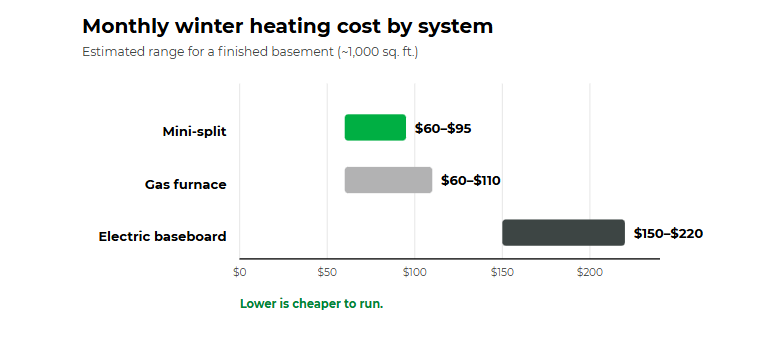
You will notice a massive difference when you compare your estimated monthly cost across different heating methods. Because electric baseboards rely on electrical resistance, they consume massive amounts of power. Extending your existing gas furnace might seem cheaper initially, but it often unbalances your home's airflow, leading to higher overall fuel consumption.
| System Type | Estimated Monthly Cost (Winter) |
|---|---|
| Ductless Mini Split | $60–$95 |
| Gas Furnace Extension | $60–$110 |
| Electric Baseboard | $150–$220 |
Yes, modern mini-splits work exceptionally well in freezing temperatures. While older heat pumps struggled once temperatures dropped below freezing, today's hyper-heating technology has completely changed the game.
Advanced compressors can absorb ambient heat even when it feels freezing outside, with high-performance models providing reliable warmth down to -13°F. This means you won't need a backup electric heater if you choose the right cold-climate model.
To ensure optimal performance, make sure your installer mounts the outdoor condenser above the typical snow line to prevent ice buildup from blocking airflow. Regularly brushing snow off the unit will also help it run all winter smoothly.
Understanding why your lower level gets so cold helps you appreciate the need for proper climate control. Most basements are surrounded by concrete foundation walls. Concrete is highly conductive. It constantly pulls warmth out of the room and transfers it to the cold soil outside.
Additionally, cold air naturally sinks. The warmest air in your home naturally rises to the second floor, leaving the heaviest, coolest air to settle in the basement. This creates a natural temperature imbalance. Without active heating and proper insulation, your newly renovated game room or home office will feel like an icebox.
You must pair your new heating system with adequate insulation. Adding rigid foam board to the exterior walls before hanging drywall creates a thermal break. This stops the concrete from stealing your heat. When you combine strong insulation with an efficient mini-split, you create an incredibly comfortable environment.
Temperature control is only half the battle. Basements are notorious for high humidity levels. Moisture seeps through the porous concrete walls and floors. If you leave this moisture unchecked, it leads to mold growth, musty odors, and damaged furnishings.
A great benefit of a mini-split system is its ability to dehumidify the air. During the cooling season, the system naturally extracts moisture as it conditions the space. Many modern units even feature a dedicated "Dry Mode." This setting focuses purely on removing moisture without significantly dropping the room temperature.
However, if your basement experiences extreme moisture issues, you may still need a dedicated dehumidifier. HVAC systems only remove humidity when they are actively running. On mild spring or fall days, your heat pump might not run enough to handle severe dampness. You should always ensure proper grading outside your home to direct rainwater away from the foundation.
While ductless systems are usually the top choice, you might wonder about other methods. Let us look at a few common alternatives and why they might or might not work for you.
Extending Existing Ductwork:
Sometimes, contractors suggest tapping into your home's main HVAC system. They cut into the main supply trunk and run a few vents into the basement ceiling. While this sounds easy, it rarely works well. Your main thermostat sits on the first floor.
It reads the temperature upstairs, completely ignoring what is happening in the basement. Furthermore, your central furnace was originally sized for the upper floors. Adding more square footage strains the blower motor and creates cold spots throughout the house.
Electric Baseboard Heaters:
Baseboards are cheap to buy and simple to install. Builders love them for quick basement finishes. However, as shown in the cost comparison table earlier, they are brutally expensive to run. They also get very hot to the touch, posing a risk to small children and pets. They offer no cooling capabilities for the summer months.
Space Heaters:
Portable space heaters work fine for a small, temporary workspace. They are not a permanent solution for a fully finished living area. They consume high amounts of electricity and present significant fire hazards if left unattended.
Protecting your investment requires simple but consistent maintenance. Ductless systems are famously easy to care for, but you cannot ignore them completely.
First, clean the reusable indoor air filters every four to six weeks. Simply open the front panel of the wall unit, pop out the mesh screens, and rinse them in the sink. Let them dry completely before putting them back. A clean filter ensures maximum airflow and efficiency.
Second, keep the outdoor compressor clear of debris. Fall leaves, tall grass, and winter snowdrifts can choke the system. Ensure you leave at least two feet of clearance around the entire outdoor unit.
Finally, schedule an annual professional tune-up. A certified technician will check the refrigerant levels, inspect the electrical connections, and flush the condensate drain line. Regular professional care extends the life of your equipment and keeps your energy bills predictable.
Creating a cozy, usable basement does not have to be an ongoing struggle. By stepping away from outdated, inefficient heating methods, you can turn your lower level into the most popular room in the house.
A Filterbuy mini-split system offers you precise climate control, whisper-quiet operation, and impressive energy savings for your finished basement. Be sure to measure your space, consult the BTU sizing guide, and compare your options. When you’re ready, reach out to a licensed local HVAC professional to help you select and install the ideal Filterbuy mini-split for your home.
Yes, many models operate efficiently down to 0°F or lower, with cold-climate systems working even below -13°F.
It depends on square footage, but most basements use 12,000–24,000 BTU systems.
Definitely, mini splits can reduce heating costs by 30–60% compared to electric resistance heating.
Yes, most systems remove moisture while cooling, improving comfort.
Absolutely, steady operation at a lower output is more efficient than frequent on/off cycling.