What Humidity Should the House be in Winter for Optimal Comfort?
January 21, 2026

Why the range matters
Quick check
Static shocks or a dry throat in the morning? Your humidity has probably dropped below healthy levels. A digital hygrometer — usually under $15 at any hardware store — tells you exactly where you stand.
One tip from experience
Many homeowners crank the heat when they feel cold — but the real fix is often more moisture. Properly humidified air at 68°F feels warmer than dry air at 72°F, and it costs less to maintain.
Clean air is the other half of winter comfort
Getting humidity right is one piece. The other is what's circulating in that air. Your furnace runs hard all season, pulling dust, pollen, and pet dander through the system on every cycle — and a fresh filter keeps that air clean while you dial in the moisture.

TL;DR: Quick Answers
What should humidity be in house in winter?
Ideal winter indoor humidity: 30-50%, with 35-45% being optimal for most homes.
After working with millions of customers nationwide, we've found this range delivers the best balance of comfort, health, and home protection during heating season.
Why this range matters:
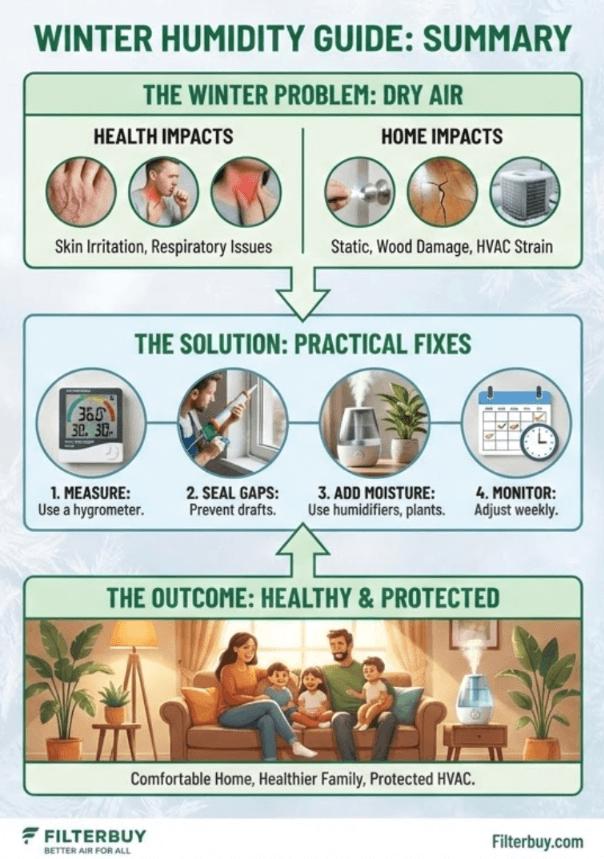
Below 30%: Dry skin, nosebleeds, increased illness, cracking wood, static shocks
Above 50%: Window condensation, mold risk, musty odors
35-45%: Sweet spot where families report feeling most comfortable
Quick check: If you're experiencing static electricity shocks or waking up with dry throat and irritated sinuses, your humidity has likely dropped below healthy levels. A simple hygrometer (under $15 at most hardware stores) reveals exactly where you stand.
Pro tip from our experience: Many homeowners crank up the heat when they feel cold, but the real issue is often low humidity. Properly humidified air at 68°F feels warmer than dry air at 72°F—and costs less to maintain.
Why Winter Humidity Matters for Your Health and Home
Cold air holds less moisture than warm air. When your furnace heats that dry winter air, relative humidity can fall to 15–20%, which are well below the comfortable 30–40% range.
The result is dry, irritated nasal passages and sinuses, uncomfortable skin, and airways that may feel more sensitive than usual. Static builds. Wood floors gap and furniture splits.
The research backs up what we hear from customers every winter:
The EPA reports that Americans spend roughly 90% of their time indoors, where pollutant levels can run 2 to 5 times higher than outdoors.
Research from Lawrence Berkeley National Laboratory found that building dampness and mold raised the risk of respiratory and asthma-related health outcomes by 30 to 50 percent across the homes studied.
A peer-reviewed study in Indoor Air estimated that 21% of U.S. asthma cases—roughly 4.6 million people are attributable to dampness and mold exposure in homes.
Both extremes cause problems. Too dry, and you get nosebleeds and itchy throats. Too humid, and you get foggy windows and that telltale musty smell. The comfortable range is narrower than most people think.
A quick note on health: dry air can irritate your skin, eyes, and airways, and it may make symptoms worse for people with asthma or allergies. Mayo Clinic and the American Lung Association both offer solid guidance on how indoor air quality and humidity affect your health. Humidity control is a comfort and prevention tool, not a treatment. If you're dealing with ongoing respiratory issues, talk to a medical professional.
The Right Humidity Level for Every Winter Temperature
The colder it gets outside, the lower you keep indoor humidity — it keeps moisture from condensing on cold windows and walls.
Signs Your Home Is Too Dry
Watch for these indicators that your humidity has dropped too low:
Frequent nosebleeds or dry sinuses
Itchy skin, chapped lips, or eczema flare-ups
Sore throat when you wake up
More static shocks than usual
Gaps forming between hardwood floor planks
Cracking in wood furniture, trim, or door frames
An air filter that clogs faster than expected
That last one surprises most homeowners. Without enough moisture, dust and particulates stay airborne longer instead of settling. Your furnace filter ends up capturing more debris in less time.
Signs Your Home Is Too Humid
Too much moisture creates the opposite set of problems:
Condensation or frost on windows
Musty odors in rooms or closets
Visible mold near windows or in corners
Peeling wallpaper or bubbling paint
A damp, clammy feeling indoors
High humidity also helps dust mites thrive, a common trigger for allergies and asthma.
How to Measure and Control Winter Humidity
Start with a digital hygrometer. These inexpensive devices display your current humidity level and help you track patterns throughout the day.
To raise humidity:
Run a portable or whole-house humidifier
Leave bathroom doors open after showers
Air-dry laundry indoors
Add houseplants that release moisture
Place water containers near heating vents
To lower humidity:
Use exhaust fans in kitchens and bathrooms
Run a dehumidifier in problem areas
Improve ventilation in basements and crawl spaces
Check for air leaks that let moist outdoor air seep in
A whole-house humidifier connected to your HVAC system offers the most consistent control. It automatically adjusts output based on your humidity setting.
How Humidity Affects Your HVAC System and Air Filters
Properly humidified air actually helps your heating system work more efficiently. Moist air feels warmer at lower temperatures, which means you can set your thermostat a few degrees cooler without sacrificing comfort.
From a filtration standpoint, balanced humidity keeps particles from circulating endlessly through your ductwork. When air is too dry, lightweight dust and allergens stay suspended longer—passing through your system repeatedly before your filter can capture them.
Maintaining 30-40% humidity extends the effective life of your air filter and improves overall air quality. It's one of the simplest upgrades you can make for healthier indoor air this winter.
"Homeowners call us about air quality issues every winter, and nine times out of ten, the real culprit is humidity below 30%—fix that first, and your filter lasts longer while your home feels noticeably more comfortable."
7 Trusted Resources for Getting Winter Humidity Right
We talk to homeowners every day about indoor air quality. One question comes up constantly once temperatures drop: What humidity level should I maintain in winter?
After manufacturing millions of air filters and helping customers troubleshoot comfort issues, we know humidity plays a bigger role in home health than most people realize. These resources from government agencies, healthcare institutions, and industry experts give you the same guidance we rely on.
1. EPA Guidelines: The Official Word on Indoor Humidity
Customers often ask us what humidity level is "safe." The EPA makes it simple: aim for 30-50% relative humidity year-round. Their guide explains why this range prevents mold growth while keeping your respiratory system comfortable.
Why we recommend it: Clear, no-nonsense guidance from the agency responsible for indoor air quality standards.
Source: U.S. Environmental Protection Agency
2. Mayo Clinic: What Your Doctor Wants You to Know About Humidifiers
Dry sinuses, nosebleeds, cracked skin—we hear about these symptoms from customers every winter. Mayo Clinic explains how the right humidifier solves these problems and how improper maintenance creates new ones. Essential reading before you buy.
Why we recommend it: Trusted medical advice on choosing and maintaining humidifiers safely.
Source: Mayo Clinic
3. Department of Energy: The Connection Between Humidity and Heating Bills
Here's something homeowners don't always realize: humid air feels warmer. The DOE explains how proper moisture levels let you lower your thermostat without sacrificing comfort. Your furnace runs less, your filter lasts longer, and your wallet stays fuller.
Why we recommend it: Practical strategies that improve comfort while reducing energy costs.
Source: U.S. Department of Energy
4. American Lung Association: Protecting Your Family's Respiratory Health
When humidity drops below 30%, your respiratory system loses its first line of defense against airborne irritants. The American Lung Association explains why maintaining 30-50% humidity helps your family breathe easier—and why it matters even more for anyone with asthma or allergies.
Why we recommend it: Family-focused guidance on how humidity affects lung health during heating season.
Source: American Lung Association
5. ASHRAE Standards: What the Pros Use to Design Comfortable Homes
Ever wonder how HVAC professionals determine the right humidity settings? ASHRAE sets the industry standards. Their thermal comfort guidelines specify the humidity levels that keep the majority of people comfortable—the same benchmarks contractors use when sizing equipment for your home.
Why we recommend it: Professional-grade specifications translated into practical home guidance.
Source: American Society of Heating, Refrigerating and Air-Conditioning Engineers
6. NIH Research: The Science Behind the 40-60% Recommendation
Want to understand why humidity affects your health? This peer-reviewed research shows that 40-60% humidity minimizes health risks from both dry air and excess moisture. The findings support what we see every day: balanced humidity means fewer complaints about dry air symptoms and better overall air quality.
Why we recommend it: Clinical evidence backing the humidity recommendations you'll find everywhere else.
Source: National Institutes of Health (PubMed Central)
7. Cleveland Clinic: Recognizing Dry Air Symptoms Before They Get Worse
Headaches. Sore throat. Itchy eyes. Static shocks. Customers describe these symptoms to us constantly—and often don't connect them to low humidity. Cleveland Clinic helps you recognize when dry air is the culprit and explains what to do about it.
Why we recommend it: Symptom-focused guidance that helps you identify humidity problems early.
Source: Cleveland Clinic
The Numbers Behind Winter Humidity Problems
We talk to customers every day about indoor air quality issues—dry skin, irritated sinuses, static shocks, and filters that clog faster than expected. The research confirms what we've observed after years of helping homeowners troubleshoot comfort problems: humidity control isn't optional. It's essential.
You're Breathing Indoor Air 90% of the Time
The EPA reports that Americans spend approximately 90% of their time indoors, where pollutant concentrations can reach 2 to 5 times higher than outdoor levels.
Here's what that means in practice: customers often call us about air quality concerns without realizing their HVAC system is working overtime to filter increasingly contaminated indoor air. During winter—when homes are sealed tight and furnaces run constantly—the air circulating through your filter carries everything from dust and pet dander to the particulates that dry air keeps suspended longer. We've found that homes with balanced humidity put less strain on their filtration systems and report fewer comfort complaints.
Source: U.S. Environmental Protection Agency – Indoor Air Quality
47% of Homes Have Moisture-Related Problems
Research from Lawrence Berkeley National Laboratory found that nearly half of U.S. homes—approximately 47%—show visible evidence of dampness or mold contamination.
This statistic doesn't surprise us. Customers describe the same pattern repeatedly: humidity swings from too dry in winter (causing cracked skin and respiratory irritation) to too humid in summer (leading to condensation and musty odors). Both extremes create problems. When winter humidity drops below 30%, we hear about nosebleeds and itchy throats. When it climbs above 50%—often from overcorrecting with humidifiers—we hear about foggy windows and that telltale mold smell in bathrooms. The sweet spot is narrower than most people realize, and hitting it consistently requires attention.
Source: Lawrence Berkeley National Laboratory – Indoor Air Quality Scientific Findings Resource Bank
21% of Asthma Cases Trace Back to Dampness and Mold
A peer-reviewed study published in Indoor Air estimated that 21% of current U.S. asthma cases—roughly 4.6 million people—are attributable to dampness and mold exposure in homes.
This finding aligns with what we hear from families managing respiratory conditions. Parents tell us their children's symptoms improve when they get humidity under control. Customers with allergies report fewer flare-ups once they stop the cycle of air that's too dry followed by overcorrection that creates mold-friendly conditions. After manufacturing millions of air filters and seeing the difference between filters from well-maintained homes versus those struggling with moisture issues, we can tell you: proper humidity management shows up in your filter—and more importantly, in how your family feels.
Source: Lawrence Berkeley National Laboratory – Public Health and Economic Impact of Dampness and Mold
The Filterbuy Perspective: These aren't just statistics to us—they're the problems our customers describe every winter. Dry air that makes breathing uncomfortable. Humidity swings that damage hardwood floors and wooden furniture. Filters that load up faster because particulates won't settle in bone-dry air. Getting humidity right solves problems you can feel immediately and prevents damage you might not notice until it's expensive to fix.
Why Humidity Is the Most Overlooked Factor in Home Comfort
After years of manufacturing air filters and talking with thousands of homeowners, we've reached a simple conclusion: humidity matters more than most people realize—and it's the one thing almost everyone neglects.
Customers call us every winter about dry skin, persistent coughs, and static shocks. They ask about their furnace, their ductwork, their furnace filter. But nine times out of ten, the real culprit is humidity below 30%.
The fix isn't complicated. It just gets ignored.
What the research confirms—and what we see firsthand:
Americans spend 90% of their time indoors
Nearly half of U.S. homes have moisture-related problems
21% of asthma cases trace back to dampness and mold exposure
These aren't abstract statistics. They represent real families dealing with preventable issues.
The ideal winter humidity range:
Maintain 30-40% relative humidity in most conditions
Lower to 25-30% when outdoor temps drop below 20°F
Reduce further to 20-25% in extreme cold (below 10°F)
Most people don't monitor these levels. They crank the furnace, seal up the house, and wonder why everyone feels miserable by February.
What changes when you get humidity right:
Fewer morning sore throats and bloody noses
Less lotion needed for dry, cracked skin
Wood floors that stop gapping and creaking
Reduced static shocks
Air filters that don't clog as quickly
HVAC systems that run more efficiently
Our honest take:
If you do one thing after reading this guide, buy a $15 hygrometer and check your humidity for a week. You'll probably find levels lower than expected.
Humidity isn't glamorous. It doesn't get the marketing attention of smart thermostats and air purifiers. But after helping homeowners solve air quality problems for years, we're convinced it belongs at the top of your winter maintenance checklist.
Get the humidity right, and everything else gets easier.
Take Control of Your Winter Humidity
You can't fix what you don't measure. Start here.
Step 1: Measure Your Current Humidity
-Buy a digital hygrometer ($10-$30 at any hardware store)
-Place it in a central living area away from vents
-Monitor readings for 3-5 days
-Check multiple rooms if possible
Target readings: 30-40% in winter. Below 30% is too dry. Above 50% risks mold.
Step 3: Monitor Weekly
-Check hygrometer readings every week during heating season
-Adjust humidifier settings when outdoor temps change
-Watch for warning signs:
Window condensation = too humid
Static shocks and dry skin = too dry
-Clean humidifiers regularly to prevent mold
Step 4: Support Your HVAC System
Check air filters monthly during winter
Replace furnace filter every 60-90 days (more often with pets)
Schedule annual HVAC maintenance
Seal air leaks around windows and doors
Need the right filter? Proper humidity and quality filtration work together. Find the right air filter for your system and keep your indoor air working for you.
FAQ on "What Should Humidity Be in House in Winter"
Q: What is the ideal indoor humidity level during winter?
A: Target 30-50%. Optimal range: 35-45%.
After working with millions of customers across every climate zone, we've found:
-Below 30%: Discomfort and health issues begin
-35-45%: Best results for most households
-Above 50%: Condensation and mold risk
Pro tip: Pick up an inexpensive hygrometer. Many homeowners don't realize humidity has dropped until problems appear.
Q: Why does indoor humidity drop so much in winter?
A: Cold air cannot hold moisture like warm air. When your furnace heats it, humidity crashes.
What we've learned from customer feedback:
-Forced-air systems cause the most dramatic drops
-Some homes see humidity fall into the teens
-The problem is often humidity, not temperature
This is one of those "invisible" air quality issues we're passionate about making visible.
Q: What health problems can low winter humidity cause?
A: Dry air compromises your body's natural defenses.
Common issues customers report:
Dry, cracked nasal passages—easier for viruses to enter, irritated skin that lotion can't fix, scratchy, dry eyes, worsening asthma and allergy symptoms, Increased cold and flu frequency
Q: How can I increase humidity in my house during winter?
A: Address air leaks first. Then add moisture strategically.
Most effective solutions (based on thousands of customer experiences):
Whole-house humidifiers — Most consistent results. Customers rarely look back.
Portable humidifiers — Good for targeting specific rooms.
Seal air leaks — Stop dry air from pouring in around windows and doors.
Maintain HVAC system — Dirty filters force harder operation and worsen humidity problems.
Simple habits that help:
Leave bathroom doors open after showers
Add houseplants
Air-dry laundry indoors
Q: How do I know if my home's winter humidity is too low or too high?
A: Your home gives clear warning signs.
Low humidity indicators:
Static electricity shocks
Cracking wood floors or furniture
Curling wallpaper edges
Persistent dry skin
Frequent nosebleeds
High humidity indicators:
Window condensation or frost
Musty odors
Visible mold growth
Clammy feeling indoors
Important: Different rooms have different levels. Check multiple locations—bathrooms run higher while bedrooms near exterior walls often run drier.