July 22, 2026
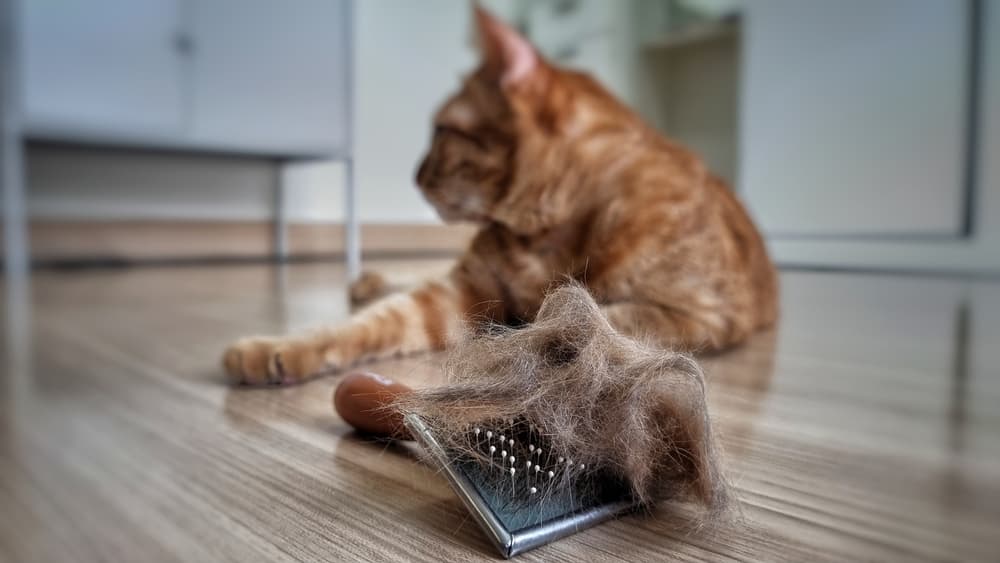
You dust the shelves, vacuum the floors, and fluff the pillows, yet the sneezing keeps coming. If that sounds familiar, you're not imagining things. The culprit is often something you'll never spot with your eyes: pet dander.
Dander is one of the most common household allergens, and it behaves in ways that surprise even devoted pet owners. In this guide, you'll learn what dander really is, why it triggers reactions, how it moves through your home, and the practical steps that actually help you manage it.
Pet dander isn't the same thing as fur, and that distinction matters more than you'd think.
The real trigger is a group of tiny proteins your pet produces naturally. These proteins live in your pet's skin cells, saliva, urine, and other biological substances. When your dog or cat sheds microscopic flecks of dead skin, or licks its coat and leaves dried saliva behind, those proteins go along for the ride.
The part that trips people up: fur usually transports allergens rather than causing the reaction itself. Hair acts like a carrier. As your pet moves around, dander clings to fur, then transfers onto dust, clothing, upholstery, and fabrics throughout your home.
So when you react to a pet, you're rarely reacting to the hair. You're reacting to the invisible proteins riding on it.
Not everyone reacts to pets, and that comes down to how each person's immune system reads those proteins. In sensitive individuals, the immune system treats harmless pet proteins as dangerous invaders. It launches a defense, and that response can show up as familiar symptoms:
Reactions vary widely from one person to the next. One family member might barely notice a thing, while another struggles the moment they walk into the room. If allergy symptoms are affecting someone in your home, a qualified medical professional can help identify triggers and options.
It's also worth busting a common myth. The amount of visible hair doesn't predict how strong a reaction will be. A "low-shedding" or "hypoallergenic" pet still produces skin, saliva, and the proteins that come with them. Less fur on the floor doesn't mean fewer allergens in the air.
Dander is constantly on the move. Understanding the cycle helps explain why it feels impossible to fully clean up.
| Step | What Happens |
|---|---|
| 1 | Your pet sheds microscopic particles. This happens all day, every day — the particles are far too small to see with the naked eye. |
| 2 | Those particles settle. They collect on fur, bedding, floors, and furniture throughout your home. |
| 3 | Daily activity disturbs them. Walking across the room, playing, vacuuming, and pet "zoomies" all kick particles loose. |
| 4 | Air movement lifts them back up. Once airborne, dander floats freely and circulates through the air. |
| 5 | Your HVAC system carries it around. Air handling moves particles from one room to another, spreading them far from where your pet actually spends time. |
| 6 | Dander settles again, and the cycle repeats. Without regular intervention, this process just keeps going. |
That loop never fully stops as long as a pet lives in the home. The goal isn't to break the cycle completely — it's to reduce how much dander builds up at each stage.
Dander gravitates toward soft, fibrous, and air-moving surfaces. Knowing the hotspots tells you where to focus your effort.
| Area | Where It Hides |
|---|---|
| Living room | Sofas and upholstered chairs, throw pillows and blankets, rugs and carpet, curtains |
| Bedroom | Bedding and pillows, mattresses, pet beds, clothing and laundry baskets |
| HVAC system | Return-air grilles, vent covers, ductwork, overdue HVAC filters |
| Overlooked spots | Car seats, fabric-covered pet carriers, baseboards, stuffed toys, cat trees, fabric lampshades |
If you only tackle the obvious surfaces, dander keeps quietly building in the places you forget.
Vacuuming is a solid habit, and you should keep it up. But it's only one piece of the puzzle. A good vacuum removes hair, dust, and surface particles. What it can't fully handle is everything happening below and around those surfaces:
Here's the honest truth: no single tactic eliminates pet dander completely. The most effective approach combines several small habits that each chip away at the problem.
This is the section to bookmark. These steps are realistic, repeatable, and genuinely make a difference.
| 1 | Wash pet bedding regularly. Use washable covers when you can, and follow the care instructions to keep them lasting. |
| 2 | Vacuum upholstery, rugs, and carpets. Pay extra attention to the spots where your pet naps and lounges most. |
| 3 | Damp-dust hard surfaces. Dry dusting just launches particles back into the air. A slightly damp cloth traps them instead. |
| 4 | Groom your pet consistently. Brush them in an easy-to-clean space, and follow your veterinarian's guidance on bathing frequency. |
| 5 | Create pet-free zones. The bedroom is a great place to start, especially for allergy-sensitive household members who need a break at night. |
| 6 | Clean HVAC returns and vent covers. Dust and hair love to gather around the areas that move your home's air. |
| 7 | Check and replace your HVAC filter. A fresh, appropriately rated filter helps capture airborne particles as air cycles through your system. |
| 8 | Consider a portable air purifier. Place it in the rooms where your pets and family spend the most time together. |
| 9 | Wash blankets and soft furnishings. Allergens pile up wherever your pet likes to curl up, so give those cozy spots regular attention. |
| 10 | Build a routine instead of relying on deep cleans. Frequent, manageable cleaning almost always beats occasional marathon sessions. |
If you only remember one thing: consistency wins. Small weekly habits keep dander from ever gaining the upper hand.
Since your HVAC system moves dander around the whole house, your filter plays a bigger role than most people realize. Before you buy, think through:
| Filter size | The exact dimensions your system requires |
| MERV rating | How effectively the filter captures small particles |
| System compatibility | Higher ratings aren't right for every unit |
| Number of pets | More pets generally means more dander |
| Allergy sensitivity | Stronger reactions call for stronger filtration |
| Odor concerns | Pets bring smells along with dander |
| Replacement frequency | Filters work best when changed on schedule |
| Filter | Best For |
|---|---|
| MERV 8 | Everyday filtration for common household particles |
| MERV 11 | Stronger filtration built to capture pet dander, dust, and smaller particles |
| MERV 13 | Higher-efficiency filtration for the finest particles, when your HVAC system supports it |
| Odor Eliminator | Adds activated carbon to help tackle household and pet odors |
A little guidance goes a long way here. Match the filter to your system and your family's needs, and swap it out on time for the best results.
Take control of pet dander with the right filter
Pet dander is invisible and persistent — but a well-matched filter is one of the easiest upgrades you can make. Find your size and MERV rating in minutes.
Find the Right Filter for Your HomePet dander is invisible, persistent, and impossible to fully eliminate — but it is very manageable. Remember that the real allergens are proteins carried on fur and dust, that they travel through your home in a constant cycle, and that no single fix does the job alone.
A steady routine of cleaning, grooming, and thoughtful air filtration keeps dander in check so you can enjoy your pet and breathe easy.
