March 19, 2026
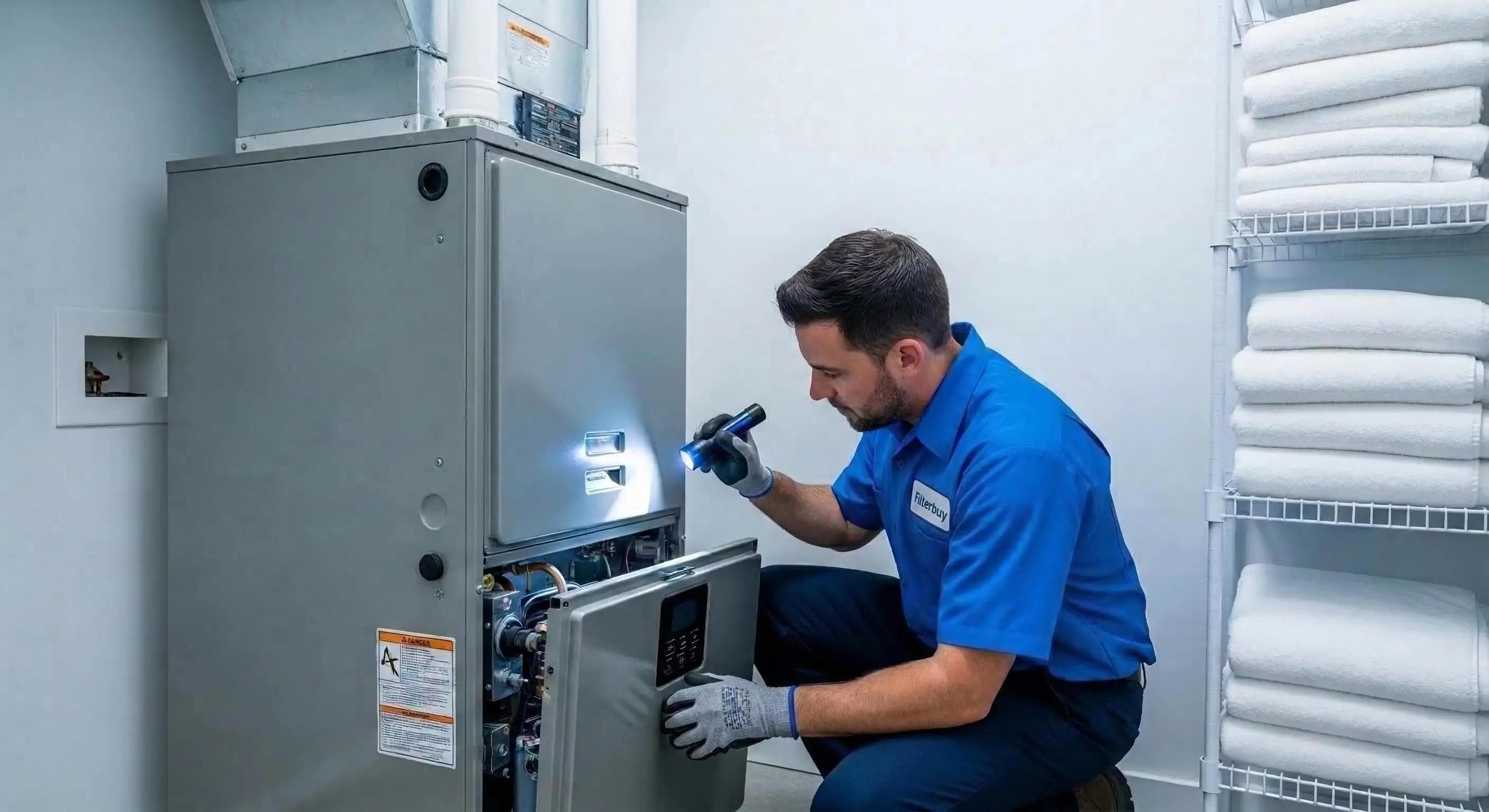
We've shipped filters to households where the furnace was 23 years old and still running clean. We've also heard from families who replaced theirs at 11. The difference, almost every time, traces back to one thing: whether anyone was actually maintaining the system, starting with the filter.
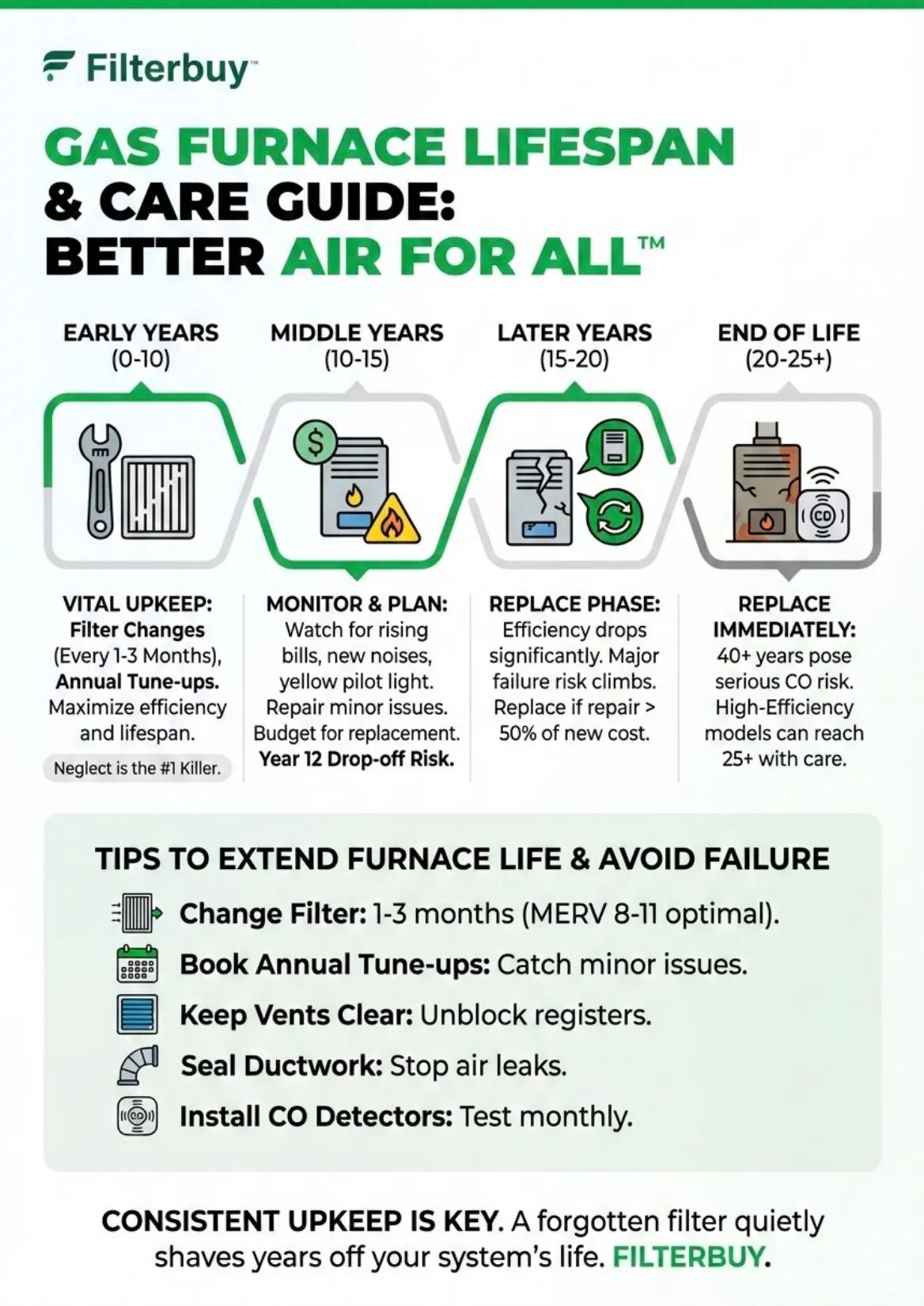
The question of how long does a natural gas furnace last doesn't have a single answer, and that's worth knowing upfront. Most systems run 15 to 20 years. A well-maintained furnace with annual tune-ups and consistent filter changes can push past 25. One that's ignored tends to start breaking down around year 12. We see this pattern across millions of households every heating season, not just in manufacturer specs.
Understanding gas furnace lifespan starts with understanding what drives it. At Filterbuy, we've been making air filters in U.S. facilities and shipping them factory-direct for over a decade. The homes that keep filters on schedule are the ones whose furnaces keep running without drama. That pattern is consistent enough to lead with.
This page covers what actually determines how long your furnace lasts, the warning signs that tell you it's heading toward failure, and the honest call on repair versus replace. We'll also walk you through what you can do today to add years to what you already have.
Most gas furnaces last 15 to 20 years. High-efficiency models (90%+ AFUE) that get consistent maintenance — annual tune-ups and filter changes every 1 to 3 months — regularly reach 20 to 25 years. Neglected systems can start failing as early as year 12.
Key factors that determine lifespan:
Filter change frequency (every 1–3 months is the standard)
Annual professional tune-ups, ideally each fall
System efficiency tier (entry-level vs. high-efficiency condensing)
Quality of the original installation
Bottom line: A well-maintained gas furnace lasts 15 to 20 years. The single biggest thing you can do to reach — or exceed — that number is keeping a clean filter in the system year-round.
Seven things worth holding onto from everything on this page.
Gas furnaces average 15 to 20 years. Properly maintained high-efficiency models can reach 25 or beyond.
How long yours lasts is largely within your control. Maintenance matters more than the brand name on the side.
Change the filter every 1 to 3 months. Nothing you do has more impact on system longevity for less money.
Know the 8 warning signs. Age, rising bills, frequent repairs, uneven heat, yellow flame, new noises, more dust, and CO alarms are the signals that count.
Use the 50% rule. When a repair costs more than half the price of a new system, replace it.
A 20-year-old furnace should be replaced. A 40-year-old one is a safety issue, not just an efficiency problem.
Upgrading to a modern high-efficiency system can cut heating costs by up to 30%. The math on replacement works out sooner than most homeowners expect.
When HVAC techs say a gas furnace lasts 15 to 20 years, they're describing a system that gets basic maintenance. The fuller picture is more useful. How long do furnaces last depends on the efficiency tier the unit belongs to, how the installation was done, and how consistently the system's been maintained since day one.
Entry-level gas furnaces, the kind found in most U.S. homes, typically run 12 to 15 years under normal use. Mid-range systems with AFUE ratings between 80 and 89% average the standard 15 to 20 years. High-efficiency condensing furnaces rated at 90% AFUE or above are built with more durable components and, when properly maintained, routinely reach 20 to 25 years of service life.
One thing that quietly shortens the average furnace lifespan is short-cycling, when your system turns on and off more often than it should. Short-cycling overworks the burner and heat exchanger, compressing years of wear into months. It almost always traces back to a clogged air filter or an undersized system. Catch it early, and you've got a repair. Ignore it, and you're looking at a replacement.
The full picture of heating system lifespan also depends on what type of system you're working with. Electric furnaces last 20 to 30 years because they have no combustion cycle, wearing down key components. Oil furnaces run 15 to 25 years, depending on fuel quality and service. For a solid technical overview of how gas combustion and heat exchange work, see the engineering overview of central heating furnaces before you make a major decision.
Gas furnaces and central AC units run on roughly parallel timelines, both averaging 15 to 20 years. That's the core of the average life of furnace and air conditioner comparison most homeowners eventually face. Because they share an air handler in most homes, replacing both together saves on installation and ensures the components match for efficiency from the start.
Your furnace almost always warns you before it fails completely. Here's what to watch for.
Your system is 15 or more years old. Furnace age alone doesn't trigger replacement, but past 15 years, the odds of a major failure, whether heat exchanger, blower motor, or control board, climb every season. Older compact units using smaller filter sizes are worth watching closely.
Your energy bills keep climbing. An aging furnace works harder to produce the same heat. If your costs rise year over year with no change in how you're using the system, efficiency is dropping.
You're calling for repairs more than once a year. A practical rule: when a repair tops 50% of what a new system would cost, replace it. Multiple small repairs in the same season add up to the same conclusion faster than most people expect.
Some rooms are warm, and others aren't. Uneven heating is usually the first noticeable sign of a system in decline. It can point to blower motor problems, heat exchanger wear, or duct pressure issues. A clogged filter is the most common trigger.
Your pilot light is yellow or orange instead of blue. A healthy gas furnace burns blue. A yellow or flickering flame signals incomplete combustion and possible carbon monoxide. This one needs professional attention immediately.
You're hearing sounds you didn't use to hear. A furnace in good shape runs quietly. Banging at startup usually means ignition delay. Rattling points to loose components. Squealing comes from a worn blower belt or motor bearing.
There's more dust, soot, or dry air in your home than usual. An aging system loses its ability to properly filter and humidify air. If dust settles faster on surfaces or allergy symptoms are getting worse indoors, the furnace may be why.
Your carbon monoxide detector goes off. A cracked heat exchanger is a leading cause of CO leaks in homes. If your detector sounds, get everyone out and call a professional. Don't reset it and wait.
If warning sign #3 sounds familiar and you're weighing your options, our complete furnace replacement cost guide breaks down average prices, AFUE efficiency rebates, and labor factors so you can build a realistic budget before collecting quotes.
The most common question we hear: should I fix what broke, or is it time to go? Knowing when to replace furnace equipment often comes down to one factor people overlook: air filter condition. A consistently dirty filter accelerates wear on every major component. Homeowners who skip filter maintenance face that decision years earlier than they should.
If your furnace is under 10 years old and had a single failure, repair is almost always the right call, provided the repair stays under 50% of replacement cost. Between 10 and 15 years, repair makes sense for minor issues, but start budgeting for replacement. Past 15 years, every repair bill is money spent on borrowed time.
If you're asking should I replace my 20 year old furnace, the answer in most cases is yes. A 20-year-old system is likely running at 60 to 70% efficiency compared to a modern unit at 95%+ AFUE. That gap costs hundreds of dollars every heating season. HVAC professionals in markets like Oviedo, FL, see this calculation play out constantly: the homeowners who replace proactively spend less over five years than the ones who wait for a failure.
For a 40-year-old furnace, there's no scenario where keeping it makes financial or safety sense. If you're asking, should I replace a 40 year old furnace, the answer is yes, right now. Units that old predate modern safety controls and emissions standards. A new high-efficiency system pays for itself in energy savings within a few years and keeps your family safe. Our HVAC solutions page is a good starting point when you're ready to move forward.
Most of what determines how long a furnace runs is within your control. These seven steps actually move the needle.
Change your air filter every 1 to 3 months. This is the single most direct investment in furnace longevity you can make. A clogged filter restricts airflow, overheats the heat exchanger, and wears down every major component. For most homes, a MERV 8 to 11 filter swapped every 60 to 90 days hits the right balance. Homes with pets or allergy sufferers should be changed monthly. Filterbuy carries over 600 standard sizes with free shipping direct from our U.S. facility.
Book an annual tune-up every fall. A professional inspection before the heating season is one of the most reliable ways to protect your furnace’s life expectancy. A tech cleans the burners, checks the heat exchanger for cracks, tests the ignition, and confirms all safety controls work.
Keep your vents and registers clear. Blocked registers create pressure imbalances that force the system to compensate. Furniture, rugs, and drapes over supply or return vents cause more damage than most homeowners realize.
Seal your duct system. The U.S. Department of Energy estimates that 20 to 30% of heated air escapes through leaky ducts in a typical home. Sealing and insulating ducts, especially in attics and crawl spaces, cuts that waste and reduces strain on your furnace directly.
Pick the right filter for your system. Filter quality supports gas furnace durability more than people expect. A properly rated filter traps more particulates, reduces buildup on internal components, and protects the heat exchanger from unnecessary stress. Size and MERV rating both matter. The wrong filter is almost as damaging as no filter at all.
Install and test carbon monoxide detectors. One on every floor, including near sleeping areas. Test the batteries monthly. In many states, it's required by code, and it catches the one furnace failure that can't wait.
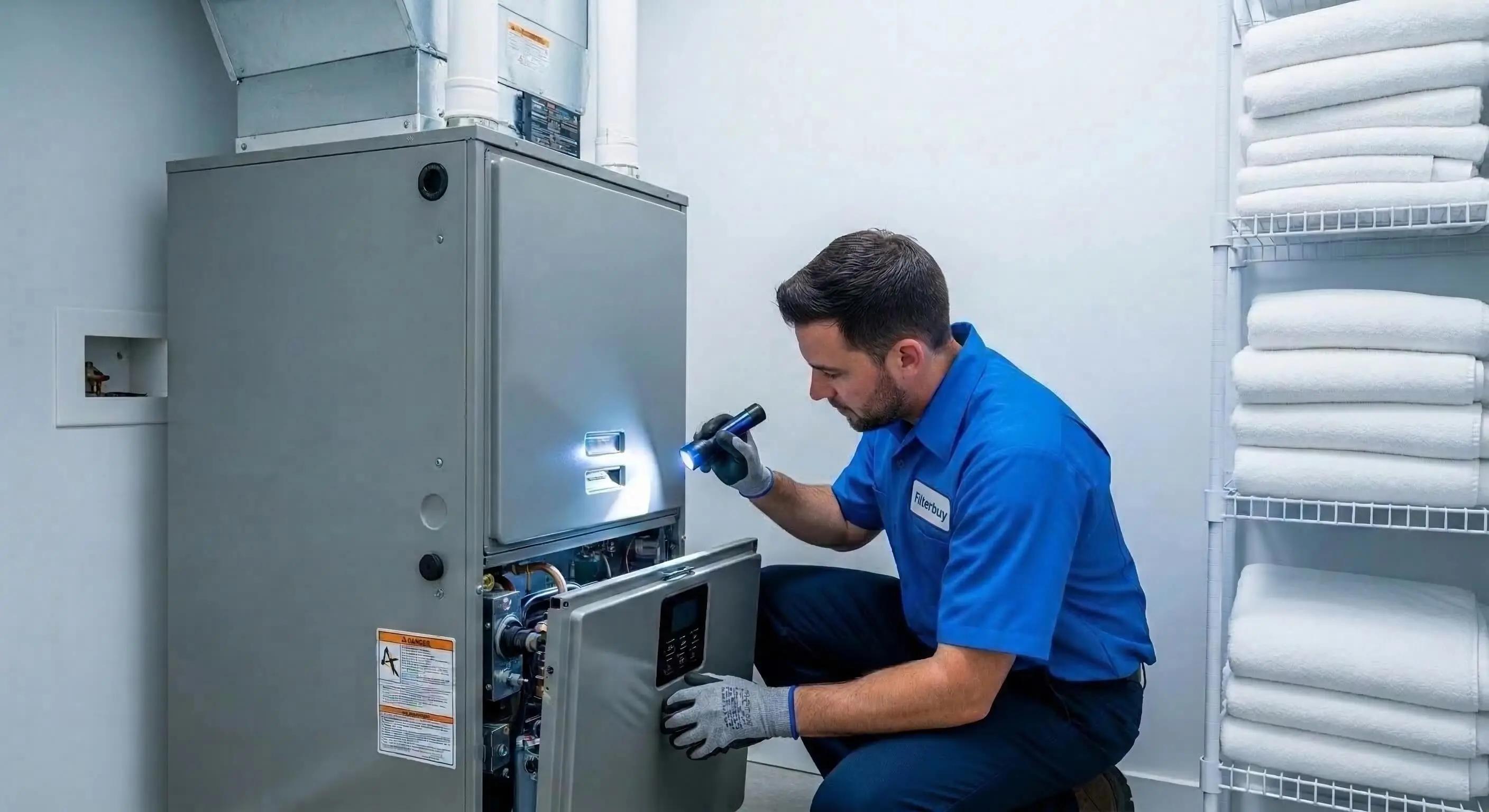
In 25 years of residential HVAC work, the most common reason I see a furnace fail early isn't age — it's neglect. A heat exchanger that cracks at 12 years almost always traces back to chronic airflow restriction from a dirty filter. When homeowners stay on top of filter changes and annual maintenance, I routinely see systems running clean and efficient well past the 20-year mark. The furnace doesn't know how old it is. It only knows how well it's been treated.
- Filterbuy Team
Whether you're troubleshooting, pricing out a replacement, or just getting oriented before a contractor call, these are the sources worth bookmarking.
U.S. Department of Energy: Furnaces & Boilers energy.gov/energysaver/furnaces-and-boilers — The DOE Energy Saver guide covers efficiency ratings, AFUE explained, and how to choose a replacement system. The most authoritative government source for residential heating decisions.
ENERGY STAR: Heating & Cooling energystar.gov/products/heating_cooling — Find certified furnaces, understand efficiency rebate programs, and calculate potential savings on your heating bills before you go shopping.
EPA: Indoor Air Quality — HVAC Systems epa.gov/indoor-air-quality-iaq — Essential context for connecting your furnace, filter choices, and your family's health. Covers how HVAC systems shape the air you breathe indoors.
Wikipedia: Furnace (Central Heating) en.wikipedia.org/wiki/Furnace_(central_heating) — A well-cited technical overview of combustion mechanics and heat exchanger design. Good background before a major purchasing decision.
Filterbuy: Furnace Replacement Cost Guide filterbuy.com — Replacement Cost Guide — Our breakdown of replacement pricing across gas, electric, and high-efficiency systems, with AFUE rebates and regional labor estimates. Read this before collecting contractor quotes.
ASHRAE: Residential HVAC Standards ashrae.org — The standards that govern HVAC equipment design and installation. A useful reference when evaluating what a contractor tells you.
CPSC: Carbon Monoxide Safety cpsc.gov — CO Safety Center — The Consumer Product Safety Commission's guide to CO hazards at home, including furnace-related risks, detector placement, and what to do if an alarm sounds.
These three figures put the financial and health stakes of furnace maintenance and replacement in real terms.
Up to 30% energy savings you can reasonably expect when you trade a 60% AFUE furnace for a modern 95%+ AFUE system. On a $1,500 annual heating bill, that's $450 back every year. The savings compound every season you own the new system, on top of eliminating whatever repair costs the old unit was racking up. Source: U.S. Department of Energy, Energy Saver: Furnaces & Boilers
90%, that's the EPA's figure for how much time the average American spends indoors. During heating season, your furnace and its air filter control most of what your family breathes at home. A maintained system with regular filter changes makes a measurable difference in indoor air quality, especially for kids, older family members, and anyone managing allergies. Source: U.S. Environmental Protection Agency, Indoor Air Quality
20-30% of heated air escapes through leaky ducts in a typical U.S. home, according to DOE estimates. All that wasted airflow forces your furnace to run longer cycles to hit the thermostat setting. Longer cycles mean more wear on the blower, heat exchanger, and burner, directly shortening how long the system lasts. Sealing ducts consistently ranks as one of the best-return home improvements you can make. Source: U.S. Department of Energy, Energy Saver: Ducts
Most furnaces don't fail because they're bad equipment. They fail because nobody maintained them.
We've been making filters in U.S. facilities and shipping them directly to homeowners for over a decade. The homes that breathe the best air aren't always the ones with the newest equipment. They're the ones with homeowners who pay attention. A forgotten filter is restricting airflow in thousands of homes right now, quietly overheating a heat exchanger and shaving years off a system's life. The fix costs under $20 and takes two minutes.
The best way to delay gas furnace replacement is by committing to an annual preventative maintenance plan and making filter changes a non-negotiable part of how you take care of your home. That's it. Not complicated. Wildly effective.
We'll also say this plainly about replacement timing: 'it's still running' isn't a maintenance strategy for a 20-year-old furnace. A system that ages burns significantly more energy per unit of heat than a modern unit would. Every season you hold on is money that leaves through your vents instead of staying in your wallet. And a furnace failure in February isn't like a car that breaks down on the shoulder. It's a safety situation that affects your whole family.
Maintain your system consistently, learn the warning signs, and make replacement decisions before an emergency forces your hand. Your furnace runs better and longer when you treat it that way. And the air in your home shows it.
Reading about maintenance is useful. Doing something about it is better. Here's where to start based on where you are today.
Check your filter today. If it's gray, swap it.
Set up auto-delivery so the next one shows up on schedule.
Schedule a fall tune-up with a licensed HVAC tech if you haven't had one this season.
Test your CO detector. Replace batteries if they're more than a year old.
Do everything in the first list, then add these steps.
Get a professional heat exchanger inspection. This is the component most likely to fail in this age range.
Start pricing out replacement options now. It's a much calmer conversation before a breakdown.
Review our furnace replacement cost guide so you know what to budget for.
Get at least three quotes from licensed HVAC contractors for a replacement system.
Ask each contractor about ENERGY STAR-certified equipment and available utility or manufacturer rebates.
If your central AC is also aging, price out replacing both at once. Combined installation costs less.
Keep up the filter changes and watch the warning signs closely in the meantime.
Replacement typically runs $2,500 to $7,500 fully installed, depending on system size, efficiency rating, and local labor rates. Our furnace replacement cost guide breaks those variables down by system type so you can build a realistic budget before you start collecting quotes.
Most last 15 to 20 years with basic maintenance. High-efficiency condensing furnaces at 90%+ AFUE that get consistent upkeep regularly push past 20 years, sometimes to 25.
In most cases, yes. A 20-year-old furnace is at or past its expected service life and likely running at 60 to 70% efficiency. The energy cost difference alone makes replacement the smarter financial call in most scenarios.
Yes, and right away. A furnace that old predates modern safety controls and efficiency standards. The CO risk from a deteriorating heat exchanger is real. Replace it.
Both average 15 to 20 years. Since they share an air handler in most systems, replacing them together when one reaches the end of life saves on installation and ensures the components match for efficiency.
Change the air filter every 1 to 3 months. A dirty filter restricts airflow, overheats the heat exchanger, and accelerates wear across the whole system. It's also the cheapest and fastest maintenance task on this list.
MERV 8 to 11 is the right range for most residential furnaces. It catches dust, pollen, pet dander, and mold spores without the airflow restriction that higher-rated filters can cause. If anyone in your home has severe allergies or asthma, check with your HVAC tech before going above MERV 11.
It can be. A yellow or orange flame usually means incomplete combustion, which can produce carbon monoxide. A healthy furnace burns blue. If you see a yellow flame, turn the system off and call a technician. Don't run a furnace with a consistently yellow flame.
You need two minutes and a filter that fits. That's the honest starting point.
At Filterbuy, we ship over 600 standard filter sizes, plus custom cuts for the tricky ones, factory-direct from our U.S. facility. Free shipping, no markups, and an auto-delivery option that takes the whole thing off your to-do list. Set it up once, and it just shows up when it's time.
If your system is aging and you're thinking about what comes next, our furnace replacement cost guide covers the budget side in full, before you make that call under pressure.
