Shop by

Neglecting to change your HVAC air filter can be like letting dust and debris pile up at the busiest crossroads in town—eventually, nothing can get through! If your home feels more like a bustling zoo or a pollution-prone area, stepping up your filter game is crucial. Here’s the hack for better quality air at home: replace your filters every 90 days. But if you have pets and allergies, change them more often. Remember, high-efficiency filters catch more, but they also fill up faster. So, to ensure the best air quality indoors, making regular filter checks and changes should be a part of your routine.
Picture this: a silent champion inside your home, tirelessly defending your air space from invisible intruders. That's your HVAC air filter, an everyday hero ensuring the air you breathe stays pristine.
But why focus on something as mundane as an air filter? Enter the MERV—Minimum Efficiency Reporting Value. This nifty scale from 1 to 20 isn't just numbers; it represents how effectively your filter can trap everything from pollen to pet dander.
Here's the snag: a high MERV rating can cleanse your air but may also suffocate your HVAC's airflow. It's like putting a high-speed runner in too-tight shoes—yes, they'll still run, but not without strain and the risk of damage over time.
Selecting the ideal air filter blends science with your daily life. Striking the right balance between pure air and smooth airflow doesn't optimize your HVAC's performance—it smartens it. This cultivates a healthier living space and keeps your energy costs from soaring.

The life span of your HVAC filters isn't just about time on the calendar—many factors influence it. Top-performing filters catch more airborne particles but also clog faster, demanding more frequent changes. Live in a high-pollution zone or share your space with furry friends? You might find yourself replacing filters more often due to increased dust, pollen, or pet dander.
And it's not just about where you live or who lives with you. High-traffic areas like commercial spaces see more dirt and dust, accelerating the need for fresh filters. Plus, if household members have allergies or respiratory conditions, clean filters become a priority to maintain a healthy indoor environment.
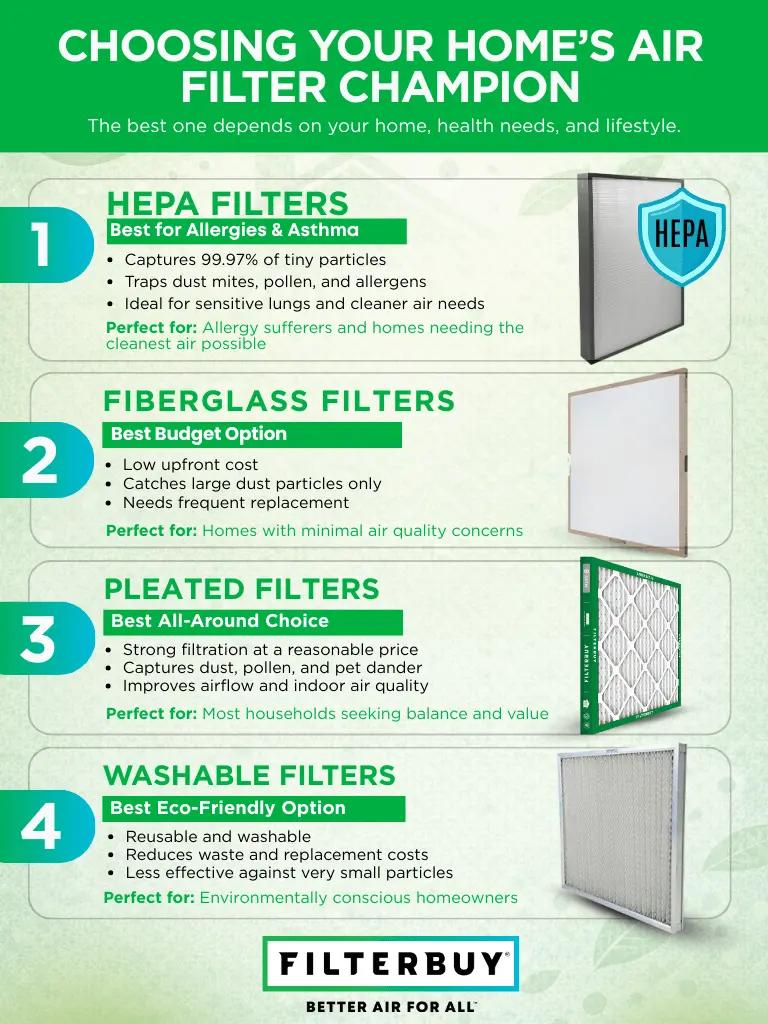
Finding the perfect air filter for your home is more akin to matchmaking than mere shopping. It's about discovering the ideal companion for your home's unique environment:
Is your living room a battlefield for allergies? Equip yourself with HEPA filters. Capturing an impressive 99.97% of minuscule adversaries like dust mites and pollen, these filters are the elite defenders for anyone with sensitive respiratory systems. They are ideal for homes where pristine air is a necessity, not a luxury.
Are you tight on budget? Fiberglass filters are wallet-friendly, but they need frequent replacements and won't catch the tiniest particles. They're a basic, straightforward choice best suited for homes without serious air quality issues.
Are they seeking a happy medium? Pleated filters provide robust filtration at a reasonable cost. They adeptly snag dust, pollen, and pet dander, making them a wise pick for most residences.
Are you driven by sustainability? Washable filters could revolutionize your approach. These allow you to minimize waste by washing and reusing the same unit. However, remember that they might not capture the smallest particles but are stellar for the environmentally conscious.
Every home is unique, as are its air quality demands. Whether combating relentless allergies or aiming to trim environmental impact while saving costs, the right filter transcends mere air purification—it harmonizes with your values and lifestyle, enhancing your breathing space both physically and economically. Ensure your selection combats dust and integrates seamlessly into your daily life.
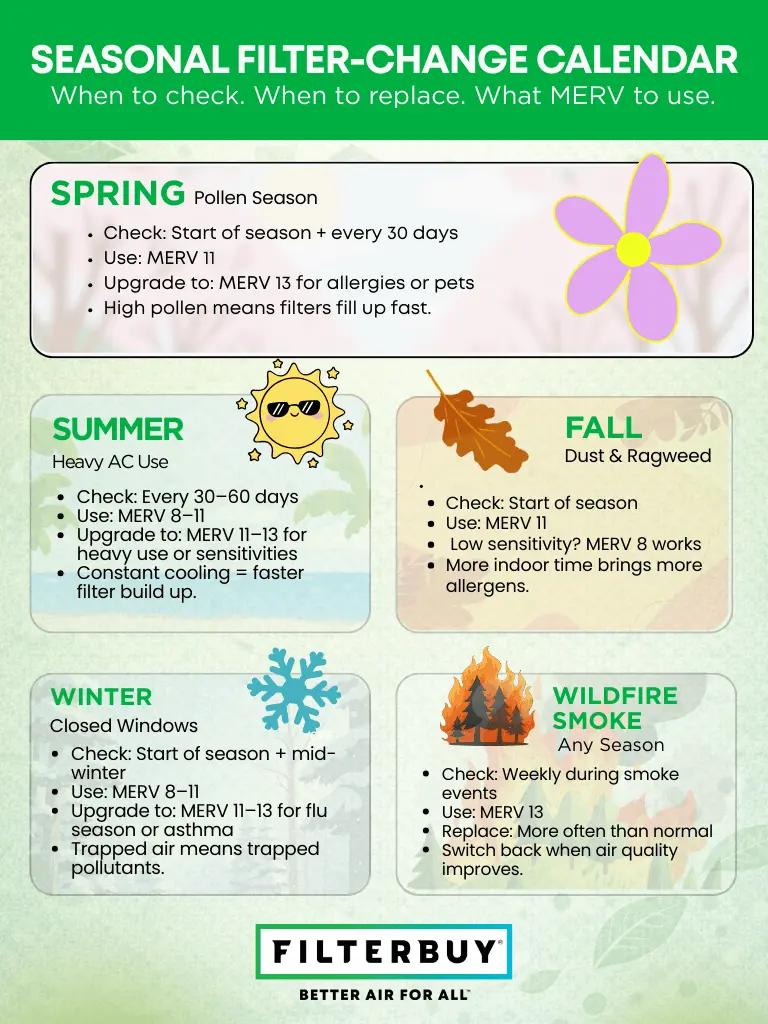
Each season brings specific challenges for your HVAC system and indoor air quality. Here's when to check and likely replace your filter:
Check at season start plus 30-day recheck. Spring pollen loads often require filter swaps. Use MERV 11 for pollen and pet dander; upgrade to MERV 13 if you have severe allergies.
Check every 30–60 days during peak cooling season. Many homes need replacement due to constant system operation. MERV 8–11 handles most situations; consider MERV 11–13 for high sensitivity or heavy usage.
Start-of-season check with likely replacement. Fall allergens and increased indoor time make MERV 11 ideal, though MERV 8 works for low-sensitivity homes.
Check at season start and mid-winter. Sealed homes concentrate indoor pollutants. MERV 8–11 covers most needs; upgrade to MERV 11–13 during cold and flu season or for asthma management.
Check weekly during active smoke events. Use MERV 13 filters and replace more frequently than normal. Return to your regular MERV 8 or 11 when air quality index (AQI) improves.
Quick visual test: If you can't see light through your filter when held up to a lamp or window, it's time for a replacement.
Energy Bills on the Rise? Have you noticed your energy bills climbing unexpectedly? This might be a signal from your HVAC system begging for a filter change. A dirty filter can overexert your system, guzzling more energy to keep you cozy or cool.
Is Your HVAC Slowing Down? When your heating or cooling system can't keep pace and fails to hit the desired temperature, your air filter often waves a red flag. A choked-up filter can strangle your system's efficiency, turning it into an energy hog rather than an energy saver.
Constant Dust Battles? If you're dusting so often that the cleaning cloth feels like an extension of your hand, it's probably time to check your air filter. When filters falter, dust gets a free pass back into your living spaces, laying siege to surfaces.
Allergies Flaring Up Indoors? A spike in sniffles and sneezes at home could be your air filter's way of waving a white flag. An ineffective filter can mean allergens are partying unchecked, so it might be time for a change.
Remember, keeping a keen eye on these signs not only enhances your home's air quality but also protects the longevity of your HVAC system. Make filter checks and changes a regular part of your home maintenance to keep the air clear and your living space comfortable.
Keeping your HVAC system humming perfectly doesn't take much—just a simple monthly checkup of your air filter, especially during those high-demand summer and winter months. Think of it as a quick health check that keeps your system running smoothly, ensuring you stay comfortable no matter the weather. Even if your filters are rated for 90 days, factors like pets, dust, or heavy usage might call for a quicker swap.
A fresh filter from Filterbuy means your system runs more efficiently, using less energy and keeping your home's air crisp. It's a small effort that pays off in lower bills and better comfort. Plus, who doesn't love cleaner air?
The optimal replacement interval can vary based on your system's usage. Regular maintenance prolongs the filter's life and ensures your system operates at peak efficiency. Inspecting and cleaning your filter routinely can significantly improve air quality and prevent efficiency losses due to clogs.
A three-month replacement cycle is common, especially in homes with pets or allergy sufferers. The presence of additional particles and allergens can reduce a filter's effective lifespan.
Air filter replacement needs vary greatly, influenced by factors like filter type, local air quality, and HVAC usage. A good rule of thumb is to check your filter monthly and aim to replace it at least every three months.
Air filters typically last between one to six months. Factors such as air quality and how frequently you use your HVAC system significantly determine a filter's lifespan. Poor air quality, for example, can necessitate more frequent changes.
Generally, pricier air filters provide superior filtration and durability, capturing a greater range of pollutants and lasting longer, which can justify their higher cost. Benefits include enhanced air quality and prolonged HVAC system life.
Putting off filter replacement can lead to the 'dirty filter fallout', where clogged air flow significantly hampers system efficiency. Accumulated dust and debris reduce the filter's effectiveness, forcing your HVAC to work harder, potentially leading to system failures.
Absolutely. Keeping your air filter fresh is crucial for maintaining top-notch air quality and AC efficiency. Over time, a dirty filter that's choked with particles can impede airflow and degrade your AC's performance.
Durability varies by brand and type. High-quality filters are known for their longevity and exceptional performance. Usage frequency, environmental conditions, and diligent maintenance influence their operational lifespan.
Start with the standard 90-day interval, then adjust to 30–60 days if you have pets, allergies, dust, or heavy HVAC use. Follow the seasonal calendar for specific timing guidance.
Leaving a filter unchanged for a year can lead to increased energy consumption, higher utility bills, and poor indoor air quality, aggravating respiratory conditions. In severe cases, it might even cause your HVAC system to fail.
No, it's not advisable. Running your HVAC without a filter allows dust, pet dander, and pollen to circulate freely in your home and accumulate in your system, reducing its efficiency and potentially causing long-term damage.
While neither is ideal, a dirty filter is preferable to none. Even a clogged filter can trap some particles, preventing them from circulating in your home. However, a clean filter is always the best choice for optimal air quality and system performance.