Adding A Mini Split AC System In Texas
Rebates & Incentives For 2026
By Michelle Wan · Reviewed by David Clark, Licensed HVAC Technician · Published July 21, 2026 · Updated July 21, 2026
The federal tax credit is gone, but Texas utility rebates are not. The 25C credit expired December 31, 2025, so a mini split installed in 2026 no longer qualifies for it. What you can claim now depends on which utility serves your ZIP code.
- Oncor (DFW, Lubbock, Waco): up to $600 per unit, up to $3,400 for larger systems
- CenterPoint (Houston metro): up to $500 per unit
- CPS Energy (San Antonio): $100–$275 per ton
- Austin Energy (Austin): about $3,000 on whole-home projects
Most programs require a participating contractor and a minimum efficiency rating, often SEER2 16 or higher. Take the quick match below to see which size and rebate path fits your room.

Answer 3 quick questions and we’ll match you to the right mini split size for your space.
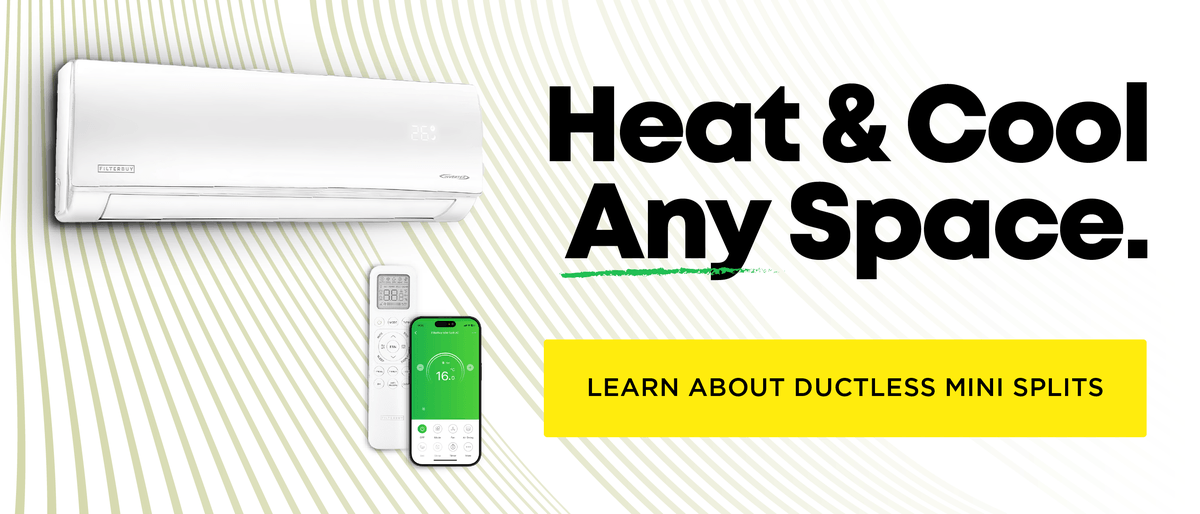
Already know your size? Filterbuy builds variable-speed R-32 ductless systems from 12,000 to 24,000 BTU, covering roughly 300 to 1,200 square feet.
Shop Filterbuy Mini Split Systems
17 SEER2 · 7-year compressor and 3-year parts warranty · mobile app control · free 2-day delivery
Adding a ductless mini split in Texas in 2026 no longer earns a federal tax credit. The 25C credit expired December 31, 2025. Your savings now come from local utility rebates: up to $3,400 from Oncor, up to $500 from CenterPoint, $100–$275 per ton from CPS Energy, and about $3,000 from Austin Energy. Larger state-run rebates are coming to Texas, but haven’t opened yet.
TL;DR
The federal mini split tax credit ended in 2025, so Texas homeowners installing a system in 2026 should focus on utility rebates and the state programs still being set up. Oncor, CenterPoint, CPS Energy, and Austin Energy all offer heat-pump rebates today, though amounts and rules vary by service area. Texas’s $690 million HEAR and HOMES rebate programs are expected to open in late 2026 or 2027.
Key Takeaways
The federal 25C Energy Efficient Home Improvement Credit expired December 31, 2025; mini splits installed in 2026 don’t qualify for it.
Mini splits are ductless heat pumps, so most Texas utility programs treat them under heat-pump rebate categories rather than cooling-only AC.
Oncor’s Take A Load Off Texas pays up to $600 per unit and up to $3,400 for larger high-efficiency systems across DFW, Lubbock, and Waco.
CenterPoint (Houston) offers up to $500 per heat pump; CPS Energy (San Antonio) pays $100–$275 per ton; Austin Energy offers about $3,000 for whole-home projects.
Texas’s $690 million federal HEAR and HOMES rebates aren’t open yet. SECO targets a late-2026 launch, subject to federal approval.
Most utility rebates require a participating contractor and a minimum efficiency rating (often SEER2 16+), so confirm eligibility before you buy.
What Is A Ductless Mini Split, And Is It A Good Fit For Texas Homes?
A ductless mini split is a heat pump system with one outdoor compressor connected to one or more wall- or ceiling-mounted indoor units, delivering both cooling and heating without ductwork. Because it moves heat rather than burning fuel, it counts as a heat pump, an important distinction for rebates.
In Texas, mini splits shine in the situations central AC struggles with. They’re a common fix for garages, bonus rooms, sunrooms, home offices, and older homes without ducts, and they let you cool one room without running the whole house. Through Texas’s long, hot cooling season they run efficiently, and their heat-pump mode easily handles the state’s mild winters.
Filterbuy’s own ductless lineup includes 12,000 BTU (115V and 230V), 18,000 BTU, and 24,000 BTU R-32 heat pump models, sized for anything from a single room to a larger open space.
Do Mini Split Rebates Still Exist In Texas In 2026?
Yes, but only from utilities and (soon) the state, not the federal government. The federal 25C tax credit that once returned up to $2,000 on a qualifying mini split expired December 31, 2025 under the One Big Beautiful Bill Act. Systems placed in service in 2026 don’t qualify for it.
Mini splits had earned the full $2,000 cap under 25C because they heat and cool as heat pumps, while cooling-only AC topped out at $600. If your system was installed and running on or before December 31, 2025, you can still claim it on your 2025 return using IRS Form 5695. The "placed in service" date is what counts, not the purchase date.
For 2026 installs, Texas has no state income tax and no active statewide rebate, so savings are utility-by-utility. That makes your ZIP code, and which utility serves it, the single biggest factor in what you can claim.
Texas Utility Mini Split Rebates (2026): A Side-By-Side Look
Four utility programs cover most of Texas: Oncor, CenterPoint, CPS Energy, and Austin Energy. Each treats heat pumps differently. Because a mini split is a ductless heat pump, it generally falls under these heat-pump rebate categories when it meets the program’s efficiency and contractor rules.
Rebate amounts reflect 2026 program figures, are first-come, first-served while funds last, and vary by equipment and service area. Confirm ductless mini split eligibility with each utility before purchasing.
What Are The $690 Million Texas HEAR And HOMES Programs?
HEAR and HOMES are two federally funded Texas rebate programs worth $690 million combined, created by the Inflation Reduction Act and administered by the State Energy Conservation Office (SECO) within the Texas Comptroller’s office. They aren’t open yet. SECO hired APTIM Federal Services in April 2026 to design and run them and is targeting a late-2026 launch, though some estimates push wider availability into 2027, pending final federal approval.
HEAR and HOMES are funded by $690 million in federal money administered by Texas's State Energy Conservation Office (SECO). SECO hired APTIM in April 2026 and targets a late-2026 launch, subject to federal approval.
One warning worth repeating: because these programs haven’t launched, any 2026 quote that "guarantees" a Texas state IRA rebate is marketing, not program approval. Watch SECO’s official IRA page for launch dates and approved-contractor lists before you rely on these dollars.
How Do You Add A Mini Split AC System In Texas?
Adding a mini split in Texas comes down to five steps, and doing them in this order is what protects your rebate eligibility. Sizing and efficiency decisions made before you buy are the ones utilities check.
Size the system to the space. Match BTU capacity to the room’s square footage, sun exposure, and insulation. A rough starting point is ~20 BTU per square foot, but ask your contractor for a proper load calculation. Oversizing hurts both comfort and efficiency.
Choose a rebate-eligible efficiency level. Most utility rebates require minimum SEER2 (cooling) and HSPF2 (heating) ratings, often SEER2 16 or higher. Pick equipment that clears your utility’s threshold before purchasing.
Use a participating or approved contractor. Oncor, CenterPoint, CPS Energy, and Austin Energy generally pay rebates only on installs by contractors enrolled in their programs. A DIY or non-participating install can void the rebate.
Install and keep every document. Save the invoice, the model and serial numbers, and the AHRI certificate that proves the system’s rated efficiency. Rebate applications ask for all three.
Submit the rebate application promptly. Most Texas utility rebates are first-come, first-served with capped annual funding. File as soon as the install is complete.

How Much Does Adding A Mini Split Cost In Texas?
A single-zone mini split in Texas typically runs about $3,000–$6,000 installed, while multi-zone systems (multiple indoor heads on one outdoor unit) range higher depending on the number of zones and the home. Utility rebates can trim several hundred to a few thousand dollars off that total, so your net cost is often meaningfully lower than the sticker.
If you already have installation lined up, equipment-only costs are lower. Filterbuy’s R-32 heat pump mini splits (12,000, 18,000, and 24,000 BTU) give Texas homeowners a straightforward option for common room sizes. Pair the right size with a rebate-eligible efficiency rating and a participating installer to keep both comfort and savings on your side.
Frequently Asked Questions
Supporting Statistics: 3 Numbers Behind A Mini Split
We don’t pull these off a chart. Filterbuy has manufactured air filters in the U.S. for over a decade. We also build R-32 heat-pump mini splits and install them through Filterbuy HVAC Solutions, so what follows is the research plus what we see in the field.
1. 52% Of Home Energy Goes To Heating And Cooling
It’s the biggest line on the bill, so an efficient heat pump hits your top cost first.
What we see on installs: when the system driving half the meter gets more efficient, the monthly bill drops with it.
Source: U.S. Energy Information Administration, Use of energy in homes
2. Leaky Ducts Waste 20–30% Of Your Conditioned Air
Mini splits are ductless, so you skip that loss.
This is the part most guides leave out, and the reason Filterbuy exists: a ductless unit only holds that efficiency if its filter stays on schedule, which is what we help homeowners do.
Source: ENERGY STAR (U.S. EPA), Duct Sealing
3. Heat Pumps Have Outsold Gas Furnaces Every Year Since 2021
In 2025, shipments ran 12% higher (3.6M versus 3.2M units).
A mini split is a heat pump, so you’d be joining the mainstream rather than taking a gamble. That’s why we added R-32 Filterbuy mini splits (12K, 18K, and 24K BTU) to our lineup.
Source: RMI, using AHRI shipment data
“After years on Texas installs, the mistake I see most is homeowners picking equipment before they check the AHRI certificate. At Filterbuy, we match the exact indoor and outdoor units to the program’s SEER2 minimum before anyone signs. A system that’s efficient enough to run isn’t always efficient enough to qualify.”
David Clark, Licensed HVAC Technician, Filterbuy
How To Stack The Savings: The Order That Works In Texas
One thing trips up almost everyone: in most of Texas, the company that pays your rebate isn’t the company that bills you for power.
Who actually pays you, a Texas quirk worth knowing
In deregulated areas (about 85% of the state), your rebate comes from your TDU, the poles-and-wires utility such as Oncor or CenterPoint, not the retail provider on your bill.
In Austin and San Antonio, one city-owned utility does it all: Austin Energy and CPS Energy.
Not sure which is yours? Your ZIP answers it. Start with DSIRE in the resources below.
The sequence we follow on installs
Confirm who pays, and whether the program is open.
Get pre-approved before you buy. Most Texas rebates require pre-approval and a participating contractor, and none are retroactive. This is the step that costs people the money.
Spec to the rebate, not the code minimum. A SEER2-14 unit that’s legal to install can still miss a SEER2-16 rebate floor, so confirm the exact pairing on your AHRI certificate before ordering.
Watch the calendar. Oncor’s cycle runs roughly February–November, first come, first served.
Keep your paperwork: the AHRI certificate, the itemized invoice, and the placed-in-service date.
Three things we tell every Texas homeowner
The $2,000 federal credit is gone for 2026 installs, so don’t budget around it.
A “guaranteed” state HEAR or HOMES rebate isn’t real yet. SECO hasn’t opened those programs.
The rebate usually covers the upcharge to a higher-efficiency unit, so the pricier system often costs less up front, and less every month after.
7 Resources We Trust For Texas Mini Split Rebates
Rebates are where a mini split project gets confusing fast. Programs change, and not every “rebate” you read about online is real. After helping homeowners spec Filterbuy systems that actually clear the paperwork, we’ve learned the hard part isn’t the rebate amount, it’s proving the system qualifies. So we pulled together the seven sources we point neighbors to..
See If Texas’s $690 Million State Rebates Are Really Open Yet
Texas Comptroller (SECO): IRA Home Energy Rebates (HOMES & HEAR)
This is the state office actually running Texas’s HOMES and HEAR rebates, so it’s the one place to trust for whether they’re open, who qualifies, and how much they pay. If a contractor tells you a state rebate is a sure thing, check here first.
https://comptroller.texas.gov/programs/seco/funding/ira/
Get The Straight Story On The Federal Tax Credit
IRS: FAQs on the One Big Beautiful Bill (Sections 25C & 25D)
Straight from the IRS: the $2,000 federal credit for a mini split ended for systems placed in service after December 31, 2025. If you’re wondering whether you can still claim it, start here before you count on the money.
See What Federal Rebates Are Headed To Texas
U.S. DOE: Home Energy Rebates Program (HOMES & HEEHR)
Want the plain-English version of the federal rebates Texas is rolling out? This DOE page breaks down the HOMES (up to $8,000) and HEEHR (up to $14,000) programs, what they cover and who they’re for, without the government-speak.
https://www.energy.gov/cmei/scep/home-energy-rebates-program
Find Every Rebate For Your Address In One Search
DSIRE: Database of State Incentives for Renewables & Efficiency
Type in your ZIP code and this free database, run by NC State University, shows every rebate and incentive you might qualify for: federal, state, local, and from your utility. It’s the quickest way to see what’s actually on the table where you live.
Pick A Mini Split That’s Sized Right And Qualifies
ENERGY STAR: Ductless Heating & Cooling
A friendly, no-sales-pitch guide to sizing a mini split correctly and reading the efficiency labels rebates care about. It even has a Rebate Finder for equipment that makes the cut.
https://www.energystar.gov/products/ductless_heating_cooling
Make Sure Your Exact System Checks The Boxes
AHRI Directory of Certified Product Performance
Before you sign anything, look up the exact indoor and outdoor units you’re quoted and confirm their certified ratings. That AHRI reference number is the proof almost every rebate application asks for, so it helps to have it early.
https://www.ahrinet.org/certification/ahri-directory
Find An Installer Who Won’t Trip Up Your Rebate
A great install is what makes a mini split actually perform, and most Texas utility rebates only pay out when a qualified contractor does the work. Pop in your ZIP code to find a recognized pro near you.
https://hvac-contractors.acca.org/locator
Glossary
Ductless mini split: A heat pump system with one outdoor compressor linked to one or more indoor units, providing cooling and heating without ducts.
Heat pump: Equipment that transfers heat to cool or warm a home; because a mini split both heats and cools, it qualifies as a heat pump for rebate purposes.
25C Energy Efficient Home Improvement Credit: A federal tax credit for qualifying home-efficiency upgrades that expired December 31, 2025.
HEAR (Home Electrification and Appliance Rebate): A federally funded, income-targeted Texas rebate program for electrification upgrades like heat pumps; not yet launched.
HOMES (Home Efficiency Rebates): A federally funded Texas program rewarding whole-house energy savings; not yet launched.
SECO (State Energy Conservation Office): The Texas Comptroller division administering the state’s HEAR and HOMES rebate programs.
SEER2 / HSPF2: Current efficiency ratings for cooling (SEER2) and heating (HSPF2); utility rebates often set minimum thresholds such as SEER2 16+.
AHRI certificate: A document verifying a system’s rated efficiency, commonly required for rebate applications.
Ton: A unit of cooling capacity (12,000 BTU/hour) used by some rebates, such as CPS Energy’s per-ton payment.
LMI (low-to-moderate income): An income category, based on Area Median Income, that determines eligibility and rebate amounts under HEAR and HOMES.
About the author: Michelle Wan writes about home air quality and HVAC for Filterbuy. This guide was reviewed for technical accuracy by David Clark, a licensed HVAC technician. Rebate figures reflect publicly available program information as of July 2026; verify current amounts and eligibility with each utility and with SECO before purchasing.
Related Filterbuy Guides
Sources
U.S. Energy Information Administration: Use of energy in homes
RMI: Tracking the Heat Pump & Water Heater Market (AHRI data)