Mini Split Making Noise? Common Sounds, Causes, and Quick Fixes
WRITTEN BY Michelle Wan · REVIEWED BY David Clark, Licensed HVAC Technician · PUBLISHED September 1, 2026
Mini Split Making Noise? What Each Sound Means
Some mini split noises are the system doing its job, and a few mean shut it off now. Soft clicking, a faint trickle, and a low whoosh are normal refrigerant and condensate sounds on a ductless mini split system. Loud buzzing, grinding, and continuous hissing are not, and point to an electrical fault, a failing motor, or a refrigerant leak.
- Normal — soft click or pop, low whoosh or trickle, gurgling in cold weather. Nothing needed.
- Monitor — rattling, or an airflow whine that gets louder as fan speed rises. Tighten panels and rinse the screens.
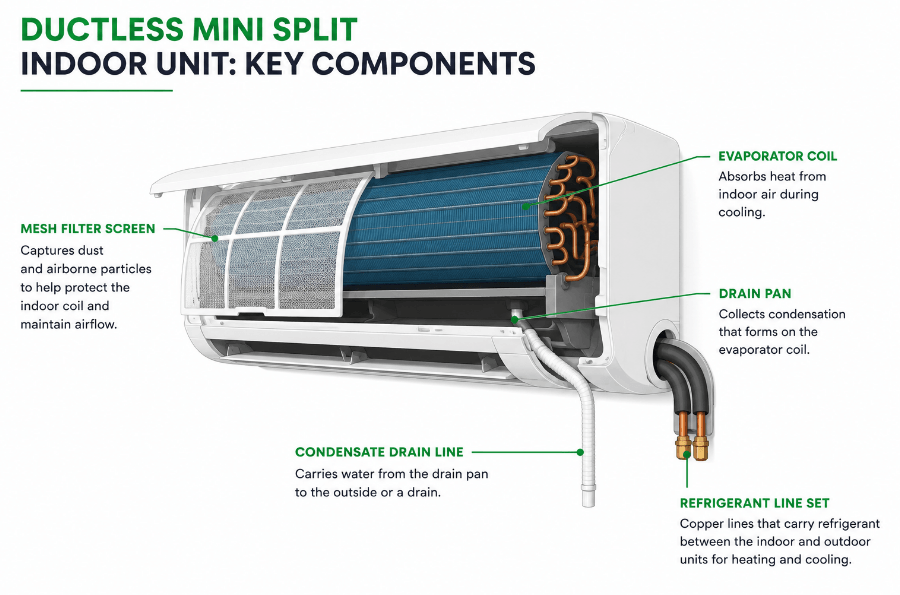
- Call soon — gurgling in cooling weather. That is a clogged condensate drain, and water can back up into the wall.
- Stop now — steady electrical buzz, grinding or squealing, continuous hiss. Power off and call a licensed technician.

Not sure which sound you have? Answer 3 quick questions and we’ll point you to the likely cause and your next step.
Replacing the system rather than repairing it?
Filterbuy mini splits are single-zone, 12,000 to 24,000 BTU, with free 2-day delivery. Professional installation is required, and the warranty is void if self-installed.
Where this guide comes from
Filterbuy, a U.S. air filter manufacturer and HVAC company, sells ductless systems and services them through
Filterbuy HVAC
, so we see which noises become repair tickets and which are the machine doing its job. Built from manufacturer service documentation.
TL;DR
Some mini split noises are the system working properly; some mean shut it off now. Soft clicking, trickling water, and a low whoosh are ordinary refrigerant and condensate sounds. Loud buzzing, grinding, and continuous hissing point to an electrical fault, failing motor, or refrigerant leak.
Why Is My Mini Split Making Noise?
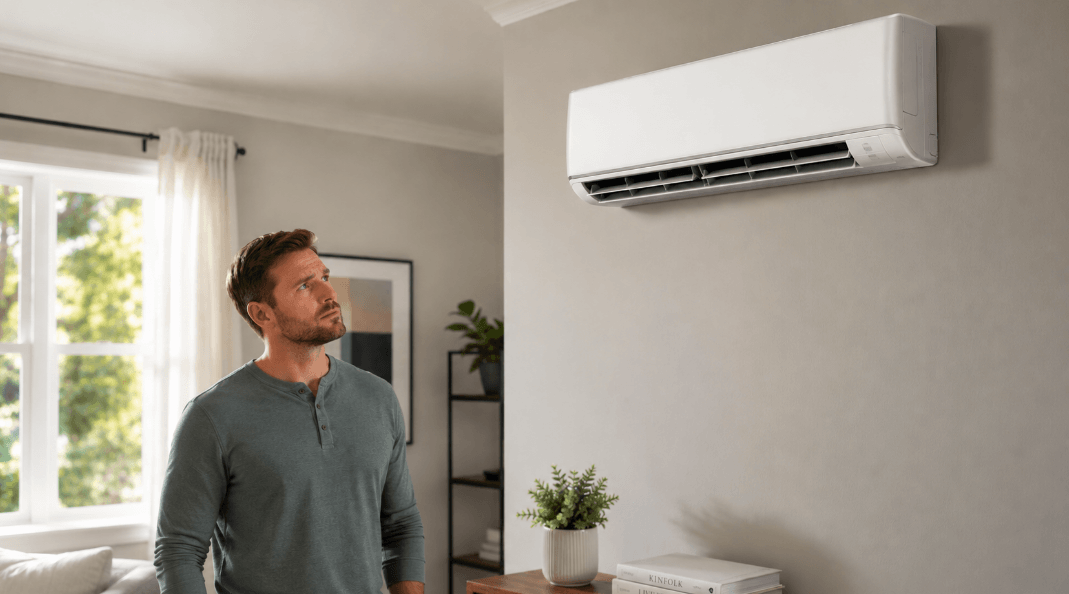
A mini split makes noise for one of two reasons: normal refrigerant movement and thermal expansion, or a fault. Because a ductless minisplit heat pump is an outdoor compressor connected to an indoor head, nearly every sound comes from one of those parts. Indoor heads run from the high 20s to the mid 40s in decibels depending on fan speed, so anything audible over a conversation is worth checking.
Key Takeaways
Soft clicking and popping are normal. Mitsubishi Electric documents that plastic hairpin clips pop on and off the coil as it expands.
Gurgling means two things by season. In winter it is the defrost cycle; in summer, usually a clogged condensate drain.
A dirty filter screen is the most common cause of new noise. On a ductless head that is a washable screen you rinse every two to four weeks, not a filter you replace.
Continuous hissing, loud buzzing, and grinding are stop-now sounds. Shut the system off and call a pro.
Mini Split Noise Chart: What Each Sound Means
Each sound maps to a cause and an urgency level.
Timing narrows the diagnosis further. Note whether the sound happens at startup only, constantly, or only in one season before you call for service.
Two sounds here carry a real cost if ignored: a blocked drain sends water into the wall, and a refrigerant leak ends in a failed compressor. Rattling is the friendliest; grinding is the opposite, and Daikin advises shutting the system off. See our maintenance schedule.
Two Tests That Narrow It Down Fast
Two free checks rule out most of it.
Test 1: Confirm it is the mini split
Cut power at the breaker and listen for thirty seconds. Plenty of sounds blamed on a mini split turn out to be a refrigerator, a bath fan, shared-wall plumbing, or a neighbor’s condenser. On a multi-zone system, switch every head off and restore them one at a time. Knowing the zone before the technician arrives saves billable time.
Test 2: Cycle the fan speeds
Set it to cool, step the fan from low to high, and listen.
Run the fan through every speed before you decide. Airflow noise scales with fan speed; refrigerant and electrical noise does not.
Normal Mini Split Sounds You Can Ignore
Most mini split noise is the machine doing its job. Daikin's guidance lists water-like flowing during cooling, a blowing sound when refrigerant switches direction, ticking as the cabinet expands, and control-valve clicking as normal.
Mitsubishi Electric explains the clicking: its Ductless Split Sounds bulletin notes that plastic hairpin clips pop on and off the coil as it expands.
Normal sounds are soft, brief, and tied to a moment. Problem sounds are loud, continuous, or worsening.
Mini Split Buzzing Noise: Usually Electrical
A steady buzz usually means an electrical problem. Loose wiring, a failing capacitor, or a contactor drawing irregular current all produce a persistent hum, most often from the outdoor condenser. Unlike a rattle, it will not resolve by tightening a screw.
Rule out two look-alikes: an unsecured line set vibrating against framing, and a condensate pump buzzing as it cycles. Anything genuinely electrical belongs to a pro.
Ductless AC Dripping Sound or Water Noise: Timing Is the Diagnosis
Water sounds are normal about half the time. What matters is when.
A mini split produces almost no condensate in heat mode, so water sounds in winter are usually refrigerant, not drainage.
In cooling weather, the coil pulls moisture from the air and drains it to a pan, so a faint trickle is expected. Loud gurgling is a different matter, and usually means algae has partly blocked the line, so you are hearing air push through standing water.
In cold weather, gurgling usually means the defrost cycle. If it runs constantly rather than in cycles, have the charge checked. See mini splits in cold weather.
A third cause goes almost unmentioned. Mitsubishi Electric documents burbling when outside air enters the drain hose because the building is under negative pressure. If gurgling starts when a range hood runs, the drain line is fine and room pressure is the cause.
When the Noise Traces Back to Installation
A mini split noisy since installation day usually has an installation problem, not a broken part. Each item below is a Mitsubishi Electric requirement.
Line set under 16 feet carries compressor noise indoors.
Indoor head not flat or secure vibrates and buzzes.
Wall penetration unsealed transfers sound into the structure.
Line set coiled vertically traps oil, producing compressor noise.
Outdoor unit boxed in amplifies condenser noise.
Source: Mitsubishi Electric, How It Works: Ductless Split Sounds. Each item is an installer correction, not a homeowner repair.
The 16-foot minimum surprises most homeowners. Our guide to vetting an installer covers credentials.
Hissing or Whistling: Stop and Call a Professional
A continuous hiss or whistle usually means refrigerant is escaping, typically at a flare fitting. Brief hissing at startup is refrigerant moving through the expansion valve.
Continuous hissing plus weak cooling or heating usually means a leak. Refrigerant loss forces the compressor against the wrong pressures, and a failed compressor is the most expensive ductless repair there is. Shut it off, ventilate, and call a pro. Under the Clean Air Act, anyone adding or removing refrigerant from a mini split must hold EPA Section 608 certification.
The 5-Minute Mini Split Noise Triage
Six checks, five minutes, free.
Run the two tests above.
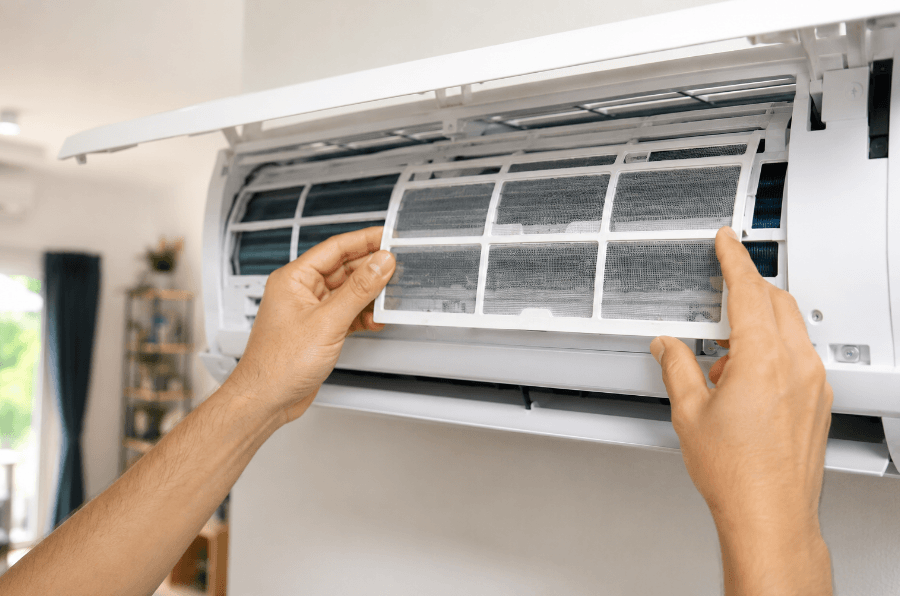
Rinse the filter screens every two to four weeks. Vacuum, wash, dry fully, reinstall.
Check the outdoor unit. Clear debris, confirm it is level.
Tighten what is visible. Reseat the cover, check screws.
Check the drain line. It should drip outside during cooling. Nothing coming out means it is blocked; a vinegar flush clears early clogs.
Check for an error code. Many faults show before they get loud.
One honest note on filters
Filterbuy sells air filters, and we will still tell you plainly: a ductless head does not take one. The pre-filter is a washable screen that protects the coil; your whole-home filter does the heavy lifting for air quality. See how
mini splits affect indoor air quality
.
When to Call a Licensed HVAC Technician
Call a pro for electrical buzzing, grinding or squealing, continuous hissing with weak performance, gurgling that persists after the drain is cleared, or any noise under warranty.
Note these before calling. Diagnostic time is billable:
When: startup, shutdown, constant, seasonal
Whether it changes with fan speed
Which head, if multi-zone
Any error code or blink pattern
Whether the drain drips outside
Filterbuy puts a routine tune-up at roughly $150 to $350, so a call that ends in a dirty screen is an expensive way to learn you needed five minutes with a hose. Our guide to finding an installer covers vetting.
Filterbuy mini splits are single-zone. Professional installation is required, and the warranty is void if self-installed.
Supporting Statistics
45 dB indoors is the level EPA identifies as preventing annoyance and activity interference, restated by NIOSH as protecting 96% of the population. Indoor heads run from the high 20s at low fan to the mid 40s at high, so a unit you can hear over a conversation has crossed that line.
Water-damaged materials must be dried within 24 to 48 hours, per EPA. That window is why a blocked drain is ranked Call Soon.
A clean filter cuts air conditioner energy use by 5% to 15%, per DOE. That restriction also produces the whine and icing behind many water noises.
Frequently Asked Questions
Glossary
Mini split: A ductless heat pump, also called a ductless AC, with indoor heads and an outdoor condenser.
Condensate drain line: The tube carrying water formed on the coil out to the exterior.
Line set: The insulated copper tubing between the units. Its flare fittings are the most common leak point.
Decibel (dB): The unit of sound level; the scale is logarithmic, so 10 dB sounds twice as loud.
MERV: The rating scale for replaceable filters. A ductless pre-filter has none.
Sources & References
Filterbuy is not affiliated with or endorsed by Mitsubishi Electric or Daikin. Their published service documentation is cited here as technical reference.