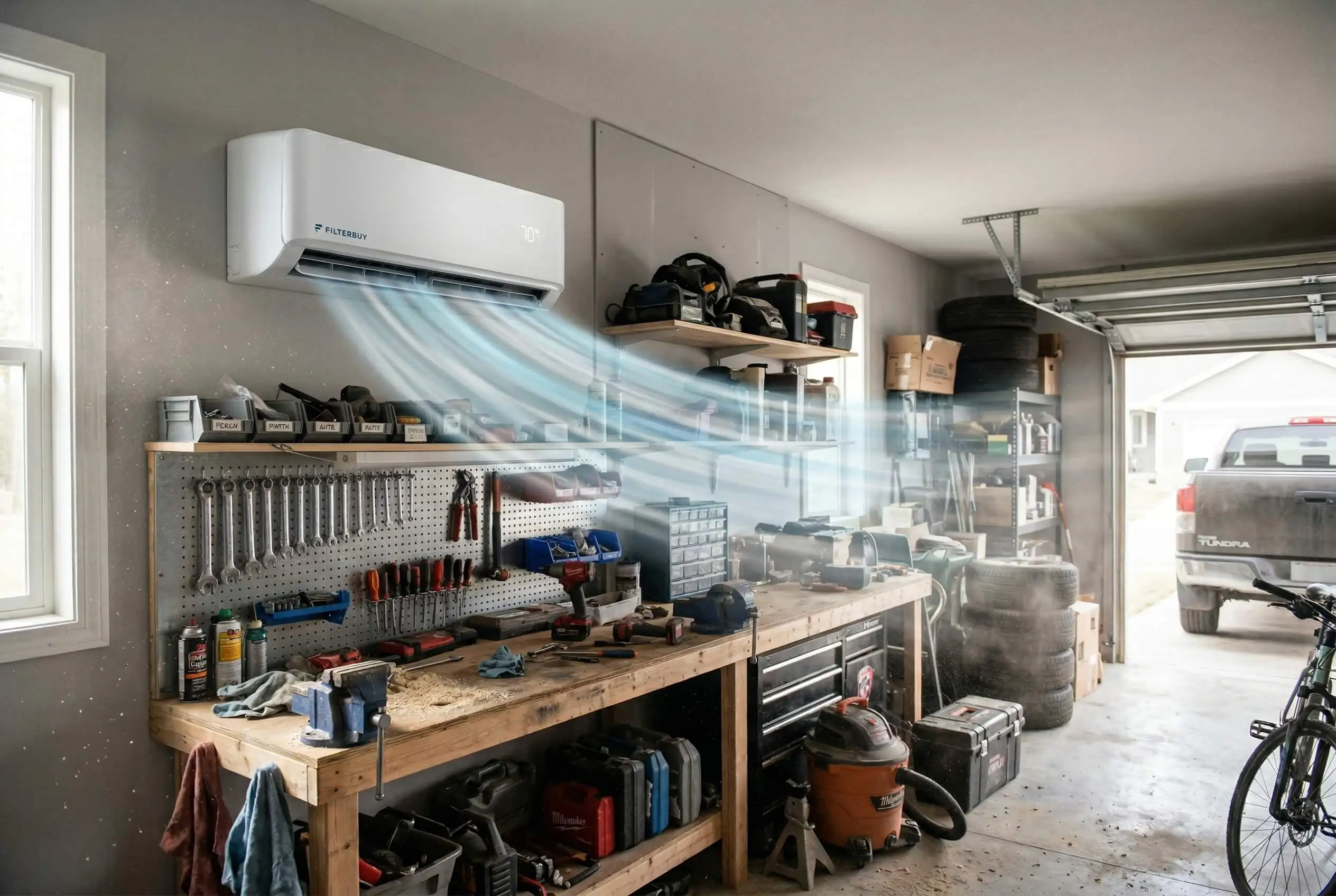
Best Mini Split AC for Garage (Complete Buyer’s Guide)
Garage Climate Control
A Garage Isn't A Bedroom. Size Your Mini Split For The Difference.
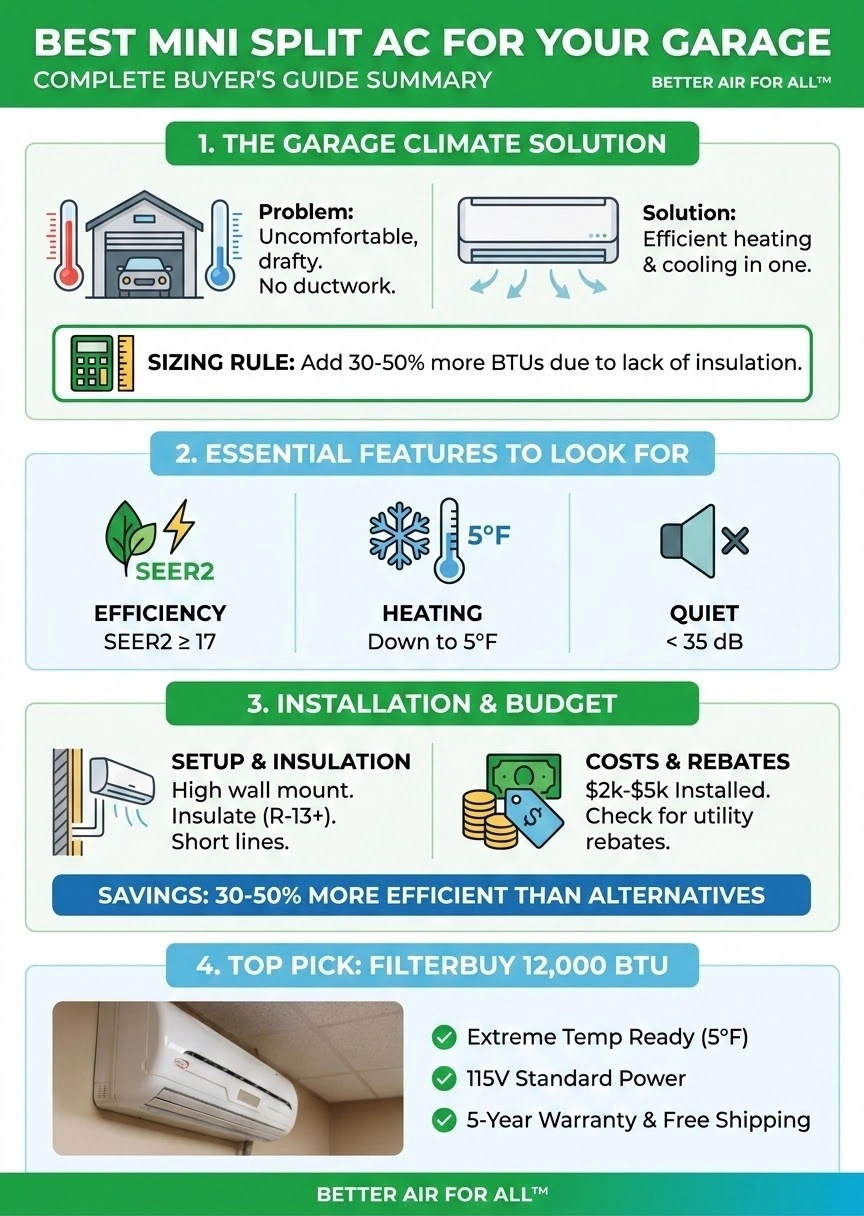
Concrete floors, drafty doors, and uninsulated walls make a garage 30% to 50% harder to heat and cool than an interior room. Match the BTU to those real conditions and a ductless mini split keeps your workshop, gym, or studio comfortable all year, with no ductwork to add.
- SEER 17 Variable Speed
- Heats Down To 5°F
- 7-Yr Compressor / 3-Yr Parts Warranty
- Free 2-Day Delivery

Not Sure Which Size Fits? Find Out In About A Minute.
Answer a few quick questions about your space and we will point you to the right mini split for your garage.
Transforming your garage into a workspace, gym, or hobby room is a great way to add usable space to your home. The problem? Most garages lack heating and cooling, making them uncomfortably cold in the winter and sweltering in the summer. To use your garage year-round, you need a reliable climate control solution.
A ductless mini split AC unit is the best option for most garages. These systems are efficient, quiet, and much easier to install than extending your home's existing ductwork. However, choosing the right mini split for a garage isn't straightforward. Garages have unique heating and cooling needs, so standard sizing rules don't always work.
This guide will help you choose the best mini split for your garage. It'll cover everything from calculating the right size (BTU) to essential features, installation tips, and costs. By the end, you'll have a clear recommendation to help you buy with confidence and start enjoying your comfortable new space.
Key Takeaways
Garages Require Special Considerations: Garages have unique heating and cooling needs, so standard mini split sizing methods may not apply. Proper evaluation of your space is crucial.
BTU Sizing is Critical: Calculating the correct BTU capacity ensures efficient operation and optimal comfort in your garage.
Features to Look For: Energy efficiency, smart controls, and the ability to handle extreme temperatures are key features to consider when selecting a mini split for a garage.
Installation Matters: Proper installation is essential for maximizing performance and longevity of your mini split system.
Budget Wisely: Understand the upfront and ongoing costs to ensure you choose a solution that fits your needs without overspending.
Why Mini Splits Are the Best AC Option for Garages
When deciding how to cool a garage, homeowners usually compare window units, portable air conditioners, and mini splits. A mini split AC system for garage environments consistently wins out for a few crucial reasons.
First, there is no ductwork needed. Extending your home's central air into the garage is expensive and often violates local building codes because it risks pulling dangerous exhaust fumes into your living space. A ductless system avoids this problem entirely.
Second, mini splits handle extreme temperatures significantly better than window units. Standard garages leak a lot of air. Mini splits provide robust, consistent airflow that can rapidly cool down or heat up these drafty spaces. Because they offer heating and cooling in one system, you do not need to buy a separate space heater for the winter.
Finally, they offer superior energy efficiency. Based on standard HVAC sizing practices, upgrading to a ductless mini split can be 30–50% more efficient than running a traditional window unit or electric baseboard heater. This translates directly to lower monthly utility bills.
What Size Mini Split Do You Need for Your Garage?
Choosing the right size is the most critical step in this process. AC capacity is measured in BTUs (British Thermal Units). If you buy a unit that is too small, it will run constantly and fail to cool the room. If it is too large, it will short-cycle, leaving the air feeling cold but clammy.
Because garages usually lack the insulation found in interior bedrooms, you cannot rely on standard room sizing charts. Below is a garage mini split sizing chart adjusted for typical garage conditions.
| Garage Type | Sq Ft | Recommended BTU | Adjusted BTU (Garage Conditions) |
|---|---|---|---|
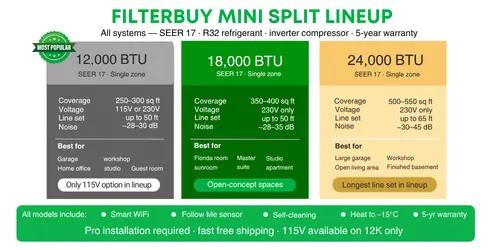
| 1-Car | ~240 | 9,000 | 12,000–18,000 |
| 2-Car | 400–500 | 12,000 | 18,000–24,000 |
| 3-Car | 600+ | 18,000 | 24,000–36,000+ |
The 30–50% Rule
Based on Manual J guidelines—the HVAC industry standard for load calculations—garages require special treatment. As a general rule of thumb, you should increase your required BTUs by 30% to 50% compared to a standard indoor room.
You should lean toward the higher end of that adjustment if your garage has poor insulation, uninsulated garage doors, or high ceilings that trap hot air. You also need a larger unit if you live in an exceptionally hot climate where summer temperatures routinely exceed 90 degrees Fahrenheit.
Quick Sizing Example
Let us look at a real-world scenario. Suppose you want to figure out the right 2 car garage mini split size. A standard two-car garage is about 400 square feet. Inside a well-insulated home, a 12,000 BTU unit would handle 400 square feet perfectly.
However, because this is a garage with a concrete slab floor, high ceilings, and an uninsulated metal door, you need to apply the 30–50% rule. Upsizing to an 18,000 or even 24,000 BTU system will ensure the space stays comfortable during a heatwave.
Key Features to Look for in a Garage Mini Split
Not all ductless systems are created equal. When shopping for a mini split garage AC unit, keep an eye out for these specific features to ensure long-term performance.
SEER2 Rating (Efficiency)
SEER2 (Seasonal Energy Efficiency Ratio 2) is the updated standard for measuring how efficiently an air conditioner operates. The higher the SEER2 rating, the less electricity the unit consumes to cool your space. For a garage setup, look for a SEER2 rating of at least 17 to ensure your energy bills remain manageable, especially if you plan to use the space daily.
Heating Capability (Cold Weather Use)
One of the main reasons to choose a ductless system is year-round comfort. If you plan to use your garage as a workshop during the winter, verify the unit's low-ambient heating capability. The best systems feature heat pumps that can pull warmth from the outside air even when temperatures drop down to 5°F or lower.
Voltage Compatibility (115V vs 230V)
Mini splits generally come in either 115V or 230V configurations. Many smaller units 12,000 BTUs can plug directly into a standard 115V outlet, making them easier to install. Larger units typically require a dedicated 230V circuit. Check your electrical panel to see if you already have a 240V outlet available or if you need to hire an electrician to run a new line.
Noise Levels
If your garage doubles as a home office, gym, or recording studio, noise is a major factor. Standard window units are notoriously loud and disruptive. Ductless AC systems place the noisy compressor outside, leaving only the quiet air handler indoors. Check the decibel (dB) rating of the indoor unit; anything under 35 dB will easily fade into the background.
Installation Considerations for Garages
A proper ductless AC for garage install requires some planning. Where you place the equipment heavily impacts its efficiency.
Indoor Unit Placement
Mount the indoor air handler high on an exterior wall to allow for optimal airflow. Keep it away from the direct path of the garage door. Every time you open the large door, a massive rush of hot or cold air enters the space. If the unit is positioned directly above the door, its sensors will get confused, causing the system to overwork.
Line Set Routing
The indoor and outdoor units connect via a bundle of copper pipes and wires called a line set. Keep the distance between the two units as short as possible. Shorter line sets mean less work for the compressor, resulting in better energy efficiency and cooling performance.
Electrical Requirements
Before purchasing a unit, evaluate your electrical panel. Garages often run power-hungry tools, air compressors, or electric vehicle chargers. Adding a mini split might overload an older subpanel.
Consult a licensed HVAC professional or electrician to ensure your home can safely support the new electrical load before beginning any installation.
Single-Zone vs Multi-Zone: What’s Best for a Garage?
Mini splits come in single-zone (one outdoor unit connected to one indoor unit) and multi-zone (one outdoor unit connected to multiple indoor units) configurations.
For the vast majority of homeowners, a single-zone system is the best mini split ac for a garage. It provides plenty of centralized airflow for an open-concept space. You only need to consider a multi-zone system if you have a massive, partitioned workshop or a detached garage with separate enclosed rooms.
Do You Need to Insulate Your Garage First?
Yes. While a powerful mini split can cool an uninsulated garage, you will pay a steep price in energy bills. Insulation is the biggest performance factor for any HVAC system.
Before installing your new AC, you should ideally insulate the walls to a minimum of R-13. You should also consider insulating the ceiling and upgrading your garage door to an insulated model. Trapping the conditioned air inside will allow your mini split to run less frequently, extending the life of the compressor and saving you money every month.
Best Mini Split AC for Garage (Top Recommendation)
If you want the best balance of performance, simplicity, and value, the Filterbuy 12,000 BTU Mini Split is our top recommendation for most 1-car and well-insulated 2-car garages.
Filterbuy 12,000 BTU Mini Split
This system takes the guesswork out of garage climate control. It handles extreme temperatures beautifully, offering reliable heating down to 5°F to keep your winter workshop cozy. It features 115V compatibility, which simplifies the electrical setup for many standard garages.
Backed by a robust 7-year compressor , it offers serious peace of mind.
How Much Does a Mini Split for a Garage Cost?
Budgeting for a garage mini split involves calculating both the equipment and the labor.
Unit Cost: $800–$3,500 (depending on brand, SEER2 rating, and BTU capacity).
Installation Cost: $1,000–$2,000.
Total Typical Cost: $2,000–$5,000.
Ways to Save
You can offset some of these upfront costs by checking for local energy rebates. Many utility companies offer incentives for upgrading to high-efficiency SEER2 heat pumps. Additionally, some homeowners opt for DIY-friendly systems that come with pre-charged line sets to save on professional installation costs, though hiring a pro ensures warranty compliance and optimal performance.
Common Mistakes to Avoid
Undersizing the unit: Relying on standard room calculators instead of a garage mini split sizing chart will leave you sweating.
Skipping insulation: Forcing your new AC to battle a drafty metal garage door is a recipe for high energy bills.
Ignoring electrical needs: Buying a 230V system without checking your electrical panel can lead to expensive surprise electrician bills.
Buying based on price only: Cheap units often lack the cold-weather heating capabilities required for year-round garage use.
Transform Your Garage Into a Comfortable Space With Filterbuy
Stop letting weather dictate how you use your home. Adding climate control to your garage opens up a world of possibilities for home gyms, workshops, and extra storage.
By selecting the right BTU capacity, insulating your walls, and picking an efficient SEER2 rated model, like that from Filterbuy, will help you create a comfortable environment all year long.
Ready to take the next step? Find the right size mini split for your garage and shop garage-ready mini split systems to unlock your property's full potential today.
Frequently Asked Questions