
Richmond, VA Live Wildfire Smoke Map
Get Alerts For Wildfires In Your Area
The moment a wildfire starts near you, you'll get an instant alert and simple tips to reduce your smoke exposure.
What's In The Smoke
30xSmaller than a human hair
Fine enough to reach deep into the lungs. A MERV 13 is built to capture it.
How Far It Travels


It Doesn't Stay Local
Smoke rides the wind far downwind — you can get smoky air with no fire nearby.
What To Do During A Smoke Event
Simple steps to reduce indoor exposure.
- Stay In, Close UpShut windows and doors to keep smoke out.
- Set Fan To "On"Keeps air cycling through your filter, not just when heating or cooling.
- Recirculate AirSwitch off fresh-air intake so you're not pulling smoke in.
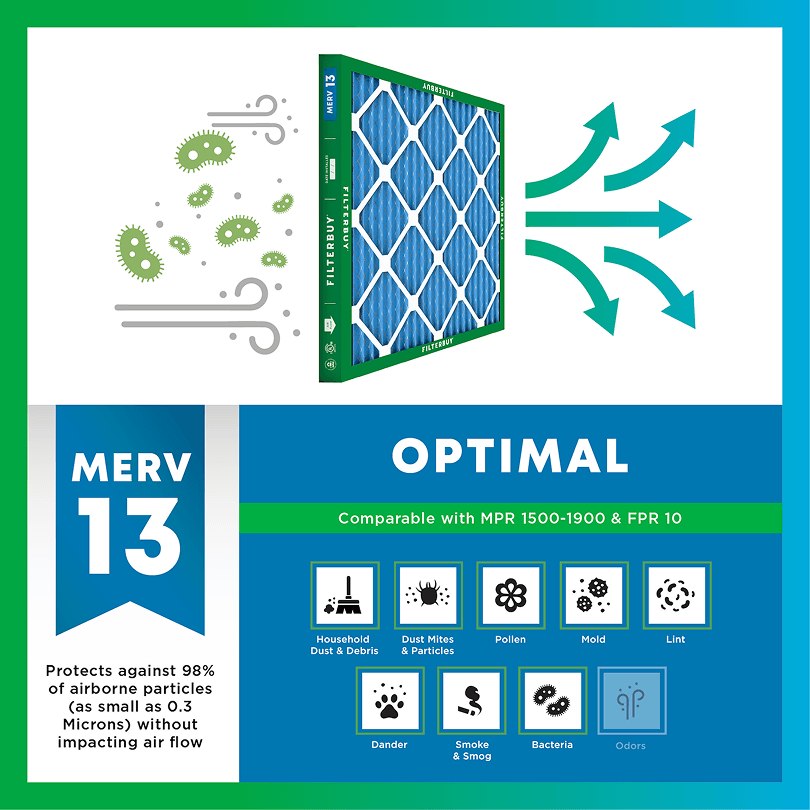
- Run A MERV 13Built to capture the fine PM2.5 in smoke.
- Add A PurifierExtra filtration for the room you use most.
- Wear an N95 if OutsideFits snug to block fine particles — a cloth mask won't.


The Best Air Filter For Wildfire Smoke
During smoke events, the EPA recommends upgrading to a MERV 13 filter — or the highest-rated filter your system can handle — to help reduce the fine particles smoke brings indoors. MERV 13 is the level most home HVAC systems can run while still capturing PM2.5, the fine particulate that makes up the bulk of wildfire smoke.
- Captures PM2.5 particles
- Blocks ash, soot, and smoke odor
- Keeps your indoor air safe—even when the outdoor air is dangerous
- Meets the EPA's recommended rating for filtering fine wildfire smoke particles.

Wildfire Smoke FAQs
Facts About Wildfires
Over 70,000 wildfires burn in the U.S. every year.
Wildfire smoke can travel 1,000+ miles, affecting states that aren't even near the blaze.
Exposure to wildfire smoke can worsen asthma, trigger heart issues, and lead to ER visits.
Indoor air can hold more fine particles during wildfire events unless it's properly filtered.
The EPA advises using MERV 13 filters or portable HEPA air cleaners during wildfire smoke events.
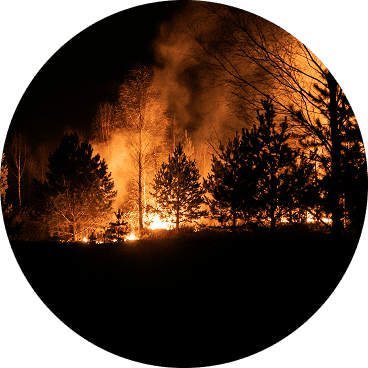
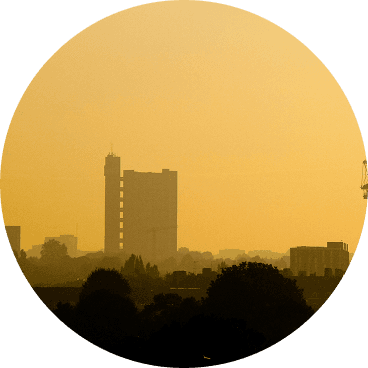
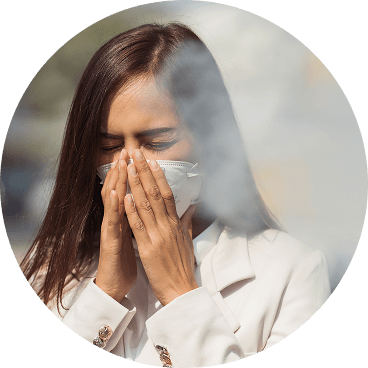
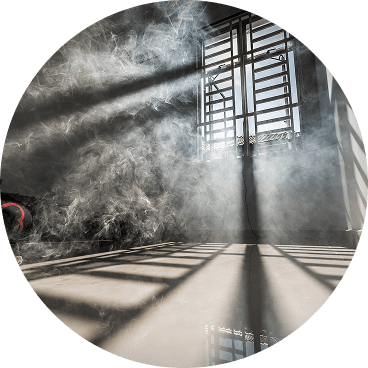
Don't Wait Until The Smoke's Inside.
Use the live wildfire smoke tracker and upgrade your air filters today to protect your lungs and your home.
Shop Filters For Smoke Protection
Live Richmond, VA Forest Wildfire & Smoke Map Today: Local Air Quality Tracking & Indoor Protection Solutions From Filterbuy.com’s Air Obsessed Experts
By Michelle Wan · Technically reviewed by David Clark, Licensed HVAC Technician · Published August 16, 2026 · Updated August 16, 2026
TL;DR
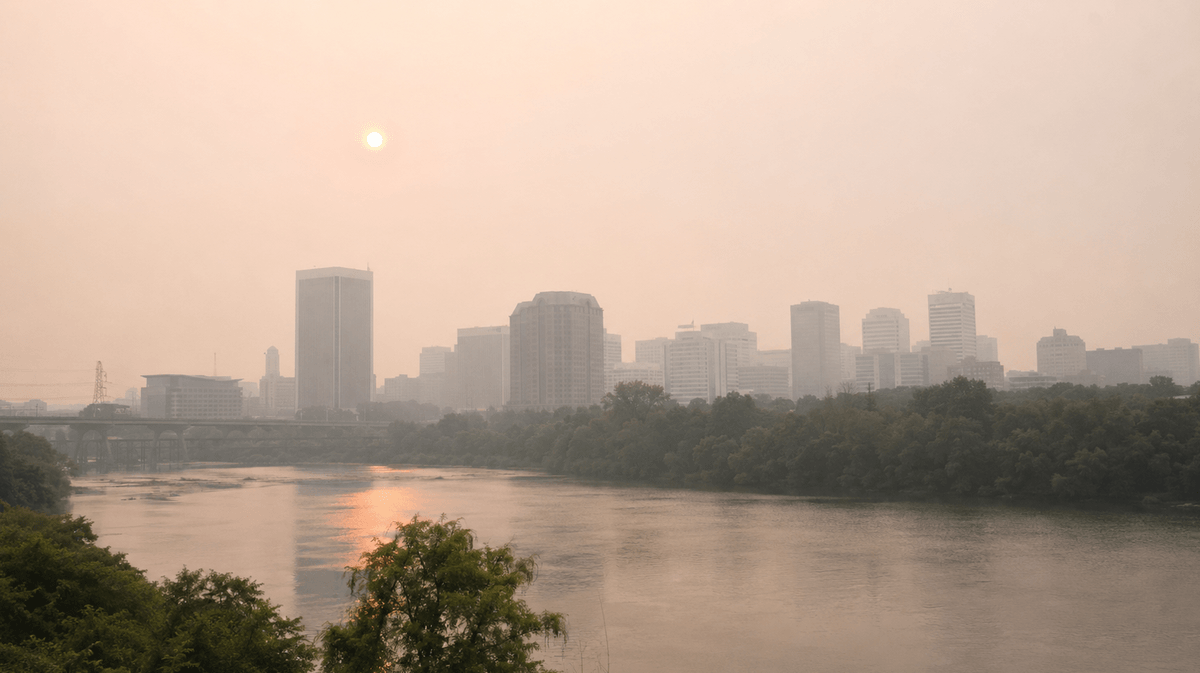
Richmond, Virginia, rarely has a large forest wildfire inside city limits, and yet it gets smoke anyway, carried in on winds from fires hundreds of miles away. The map above shows where fires are burning, what the air measures near you, and where smoke is drifting next. When Virginia DEQ posts Code Orange or worse, close the house up, switch the HVAC fan to On, and get a MERV 13 filter in the slot.
Key Takeaways
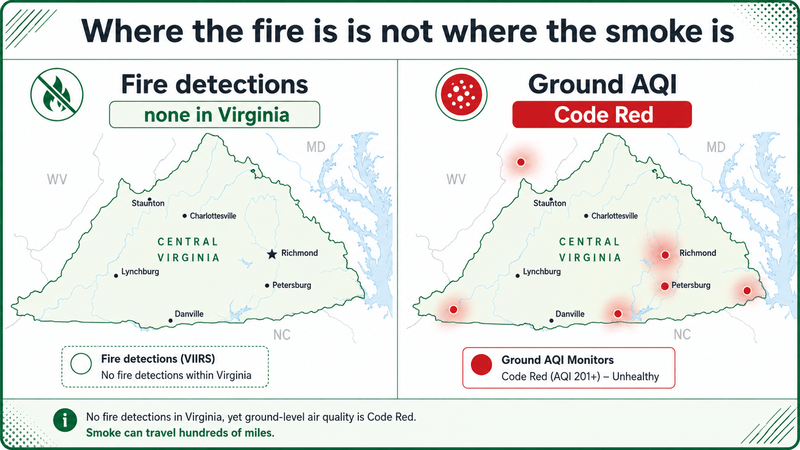
The AQI number matters more than the fire icons. Richmond air can turn unhealthy with no fire on the map.
Canadian smoke is Richmond’s most common summer source. On July 16–17, 2026, Virginia DEQ moved Richmond from Code Orange to Code Red and forecast Code Purple downtown.
Escaped debris burning is Virginia’s leading cause of wildfire, which is why the 4 PM Burning Law runs from Feb 15 to Apr 30.
MERV 13 is the rating EPA points to for smoke, because smoke is mostly PM2.5, the particles MERV 8 and MERV 11 let through.
Not every hazy Code Orange day is smoke. Ozone produces the same alert, and no filter removes it.
What Is the Live Richmond Wildfire and Smoke Map Showing?
Three data sets sit on this map, and each answers a different question. Satellite detections show where something hot is burning, ground monitors show what the air measures where people are standing, and plume outlines show where smoke is drifting next. Only the monitor reading tells you whether tonight is safe for open windows.
Smoke plumes are off by default, so open the settings icon and toggle on NOAA Smoke Plumes. Then check the AQI number first, the smoke forecast second, and the fire icons last. Hotspots in Quebec are not an emergency until PM2.5 climbs at a Richmond monitor, and Virginia DEQ reads those from Shirley Plantation, the MathScience Innovation Center, and Beach Road VDOT.
Where Does the Smoke Over Richmond Come From?
Richmond’s smoke is mostly imported. Central Virginia sits downwind of both the Canadian boreal forest and the Appalachian ridgeline, while local fire risk peaks in spring and fall rather than midsummer, so three sources account for nearly every smoky day here.
Both of Richmond’s worst recent smoke events, June 2023 and July 2026, were driven by fires in Canada, and neither involved a wildfire burning near Richmond. That is why Filterbuy puts the AQI reading above the fire icons: the fire layer can sit empty across Virginia on the very day your air is the worst it has been all year.
The households that ride out a smoke week comfortably seldom decided anything during the smoke week. They put a MERV 13 in before fire season, and their only job in July was to close the windows. The people writing to us mid-event are shopping for a filter with the problem already inside the house. You make that decision in May, not August.
Michelle Wan, indoor air quality writer, Filterbuy
What Does Today’s AQI Color Mean for Your Household?
Virginia DEQ issues Richmond alerts on the federal AQI scale: Green runs 0 to 50, Yellow 51 to 100, Orange 101 to 150, Red 151 to 200, Purple 201 to 300, and Maroon above 300. Each band calls for a different action inside the house.
Health guidance follows the U.S. EPA and the Virginia Department of Health. If someone in your household has a lung or heart condition, their doctor's instructions come first.
Is It Smoke, or Is It Ozone? Richmond Gets Both
Not every Code Orange in Richmond is wildfire smoke. Virginia DEQ logged ozone exceedances in 2026 on June 5 and again on July 17, the second falling on the same day Canadian smoke pushed the region into Code Red. Ozone and PM2.5 come from different sources, and one of them your filter cannot touch.
Smoke you can usually smell, and the sky turns milky white or orange. The pollutant is PM2.5, which a MERV 13 filter captures.
Ozone carries no smell and no haze at all. It forms on hot, stagnant afternoons out of vehicle and industrial emissions, peaks mid-afternoon, and drops after sunset. An HVAC filter does not remove ozone, so shift outdoor activity to the morning and keep windows shut through the afternoon heat.
Filterbuy would rather say a filter makes no difference than sell you one that cannot, so check which pollutant is driving the number before you act. The DEQ forecast names it, and for plain AQI you can use our live Richmond, VA air quality map.
How Do You Keep Wildfire Smoke Out of a Richmond Home?
Seal the house, recirculate the air, then filter it continuously. That is the order EPA recommends, and the whole routine takes about fifteen minutes. The step people skip is usually the fan setting, because it is the only one that costs nothing and shows nothing.
Close every window, exterior door, and the fireplace damper, and towel the door gaps.
Set the HVAC to recirculate and close any fresh-air intake.
Move the thermostat fan from Auto to On, since on Auto the filter only runs during cooling cycles.
Put a MERV 13 filter in the slot, or the highest rating your system safely accepts. For an odd opening, Filterbuy builds custom sizes.
Set up one clean room, usually the bedroom, with a portable HEPA air cleaner, which EPA credits with cutting indoor particles by as much as 85%. Avoid ozone generators.
Stop adding smoke of your own, so no candles, gas-stove frying, or vacuuming.
When the air improves, air out the house during the break, replace the loaded filter even if it feels early, and check the map before evening, because plumes come back with wind shifts.
Which Filter Rating Actually Captures Wildfire Smoke?
MERV 13 is the lowest rating that reliably captures wildfire smoke, because smoke is dominated by PM2.5, the fine particles you cannot see. After a decade of building filters in Filterbuy’s U.S. plants, the failure we see most is not a bad filter but a good one bought too late.
Heavy smoke loads a MERV 13 in 30 to 60 days rather than the usual 90, so auto-delivery keeps a spare on hand. Shop Filterbuy MERV 13 filters.
The mistake I see most often during smoke season is a homeowner dropping a 1-inch MERV 13 into a system that was never sized for it. Check your filter slot depth and have someone read static pressure across the coil. In a lot of older Richmond-area homes, a 4-inch media cabinet moves more clean air than a 1-inch panel ever will.
David Clark, Licensed HVAC Technician, technical reviewer for Filterbuy
Richmond Smoke by the Numbers
AQI 180 in downtown Richmond and Chesterfield County, and close to 200 in Henrico, on June 8, 2023, against a high-40s reading on the same date a year earlier. Virginia DEQ figures, as reported by WTVR CBS 6.
Virginia averages roughly 700 wildfires burning just under 9,500 acres a year, damaging or destroying more than 60 structures. Virginia Department of Forestry 10-year average.
A MERV 13–16 filter cuts indoor particles by as much as 95%, and moving the thermostat fan to On alone cuts them by as much as 24%. U.S. EPA Indoor Air Filtration factsheet, EPA-452/F-18-005.
Frequently Asked Questions
Get Ahead of the Next Smoke Day in Richmond
The worst time to shop for a filter is the morning the sky turns orange, which is exactly when most people do it. Check today’s number on our live Richmond, VA air quality map, then read about how to keep smoke out of your house. When you are ready, shop Filterbuy MERV 13 filters or build a custom size, backed by auto-delivery timed to fire season.
About the Author
Michelle Wan writes about indoor air quality and filtration for Filterbuy, which has built pleated air filters in the U.S. for over a decade and shipped to more than two million households, and she follows each fire season through what customers ask for and when. Technically reviewed by David Clark, Licensed HVAC Technician.
Glossary
PM2.5: Fine particles 2.5 micrometers or smaller; the dominant pollutant in wildfire smoke.
MERV: Minimum Efficiency Reporting Value, a 1–20 filter efficiency scale.
AQI: EPA 0–500 color-coded air quality scale.
Ozone: A gas pollutant formed in sunlight from vehicle and industrial emissions; not captured by air filters.
NOAA HMS: NOAA Hazard Mapping System, whose analysts confirm fire detections and draw the smoke plumes on the AirNow map.
Filterbuy: A U.S. air filter manufacturer building pleated HVAC filters domestically for over a decade, shipping factory-direct in 600+ sizes.
Subscribe to wildfire smoke alerts for Richmond, VA, to get a heads-up before the next event reaches your area.