
Modesto, CA Live Wildfire Smoke Map
Get Alerts For Wildfires In Your Area
The moment a wildfire starts near you, you'll get an instant alert and simple tips to reduce your smoke exposure.
What's In The Smoke
30xSmaller than a human hair
Fine enough to reach deep into the lungs. A MERV 13 is built to capture it.
How Far It Travels


It Doesn't Stay Local
Smoke rides the wind far downwind — you can get smoky air with no fire nearby.
What To Do During A Smoke Event
Simple steps to reduce indoor exposure.
- Stay In, Close UpShut windows and doors to keep smoke out.
- Set Fan To "On"Keeps air cycling through your filter, not just when heating or cooling.
- Recirculate AirSwitch off fresh-air intake so you're not pulling smoke in.
- Run A MERV 13Built to capture the fine PM2.5 in smoke.
- Add A PurifierExtra filtration for the room you use most.
- Wear an N95 if OutsideFits snug to block fine particles — a cloth mask won't.


The Best Air Filter For Wildfire Smoke
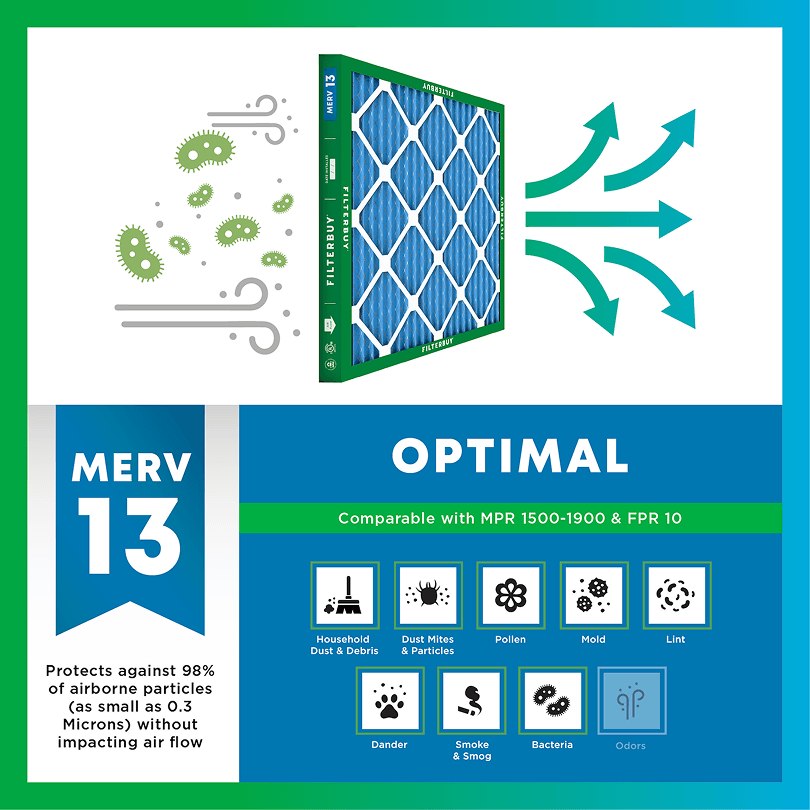
During smoke events, the EPA recommends upgrading to a MERV 13 filter — or the highest-rated filter your system can handle — to help reduce the fine particles smoke brings indoors. MERV 13 is the level most home HVAC systems can run while still capturing PM2.5, the fine particulate that makes up the bulk of wildfire smoke.
- Captures PM2.5 particles
- Blocks ash, soot, and smoke odor
- Keeps your indoor air safe—even when the outdoor air is dangerous
- Meets the EPA's recommended rating for filtering fine wildfire smoke particles.

Wildfire Smoke FAQs
Facts About Wildfires
Over 70,000 wildfires burn in the U.S. every year.
Wildfire smoke can travel 1,000+ miles, affecting states that aren't even near the blaze.
Exposure to wildfire smoke can worsen asthma, trigger heart issues, and lead to ER visits.
Indoor air can hold more fine particles during wildfire events unless it's properly filtered.
The EPA advises using MERV 13 filters or portable HEPA air cleaners during wildfire smoke events.
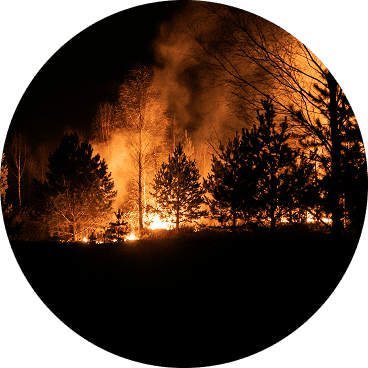
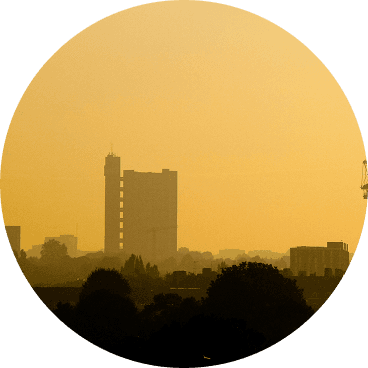
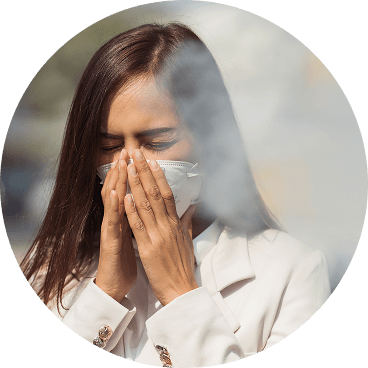
Don't Wait Until The Smoke's Inside.
Use the live wildfire smoke tracker and upgrade your air filters today to protect your lungs and your home.
Shop Filters For Smoke Protection
Live Modesto, CA Forest Wildfire & Smoke Map Today: Local Air Quality Tracking & Indoor Protection Solutions
By Michelle Wan · Technically reviewed by David Clark, Licensed HVAC Technician · Published August 22, 2026 · Updated August 22, 2026
TL;DR
Modesto sits at a pinch point between two fire-prone ranges, which is why smoke can settle over Stanislaus County on days when no fire burns anywhere near you. The live map below shows active fire perimeters, smoke plume coverage, and current air quality readings. Check the AQI first, then close your windows, switch your HVAC to recirculate, and put a clean MERV 13 filter in place.
Key Takeaways
Modesto is bracketed by two wildfire sources: the Sierra Nevada east and the Diablo Range west.
The valley inversion acts as a lid, holding smoke near ground level for days after the fire is contained.
PM2.5 is what drives wildfire smoke AQI readings in the Valley.
The EPA tightened the PM2.5 Good threshold in May 2024, so Modesto now reads Moderate more often.
The Valley Air District runs free Clean Air Centers and a free purifier program for qualifying households.
How To Read The Live Modesto Wildfire And Smoke Map Today
The live Modesto smoke map layers active fire perimeters, plume coverage, and ground monitor readings. The three are not interchangeable. The same layers drive the federal AirNow Fire and Smoke Map, which the EPA and the U.S. Forest Service build together. Fire location tells you where the smoke started, plume coverage tells you whether it is overhead, and the AQI tells you what to do about it indoors.
A plume over Modesto does not mean smoke has reached the ground. Satellite products detect smoke anywhere in the vertical column, including smoke riding thousands of feet overhead, where it dims the sun without changing what you breathe. The reverse happens just as often. Monitors can climb sharply on a morning with no visible plume, because the overnight inversion has pressed yesterday’s smoke into the lowest few hundred feet.
So if you take one thing from this page, make it this: trust the ground monitor over the plume graphic. The plume tells you what is coming, while the monitor tells you what you are breathing now, and only one of those should change what you do in the next hour.
Why Modesto Gets Wildfire Smoke From Fires You Cannot See
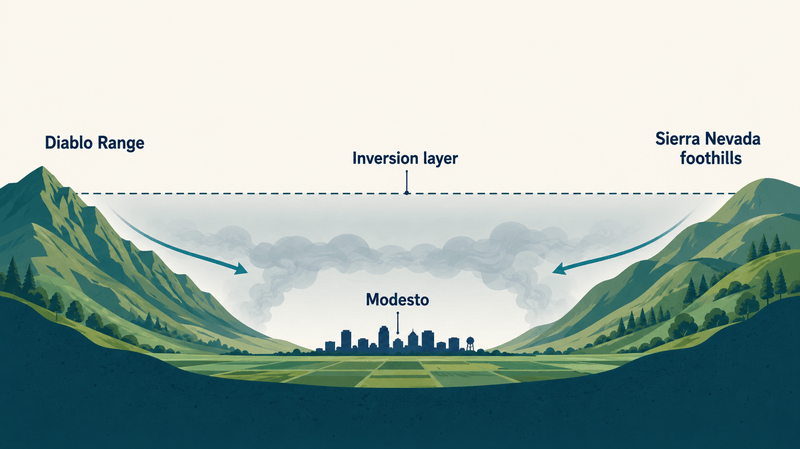
Modesto gets smoke from fires you cannot see because the city sits between two fire-prone ranges and because valley air stagnates. Smoke travels hundreds of miles before it settles, and an inversion then caps it near ground level, so a hazy sky usually traces back to a fire in another county.
The two sources sit on opposite sides of the city. To the east, the Sierra Nevada foothills climb toward the Stanislaus National Forest, and smoke funnels down the Stanislaus and Tuolumne river corridors onto the valley floor. To the west, the Diablo Range is no minor player. The 2020 SCU Lightning Complex burned 396,624 acres across it, with fire activity in Stanislaus County some 25 miles from downtown Modesto.
The Delta breeze adds a third variable that cities farther south do not share. Air from the Sacramento-San Joaquin Delta can scour the valley clean within hours, yet that same flow can carry Northern California smoke into Stanislaus County. In Modesto, wind is not reliably good news, which is why a live reading beats a forecast.
For how these dynamics play out farther south, see our live Fresno wildfire and smoke map.
What Today’s Modesto AQI Number Means For Your Household
Today’s Modesto AQI tells you two things: whether anyone in your household should limit time outdoors, and how hard your filtration needs to work indoors. During a smoke event, the number is almost always driven by PM2.5. The table below pairs each category with its range and the action that matches it.
PM2.5 concentrations are shown in micrograms per cubic meter. Breakpoints reflect the U.S. EPA Air Quality Index update effective May 6, 2024.
These breakpoints reflect the EPA update of May 6, 2024, which lowered the Good threshold from 12.0 to 9.0 micrograms per cubic meter. That change lands harder in the San Joaquin Valley than almost anywhere else, and here is the part we think gets missed.
Your First Hour Modesto Smoke Response Plan
When the AQI crosses 100, act within the first hour, because your home takes in outdoor air continuously and delay adds particle load. These steps follow District guidance on how to protect yourself from wildfire smoke, and they work best in order.
Close every window and exterior door, including any left cracked overnight.
Set your thermostat fan from Auto to On so it filters continuously, not just during a cooling cycle.
Switch your HVAC to recirculate and close any fresh air intake.
Confirm the filter in your return is clean and oriented with the airflow arrow toward the blower.
Choose one clean room, usually a bedroom, and add a portable air cleaner sized for it.
Skip anything that adds indoor particles: candles, gas cooking, frying, and vacuuming without a sealed filter.
Evaporative coolers are common across the Central Valley and among the most direct paths smoke has into a home. Under EPA clean room guidance, cover their outside air intakes with four-inch MERV 13 furnace filters during smoke events, or use the cooler sparingly.
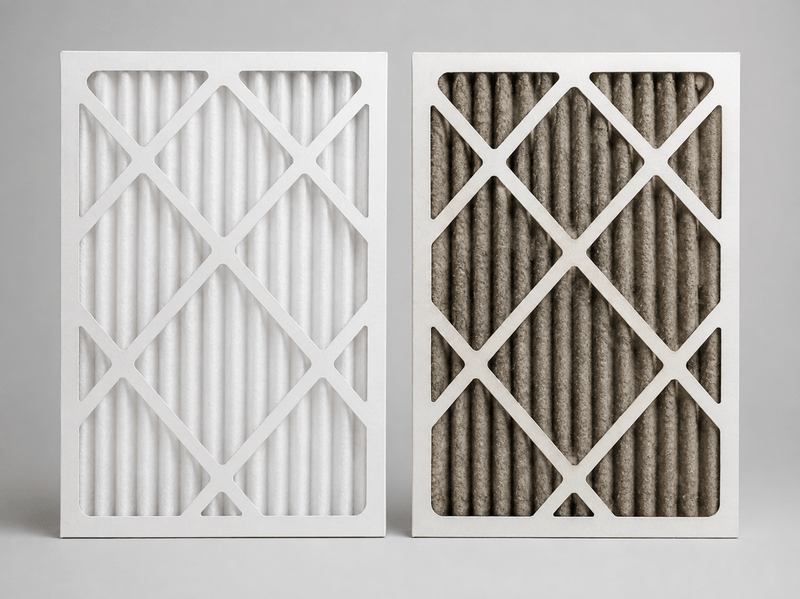
Choosing An HVAC Filter For Modesto Wildfire Smoke
Under EPA guidance on preparing for smoke and heat, a filter rated MERV 13 or higher is recommended during smoky periods, because that media is built to capture the fine particle fraction wildfire smoke is made of. Lower-rated filters handle household debris well but let smoke-sized particles through, which makes MERV 13 the practical target for most Modesto homes.
MERV, or Minimum Efficiency Reporting Value, rates how well a filter captures particles by size, and our breakdown of how MERV ratings are measured covers the full scale. MERV 8 handles dust, lint, and pollen, and MERV 11 adds finer capture for homes with pets or allergies. MERV 13 is the tier the EPA points to for smoke, though it is not True HEPA and was never meant to be, since HEPA media belongs in a sealed portable unit rather than a furnace slot. Our guide to MERV 13 versus HEPA for wildfire smoke covers how the two work together.
The EPA notes that most furnaces accommodate a MERV 13 filter without equipment problems, provided it is replaced frequently, and that a licensed technician can determine the highest-efficiency filter a system takes.
We manufacture Filterbuy pleated filters in Talladega, Alabama, so read this as a position with an interest attached. We still think MERV 13 is a ceiling for most Modesto systems, not a floor. A filter your blower cannot pull air through is worse than the lower-rated one already in the slot, because restricted airflow starves the system while smoke keeps arriving. Buy the highest rating your system supports, then stop.
Fit matters as much as rating, because a gap in the slot lets smoke bypass the media, so measure the filter you are replacing rather than the housing. Cadence shifts during smoke as well. A Filterbuy pleated filter is built for a 90-day service life, and sustained smoke can load one up in weeks. Our guidance on running an air purifier during wildfire season covers the portable side of the same plan.
Wildfire smoke is the clearest case for why filtration matters. Modesto families cannot control what the Sierra or the Diablo Range sends into the valley, but they can control what their HVAC system removes before it reaches a bedroom. We have been manufacturing filters for over a decade and serving more than two million households, and smoke season is when that work matters most.
David Heacock, Founder and CEO, Filterbuy
Supporting Statistics
The 2020 SCU Lightning Complex burned 396,624 acres across five counties, including Stanislaus, according to CAL FIRE’s SCU Lightning Complex incident record.
Asthma-associated emergency department visits ran 17 percent higher than expected across 19 wildfire smoke days in 2023, per the CDC syndromic surveillance analysis of asthma and wildfire smoke.
The threshold for Good air quality tightened from 12.0 to 9.0 micrograms per cubic meter of PM2.5 on May 6, 2024, as detailed in the EPA fact sheet on the particulate matter Air Quality Index update.
Frequently Asked Questions About Wildfire Smoke In Modesto
Get Your Modesto Home Ready Before The Next Smoke Event
Smoke reaches Modesto faster than a filter order does. Households that ride out an episode comfortably had the right filter in place before the sky turned amber. Check the size on your filter frame, confirm your system supports it, and put a clean MERV 13 pleated air filter in place now. If your return takes a non-standard opening, Filterbuy offers custom filters built to your exact dimensions, so a hard-to-fit system is no reason to go unprotected this season.
Glossary Of Modesto Air Quality And Wildfire Smoke Terms
AQI, or Air Quality Index. A U.S. EPA scale from 0 to 500 turning pollutant levels into one color-coded number, where lower means cleaner.
PM2.5. Fine particulate matter 2.5 micrometers or smaller. PM2.5 dominates wildfire smoke and reaches deep lung tissue.
MERV, or Minimum Efficiency Reporting Value. The standardized scale for how well an HVAC filter captures airborne particles by size.
Inversion. Warmer air sitting above cooler surface air, preventing vertical mixing. This is why smoke lingers over Modesto.
Valley Air District. The San Joaquin Valley Air Pollution Control District, covering eight counties including Stanislaus, with a Modesto office.
Subscribe to wildfire smoke alerts for Modesto, CA, to get a heads-up before the next event reaches your area.