
West Jordan Real-Time AQI Tracker


Get Alerts For Unhealthy AQI In Your Area
When air quality in your area reaches unhealthy levels, we'll send you a quick alert, along with expert tips on how to reduce your exposure.
What's Actually In West Jordan Air Today?
What High AQI Means for Your Lungs in West Jordan
How to Read AQI
The Air Quality Index (AQI) measures how polluted the air is and how it may affect your health.
0–50 (Good): Air quality is satisfactory.
51–100 (Moderate): Acceptable, but some pollutants may pose minor concerns.
101–150 (Unhealthy for Sensitive Groups)
151–200 (Unhealthy)
201–300 (Very Unhealthy)
301+ (Hazardous)
Moderate
Still okay for most, but if you have asthma or allergies, take it easy and avoid long outdoor workouts.
Shop MERV 11 filters→What's the Right Filter for Your AQI Level?


Check Today's Live Real Time Air Quality Index AQI Map in West Jordan, UT Now
TL;DR
Filterbuy's live map above shows West Jordan's current air quality index (AQI), updated throughout the day. Under 50 is Good, and past 100, sensitive groups should limit time outdoors. West Jordan's worst air comes from winter inversions, summer ozone, wildfire smoke and Great Salt Lake dust. When the map reaches 100, Filterbuy recommends four home steps: MERV 13 in the HVAC, the fan set to On, a portable HEPA air cleaner in each occupied room, and the house closed up.
Key Takeaways
No Utah DAQ regulatory monitor sits inside West Jordan. The closest is Copperview in Midvale, about 2.5 miles east of City Hall.
Fine particles (PM2.5) drive West Jordan's worst winter days during inversions, and ground-level ozone drives the worst summer days.
Utah DAQ burn restrictions cover all of Salt Lake County, usually from November 1 through March 1.
EPA recommends a filter rated MERV 13 or higher in a central HVAC system during smoke events. Filterbuy's rule is to switch to MERV 13 when the live map reaches 100.
West Jordan Air Quality Now: Reading the Live Map
The live map shows West Jordan's current AQI in real time, colored by EPA's six categories. Green and yellow are fine for most people, while orange and above tell children, older adults and anyone with heart or lung disease to cut back outdoors.
The map also names the pollutant behind the reading. PM2.5 (the tiny particles in inversion haze and smoke) calls for filtration indoors, while ozone mostly calls for timing outdoor plans, since it fades once windows are shut.
AQI Categories for West Jordan and What Each One Asks of You
Every West Jordan reading uses the U.S. Air Quality Index, which runs from 0 to 500. Category names and outdoor precautions follow EPA AirNow guidance, and the home steps are Filterbuy's recommendation.
Always follow the category shown on the live map above.
What to Do When West Jordan's AQI Reaches 100
When West Jordan's AQI reaches 100, Filterbuy recommends four home steps in this order. That threshold is our line, not EPA's. On the official scale, 100 is still the top of Moderate. Check AirNow's Fire and Smoke Map and Utah DAQ for local guidance first.
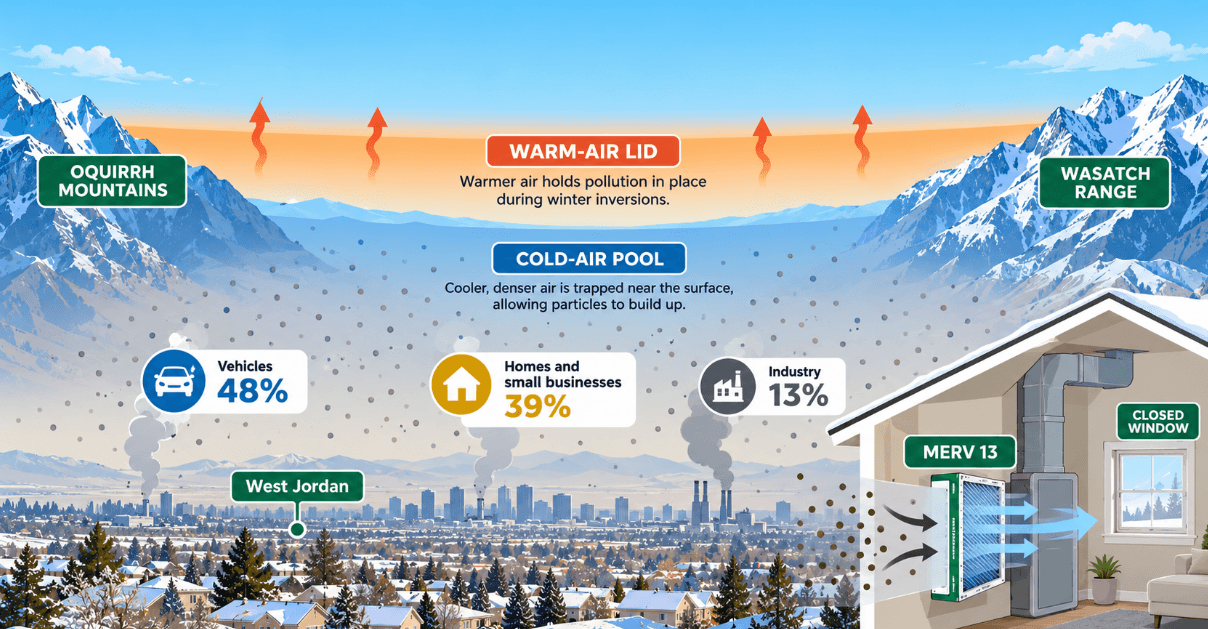
Put a MERV 13 filter in your HVAC system. The central system moves far more air than any portable unit, so this is your whole-home layer.
Set the thermostat fan to On. On Auto, the system only filters while it's heating or cooling.
Run a portable HEPA air cleaner in each occupied room, bedrooms first. HEPA belongs in portable units, never in a furnace slot. Our MERV 13 vs. HEPA guide explains how the two work together.
Close the house up. Keep windows and doors shut, and skip candles, frying, smoking and vacuuming without a sealed HEPA vacuum.
No central HVAC or a swamp cooler? A portable HEPA air cleaner is your primary defense. Swamp coolers pull outdoor air inside, so the Salt Lake County Health Department advises limiting their use during smoke.
Sizing a portable unit: EPA's filtration guidance says its smoke CADR (clean air delivery rate) should be at least two-thirds of the room's square footage, so a 300-square-foot bedroom needs about 200. Choose a CARB-certified unit, since EPA advises against ionizers and other cleaners that may produce ozone.
At 201 and above, follow AirNow, Utah DAQ and county guidance first, including any advice to relocate.
Where West Jordan's AQI Readings Come From
West Jordan's AQI comes from monitors in neighboring cities, since none sits inside city limits. According to DAQ's 2025 monitoring network plan, the closest are Copperview in Midvale (about 2.5 miles east), Lake Park in West Valley City (about 8 miles north) and Herriman #3 (about 9 miles southwest).
The west side climbs toward the Oquirrh foothills and can sit above an inversion while the valley floor stays hazy. EPA's NowCast method also averages recent hours, so sudden smoke shows up gradually on the map.
For current readings, use the ZIP lookup above.
What Drives West Jordan's Air Through the Year
West Jordan's air follows a yearly pattern: inversion PM2.5 in winter, ozone in summer, and bursts of smoke and dust in between.
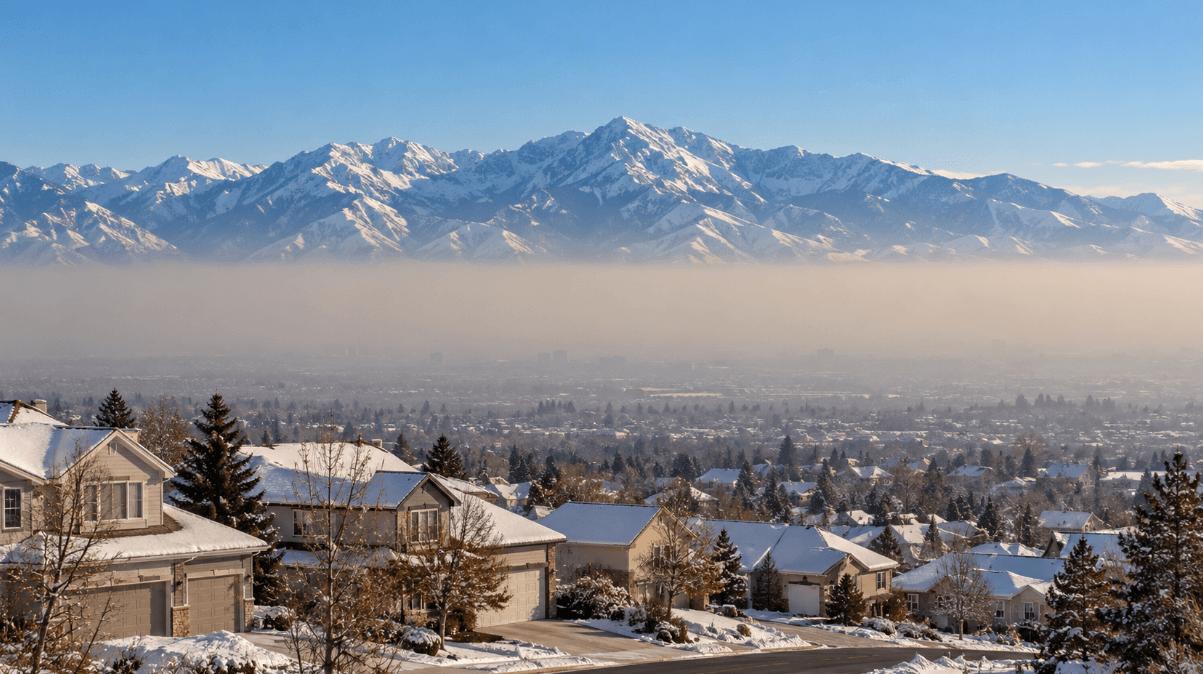
Winter inversions (November–February). Warm air settles over cold valley air like a lid, and surrounding mountains box the valley in, as NASA's Earth Observatory describes. PM2.5 builds each still day until a storm clears it. Utah DAQ traces a typical inversion's PM2.5 to vehicles (48%), homes and small businesses (39%) and industry (13%).
Summer ozone (May–September). Sunlight turns emissions into ozone on hot afternoons, and the Wasatch Front is a serious nonattainment area for the federal ozone standard. Schedule workouts for early morning.
Wildfire smoke and lakebed dust. Western wildfire smoke rides cold fronts into the valley; on August 6, 2021, it pushed Wasatch Front air into the red "unhealthy" range, KSL reported. The shrinking Great Salt Lake has exposed about 800 square miles of lakebed, and University of Utah researchers found its dust is mostly coarse PM10. Pleated filters capture smoke particles, not odor gases; for smell, see the Odor Eliminator line.
Fireworks. Utah DEQ records PM2.5 and PM10 spikes around fireworks, so close up the house before the July 4 and Pioneer Day shows.
What a Utah Air Quality Action Day Means in West Jordan
Utah DAQ sets a daily burn action level for Salt Lake County, usually November 1 through March 1, according to Utah DEQ. On Mandatory Action days, wood, pellet and coal stoves and fireplaces are prohibited unless registered as a sole heat source, with fines up to $150. Gas and propane are allowed, and the county treats Voluntary Action days as no-burn days too.
We treat a Mandatory call as an early warning: move practices indoors, combine errands and check the furnace filter.
Our Take: What a Filter Manufacturer Sees in West Jordan's Numbers
As a filter manufacturer, we see three patterns in West Jordan's data.
Inversion season is furnace season. Filters face their heaviest particle load when furnaces run longest, so one installed in October may be spent by mid-January.
The live number is measured next door. Watch the multi-day trend, not a single reading.
Upgrade before the haze. Switch to MERV 13 when you change from cooling to heating.
"We've spent more than a decade building filters in Talladega, Alabama, and the calendar is the first thing I point West Jordan families to. Your furnace works hardest in exactly the weeks the inversion holds the valley's air in place. Put a fresh, high-efficiency filter in when you turn the heat on in the fall, not after the third red-air day."
David Heacock, Founder & CEO, Filterbuy
Which Filter West Jordan Homes Need and How Often to Change It
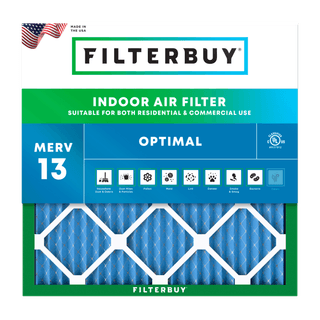
MERV 13 is the filter Filterbuy recommends once West Jordan's AQI reaches 100. EPA recommends MERV 13 or higher in a central HVAC system during smoke events and notes that most furnaces and HVAC systems can accommodate it without equipment problems when the filter is replaced often.
Filterbuy recommendation. Confirm your filter's size and depth, as you would for any replacement.
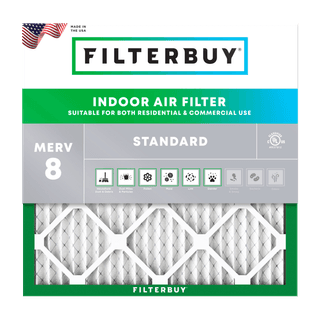
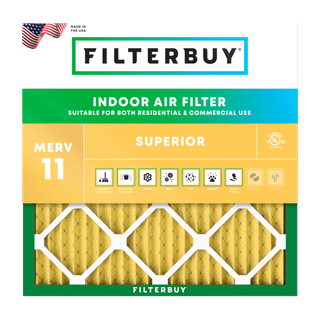
Normally, change a 1-inch filter every 1–3 months and a 4- or 5-inch filter every 6–12 months, checking monthly during inversion season. During smoke, EPA advises changing it when it looks dirty or starts to smell, often well before the normal interval, so keep a spare. Shop MERV 8, MERV 11 and MERV 13.
Supporting Statistics
16.9% of adults in northeast West Jordan report current asthma, compared with 10.1% statewide (2018–2022). Source: Utah Department of Health and Human Services, IBIS-PH.
Winter inversions raised the odds of an asthma emergency room visit in Salt Lake County by 14%. A Utah Department of Health study (NIH) reviewed 3,425 visits.
Salt Lake County averages 20.8 unhealthy ozone days a year. The American Lung Association's State of the Air 2026 ranked the metro 13th worst for ozone.
Frequently Asked Questions
Is the air quality bad in West Jordan today?
Check the live map above. An AQI above 100 is unhealthy for sensitive groups, and above 150 for everyone. Winter inversions are the usual cause; in summer, it's ozone or smoke.
What MERV rating do I need for wildfire smoke in West Jordan?
MERV 13. EPA recommends MERV 13 or higher in a central HVAC system during smoke events. Filterbuy recommends switching when the AQI reaches 100.
Where is the closest air quality monitor to West Jordan?
The closest Utah DAQ regulatory monitor is Copperview in Midvale, about 2.5 miles east of West Jordan City Hall. Lake Park in West Valley City and Herriman #3 are the next closest.
Can I use my fireplace in West Jordan today?
Check Utah DAQ's daily action level at air.utah.gov or in the UtahAir app. On Mandatory Action days, wood, pellet and coal burning is prohibited across Salt Lake County unless the device is a registered sole heat source. Natural gas and propane are allowed.
When is air quality worst in West Jordan?
November through February, when inversions trap PM2.5 for days. Summer adds ozone, wildfire smoke in August and September, and fireworks spikes around July 4 and Pioneer Day (July 24).
Glossary
AQI (Air Quality Index): The EPA's 0-to-500 scale for reporting daily air pollution. Good (0–50), Moderate (51–100), Unhealthy for Sensitive Groups (101–150), Unhealthy (151–200), Very Unhealthy (201–300), Hazardous (301+).
PM2.5: Fine particulate matter 2.5 micrometers or smaller. PM2.5 sets most of West Jordan's high winter and smoke-day readings and is what high-MERV filtration targets.
PM10: Coarser particulate matter 10 micrometers or smaller, including windblown dust from the exposed Great Salt Lake lakebed.
Ozone (O3): Ground-level ozone, a lung irritant formed when sunlight reacts with vehicle and industrial emissions on hot days. Ozone is the Salt Lake Valley's main summer air problem.
Temperature inversion: A weather pattern in which warm air sits above colder air, capping the valley and trapping pollutants near the ground. Inversions drive the Salt Lake Valley's worst winter PM2.5 days.