
Columbia Real-Time AQI Tracker


Get Alerts For Unhealthy AQI In Your Area
When air quality in your area reaches unhealthy levels, we'll send you a quick alert, along with expert tips on how to reduce your exposure.
What's Actually In Columbia Air Today?
What High AQI Means for Your Lungs in Columbia
How to Read AQI
The Air Quality Index (AQI) measures how polluted the air is and how it may affect your health.
0–50 (Good): Air quality is satisfactory.
51–100 (Moderate): Acceptable, but some pollutants may pose minor concerns.
101–150 (Unhealthy for Sensitive Groups)
151–200 (Unhealthy)
201–300 (Very Unhealthy)
301+ (Hazardous)
Moderate
Still okay for most, but if you have asthma or allergies, take it easy and avoid long outdoor workouts.
Shop MERV 11 filters→What's the Right Filter for Your AQI Level?


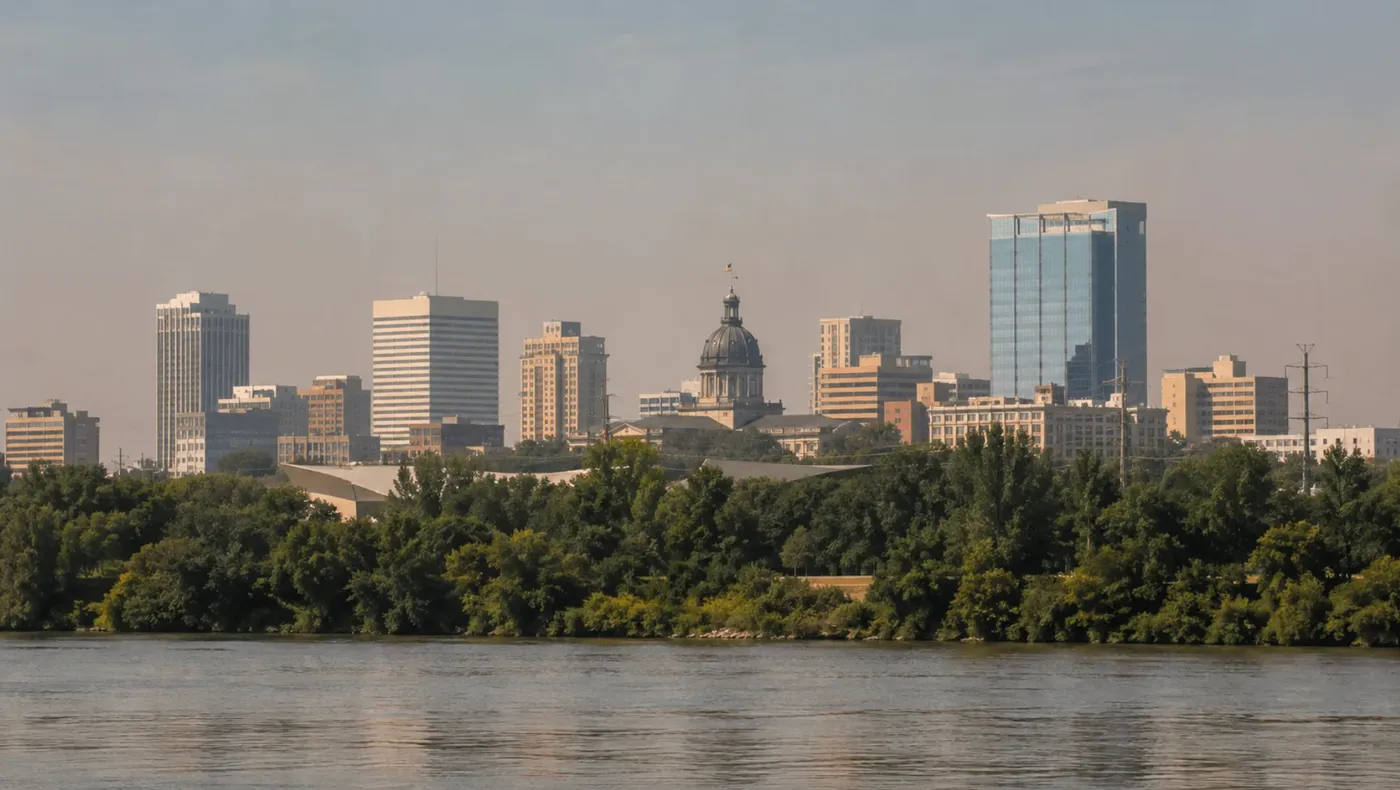
Check Today's Live Real Time Air Quality Index AQI Map in Columbia, SC Now
By Michelle Wan | Reviewed by David Clark, Licensed HVAC Technician | Published September 1, 2026 | Updated September 1, 2026
TL;DR
The live map above shows Columbia, South Carolina’s current air quality index (AQI) in real time. Most days it sits in the Good to Moderate range, and Richland County has never been designated a nonattainment area by the U.S. Environmental Protection Agency. When the number does climb, it is usually one of two things. Ground-level ozone builds on hot, sunny days from April through September, and fine-particle smoke drifts in from prescribed forestry burns across the Midlands. Once the reading passes 100, close your windows, switch the HVAC fan on, and put a clean filter in the return.
Key Takeaways
The AQI is a 0-to-500 health scale, not a pollution measurement. The U.S. EPA converts pollutant concentrations into a single index number, where 100 marks the national health standard.
Columbia’s ozone season runs April 1 through September 30. SCDES publishes a daily ozone forecast across that window.
Richland County has never been in nonattainment. Only two areas in South Carolina ever have been, per EPA’s Green Book, and both were redesignated years ago.
The Columbia metro earned Cs for ozone and short-term particle pollution in State of the Air 2026, plus a passing year-round grade.
Smoke means MERV 13. EPA recommends a filter rated MERV 13 or higher in a central system during smoke events. AQI 100 is where we tell customers to act.
The Filterbuy Take: Columbia’s Real Air Problem Is Not the One the AQI Measures
Filterbuy is a US air filter manufacturer, and our reading of Columbia runs against the grain. Most air quality pages written for Southern cities are built to worry you. Columbia’s numbers do not support that.
The number that should concern a Columbia household is the one the AQI leaves out. The index covers ozone, particulates, carbon monoxide, sulfur dioxide and nitrogen dioxide, but it says nothing about pollen or mold, and Columbia ranks 27th of 100 metro areas for pollen difficulty. Watch only the AQI and you can see green through all of April while feeling terrible.
What Is the Air Quality in Columbia, SC Today?
The map above pulls Columbia’s current AQI from EPA-affiliated monitoring data. Readings above 100 are uncommon in the Midlands, and usually arrive on a hot summer afternoon or when smoke has settled over the region.
Reading the map takes about ten seconds. Start with the number, then look at which pollutant is driving it, almost always ozone or PM2.5, the fine particles in smoke and exhaust. To compare conditions elsewhere in the state, see live air quality across South Carolina.
One limit is worth stating plainly. The AQI comes from a small number of fixed monitors, so it describes a region rather than your street. A house beside I-26 and one in Forest Acres share a posted number, not the same air.
What Each AQI Number Means in Columbia
The AQI is EPA’s standard 0-to-500 scale for reporting daily air quality. The table below pairs each category with the practical response for a Columbia household.
Categories, ranges and colors are U.S. EPA's. The action column is Filterbuy's. EPA recommends a filter rated MERV 13 or higher in a central system during smoke events; acting at AQI 100 is our call, not EPA's.
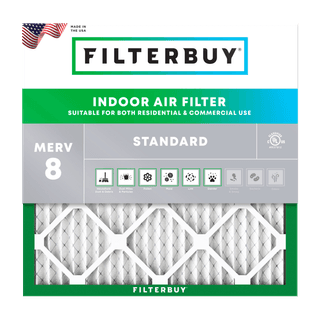
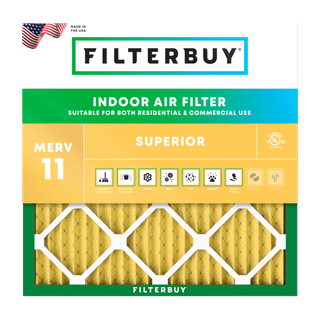
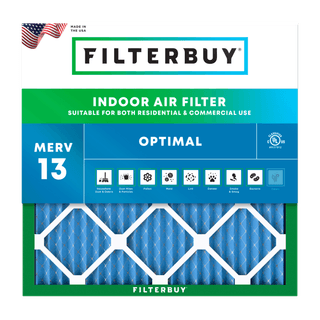
Filter tiers: MERV 8, MERV 11, MERV 13.
What to Do at AQI 100 and Above
AQI 100 is where Filterbuy tells customers to move. EPA’s category boundary sits at 101, so 100 is still the top of Moderate. We act at the threshold rather than after crossing it. Four steps, in this order.
Put a MERV 13 in the HVAC. The central system moves far more air than any portable unit, so this is the whole-home layer.
Set the thermostat fan to On. Auto only filters while the system is heating or cooling. On filters continuously.
Run a portable HEPA air cleaner in each occupied room, bedrooms first. For sizing, EPA’s clean-room rule is a unit whose smoke CADR is at least two-thirds of the room’s square footage, so a 300 square foot bedroom wants a smoke CADR near 200. Skip anything that produces ozone, including ionizers and ozone generators.
Close the house up. Windows and doors shut, and nothing that adds indoor smoke while it is in. No candles, no frying, no vacuuming without a sealed unit.
No central HVAC? Apartments, window units and older Columbia homes without ductwork have no whole-home layer available. For those readers the portable cleaners are the main defense rather than a supplement, and the sizing rule above matters more, not less.
Who recommends what. EPA recommends a high-efficiency filter rated MERV 13 or higher in a central system during smoke events. Acting at AQI 100, and running a cleaner in every occupied room rather than one, are Filterbuy calls that go beyond EPA guidance.
When smoke is in the area, check the AirNow Fire and Smoke Map and your local air agency first. Official guidance outranks anything on this page.
What Actually Drives Columbia’s Air Quality
Three local forces shape Columbia’s air, and knowing which one is active tells you what to do about it.
Ground-level ozone, April through September. Ozone forms when nitrogen oxides and volatile organic compounds react in sunlight, so it builds on the hot, still days that describe much of a Columbia summer. SCDES runs its daily ozone forecast from April 1 through September 30 for that reason.
Prescribed forestry burns. South Carolina is a working-forest state, and controlled burning is routine and legal under the state Smoke Management Guidelines. When the wind carries that smoke toward the Midlands, PM2.5 rises and the sky hazes over. The SC Forestry Commission maintains a public map of active burns.
Traffic and climate. Interstates 20, 26 and 77 converge on Columbia, and the exhaust supplies the nitrogen oxides that feed ozone. The humid climate drives heavy pollen and year-round mold, neither of which the AQI reports. SCDES runs the monitoring network behind the numbers.
What You Are Noticing, and What It Actually Is
Two of the five complaints below never show up in the AQI at all.
Original Filterbuy diagnostic. Two of these five never appear in the index at all.
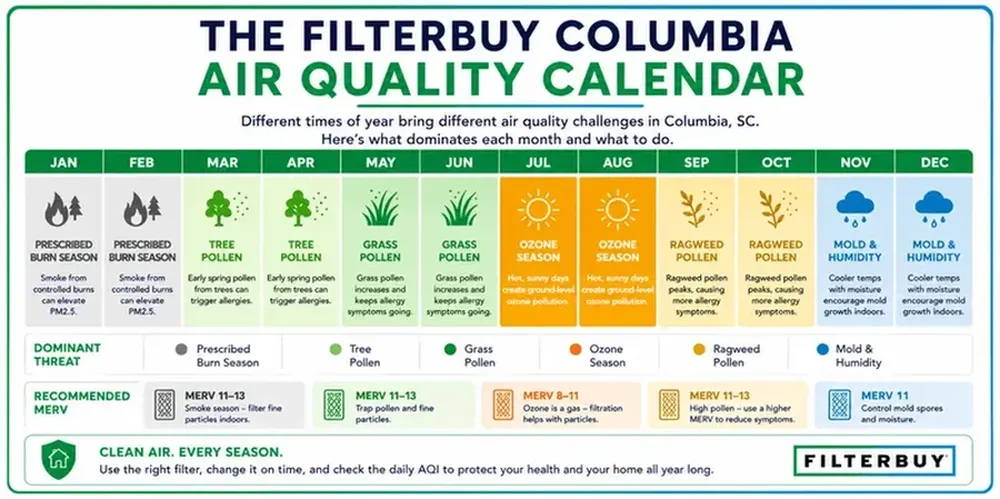
The Filterbuy Columbia Air Quality Calendar
Original Filterbuy synthesis. Pollen timing per AAFA, ozone window per SCDES, burn season per the SC Forestry Commission.
How Good Is Columbia’s Air, Historically?
Richland County has never been designated a nonattainment area for any criteria pollutant. EPA’s Green Book, current as of July 31, 2026, lists only two entries in South Carolina’s regulatory history. Cherokee County appears for the since-revoked 1-hour ozone standard, redesignated in 1993, and part of York County under the Charlotte-area ozone designation, redesignated in 2016.
The American Lung Association put the Columbia metro mid-pack in 2026, ahead of Greenville, which took a D for ozone, and behind Charleston at a B.
Sources: U.S. EPA Green Book; South Carolina Department of Environmental Services; American Lung Association State of the Air 2026; Asthma and Allergy Foundation of America 2026 Allergy Capitals.
Why Outdoor AQI Is an Indoor Problem
Outdoor air becomes indoor air. EPA notes that pollutants enter buildings through doors, windows, ventilation systems and cracks, and once inside they stay suspended for hours. For most Columbia houses the HVAC filter is the only whole-home filtration there is.
The AQI reading is a filter decision as much as a plan for the afternoon, and the MERV 13 tier is the one we recommend once smoke is in the air.
Expert Commentary From David Clark, Licensed HVAC Technician
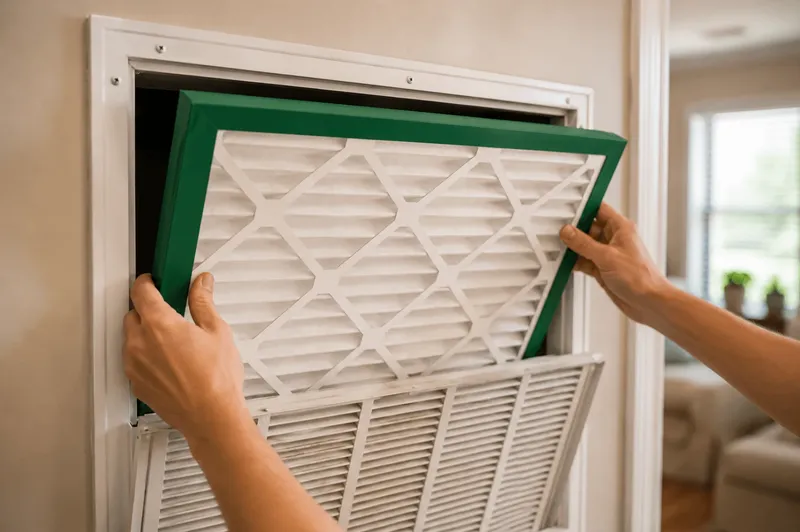
The mistake I see most often here is treating filter changes as a calendar task instead of a seasonal one. A filter that lasts ninety days in February will not last ninety days in August, because the system runs almost constantly and the pollen load is heavier. Pull the filter and look at it. If you cannot see light through it, it is done, whatever the date says.
David Clark, Licensed HVAC Technician
Supporting Statistics
Three findings explain why an outdoor reading ends up being an indoor decision.
1. You breathe indoor air about 90% of the time.
EPA puts indoor levels of some pollutants at 2 to 5 times outdoor levels.
Columbia keeps windows shut for months, so the return-vent filter handles most of the air you breathe.
2. Airflow problems cut HVAC efficiency by up to 15%.
EPA advises inspecting filters monthly, and Midlands humidity loads them faster than the label assumes.
3. Nearly half of U.S. children live where the air earns a failing grade.
The 46% figure is 33.5 million children. Columbia’s metro grades are C, not F.
Will a MERV 13 Fit Your System?
Most furnaces and HVAC systems accommodate a MERV 13 without equipment problems, provided the filter is replaced often. That is EPA’s finding, and it is why the fit check is the same one you would run for any filter. Confirm the nominal size printed on the frame, then order that size. Filterbuy carries MERV 13 in more than 600 sizes.
Frequently Asked Questions
Glossary
AQI (Air Quality Index) – The U.S. EPA’s 0-to-500 scale for daily outdoor air quality, where 100 marks the national health-based standard. Source.
PM2.5 – Airborne particles 2.5 micrometers or smaller, small enough to bypass the body’s defenses.
Ground-level ozone – A colorless gas formed when nitrogen oxides and volatile organic compounds react in sunlight. Columbia’s dominant warm-season pollutant. Source.
MERV (Minimum Efficiency Reporting Value) – The ASHRAE 52.2 scale, 1 to 16 for residential filters, rating how effectively a filter captures airborne particles. Higher numbers capture smaller particles. Source.
Nonattainment area – An EPA designation for a region failing a National Ambient Air Quality Standard. Richland County has never received one. Source.
CADR (Clean Air Delivery Rate) – A portable air cleaner’s rated output. EPA’s clean-room rule is a smoke CADR of at least two-thirds of the room’s square footage.
SCDES – The South Carolina Department of Environmental Services. Its Bureau of Air Quality runs the state monitoring network and the April-to-September ozone forecast. Source.
Why Filterbuy Publishes This Page
Filterbuy builds pleated air filters in the United States and ships them factory-direct in more than 600 sizes.
We would rather say Columbia’s air is mostly fine and that pollen is the real fight than sell you a filter you do not need. If a MERV 8 covers your house, buy the MERV 8.
About the Author
Michelle Wan writes about indoor air quality and home filtration for Filterbuy, a US air filter manufacturer based in Talladega, Alabama. This page was reviewed for technical accuracy by David Clark, a Licensed HVAC Technician.