
Air Quality in South Carolina
Air quality index (AQI⁺) and PM2.5 air pollution in South Carolina •

Get Alerts For Unhealthy AQI In Your Area
When air quality in your area reaches unhealthy levels, we'll send you a quick alert, along with expert tips on how to reduce your exposure.
Live Air Quality Ratings in South Carolina
Live Most Polluted City Ranking
Real-time most polluted cities in South Carolina
Live Cleanest City Ranking
Real-time cleanest cities in South Carolina
The Right Air Filter For High AQI Days
When outdoor air quality drops, the EPA recommends upgrading to a MERV 13 filter — or the highest-rated filter your HVAC system can handle — to help capture more of the fine particulate (PM2.5) that comes with poor air quality. MERV 13 is the highest rating most residential systems can run without restricting airflow.
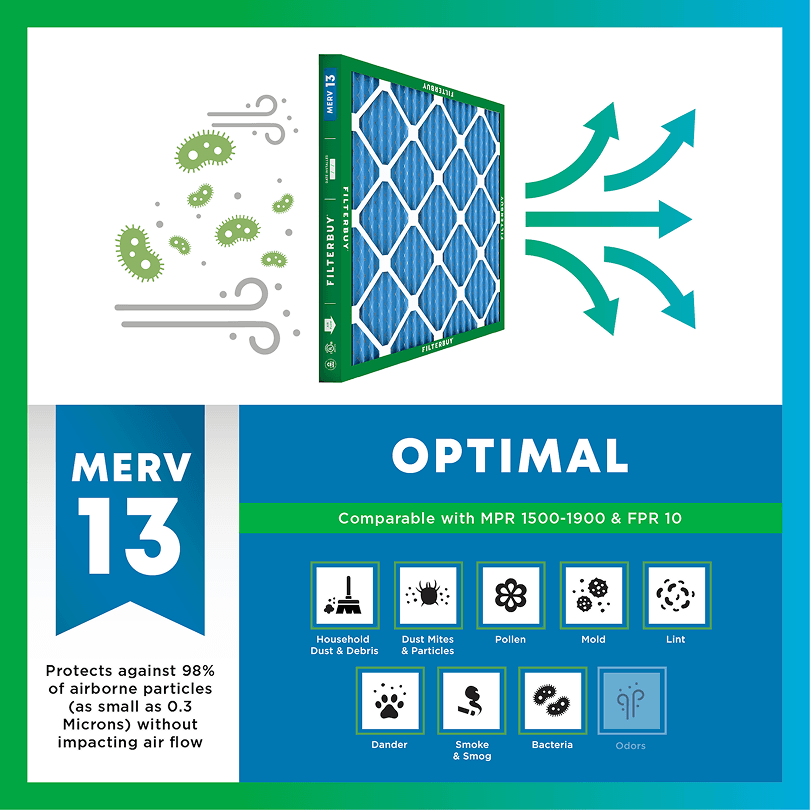
- Captures PM2.5 and other fine particulates
- Filters ash, soot, and smoke particles
- Rated to capture particles as small as 0.3 microns
- Matches the filter rating the EPA suggests during high-AQI and smoke events

AQI FAQs
What is AQI?
AQI stands for Air Quality Index, the EPA's scale for reporting daily air quality. It runs from 0 to 500. The higher the number, the greater the level of air pollution. Values at or below 100 are generally considered satisfactory; values above 100 mean air quality is unhealthy, first for sensitive groups, then for everyone as numbers climb.
What does AQI measure?
The AQI tracks five major pollutants regulated by the Clean Air Act: ground-level ozone, particle pollution (PM2.5 and PM10), carbon monoxide, sulfur dioxide, and nitrogen dioxide. The reported AQI value reflects whichever pollutant is highest at that time — most often ozone or fine particles (PM2.5).
How is AQI calculated?
Monitoring stations measure pollutant concentrations, and the EPA converts each into a standardized 0–500 score using set breakpoints. Each pollutant gets its own sub-index, and the highest sub-index becomes the reported AQI. That's why a single number can represent different pollutants on different days.
What is a good AQI?
An AQI of 0–50 is rated "Good" — air quality poses little or no risk. 51–100 is "Moderate," acceptable for most people though unusually sensitive individuals may want to limit prolonged outdoor exertion. Anything at or below 100 is generally considered satisfactory air quality.
What does an AQI of 100 (or 150) mean?
100 is the dividing line: at or below it, air quality is satisfactory for the general public. From 101–150, air is "Unhealthy for Sensitive Groups" — people with respiratory conditions, older adults, and children. From 151–200, it's "Unhealthy" and everyone may begin to feel effects.
Why is the AQI bad today?
Short-term AQI spikes usually come from wildfire smoke, temperature inversions that trap pollutants near the ground, high-ozone weather (hot, sunny, stagnant days), or heavy traffic and industrial activity. Check a real-time source like the map on this page to see which pollutant is driving today's reading in your area.
What AQI is bad for running or exercise?
Many runners follow the EPA category lines: below 50, no adjustment needed; 51–100, unusually sensitive people may shorten intense workouts; above 100, sensitive groups are advised to reduce prolonged or heavy outdoor exertion; above 150, that advice extends to everyone. Exercise increases how much air you breathe in, which is why thresholds matter more during workouts.
What AQI is safe to open windows?
A common rule of thumb is to keep windows open when the AQI is under 100 and close them when it climbs above, especially during wildfire smoke events when fine particles are elevated. When windows are closed, running your HVAC system with a fresh filter helps capture particles circulating indoors.
Should I wear a mask based on AQI?
Public health agencies generally suggest considering a well-fitted N95-style respirator outdoors when the AQI exceeds 150, particularly during smoke events. Cloth and surgical masks don't filter fine particles effectively. Follow guidance from your local health department, which may adjust recommendations during severe episodes.
Check Today's Live Real Time Air Quality Index AQI Map in South Carolina Now
By Michelle Wan, Brand Manager and Air Quality Writer · Reviewed for technical accuracy by David Clark, Licensed HVAC Technician · Publish Date: September 1, 2026 · Updated Date: September 1, 2026
South Carolina's air quality right now appears on the live AQI map above, which pulls hourly readings from EPA and South Carolina Department of Environmental Services monitors across the state. Most days here land in the Good range, between 0 and 50. What moves the number is ozone on a hot Upstate afternoon, or smoke from a prescribed burn or wildfire, which can push fine particles up within hours.
TL;DR
South Carolina air quality is Good on most days, and every county in the state meets the 2015 federal ozone standard. Two things change that: ground-level ozone, which builds on hot afternoons and concentrates in the Upstate, and PM2.5, the fine soot-sized particles that arrive with smoke. Check the live map above before outdoor plans, then keep a clean filter running so your indoor air stays ahead of the number.
Key Takeaways
South Carolina's live AQI readings come from the state ambient air monitoring network, which SCDES planned to grow to 60 monitors and samplers at 21 sites for 2024–2025.
Every South Carolina county is designated Attainment/Unclassifiable for the 2015 federal ozone standard.
Greenville-Spartanburg-Anderson earned the state's lowest ozone grade, a D, in the American Lung Association's “State of the Air” 2026 report.
Charleston-North Charleston ranked among the nation's cleanest metro areas for short-term particle pollution for a second year, at zero unhealthy particle days.
Permitted prescribed burning covered 354,434 acres in fiscal 2024–25, roughly 25 times the acreage of an average wildfire year.
What Is the Air Quality in South Carolina Today?
The live map above shows South Carolina's current air quality index, updated hourly from state and federal monitors. The AQI runs from 0 to 500, and it reports only the single worst pollutant at your nearest monitor, so a reading of 62 means one pollutant hit 62 rather than an average of all of them. In South Carolina that pollutant is usually ozone through the summer and fine particles the rest of the year.
Readings vary across the state on the same day. Charleston can sit in the yellow Moderate band on a humid August afternoon while Greenville reads green, and the reverse happens once Upstate ozone starts building. Rather than relying on a statewide number, search your city or ZIP code on the map, or open the Charleston, SC live AQI map, the Columbia, SC live AQI map, or the Greenville, SC live AQI map for a closer read. To compare South Carolina against the rest of the country, use the USA live AQI map.
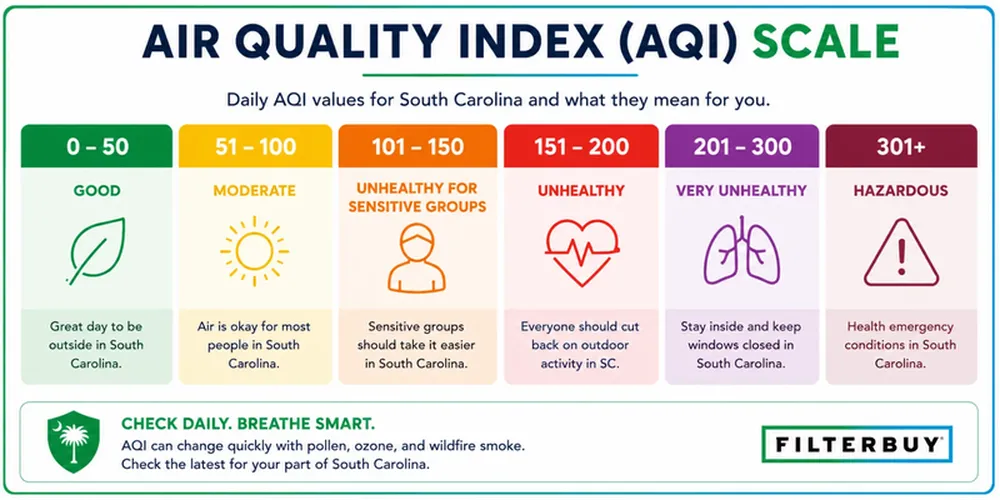
What Do the AQI Colors Mean in South Carolina?
AQI categories follow the U.S. EPA scale nationwide. The table below adds what each band typically looks like here.
AQI categories, ranges and colors follow the U.S. EPA Air Quality Index scale. South Carolina context added by Filterbuy.
What Drives Air Quality in South Carolina?
South Carolina's air answers to a few drivers, and they don't share a calendar.
Ground-level ozone peaks on hot Upstate afternoons. Ozone forms when vehicle and industrial emissions react in sunlight, so it builds through the day and fades after dark, and SCDES publishes a daily ozone forecast from April through September. The Upstate carries the heaviest load: the I-85 corridor feeds it, and the terrain along the Blue Ridge escarpment holds the air in place long enough for it to accumulate. That's why Greenville-Spartanburg-Anderson graded a D for ozone while coastal Florence and Myrtle Beach graded A.
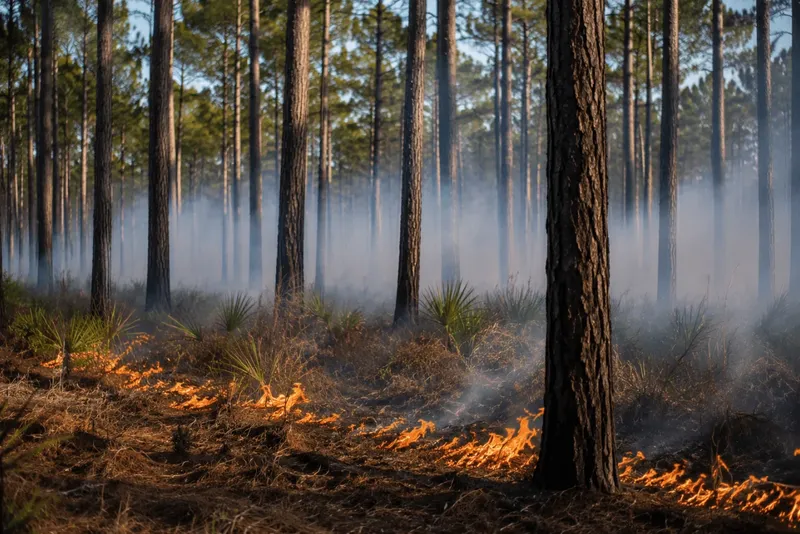
Smoke from planned fire is South Carolina's most underrated particle source. Filterbuy maintains live AQI pages for states and cities across the country, and South Carolina is the state that changed how our team reads a Moderate number. In most markets a yellow reading on a cool, clear day points to traffic or a stalled air mass. Here it usually points upwind, to a permitted burn.
That's because South Carolina is a working forest state, and prescribed burning for forestry, wildlife and agriculture is both legal and enormous in scale: 9,670 permitted burns covering 354,434 acres in fiscal 2024–25. Those burns follow the state's Smoke Management Guidelines, which rate each day 1 through 5 for smoke dispersion and prohibit burning outright on a Category 1 day.
South Carolina is the state where I stopped assuming a Moderate reading meant traffic. On a clear February afternoon here, it’s usually a permitted burn a few counties upwind, doing exactly what it was scheduled to do.
Michelle Wan, Brand Manager and Air Quality Writer, Filterbuy
Wildfire smoke moves the number fastest, and March 2025 is the reference point for anyone in the Upstate. The Table Rock Complex burned 15,973 acres across Pickens and Greenville counties, and SCDES issued an air quality alert for fine particulates while it ran. On the coast that same month, the Covington Drive Fire dropped into peat outside Myrtle Beach and burned for 94 days before crews controlled it in June. After 102 wildfires ignited in a single day, the State Forester closed all 46 counties to outdoor burning. Downed timber left by Hurricane Helene fed most of it.
A peat fire burning into June puts smoke on the same air masses for weeks at a time, and a daily reading won't show you that.
How Does South Carolina's Air Quality Rank Nationally?
South Carolina posts some of the cleanest metro air in the country for particle pollution and some of its weakest grades for ozone, often in the same year. The American Lung Association's “State of the Air” 2026 report graded counties on EPA monitoring data from 2022 through 2024.
Grades from the American Lung Association "State of the Air" 2026 report, based on U.S. EPA monitoring data from 2022 through 2024.
Read that table as a filtration map, because that's how Filterbuy reads it. Across every state page in the network, South Carolina is one of the few holding a cleanest-in-the-nation grade and a D in the same report year. In practice that means two different filter decisions inside one state: Upstate homes managing ozone with a real summer peak and a fire season on top of it, and Lowcountry homes managing humidity and pollen against an unusually clean particle baseline.
Is Today's Smoke a Permitted Burn? How to Check
Smoke you can smell but can't source is the most common air quality question in South Carolina, and you can usually answer it yourself in about five minutes.
Check the prescribed burn map. The Forestry Commission publishes a statewide map of current permitted burns, and markers upwind of you are very likely your answer.
Check the active wildfire map. A separate Forestry Commission map shows what's burning now. Peat fires in the Lowcountry smolder for weeks, so an old fire can still be today's smoke.
Check whether a burning ban is in effect. The State Forester has issued only 29 since 1987, so an active ban means conditions are unusual and the smoke probably isn't planned.
Check the day's category rating. Burns are rated 1 to 5 for smoke dispersion, and on a Category 1 day no burning is permitted at all.
Check the AirNow Fire and Smoke Map. The AirNow Fire and Smoke Map fills in low-cost sensor readings between the official monitors, which is where drifting smoke tends to show up first.
If none of that explains it and the smoke is heavy, report it. Human activity causes about 98% of South Carolina wildfires, and roughly half of those start as escaped debris burns, so an early call is often what keeps a small one small.
Once you know what you're dealing with, the Filterbuy guide to keeping wildfire smoke out of your house covers the indoor steps in order.
What to Do When South Carolina's AQI Reaches 100
At AQI 100, switch to a MERV 13 filter. That's the tier we point South Carolina customers to for smoke, and 100 is where we tell them to move.
It's worth being precise about who's saying what. EPA recommends a high-efficiency filter rated MERV 13 or higher in a central system during smoke events, and it doesn't attach an AQI number to that. The 100 threshold is ours. It's also the top of EPA's Moderate band rather than the start of Orange, so we're acting at the line instead of waiting for the category to change at 101.
Four things, in this order:
Put a MERV 13 in the HVAC. If you're running a lower tier, switch. The central system moves far more air than any portable unit, so this is the layer that treats the whole house.
Set the thermostat fan to On. On Auto, the system only filters while it's heating or cooling. On filters continuously.
Run a portable HEPA air cleaner in each occupied room. Bedrooms first. This is a second layer, not an alternative to the first. The filter treats the house; the portable unit treats the room you're in harder than the central system can.
Close the house up. Windows and doors shut, and don't add to what's already inside. No candles, no frying, no vacuuming without a sealed unit, no smoking.
Sensitive Groups
If you have asthma, COPD or a heart condition, follow AirNow's activity guidance for your category and whatever your clinician has told you. That's a better source than anything we can offer here.
Filter Checks During Smoke
Smoke loads a filter far faster than normal use, so don't go by the calendar. Check it while smoke is around and replace it when it looks dirty, dark brown or black, which can be well before the interval on the box. Keep spares on hand so a change doesn't wait on a delivery.
When the Air Clears
Open the windows and air the house out, even if the break is short. Sealing a house is temporary, and cooking, cleaning products and everyday dust keep building while it's shut, so EPA advises using any improvement in outdoor air to ventilate.
What the AQI Does Not Measure
The Air Quality Index covers five outdoor pollutants: ozone, particle pollution, carbon monoxide, sulfur dioxide and nitrogen dioxide. What it leaves out matters here.
Pollen. Spring tree pollen doesn't appear in the AQI at any level, which is why a green day in late March can still be the worst day of your year. If the number says Good and your eyes disagree, the number is measuring something else.
Humidity. The AQI doesn't track it, and Lowcountry summers run high enough to support mold and dust mites indoors regardless of what the outdoor reading says.
Your house. The AQI is an outdoor average across a monitor's reporting area, and it was never built to describe the room you're standing in. Cooking, cleaning products, pets and an overdue filter are all invisible to it.
One number can only carry so much, so read the AQI as an early warning about outdoor air and handle indoor air separately. That second half is the part Filterbuy works on.
Which Air Filter Fits South Carolina Conditions?
For wildfire smoke, the answer is MERV 13. Filterbuy has built air filters in the United States since 2013 and pleats them in Talladega, Alabama, inside the same Southeastern pine belt that sets South Carolina's burn calendar.
Confirming a MERV 13 fits is the same check as confirming a size: measure the slot, then order the tier you want in that size. Most furnaces and HVAC systems accommodate MERV 13 without equipment problems, provided the filter gets replaced often. If you're weighing it against a portable unit, MERV 13 vs. HEPA for wildfire smoke covers how the two layers differ.
The MERV 13 swap is the easy part. What people skip is the fan. Leave it on Auto during a smoke week and the system’s only cleaning the air while it happens to be running.
David Clark, Licensed HVAC Technician
Clean indoor air on South Carolina's worst smoke and ozone days starts with the filter already in your HVAC before the map turns orange. Find your Filterbuy size in under a minute and set up auto-delivery before burn season starts. Filterbuy builds them in four U.S. plants, in over 600 standard sizes plus custom, shipped factory-direct.
No Central HVAC? Here Is What Actually Works
Plenty of South Carolina homes run on window units, mini-splits, or a landlord's equipment nobody's allowed to touch. There's no whole-home layer available in those homes, so a portable air cleaner is the primary defense rather than a supplement. Filterbuy makes air filters, so it's worth saying plainly that in a home without a filter slot, a portable cleaner will do more for you than anything we build.
Sizing. Match the cleaner to the room. EPA's clean-room guidance is a smoke CADR of at least two-thirds the room's square footage, so a 300-square-foot bedroom wants a smoke CADR of about 200.
Ozone. Skip anything that makes ozone. EPA advises against ozone-producing air cleaners, and that includes ionizers.
Window units. Close the outdoor air damper. If it won't close, EPA advises against running the unit in smoky conditions, because it pulls smoke in. Seal the gap between the unit and the window as tightly as you can.
Mini-splits. Most recirculate indoor air already, which works in your favor during a smoke event. Clean the washable filters, because a loaded filter moves almost nothing.
Renters. A portable air cleaner needs no permission and moves with you, so size it to the room you sleep in rather than the whole house.
On a budget. EPA has tested box-fan air cleaners built with a MERV 13 filter and found them effective at reducing smoke. Use a certified fan from 2012 or newer, change the filter often, and don't leave it running unattended. It's a reasonable stopgap, not a replacement for a certified air cleaner.
One cleaner running in the bedroom beats nothing everywhere else.
Supporting Statistics
Three sourced findings behind the guidance above.
1. Planned fire moves more South Carolina smoke than wildfire does.
9,670 permitted prescribed burns
354,434 acres burned under permit
14,193 acres: five-year wildfire average, per year
855 of 1,550 wildfires started as debris burning. Lightning caused 58.
Permitted burning covers about 25 times the acreage of a typical wildfire year.
Source: S.C. Forestry Commission, FY2024–25 Annual Report
2. South Carolina holds both ends of the national range.
Greenville-Spartanburg-Anderson: 91st worst of 226 U.S. metros for ozone. Grade D.
Charleston-North Charleston: among the nation's cleanest for short-term particles, second year running. Zero unhealthy days.
Nationally: 44% of Americans, 152.3 million people, live in a county with a failing grade.
Source: American Lung Association, “State of the Air” 2026 (EPA data, 2022–2024)
3. A deeper filter moves more clean air in a DIY air cleaner.
EPA tested box-fan air cleaner designs against simulated wildfire smoke in a sealed chamber. Clean air delivery rate, higher is better:
Higher is better. U.S. EPA chamber testing with simulated wildfire smoke, Wildfire ASPIRE Study.
The 4-inch design delivered a 123% gain over the 1-inch. EPA also found dirty filters removed almost nothing, which is why you replace after a smoke event rather than by the calendar.
Source: U.S. EPA Office of Research and Development, Wildfire ASPIRE Study
Frequently Asked Questions
Glossary
AQI (Air Quality Index): the U.S. EPA's 0 to 500 scale for outdoor air quality, based on the single highest-reading pollutant at a monitor.
PM2.5: fine particulate matter under 2.5 micrometers across, small enough to reach deep lung tissue. The main pollutant in smoke.
Ground-level ozone: a gas formed when emissions react in sunlight, peaking on hot, stagnant afternoons. The core of summer smog.
SCDES: the South Carolina Department of Environmental Services, the state agency that runs air monitoring, permitting and daily ozone forecasts through its Bureau of Air Quality.
NAAQS: the National Ambient Air Quality Standards, the federal outdoor limits EPA sets for six criteria pollutants under the Clean Air Act.
Attainment/Unclassifiable: an EPA designation meaning an area meets a federal standard, or has no data showing otherwise. All South Carolina counties hold it for the 2015 ozone standard.
MERV: the 1 to 16 rating scale for how much particulate an air filter captures. Higher numbers capture smaller particles.
CADR: clean air delivery rate, a measure of how much filtered air a portable air cleaner delivers. Higher is better.
Prescribed burn: a controlled fire set under permit for forestry, wildlife or agricultural management, governed here by state Smoke Management Guidelines.
Category Day: the 1 to 5 rating the Forestry Commission assigns each day for how well smoke will disperse. No burning is allowed on a Category 1 day.
About the Author
Michelle Wan is Brand Manager and Air Quality Writer at Filterbuy, where she turns pollutant science and EPA guidance into steps homeowners can act on. She works directly with Filterbuy's U.S. manufacturing teams across its Alabama, Florida, Pennsylvania and Utah plants, so her writing reflects how filters are built and used rather than spec sheets alone. This page was reviewed for technical accuracy by David Clark, Licensed HVAC Technician.