
Aurora Real-Time AQI Tracker


Get Alerts For Unhealthy AQI In Your Area
When air quality in your area reaches unhealthy levels, we'll send you a quick alert, along with expert tips on how to reduce your exposure.
What's Actually In Aurora Air Today?
What High AQI Means for Your Lungs in Aurora
How to Read AQI
The Air Quality Index (AQI) measures how polluted the air is and how it may affect your health.
0–50 (Good): Air quality is satisfactory.
51–100 (Moderate): Acceptable, but some pollutants may pose minor concerns.
101–150 (Unhealthy for Sensitive Groups)
151–200 (Unhealthy)
201–300 (Very Unhealthy)
301+ (Hazardous)
Moderate
Still okay for most, but if you have asthma or allergies, take it easy and avoid long outdoor workouts.
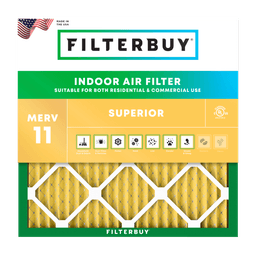
Shop MERV 11 filters→What's the Right Filter for Your AQI Level?



Live Air Quality Index AQI Map Aurora Colorado Today | Filterbuy.com
Checking Aurora's air quality today? As a company that's spent over a decade obsessed with the air people breathe, we can tell you that what's happening outside in Aurora directly affects what's circulating inside your home. Front Range communities deal with a unique combination of Denver-metro ozone, seasonal wildfire smoke, and high-altitude UV that accelerates smog formation — and our team sees it reflected every year in the surge of Colorado customers upgrading to higher-MERV filters when AQI levels spike.
Use our live AQI map below to see real-time pollution levels across Aurora right now. Then take the next step most people miss: make sure your HVAC system is equipped to handle what's coming through your vents. After manufacturing millions of air filters in the USA and shipping them to homes just like yours, we've learned that the families who stay ahead of poor air quality days — not just react to them — are the ones breathing easier all year long.
TL;DR Quick Answers
Live Air Quality Index AQI Map Now Today in Aurora Colorado
Aurora's live AQI map shows real-time pollution levels across the city right now, measured on a scale of 0–500. The lower the number, the cleaner the air.
What to know at a glance:
0–50 (Green): Good. Enjoy normal activities.
51–100 (Yellow): Moderate. Your HVAC filter is already working harder than you think.
101–150 (Orange): Unhealthy for sensitive groups. Close windows and run your system continuously.
151+ (Red): Unhealthy for everyone. Your filter becomes your first line of defense.
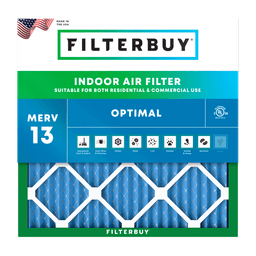
Our recommendation for Aurora homes: MERV 11 minimum for everyday protection. MERV 13 during ozone season and wildfire events. Check the map above, then make sure your filter matches what Aurora's air is throwing at your HVAC system today.
Top 5 Takeaways
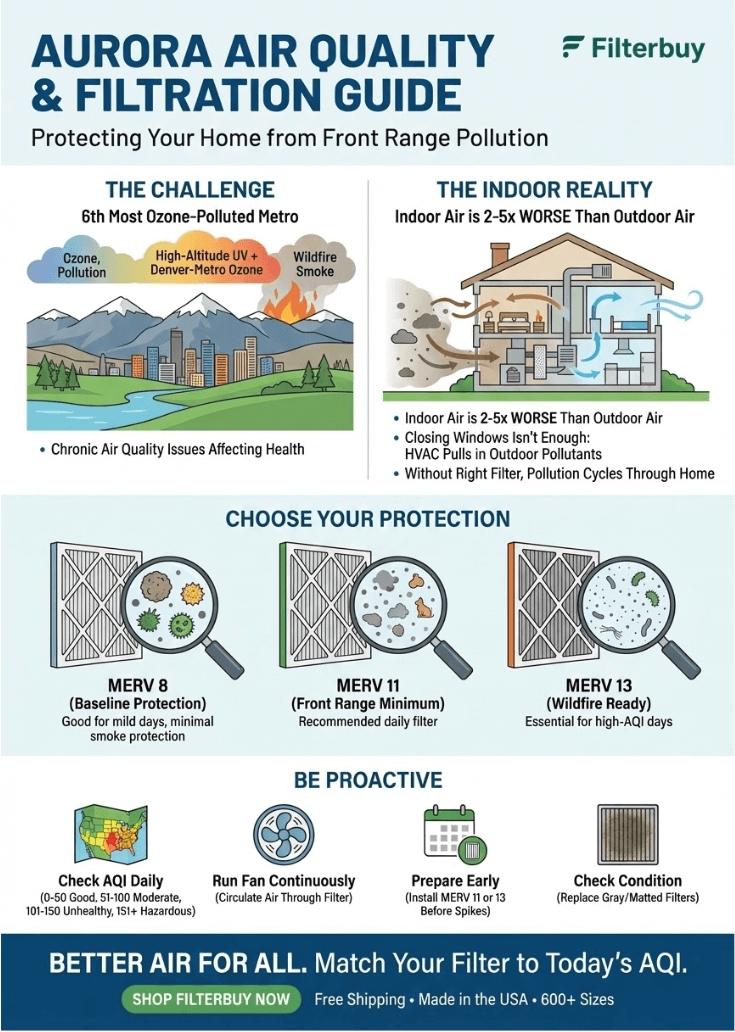
Aurora's air problem is chronic. Ranked 6th worst for ozone three years straight.
Indoor air is 2–5x worse than outdoor. Closing windows alone isn't enough.
Prepare before the spike, not after. The right filter should already be installed.
MERV 8 is the baseline. MERV 11 is our Front Range minimum. MERV 13 for the smoke and ozone season.
Make the AQI a daily trigger. Check the map, then make sure your filter matches.
Understanding Aurora's Air Quality Index Today
The Air Quality Index is a standardized scale from 0 to 500 that tells you how clean or polluted the air is in your area and what health effects you might experience. For Aurora residents, the number you see on the map above reflects real-time measurements of five major pollutants: ground-level ozone, particulate matter (PM2.5 and PM10), carbon monoxide, sulfur dioxide, and nitrogen dioxide. An AQI reading under 50 means the air is good. Once it climbs above 100, sensitive groups — including children, older adults, and anyone with asthma or respiratory conditions — should start paying closer attention.
Why Aurora's Air Quality Fluctuates
Aurora sits at the eastern edge of the Denver metropolitan area, and that geography matters. Vehicle emissions along the I-225 and E-470 corridors, combined with industrial activity and Colorado's high elevation, create conditions where ground-level ozone forms faster than in many other U.S. cities. Summer months tend to bring the worst readings, as heat and sunlight cook those emissions into smog. Then there's wildfire season — when smoke from fires burning hundreds of miles away can push Aurora's AQI into unhealthy territory for days at a time. Even winter isn't a free pass, as temperature inversions can trap particulate matter close to the ground across the Front Range.
What Your AQI Reading Means for Indoor Air
Here's something we've seen firsthand after shipping millions of filters to Colorado homes: most people check the AQI, decide to stay indoors, and assume they're protected. The reality is more complicated. Your HVAC system pulls in outdoor air, and without the right filter, those same pollutants — fine particulate matter, ozone byproducts, smoke particles — cycle through your home every time your system runs. On days when Aurora's AQI is elevated, your air filter is doing the heaviest lifting, and a standard fiberglass filter simply isn't built for that job.
How To Protect Your Home on High-AQI Days
Run your HVAC fan continuously to keep air cycling through your filter rather than sitting stagnant. And make sure you're using a filter rated to capture the pollutants that actually affect Aurora — a MERV 11 or MERV 13 filter traps the fine particles and allergens that lower-rated filters let pass right through.
We manufacture our filters in MERV 8, MERV 11, and MERV 13 ratings, so you can match your level of protection to what the AQI map is telling you on any given day. If wildfire smoke is in the forecast, that's when stepping up to a MERV 13 makes the biggest difference.

Stay Ahead of Aurora's Air Quality
Making it part of your routine — the same way you check the weather — puts you in control of your family's air quality year-round. Bookmark this page for a quick daily check, and pair it with a filter replacement schedule that keeps your HVAC system ready for whatever Aurora's air throws at it. With over 600 sizes available and free direct-to-door shipping from our U.S. factories, keeping your home protected has never been easier.
"After more than a decade of manufacturing air filters and shipping millions to homes across Colorado, we've seen a clear pattern — the families who pair their daily AQI check with the right MERV-rated filter aren't just reacting to bad air days, they're preventing them from becoming an indoor problem in the first place."
— Filterbuy Air Quality Team
7 Air Quality Resources Every Aurora Homeowner Should Have in Their Back Pocket
Look — we get it. You Googled Aurora's air quality because you want a quick answer, not a research project. But after spending over a decade helping Colorado families breathe better air at home, we've learned that the people who really stay on top of their air quality don't just check one source and call it a day. They know where to look, what the numbers actually mean, and when it's time to take action indoors. We pulled together the seven resources that matter most so you can skip the guesswork.
1. AirNow.gov: Your Go-To for Real-Time AQI Data Straight from the EPA
EPA's interactive map shows current AQI readings with pollutant-specific layers for ozone and particulate matter, plus a 24-hour time slider so you can see how Aurora's air has changed since this morning. No ads, no spin — just the official numbers from the agency that sets the standards. We check it ourselves before making filtration recommendations to Colorado customers.
Source: U.S. Environmental Protection Agency
2. Colorado CDPHE Air Quality Page: The Statewide View That Hits Close to Home
Living along the Front Range means your air quality story is never just about Aurora — it's about what's blowing in from Denver, drifting down from mountain wildfires, or building up during an ozone action day. Colorado's health department tracks all of it, including Front Range advisories, the Colorado Smoke Blog, prescribed fire maps, ozone action day tallies, and live data from monitoring stations across the region. When wildfire season hits and our Colorado orders for MERV 13 filters spike, this is usually the resource that's driving the urgency.
Source: Colorado Department of Public Health & Environment
URL: https://www.colorado.gov/airquality/air_quality.aspx
3. City of Aurora Air Quality Network: Block-by-Block Data for Your Side of Town
The city runs 15 government-sponsored air quality monitoring stations across every Ward, measuring particulate matter, volatile organic compounds, ozone, carbon monoxide, and nitrogen dioxide in real time. That means you're not just seeing a metro-wide average — you're seeing what's actually in the air near your neighborhood. We wish every city offered this level of detail. It makes choosing the right filter for your specific conditions a whole lot easier.
Source: City of Aurora Energy & Environment Division
URL: https://www.auroragov.org/residents/environmental_resources/air_quality
4. EPA AQI Basics Guide: Finally Understand What Those Color Codes Mean
We talk to homeowners every day who check the AQI but aren't sure what the number actually tells them. No shame in that — it's not exactly intuitive. The scale runs from 0 to 500, with readings at or below 50 meaning good air quality and anything above 300 considered hazardous. This quick EPA guide breaks down every color-coded category and spells out when you should change your plans. Think of it as the cheat sheet that makes the map above actually useful.
Source: U.S. Environmental Protection Agency — AirNow
URL: https://www.airnow.gov/aqi/aqi-basics/
5. EPA Patient Exposure & AQI Activity Guide: Must-Read If Anyone in Your Home Is in a Sensitive Group
If you've got kids, aging parents in the house, or anyone dealing with asthma or heart issues, the standard AQI advice doesn't go far enough. The EPA's clinical guide explains that when AQI levels hit the 101–150 range, people with heart or lung disease, older adults, children, people with diabetes, and lower-income communities should reduce prolonged or heavy exertion outdoors. It's also the reason we always recommend stepping up to at least a MERV 11 for households with sensitive family members — because staying inside only helps if your indoor air is actually clean.
Source: U.S. Environmental Protection Agency — Health Professionals
URL: https://www.epa.gov/pmcourse/patient-exposure-and-air-quality-index
6. IQAir Aurora: See Whether Today's Reading Is Normal or a Red Flag
A single AQI number doesn't tell you much without context. We use trend data when advising customers on whether a MERV 8 is sufficient for their area or whether they should be running a MERV 13 year-round. Spoiler: if you're in Aurora, the answer is usually the latter.
Source: IQAir
URL: https://www.iqair.com/us/usa/colorado/aurora
7. Filterbuy: Where Checking the AQI Turns into Actually Protecting Your Home
This is the part most air quality pages leave out — and it's the part we know best. After manufacturing millions of filters in our U.S. factories and shipping them directly to homes across Colorado, we've seen the pattern play out every year: AQI spikes, homeowners close the windows, but the HVAC system keeps pulling those same pollutants inside. That's the gap we fill. Our MERV 8, MERV 11, and MERV 13 filters are built to capture the exact particles that AQI maps measure — fine particulate matter, smoke, ozone byproducts, and allergens. Pick the rating that matches what today's map is showing you, and we'll ship it directly to your door with free delivery and no middlemen. Because knowing what's in the air is important, but doing something about it is the whole point.
Source: Filterbuy — U.S. Manufactured Air Filters, Better Air For All
What the Data Tells Us — And What We've Seen Firsthand in Colorado Homes
We've spent over a decade shipping filters to Front Range homes. The numbers from federal and nonprofit sources back up exactly what we see in our order data and customer conversations every season.
1. Aurora Sits Inside the 6th Most Ozone-Polluted Metro in the U.S. — Three Years Running
The American Lung Association's 2025 "State of the Air" report ranked the Denver metro area 6th worst nationally for ozone pollution for the third consecutive year. We could see it before the report confirmed it. Every summer, our Colorado orders shift heavily toward MERV 13 filters starting in late May and don't taper off until October — tracking almost perfectly with ozone season.
This isn't a fluke year. Nationally, 156 million Americans — 46% of the population — live in areas with unhealthy air pollution levels, and Aurora is firmly inside that footprint.
What we tell our Colorado customers: Run a MERV 11 at a minimum. Step up to MERV 13 during summer. The data and our own shipping trends tell the same story.
Source: American Lung Association — 2025 "State of the Air" Report
URL: https://www.lung.org/media/press-releases/co-sota-2025-denver-release
2. The Federal Government Has Classified the Front Range as Failing Ozone Standards — Twice
Two federal benchmarks. Two failing grades:
2015 ozone standard: In July 2024, the EPA reclassified the Denver metro/northern Front Range from "moderate" to "serious" nonattainment, based on monitoring data from 2021–2023 showing the region would not meet federal limits. 2008 ozone standard: The EPA had already escalated the classification from "serious" to "severe" in 2022.
In practical terms, Aurora's air quality isn't just bad on occasional spike days. It's been formally documented as chronically exceeding levels the federal government considers safe.
We've watched this progression play out in how our customers buy. Five years ago, most Aurora-area orders were MERV 8. Today, the majority are MERV 11 and MERV 13. Our customers figured out what the EPA confirmed — standard filtration isn't enough for Front Range air.
Source: Colorado Department of Public Health & Environment
URL: https://cdphe.colorado.gov/nonattainment-federal-ozone-pollution-standards
3. Your Indoor Air Is Likely 2–5x More Polluted Than the Air Outside
This is the statistic that changes the conversation for most of our customers:
The EPA reports that Americans spend approximately 90% of their time indoors, where some pollutant concentrations are often 2 to 5 times higher than typical outdoor levels.
The people most vulnerable — young children, older adults, and those with cardiovascular or respiratory disease — tend to spend even more time inside.
We hear the same thing from Aurora families every wildfire season: "We closed the windows, so we should be fine." After working with millions of homeowners, here's what we can tell you:
Closing windows is only half the equation.
Your HVAC system keeps pulling and recirculating air — including whatever infiltrates through ducts and gaps.
A basic fiberglass filter rated below MERV 8 catches the big stuff but lets fine particulate matter pass right through.
That's the gap we built our product line to close: three MERV ratings, over 600 sizes, all manufactured in our U.S. factories — because the EPA's data makes it clear your filter is the last line of defense between outdoor pollution and your family's lungs.
Source: U.S. Environmental Protection Agency — Indoor Air Quality
URL: https://www.epa.gov/report-environment/indoor-air-quality
Final Thoughts and Opinion
After more than a decade of manufacturing filters and shipping them to Colorado homes, we've reached a conclusion most air quality pages won't tell you: checking Aurora's AQI is important, but it's not enough.
Most resources stop at the outdoor number. They'll tell you the AQI is orange and advise you to limit outdoor activity. Solid guidance — but it leaves out the most actionable step a homeowner can take: making sure the air inside your home is actually cleaner than what's outside.
Here's what we've learned working directly with Front Range families:
Most homeowners overestimate what their current filter is doing. Standard fiberglass filters protect your HVAC equipment, not your lungs. They do almost nothing for the fine particles and smoke that the AQI actually measures.
The families breathing the best air prepared before the spike, not after. Customers on a recurring MERV 13 delivery don't scramble when wildfire smoke rolls in. Their system is already equipped.
Aurora's air challenges aren't going away. The EPA has downgraded the Front Range twice. The Lung Association has ranked Denver-Aurora 6th worst for ozone three years straight. Longer wildfire seasons and continued corridor growth mean filtration is becoming more important, not less.
Our honest take: Treat the AQI map above as a trigger, not just a tracker. When that number climbs, think about what's happening inside your house — and whether your filter is up to the task.
What To Do Next: 3 Steps to Cleaner Indoor Air Today
You've checked the AQI. You've seen the data. Now turn awareness into action.
Step 1: Bookmark This Page
Make Aurora's AQI part of your daily routine. Today's reading tells you how hard your HVAC filter is working — and whether it's enough.
Step 2: Check Your Current Filter
Pull it out and look for two things:
MERV rating. Below MERV 8 or unlisted? It's not capturing the fine particles driving Aurora's AQI.
Condition. Gray or matted? It's past due. Your system is working harder and filtering less.
Your filter size is printed on the frame. We carry over 600 sizes, including custom options.
Step 3: Match Your MERV Rating to Front Range Air
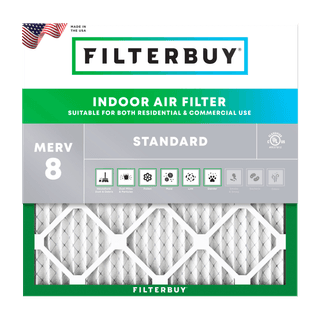
MERV 8 — Baseline protection. Captures dust, pollen, and mold. Good for mild AQI days.
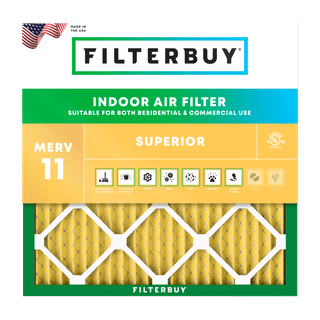
MERV 11 — Our most popular for Colorado. Traps smog particles, pet dander, and fine allergens. Our minimum recommendation for sensitive households.
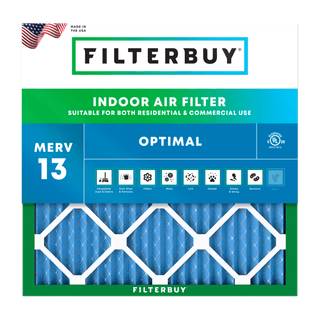
MERV 13 — Maximum residential protection. Captures smoke, bacteria, and ultrafine particulate matter. What we recommend for Aurora homes that take air quality seriously.
Ready? Visit Filterbuy.com, enter your size, pick your MERV rating, and we'll ship factory-direct to your door with free delivery. Set up auto-delivery so your next filter arrives on schedule — no scrambling when the AQI spikes.
Frequently Asked Questions
Q: What is the AQI, and what do Aurora's numbers mean?
A: The AQI scale runs 0–500. Lower is better: 0–50 (good), 51–100 (moderate), 101–150 (unhealthy for sensitive groups), 151+ (unhealthy for everyone). After a decade helping Colorado homeowners, we've learned most people wait until orange to act. But even yellow readings mean your HVAC is pulling ozone and fine particles through your home every cycle.
Q: Why is Aurora's air quality worse than that of other Colorado areas?
A: Location. Aurora sits inside a nine-county zone the EPA has twice classified as failing federal ozone standards. High altitude, intense UV, I-225/E-470 corridor emissions, and wildfire smoke create year-round challenges. Our Aurora customers consistently order higher-MERV filters than our national average — the local air demands it.
Q: How often does the live AQI map update?
A: Data refreshes hourly from monitoring stations. Aurora also operates 15 city-run stations across every Ward. Our advice: check it every morning like the weather. During ozone season and wildfire events, check twice daily. Families who build this habit catch bad air days before the house fills with pollutants.
Q: What should I do when Aurora's AQI tops 100?
A: Close windows, run your HVAC fan continuously, and know your filter's MERV rating:
MERV 8 — Catches dust and pollen. Baseline only.
MERV 11 — Traps smog and fine allergens. Our Front Range minimum.
MERV 13 — Captures smoke and ultrafine particles. Best for high-AQI days.
The right filter should be installed before the spike, not after.
Q: How does outdoor AQI affect my indoor air?
A: More than most people expect. The EPA reports indoor pollutants are typically 2–5x higher than outdoor levels. Your HVAC recirculates air constantly — and a basic filter below MERV 8 lets fine particles pass right through. After working with millions of homeowners, we can tell you: the difference between a home that smells like smoke for days and one that doesn't almost always comes down to what's in the filter slot.
Now That You've Checked Aurora's Live Air Quality Index, Make Sure Your Home Is Ready for What's in the Air
Find your filter size, choose the MERV rating that matches today's AQI, and we'll ship it factory-direct to your door with free delivery — because the air quality map tells you what's outside, but the right Filterbuy filter protects what's inside.