
Temecula Real-Time AQI Tracker


Get Alerts For Unhealthy AQI In Your Area
When air quality in your area reaches unhealthy levels, we'll send you a quick alert, along with expert tips on how to reduce your exposure.
What's Actually In Temecula Air Today?
What High AQI Means for Your Lungs in Temecula
How to Read AQI
The Air Quality Index (AQI) measures how polluted the air is and how it may affect your health.
0–50 (Good): Air quality is satisfactory.
51–100 (Moderate): Acceptable, but some pollutants may pose minor concerns.
101–150 (Unhealthy for Sensitive Groups)
151–200 (Unhealthy)
201–300 (Very Unhealthy)
301+ (Hazardous)
Moderate
Still okay for most, but if you have asthma or allergies, take it easy and avoid long outdoor workouts.
Shop MERV 11 filters→What's the Right Filter for Your AQI Level?



Check Today's Live Real Time Air Quality Index AQI Map in Temecula, CA Now
TL;DR
The live map above shows Temecula’s real-time air quality index (AQI) and the pollutant behind it, updated hourly. An afternoon sea breeze usually keeps Temecula cleaner than the rest of Riverside County, though summer ozone and wildfire smoke still cause bad days. The indoor advice here draws on Filterbuy’s work building air filters in the U.S. since 2013.
Key Takeaways
Most bad-air days come from summer ozone or wildfire smoke.
In 2023, Temecula logged 3 days over the federal ozone standard, compared with 69 in Metropolitan Riverside.
At an AQI of 100, Filterbuy’s action line, switch to MERV 13, set the fan to On, run a portable HEPA air cleaner in each occupied room, and close up the house.
How to Read Temecula’s Live AQI Map Right Now
Filterbuy’s live Temecula air quality map above is the quickest way to answer “what is the air quality in Temecula today?” Each marker shows the AQI from 0 (cleanest) to 500 (hazardous); tap one to see the pollutant behind it.
The official reading comes from the South Coast Air Quality Management District (South Coast AQMD). Readings can vary across ZIP codes 92590, 92591, and 92592.
What Each AQI Color Means for Your Day in Temecula
The AQI sorts air into six color-coded categories set by the U.S. Environmental Protection Agency (EPA), and each color points to a simple next step.
Filterbuy’s guide explains how the air quality index is calculated.
Why Temecula’s AQI Can Shift Fast or Look Wrong
Temecula’s AQI can lag behind what you see and smell, because official monitors report multi-hour averages. AirNow, the EPA’s public air quality site, uses a method called NowCast that weights the newest hourly readings most.
To measure that lag, Filterbuy ran the EPA’s NowCast formula against a modeled smoke plume. The number read 42 AQI points too low as smoke arrived and 79 points too high as it cleared. If you smell smoke, close up before the map turns orange. See what NowCast AQI means.
Is the Air in Temecula Safe to Breathe Today?
Whether Temecula’s air is safe today depends on the AQI shown on the live map above. Readings up to 100 are fine outdoors for most people. From 101, sensitive groups should spend less time outdoors.
If you must be outside in heavy smoke, South Coast AQMD notes that a properly fitted N95 or P100 respirator may provide some protection. Anyone with a lung or heart condition should follow their doctor’s plan when the AQI climbs.
Where to Check Temecula’s Air Quality Forecast and Alerts
South Coast AQMD publishes Temecula’s daily air quality forecast and smoke advisories, both free through its app or email air alerts.
From November 1 through February, it can also call mandatory 24-hour No-Burn Days under its Check Before You Burn program (Rule 445).
What’s Driving Temecula’s Air: Ozone and Smoke Versus the Sea Breeze
Temecula’s air comes down to geography: the city sits about 22 miles inland, behind coastal mountains whose low gaps let ocean air through most afternoons. Desert heat draws that air through the Santa Margarita and Rainbow Gap passes, a pattern local meteorologists call the Elsinore Convergence Zone.
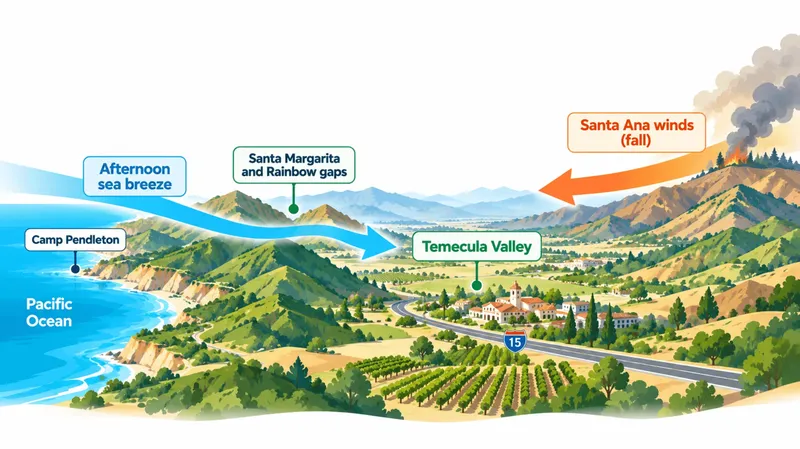
Two pollutants cause most bad-air days:
Ground-level ozone forms when emissions react in sunlight, and Interstate 15 traffic pushes it higher on hot, still days.
PM2.5, fine particles small enough to reach deep into the lungs, comes mostly from wildfire smoke and winter wood burning, plus some construction and hillside dust.
How Temecula Compares With the Rest of Riverside County
Temecula sees far fewer high-ozone days than most of Riverside County, even though the county ranks second-worst in the nation for ozone. The American Lung Association’s State of the Air 2026 report card for Riverside County also fails it on particle pollution.
Source: South Coast AQMD 2023 Air Quality Data Tables. The federal 8-hour ozone standard is 0.070 parts per million.
When Filterbuy lined up the district’s 2023 station data, Temecula’s 3 days looked more like Orange County’s monitors (2 and 9 days) than Metropolitan Riverside’s 69. In our view, the county’s grade reflects its smoggiest inland monitors, though Temecula did log 47 days in 2017. Compare our Lake Elsinore AQI map, Riverside AQI map, or live California AQI map.
Wildfire Smoke and Santa Ana Winds in the Temecula Valley
Wildfire smoke is Temecula’s most serious short-term air quality risk, and it can arrive from any direction. Santa Ana winds carry it west from inland fires, and fires to the south and west blow it straight in:
Highland Fire, October 2023: This fire near Aguanga drew a South Coast AQMD smoke advisory for Temecula.
Henderson Fire, May 2025: The Henderson Fire near Pala sent smoke toward Temecula, and Temecula Valley High School became an evacuation center.
Mateo Fire, June 2026: South Coast AQMD reported smoke pushing east toward Temecula.
Track fires on Filterbuy’s Riverside wildfire and smoke map.
Temecula’s Air Quality Calendar: When to Watch for Ozone and Smoke
Temecula’s air problems follow the seasons. Two of the three smoke events above came in late May and June, so keep a MERV 13 on the shelf by Memorial Day.
Seasons overlap; check the live map daily.
No Central Air? Smoke Steps for Temecula Homes With Swamp Coolers or Fans
Without ductwork, portable HEPA air cleaners are your main defense against smoke, not a backup. Turn off swamp coolers and whole-house fans during smoke, since both pull outdoor air inside.
Size each cleaner with the EPA’s clean room rule: a smoke CADR of at least two-thirds of the room’s square footage. A 300-square-foot bedroom needs a smoke CADR of about 200. Skip ionizers and ozone generators; the EPA advises against cleaners that produce ozone.
Filterbuy’s Take: What to Do When Temecula’s AQI Hits 100
An AQI of 100 is our action line for smoke: switch to a MERV 13, set the thermostat fan to On, run a portable HEPA air cleaner in each occupied room, and close up the house. That’s still Moderate on the AQI; it’s simply where we tell customers to act. Check AirNow and South Coast AQMD advisories first, and follow any local instructions to stay in or leave.
MERV 13 in your HVAC. It’s the whole-home layer, moving far more air than any portable unit.
Fan set to On. On Auto, the system only filters while it’s heating or cooling.
A portable HEPA air cleaner in each occupied room, bedrooms first. It cleans that room harder than the central system can.
A closed-up house. Keep windows and doors shut, and skip candles, frying, smoking, and vacuuming without a sealed unit.
Ozone is different: pleated filters capture particles, not gases, so on ozone days, just keep windows shut.
The number and your nose are answering two different questions. NowCast is telling you what the last few hours averaged out to. Your nose is telling you what is coming through the wall right now. On a service call during fire season I go by what the filter looks like, not what the app says.
David Clark, Licensed HVAC Technician
Matching Your Filter to Temecula’s AQI
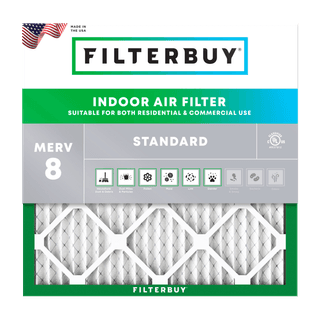
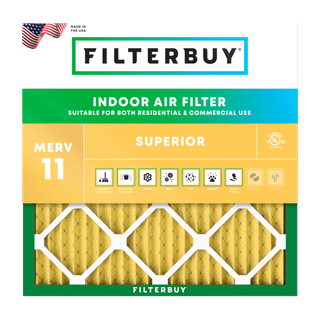
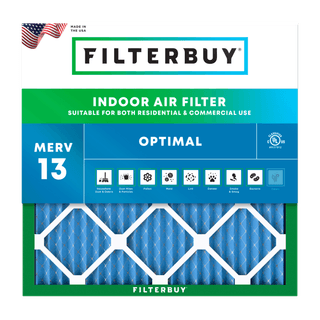
For wildfire smoke, the answer is MERV 13. MERV 8 handles everyday dust, and MERV 11 adds pet dander and pollen, but once the AQI reaches 100 or smoke is in the air, MERV 13 is the tier we recommend. The EPA recommends a filter rated MERV 13 or higher in central systems during smoke events. It also notes that most furnaces and HVAC systems handle MERV 13 without equipment problems when the filter is replaced often, so just confirm your size.

Most furnaces and HVAC systems can take a MERV 13 without equipment problems when the filter is replaced often, per the EPA. Confirm your size first.
During smoke, check the filter often and replace it when it looks dark brown or black, which can be well before its usual interval. Keep spares on hand, or set up auto-delivery.
We make every Filterbuy filter to order in our U.S. plants, in more than 600 sizes. Find MERV 13 air filters in your size, or browse MERV 8 and MERV 11 for everyday use.
Supporting Statistics: The Research Behind This Page
1,218 locations. South Coast AQMD’s map blends monitors and sensors with a forecast model at 1,218 points, so ZIP codes can differ.
55% to 60% of outdoor smoke. That’s roughly how much reaches indoors with windows closed.
A high-efficiency HVAC filter with the fan running may cut indoor PM2.5 by about 50%.
17% more asthma ER visits. That’s what the CDC found on 2023 wildfire smoke days.
It covered 19 smoke days at AQI 101 or above.
Source: CDC, Morbidity and Mortality Weekly Report, August 2023
Temecula Air Quality FAQs
What Is the Air Quality in Temecula Today?
Filterbuy’s live map at the top of this page shows Temecula’s current AQI and main pollutant, refreshed hourly.
Is the Air Quality Bad in Temecula Today?
Check the live Temecula AQI map. From 101 (orange), sensitive groups should limit outdoor exertion, and from 151, everyone should. At 100, start Filterbuy’s four smoke steps.
What Is Temecula’s PM2.5 Level Today?
Tap any marker on the live map for Temecula’s PM2.5 reading right now. The EPA considers a 24-hour PM2.5 average of 9.0 micrograms per cubic meter or less “Good.”
What MERV Rating Do I Need for Wildfire Smoke in Temecula?
MERV 13. Filterbuy recommends switching to it once the AQI reaches 100 or smoke is in the air, with the fan set to On.
When Is Temecula’s Air Quality Usually Worst?
Ozone peaks on hot summer afternoons, and wildfire smoke can drift in anytime from late May through December.
Temecula Air Quality Glossary
Air Quality Index (AQI): The EPA’s 0–500 scale with six color-coded health categories.
PM2.5: Fine particles 2.5 micrometers or smaller; the main pollutant in smoke.
Ground-level ozone (O3): The main ingredient in smog.
NowCast: The EPA’s method for estimating current AQI.
South Coast AQMD: The regional agency that monitors Temecula’s air.
Rainbow Gap and Santa Margarita Gap: Mountain passes that let ocean air into the valley.
MERV: Minimum Efficiency Reporting Value, a 1–16 filter efficiency rating.
HEPA: High-efficiency particulate air filtration, used in portable air cleaners, never a home furnace.
CADR: Clean air delivery rate, the amount of filtered air a portable cleaner delivers.