
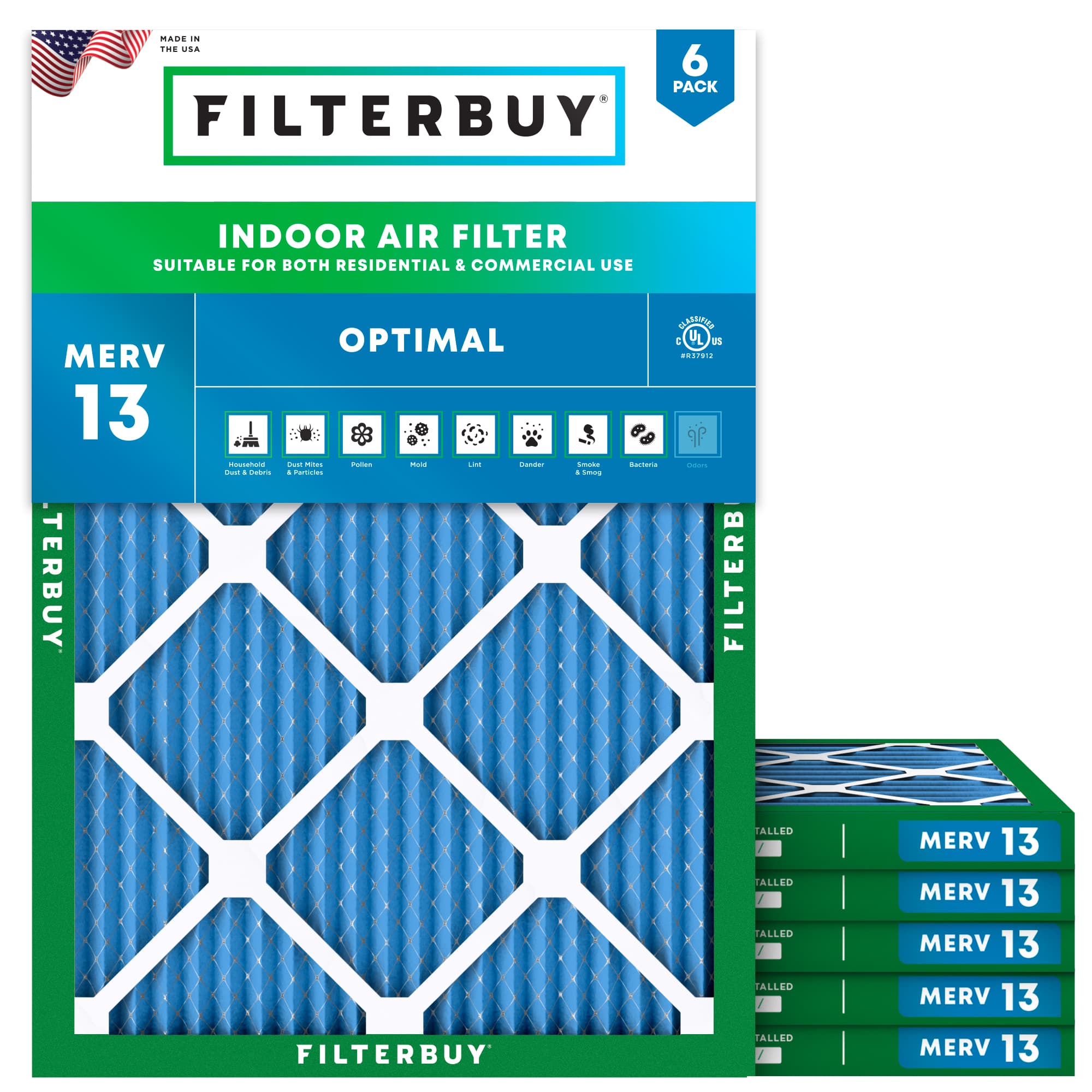
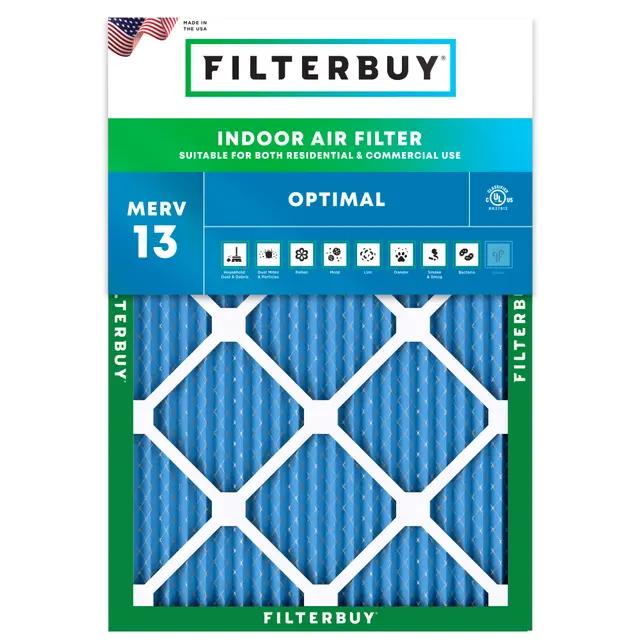
21.5x23.25x1 MERV 13 Pleated Air Filter
Actual Size: 21.5x23.25x0.75
 Free Delivery
  Factory-Direct Low Prices, Made in the USA
 Hassle-Free Returns & Free Exchanges
RESIDENTIAL AND/OR COMMERCIAL USE
Change Every 3 Months
21.5x23.25x1 MERV 13 Pleated Air Filter
Actual Size: 21.5x23.25x0.75
Free Delivery Factory-Direct Low Prices, Made in the USAHassle-Free Returns & Free ExchangesRESIDENTIAL AND/OR COMMERCIAL USE
Change Every 3 Months
21.5x23.25x1 MERV 13 Pleated Air Filter
Actual Size: 21.5x23.25x0.75
Free Delivery Factory-Direct Low Prices, Made in the USAHassle-Free Returns & Free ExchangesRESIDENTIAL AND/OR COMMERCIAL USE
Change Every 3 Months
About
- This is a list 21.5x23.25x1 MERV 13 air filter replacement for your furnace, air conditioner, heat pump, or HVAC system
- Actual air filter size: 21.5x23.25x0.75
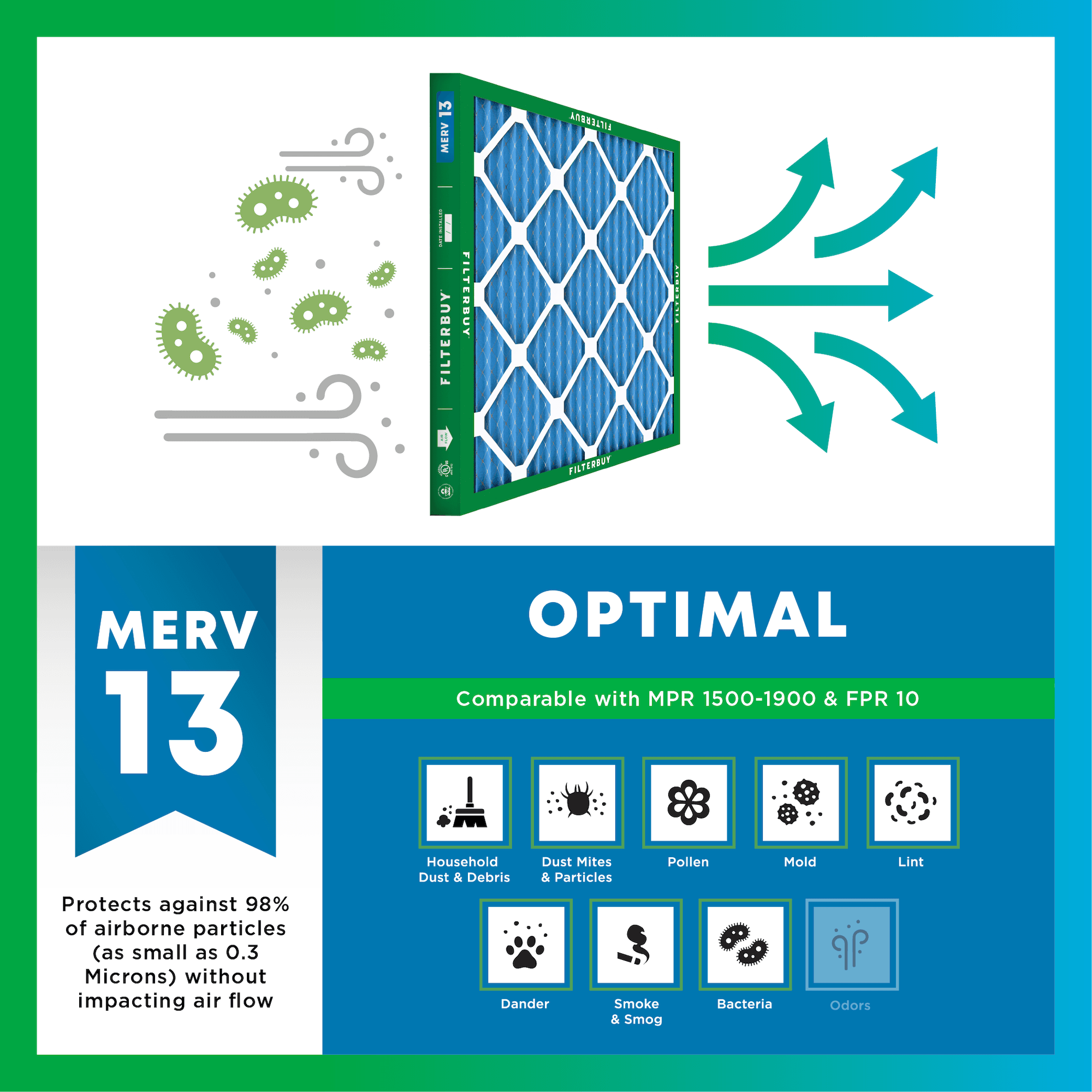
- MERV 13 synthetic media (comparable with MPR 1500/1900 and FPR 10) offers the best protection from dust, pollen, pet dander, mold, smog, bacteria, and virus carrying particles by trapping 98% of airborne particles without impacting air flow.
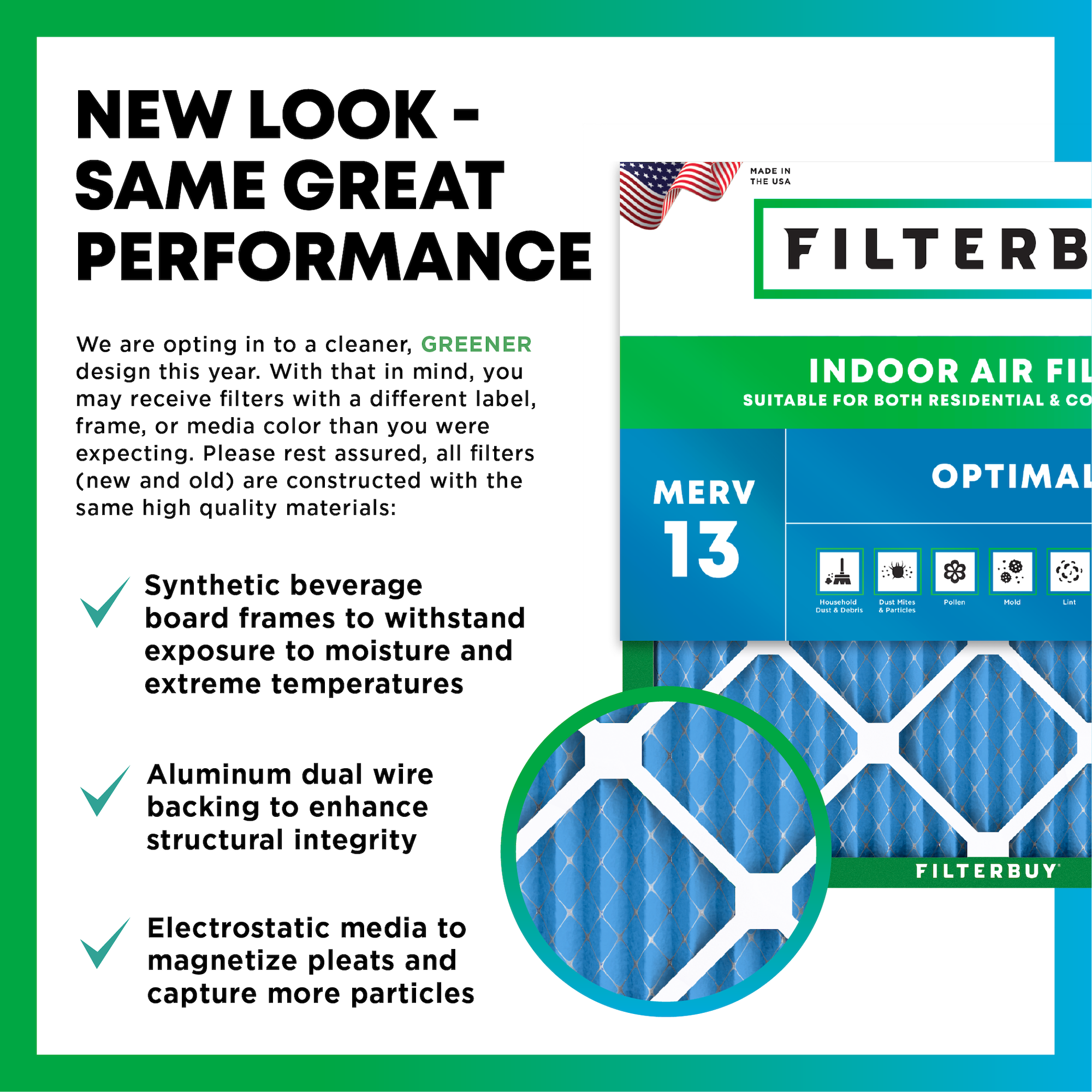
- High-quality construction means electrostatically charged pleated filter media, reinforced wire backing for structural integrity, and a durable frame to resist heat and humidity
- Built to last 3 months. 300% longer than fiberglass models
- 100% manufactured in the United States and designed with recyclable materials
- Learn more about 21.5x23.25x1 Air Filters
Top-Rated Filters. American Made. Delivered Free.
At Filterbuy, we don't cut corners—we craft high-quality air filters right here in the USA and ship them to your doorstep for free. No delays, no gimmicks—just clean air, made easy. With thousands of five-star reviews and filters built for real life & every HVAC system, it's no wonder why over 4 million families trust Filterbuy.

Proudly Made In The USA

Fast, Free Shipping on Every Order

Premium Materials That Go The Distance

85,000+ 5-Star Reviews From Happy Customers

Save Up to 70% Per Filter with Packs
Things to Know About Filter Sizes

Nominal Size
- The rounded size printed on your filter or HVAC unit (e.g., 21.5x23.25x1).
- Usually whole numbers to make identifying and ordering easier.
- A label for compatibility—not the exact measurement.

Actual Size
- The true, trimmed dimensions of the filter (e.g., 21.5x23.25x0.75 inches).
- Filters are manufactured slightly smaller so they slide into the filter slot without forcing.
- If you don't know your nominal size, measure your filter to get the actual size, then round up to find the nominal size to search on our site.

Why the difference?
- Nominal sizes simplify shopping and standardize categories.
- Actual sizes ensure the filter fits properly inside your HVAC's filter rack.
How To Find Your Nominal Size When You Don't Know It


Measure length × width × depth with a tape measure to find the actual size.

Round up each dimension to the nearest whole number to get the nominal size. Example: 21.5x23.25x0.75 in → 21.5x23.25x1 nominal.

Search by nominal size on our site for the best fit.

Why Getting the Right Size Matters
- Too small? Air can bypass the filter, reducing air quality and efficiency.
- Too big? It won't fit—risking bent frames and airflow issues.
- Just right? You get maximum performance, better filtration, and cleaner air.

Free Exchange Policy
If the filter you buy doesn't fit, we'll send you a better size.

What's a MERV Rating?
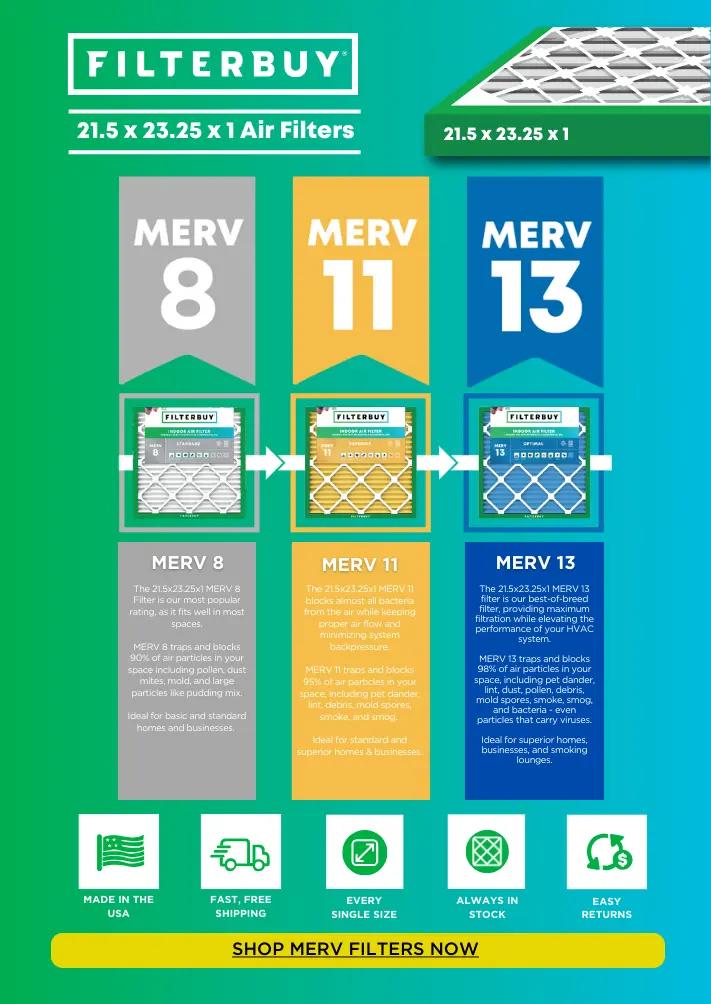
MERV stands for Minimum Efficiency Reporting Value—but don't let the technical name fool you. It's just a way to rate how well an air filter traps stuff like dust, pollen, pet dander, and smoke. The higher the MERV number, the more particles it catches—and the cleaner your air will be.

Merv 8
Comparable to:FPR: 4-7
MPR: 600-1000
 Dust & Debris
 Dust Mites & Particles
 Pollen
 Mold
Mold Lint
Lint Dander
Merv 11
Comparable to:FPR: 6-9
MPR: 1200-1550
Dust & DebrisDust Mites & ParticlesPollenMoldLintDander Smoke & Smog
Merv 13
Comparable to:FPR: 10
MPR: 1900-2800
Dust & DebrisDust Mites & ParticlesPollenMoldLintDanderSmoke & Smog Bacteria
MERV 8
Comparable to:FPR: 4-7MPR: 600-1000


MERV 11
Comparable to:FPR: 6-9MPR: 1200-1550

MERV 13
Comparable to:FPR: 10MPR: 1900-2800
What Makes Our Filters Last 90 Days? Quality, From the Inside Out
We build every Filterbuy filter to deliver reliable 90-day performance—thanks to smart design and premium materials that do the heavy lifting. Here's what makes the difference:
Pleated Design
More pleats = more surface area to capture dust and debris, keeping your air cleaner longer.
Electrostatically Charged Media
Pleats are magnetized to attract and trap microscopic particles—like pet dander, pollen, and smoke.
Synthetic Beverage Board Frame
Engineered to resist warping in extreme temperatures and high humidity.

Aluminum Dual Wire Backing
A layer of metal reinforcement keeps pleats evenly spaced and structurally sound—no sagging, even at high airflow.
Made in the USA
Assembled with care. Built to perform. Ships fast, free, and reliably from our U.S. facilities.
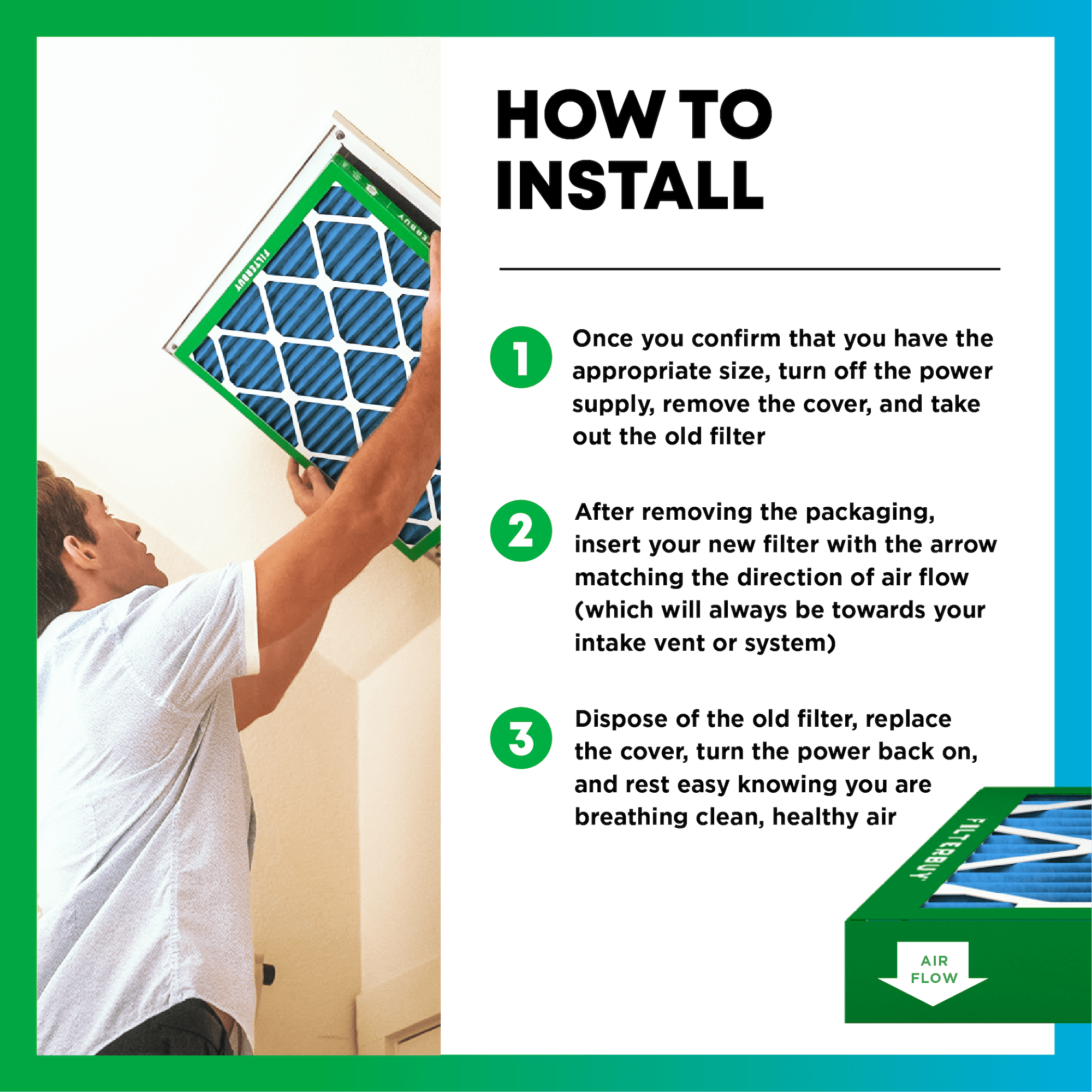
How to Install Your Filter in 4 Simple Steps

Turn Off Your HVAC SystemSafety first.

Remove The Old FilterLook for the airflow arrow and make note of the direction.

Slide In Your New FilterArrow should point toward the system (same direction as before).

Turn Your System Back OnAnd enjoy the fresh, clean air.

Never forget to replace your air filter again.
- Save 5% on every order
- Choose Your Delivery Schedule
- Edit, Skip, or Cancel Anytime.
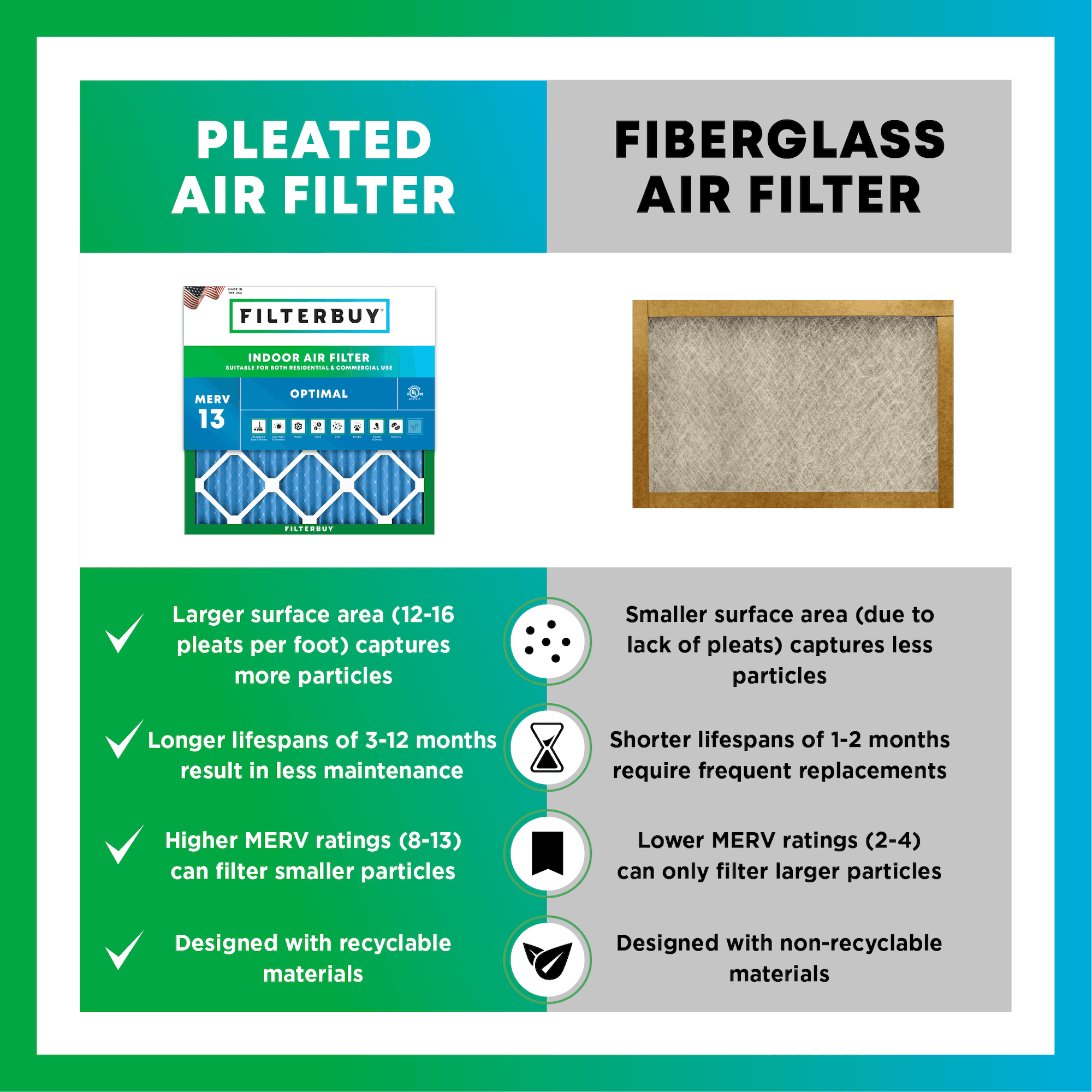
Pleated Filters vs. Fiberglass—What's the Difference?
Not all air filters are created equal. Pleated filters don't just last longer—they actually clean your air better. Here's how they stack up:

Pleated Filters
Efficiency:
High (MERV 8–13) – Traps more particles
Lifespan:
90 days – Long-lasting performance
Air Quality:
Excellent – Cleaner, healthier air
Materials:
Recyclable and durable

Fiberglass Filters
Efficiency:
Low (MERV 4 or less) – Misses small stuff
Lifespan:
30 days or less – Replace often
Air Quality:
Minimal – Basic protection only
Materials:
Thin, flimsy, and not recyclable
Pleated filters are a no-brainer—more protection, less hassle, and better air for your home.
How Often Should You Change Your Filter?
Changing your filter on time keeps your HVAC system running efficiently—and helps protect your lungs from dust, allergens, and airborne irritants. Here's how often to swap it out based on your needs:

Every 90 Days
Standard ScheduleFor most homes without pets or special air quality concerns. Great for general upkeep and energy efficiency.

Every 60 Days
If You Have Pets or AllergiesShedding fur, dander, and allergy triggers can build up fast. Changing your filter every two months helps keep the air fresher and symptoms at bay.

Every 30 Days
If You Have Respiratory Concerns or Live in Smog/Wildfire ZonesFor households affected by smoke, pollution, or respiratory conditions, monthly changes ensure maximum protection.

Want to stay on track? Set a reminder—or skip the stress with auto-delivery so fresh filters show up right when you need them.
Don't Just Take Our Word For It...
Got More Questions? We've Got Answers.
Product Specifications
| Nominal Size | 21.5 x 23.25 x 1 inches |
| Actual Size | 21.5 x 23.25 x 0.75 inches |
| Filter Type | Pleated |
| Media | Electrostatically Charged |
| Frame | Beverage Board |
| MERV Ratings Available | 8, 11, 13 |
| Lifespan | Up to 90 Days |
| Origin | Made in USA |
Reducing Ragweed in Your Home With 21.5x23.25x1 MERV 13 Filters
After manufacturing millions of MERV 13 filters and hearing from allergy sufferers across the country, we know one thing for certain: when ragweed season hits, your home should be your sanctuary—not another source of misery. A 21.5x23.25x1 MERV 13 filter captures up to 90% of ragweed pollen particles, transforming your indoor air from allergen-filled to breathable. Customers tell us the difference is immediate: clearer breathing, fewer symptoms, and finally feeling comfortable in their own homes during peak allergy season.
TL;DR Quick Answers
21.5x23.25x1 MERV 13 Air Filter
What it is: A 1-inch thick pleated air filter measuring 21.5" x 23.25" with MERV 13 filtration—the highest efficiency rating recommended for residential HVAC systems.
What it captures: Ragweed pollen, other pollens, mold spores, dust mites, pet dander, bacteria, smoke particles, and some viruses—at 85-90% efficiency for particles 1-3 microns.
Best for: Ragweed allergy sufferers, seasonal allergy management, homes with respiratory concerns, and anyone seeking premium indoor air quality.
Ragweed season replacement: Every 30-45 days during peak August-September; 60-90 days during off-season.
Pro tip from our team: After manufacturing millions of MERV 13 filters, we've found that installing a fresh filter in late July—before ragweed season starts—makes a significant difference in symptom severity compared to waiting until symptoms begin.
Top Takeaways
1. MERV 13 captures 90%+ of ragweed pollen. This is significantly higher than MERV 8 (70-85%) and makes a noticeable difference in symptoms.
2. Ragweed season is getting longer. Climate change has extended the season by up to 25 days in some regions, making proper filtration more critical than ever.
3. Timing matters. Install a fresh MERV 13 filter in late July before ragweed season begins, and increase replacement frequency to 30-45 days during peak months.
4. EPA and ASHRAE recommend MERV 13. It's now the professional standard for improved indoor air quality and allergen control.
5. Combine filtration with basic practices. Keep windows closed, shower before bed, and remove shoes at the door to maximize your MERV 13 filter's effectiveness.
Why Ragweed Is So Challenging to Control
Ragweed isn't like other allergens. Here's what makes it particularly difficult:
• Prolific pollen production: A single ragweed plant produces up to 1 billion pollen grains per season
• Extreme travel distance: Ragweed pollen has been detected 400 miles out to sea and 2 miles up in the atmosphere
• Extended season: Climate change has lengthened ragweed season by up to 25 days in northern regions
• Small particle size: Ragweed pollen measures 18-22 microns—small enough to penetrate deep into airways
Why MERV 13 Is the Right Choice for Ragweed
MERV 13 filters capture particles down to 0.3 microns at 85-90% efficiency. For ragweed pollen (18-22 microns), this means near-total removal from your indoor air. Here's how MERV 13 compares:
• MERV 8: Captures ~70-85% of ragweed pollen
• MERV 11: Captures ~85-90% of ragweed pollen
• MERV 13: Captures 90%+ of ragweed pollen PLUS smaller allergens, bacteria, and some viruses
The EPA and ASHRAE now recommend MERV 13 as the minimum for improved indoor air quality. For ragweed allergy sufferers, this recommendation isn't optional—it's essential.
Timing Your Filter Replacement for Ragweed Season
Ragweed season runs from August through the first frost (typically October-November). For maximum protection:
• Install a fresh MERV 13 filter in late July before ragweed season begins
• Replace every 30-45 days during peak season (August-September) when pollen loads are heaviest
• Return to 60-90 day replacement after the first frost ends ragweed season
Customers tell us this proactive approach—installing fresh filters before the season starts—makes a dramatic difference in symptom severity.
Additional Strategies to Maximize Your MERV 13 Filter's Effectiveness
Your filter works best when combined with these practices:
• Keep windows closed during ragweed season (pollen peaks in morning hours)
• Shower before bed to remove pollen from hair and skin
• Run your HVAC fan continuously during high pollen days for maximum air circulation through the filter
• Remove shoes at the door to prevent tracking pollen inside
• Wipe pets before they enter—they carry significant pollen on their fur
"After manufacturing air filters for over a decade and tracking customer feedback through countless ragweed seasons, we've seen MERV 13 transform homes from allergy battlegrounds to actual sanctuaries. The data is clear: customers who upgrade to MERV 13 before ragweed season and maintain a 30-45 day replacement schedule during peak months report dramatically fewer symptoms and significantly better quality of life."
Essential Resources on 21.5x23.25x1 MERV 13 Air Filters
At Filterbuy, we're obsessed with helping allergy sufferers breathe easier. Here are the seven most valuable resources for anyone researching MERV 13 filters for ragweed protection:
1. Understand EPA Recommendations for MERV Ratings
The EPA explains MERV ratings and recommends MERV 13 as the minimum for improved indoor air quality—essential reading for allergy sufferers.
Source: EPA - What Is a MERV Rating?
2. Track Ragweed Pollen Season Length Changes
EPA's climate change indicator shows how ragweed season has lengthened by up to 25 days in some regions—critical for planning your filter replacement schedule.
Source: EPA - Climate Change Indicators: Ragweed Pollen Season
3. Learn Ragweed Allergy Management Strategies
AAFA provides comprehensive guidance on ragweed allergies, including why HVAC filtration is a key defense strategy.
Source: AAFA - Ragweed Woes: How to Win Against Pollen
4. Review ASHRAE Filtration Standards
ASHRAE developed the MERV standard and now recommends MERV 13 as the minimum for virus and allergen control—the professional benchmark for air quality.
Source: ASHRAE - Filtration and Disinfection FAQ
5. Check Your Local Allergy Ranking
AAFA's Allergy Capitals report ranks 100 U.S. cities by allergy severity—see how your area compares and adjust your filtration strategy accordingly.
Source: AAFA - Allergy Capitals Report
6. Understand High-MERV Filter Implementation
The Building America Solution Center provides technical guidance on implementing MERV 13 filters without impacting HVAC system performance.
Source: Building America - High-MERV Filters Guide
7. Shop 21.5x23.25x1 MERV 13 Filters
Ready to protect your home from ragweed? Browse our American-made 21.5x23.25x1 MERV 13 filters, manufactured specifically for allergy sufferers.
Source: Filterbuy 21.5x23.25x1 Filters
Supporting Statistics
After manufacturing millions of filters and tracking customer outcomes through multiple ragweed seasons, we've seen these statistics play out in real homes. Here's what the research confirms:
• Approximately 81 million Americans are diagnosed with seasonal allergic rhinitis annually. Ragweed is one of the most common triggers, affecting about 15% of the population. (Asthma and Allergy Foundation of America)
• Ragweed pollen season has increased by up to 25 days in northern regions due to climate change. This extended exposure window makes proper filtration more critical than ever. (Environmental Protection Agency)
• A single ragweed plant can produce up to 1 billion pollen grains. This explains why outdoor avoidance alone isn't enough—pollen infiltrates homes through doors, windows, clothing, and pets. (AAFA - Ragweed Information)
Final Thoughts & Opinion
Here's what we've learned after manufacturing filters for over a decade and serving countless ragweed allergy sufferers:
MERV 13 isn't optional for ragweed allergy sufferers—it's essential.
The science is clear: ragweed produces billions of pollen grains, the season is getting longer, and your home should be your refuge. MERV 13 provides the filtration efficiency needed to make that happen.
Our honest recommendation for ragweed season:
• Install a fresh MERV 13 filter in late July, before the season starts
• Replace every 30-45 days during peak August-September months
• Run your HVAC fan continuously on high-pollen days
• Combine with basic pollen-reduction practices (closed windows, showering before bed, and shoe removal)
Customers who follow this approach tell us they've reclaimed ragweed season. The investment in MERV 13 filters pays dividends in comfort, reduced medication needs, and finally being able to breathe easily in their own homes.
FAQ on 21.5x23.25x1 MERV 13 Air Filters
Q: Will MERV 13 really make a noticeable difference in my ragweed symptoms?
A: Yes—and the difference is often dramatic. MERV 13 captures 90%+ of ragweed pollen particles, compared to 70-85% for MERV 8. Customers consistently report clearer breathing, better sleep, and significantly reduced need for allergy medication within days of upgrading. After manufacturing millions of these filters, we've seen this transformation repeatedly: homes go from miserable during ragweed season to genuinely comfortable.
Q: Can my HVAC system handle a MERV 13 filter?
A: Most modern HVAC systems (2010 and newer) handle MERV 13 without issues. We specifically design our MERV 13 filters with optimized pleat density to balance filtration efficiency with airflow. The key is proper sizing and regular replacement—a clogged filter of any MERV rating restricts airflow. If your system is older, check the manufacturer's specs or consult an HVAC professional. Many customers with older systems successfully use MERV 13 by simply replacing filters more frequently.
Q: How often should I change my MERV 13 filter during ragweed season?
A: During peak ragweed season (August-September), we recommend:
• Severe allergies: Every 30 days
• Moderate allergies: Every 45 days
• After first frost: Return to standard 60-90 day schedule
The higher replacement frequency during peak season accounts for the massive pollen loads your filter is capturing. A saturated filter can't protect you.
Q: Is 21.5x23.25x1 a standard size that's easy to find?
A: Yes, 21.5x23.25x1 is a standard production size—no custom order required. This dimension fits specific HVAC systems, including certain Carrier, Bryant, and Trane units. Always verify by measuring your current filter or filter slot; actual dimensions should match within 1/4" of the nominal size. Buying direct from a manufacturer like Filterbuy ensures you get the exact size with MERV 13 filtration certified to ASHRAE standards.
Q: Should I use MERV 13 year-round, or only during ragweed season?
A: We recommend MERV 13 year-round if you have allergies or respiratory sensitivities. While ragweed is the primary concern August-October, tree pollen hits spring, grass pollen peaks in early summer, and indoor allergens (dust mites, mold spores, pet dander) are year-round issues. MERV 13 captures all of these. Customers tell us once they experience the difference MERV 13 makes, they never go back to lower-rated filters—even outside allergy seasons.
Start Reducing Ragweed in Your Home Today With a 21.5x23.25x1 MERV 13 Filter
Don't wait for symptoms to start—order your 21.5x23.25x1 MERV 13 filter now and make your home the allergy-free sanctuary it should be this ragweed season.