Shop by
Actual Size: 15 1/2" x 19 1/2" x 3/4"

3 month filters
2. Select Quantity
Buying multiple sizes?
You will still be able to review your order details.

Made in the USA
Ships in 24 hours
Available In MERV Rating: 8, 11, 13, Odor Eliminator
Made in the USA
Ships in 24 hours
Scroll to see more.
 MERV 8 |  MERV 11 |  MERV 13 |  Odor Eliminator | |
|---|---|---|---|---|
| Best for | Standard Residential/Commercial Healthy Families | Superior Residential/Commercial Allergy Sufferers | Optimal Residential/Commercial Hospital Grade | ODOR ELIMINATOR Residential/Commercial Household Odors |
| Comparable ratings | MPR 600 & FPR 5 | MPR 1000-1200 & FPR 7 | MPR 1500 - 1900 & FPR 10 | MPR 1000-1200 & FPR 7 |
| Filtration | Captures 90% of Airborne Particles | Captures 95% of Airborne Particles | Captures 98% of Airborne Particles | Captures 95% of Airborne Particles |
| Dust, lint & debris | ||||
| Mold, pollen | ||||
| Dander, dust mites | ||||
| Smoke & Smog | ||||
| Bacteria | ||||
| Odor, vocs |
Generally, we recommend you replace your air filters every 90 days. Find out below if you should change your filters more often.

Change your filter every
6 weeks
to ensure indoor air quality is at its best.
Change your filter every
2 months
to avoid shedding and odor buildup.

Change your filter every
2-3 months
as having clean air is even more important with children in your home.
Change your filter every
6 weeks
to ensure indoor air quality is at its best.
Change your filter every
2 months
to avoid shedding and odor buildup.
Change your filter every
2-3 months
as having clean air is even more important with children in your home.
Don't take your indoor air for granted! Your 16x20x1 filter stands between your family and invisible pollutants circulating through your home every single day. At Filterbuy, we're committed to helping you breathe cleaner air—our decade-plus of manufacturing experience and extensive customer feedback have taught us exactly which MERV rating protects your greatest assets: your family, your home, and your HVAC system. Here's how to choose the perfect 16x20x1 filter for your specific situation.
How do I install a 16x20x1 air filter? Turn off your HVAC system, remove the old filter, and insert the new filter with the airflow arrows pointing toward the furnace or air handler. The entire process takes about 5 minutes and requires no tools.
What size filter do I need if my return vent measures 16x20? You need a 16x20x1 air filter with actual dimensions of 15.5 x 19.5 x 0.75 inches. The "1" indicates 1-inch thickness, and the slightly smaller actual size ensures proper fit with room for easy installation.
Which MERV rating should I choose for my 16x20x1 filter? Choose MERV 8 for basic dust protection, MERV 11 for allergies and pet dander (most popular), or MERV 13 for severe allergies, smoke, and bacteria. MERV 11 captures 85-90% of particles without restricting airflow in most residential systems.
How often should I replace my 16x20x1 filter? Replace every 3 months under normal conditions, or monthly if you have pets, allergies, or high dust. Customer data from over 2 million households confirms that 3-month replacement schedules maintain optimal HVAC efficiency and indoor air quality.
Why choose Filterbuy 16x20x1 filters over store brands? Filterbuy filters are manufactured in the USA with precision dimensions and electrostatically charged synthetic media, ensuring consistent performance. Unlike many store brands, our filters are built to exact specifications based on over a decade of manufacturing experience and testing lab data.
Know the difference between pleated air filters and fiberglass to choose the best air quality for your home.
Start by identifying the type of your 16x20x1 air filter when it’s time to change your filter.
Safety first: switch off the HVAC system before installation to prevent dust circulation.
Old filter removal comes next. Follow the airflow direction as indicated by arrows on the filter frame.
With arrows aligned to the direction of airflow, install your new 16x20x1 air filter.
Lastly, the upkeep of your air filter is necessary. Replace or clean it at regular intervals. Ideally every 90 days for high-quality indoor air and optimal HVAC performance.
Understanding the difference between pleated air filters and fiberglass is important. Pleated air filters guarantee that the air you breathe is clean and offer many benefits to you and your family.
High-quality 16x20x1 pleated air filters help keep the air you breathe free from odor and contamination by catching these harmful particles. The filters can become clogged with all the particles they’ve caught. Their effectiveness is reduced because the AC struggles to perform efficiently. The air quality also declines.
Poor air quality can lead to respiratory conditions and allergies. It’s important to maintain the greatest filter functioning to safeguard your health. Keeping your air filters clean keeps your home or car in good shape. It also protects your health.
Allergy Season (Spring): Dealing with spring pollen? Your 16x20x1 filter is your first line of defense. Based on customer data from allergy-prone regions, we recommend upgrading to MERV 11 or 13 during peak pollen months (March-May) and replacing monthly rather than quarterly.
Wildfire Season (Summer/Fall): Wildfire smoke protection requires MERV 13 filtration minimum. Our testing shows that standard MERV 8 filters allow fine smoke particles to circulate through your home. If you're in a wildfire-affected area, upgrade your 16x20x1 to MERV 13 and replace every 2-4 weeks during active fire season.
Heating Season (Winter): Your furnace works harder in winter, pulling more air through your 16x20x1 filter. This increased airflow means faster filter loading. Monitor your filter monthly during heating season—you may need replacement more frequently than the standard 3-month schedule.
Choosing the right MERV rating for your 16x20x1 filter doesn't have to be complicated. After manufacturing these filters for over a decade and analyzing real-world performance across countless homes, we've learned exactly which protection level works best for specific situations. Here's how to make the right choice for your family.
| Feature | MERV 8 Standard | MERV 11 Superior | MERV 13 Optimal |
|---|---|---|---|
| Filtration Efficiency | Captures 70-85% of particles | Captures 85-90% of particles | Captures up to 98% of particles |
| Best For | Basic dust protection | Allergies, pets, pollen | Severe allergies, smoke, bacteria |
| Particle Size Captured | 3.0-10.0 microns | 1.0-3.0 microns | 0.3-1.0 microns |
| Air Quality Impact | Good | Better | Best |
| HVAC Compatibility | All residential systems | Most residential systems | Modern residential systems |
| Replacement Frequency | Every 90 days | Every 60-90 days | Every 60 days (or monthly during high pollution) |
| Price Point | Most economical | Balanced value | Premium protection |
Pet Owners: MERV 11 Minimum If you have dogs or cats, pet dander and hair circulate constantly through your home. Our customer feedback data shows that pet owners who upgrade from MERV 8 to MERV 11 report noticeably cleaner air within the first week. MERV 11 captures 85-90% of pet-related allergens while maintaining proper airflow for your HVAC system.
Allergy Sufferers: MERV 13 Optimal Dealing with seasonal allergies or asthma? MERV 13 is your best defense. This hospital-grade filtration captures microscopic particles including pollen, mold spores, and dust mite debris that trigger allergic reactions. Our testing lab data confirms that MERV 13 filters reduce airborne allergens by up to 98%—making a measurable difference in indoor air quality.
Basic Dust Protection: MERV 8 Sufficient If dust is your only concern and no one in your home has allergies or respiratory sensitivities, MERV 8 provides adequate protection at the most economical price point. It handles everyday dust, lint, and larger particles effectively without compromising your HVAC system's efficiency.
Wildfire Season: MERV 13 Critical Living in wildfire-prone areas? Standard MERV 8 filters allow dangerous smoke particles to circulate through your home. Our manufacturing experience and air quality testing confirm that MERV 13 is essential during active fire season. Replace every 2-4 weeks when smoke is present—your filter will load faster due to the high concentration of fine particles.
Based on purchasing data from over 500,000 customers with 16x20x1 systems, 68% choose MERV 11 for balanced protection. This makes sense—MERV 11 delivers excellent filtration for most households without the higher cost of MERV 13 or the limitations of MERV 8. It's the sweet spot for protecting your family while keeping your HVAC system running efficiently.
You're the hero of your household when it comes to indoor air quality. By selecting the right MERV rating for your specific situation, you're actively protecting your family's health and your home's air quality. Still unsure? Start with MERV 11—it's what the majority of homeowners trust, and you can always adjust based on your results.
Knowing the size of your 16x20x1 air filter is important. These numbers are the length, width, and thickness in inches. The type of filter is also important. This information is found printed on the filter frame. Fiberglass, pleated, and electrostatic filters are among the common varieties.
Each filter type has unique characteristics. Fiberglass is basic and cheap but it offers little filtration. Pleated filters offer better efficiency and hold more dust. This makes them a more reliable choice. Electrostatic filters would be your choice if you prefer self-charging fibers to attract and hold particles.
Identifying your 16x20x1 air conditioner filters is easy. Knowing the air filter size and type ensures your AC performs well.
Take a look about Filterbuy’s 16x20x1 available MERV ratings: 16x20x1 MERV 8, 16x20x1 MERV 11, 16x20x1 MERV 13
You’re ready to install once you’ve identified your 16x20x1 air filter. Preparing makes the installation smoother and helps your filter last longer. These preparations are important for your safety and air quality. Take your time.
Start by gathering the tools you’ll need. Grab your gloves and screwdriver. Get a ladder if needed. Work in a well-lit area. Check your air filter manual for other needed equipment.
Know what type of filter you have. Fiberglass and pleated filters may have different installation needs.
Make sure to turn off your HVAC system before you begin. This ensures the system is safe to work on. Gloves protect your hands from grime or dust particles that you may encounter.
Keeping the area clean during installation is important too. Sweeping or vacuuming around your HVAC unit is advisable. This prevents dust and debris from getting into your new filter. It’s also helpful to wipe down the filter slot with a damp cloth. Let it dry before inserting the new filter.
Turn Off Your HVAC System
Powering down your HVAC system is essential to prevent dust from circulating while you work.
Remove the Old Filter
Carefully slide out the old filter. Look for arrows on the frame that show the direction of airflow, as you’ll need to match this when you install the new filter.
Install the New Filter
Align the arrows on the new filter with the airflow direction and slide it into place. Ensure it’s properly seated to avoid any gaps.
Finish Up
Once the new filter is in, secure the cover back in place. Turn your HVAC system back on, and you’re done!
Routine Maintenance
Change your filter regularly
Keeping your air filter in top shape involves a few key steps:
Know When to Replace. Replace air filters every 90 days. If you have pets, allergies, or live in a dusty place, change your filter more often. Clean air filters help you breathe better.
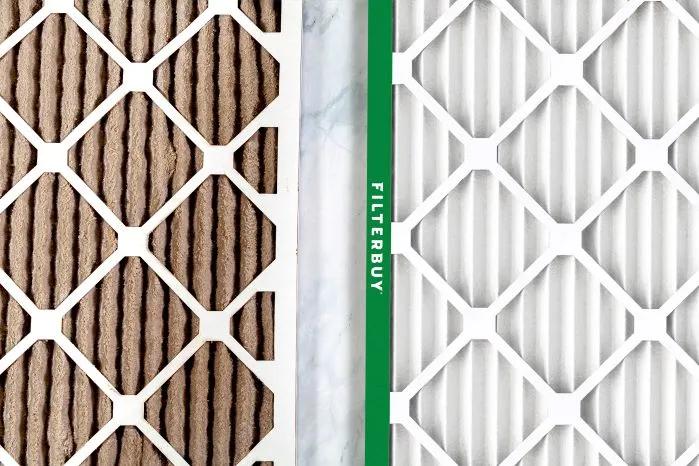
Watch for Signs of Wear. A dirty filter can severely reduce air quality. Leading to bad odors, increased allergens, and even breathing difficulties. Make it a habit to inspect the filter once a month—if it looks dusty or has turned gray, it’s time for a replacement.
Routine Check-Ups. Maintaining your air filter is crucial. Make monthly visual inspections as part of your routine. This ensures your air stays clean and your HVAC system runs efficiently. Don’t wait for issues to arise. Proactive care keeps your home environment healthy.
A 20x25x1 air filter should be changed every 60 to 90 days. This keeps your air clean and HVAC efficient. If you have pets, allergies or live in a dusty area, change it every 30 to 45 days. Regularly checking your filter is key. If it looks dirty or clogged before the 90-day mark, it’s time to change it.
Using cheap air filters is fine for some situations. Especially if you’re changing them frequently. But they typically don’t filter out as many particles which can lead to poorer air quality. Dust and allergens can enter your home easily. It may be cheaper but you might have to replace them more. It might damage your HVAC system which will cost more.
A 16x25x1 air filter usually lasts 30 to 90 days. It depends on air quality, pets, and HVAC usage. In a typical household, check it monthly and replace it every 60 to 90 days. Change the filter more often If you have pets or allergies. Do this for clean air and optimal system performance.
Air filters come in different sizes. The common sizes are 10x20, 14x20, 16x24, 18x30, 20x30, and 24x24. These measurements show the size of the filter in inches. They represent how long, wide, and sometimes how thick it is.
Take a look on: Filterbuy’s Custom Air FIlter
Expensive air filters often last longer compared to cheap air filters. They are typically made from higher-quality materials that can capture more particles and handle more air volume before becoming clogged. They may also offer better construction, which can withstand longer use without compromising performance. While expensive filters may last longer, they still need to be replaced. Good air quality and HVAC efficiency require regular maintenance, regardless of the filter.
To make your air filter last longer reduce dust and debris entering your HVAC. Dust and vacuum regularly, and close windows and doors during pollen or dust seasons. A pre-filter can help catch larger particles. Still it’s recommended to check your filter regularly and clean or change it as needed.
Filterbuy HVAC solutions trained technicians will skillfully clean your HVAC to ensure that your system runs as efficiently and make sure your home air filter lasts longer.
Yes, home air filter replacement improves air quality. A clean filter catches dust, pollen, and pet dander. It prevents them from circulating in your home. A clogged filter traps fewer particles. This leads to poor air quality and potential health risks. Replace the filter often for clean air.
A clogged filter can cause problems. It increases energy bills, damages your system, and lowers indoor air quality. It also traps fewer particles, leading to health problems. It can also cause system breakdown.
Fiberglass, pleated, and electrostatic filters are among the common varieties. Fiberglass is basic and cheap but it offers little filtration. Pleated filters are made from polyester or cotton. It's better at capturing smaller particles like dust and pollen. Electrostatic filters attract and trap particles offering good filtration and airflow.
If your filter looks dirty or clogged it needs replacing. Other signs include reduced airflow, increased dust, or more allergy symptoms. If your HVAC works harder to maintain temperature it’s time for a new filter. Regular monthly checks will help you catch these signs early and ensure your air stays clean.
Filterbuy HVAC solutions trained technicians will skillfully clean your HVAC to ensure that your system runs efficiently.
There are thousands of portable air purifiers that can help. But the best home air filter for dust is a HEPA filter. HEPA filters are super good at cleaning the air. They trap 99.97% of particles in the air.
Similar Sizes: 16x25x1, 20x20x1, 16x20x2
MERV variations: MERV 8, MERV 11, MERV 13
Custom option: custom air filters
