
HEPA Furnace Filters for Winter: Do You Need One?
May 5, 2026
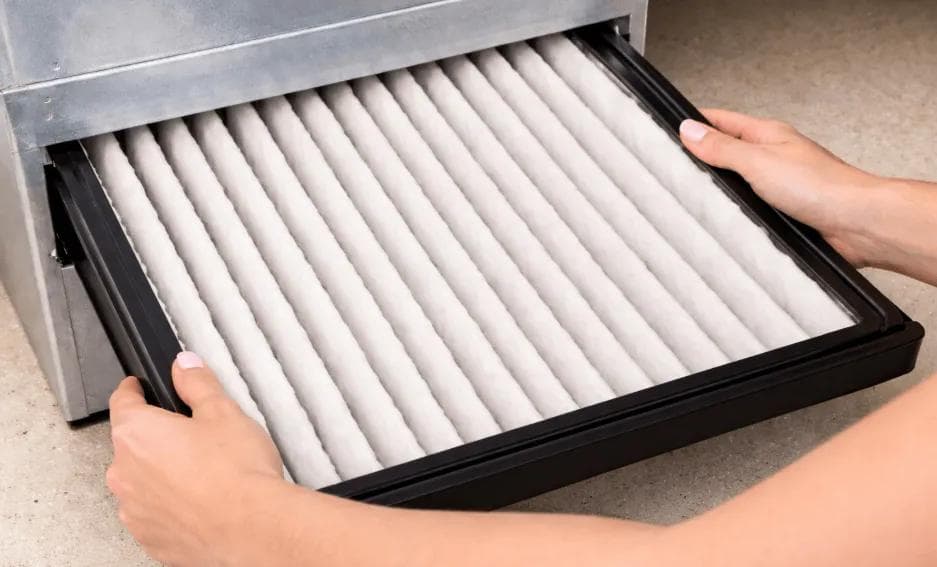
Winter seals your home tight, and everything floating in your air stays trapped inside. That's when most homeowners start searching for the strongest filter they can find, and HEPA tops every list.
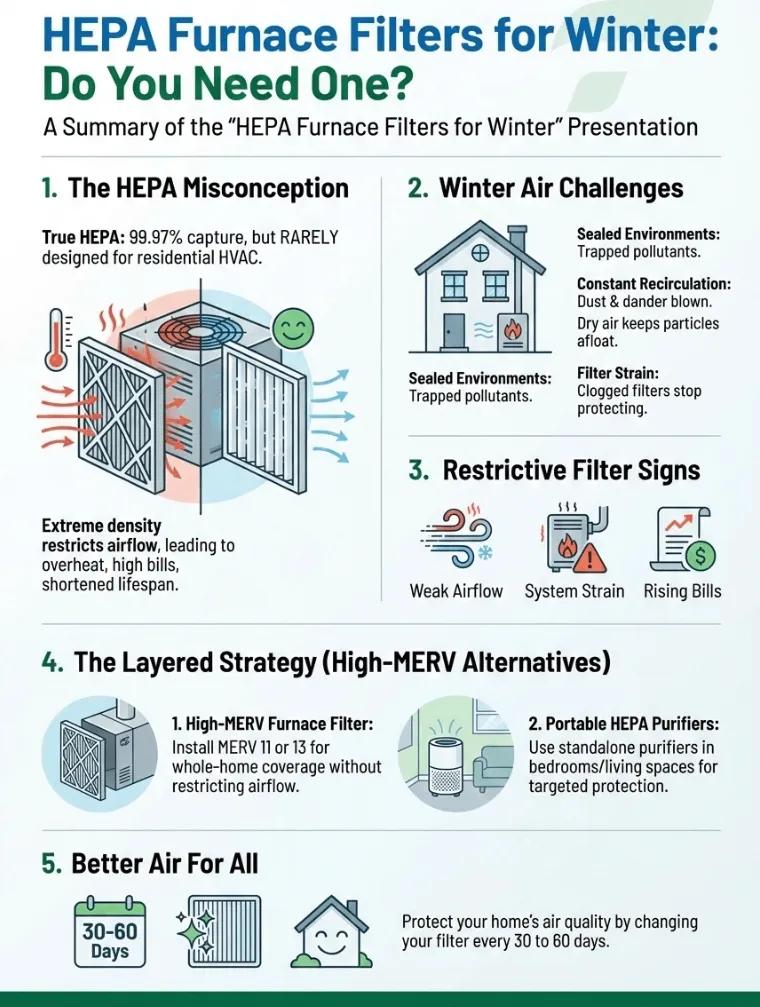
But after over a decade of manufacturing air filters and helping millions of customers choose the right one, we can tell you this: a true HEPA filter in your furnace isn't always the upgrade it sounds like. In fact, it can restrict airflow enough to overheat your system, spike your energy bills, and shorten your furnace's lifespan.
Here's what we recommend instead, and why most HVAC professionals agree.
TL;DR Quick Answers
Do You Need a HEPA Furnace Filter for Your Home This Winter?
Short answer: No, most homes don't need one, and most furnaces can't handle one.
True HEPA filters are too dense for standard residential HVAC systems. Installing one can restrict airflow, overheat your furnace, and drive up energy bills, even when the filter is brand new.
What we recommend instead:
MERV 11 or MERV 13 furnace filter captures the majority of winter allergens without straining your system.
Portable HEPA air purifier, place in bedrooms and living spaces for targeted, HEPA-grade protection.
Replace your filter every 30–60 days. Winter is the hardest season on your filter. Don't wait until it's clogged.
Top Takeaways
HEPA filters aren't built for most home furnaces. They restrict airflow, cause overheating, and can damage your system, even straight out of the box.
MERV 11 or MERV 13 is the sweet spot. Near-HEPA particle capture. No furnace strain. The best balance for most homes.
Winter hits your filter the hardest. Sealed homes. Constant heating. Recirculating dust. Check your filter monthly. Replace every 30–60 days.
Layer your filtration for the best results. High-MERV furnace filter for whole-home coverage. Portable HEPA purifier in bedrooms and living spaces for targeted protection.
Always match the filter to your system, not just your air quality goals. Check your furnace manual or ask an HVAC pro before upgrading.
What Is a HEPA Furnace Filter?
HEPA stands for High-Efficiency Particulate Air, a filtration standard that captures 99.97% of airborne particles as small as 0.3 microns. That includes dust mites, pollen, mold spores, and even some bacteria.
Sounds perfect for your furnace, right? Here's what most people don't know: true HEPA filters are rarely designed for residential HVAC systems. The filters you see labeled "HEPA" at the hardware store are often high-MERV-rated filters, effective, but not the same thing. Understanding that difference matters because installing the wrong one can do more harm than good.
Why Homeowners Consider HEPA Filters in Winter
Winter changes everything about your indoor air. Windows stay closed for months, your heating system runs constantly, and every particle in your home, pet dander, dust mites, mold spores, just keeps recirculating. Dry winter air makes it worse, irritating airways and letting fine particles stay suspended longer.
It makes sense that homeowners start looking for the most powerful filtration available. The problem is that "most powerful" doesn't always mean "best fit."
Benefits of HEPA Furnace Filters in Winter
When properly matched to a compatible system, HEPA filtration delivers serious performance. These filters excel at trapping the smallest allergens that standard filters miss, fine dust, pet dander, pollen tracked indoors on clothing, and mold spores that thrive in winter humidity fluctuations.
For households with severe asthma or allergy sufferers, that level of capture can make a noticeable difference in daily comfort. You'll also see cleaner surfaces, less dust buildup on furniture, and fresher-smelling air throughout the home.
Major Drawbacks Homeowners Should Know
Here's where our manufacturing experience matters. After working with millions of customers on filter selection, the most common mistake we see is choosing filtration power without considering airflow.
True HEPA filters are extremely dense. That density is what makes them so effective, but it also restricts the airflow your furnace needs to operate safely. When your system can't pull enough air through the filter, several things can happen: the furnace overheats and shuts down, it short-cycles on and off repeatedly, energy bills climb, and over time, the added strain can shorten your system's lifespan.
Most residential HVAC systems simply aren't built to handle that level of restriction without modification.
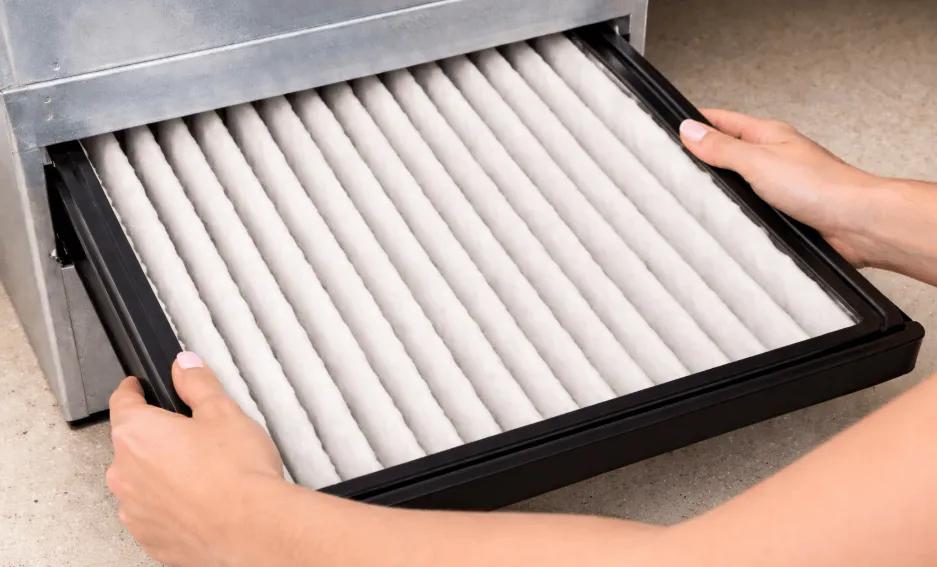
Are HEPA Filters Right for Your Furnace?
Before making the switch, ask yourself four questions. Does someone in your home have severe allergies or asthma that isn't manageable with standard filtration? Does your furnace manual specifically list HEPA or high-MERV compatibility? Is your home dealing with persistent dust, multiple pets, or ongoing air quality concerns? And are you prepared to modify your system if needed to handle the added restriction?
If you answered yes to most of these, a HEPA setup might be worth exploring with an HVAC professional. If not, there's a better path.
High-MERV Alternatives That Work for Most Homes
This is what we recommend to the majority of our customers, and what most HVAC professionals recommend, too.
A MERV 11 filter delivers strong allergen control while maintaining balanced airflow for virtually any residential system. It captures dust, pollen, pet dander, and mold spores without straining your furnace. For homes that need a step up, a MERV 13 filter approaches HEPA-level performance for common household particles, without the system strain. It's the sweet spot that gives you cleaner air and a furnace that runs the way it should.
How to Improve Winter Indoor Air Without a HEPA Filter
You don't need HEPA in your furnace to breathe cleaner air this winter. A smarter approach combines several strategies that work together. Use a portable HEPA air purifier in bedrooms and living areas where you spend most of your time. Keep indoor humidity between 30% and 50% to reduce dust suspension and protect your airways. Clean vents, return registers, and surfaces regularly to reduce particle buildup. Change your furnace filter every 30 to 60 days; a dirty filter of any rating isn't protecting anyone. And when the weather allows, crack a window briefly to introduce fresh air circulation.
Signs Your Furnace Filter Is Too Restrictive
If you've already installed a high-rated filter and something feels off, watch for these warning signs: weak or reduced airflow from your vents, your furnace short-cycling or shutting off unexpectedly, rising energy bills without a clear explanation, hot spots near the furnace paired with cold spots in distant rooms, or unusual odors that suggest overheating.
Any of these symptoms means your filter is likely too dense for your system. Swap it for a lower-MERV option and see if performance improves.
Do You Really Need a HEPA Furnace Filter for Winter?
For most homes, the answer is no, and that's actually good news. HEPA filtration is powerful technology, but it belongs in purpose-built air purifiers, not forced into a furnace that wasn't designed for it. High-MERV filters deliver the best balance of strong particle capture and safe, efficient airflow for residential systems. Pair one with a portable HEPA purifier in your most-used rooms, and you get the best of both worlds: serious filtration where it counts, without risking your furnace.
"After manufacturing millions of air filters and helping homeowners troubleshoot every winter air quality issue imaginable, we've learned that the best filter isn't always the strongest one, it's the one that works with your system, not against it."- The Filterbuy Team
Essential Resources for Choosing the Right Winter Furnace Filter
Don't take your indoor air for granted, especially during the winter months when your home is sealed tight, and your furnace is working overtime. We've curated these seven trusted resources from government agencies, health organizations, and HVAC industry experts to help you make a smart, confident decision about your home's filtration this winter. Because at Filterbuy, we believe the more you know about your air, the better you can protect your family.
1. Understand What HEPA Actually Means Before You Buy
Before you spend money on a filter labeled "HEPA," make sure you know what that standard really requires. The EPA breaks down the official HEPA definition and explains why true HEPA filters aren't designed for most residential furnaces. After helping millions of customers choose the right filter, we can tell you this is the number one misconception we see, and this resource clears it up fast.
Source: U.S. Environmental Protection Agency (EPA)
https://www.epa.gov/indoor-air-quality-iaq/what-hepa-filter
2. Compare Portable Air Cleaners vs. Furnace Filters for Your Home
Should you upgrade your furnace filter, add a portable air purifier, or use both? This EPA consumer guide walks you through the pros and cons of each approach. Pro tip from our team: for most homes, the smartest winter strategy is a high-MERV furnace filter paired with a portable HEPA purifier in the rooms where your family spends the most time.
Source: U.S. Environmental Protection Agency (EPA)
https://www.epa.gov/indoor-air-quality-iaq/guide-air-cleaners-home
3. Find the Right MERV Rating for Your Furnace and Air Quality Needs
MERV ratings are the industry standard for comparing filter performance, and understanding them is the key to choosing a filter that protects your family without straining your system. The EPA recommends upgrading to at least MERV 13 when your furnace supports it, which delivers near-HEPA particle capture without the airflow restriction. This is exactly what we recommend to our customers, and it's backed by over a decade of real-world manufacturing experience.
Source: U.S. Environmental Protection Agency (EPA)
https://www.epa.gov/indoor-air-quality-iaq/what-merv-rating
4. Keep Your Heating System Running Efficiently All Winter
Your furnace filter is only part of the equation. ENERGY STAR's maintenance guide covers everything from filter replacement schedules to system tune-ups that keep your heating running at peak efficiency all season long. We tell our customers this all the time: the best filter in the world won't protect your home if the rest of your system isn't maintained. This resource helps you stay on top of it.
Source: ENERGY STAR (U.S. Environmental Protection Agency / U.S. Department of Energy)
https://www.energystar.gov/saveathome/heating-cooling
5. Reduce Winter Allergens Room by Room in Your Home
If allergies or asthma are driving your search for better filtration, this room-by-room checklist from the AAFA is one of the most actionable resources available. It covers HVAC filter maintenance, certified air purifier recommendations, humidity control, and practical steps you can take today to make your home's air cleaner and safer for your family.
Source: Asthma and Allergy Foundation of America (AAFA)
https://aafa.org/allergies/prevent-allergies/healthier-home-indoor-air-quality/
6. Manage Winter Asthma Triggers With Better Indoor Air
Cold weather forces you indoors, and that means more exposure to the dust, dander, and mold spores circulating through your heating system. The Allergy & Asthma Network provides targeted guidance for asthma sufferers on managing these winter triggers, including when a standalone HEPA purifier makes more sense than upgrading your furnace filter. If someone in your household has respiratory sensitivities, this resource is worth bookmarking.
Source: Allergy & Asthma Network
https://allergyasthmanetwork.org/news/cold-air-asthma-in-winter/
7. Follow the Industry Standard for Residential Furnace Maintenance
ACCA Standard 4 is the nationally recognized benchmark that HVAC professionals follow for residential system maintenance, including airflow testing, filter evaluation, and performance checks. If you've ever wondered what a proper furnace inspection should include or whether your current filter might be too restrictive for your system, this is the standard the pros use to find out.
Source: Air Conditioning Contractors of America (ACCA)
https://www.acca.org/viewdocument/quality-maintenance-of-residential-hvac-systems
Supporting Statistics: Why Your Winter Furnace Filter Choice Matters
These aren't just numbers. They reflect the same issues we hear about every day from homeowners who come to us looking for answers. After over a decade of manufacturing air filters and working with millions of customers, we've seen how the wrong filter choice can turn a simple winter upgrade into a costly problem.
1. Indoor Air Can Be 2–5x More Polluted Than Outdoor Air
The U.S. Environmental Protection Agency found that indoor pollutant concentrations are often 2 to 5 times higher than outdoor levels, and Americans spend approximately 90% of their time indoors.
Winter makes this worse. Here's why:
Windows stay sealed for months, trapping pollutants inside.
Your furnace runs constantly, recirculating dust, dander, and allergens.
Stale air has nowhere to go without proper filtration.
We hear from customers every heating season about increased dust, worsening allergies, and stale-smelling air. Winter is when your filter choice matters most, and the worst time to install one if your system can't handle it.
Source: U.S. Environmental Protection Agency, Indoor Air Quality
https://www.epa.gov/report-environment/indoor-air-quality
2. The Wrong Filter Can Increase Energy Bills by Up to 15%
The U.S. Department of Energy found that replacing a dirty filter with a clean one can reduce HVAC energy consumption by 5% to 15%.
But here's what most homeowners miss: a brand-new filter can cause the same problem if it's too dense for your system.
A true HEPA filter restricts airflow the moment you install it.
Your furnace strains harder to push air through, just like it would with a clogged filter.
Energy bills climb. Components wear out faster. System lifespan shortens.
We've helped countless homeowners troubleshoot this exact issue. The fix is almost always the same: step down to a high-MERV filter that lets the system breathe.
Source: U.S. Department of Energy (as cited by ENERGY STAR)
https://www.energystar.gov/saveathome/heating-cooling
3. Common Winter Allergens Are Exactly What a Properly Matched Filter Captures
The Asthma and Allergy Foundation of America confirms that indoor air is often significantly more polluted than outdoor air, with dust mites, pet dander, mold spores, and cockroach particles among the most common household allergens.
These are the contaminants customers ask us about most during heating season. Here's what we've learned works best:
MERV 11 captures dust, pollen, pet dander, and mold spores, without straining most residential systems.
MERV 13 delivers near-HEPA particle capture for homes that need stronger protection.
Portable HEPA purifiers in bedrooms and living spaces add a second layer of defense for severe allergy and asthma sufferers.
This layered approach gives your family serious filtration across the whole home, without compromising your furnace.
Source: Asthma and Allergy Foundation of America (AAFA), Healthier Home Indoor Air Quality
https://aafa.org/allergies/prevent-allergies
Final Thought: The Best Winter Furnace Filter Isn't Always the Strongest One
HEPA filters are incredible technology. They capture 99.97% of particles down to 0.3 microns, and in the right application, like a portable air purifier, they're hard to beat. But your furnace isn't that application.
After manufacturing millions of air filters and helping homeowners across the country navigate this exact decision, we've developed a strong opinion on this: installing a true HEPA filter in a standard residential furnace is one of the most common and costly air quality mistakes homeowners make in winter.
It sounds like the smart move. But in most homes, it leads to:
Restricted airflow
Rising energy bills
Short-cycling and overheating
Accelerated furnace wear
The very problems you were trying to avoid by upgrading in the first place.
What We Recommend Instead
Based on what we've seen work best in real homes, across every kind of winter climate:
Start with a MERV 11 or MERV 13 furnace filter. These ratings capture the allergens, dust, and dander that drive winter air quality complaints, without choking your system.
Add a portable HEPA purifier where it counts. Bedrooms and living spaces are where your family breathes the most. A standalone HEPA unit gives you hospital-grade filtration without touching your furnace.
Change your filter every 30–60 days during heating season. Even the best filter stops working once it's clogged. Winter is the hardest season on your filter; check it monthly.
Know your system's limits. Check your furnace manual or consult an HVAC professional before upgrading to a higher MERV rating.
The Bottom Line
The families who breathe the cleanest air this winter won't be the ones who bought the strongest filter. They'll be the ones who choose the right filter for their system and back it up with smart habits.
That's the approach we believe in at Filterbuy. Not the most expensive solution. Not the most impressive spec sheet. The one that actually works, for your furnace, for your family, and for the air you breathe every day.
Next Steps: Protect Your Home's Air Quality This Winter
Ready to make the right filter choice? Here's exactly what to do.
1. Check Your Furnace's Filter Compatibility
Find your furnace manual and look for the maximum MERV rating.
Check the size printed on your current filter's frame.
Not sure? Contact an HVAC professional to confirm your system's airflow capacity.
2. Choose the Right MERV Rating
Match your filter to your household's needs:
MERV 8, Standard dust control. Great for homes with minimal allergies.
MERV 11, Stronger protection. Ideal for pet owners and moderate allergy sufferers.
MERV 13, Near-HEPA performance. Best for severe sensitivities without the airflow risk.
3. Set a Winter Replacement Schedule
Your filter works harder during heating season. Stay ahead of it.
Check monthly from November through March.
Replace every 30–60 days during heavy use.
Set a phone reminder or subscribe to automatic deliveries so you never miss a change.
4. Add a Portable HEPA Purifier Where It Counts
A furnace filter alone may not be enough for severe allergies or asthma.
Place one in the bedroom where you sleep.
Add a second in your most-used living space.
This gives you whole-home filtration through your furnace plus targeted HEPA-grade protection where your family breathes most.
5. Find the Right Filter for Your System
We manufacture over 600 sizes, including custom sizes, so you never have to force-fit a filter.
Shop MERV 11 Filters
Find Your Size
Not sure which filter fits your furnace? We've spent over a decade matching homeowners with the right filter, and we're happy to help you find yours.
FAQ on HEPA Furnace Filters for Winter
Q: Can I put a true HEPA filter in my home furnace during winter?
A: In most cases, no. True HEPA filters are built for standalone air purifiers, not residential HVAC systems. The filter media is too dense for most home furnaces to pull air through effectively.
What typically happens when homeowners try:
Restricted airflow throughout the home
Furnace overheating or shutting down
Higher energy bills from day one
This is the most common filter mistake we see after working with millions of customers. A MERV 11 or MERV 13 filter gives you strong allergen capture without the system strain.
Q: What's the difference between a HEPA filter and a high-MERV furnace filter?
A: The key differences come down to filtration level and airflow resistance.
HEPA filters capture 99.97% of particles down to 0.3 microns. Designed for hospitals, labs, and clean rooms.
MERV 13 filters capture up to 98% of particles in the 1.0–3.0 micron range. Designed for residential HVAC systems.
The critical difference: HEPA filters are far too dense for most home furnaces. A MERV 13 delivers near-HEPA performance your system can actually handle.
From a manufacturing standpoint, the right filter balances particle capture with the airflow your furnace needs to operate safely.
Q: How often should I change my furnace filter during winter?
A: Check monthly. Replace every 30–60 days during heating season.
Winter demands more from your filter than any other season:
The furnace runs constantly.
Windows stay sealed.
Dust, dander, and allergens recirculate nonstop.
A clogged filter, regardless of rating, stops protecting your air and starts straining your system. Homeowners with pets, allergies, or heavy furnace use should lean closer to the 30-day cycle during peak winter months.
Q: Is a HEPA air purifier better than a HEPA furnace filter for winter?
A: Yes. A portable HEPA purifier is purpose-built for HEPA-grade filtration. Your furnace is not.
Here's the approach we recommend:
High-MERV furnace filter (MERV 11 or 13) for whole-home baseline coverage.
Portable HEPA purifier in bedrooms where your family sleeps.
Second HEPA purifier in the main living spaces where you spend the most waking hours.
This layered strategy gives you the best of both technologies, without risking your heating system.
Q: What are the signs that my furnace filter is too restrictive?
A: If you've recently upgraded your filter, watch for these warning signs:
Weak or reduced airflow from vents
Furnace short-cycling, turning on and off frequently
Unexplained spike in energy bills
Hot spots near the furnace with cold spots in distant rooms
Unusual odors or an overheating smell
We've seen these symptoms hundreds of times. The fix is simple: step down to a lower MERV rating and check if performance improves. Always confirm the highest MERV rating your system supports by checking your furnace manual or consulting an HVAC professional.
Find the Right Winter Furnace Filter for Your Home, Without the HEPA Risk
Skip the guesswork and shop Filterbuy's full range of MERV 11 and MERV 13 filters in over 600 sizes, built to protect your family's air and your furnace all winter long. Shop Now →