
7 Ways to Prepare Your HVAC System for Freezing Winter Weather
May 5, 2026
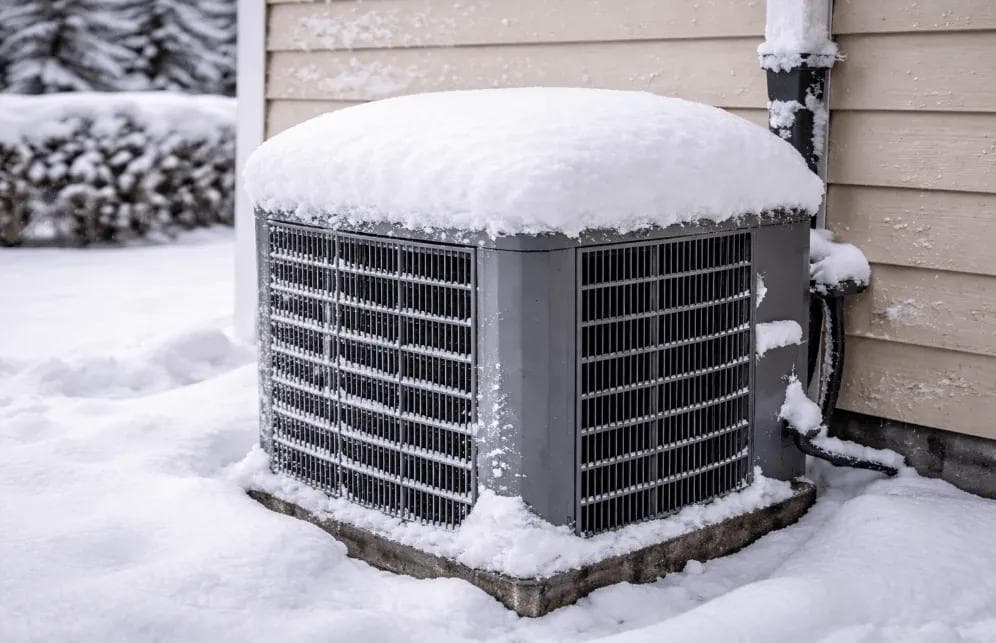
When freezing temperatures hit, your HVAC system faces its toughest test of the year — and most breakdowns we respond to during cold snaps trace back to preparation steps that were skipped or overlooked. After serving local homeowners through countless winter seasons, our technicians consistently see the same preventable problems: clogged filters forcing furnaces into overdrive, cracked condensate lines from overnight freezes, and thermostats that weren't calibrated for the sudden shift from mild to bitterly cold.
The good news? 7 straightforward steps can prevent the majority of winter HVAC emergencies we see every year. This guide shares exactly what our team recommends — and personally checks in our own homes — before the first hard freeze arrives.
TL;DR Quick Answers
How do I prepare my HVAC for winter cold?
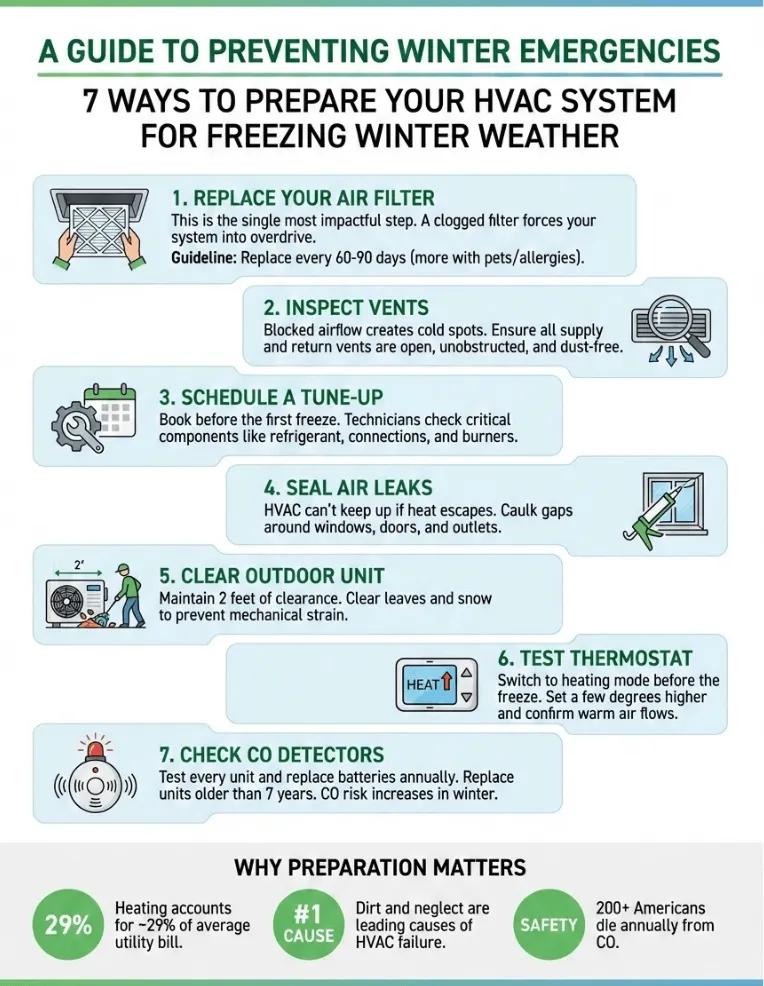
Seven steps — in priority order:
Replace your air filter. This is the single most impactful step. A clogged filter forces your system into overdrive the moment temperatures drop.
Inspect and clean all vents, registers, and ducts. Blocked airflow creates cold spots and unnecessary system strain.
Schedule a professional tune-up. Book before the first freeze — once cold weather hits, HVAC companies are flooded with emergency calls.
Seal air leaks. Caulk gaps around windows, doors, and outlets. Your system can't keep up if heated air is escaping.
Clear your outdoor unit. Maintain at least two feet of clearance on all sides.
Test your thermostat. Switch to heating mode and confirm warm air flows before you actually need it.
Check CO detectors. Test every unit, replace old batteries, and replace any detector over seven years old.
The most important thing to know: After manufacturing millions of air filters and working with homeowners across every climate zone, we've learned that winter HVAC failures are almost never about equipment age. They're about skipped preparation. Start with the filter — it takes one minute and sets the foundation for everything else.
Top Takeaways
A clean filter is your #1 winter priority. After manufacturing millions of filters, we can tell you the top cause of preventable winter HVAC strain is a filter that should have been replaced weeks ago. Check yours today.
Most winter breakdowns are preventable. Systems fail because preparation was skipped — not because of age or brand. Dirt and neglect are the leading causes of heating failure (ENERGY STAR).
Filter replacement and air sealing work as a team. Even a high-MERV filter can't compensate for conditioned air escaping through cracks and duct leaks. Pair a fresh filter with basic sealing for maximum efficiency.
Winter prep is a safety issue, not just a comfort issue. 200+ Americans die annually from CO linked to malfunctioning furnaces (CPSC). Functional detectors and annual professional inspections are non-negotiable.
Proactive beats reactive every time. A new filter, a tube of caulk, and a pre-season tune-up cost a fraction of one emergency repair in January. Every step in this guide pays for itself.
1. Replace Your HVAC Air Filter Before Temperatures Drop
A clean filter is the single most important thing standing between your heating system and an expensive winter breakdown. When temperatures plunge, your HVAC runs longer and harder — and a clogged filter forces the blower motor to work overtime just to push air through. After manufacturing filters for over a decade, we can tell you that the number one cause of preventable winter HVAC strain is a filter that should have been swapped weeks ago.
Check your current filter now. If it's been in place for more than 60 to 90 days — or if you have pets, allergies, or a dusty home — replace it before cold weather sets in. Starting winter with a fresh filter gives your system the unrestricted airflow it needs to heat efficiently without overworking components.
2. Inspect and Clean Vents, Registers, and Air Ducts
Blocked or dirty vents create pressure imbalances that make your heating system work harder to distribute warm air evenly. We hear from homeowners every winter who can't figure out why certain rooms stay cold while others overheat — and the answer is almost always restricted airflow at the vent level.
Walk through every room and make sure all supply and return vents are open, unobstructed by furniture or curtains, and free of dust buildup. Vacuum vent covers and registers to remove accumulated debris. If you notice weak airflow, musty odors, or visible dust coming from vents, it may be time for a professional duct inspection to rule out deeper blockages or leaks.
3. Schedule a Professional Winter HVAC Tune-Up
Even well-maintained systems benefit from a professional set of eyes before the heating season begins. A qualified technician checks components that homeowners simply cannot evaluate on their own — refrigerant levels, electrical connections, heat exchanger integrity, and blower motor performance.
The best time to schedule a tune-up is before demand surges. Once the first freeze hits, HVAC companies are flooded with emergency calls, and appointment availability tightens fast. A pre-season inspection typically catches small issues before they escalate into mid-winter failures that cost significantly more to repair under emergency conditions.
4. Seal Air Leaks Around Your Home
Your HVAC system can only do so much if heated air is escaping through gaps around windows, doors, electrical outlets, and pipe penetrations. According to the Department of Energy, air leaks can account for a significant portion of heating energy loss in a typical home — meaning your system runs longer and your utility bills climb even when everything is mechanically sound.
Check weatherstripping around exterior doors, apply caulk to visible gaps around window frames, and use foam gaskets behind outlet covers on exterior walls. These low-cost fixes reduce the load on your heating system and help it maintain consistent temperatures without cycling excessively.
5. Clear Debris From Around Your Outdoor Unit
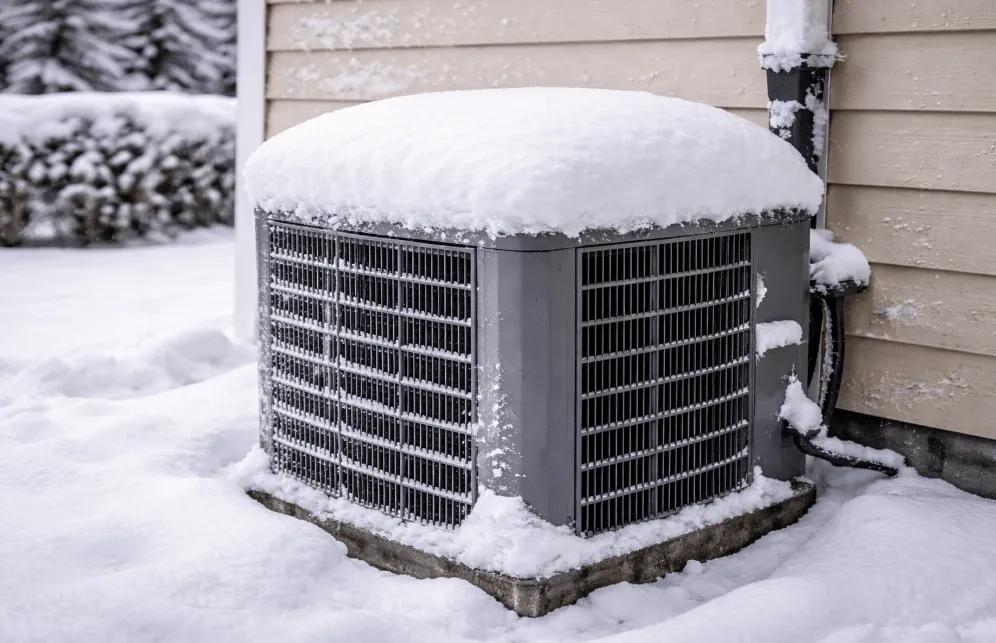
Heat pumps and outdoor condenser units need adequate clearance to operate efficiently, even during winter. Fallen leaves, branches, yard debris, and accumulated snow or ice can restrict airflow and cause mechanical strain on fans and compressor components.
Clear at least two feet of space around all sides of your outdoor unit. Trim back any vegetation that has grown too close during the warmer months. During and after winter storms, check for snow and ice accumulation on and around the unit — but never use sharp tools to chip away ice from coils or fan blades, as this can cause damage. A gentle rinse with water is a safer approach when conditions allow.
6. Test Your Thermostat and Optimize Settings
Before you actually need your heating system on a freezing night, run a test. Switch your thermostat to heating mode, set it a few degrees above the current room temperature, and confirm that warm air flows within a few minutes. This simple step exposes thermostat malfunctions, wiring issues, or system faults while you still have time to address them.
If you have a programmable or smart thermostat, set a winter schedule that lowers the temperature while you sleep or are away and warms the home before you wake or return. The Department of Energy suggests that setting your thermostat back 7 to 10 degrees for eight hours a day can reduce annual heating costs by as much as 10 percent.
7. Check Your Carbon Monoxide Detectors and Safety Features
This is the step that protects more than comfort — it protects lives. Gas and oil-burning furnaces produce carbon monoxide as a byproduct of combustion, and cracked heat exchangers or blocked flue pipes can allow this odorless, invisible gas to enter your living space. Winter is the highest-risk season because homes are sealed up tight and heating systems run continuously.
Test every carbon monoxide detector in your home and replace batteries as needed. Install detectors on every level of your home and near sleeping areas if you haven't already. If your detectors are more than seven years old, replace the units entirely — sensors degrade over time and may not respond reliably. If your heating system produces unusual odors, yellow or flickering burner flames instead of steady blue, or excessive moisture on windows near the furnace, shut the system down and contact a professional immediately.
"After manufacturing millions of air filters and hearing from homeowners across every climate zone, we've seen one pattern repeat every winter without fail — the systems that break down in freezing weather are almost never the oldest or cheapest units. They're the ones that went into the season with a dirty filter and skipped maintenance."
Essential Resources
At Filterbuy, we're obsessed with helping you protect your greatest assets — your family, your home, and your HVAC system. Preparing for winter means going beyond just changing your filter (though that's always step one). These seven trusted resources from government and industry authorities give you the deeper knowledge to take full control of your home's winter readiness. After manufacturing millions of filters and hearing from homeowners across every climate zone, we know that the best-prepared households are the ones armed with the right information before the cold hits.
1. U.S. Department of Energy — Fall and Winter Energy-Saving Tips
We always tell customers that a clean filter is the foundation — but it works best when your entire system is optimized for efficiency. The DOE's seasonal guide walks you through furnace maintenance schedules, smart thermostat strategies, and practical steps that work alongside regular filter changes to keep your heating costs under control all winter long.
Source: https://www.energy.gov/energysaver/fall-and-winter-energy-saving-tips
2. ENERGY STAR — Heating and Cooling Maintenance Checklist
When we recommend scheduling a professional tune-up before winter, this is exactly what that inspection should cover. ENERGY STAR's maintenance checklist details the electrical connections, refrigerant levels, burner combustion checks, and blower performance tests that a qualified technician should perform — the kind of thorough service that helps your filter and your system work together at peak performance.
Source: https://www.energystar.gov/saveathome/heating-cooling/maintenance-checklist
3. U.S. Department of Energy — Air Sealing Your Home
Here's something we've learned from over a decade of helping homeowners improve their indoor air quality: even the highest-rated MERV filter can't fully compensate for a home that leaks conditioned air through every crack and gap. The DOE's air sealing guide shows you exactly where to find hidden leaks around windows, doors, outlets, and ductwork — and how to seal them so your HVAC system and your filter aren't working overtime against air you're losing.
Source: https://www.energy.gov/energysaver/air-sealing-your-home
4. U.S. Department of Energy — Programmable Thermostats
Proper thermostat programming is one of the easiest ways to reduce the strain on your heating system and extend the life of your air filter. The DOE's guide covers optimal winter temperature settings, scheduling strategies for when you're home versus away, and correct thermostat placement — small adjustments that make a real difference in both comfort and efficiency.
Source: https://www.energy.gov/energysaver/programmable-thermostats
5. U.S. EPA — Winter Weather and Indoor Air Quality
Don't take your indoor air for granted — especially during winter when homes are sealed up tight, and heating systems run continuously. The EPA's winter air quality guide covers carbon monoxide prevention, safe venting of fuel-burning appliances, and moisture control strategies that protect the air your family breathes during the months you spend the most time indoors.
Source: https://www.epa.gov/emergencies-iaq/winter-weather-and-indoor-air-quality
6. U.S. Consumer Product Safety Commission — Carbon Monoxide Fact Sheet
This is the step that goes beyond comfort and efficiency — it protects lives. The CPSC's definitive resource covers where to install CO detectors, when to replace them, and the warning signs of carbon monoxide exposure every homeowner needs to know before heating season begins. After working with millions of customers on their home air quality, we know that safety is always the top priority.
Source: https://www.cpsc.gov/safety-education/safety-guides/carbon-monoxide/carbon-monoxide-fact-sheet
7. ENERGY STAR — Guide to Energy-Efficient Heating and Cooling
This comprehensive guide ties everything together — from routine maintenance and duct sealing to thermostat optimization and knowing when it's time to upgrade your system. Think of it as the big-picture resource for homeowners who want to take a proactive, whole-system approach to winter HVAC performance. It pairs perfectly with a fresh filter and a commitment to staying ahead of problems before they start.
Supporting Statistics
After manufacturing air filters for over a decade and working with millions of homeowners, we've seen these numbers play out every heating season.
Heating accounts for ~29% of the average utility bill (U.S. Department of Energy) — the single largest energy expense in most homes. From what we've seen, the majority of that cost is driven by systems overworking due to clogged filters, unsealed air leaks, or skipped maintenance. A fresh filter and basic air sealing are the lowest-cost, highest-return fixes any homeowner can make before winter hits.
Source: https://www.energy.gov/energysaver/home-heating-systems
Dirt and neglect are the #1 causes of HVAC failure (ENERGY STAR). This matches our experience directly. The urgent filter orders we process spike every year during cold snaps — almost always from homeowners who didn't realize their system was struggling until their bill spiked or their furnace quit entirely.
Source: https://www.energystar.gov/products/energy_star_home_upgrade/clean_heating_cooling
200+ Americans die annually from carbon monoxide linked to consumer products, including malfunctioning furnaces (U.S. Consumer Product Safety Commission). The CPSC recommends CO alarms on every level and outside each sleeping area, plus annual professional inspection of all fuel-burning appliances. After working with millions of customers on indoor air quality, we know winter preparation goes beyond comfort — it starts with functioning detectors and properly maintained equipment.
Source: https://www.cpsc.gov/safety-education/safety-guides/
Bottom line: Homeowners who stay proactive spend far less over time than those who wait for problems to surface.
Final Thought & Opinion
Preparing your HVAC system for winter isn't complicated — but it requires attention before the cold arrives, not after. These seven steps cover everything that matters most:
Start with a clean air filter
Ensure unrestricted airflow through vents and ducts
Schedule a professional pre-season tune-up
Seal air leaks that silently drain your heating budget
Clear debris from your outdoor unit
Optimize your thermostat settings for winter
Confirm carbon monoxide detectors are functional and properly placed
Every step is straightforward. None is expensive. Together, they prevent the vast majority of winter HVAC emergencies we see year after year.
Our honest take after manufacturing millions of air filters and hearing from homeowners across every climate zone: the difference between a household that cruises through winter and one that faces a mid-January breakdown rarely comes down to equipment age or brand. It comes down to preparation.
The systems that fail during freezing weather are overwhelmingly the ones that went into the season with:
A dirty filter is forcing the blower motor into overdrive
Unsealed air leaks are draining conditioned heat
Worn components, a basic tune-up would have caught
We've seen this pattern repeat so consistently over the past decade that we consider it the single most important thing homeowners need to understand about winter HVAC performance — the system itself is rarely the problem. The neglect is.
One step you can take right now: Check your filter. Hold it up to the light. If light isn't passing through, your system is already working harder than it should — and winter hasn't even started yet. That single check takes less than a minute and sets the foundation for everything else in this guide.
You're the hero of your household when it comes to protecting your family's comfort, your home's efficiency, and your HVAC system's longevity. The best time to prepare is before you need to — and we're here to help you stay one step ahead.
Next Steps
Ready to get your HVAC system winter-ready? Here's where to start:
Do today:
Check your air filter — hold it up to the light. No light passing through means it's time to replace it
Walk through every room and confirm all vents and registers are open and unobstructed
Test each carbon monoxide detector and replace any batteries older than one year
Do this week:
Seal visible air leaks around windows, doors, and electrical outlets with caulk or weatherstripping
Clear at least two feet of space around your outdoor unit
Switch your thermostat to heating mode and run a test cycle to confirm warm air flows within minutes
Schedule now:
Find your exact filter size from our selection of over 600 sizes at Filterbuy.com
Not sure which MERV rating is right for your home? Our team can help match the right filter to your system and household needs
Bottom line: Start with the filter. It's the fastest, lowest-cost step — and after manufacturing millions of them, we can tell you it makes the single biggest difference in how your system handles winter.
Frequently Asked Questions
Q: When should I start preparing my HVAC system for winter?
A: Four to six weeks before your area's first expected freeze. This gives you time to:
Replace your air filter
Schedule a professional tune-up before demand surges
Address any issues while appointment availability is still open
After working with millions of homeowners, we've seen that early preparation eliminates the mid-winter scramble almost entirely.
Q: How often should I change my air filter during winter?
A: Every 60 to 90 days under normal conditions — but check it monthly during peak heating season. Replace more frequently if your household includes:
Pets
Allergy sufferers
High dust levels
Your system runs longer and harder in winter, which means filters accumulate debris faster. After manufacturing filters for over a decade, we can tell you a clogged winter filter is the fastest path to an overworked system and higher energy bills.
Q: Can I prepare my HVAC system for winter myself or do I need a professional?
A: Both. Handle these steps yourself:
Replace your air filter
Clear and vacuum all vents and registers
Seal air leaks around windows, doors, and outlets
Test your thermostat in heating mode
Check all carbon monoxide detectors
Book a professional for what you can't evaluate on your own:
Heat exchanger integrity
Refrigerant levels
Electrical connections
Burner combustion performance
We recommend completing the DIY steps now and scheduling a professional inspection before heating season peaks.
Q: What is the most important step to winterize my HVAC system?
A: Start with your air filter. It's the fastest, lowest-cost step — and it makes the single biggest difference in winter performance. A dirty filter:
Restricts airflow
Forces the blower motor to overwork
Drives up energy costs
Accelerates component wear
After seeing patterns across millions of filter orders, we consistently find that a clean filter is the foundation everything else builds on.
Q: How do I know if my HVAC system is ready for freezing temperatures?
A: Run this quick test before you actually need your system:
Switch your thermostat to heating mode
Set it a few degrees above the current room temperature
Confirm warm air flows within a few minutes
Listen for unusual sounds and check for strange odors
Then verify these five items:
All vents are open and unobstructed
Your air filter is clean
Your outdoor unit has at least two feet of clearance
Every CO detector in your home is functional
No visible air leaks around windows and doors
If anything seems off during the test, schedule a professional inspection while you still have time to address it.
Don't Let Freezing Weather Catch Your HVAC System Off Guard
Start with the step that makes the biggest difference — replace your air filter today with the right size and MERV rating from Filterbuy's selection of over 600 sizes at Filterbuy.com. Your system protects your family all winter long — make sure it's ready before the cold hits.