
What's the Difference Between Heat Pump and HVAC Systems?
March 4, 2026
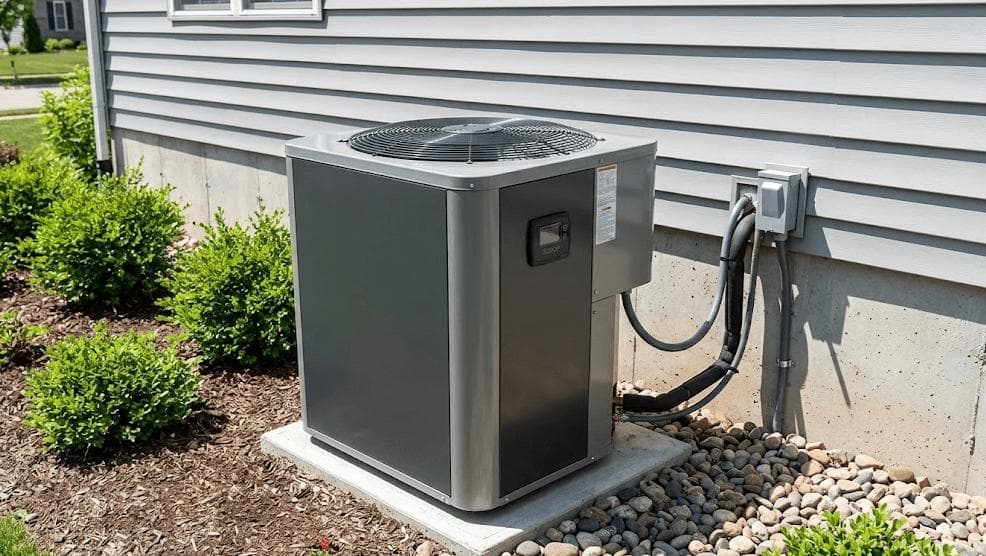
At Filterbuy, we've manufactured air filters for millions of American homes, and one question comes up more than almost any other: "What's the difference between a heat pump, a furnace, and an air conditioner, and which one do I actually need?" It's a fair question, and the honest answer is that the system you choose doesn't just affect your energy bill; it directly determines the type of filtration your home requires to maintain healthy indoor air.
Here's what most comparison guides won't tell you: the wrong filter in the wrong system can restrict airflow, strain your equipment, and leave your family breathing air that's far from clean. We've seen it in countless homes across every climate zone, and that's why we put this guide together. In the next few minutes, you'll understand exactly how each system works, how they differ, and how to protect whichever system you choose, so your home stays comfortable, efficient, and breathing easy year-round.
TL;DR: Quick Answers
Heat Pump vs HVAC Systems
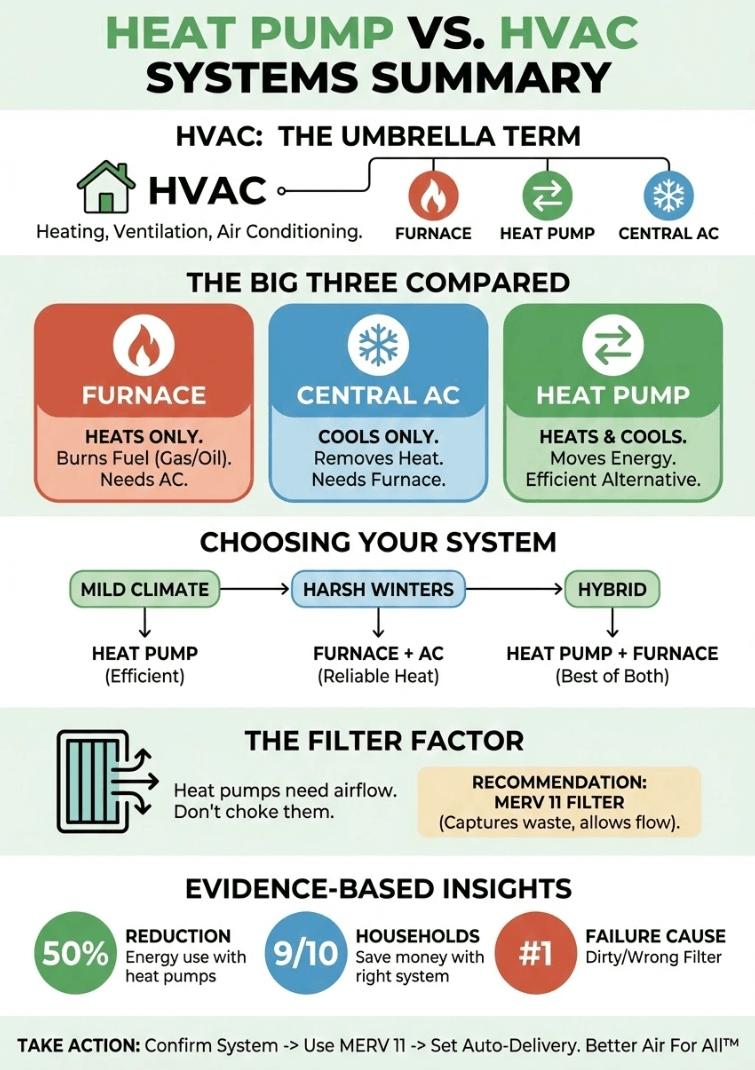
HVAC is the umbrella term for your home's entire heating, ventilation, and air conditioning system. A heat pump, furnace, and air conditioner are each components that can operate within it.
The core differences:
Furnace — heats only. Burns fuel (gas, propane, or oil) to generate heat. Requires a separate AC for cooling.
Central Air Conditioner — cools only. Removes heat and humidity from indoor air. Requires a separate furnace for heating.
Heat Pump — heats and cools from a single unit. Transfers heat rather than generating it. Replaces both a furnace and an AC in moderate climates.
Which system is right for your home?
Mild to moderate climate → heat pump
Harsh winters with extreme cold → gas furnace + central AC
Want efficiency with cold-weather backup → dual-fuel system (heat pump + gas furnace)
The detail most guides miss: Your system type determines the air filter your home needs. Heat pumps run more frequently at lower fan speeds. A mismatched filter restricts airflow, strains the system, and cancels out efficiency gains. MERV 11 is the recommended filter rating for most heat pump systems.
Top Takeaways
A heat pump, furnace, and AC are three different systems — not interchangeable. A furnace only heats. A central AC only cools. A heat pump does both. The right choice depends on your climate, your home's infrastructure, and your energy costs.
Your system type determines your filter needs. Heat pumps need airflow-conscious filtration. Furnaces and AC systems can handle higher MERV ratings. Match your filter to your system; it directly affects efficiency, air quality, and equipment lifespan.
A dirty or wrong-sized filter is the most preventable cause of HVAC underperformance. It increases run time, strains motors, and accelerates wear, regardless of how efficient your equipment is on paper.
90%+ of American homes would save money with the right heat pump. The keyword is right. System size, climate zone, and ductwork compatibility determine whether the savings show up. An informed decision always outperforms a convenient one.
The system decision happens once. The filter decision happens every 30 to 90 days, for the life of the system. Right filter. Right schedule. Little effort. Big impact.
What Is an HVAC System, Really?
"HVAC" isn't a single appliance; it's an umbrella term for your home's entire Heating, Ventilation, and Air Conditioning system. A furnace, a heat pump, and a central air conditioner can all be components within an HVAC system. Understanding this distinction is the first step to making sense of how they compare.
How a Furnace Works
A furnace generates heat by burning fuel, typically natural gas, propane, or oil, and distributing that warm air throughout your home via ductwork. It's a heating-only system, which means most homes with a furnace also pair it with a separate central air conditioner for cooling.
Furnaces are the most common heating system in the U.S., particularly in colder climates where consistent, powerful heat output is a priority. They heat quickly, handle extreme cold well, and have a long service life when properly maintained. The tradeoff? They only do one job, and that job requires fuel combustion, which means ongoing fuel costs and the importance of clean, unobstructed airflow through your filter.
How a Central Air Conditioner Works
A central air conditioner cools your home by pulling warm air over refrigerant-filled coils, removing heat and humidity, then circulating the cooled air back through your ductwork. Like a furnace, it's a single-function system, cooling only.
Most homes in the U.S. use a split system, where the furnace and air conditioner share the same air handler and duct network but operate independently. This setup works well, but it also means your air filter is working double duty, protecting both systems year-round.
How a Heat Pump Works — and Why It's Different
A heat pump doesn't generate heat; it moves it. In winter, it extracts heat energy from the outdoor air (even in cold temperatures) and transfers it inside. In summer, it reverses the process, moving heat from inside your home to the outdoors, functioning exactly like an air conditioner.
This makes a heat pump the only system that handles both heating and cooling in a single unit, which is why so many homeowners are making the switch. Heat pumps are highly energy-efficient because they're transferring heat rather than creating it, which can significantly reduce energy costs in moderate climates. In very cold regions, some heat pumps are paired with a backup electric or gas furnace, a setup called a dual-fuel or hybrid heat pump system.
Heat Pump vs. Furnace: Which Heats Better?
For raw heating power in extreme cold (think single digits or below), a gas furnace still holds the edge. Furnaces produce very high heat output regardless of outdoor temperature. Traditional heat pumps can lose efficiency as temperatures drop, though modern cold-climate heat pumps have significantly closed that gap and can operate effectively well below freezing.
In mild-to-moderate winter climates, a heat pump often outperforms a furnace on efficiency and operating cost. The decision typically comes down to your local climate, your existing infrastructure, and your energy costs.
Heat Pump vs. Air Conditioner: Are They Really That Different?
In cooling mode, a heat pump and a traditional air conditioner work almost identically; both use refrigerant to move heat out of your home. The practical difference is that a heat pump can reverse that process to heat your home, while a standard AC cannot. If you're replacing just your cooling system and your home already has a furnace, a traditional AC may be the simpler, lower-cost option. If you're replacing your entire system or building new, a heat pump offers the advantage of handling both functions.
The Filter Factor: Why Your System Choice Affects Your Air Quality
Here's something most comparison guides overlook entirely: the type of system you run directly affects your air filtration needs, and getting it wrong can cost you.
Heat pumps run more frequently than furnaces at lower fan speeds, which means air is passing through your filter more often. That's actually good for air quality when you have the right filter, but it also means a filter that's too restrictive can strain the system and reduce efficiency. Based on what we see across the homes we serve, a MERV 11 filter is the sweet spot for most heat pump systems: it captures the particles that matter most, dust, pollen, pet dander, and mold spores, without creating the airflow restriction that can wear down your equipment over time.
Gas furnaces, which run in shorter, more intense cycles, can typically handle a MERV 11 or MERV 13 filter without issue, making them a good fit for households with allergy sufferers or pets. Central AC systems follow the same guidance as furnaces since they share the same air handler and filter.
No matter which system you have, a dirty or wrong-sized filter is one of the fastest ways to reduce both comfort and equipment lifespan. We've built over 600 filter sizes for exactly that reason, because your system deserves a filter that actually fits.
So, Which System Is Right for Your Home?
The honest answer depends on four things: your climate, your existing equipment and ductwork, your energy costs, and your household's air quality needs. Here's a quick way to think about it:
Choose a furnace + AC if you live in a region with harsh winters, already have gas infrastructure, or need maximum heating power.
Choose a heat pump if you live in a mild-to-moderate climate, want to reduce energy costs, or prefer an all-in-one system with a lower carbon footprint.
Choose a hybrid/dual-fuel system if you want heat pump efficiency for most of the year with a gas furnace backup for extreme cold.
Whatever system you choose, protecting it with the right air filter, changed on schedule, is the simplest, most affordable maintenance step you can take to keep it running at its best.
A furnace, a heat pump, and an air conditioner all move air through the same filter — which means no matter which system you choose, the filter you put in it is the one decision that touches your comfort, your air quality, and your equipment life every single day."
— Filterbuy Air Quality Experts
Not Sure Which System Is Right for You? These 7 Resources Will Clear It Up.
We get it, the heat pump vs. HVAC conversation can spiral fast. One minute you're Googling "what's a heat pump," and the next you're buried in SEER2 ratings and dual-fuel specs. We've done the digging for you. Here are the seven resources that actually matter, organized by where you are in the process, so you can stop second-guessing and start making a confident call.
First Things First: Get the Basics Down
1. The No-Nonsense Government Guide to How Heat Pumps Actually Work
U.S. Department of Energy | energy.gov
Before you compare prices or talk to a contractor, you need to know what you're actually buying. The DOE's Energy Saver page breaks down how air-source, geothermal, and cold-climate heat pumps work, without trying to sell you anything. It's the cleanest, most unbiased starting point out there.
What you'll learn: How heat pumps move heat instead of generating it, cold-weather performance thresholds, and whether your home's ductwork is already set up for one
2. Why Your Furnace, Heat Pump, and AC Might Already Be Working Together
Trane | trane.com
Here's something most homeowners don't realize: these three systems aren't always separate choices; they often share the same ductwork, air handler, and thermostat. Trane's breakdown explains how all the pieces of your HVAC system fit together, which changes how you think about replacing just one of them.
What you'll learn: How system components interact, what a dual-fuel setup looks like in practice, and why your filter is protecting more than one piece of equipment
Ready to Compare? Here's How Each System Stacks Up
3. Heat Pump vs. Furnace: The Honest Side-by-Side for Cold-Climate Homeowners
Trane | trane.com
If you're in a colder region and wondering whether a heat pump can actually keep up with your winters, this is the resource to read. It gives you real temperature benchmarks, efficiency ratings side by side, and clear guidance on when a hybrid system, heat pump plus gas furnace backup, makes more sense than going all-in on either one alone.
What you'll learn: At what outdoor temperature a heat pump loses efficiency, how HSPF ratings compare to furnace AFUE ratings, and what a dual-fuel system costs vs. what it saves
4. Only Replacing Your Cooling System? Read This Before You Decide
Carrier | carrier.com
If your furnace is fine but your AC is on its last legs, you've got a real decision to make: replace it with another AC, or step up to a heat pump that heats and cools. The carrier's guide is written specifically for that situation, including a real contractor's plain-English explanation of how a heat pump's reversing valve works and when upgrading makes financial sense.
What you'll learn: How heat pumps and ACs perform identically in cooling mode, where the costs actually differ, and how Hybrid Heat systems balance efficiency with reliability
🔗 https://www.carrier.com/residential/en/us/products/heat-pumps/heat-pumps-vs-air-conditioners/
5. The Full HVAC Breakdown — From a Contractor Who Isn't Selling You Anything
Fire & Ice HVAC | indoortemp.com
This one's our pick for homeowners who want straight talk from someone who installs these systems for a living, not a manufacturer's marketing page. It covers all four core HVAC components, AC, heat pump, furnace, and air handler, including what it actually costs to switch from electric to gas, and which system pairings perform best in which climates.
What you'll learn: Real-world installation trade-offs, infrastructure costs by system type, and how geothermal heat pumps fit into the picture for the right home
🔗 https://indoortemp.com/resources/difference-between-ac-heat-pump-furnace-air-handler
Don't Leave Money on the Table: What You Can Get Back
6. Here's What the Government Will Actually Pay You to Upgrade Your HVAC
ENERGY STAR | energystar.gov
If you're buying a new heat pump, there's a good chance you qualify for a federal tax credit — and ENERGY STAR is the place to find out exactly which systems qualify and how much you can claim. No guesswork, no third-party interpretation, just the official qualifying product lists and credit amounts, straight from the source.
What you'll learn: Which heat pumps meet the current efficiency standards for the 25C credit, annual credit limits by equipment category, and how to find verified qualifying models
7. How to Actually Claim Your Heat Pump Tax Credit — From the IRS Itself
IRS | irs.gov
Once your new system is installed, this is the page that walks you through getting your money back at tax time. The IRS outlines the $2,000 annual credit limit that applies specifically to qualifying heat pumps, what documentation you'll need, and exactly how to file Form 5695. Bookmark it before you talk to your tax preparer.
What you'll learn: How to claim the 25C Energy Efficient Home Improvement Credit, what qualifies as an eligible installation, and how to avoid the most common filing mistakes
🔗 https://www.irs.gov/credits-deductions/energy-efficient-home-improvement-credit
The Numbers Behind the Decision: What the Research Actually Shows
We've manufactured filters for American homes since 2013. In that time, the questions homeowners ask about heating and cooling almost always come back to the same three things: efficiency, savings, and whether their filter is actually doing its job. Here's what the research confirms.
1. The Right Heat Pump Can Cut Heating Energy Use by Up to 50%
"Modern air-source heat pumps can reduce electricity use for heating by up to 50% compared to electric resistance furnaces and baseboard heaters." — U.S. Department of Energy, Energy Saver
🔗 https://www.energy.gov/energysaver/air-source-heat-pumps
This isn't a marketing claim. It's physics. A heat pump transfers heat rather than generating it, which takes a fraction of the energy.
What we've seen across homes we serve:
Efficiency gains show up within the first full heating season after switching
Because heat pumps handle cooling too, savings compound across the entire year, not just the winter months
The gap between heat pump efficiency and traditional electric resistance heating is the widest of any system comparison we encounter
2. Over 9 in 10 American Homes Would Save Money by Switching to a Heat Pump
"Peer-reviewed research from two national laboratories shows that for over 90% of American households assessed, replacing worn-out heating equipment with the right heat pump will save on energy bills." — U.S. Department of Energy, Office of Policy
🔗 https://www.energy.gov/policy/articles/most-americans-heat-pump-can-lower-bills-right-now.
The phrase that matters most here, and that most headlines leave out, is "the right heat pump."
Based on what we've observed firsthand:
Homes where heat pump upgrades fall short are almost always a mismatch between system size, climate zone, and existing ductwork
When the match is right, savings hold up whether you're in Arizona or Michigan
No two HVAC systems are alike — and no two filter needs are either
3. A Clogged Filter Doesn't Just Dirty Your Air — It Actively Works Against Your System
"A dirty or clogged filter can dramatically reduce airflow, increasing furnace run time, wear on the motor, and energy consumption." — U.S. Department of Energy, Building Science Education Solution Center
🔗 https://bsesc.energy.gov/energy-basics/hvac-proper-installation-filters
This is the stat we wish more homeowners saw before they called a repair technician.
What a neglected filter actually costs you:
Longer run cycles and higher energy bills, every month, remain unchanged
Accelerated motor wear across every system type: furnace, heat pump, and central AC
Premature equipment failure that a timely filter change could have prevented
A filter change takes two minutes. The cost of skipping it compounds quietly, until it doesn't. After more than a decade of manufacturing filters and working directly with the homes that use them, we've seen this play out too many times to count.
Our Final Take: The System Matters — But What's Inside It Matters Just as Much
We've manufactured filters for millions of American homes since 2013, across every climate zone and every system type. Here's the opinion we've earned the right to share:
The heat pump vs. HVAC debate gets a lot of attention. What happens after installation doesn't. That's where real-world performance is won or lost.
What We've Observed, Home After Home
A well-chosen system in a neglected state underperforms every time. A properly maintained older furnace will consistently outperform a brand-new heat pump with a clogged filter.
The most common cause of HVAC inefficiency isn't age or installation quality. It's a wrong-sized or wrong-rated filter quietly choking the system from the inside.
Homeowners who stay current on filter changes get measurably more, more comfort, lower energy bills, and longer equipment life, out of whatever system they own.
The Part Most Guides Skip
The system choice is a one-time decision. The filter decision happens every 60 to 90 days for the entire life of that system.
We've seen firsthand:
$15,000 heat pump installations disappoint, because nobody tracked the filter
Older furnace systems outlive their expected lifespan by years, because someone did
Our Bottom Line
Choose your system wisely. Match it to your climate. Use the resources in this guide to make a confident decision.
Then protect that investment, every single month, with a filter that's actually built for it.
That's the part that's in your hands. And it's the part that matters most.
Ready to Take Action? Here's Exactly What to Do Next.
You've done the research. Now let's make it count. Four steps, that's all it takes to go from informed to protected.
Step 1: Confirm Your System Type
Know what you're working with before anything else.
Furnace + AC: Look for a separate outdoor condenser unit and a gas furnace indoors
Heat pump: Check your thermostat; if it shows "Emergency Heat," you have a heat pump.
Dual-fuel system: You'll see both a heat pump outdoor unit and a gas furnace indoors
Your system type determines the right MERV rating, filter size, and change frequency. Everything else flows from this.
Step 2: Match the Right Filter to Your System
Heat pump → MERV 11. Captures what matters most without restricting airflow on variable-speed equipment
Gas furnace or central AC → MERV 11 or MERV 13. Step up to MERV 13 for allergy sufferers, pet owners, or anyone prioritizing air quality above all else
Don't know your size? Check the cardboard frame of your current filter; the size is printed right on it
Shop Filterbuy Filters — 600+ sizes, American-made, ships free
Step 3: Set Your Filter Change Schedule
A dirty filter is the most preventable cause of HVAC inefficiency. Here's the schedule we recommend: single occupants with no pets can go up to 90 days between changes, while the average home with one or two occupants should change every 60 days. Households with pets or mild allergies should aim for every 45 to 60 days, and homes with multiple pets or allergy sufferers should change every 30 to 45 days. At minimum, change your filter at the start of each heating and cooling season — and when in doubt, pull it out and check. If it looks gray and loaded, it's past due.
Step 4: Set Up Auto-Delivery and Stop Thinking About It
Life gets busy. Filters get forgotten. That's how systems fail ahead of schedule.
Pick your delivery frequency — we'll match it to your change schedule
Your exact size ships free, factory-direct, right to your door
No store runs. No wrong sizes. No reminders needed.
FAQ on "Heat Pump vs HVAC"
Q: What is the difference between a heat pump and an HVAC system?
A: "HVAC" is not a single appliance. It stands for Heating, Ventilation, and Air Conditioning, the umbrella term for your home's entire comfort system. A heat pump is one type of equipment that operates within that system.
Key distinctions:
A heat pump heats and cools from a single unit by transferring heat rather than generating it
A traditional HVAC setup pairs a gas furnace (heating) with a central AC (cooling), two separate systems
Both configurations use the same ductwork and air handler, and require a matched air filter to perform correctly
Q: Is a heat pump better than a furnace and AC?
A: It depends on three things: your climate, your home's setup, and your energy costs. Neither is universally better.
What the data and our firsthand experience show:
Heat pumps reduce heating energy use by up to 50% in moderate climates (U.S. Department of Energy)
In sustained subzero climates, gas furnaces deliver more reliable heat output at temperature extremes
The homeowners who struggle most with this decision compare systems in isolation. The smarter question is: which system, matched to my home, performs best over a full year?
Q: Can a heat pump replace both my furnace and air conditioner?
A: Yes. One unit replaces two.
How it works:
Extracts warmth from outdoor air in winter to heat your home
Reverses the process in summer, functioning identically to a central air conditioner
Eliminates the need to purchase, install, and service two separate systems
One exception: In very cold climates, a dual-fuel system, heat pump as the primary unit, gas furnace as backup, delivers the best balance of efficiency and cold-weather reliability. From what we've observed across homes in colder states, this hybrid configuration is frequently the most practical long-term choice.
Q: Do heat pumps work in cold climates?
A: Yes, far more effectively than most homeowners expect.
What's changed:
Modern cold-climate heat pumps operate efficiently at 0°F and below
The outdated reputation for cold-weather struggles is based on technology that's 10–15 years old
Homeowners who dismissed heat pumps based on older information are among the most common regrets we hear
Best practice by climate:
Mild to moderate winters → standard heat pump
Occasional cold snaps → variable-speed cold-climate heat pump
Sustained subzero temperatures → dual-fuel system (heat pump + gas furnace backup)
Q: Does it matter which air filter I use if I switch from a furnace to a heat pump?
A: It matters more than most people realize, and it's the detail almost no system comparison guide covers.
Why filter choice changes with a heat pump:
Heat pumps run more frequently than furnaces, at lower fan speeds
Air circulates through your filter more often throughout the day
A filter that's too restrictive creates pressure drop, forces the system to work harder, and erodes efficiency gains
What we recommend based on firsthand experience across homes we serve:
MERV 11 is the sweet spot for most heat pump systems
Captures dust, pollen, pet dander, and mold spores effectively
Does not restrict airflow on variable-speed equipment
Switching your system without updating your filter strategy leaves real performance on the table
Now That You Know the Difference Between a Heat Pump, Furnace, and Air Conditioner, Protect Whichever System You Have.
Find the right American-made filter for your system in seconds, with over 600 sizes, fast free shipping, and auto-delivery so your home keeps breathing clean air without the hassle.