
Ground Source Heat Pumps: Worth It? Real 2025 Costs Explained
March 19, 2026
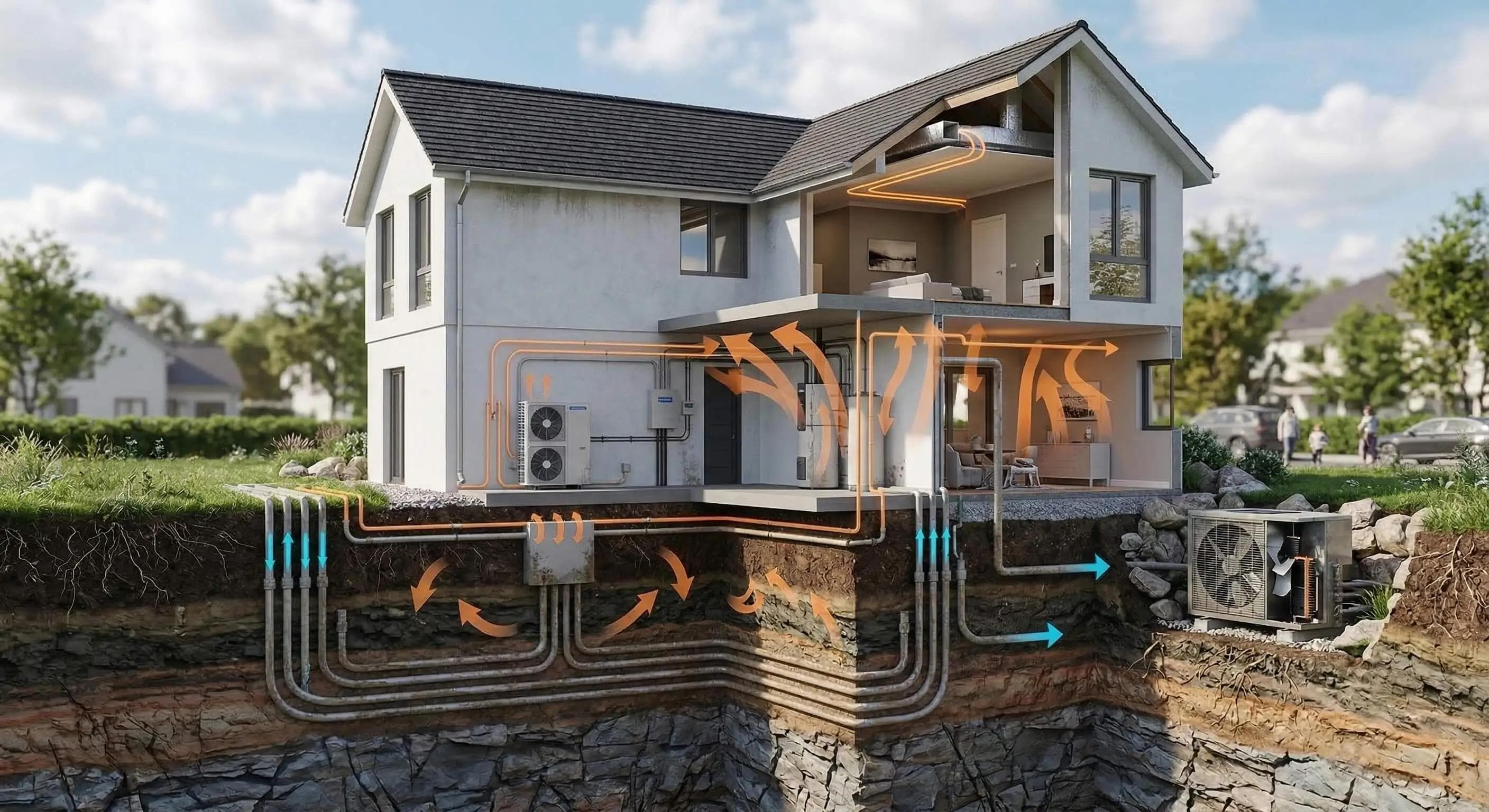
The upfront cost of a ground source heat pump is the conversation stopper. Somewhere between $10,000 and $30,000 installed, and a lot of homeowners close the browser before reading any further. What tends to get missed is the 30% federal tax credit that’s been available since 2022, the state rebates on top of that, and operating costs that run well below what a gas furnace costs to run year-round. We’ve spent years fielding questions from homeowners who initially balked at the price, and the ones who ran the full numbers were almost always glad they did.
So, is it worth $20,000? How deep do those loops actually go? Does this work in a Minnesota winter? This page has the 2025 cost breakdown, a plain-English explanation of how geothermal systems work, and a straight answer on when ground source makes sense and when a different heat pump would serve you better.
TL;DR Quick Answers
Ground Source Heat Pump
A ground source heat pump (also called a geothermal heat pump or GHP) is a home heating and cooling system that uses the earth's stable underground temperature — typically 50–60°F year-round — instead of outdoor air or combustion fuel.
Here's how it works:
A loop of pipes buried underground circulates a water-and-antifreeze mixture
In winter, the fluid absorbs heat stored in the earth and carries it indoors
In summer, the process reverses — the system pulls heat from your home and deposits it back into the cooler ground
An indoor heat pump unit (powered by electricity) concentrates and distributes that thermal energy through your existing ductwork
Why it matters for your air: Because geothermal systems run longer, gentler cycles than conventional HVAC, your air filter works more hours per day. A properly rated MERV filter changed on schedule protects your heat exchanger and keeps your system running at the efficiency you paid for.
Key specs at a glance:
Efficiency: 300–500% COP (3–5 units of heating or cooling per 1 unit of electricity)
Installed cost: $10,000–$30,000, reduced by a 30% federal tax credit through 2032
Loop lifespan: 50–75+ years
Works in cold climates: Yes — ground temperature is stable even when outdoor air drops below 0°F
Top Takeaways
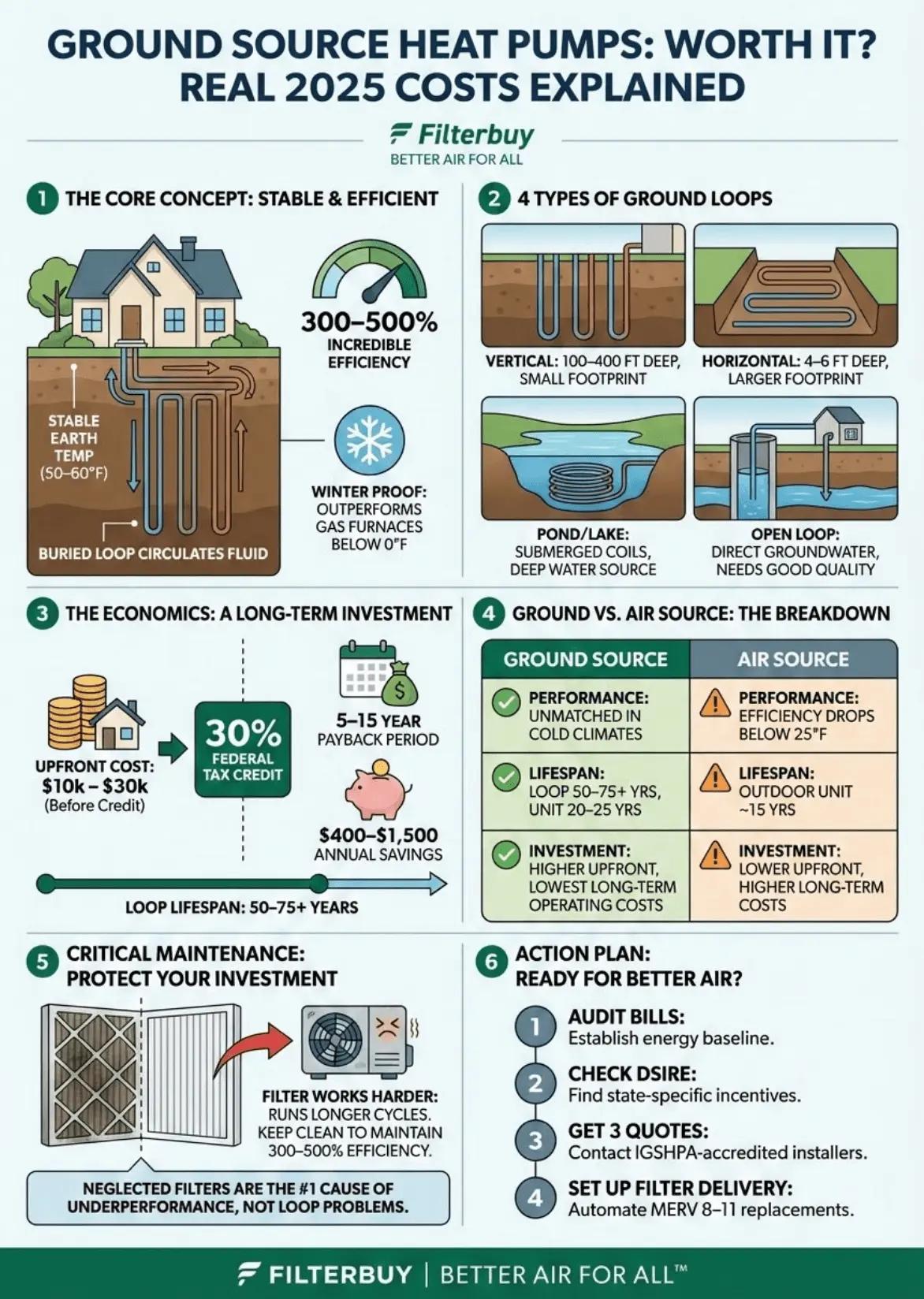
Ground source heat pumps use stable underground temperatures (50–60°F year-round) to heat and cool homes at 300–500% efficiency, far outperforming gas furnaces and most air source alternatives.
Four main loop configurations exist: vertical (100–400 ft deep, small lots), horizontal (4–6 ft deep, larger lots), pond/lake (homes near water), and open loop/water source (direct groundwater use).
The installed cost in 2025 runs $10,000–$30,000. The 30% federal tax credit under the Inflation Reduction Act, available through 2032, cuts that number significantly. Many states add additional rebates.
Payback periods range from 5 to 15 years, depending on climate, utility rates, and system size. For homeowners staying 7-plus years, the economics usually work in their favor.
Ground source systems outperform air source heat pumps in cold climates because ground temperature stays stable regardless of outdoor air temperature. Air source efficiency drops sharply below 25°F. Ground source doesn’t.
The ground loop lasts 50–75-plus years. The indoor heat pump unit lasts 20–25 years. Invest in loop quality above everything else.
Partial DIY is feasible for trenching and site prep, but vertical drilling and refrigerant work require licensed professionals. Cutting corners here voids warranties and affects 50 years of system performance.
Your HVAC air filter matters more with geothermal, not less. Longer run cycles mean your filter works harder. Keep it clean on schedule to protect your heat exchanger and maintain the efficiency you paid for.
How Does a Ground Source Heat Pump Work?
A ground source heat pump moves heat rather than generating it. Here’s how that plays out in practice. A loop of pipes buried underground circulates a water-and-antifreeze mixture. In winter, that fluid absorbs heat stored in the earth and carries it up to an indoor heat pump unit, which uses a refrigerant cycle (the same basic process as your refrigerator, scaled up significantly) to concentrate that warmth and push it through your ductwork. In summer, the process runs in reverse: the system pulls heat out of your home and deposits it back into the cooler ground. The compressor driving the refrigerant cycle runs on electricity, but because it’s moving heat rather than creating it, you get 3 to 5 units of heating or cooling for every 1 unit of electricity you put in. That’s what a 300–500% efficiency rating looks like in practice.
Ground Loop Types: What Goes Underground
The loop configuration depends on your lot size, soil conditions, and what’s available on your property. Four options cover most residential situations:
Vertical Closed Loop: Boreholes drilled 100–400 feet deep. Best for smaller suburban lots. Higher drilling cost, but a much smaller land footprint.
Horizontal Closed Loop: Trenches dug 4–6 feet deep across a wider area. Lower labor cost, but needs roughly 400–600 sq ft per ton of capacity. Works well for rural properties.
Pond / Lake Loop: Coiled pipes submerged at least 8 feet below the surface of a nearby pond or lake. Very cost-effective when the water source is close by.
Open Loop (Water Source): Draws directly from a groundwater well and returns it. Highly efficient, but requires adequate water quality and local regulatory sign-off.
What Does Ground Source Heat Pump Installation Actually Involve?
Installation breaks into two main jobs: the ground loop and the indoor unit. The loop work is the bigger one. Drilling or trenching typically takes one to three days and requires specialized equipment. The indoor heat pump unit replaces your existing furnace and air handler and, in most homes, connects directly to your current duct system. Start to finish, including permitting and commissioning, a standard residential installation usually wraps up in one to two weeks.
One thing we always tell homeowners: loop quality is where to spend your attention. A properly sized, well-sealed loop lasts 50-plus years. Cut corners on the installation, and you’ll feel it in your efficiency numbers for the life of the system. Get a certified GeoExchange contractor, pull the permit, and have the system pressure-tested before anyone fills in the trench.
Ground Source Heat Pump Cost: Real 2025 Numbers
We’re not going to pretend this is a cheap system to install. The upfront cost is the legitimate reason most homeowners hesitate, so here’s how the math actually lays out:
Equipment (heat pump unit only): $3,000 – $8,000
Vertical loop installation: $5,000 – $15,000
Horizontal loop installation: $3,500 – $8,000
Total installed cost (avg. home): $10,000 – $30,000
Federal tax credit (IRA 30%, through 2032): −$3,000 to −$9,000
Net cost after federal credit: $7,000 – $21,000
Typical annual energy savings: $400 – $1,500
Simple payback period: 5–15 years (varies by climate and utility rates)
The 30% federal tax credit under the Inflation Reduction Act applies to geothermal heat pump installations through 2032. Many states layer their own rebates on top, tracked by the DSIRE database at dsireusa.org. For a homeowner planning to stay in their home for 10 or more years, especially in a climate with serious heating loads or expensive natural gas, the long-term economics tend to work out clearly in favor of geothermal.
Ground Source Heat Pump Efficiency: What the Ratings Actually Mean
The two numbers you’ll see most often are COP (Coefficient of Performance) for heating and EER (Energy Efficiency Ratio) for cooling. A COP of 4.0 means you’re getting 4 units of heat for every 1 unit of electricity. Compare that to a 95% efficient gas furnace, which clocks in at a COP of roughly 0.95, or a high-efficiency air source heat pump running at 2.0–3.0 in mild weather and dropping further when it gets genuinely cold outside.
Ground source systems hold their efficiency regardless of outdoor temperature because they pull from the earth rather than the air. In a cold climate, that consistency is the biggest practical edge they have over air source systems. One related point worth flagging: because geothermal moves air more gently and continuously through your ductwork, your HVAC filter runs for more hours per day. A quality MERV-rated filter changed on schedule protects your heat exchanger and keeps the system performing at the efficiency ratings you paid for.
Ground Source vs. Air Source: The Honest Comparison
Both are strong choices over fossil-fuel heating. Which one makes more sense for your home comes down to climate, lot size, budget, and how long you plan to stay. Air source heat pumps, including mini-splits, run $3,500–$10,000 installed, handle moderate climates well, and are significantly easier to install. Ground source systems cost more upfront but outperform in cold climates, run quieter, and carry a longer system lifespan. For a full side-by-side look at all three types, see our guide:
Air Source vs. Ground Source vs. Mini-Split Heat Pumps: Which Is Best for Your Home?
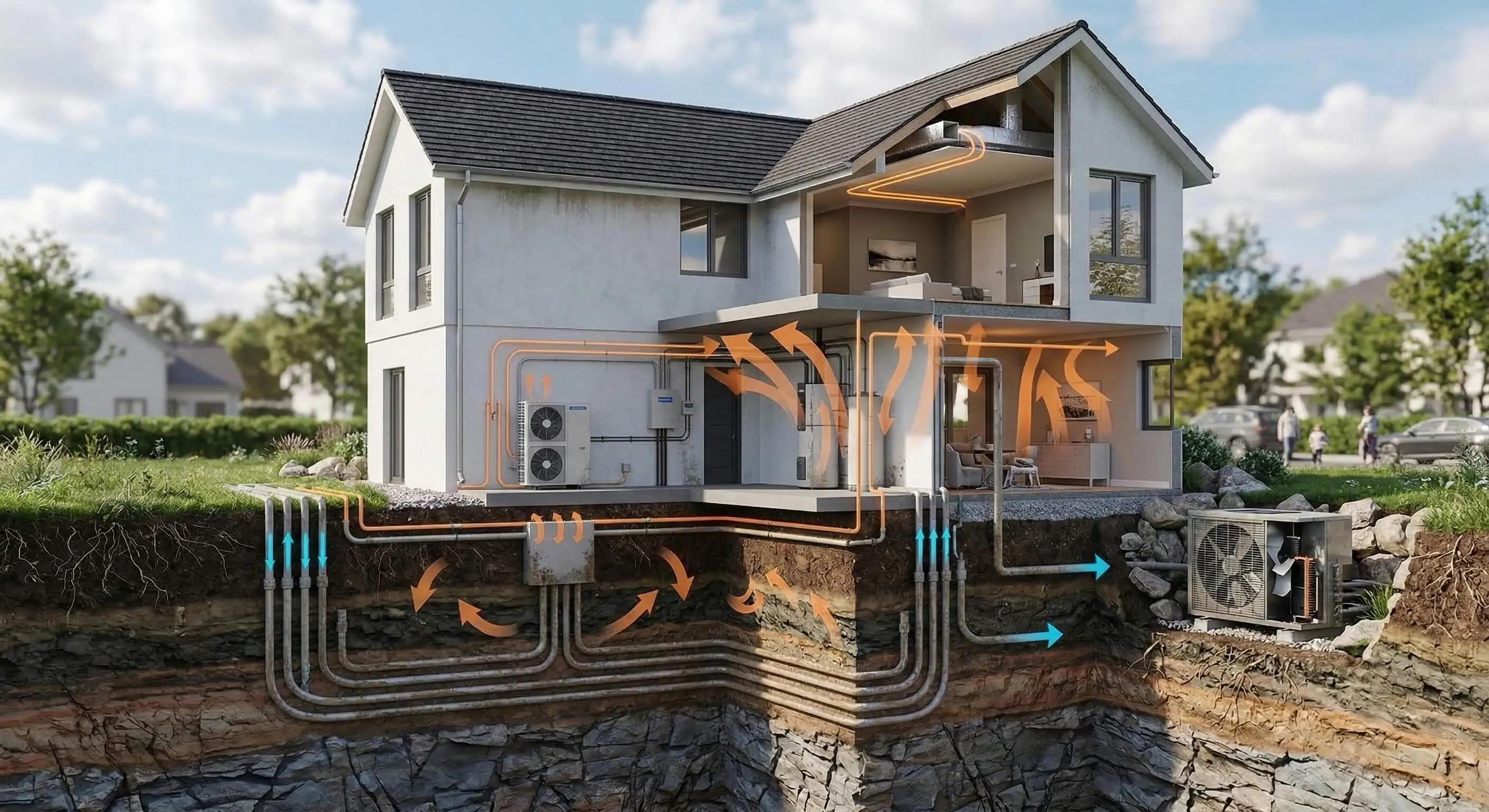
"In our experience servicing geothermal systems, the ones that underperform almost never have a loop problem — they have a neglected filter that's been starving the air handler for months, and the homeowner had no idea the two were connected."
— Filterbuy HVAC Engineering Team
7 Essential Resources
These are the sources our team goes back to when homeowners ask us to back up what we’re saying. Free, government- and industry-backed, and worth saving before you start getting quotes.
1. U.S. Department of Energy — Geothermal Heat Pumps
The DOE’s official overview of geothermal heat pump technology, efficiency benchmarks, and how residential systems work. Start here.
https://www.energy.gov/energysaver/geothermal-heat-pumps
2. ENERGY STAR — Certified Geothermal Heat Pumps
The ENERGY STAR product database for certified GHP equipment. Check this before you buy any unit to confirm it qualifies for the federal tax credit.
https://www.energystar.gov/products/heating_cooling/geo_heat_pumps
3. DSIRE — Database of State Incentives for Renewables & Efficiency
The go-to U.S. database for state and local rebates, tax credits, and incentive programs. Check your state before you finalize a budget.
4. IGSHPA — International Ground Source Heat Pump Association
The industry’s primary certification and training body for geothermal contractors. Use the IGSHPA contractor directory to find accredited installers in your area.
5. EPA — Geothermal Heating and Cooling Technologies
The EPA’s environmental analysis of geothermal systems including greenhouse gas reduction data and air quality comparisons. Useful for understanding the environmental side of the case.
https://www.epa.gov/rhc/geothermal-heating-and-cooling-technologies
6. Wikipedia — Heat Pump
A solid foundational reference on how heat pumps work at a technical level: thermodynamic principles, refrigerant cycles, system types. Good background before getting into geothermal specifics.
https://en.wikipedia.org/wiki/Heat_pump
7. Filterbuy — Air Source vs. Ground Source vs. Mini-Split Heat Pumps
Our own head-to-head comparison of the three main residential heat pump types: efficiency, cost, climate performance, and which one fits different homes. The companion piece to this page.
3 Key Statistics
Three numbers worth knowing before you start talking to installers.
25–50%
Reduction in energy use compared to conventional heating and cooling systems.
Source: U.S. Department of Energy — energy.gov/energysaver/geothermal-heat-pumps
Up to 72%
Reduction in greenhouse gas emissions versus electric resistance heating.
Source: U.S. Environmental Protection Agency — epa.gov/rhc/geothermal-heating-and-cooling-technologies
3–5×
More efficient than conventional heating and cooling systems, according to ENERGY STAR.
Source: ENERGY STAR — energystar.gov/products/heating_cooling/geo_heat_pumps
Final Thoughts & Opinion
Ground source heat pumps are underrated. The technology is proven. The tax incentives right now are better than they’ve been in a long time. And the long-term operating cost advantage over gas heat and electric resistance isn’t a close call. We’ve been working with homeowners on HVAC and indoor air quality long enough to say that with some confidence.
That said, we won’t tell you it’s the right answer for every home. Planning to move in three years? The payback math doesn’t work. Lot too small for a horizontal loop, and bedrock making vertical drilling prohibitively expensive? A high-efficiency air source heat pump may be the smarter call. Those are real constraints worth facing before you commit.
What’s shifted in the past few years is the financial picture. The 30% federal tax credit under the Inflation Reduction Act runs through 2032. Natural gas prices have moved up. Electricity grids keep getting cleaner. The numbers favor geothermal a little more with each year that passes.
Our call: if you’re staying in your home for seven or more years, you’re in a climate with real winters or high cooling loads, and you have the yard space for a loop, geothermal is worth getting quotes on. Get at least three estimates. Verify each contractor’s IGSHPA accreditation. Ask for the Manual J load calculation and a ground thermal conductivity assessment before anyone starts drilling.
Once you switch to geothermal, your air filter schedule matters more than it did before. Geothermal systems run longer, gentler cycles, which is great for comfort but means your filter is working more hours per day. A quality MERV-rated filter on schedule protects your heat exchanger and keeps your system performing at the efficiency ratings you paid for. We’re mentioning it because it’s how the system works, not because we’re trying to sell you a filter (though we do make a very good one).
Next Steps
Here’s where to start, in the order that actually matters.
Pull 12 months of utility bills. Note your heating and cooling costs by season. This gives you a baseline to measure potential savings against, and it’s the first thing any good installer will ask for.
Get a read on your lot and soil. Vertical loops work on small lots but need soft enough ground for cost-effective drilling. Horizontal loops are cheaper to install but need more space. A quick assessment from a local driller can save you from expensive surprises later.
Research your state incentives. Visit DSIRE at dsireusa.org and enter your state. Stack your state rebates on top of the 30% federal tax credit to understand your actual net investment before you talk to a single contractor.
Find IGSHPA-accredited contractors. Use the IGSHPA contractor directory at igshpa.org to locate certified geothermal installers in your area. Accreditation means the contractor has completed verified training in the GHP system design and installation.
Get three quotes, and make each one specific. Ask each contractor for a Manual J heating and cooling load calculation, a ground thermal conductivity estimate, a loop design diagram, and a written breakdown of equipment specs and warranty terms. Comparing those details is how you find the right installer, not just the cheapest one.
Plan your air filter setup. Once your geothermal system is in, your filter schedule matters more than it did with your old HVAC. Choose a MERV 8–11 filter suited to your home’s air quality needs. Set up a reminder or auto-delivery so you’re never running a clogged filter on a system you just invested serious money in.
Frequently Asked Questions
What is a ground source heat pump?
A ground source heat pump (GHP) is a heating and cooling system that uses the earth’s stable underground temperature as a heat source in winter and a heat sink in summer. Also called a geothermal heat pump or geothermal HVAC system, it circulates fluid through buried pipes to exchange heat with the ground, then runs that thermal energy through an indoor unit to heat or cool your home. It runs entirely on electricity. No combustion, no gas line required.
How deep do ground source heat pump loops go?
Depends on the loop type. Vertical closed loops are drilled 100–400 feet per borehole, with depth varying based on soil thermal conductivity and heating load. Horizontal loops are installed 4–6 feet below the frost line across a wider area. Pond and lake loops go at least 8 feet below the water surface. Open-loop systems draw from an existing groundwater well at whatever depth the aquifer sits.
What powers a ground source heat pump?
The compressor inside the heat pump unit runs on electricity. The ground loop itself is powered by the natural solar and geothermal energy stored in the earth, which is why the system can deliver 3–5 units of heat for every 1 unit of electrical input. The electricity powers the pump and compressor. The earth handles the rest.
Is a ground source heat pump worth the cost in 2025?
For most homeowners planning to stay in their home for 7 or more years, yes, particularly in climates with high heating loads or expensive natural gas. The 30% federal tax credit, available through 2032, takes a real chunk out of the upfront number. Annual energy savings of $400–$1,500 [VERIFY] add up quickly after that. The honest caveat: if you’re moving in a few years, the payback window doesn’t align. A high-efficiency air source heat pump is likely the smarter financial move in that situation.
Does a ground source heat pump work in cold climates?
Yes, and this is one of geothermal’s most significant advantages. Because the system draws heat from the ground rather than outdoor air, its efficiency stays stable even when outside temperatures drop well below 0°F. Air source heat pumps lose significant efficiency below 25°F. Ground source systems don’t have that problem because ground temperature at loop depth stays around 50–60°F year-round across most of the continental U.S.
How long does a geothermal heat pump system last?
The ground loop, the buried pipes, can last 50 to 75-plus years when properly installed with high-density polyethylene (HDPE) pipe. The indoor heat pump unit has a lifespan of roughly 20–25 years, which is significantly longer than a conventional furnace or central air conditioner. Over a 20-year ownership period, the total cost of running a geothermal system typically compares well against conventional HVAC alternatives.
Can I DIY a ground source heat pump installation?
Partially. Homeowners can help with horizontal trench digging, some interior piping runs, and site preparation, and doing so can trim labor costs meaningfully. Vertical borehole drilling requires specialized equipment and a licensed well driller in most states. Refrigerant work requires EPA 608 certification. System commissioning should always involve a licensed HVAC technician. Going full DIY risks voiding your equipment warranty and, more to the point, compromising 50 years of system performance.
What maintenance does a geothermal system require?
Compared to a gas furnace or central AC, ground source systems need very little attention. The most important ongoing task is regular HVAC filter changes. Geothermal systems run more hours per day than traditional systems, so filter condition directly affects efficiency. Beyond that: an annual professional inspection of the heat pump unit, a periodic check of loop fluid levels and antifreeze concentration every 3–5 years, and keeping the area around the indoor unit clear. The ground loop itself needs essentially zero maintenance once installed correctly.
Your Ground Source Heat Pump Works Hard — Make Sure Your Filter Does Too
A geothermal system runs more hours per day than conventional HVAC, so the right MERV-rated filter isn't optional — find your size at Filterbuy.com and set up auto-delivery so clean air stays on schedule, not on your to-do list.