Shop by

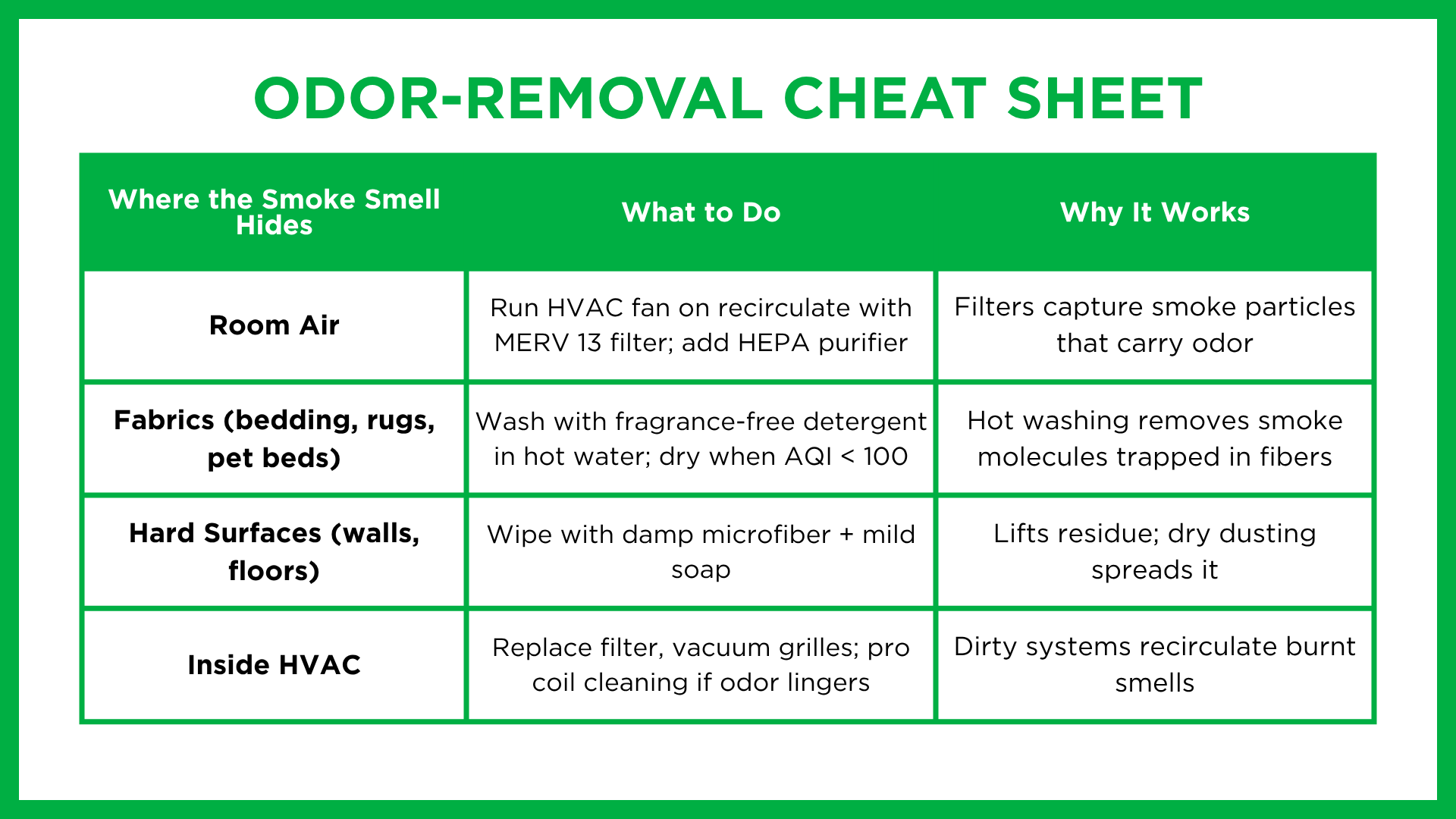
That lingering camp-fire odor is more than a nuisance—it signals that fine smoke particles are still trapped in your air and on your belongings. Use the quick-action steps and table below to clear the smell fast, then keep reading for extra health reasons to seal and filter whenever wildfire smoke drifts in.
1. PM 2.5 Reaches Places Larger Dust Cannot
PM 2.5 is extremely small—about 30 times thinner than a piece of hair. It slides past your nose and throat, settles deep in the lungs, and can even move into the blood. Hospitals record more asthma attacks, heart problems, and strokes on smoky days, with children, seniors, and people who already have lung or heart disease affected first.
2. Indoor Smoke Can Quickly Equal Outdoor Smoke
Tests by the EPA show that open cracks—window gaps, door bottoms, kitchen and bath vents—pull in almost half of outside smoke in just a few hours. Normal home tasks like walking or cooking stir up that dust repeatedly.
3. Repeated Exposure Adds Up
A single smoky day irritates airways. A smoky month keeps them inflamed. Long studies in fire-prone areas link weeks of PM 2.5 exposure to lasting lung problems and extra strain on the heart, even after skies look clear.
4. Smoke Dust Damages HVAC Equipment
When smoke infiltrates, the first stop is the return grille. Filters cake faster, blower pressure rises, and coils coat with sticky soot that blocks heat exchange. A dirty filter alone can hike cooling bills; add sooted coils and the hit is higher. Your system also runs hotter, shortening motor life.
5. Sealing Gives Filters and Purifiers a Chance
A MERV 13 furnace filter or HEPA purifier can remove most PM 2.5 that passes through it. If windows stay open or door gaps leak, however, the smoke load overwhelms even a new filter. By sealing first—closing windows, latching fireplace dampers, taping door sweeps—you cut the particle rush and let filtration push indoor PM 2.5 far below outdoor peaks.
Why Speed Matters
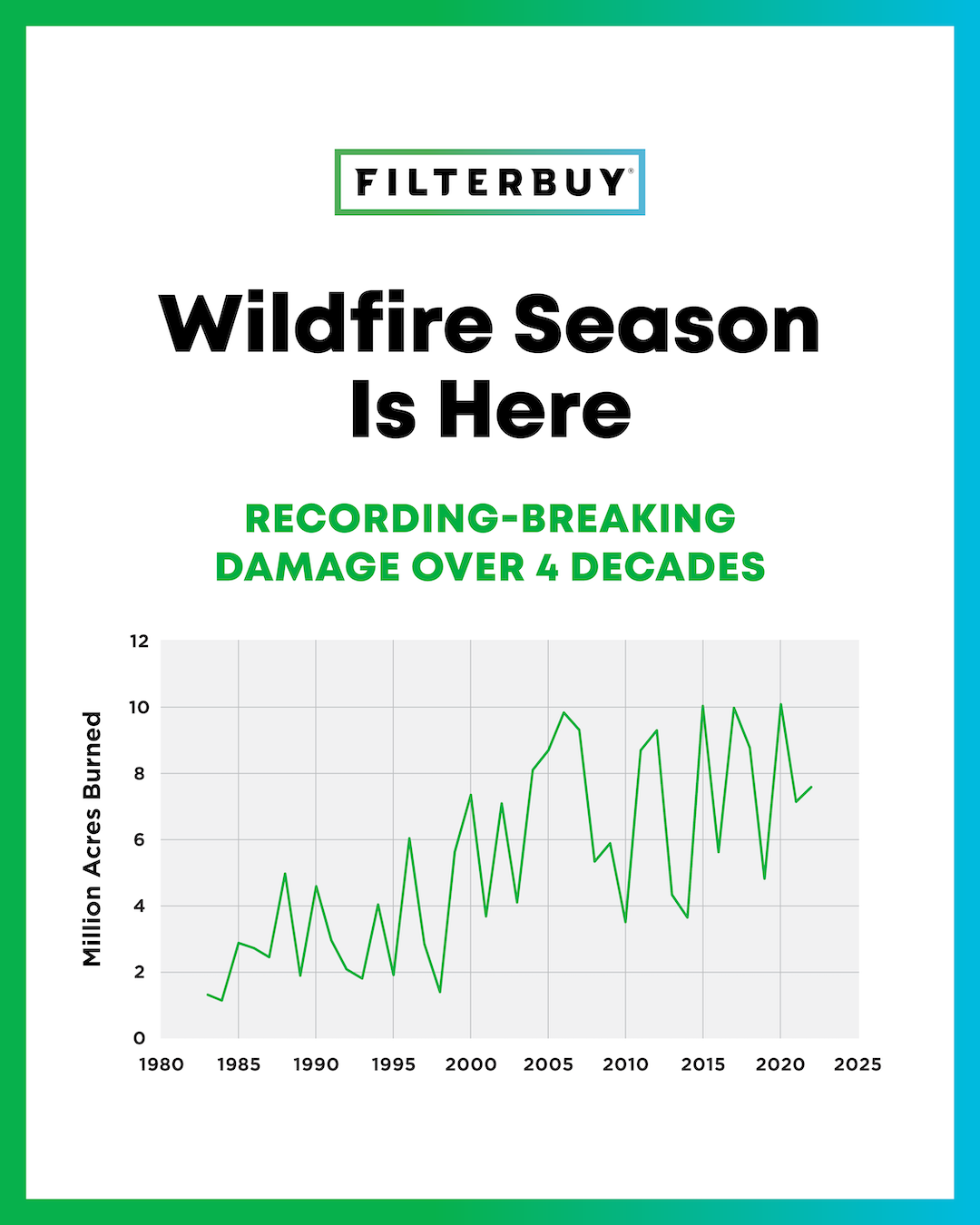
Wildfire plumes can arrive with little warning, and particle counts spike fastest in the first daylight hours after an overnight burn. Quick sealing limits that initial wave, avoiding a day-long struggle to bring high indoor counts back down.
Act Fast
At the first wildfire alert, shut openings, flip your HVAC to recirculate with a MERV 13 filter, run a HEPA purifier, and clean surfaces so the smoke smell—and the particles that cause it—disappear quickly.
The fine dust in smoke (PM 2.5) settles deep in the lungs and can even reach the bloodstream, raising the risk of breathing trouble, heart strain, and stroke.
The same tiny particles that carry odor slip through window cracks and door gaps; tests show about half the outdoor smoke—and its smell—can leak indoors within a few hours.
Yes, if you close any fresh-air intake and set the fan to recirculate so it cleans indoor air instead of drawing smoky air from outside.
A MERV 13 pleated filter with an activated-carbon layer catches fine dust and adsorbs many smoke smells; a particle-only pleat removes dust but not gases that cause odor.
A portable HEPA purifier with carbon in bedrooms or living areas adds extra odor and dust removal—especially useful if your HVAC can’t handle a high-MERV filter.
Only if the Air Quality Index (AQI) is below 100. If the number is higher, keep everything shut to avoid re-introducing smoke odors.
No. Use a snug N95 or KN95 respirator; it filters the odor-carrying PM 2.5 particles that cloth masks miss.
Check monthly. Heavy smoke can load a MERV 13 filter in 30–60 days—much faster than normal.
Reseal door and window gaps, run the HVAC on recirculate with a fresh MERV 13 + carbon filter, and operate a HEPA purifier until the smell fades. Wipe hard surfaces with a damp cloth and launder fabrics to remove settled odor particles.
They only mask it and add new particles. Filtration plus surface cleaning is the safest way to eliminate smoke odor.
Yes. Pets inhale the same air you do. Keep them indoors, seal leaks, and run high-efficiency filters to protect their lungs and reduce odor.

