
Furnace Blower Motor Replacement: Cost, Signs of Failure, Repair vs. Replace, DIY vs. Pro, and Lifespan
January 22, 2026
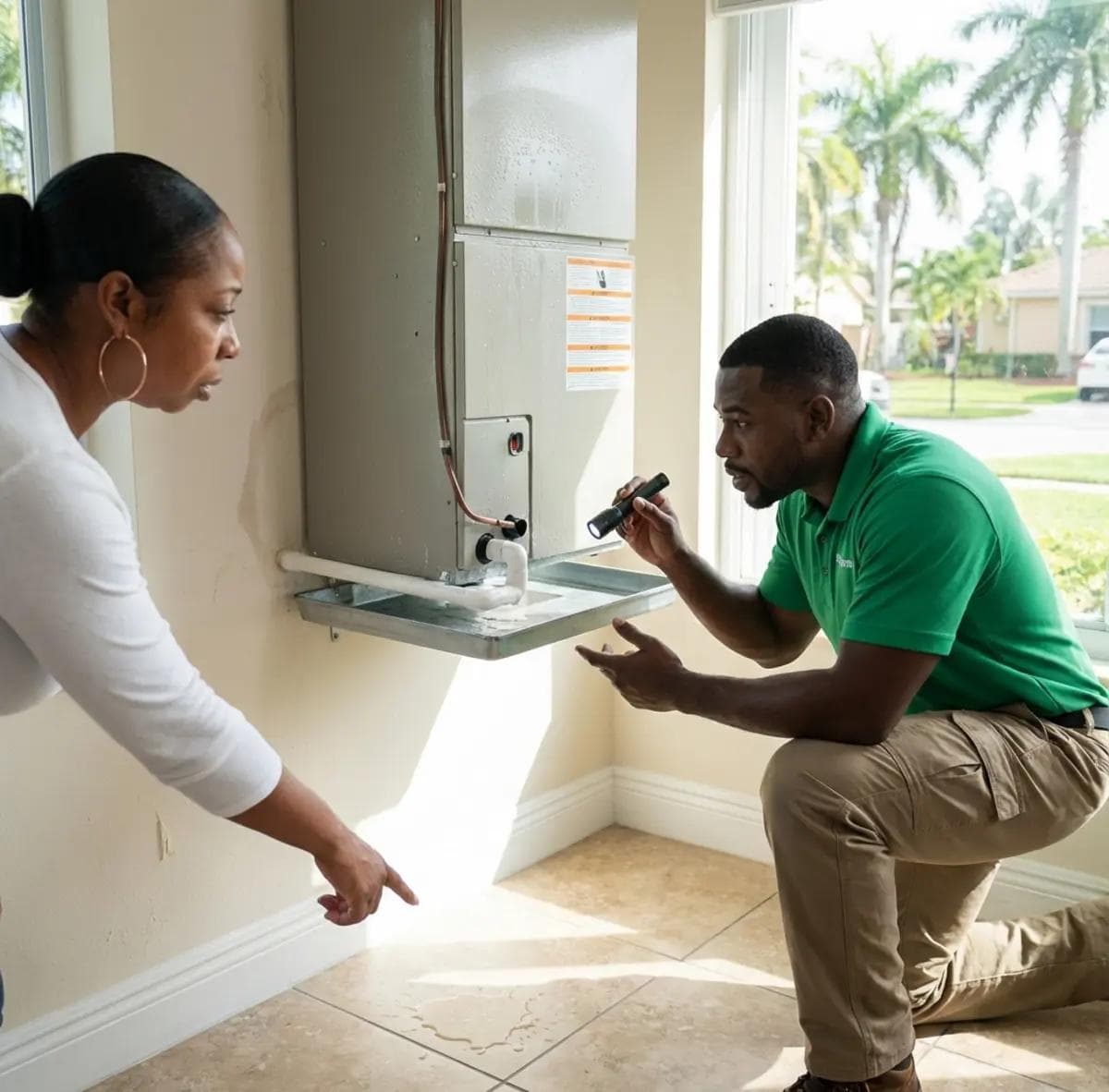
A furnace blower motor powers the fan that moves air through your ductwork. When it starts failing, you may notice weak airflow, strange noises, or a system that runs but does not heat well. This guide explains typical replacement costs, common failure signs, when repair makes sense, when replacement makes sense, and what you can do to help the next motor last longer.
TL;DR Quick Answers
Furnace Blower Motor Replacement
A furnace blower motor typically costs $150–$450 for the part, with professional installation adding $150–$300 in labor. Total replacement runs $300–$750 for most homes.
Signs you need replacement:
Motor hums but won't start
Weak or no airflow from vents
Overheating and frequent shutoffs
Squealing, grinding, or rattling noises
Unusually high electric bills
DIY vs. Pro: Handy homeowners can replace a direct-drive motor in 1–2 hours. Belt-driven motors or variable-speed ECM motors are more complex and typically warrant professional installation.
Quick tip: Before replacing, check the capacitor first—a failed $15 capacitor mimics motor failure and is an easy fix.
Key Takeaways
Most blower motor replacements total about $300–$900, with an average around $560, depending on motor type and labor time.
Weak airflow, squealing, or intermittent airflow may signal a motor issue, but restrictions can cause the same symptoms. Change filters regularly to reduce strain.
Repair can make sense for simple issues (like a weak capacitor on some systems), but replacement is often the practical fix when the motor windings or electronics fail.
DIY replacement is risky if wiring, programming, or safety checks are involved. Many jobs require professional diagnosis and correct setup.
Cost: What Blower Motor Replacement Typically Runs
A blower motor replacement is usually priced as parts + labor. Your total depends on the motor type, whether the system needs an exact match, and how long the job takes.
National cost ranges commonly land in these buckets:
Average total (parts + labor): about $560
Most common total range: about $300–$900
These are broad estimates, not a quote. A tight mechanical room, a hard-to-source motor, or extra electrical work can increase the total.
Use ranges to set expectations but trust an on-site diagnosis for the real number.
What Pushes The Price Up Or Down
Two homes can get very different quotes for the “same” repair because the job details change.
The most common cost drivers are:
Motor type: ECM motors and assemblies often cost more than PSC motors. PSC means Permanent Split Capacitor. These motors are common in many older systems and often use a run capacitor.
Exact part requirements: Some systems need a manufacturer-matched part or kit.
Access: Tight closets, attics, crawlspaces, or packed utility rooms increase labor time.
Related issues: A dirty blower wheel, overheated wiring, or airflow restrictions can add work.
If a quote feels high, it is usually because of motor type, access time, and added parts, not because someone is “charging for nothing.” Ask what is driving the price (motor type, access time, added parts), and you will usually get a clear explanation.
Signs Your Blower Motor Is Failing
Blower motor problems often show up as airflow and comfort problems first.
Common signs include:
Weak airflow from vents, even when the system is running
Rattling, scraping, squealing, or humming from the blower area
Intermittent airflow (air starts, stops, then starts again)
Overheating or shutdowns that look like the system is “trying” but cannot keep running
Burning smell or visible wire discoloration near the motor area (shut the system off and call for service)
Before you assume the motor is the problem, check airflow basics. A clogged air filter can reduce airflow and make the motor work harder. If the filter looks dirty, replace it and see if airflow improves. A clean filter will not fix a failed motor, but it can reduce strain and help you avoid mistaking an airflow issue for a motor failure.
If you need a replacement filter quickly (including common MERV 8, 11, and 13 options), Filterbuy carries a wide range of standard sizes and offers hard-to-find sizes.
Many symptoms overlap. A basic airflow check (including the filter) is a smart first step, but persistent issues still need a proper diagnosis.
Repair Vs. Replace
“Repair” can mean different things depending on what failed.
A repair may make sense when:
A capacitor is weak (common on PSC setups), and the motor itself tests healthy
A wiring connection is loose or damaged, and the motor has not been harmed
The blower wheel is severely dirty, and cleaning restores normal airflow and motor load
Replacement is often the practical choice when:
The motor windings test as failed, the motor overheats, or it will not run reliably
The motor is noisy from internal wear, and the noise does not go away
An ECM (Electronically Commutated Motor) control or motor assembly fails, and replacement is the most reliable fix
If your furnace is older and has multiple major issues, it may be worth discussing the bigger picture with a technician. Sometimes “replace the motor now” is still the right move. Other times, planning for a larger upgrade is more cost-effective.
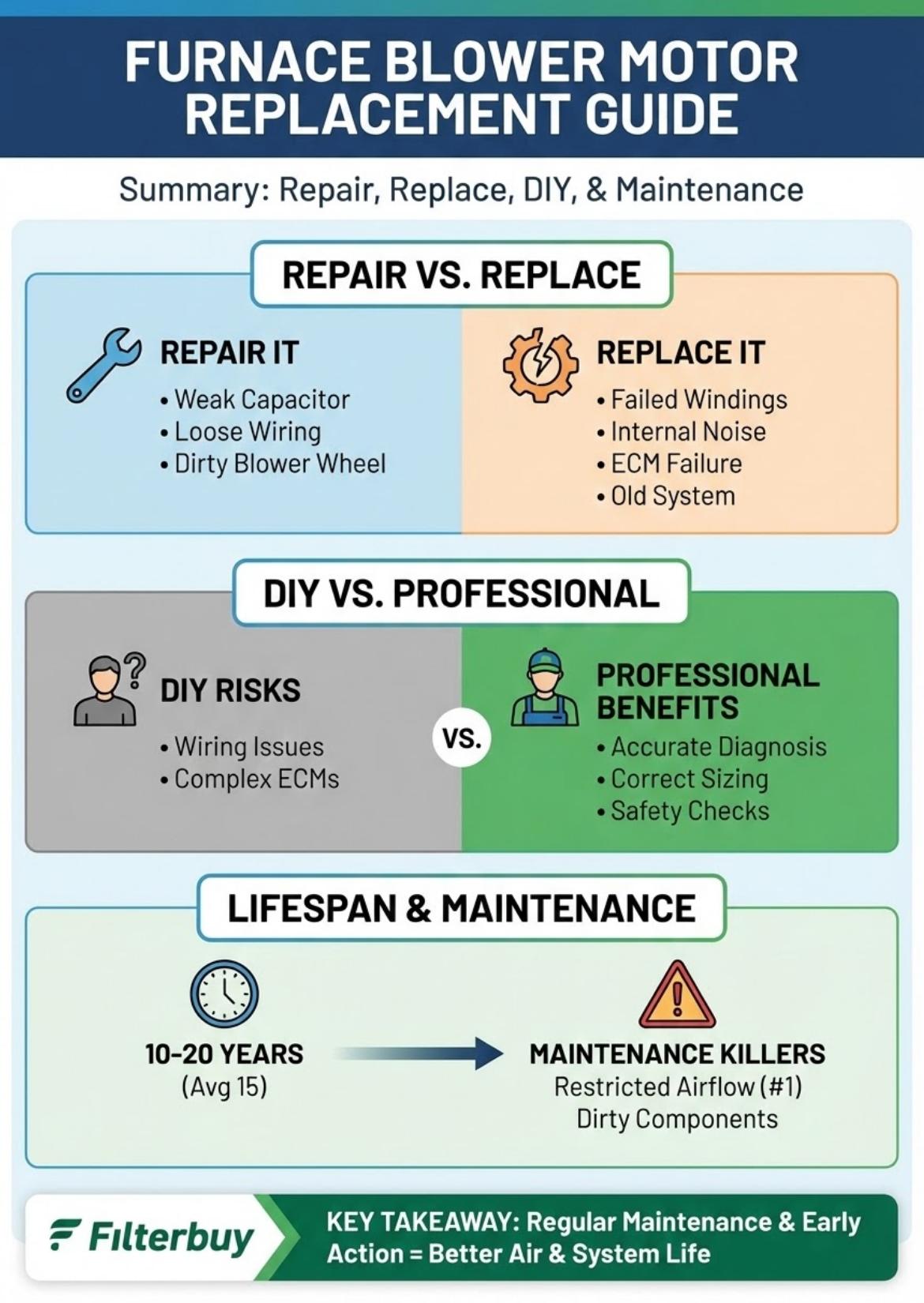
Repair it when testing points to a capacitor, wiring, or airflow issue. Replace it when the motor is worn, overheating, noisy, or failing electronically.
Diy Vs. Professional Installation: What To Know
Some homeowners try DIY because blower motors are sold as parts. The risk is that “installed” is not the same as “correctly matched, wired, and verified.”
DIY is higher risk when:
The system uses an ECM (Electronically Commutated Motor) that needs correct matching or configuration
Wiring is unclear, damaged, or non-standard
Safety checks, airflow checks, or control board testing are needed to confirm the real cause
Professional installation is usually the safer option because a technician can:
Confirm the motor is truly the problem
Ensure the replacement matches what the system requires
Test startup, operation, and basic airflow
If you want service support, Filterbuy HVAC Solutions advertises heating and cooling repair and replacement services in certain areas, which can help when you need diagnosis plus installation.
If you are not fully confident about diagnosis and wiring, professional installation is usually the best option.
How Long Your Blower Motor Should Last
Blower motor lifespan depends on runtime and operating conditions. Many last about 10 to 20 years, and a lot of homeowners see something closer to 15 years with normal use. Maintenance and airflow can push that longer or shorten it.
Motors tend to wear faster when:
Airflow stays restricted for long periods
The blower wheel is dirty and unbalanced
The system runs constantly due to duct leaks, poor insulation, or thermostat settings that keep demand high
You cannot control every factor, but airflow and cleanliness are two of the most practical factors you can control.
Blower motor replacement usually comes down to accurate diagnosis, the correct part, and safe installation. Use national cost ranges to set expectations but let a technician confirm whether the motor is truly the issue or whether another component caused the symptoms. If you address warning signs early and keep airflow steady with routine maintenance, your blower motor can last longer, and your furnace can run more consistently. When it is time to replace your air filter, Filterbuy offers common and hard-to-find sizes so you can stay on schedule.
FAQs
How much does a furnace blower motor replacement usually cost?
Most homeowners pay about $300–$900 total, with an average around $560, depending on the motor type and labor time.
What are the most common signs the blower motor is failing?
Common signs include weak airflow, squealing/grinding noises, intermittent airflow, or overheating shutoffs.
Should I check anything before assuming the motor is bad?
Yes. Check the air filter first. A clogged filter can restrict airflow and make the system act like the motor is failing.
When does repair make sense instead of replacement?
Repair can make sense when the real issue is a weak capacitor (PSC — Permanent Split Capacitor systems) or a loose/damaged wire, and the motor tests are healthy.
When is replacement the better choice?
Replacement is usually best when the motor overheats, will not run reliably, tests bad, or the ECM (Electronically Commutated Motor) assembly fails.
Can I replace a blower motor myself?
Some homeowners can, but DIY is higher risk when wiring is unclear or the system uses ECM parts that require correct matching and setup. A professional can confirm diagnosis and verify safe operation.
How long should a blower motor last?
Many blower motors last about 10–20 years, but restricted airflow and dirty components can shorten lifespan.