Shop by

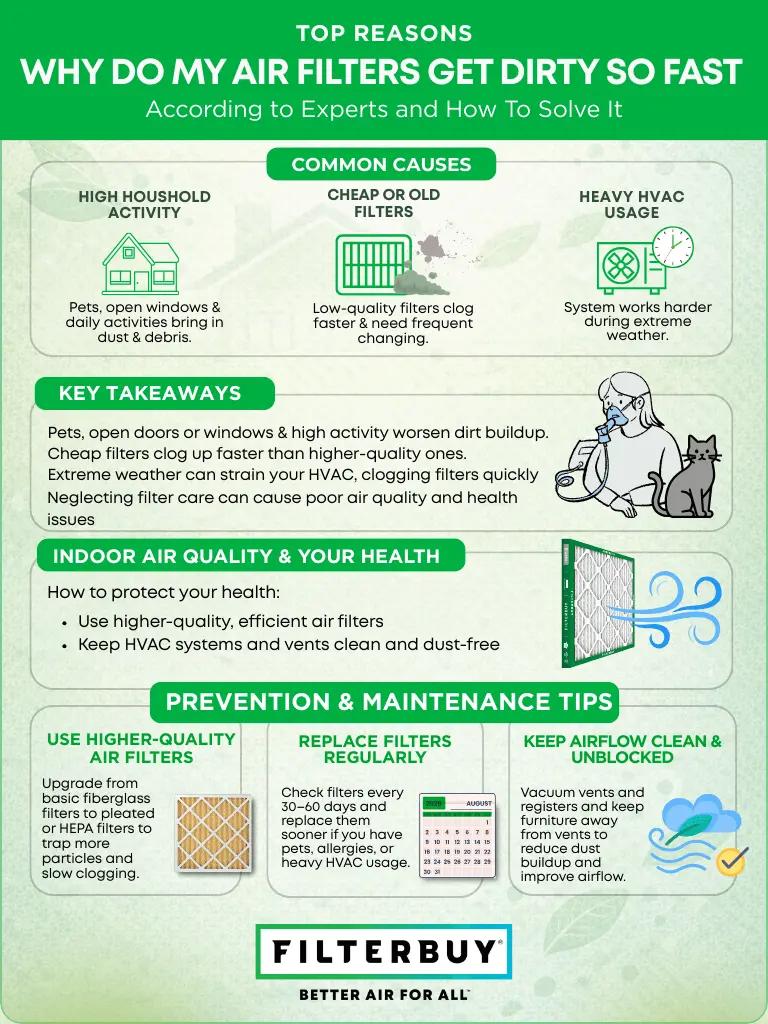
Air filters get dirty fast for six main reasons: high dust levels in the home, pets that shed hair and dander, leaving windows and doors open, your thermostat fan set to “ON” instead of “AUTO,” leaky air ducts pulling in attic dust, and using cheap fiberglass filters that clog quickly.
At Filterbuy, we’ve manufactured millions of air filters in the USA and heard from homeowners across the country dealing with this exact frustration. The good news: most of these causes have simple, affordable fixes. Below, we’ll walk you through each cause and show you exactly how to extend your filter’s life—so you can stop wasting money on premature replacements and start breathing cleaner air.
Hence, implementing suitable solutions can significantly boost the efficiency and longevity of your HVAC system.
Air filters accumulate dirt quickly for several reasons. Some factors include high dust levels, the presence of pets, and even frequent opening of windows and doors. These actions lead to more debris and pollutants entering indoor spaces without you knowing. Heavy HVAC system usage and low-quality filters also contribute to rapid clogging. That’s why, to address this issue, start regularly vacuuming your filters. Then, inspect the HVAC system for leaks and blockages and avoid overworking the system. Remember, dirty filters can impact both your health and air quality, so consider these preventative measures.
1. Pets that shed hair and dander 2. High dust levels from activity, construction, or climate 3. Thermostat fan set to “ON” instead of “AUTO” 4. Windows and doors left open during pollen/pollution season 5. Leaky air ducts pulling in attic/crawl space dust 6. Using cheap fiberglass filters instead of quality pleated options The fix: Address each cause above, then upgrade to a MERV 8–13 pleated filter and set a regular replacement schedule (every 60–90 days). Need a filter that lasts? Shop Filterbuy pleated filters.
Air filters can clog quickly due to various factors, such as high household activity, pets, or open windows, which can allow outdoor pollutants to enter.
Cheaper filters, like fiberglass ones, can clog faster than higher-quality options like pleated or HEPA filters.
Extreme weather can make your HVAC system work harder, leading to faster filter buildup.
Neglecting filter maintenance, like not changing or cleaning regularly, can cause blockages and poor air quality.
To prevent this, replace your filters regularly, vacuum them occasionally, and don't overload your HVAC system.
Air filters play an integral part in indoor air quality. These components are usually overlooked because they work inside the HVAC systems. But for them to diligently give you clean, healthy air to breathe—their effectiveness hinges on two main factors: filter efficiency and airflow dynamics.
Filter efficiency indicates how well an air filter captures and retains airborne particles. A filter with high efficiency can trap a greater number of smaller particles. However, higher efficiency may reduce airflow, forcing the system to exert more effort, which isn't great.
Airflow dynamics describe how air moves through your system. Filtration and circulation work best in your home when the air flows properly. When airflow dynamics are not balanced, filters can become dirty more quickly than expected. Maintaining correct airflow will help keep filters cleaner longer while ensuring HVAC systems perform at their best.
Despite thorough maintenance, air filters can still become clogged early on. This is often influenced by debris sources and filter durability.
A primary reason for this is dust accumulation in homes. Households with pets, children, or high activity levels typically generate more dust and debris. This increased load can diminish filter lifespan, leading to faster clogging. Leaving doors and windows open can let outside allergens and pollutants into your home. These can settle on your air filter and make it clog up more quickly.
Another significant factor is HVAC system usage. Increased operation leads to faster filter clogging. For instance, during extreme weather conditions, systems work harder, causing filters to endure additional strain.
Lastly, the filter type plays an essential role. Most cheap filters don't last as long and get clogged most of the time. That’s why even though high-quality filters are more expensive, they still last longer and require less replacement. This saves you time and frustration. And with this approach, you can also extend the life of your HVAC system.
Your Thermostat Fan Is Set to “ON” Instead of “AUTO”
This is one of the most overlooked reasons filters clog fast. Check your thermostat—you’ll see two fan settings: “AUTO” and “ON.” When set to “ON,” the blower runs continuously—24/7—even when your system isn’t actively heating or cooling. That means air passes through your filter nonstop, picking up particles far faster than normal. According to ENERGY STAR, this constant cycling also drives up energy bills. The fix: Switch to “AUTO.” The fan will only run when your HVAC system is actively conditioning air, giving your filter much more life between changes. If you keep it on “ON” for allergy reasons, upgrade to a MERV 11 or MERV 13 pleated filter—they handle continuous use better than cheap fiberglass options.
Leaky Air Ducts Are Pulling In Extra Dust If your ductwork has gaps, cracks, or loose connections—especially in unconditioned spaces like attics or crawl spaces—your filter is working overtime. Leaky ducts pull in insulation fibers, attic dust, and outdoor particles that wouldn’t normally reach your filter. According to ENERGY STAR, the average home loses 20–30% of conditioned air through duct leaks. That’s not just wasted energy— it’s a flood of unfiltered particles hitting your air filter from every direction. The fix: Have a professional inspect your ductwork and seal any leaks. In the meantime, upgrading to a quality pleated filter (MERV 8–13) will capture more of that extra debris while you address the root cause. If you need professional ductwork help, Filterbuy HVAC Solutions offers duct inspection and sealing services.
Your house might have invisible grime that causes poor indoor air quality. This matter extends beyond merely accumulating dust on filters; it poses serious health risks.
Some health problems linked to poor air quality include persistent headaches, fatigue, dizziness, and chronic respiratory conditions. People with allergies often experience heightened symptoms. At the same time, individuals with asthma or lung diseases may face more frequent and severe attacks.
Long-term exposure can lead to serious illnesses, such as heart disease and respiratory issues like bronchitis and lung cancer. Children, the elderly, and people whose immune systems aren't strong enough are more likely to get sick from bad indoor air quality.
Bad indoor air can affect more than just your physical health. It can also affect your mood and cognitive functions. Concentration may also become hard and trigger anxiety.
According to the EPA, indoor air can be 2 to 5 times more polluted than outdoor air—and in some cases up to 100 times worse.
Due to the serious health risks linked to poor indoor air quality, prevention and maintenance play important roles. Start by sticking to a regular filter replacement schedule. Clean your filters to improve air quality and promote HVAC system efficiency.
Follow the guidelines for cleaning techniques. Note that a vacuum cleaner works well for removing dust and debris from air filters. Avoid using water or cleaning agents unless filters are specifically designed for washing. Check the manufacturer's instructions or ask a technician if in doubt.
The U.S. Department of Energy estimates that a dirty filter can increase HVAC energy consumption by up to 15%.
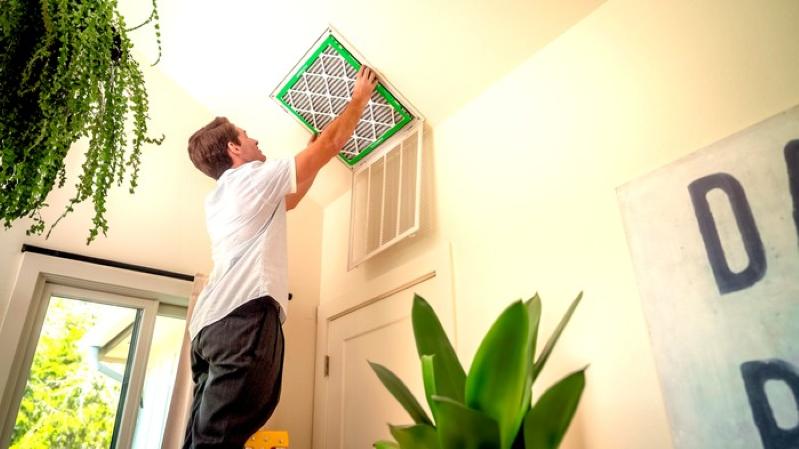
Tired of remembering to change your filter? Set up auto-delivery and we’ll ship your exact size on your schedule—no more last-minute runs to the hardware store
Choosing an appropriate air filter influences your home’s air quality. Since numerous filter types exist, keep in mind that each offers unique advantages and disadvantages. Common varieties include fiberglass, pleated, and high-efficiency particulate air (HEPA) filters.
Firstly, fiberglass filters represent an economical choice and are disposable; however, their efficiency is limited. For improved filtration, pleated options become a better alternative. These filters effectively capture smaller particles, yet their denser material may stress HVAC systems.
Contrarily, HEPA filters deliver top-notch efficiency, trapping nearly 99.97% of airborne particles. Although pricier, professional installation might be necessary for optimal performance.
Remember, maintenance is more than just cleaning or replacing filters. You can keep the HVAC system running perfectly by frequent inspections for leaks or blockages. Since you don't want your system to work harder than it needs to, follow these instructions to extend the cleanliness of the filter longer by not clogging more quickly.
At Filterbuy, we’ve built air filters in the USA since 2013 and shipped millions to homes nationwide. Based on our experience and customer feedback, here’s what we know works.
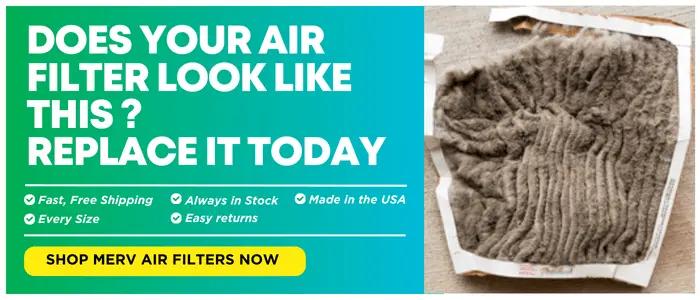
Ready to upgrade? Shop Filterbuy’s MERV 8, MERV 11, and MERV 13 pleated filters—shipped fast and free to your door.”
Not sure what size you need? We carry 600+ standard sizes plus custom filters. Find your exact fit in seconds.
FILTERBUY EXPERT TIP: “If your filter clogs constantly, don’t downgrade to a cheaper filter to ‘save airflow.’ Stick with a MERV 8–13 pleated filter to protect your health, but check and replace it more frequently. We’ve seen homeowners save hundreds in HVAC repair costs just by upgrading from fiberglass to pleated.”
If there is a lot of dust, pet dander, or other particles inside your home, your air filter can get dirty very quickly. Construction, renovations, or a lot of pollution outside can also cause your filter to clog quickly.
If your filters frequently clog, it might be due to a high concentration of airborne particles. It might also mean your home's ventilation system is not effectively filtering air before it reaches the main filter.
When you see a black air filter, it might indicate that the filter is capturing a lot of soot or mold spores. This could be caused by burning candles, using a fireplace, or having mold problems. High pollution levels can also lead to a quick accumulation of dark particles.
You might notice that your air purifier gets dirty fast because it's absorbing a lot of dust, pollen, smoke, and pet dander from your home. This could mean that your indoor air quality is bad and requires fixing, but it could also mean that it is functioning properly.
To extend the life of your air filter, start by keeping your home clean and dust-free. Consider using extra air purifiers to reduce the load on your main filter. Regular vacuuming and reducing indoor pollution sources, like smoking or burning candles, can also help maintain cleaner air.
If your home is extremely dusty, your pets shed a lot, or you live in a highly polluted area, you may need to change the filter more frequently. Furthermore, filters can become clogged more rapidly if your HVAC system runs often or if there is construction nearby or in your immediate vicinity.
The fact that the air filter has turned grey after a week indicates that it is effectively removing a great deal of dust, lint, and other airborne particles. This might be because of environmental variables, like pollen or construction dust, or because of high activity inside, like frequent cleaning.
The time it takes for an air filter to become dirty varies greatly. It actually depends on factors such as indoor air quality, pet presence, and overall home cleanliness. A filter may begin to show signs of dirt accumulation within a month, but certain environments can cause it to clog much sooner.
When you see a substantial accumulation of dust and debris on your air conditioner filter, or if you notice reduced airflow from your vents, it's time to clean it. In addition to increasing energy costs and even overheating, a dirty filter can force your HVAC system to work harder.
Yes, a dirty air filter, which limits airflow, negatively affects your air conditioner's ability to cool down, work efficiently, and avoid expensive repairs. Additionally, this can shorten the life of your HVAC system in the long run.
Although it is theoretically feasible to operate your air conditioner for a few days without a filter, doing so is highly discouraged due to the potential damage and decreased efficiency caused by dust and debris entering the system. Going without a filter also means pollutants circulate freely, harming your indoor air quality.
While variables like air quality and usage affect how long an air filter lasts, a good rule of thumb is to change it every one to three months. The frequency of filter changes may be more pronounced in more complex environments, but it may be longer for higher-quality filters or those used in less polluted areas.
Now that you know what's causing your air filters to clog quickly, it's time to upgrade to a high-quality replacement that works harder and lasts longer. Shop Filterbuy's 600+ sizes — all made in the USA, shipped fast and free right to your door.

