Shop by
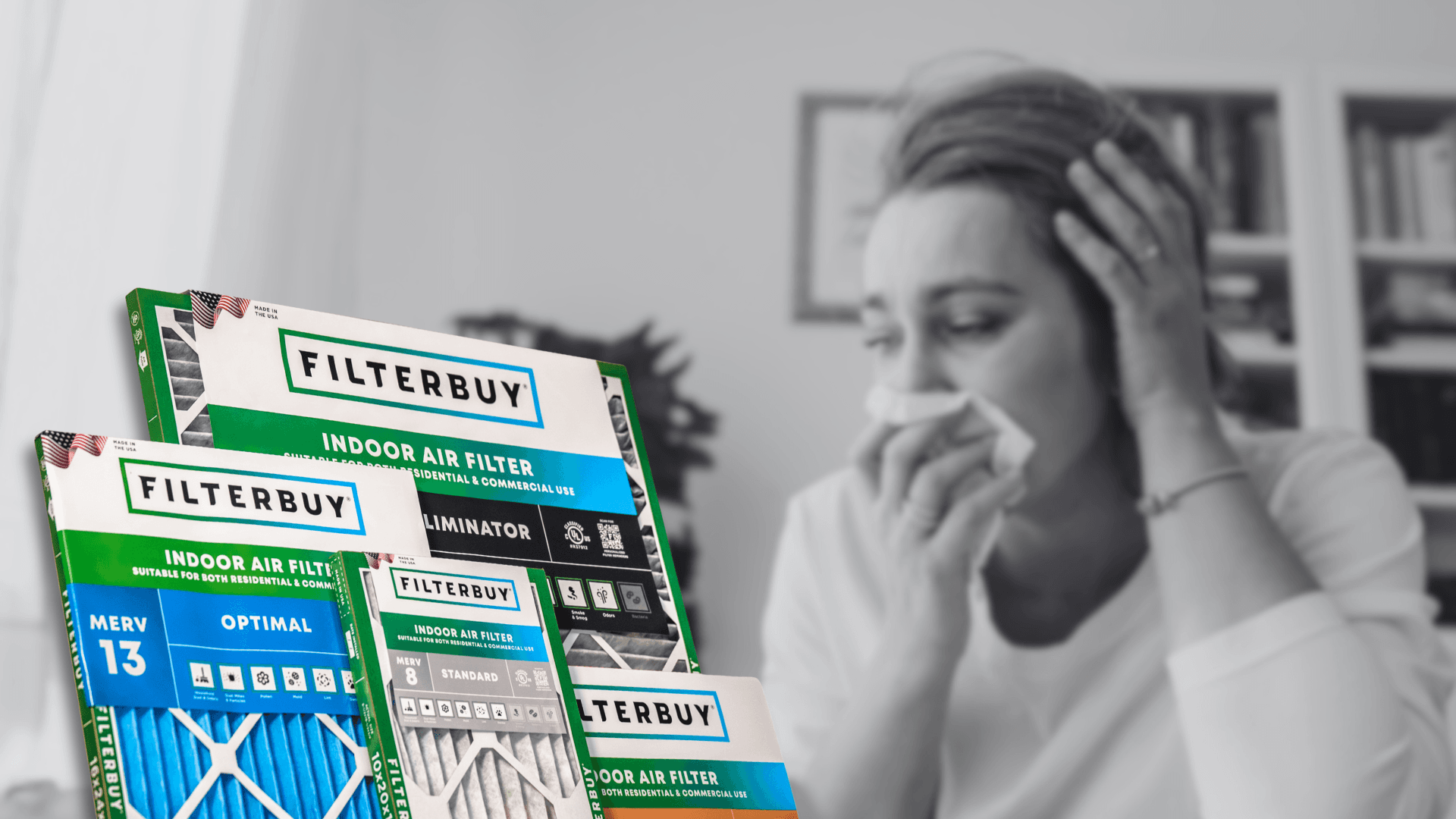
Mold allergies flare when you inhale spores just 2 – 10 microns wide—small enough to stay airborne yet large enough for a high‑grade HVAC filter or a true‑HEPA purifier to trap. A Filterbuy MERV 11 pleated filter clears spores from the whole house every time the blower runs. Add a portable purifier with a true‑HEPA cartridge for rooms where you spend the most time, and back both solutions with moisture control to build the strongest defense against mold‑allergy flare‑ups.
Upgrade the main filter: A Filterbuy MERV 11 filter to remove the bulk of mold spores, including black‑mold spores whenever the HVAC cycles.
Treat musty zones: In damp, smelly areas, install a Filterbuy Odor Eliminator (MERV 11 + carbon) to trap spores and absorb musty odor in one step.
Add room insurance: Place a true‑HEPA purifier in bedrooms or basements for localized, ≥ 99.97 % spore removal—ideal for severe mold allergies.
| Symptom | Why it happens |
|---|---|
| Sneezing, runny or stuffy nose | The immune system treats spores as invaders (hay-fever-type reaction). |
| Itchy, watery, or red eyes | Spores prompt the body to release histamine, leaving eye tissues inflamed and uncomfortable. |
| Cough & throat itch | When spores irritate the upper airways, the reaction can develop into lingering post-nasal drip. |
| Wheeze or asthma flare | Spores reach lower lungs, narrowing airways, especially in asthmatics. |
Most affected groups:
People with asthma or existing allergies
Babies and toddlers, whose lungs are still developing
Older adults with chronic lung disease
Anyone with weakened immunity (chemo, transplant, HIV)
| Symptom | Why it happens |
|---|---|
| Sneezing, runny or stuffy nose | The immune system treats spores as invaders (hay-fever-type reaction). |
| Itchy, watery, or red eyes | Spores prompt the body to release histamine, leaving eye tissues inflamed and uncomfortable. |
| Cough & throat itch | When spores irritate the upper airways, the reaction can develop into lingering post-nasal drip. |
| Wheeze or asthma flare | Spores reach lower lungs, narrowing airways, especially in asthmatics. |
Choosing the best filter isn’t one‑size‑fits‑all. It depends on your home and situation—mold load, HVAC capacity, humidity, and occupant health (allergies and asthma). Below are the most common filters and when each is appropriate.
MERV 11 filters are designed to remove over 65% of particles in the 1 to 3 micron range, which includes many types of mold spores. Positioned in the furnace or air-handler return grille, this filter offers consistent spore reduction throughout the home during each HVAC cycle. It provides an appropriate level of protection for general indoor air quality maintenance without significantly restricting airflow.
MERV 13 filters capture a higher percentage of fine particles, including mold spores in the lower micron range. This filter is recommended for households where black mold (Stachybotrys) has been confirmed or where residents suffer from chronic asthma or severe mold allergies. It improves spore removal efficiency and is compatible with many modern HVAC systems.
Filters that combine pleated media with an activated carbon layer are designed to remove both mold spores and associated odors. The pleated filter captures the physical spores, while the carbon adsorbs volatile organic compounds (VOCs) and musty smells released by active mold. This type is suitable for damp environments such as basements or areas where odor is a concern in addition to spore removal.
A standalone air purifier with a true-HEPA filter can remove ≥ 99.97% of particles at 0.3 microns, which includes nearly all mold spores. These devices operate independently of the HVAC system and continuously recirculate and filter room air. They are ideal for use in bedrooms, offices, or nurseries where additional protection is needed for individuals with mold sensitivities or respiratory conditions.
An HVAC filter can trap spores floating in the air, but mold keeps producing new spores as long as the surface stays wet. Break the moisture supply and the colony stops growing, then the filter can finish the cleanup without a constant influx of fresh spores.
Fix roof or plumbing leaks.
Vent baths and kitchens outdoors.
Keep indoor RH ≤ 60% with a dehumidifier.
Discard porous items that stay wet >48 h.
Choose Filterbuy filters—U.S.‑made and shipped free nationwide—to free your home from mold. Pair the right filter with a true‑HEPA purifier in problem rooms and good moisture control to keep mold spores, black‑mold worries, and allergy symptoms under control all year.

Change it at least every 90 days, or sooner if the pleats look gray, so it keeps trapping spores efficiently.
No, only a certified true‑HEPA filter meets the 99.97 % efficiency standard needed to capture virtually all mold spores.
They catch larger dust but miss many fine spores, so they’re not the best choice for mold control.
Yes, more circulation pushes additional air, and spores, through the filter, but it will raise energy use slightly.
Carbon removes musty odors but does not kill or inactivate spores; it simply adsorbs the smells while a high‑MERV layer traps the particles.
UV‑C can help inactivate spores near the lamp, but it does not replace the mechanical capture you get from MERV 13 or HEPA filtration.
Yes, ratings such as MERV 14–16 trap a slightly higher percentage, but many residential blowers cannot handle the added airflow resistance.
No, visible mold must be cleaned and the moisture source removed; filters only reduce spores floating in the air.
Yes, keeping indoor humidity below 60 percent slows mold growth, meaning fewer fresh spores are released for the filter to catch.
Yes, true-HEPA units are designed for continuous operation; just place the purifier a foot from walls so air can circulate freely.
Partially. Outdoor air can bring in new mold spores, so on high-pollen or damp days it’s better to keep windows closed and let the HVAC system filter the air.

