
Is There an Air Filter for Mold Spores?
July 23, 2026
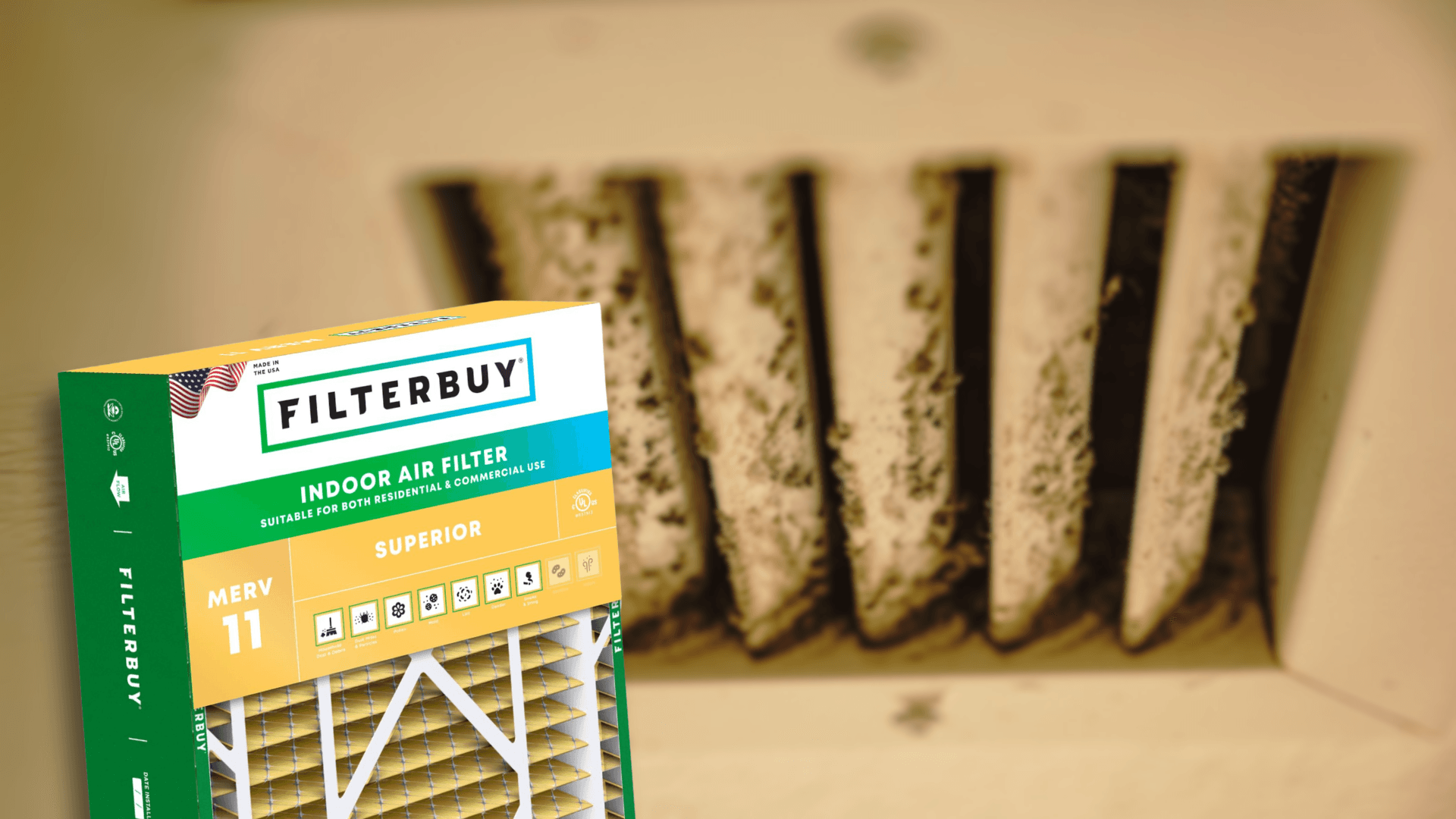
Indoor mold begins as microscopic spores, typically 2 to 10 µm in diameter, that float freely until they meet moisture and a food source. Breathing these spores can trigger allergic rhinitis, worsen asthma, and irritate eyes or skin. Long‑term exposure to toxigenic species such as Stachybotrys chartarum (“black mold”) poses additional risk. A correctly chosen air‑filtration strategy captures spores before they settle or reach the lungs and forms a critical layer of protection alongside moisture control and prompt removal of visible growth.
Common Indoor Mold Varieties (and Where They Grow)
Cladosporium: Often green‑black or brown; thrives on wood, painted surfaces, and HVAC insulation. Spores are common asthma irritants.
Penicillium: Blue‑green colonies that spread on water‑damaged buildings. Produces a musty odor and fine spores that disperse easily.
Aspergillus: Yellow‑green or gray; colonizes dust, HVAC coils, and damp insulation. Certain strains can cause allergic bronchopulmonary aspergillosis in sensitized individuals.
Stachybotrys chartarum (“black mold”): Dark green‑black colonies on chronically wet gypsum board or cellulose‑backed flooring. Spores are sticky, but fragments and VOCs may aggravate asthma and systemic symptoms.
Can An Air Filter Help with Mold Spores?
Yes. A pleated MERV 11 or MERV 13 in the HVAC return captures most 2–10 µm spores. In damp or musty areas, pair it with a True‑HEPA purifier and the Odor Eliminator with carbon to address VOCs.
Mold‑Related Symptoms to Watch
| Feature | Pleated Filter | Fiberglass Filter |
|---|---|---|
| Filtration Ability | Traps very small particles like pollen, pet dander, and even some bacteria (better at cleaning air). | Only catches large particles like dust and lint; lets finer dust and allergens through. |
| Airflow | Thicker and can slightly reduce airflow if too restrictive (more resistance to air). | Thin and porous design; air flows freely through (very little resistance). |
| Indoor Air Quality | Improves indoor air quality and helps people with allergies by removing more irritants from the air. | Only offers basic filtration, so fine dust and allergens may stay in the air (lower air quality). |
| Longevity | Lasts longer – usually about 2–3 months before replacement is needed. | Short lifespan – usually needs to be replaced about every 1 month. |
| Maintenance | Less frequent changes (fewer replacements needed, saving time). | Requires frequent changes (must check and replace often to keep filter from clogging). |
Typical Indoor “Hot Spots” for Mold Spores
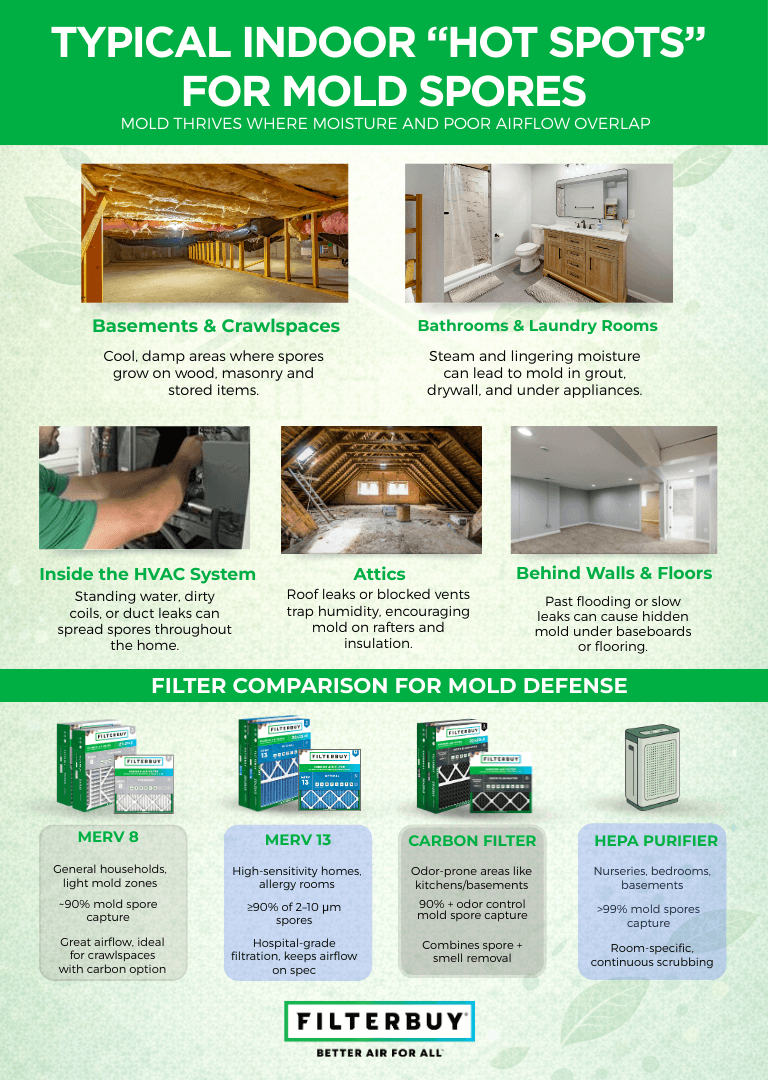
Indoor mold thrives where moisture, organic dust, and limited airflow intersect.
Basements and crawlspaces are frequent trouble spots because cool foundation walls condense ground moisture; the resulting damp conditions favor Cladosporium and Penicillium growth on masonry, joists, and stored items.
Bathrooms and laundry rooms add warm steam to the equation. Without mechanical exhaust, daily showers or dryer cycles leave surfaces wet long enough for Aspergillus and additional Penicillium colonies to establish in tile grout, drywall paper, and under appliances.
Mold can also develop inside the HVAC system itself. Standing water in condensate pans, biofilm on evaporator coils, or leaks at un‑taped duct joints create a sheltered, nutrient‑rich habitat; spores released from these points are picked up by the blower and redistributed through every supply register.
Attics present a different pathway: roof leaks or blocked soffit vents trap humid air beneath the decking, encouraging Stachybotrys (sometimes called “black mold”) on damp sheathing and rafters.
Finally, finished walls and flooring that once held floodwater—or have chronic plumbing drips—can support hidden colonies behind baseboards, under vinyl planks, or inside insulation, remaining active long after surfaces appear dry.
Things to Consider When Choosing A Filter
Most indoor spores are 2 to 10 µm, so a pleated MERV 11 works for most homes. Step up to MERV 13 if allergies are severe or mold load is heavy, and your HVAC blower can handle the extra resistance. If you smell musty odors or worry about VOCs, use the Odor Eliminator with carbon. In bedrooms, nurseries, or offices where people spend hours, run a True‑HEPA purifier rated 99.97% at 0.3 µm. Filtration lowers airborne spores, but it does not remove existing growth. Fix leaks, dry the area, and discard porous materials that stayed wet more than 48 hours.
Filter Solutions Stocked by Filterbuy
1. MERV 11 Pleated Whole‑House Filter
Installed at the furnace or air‑handler return, this cartridge removes roughly two‑thirds of 1–3 µm particles, covering most common mold spores, on each HVAC cycle while maintaining low pressure drop for everyday system operation.
2. MERV 13 Filter
For homes dealing with confirmed Stachybotrys or severe mold allergies, a MERV 13 pleat offers a higher removal fraction of the smallest spores without extensive retrofit work on many modern blowers. Verify fan capability before upgrading.
3. Odor Eliminator (MERV 8 + Activated Carbon Layer)
Where musty smell accompanies spore concerns, typical in basements or crawlspaces, this filter pairs a pleated MERV 8 media for larger spore capture with a carbon bed that adsorbs the volatile organic compounds responsible for earthy odors.
4. HEPA Filter
Independent of the ductwork, a sealed HEPA unit recirculates bedroom or office air through media rated ≥ 99.97 % at 0.3 µm, providing continuous clearance of airborne spores for occupants who are highly sensitive or recuperating from respiratory illness.
Order Your Filter Now!
Selecting the appropriate cartridge for the HVAC return and supplementing with room purification where needed ensures that spores released from any of the indoor hot spots above are intercepted before they circulate and settle elsewhere in the building.
Order your Filterbuy mold‑defense filter today for free fast shipping, a 90‑day lifespan, and up to 70% savings on multi‑packs.
Frequently Asked Questions
Do standard HVAC filters remove mold spores?
Yes. Any filter rated MERV 8 or higher will catch some spores, but MERV 11 is the practical starting point for reliable whole‑house reduction.
Which MERV rating is best for persistent or “black mold” problems?
MERV 13 is recommended because it captures a higher fraction of fine, hard‑to‑remove Stachybotrys spores without requiring a separate purifier.
Will a higher‑MERV filter choke my airflow?
Not if the blower is in good condition and the filter is changed on schedule; most modern residential systems accommodate MERV 11–13 with no pressure issues.
Do activated‑carbon filters get rid of the musty smell?
Yes, the carbon layer adsorbs the volatile organic compounds responsible for earthy odors while the pleated media traps the spores themselves.
Are washable electrostatic filters good for mold control?
They stop coarse dust but miss many 2–10 µm spores, so they are not the first choice for mold‑focused filtration.
How often should I change a mold‑defense HVAC filter?
Inspect monthly and replace at 90 days or sooner if the pleats appear gray because loaded media loses efficiency and raises resistance.
Is a true‑HEPA purifier necessary if I already use MERV 13?
Use HEPA in bedrooms or nurseries when a resident has severe allergies or asthma and needs continuous, near‑total spore removal in a single room.
Do “filter‑free” ionizers work for mold spores?
Ionizers reduce a small fraction of airborne particles but cannot match the capture rate of a pleated MERV filter or true‑HEPA purifier.
Can an air filter solve mold growth on walls or carpet?
No, filtration only reduces airborne spores; visible colonies persist until leaks are fixed, humidity is lowered, and contaminated materials are removed.