May 13, 2026
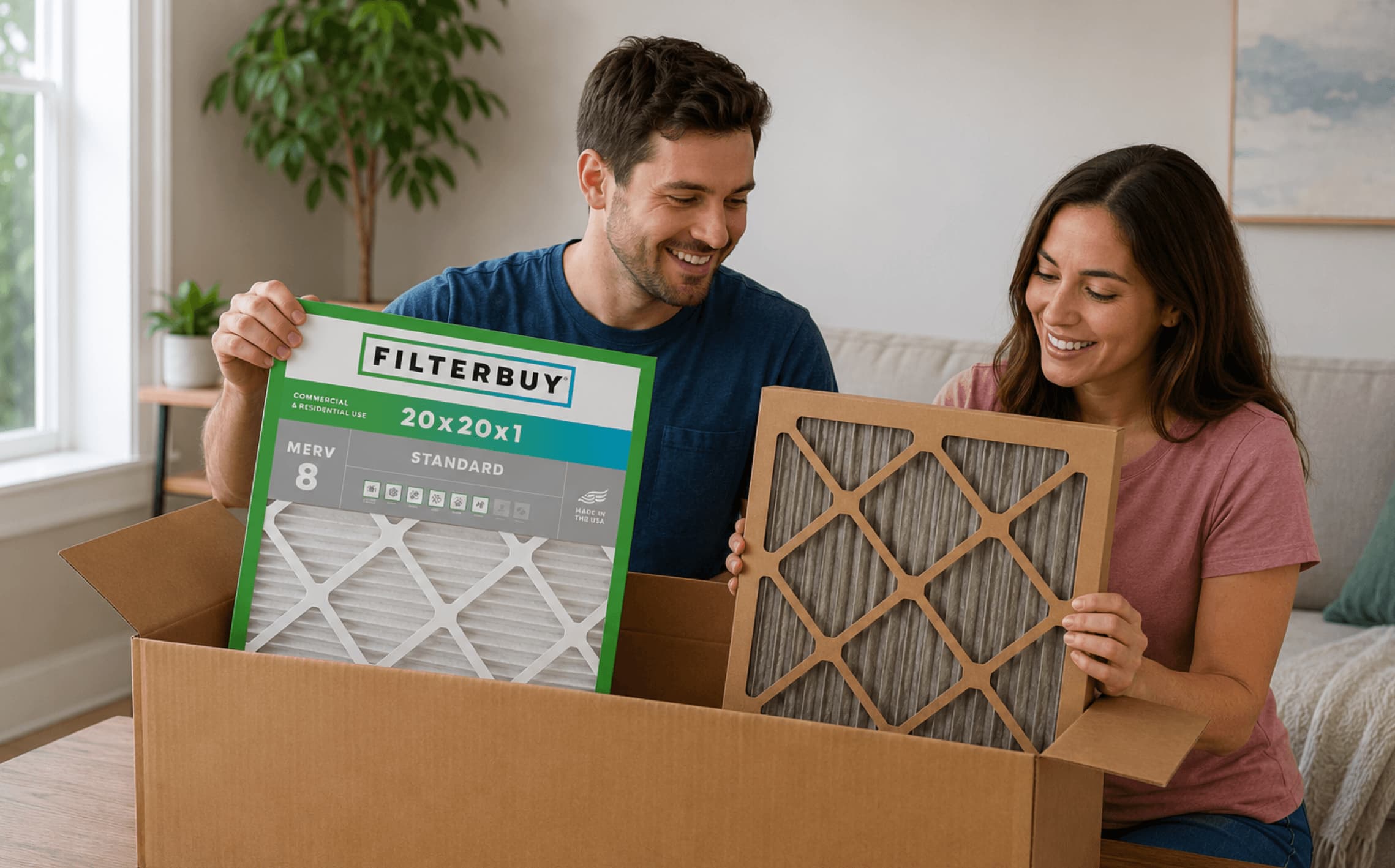
Two filters sit a foot apart on the hardware store shelf. The cheap fiberglass one lets about 80% of airborne particles drift right through it. The pleated one a few dollars over captures around 85%. Your HVAC tech just told you to grab the first one. So should you?
Short answer for most homes: no, with a few honest exceptions. A pleated MERV 8 filter gives your system nearly the same airflow your tech wants, while actually protecting the air your family breathes. Below, we walk you through when your tech is right, when they're behind on the science, and the middle-ground choice most homeowners miss.
In the fiberglass vs pleated air filter matchup, pleated wins for nearly every modern home. Fiberglass (MERV 1–4) costs about $1–$3 and protects HVAC equipment from large debris, but lets roughly 80% of airborne particles drift right through. Pleated (MERV 8–13) costs about $5–$15, captures around 85% of those particles, and has airflow resistance close enough to fiberglass that most HVAC systems built in the last 15 years handle it without strain. Pick fiberglass only if your system is 20+ years old, undersized, or specifically rated for MERV 4. Otherwise, go pleated MERV 8 as the safe default, MERV 11 for pet households, and MERV 13 for homes with allergies, asthma, or kids.
• Fiberglass filters are rated MERV 1 to 4, designed to protect HVAC equipment more than improve your indoor air.
• HVAC techs reach for fiberglass mostly to safeguard airflow on older or undersized systems.
• A pleated MERV 8 filter captures roughly 85% of airborne particles, with airflow resistance close to fiberglass.
• Replace fiberglass filters every 30 days. Pleated filters can run 60 to 90 days.
• Homes with pets, kids, allergies, or asthma should skip fiberglass entirely and pick MERV 11 or 13.
• The annual cost gap between fiberglass and pleated is usually less than $10, and health and HVAC longevity quickly make up the rest.
Give your tech the benefit of the doubt. Most pros aren't lazy when they suggest fiberglass. They're solving for the variable they get blamed for, which is airflow. A restricted filter strains the blower motor, freezes the evaporator coil, and triggers a no-cool callback in the middle of July. Fiberglass media has almost no airflow resistance, so it's a safe default when a tech doesn't know how diligent a homeowner will be about filter changes.
Four reasons HVAC techs default to fiberglass:
• Airflow protection. Fiberglass is the lowest-resistance filter on the market, full stop.
• Older or undersized equipment. Systems built before the mid-2000s weren't always engineered for higher-MERV media.
• Habit. Fiberglass has been the default install since the 1960s, and old habits in any trade die slowly.
• Liability. If you install a MERV 16 in a system rated for MERV 8 and the coil freezes, the tech doesn't want that callback.
• Your tech isn't wrong. They're solving for one variable, which is your equipment. The question is whether that's the only variable that matters to you.
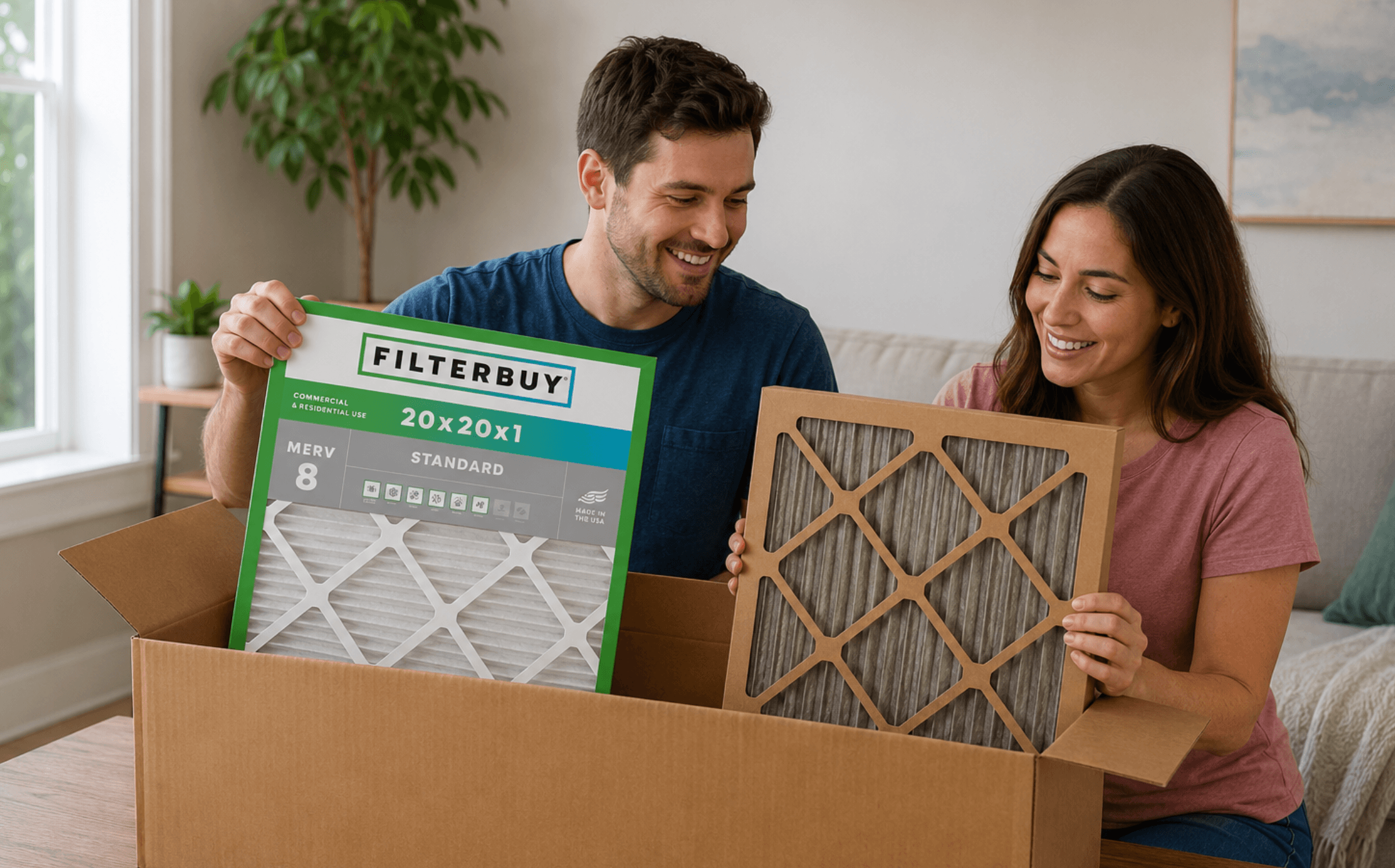
Fiberglass filters carry a MERV rating of 1 to 4. They stop lint, hair, and large dust. They miss pet dander, mold spores, smoke, and most pollen. A pleated MERV 8 filter, by contrast, captures around 85% of the airborne particles that pass through it. A pleated MERV 13 hits the level the American Lung Association recommends for cleaner indoor air.
The airflow gap is smaller than most people assume. In residential systems, a MERV 8 pleated filter has airflow resistance comparable to fiberglass, and most HVAC equipment built in the last 15 years handles it without strain. Only MERV 14 and above start to meaningfully restrict airflow in standard home systems.
Pros: Cheap, often $1 to $3 each. Almost no airflow resistance. Widely available in 1-inch sizes. A reasonable pick for older systems or low-use vacation homes.
Cons: Misses roughly 80% of airborne particles. Requires monthly replacement. Holds less dust because of small surface area. Provides essentially no allergy or asthma relief. Doesn't capture the fine dust that builds up on your coils over time.
Sticker price doesn't tell the real story. A $2 fiberglass filter replaced monthly runs about $24 a year. A pleated MERV 8 at $7, replaced every 75 days, runs about $34. That's a $10 annual gap for a filter that captures eight times more particles. Buying pleated filters in a six-pack closes the gap further. Filterbuy pack pricing saves up to 70% per filter, which often makes pleated the cheaper choice on a per-year basis.
• Default cadence: every 30 days.
• With pets: every 20 to 25 days.
• Vacation home or light use: every 45 days, max.
• Visual cue: hold the filter up to a window. If you can't see light through the media, it's overdue.
Here's the filter that gives your tech the airflow they care about and gives your family the cleaner air you care about: a pleated MERV 8 electrostatic filter. Filterbuy MERV 8 pleated filters keep airflow comparable to fiberglass while capturing around 85% of common airborne particles. Pet households tend to settle on MERV 11. Anyone dealing with allergies or asthma at home should jump straight to MERV 13.
"Most techs hand homeowners fiberglass out of habit, not because it's the right call for the home. A pleated MERV 8 keeps the same airflow with several times the filtration, and it's the upgrade we recommend in our own homes first."
—Filterbuy HVAC technician
Want to dig further on indoor air quality and filtration? These are the government and non-profit sources our editorial team actually leans on. None of these are sales pages.
• EPA Guide to Air Cleaners in the Home. The federal government's plain-language guide to picking furnace and HVAC filters, including their MERV 13 recommendation: https://www.epa.gov/indoor-air-quality-iaq/guide-air-cleaners-home
• EPA: The Inside Story, A Guide to Indoor Air Quality. The original EPA reference document on indoor air pollution sources and what you can do about them: https://www.epa.gov/indoor-air-quality-iaq/inside-story-guide-indoor-air-quality
• EPA Indoor Particulate Matter. A close look at PM2.5, where it comes from, and how filtration helps: https://www.epa.gov/indoor-air-quality-iaq/indoor-particulate-matter
• ENERGY STAR, Heat & Cool Efficiently. The Department of Energy's guidance on filter changes and HVAC efficiency: https://www.energystar.gov/saveathome/heating-cooling
• American Lung Association, Clean Air at Home. Plain-English guidance from a respected respiratory health authority: https://www.lung.org/clean-air/indoor-air/building-type-air-resources/at-home
• NIEHS, Indoor Air Quality. The National Institute of Environmental Health Sciences on how the air at home affects your health: https://www.niehs.nih.gov/health/topics/agents/indoor-air
• American Lung Association, Let the Air In. Low-cost ways to improve indoor air quality, including a MERV-13 filter recommendation: https://www.lung.org/blog/indoor-air-quality-improvements
Three numbers cut through the fiberglass-versus-pleated debate quickly.
• Americans spend about 90% of their time indoors, where some pollutants run 2 to 5 times higher than outdoor levels. If your filter only catches large dust, the air you breathe most of the day still carries fine particles.
Source: U.S. Environmental Protection Agency. https://www.epa.gov/report-environment/indoor-air-quality
• A clogged or overly restrictive filter can raise HVAC energy use by up to 15%. That's why monthly replacement isn't optional with fiberglass. The cost in filters is less than the cost on your power bill.
Source: ENERGY STAR, U.S. Department of Energy. https://www.energystar.gov/saveathome/heating-cooling
• The American Lung Association recommends a MERV-13 furnace filter for cleaner indoor air. That alone tells you why fiberglass falls short for any home with allergies, asthma, kids, or pets.
Source: American Lung Association. https://www.lung.org/blog/indoor-air-quality-improvements
Your HVAC tech isn't wrong. They're just answering a different question than the one you're really asking. They're answering, "What filter will keep this system running through summer?" You're asking, "What filter will keep my family healthy and my system running through summer?"
Fiberglass earned its place in HVAC history because it was a cheap, safe default for systems that hadn't been engineered for anything better. Residential equipment has come a long way since then. So has the science on indoor air. Our honest take: unless your system is over 20 years old, undersized, or specifically rated for MERV 4 only, fiberglass is leaving cleaner air on the table.
Pleated MERV 8 is the new safe default. MERV 11 is the smart upgrade for pet households. MERV 13 is the right call for anyone with kids, allergies, or asthma at home, which describes most of the families we hear from.
Ready to move from "my HVAC guy said fiberglass" to "my home actually breathes clean"? Here's the path:
• Step 1, find your filter size. Look at the cardboard frame of your current filter. The size is printed there, like 16x25x1 or 20x20x1.
• Step 2, pick your MERV rating. MERV 8 for the basic upgrade. MERV 11 for pet homes. MERV 13 if anyone has allergies or asthma.
• Step 3, confirm your system can handle it. Almost every residential HVAC system built after 2010 handles MERV 8 to 13 without strain. If your system is older, start with MERV 8.
• Step 4, buy in a pack and set a reminder. Pack pricing drops the per-filter cost dramatically. A calendar reminder every 60 to 90 days keeps your system breathing easy.
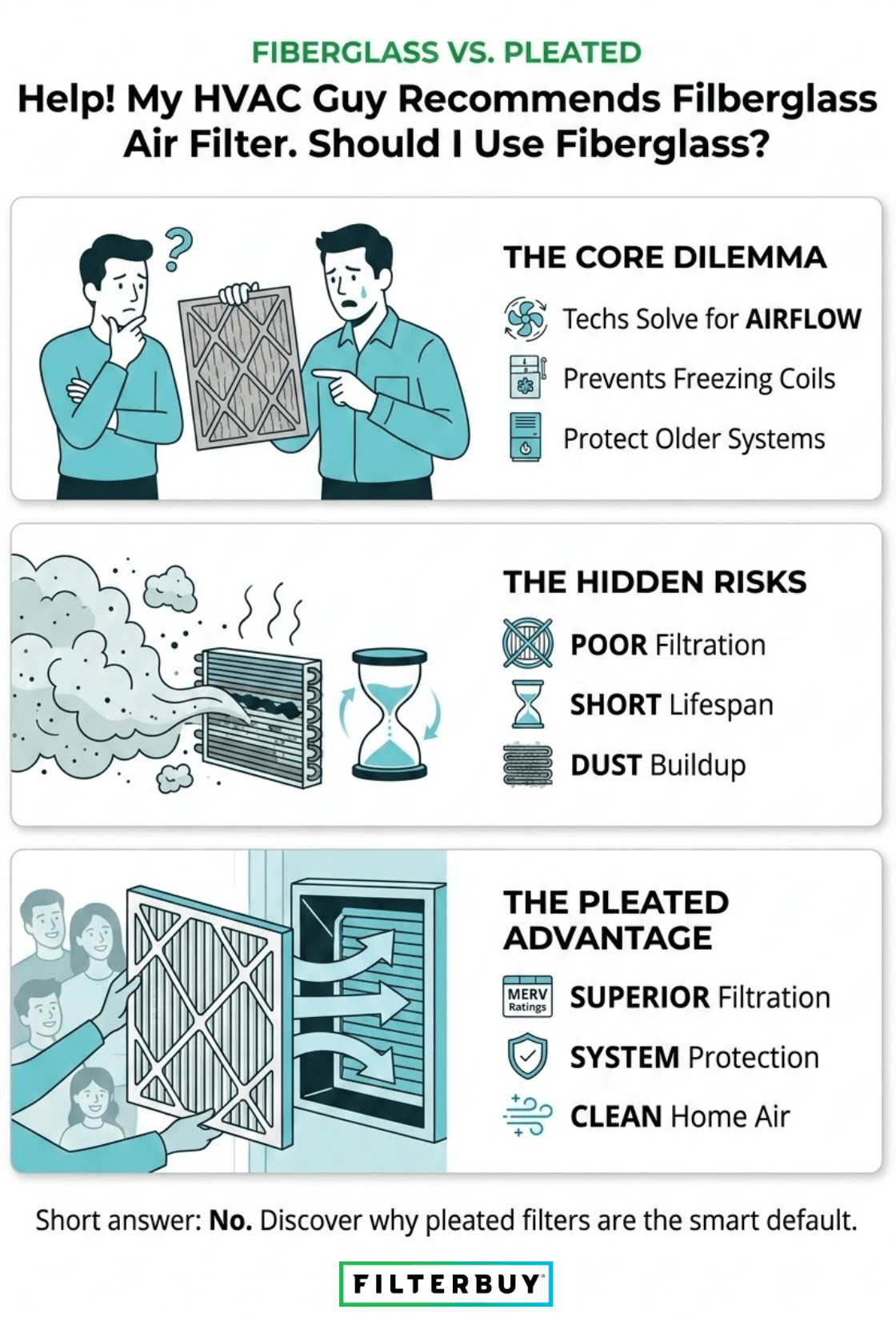
Most HVAC techs recommend fiberglass because it has the lowest airflow resistance of any filter type, which protects blower motors and coils on older or undersized systems. Fiberglass is also the safest pick for homeowners who might forget to replace filters on time, since fiberglass won't choke a system even when it stays in too long.
Disposable fiberglass air filters typically carry a MERV rating between 1 and 4. They capture large particles like lint, dust bunnies, and carpet fibers. They miss most airborne allergens, pet dander, mold spores, and smoke.
Replace a 1-inch fiberglass air filter every 30 days. Homes with pets or heavy dust should replace every 20 to 25 days. Fiberglass holds less dust than pleated media, so it loads up faster even though particle capture is lower.
Most residential HVAC systems built after 2010 handle MERV 8 to MERV 13 pleated filters without issue. If your system is older or undersized, start with MERV 8. It has airflow resistance comparable to fiberglass while capturing roughly eight times more particles.
Fiberglass air filters provide essentially no allergy relief. They're rated MERV 1 to 4, which means they miss pollen, pet dander, mold spores, and dust mite debris. Those are the particles that actually trigger allergic reactions. Allergy households should use MERV 11 or MERV 13 pleated filters instead.
In residential systems, a MERV 8 pleated filter has airflow resistance close to a fiberglass filter, and most HVAC equipment built in the last 15 years handles the difference without strain. Only MERV 14 and higher create meaningful airflow restriction in typical home HVAC systems.
Yes, but only partly. Fiberglass filters block large debris like lint and hair, which protects your blower motor. They don't capture the fine dust that builds up on evaporator coils over time. A pleated MERV 8 filter protects your equipment more thoroughly over the long run.
Your home should be a sanctuary, and the air in it should be too. If you've been running fiberglass on your HVAC guy's recommendation, you don't have to choose between protecting your system and protecting your family. A pleated MERV 8, MERV 11, or MERV 13 filter gives you both.
Filterbuy makes American-made pleated filters in over 600 standard sizes, plus custom cuts for unusual returns. Every order ships free. Packs save you up to 70% per filter, and auto-delivery means you'll never miss a replacement date again.
