July 23, 2026
Standing in the filter aisle, squinting at the packaging, wondering whether you need an air filter and a furnace filter? You probably only need one.
These two terms trip up almost everyone, and that confusion leads to wasted money and filters bought for slots that don't exist. This guide breaks down what each term really means, how to find your filter, and how to tell — in about five minutes — whether your home runs on one filter or two.
The short answer
In most homes, yes — they're the same filter. “Air filter” and “furnace filter” usually name one component that cleans your air and protects your HVAC system. What matters isn't the label on the box — it's how your system is built, and that's what tells you whether you need one filter or two.
TL;DR
Here's the part most guides skip. In a central forced-air home, the air returning to be heated or cooled passes through the furnace (or air handler) cabinet on its way back into the system. The filter sits right at that intake — so it gets called a "furnace filter" even though it's working all summer while the furnace is off.
That's why the names are interchangeable: it's one filter, in one airstream, doing one job year-round. "Air filter" describes what it does. "Furnace filter" describes where it lives. Same component.
One more source of confusion worth clearing up: some people use "air filter" to mean a standalone air purifier — a plug-in machine that cleans one room. That's a different device from the filter in your HVAC system. Here's how the three terms line up.

Before you buy anything, locate your filter slot. There are two common spots.
1. The main return air grille
Usually the largest vent in your home — often in a hallway, on a living-room wall, or in the ceiling.
2. The furnace or air handler compartment
Look near the blower motor, behind a removable panel.
Find only one slot? You need only one filter. It really is that simple for most homes.
Single-filter setup (most common). One filter total, living at either the return air vent or inside the furnace. It handles both heating and cooling and is easy to replace. This is the standard residential setup.
Dual-filter setup (less common). Two filters in different spots: one at the return grille to catch larger debris, one inside the furnace for added protection. You'll mostly see this in larger homes, older systems, or homes with multiple return vents.
A second filter can help if you have heavy pet hair or dust, a large home with long duct runs, or you want to capture finer particles in part of the system. The trade-off is airflow: stacking two dense, high-MERV filters can choke your system and raise energy use. If you run two, match each one to its location and rating rather than maxing out both.
| Feature | Single filter | Dual filter |
|---|---|---|
| Cost | Lower — one filter to replace | Higher — two filters |
| Maintenance | Simpler — one location | More complex — two locations |
| Particle capture | Effective with the right MERV rating | Layered, when filters are balanced |
| Best for | Most homes | Pets, dust, or large square footage |
| Filter changes | Every 1–3 months | Every 1–2 months (varies by location) |
| Airflow risk | Low when properly rated | Medium if both are too restrictive |
Before you add a second filter
Found an empty second slot? Don't automatically fill it. Many systems are designed to run on one filter to keep airflow correct. Adding a filter where one isn't intended can restrict airflow and reduce efficiency. If you find two slots but only one filter, check with an HVAC professional first — the original setup was probably on purpose.
In most homes, yes. Your heating and cooling systems share the same ductwork and air handler, so one filter serves both. Heat-pump homes are the same story: one compressor, one air handler, one filter. Replace it on schedule and you're keeping both heating and cooling running efficiently all year.
Text:
Once you know how many filters your system takes, the rest comes down to size and MERV rating. Ask yourself:
What type of HVAC system do I have?
Where are the filter slots?
How large is my home?
Do I have pets, dust, or smoke to manage?
What MERV rating does my system support?
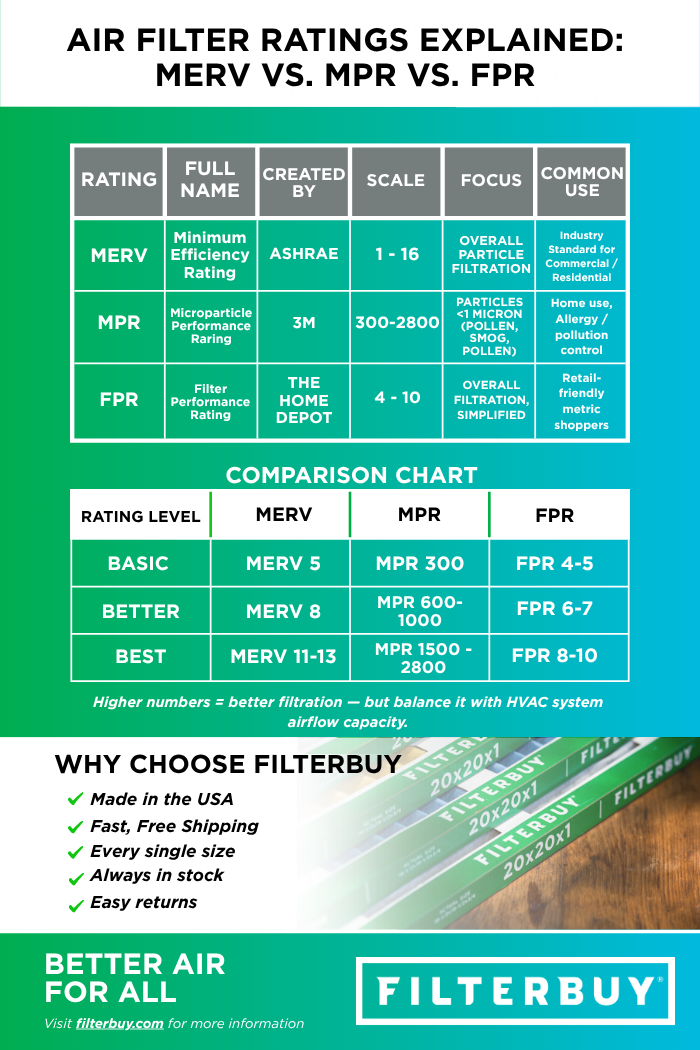
As a general rule, most residential systems run well on MERV 8–11. A higher-efficiency filter (MERV 11–13) captures finer particles like fine dust, pollen, and smoke — as long as your blower can handle the added airflow resistance. If you're not sure which rating fits, our MERV rating guide walks through it step by step.
The 5-minute filter check
Two slots, one filter installed? Talk to an HVAC pro before adding a second. The original setup was likely intentional.
Once you know what your system needs, the hard part is over. Keeping your air clean comes down to having the right filter on hand the right size, at the right time.
Filterbuy makes it simple
Furnace filters and air filters often refer to the same type of filter, but their location and function may differ.
Many homes use just one filter to manage airflow and air quality. However, systems with return air grilles and furnace slots might need two.
HVAC setups, replacement schedules, and filter ratings (like MERV) all influence what kind of filters you need.
Most modern HVAC systems share a single filter for heating and cooling, but exceptions exist.
Yes — in about 87% of residential HVAC systems, they’re the same component.
“Air filter” and “furnace filter” usually refer to the single filter that:
Cleans the air circulating through your home
Protects your furnace, AC, or heat pump from dust and debris
Only about 13% of systems are designed to use more than one filter — and that’s where confusion (and unnecessary purchases) often happen.
87%: One filter location
13%: Two filter locations
Filterbuy Insight: After analyzing millions of customer installations, we’ve found that many homeowners waste money buying filters for locations that don’t exist. Always locate your filter slot(s) first.
Before buying anything, check these two common locations:
Main return air grille (Usually the largest vent in a hallway, living room, or ceiling)
Furnace or air handler compartment (Near the blower motor)
If you only find one slot, you only need one filter.
For most modern HVAC systems, yes.
Both terms typically describe the filter that:
Works year-round for heating and cooling
Traps dust, pollen, pet hair, and other airborne particles
Keeps debris out of sensitive HVAC components
However, how your system is designed determines whether one or two filters are needed.
One filter total
Located at either the return air vent or inside the furnace
Handles both heating and cooling
Easy maintenance and replacement
Two filters in different locations
Return air grille filter traps larger debris
Furnace filter provides added system protection
Best for: Larger homes, older systems, homes with pets or allergy concerns
Pro Tip: Just because you can fit two filters doesn’t mean your system is designed for it.
Not always — and for most homes, the answer is no.
Using two filters can be beneficial in specific situations:
Homes with heavy pet hair or dust
Allergy-sensitive households
Large homes with long duct runs
Benefits
Layered filtration
Reduced debris inside the system
More customization with MERV ratings
Drawbacks
Risk of restricted airflow
Higher energy use if filters are too dense
More frequent replacements
Data Insight: Based on Filterbuy data, homes with pets or allergies see up to 40% better air quality when using properly balanced dual filters — not two high-MERV filters stacked together.
Some systems are designed this way — especially:
Larger homes with multiple return vents
Older HVAC systems
Split or custom duct layouts
If one filter slot is empty, don’t automatically add a second filter. Some systems are meant to use only one to maintain proper airflow.
In most homes, yes.
Your heating and cooling systems share the same ductwork and air handler, so a single filter typically serves both functions.
Ask yourself:
What type of HVAC system do I have?
Where are the filter slots located?
How large is my home?
Do I have pets, allergies, or smoke exposure?
What MERV rating does my system support?
Find your main return air vent
Check behind the grille for a filter
Inspect your furnace or air handler
Take photos and measure dimensions
Identify whether you have one or two slots
Pro Tip: If you find two slots but only one filter, consult an HVAC professional before adding another.
Still unsure? We’ve got you covered.
Custom sizes for every HVAC system
Easy subscriptions so you never forget
Expert support to help you choose correctly
Find the right filter for your home in minutes.
For deeper dives, explore our guides on:
How air filters work
Choosing the right MERV rating
When to replace your HVAC filter
Furnace filters and air filters are often the same in function, but not always in purpose. In central HVAC systems, the term “furnace filter” typically refers to the air filter used to protect the furnace from dust and debris. Meanwhile, “air filter” can refer to filters used in AC units, purifiers, or return vents. While the filter type may be interchangeable, always choose a filter based on your specific system’s design and MERV rating needs.
Most homes only need one air filter, usually located at the main return air vent. However, some HVAC systems—especially older or larger ones—may use two filters: one at the return and one inside the furnace. If your system supports both, ensure each filter is clean and properly rated to avoid restricting airflow.
Yes, most furnaces have an internal air filter located near the blower motor or return duct. Its job is to capture dust, allergens, and debris before they reach your heating system. Keeping this filter clean helps extend the life of your furnace and improve air quality.
Yes, furnace filters help clean indoor air by trapping pollutants like dust, pollen, and pet dander. However, their air purification ability depends on the MERV rating. For allergy relief or cleaner air, consider upgrading to a high-efficiency filter (MERV 11–13) or adding a standalone air purifier.
Replace your furnace filter every 1 to 3 months, depending on its thickness, MERV rating, and your home’s conditions. If you have pets, allergies, or high dust levels, check it monthly. A clogged filter reduces airflow and makes your system work harder, raising energy bills.
Yes, in most modern HVAC systems, the AC and furnace share the same air filter. It’s usually located at the return air vent or inside the air handler. Replacing this filter regularly ensures year-round efficiency in both heating and cooling modes.
Installing a furnace filter backwards restricts airflow, making your system less efficient and potentially damaging the blower motor. Always check the arrow on the filter’s frame—it should point in the direction of airflow toward the furnace or blower.
Not all systems have two filters. Most homes have just one air filter in the return duct. However, multi-zone systems or larger homes might use two or more filters. Check your system’s manual or ask an HVAC technician to confirm your setup.
Most homes have one air filter, but the number can vary. Larger homes, homes with multiple HVAC zones, or those using ductless mini-splits or air purifiers may have several filters. Always inspect each system individually to find and maintain all filters.
Your furnace filter is usually found in one of two places:
Inside the blower compartment behind a panel or
At the return air grille, especially in systems with shared filtering
Look for a removable cover near where the air enters the furnace. Consult your manual or a technician from Filterbuy HVAC Solutions if you’re unsure.
Yes, central AC systems typically use the same filter as the furnace. The filter removes particles from the air before it's cooled and distributed through your home. Regular filter changes help your AC run efficiently and keep your indoor air clean.
No, running a furnace without a filter is not safe. Without a filter, dust and debris can enter the furnace, clog internal parts, and cause overheating or system failure. It also degrades air quality. Always install a filter—and keep it clean.
Key takeaways
