2026 Rebates, Costs & How to Qualify
By Michelle Wan · Reviewed by David Clark, Licensed HVAC Technician
Published July 19, 2026 · Updated July 19, 2026
Yes. You can still get money back on a new mini split in Oklahoma in 2026, and it now comes from your electric utility, not the federal government. The federal heat-pump tax credit expired December 31, 2025, so 2026 installs no longer qualify.
Here is where the savings are now:
Not sure which system qualifies for your utility? Match yours in under a minute below, then browse the systems built to hit those rebate tiers.

Answer a few quick questions and we will match you to the right mini split for your Oklahoma home.
You can still save real money adding a mini split in Oklahoma in 2026, just not from the federal government. The federal heat-pump tax credit (Section 25C) expired December 31, 2025, so 2026 installs don't qualify. The savings now come from Oklahoma utilities: OG&E pays up to $3,000 and PSO/AEP pays $600–$1,400. To get it, install a qualifying system with a licensed contractor and file on time.
The federal Section 25C and 25D tax credits ended December 31, 2025, so a 2026 mini split doesn't qualify for the old $2,000 credit.
OG&E pays up to $3,000 on a qualifying HVAC replacement in 2026.
PSO / AEP Oklahoma pays $600–$1,400 for air-source heat pumps by SEER2 tier, with ductless mini splits eligible for up to $600.
Rural co-ops such as OEC pay roughly $200–$1,050 per ton; Cimarron Electric runs a $600 rebate near Kingfisher.
Oklahoma's IRA-funded HEAR and HOMES rebates hadn't launched as of early 2026. When they do, income-qualified homes should be able to stack them with utility rebates.
Ductless mini splits qualify only when they meet the SEER2/HSPF2 minimum and are professionally installed. DIY rarely qualifies
Yes. Oklahoma homeowners can still get money back on a new mini split in 2026, but the source changed. The federal Energy Efficient Home Improvement Credit (Section 25C) that paid up to $2,000 on a heat pump expired December 31, 2025, so a 2026 install doesn't qualify. What's still real are utility rebates from OG&E, PSO, and several rural co-ops.
Under the One Big Beautiful Bill Act, both Section 25C and 25D ended for equipment placed in service after December 31, 2025. If a page still promises a 30% federal credit for a 2026 mini split, that's out of date, so don't build your budget around it.
One exception: if your system was running on or before December 31, 2025, the credit is still yours: file IRS Form 5695 with that year's return. For any 2026 install, plan around the utility rebates below.
A quick word on where we sit. At Filterbuy, we've spent over a decade making the air filters that go inside heating and cooling systems, and we now build mini splits too. That gives us a vantage point most rebate blogs and installers don't have: we see what happens after the rebate clears, not just on install day. So this guide is about keeping the savings, too.
Your biggest 2026 savings come from your electric utility. OG&E leads with up to $3,000; PSO/AEP pays $600–$1,400 by tier; rural co-ops pay per ton of cooling.
Amounts and rules change over time. Confirm current figures with your utility before you buy.
ADDING A SYSTEM VS. REPLACING ONE: IT MATTERS
A catch most pages skip: OG&E's and PSO's rebates are built as replacement incentives. They generally require replacing an existing system. If you're truly adding a mini split to a space that never had one (a garage or bonus room), confirm your program accepts new-load installs first. Co-op per-ton rebates and the coming HEAR/HOMES programs are the likelier fit for a brand-new zone.
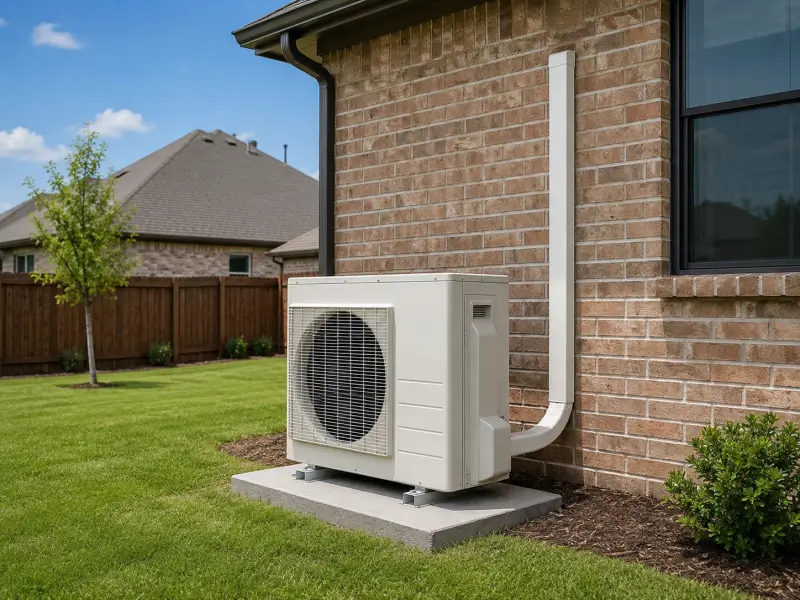
A single-zone ductless mini split typically runs about $3,500–$7,000 installed in Oklahoma, depending on the space, the unit's efficiency, and the install. A multi-zone system generally lands in the $8,000–$15,000 range. Rebates of a few hundred to $3,000 come off that total once you qualify.
Three things move the price: the number of zones (each head adds cost), the SEER2 rating (higher efficiency costs more up front but earns bigger rebates), and the install itself. A straightforward exterior wall beats a long line-set run through finished space.
For a rough net cost, subtract the rebate: a $6,000 single-zone system with a full $3,000 OG&E rebate nets about $3,000 out of pocket, before bill savings.
To capture every dollar in 2026, confirm your utility, pick equipment that hits its SEER2 tier, use a licensed installer, and file inside the deadline. In our experience, the homeowners who capture the most do this research before they sign.
Find out who provides your power. Your rebate is set by your electric utility: OG&E, PSO/AEP, or a co-op like OEC or Cimarron. This one fact decides how much you can get.
Check the SEER2 / HSPF2 minimum. Most Oklahoma programs start around 15.2 SEER2, and higher tiers pay more. Ask for the exact qualifying model in writing before you buy.
Use a licensed, professional installer. DIY mini split installs rarely qualify. A licensed contractor also handles the AHRI certificate and rebate forms most programs require.
Keep every document. Save your paid invoice, the AHRI certificate, and the manufacturer's efficiency documentation. That's what the rebate reviewer wants to see.
File inside the deadline. Utility windows are typically 30–90 days from install, and many are first-come until funds run out. Submit early.
Watch for HEAR / HOMES. When Oklahoma's IRA-funded rebates launch, income-qualified households should be able to stack them on top of the utility rebate.
A denied or reduced rebate usually traces to one avoidable mistake:
Wrong SEER2 tier. A unit one step below the threshold can drop your rebate to zero.
A non-participating contractor. PSO only pays when a registered service provider does the install.
A DIY install. Most programs won't accept self-installed equipment.
Missing paperwork. No AHRI certificate or itemized invoice means no payout.
Applying too late. Many programs are first-come and close when funds run out.
A mini split earns a rebate on two ratings: SEER2 (cooling) and HSPF2 (heating). Oklahoma programs generally require at least 15.2 SEER2, and higher tiers earn more. For reference, Filterbuy's mini splits are rated 17 SEER2, above that floor. The unit must also be ENERGY STAR-certified and professionally installed.
Because a mini split both heats and cools from one unit, both ratings matter, so have your installer put the exact model's ENERGY STAR listing and SEER2 tier in writing before you buy.
Choose a single-zone mini split for one room: a garage, sunroom, bedroom, or a hot spot the central system never reaches. Choose a multi-zone system to condition several rooms from one outdoor unit. Both use the same heat-pump technology; the difference is the number of indoor heads. Filterbuy's own lineup is single-zone, from 12,000 to 24,000 BTU, built for one-room jobs.
Single-zone: the lowest-cost path to a rebate-eligible heat pump for one room, garage, or addition.
Multi-zone: quiet, even comfort across several rooms without ductwork, ideal for a smaller home.
One thing most rebate guides leave out: a mini split earns its efficiency rating on day one, but a clogged filter quietly gives it back. Restricted airflow makes the system work harder and wear out faster, chipping away at the savings the rebate helped you capture. Oklahoma's red-dirt dust and heavy spring pollen clog filters faster than in most of the country, so it's no small footnote here.
“We come at this differently from a rebate blog or an installer. We've built the filters that go inside these systems since 2013, for more than two million U.S. homes, so we see the whole lifecycle, well past the sale. The efficiency you're rebated for on install day only lasts as long as the filter behind it stays clean.”
Michelle Wan, Filterbuy
That's why our advice doesn't stop at the rebate. Filterbuy ships filters factory-direct in 600+ standard sizes plus custom sizes, with auto-delivery, the simplest way to keep a new mini split hitting the number it was rebated for.
DO THIS NEXT
Confirm your utility rebate before you buy. Browse Filterbuy's ductless mini split systems, set up auto-delivery for the right-size filter, and see our heat pump rebates guide.
Seven authoritative places to research your options and rebates next:
U.S. DOE Energy Saver, Ductless Mini-Split Heat Pumps (energy.gov): How mini splits work and the efficiency ratings to look for.
ENERGY STAR Rebate Finder (energystar.gov): Enter your ZIP to find local rebates on certified systems.
IRS, Energy Efficient Home Improvement Credit (irs.gov): The federal credit's rules and its 2025 expiration.
OG&E Residential Rebates (oge.com): OG&E's HVAC-replacement rebate amounts and who qualifies.
PSO Power Forward Rebates (powerforwardwithpso.com): PSO's heat-pump and mini-split rebate tiers and requirements.
DSIRE Incentive Database (dsireusa.org): Search every Oklahoma incentive, including rural co-op programs.
Oklahoma Dept. of Commerce, State Energy Office (okcommerce.gov): Status and timing of the state's HEAR and HOMES programs.
Independent U.S. government data backs an efficient mini split in Oklahoma:
Heating and cooling = 52% of home energy use. It's the average U.S. household's single biggest energy cost, so efficiency pays off first.
Mini splits use up to 60% less energy. ENERGY STAR-certified mini split heat pumps beat standard electric resistance heating.
Source: ENERGY STAR (U.S. EPA)
Oklahoma sits in the nation's hottest cooling zone. The West South Central census division logs the most cooling degree days in the U.S. each year.
No. The federal Section 25C heat-pump credit expired December 31, 2025 under the One Big Beautiful Bill Act, so 2026 installs don't qualify. If your system was placed in service on or before that date, claim it on the 2025 return using IRS Form 5695.
OG&E pays up to $3,000 for a qualifying HVAC replacement for residential customers. Confirm the current tier with OG&E or your installer before you buy.
Not yet. Oklahoma's IRA-funded HEAR and HOMES rebates hadn't launched as of early 2026. Once live, income-qualified households can combine them with utility rebates.
Mini split (ductless mini split): An outdoor heat-pump unit connected to one or more wall- or ceiling-mounted indoor heads, delivering heating and cooling without ductwork.
Heat pump: Equipment that heats and cools by moving heat rather than burning fuel; every mini split is a heat pump.
SEER2 / HSPF2: The current U.S. standards for rating cooling (SEER2) and heating (HSPF2) efficiency; higher numbers mean lower energy use.
Section 25C / 25D: Federal home-energy tax credits (up to $2,000 for heat pumps; 30% for geothermal) that the One Big Beautiful Bill Act (OBBBA) ended after December 31, 2025.
HEAR / HOMES: Two IRA-funded, state-run rebate programs; in Oklahoma they had not launched for consumers as of early 2026.
Michelle Wan writes about home air quality and HVAC for Filterbuy, translating efficiency ratings and shifting rebate rules into plain guidance Oklahoma homeowners can act on, informed by Filterbuy's decade-plus making the filters that keep these systems running. See Michelle's author page.
Reviewed for technical accuracy by David Clark, a Licensed HVAC Technician, who verified the efficiency requirements, install guidance, and rebate mechanics.