
Corpus Christi, TX Live Wildfire Smoke Map
Get Alerts For Wildfires In Your Area
The moment a wildfire starts near you, you'll get an instant alert and simple tips to reduce your smoke exposure.
What's In The Smoke
30xSmaller than a human hair
Fine enough to reach deep into the lungs. A MERV 13 is built to capture it.
How Far It Travels


It Doesn't Stay Local
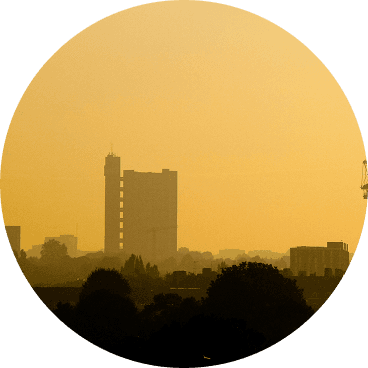
Smoke rides the wind far downwind — you can get smoky air with no fire nearby.
What To Do During A Smoke Event
Simple steps to reduce indoor exposure.
- Stay In, Close UpShut windows and doors to keep smoke out.
- Set Fan To "On"Keeps air cycling through your filter, not just when heating or cooling.
- Recirculate AirSwitch off fresh-air intake so you're not pulling smoke in.
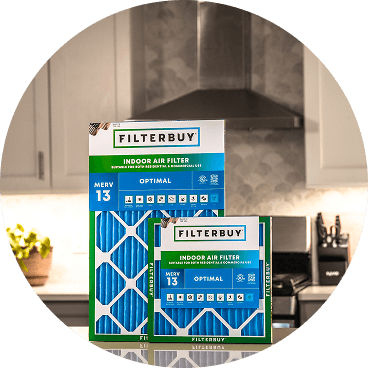
- Run A MERV 13Built to capture the fine PM2.5 in smoke.
- Add A PurifierExtra filtration for the room you use most.
- Wear an N95 if OutsideFits snug to block fine particles — a cloth mask won't.


The Best Air Filter For Wildfire Smoke
During smoke events, the EPA recommends upgrading to a MERV 13 filter — or the highest-rated filter your system can handle — to help reduce the fine particles smoke brings indoors. MERV 13 is the level most home HVAC systems can run while still capturing PM2.5, the fine particulate that makes up the bulk of wildfire smoke.
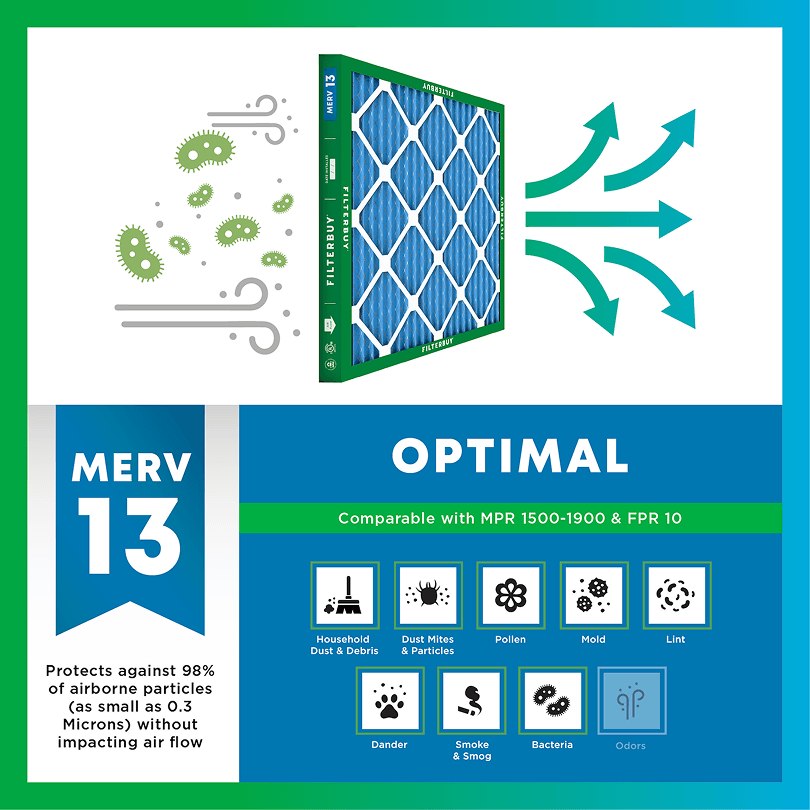

- Captures PM2.5 particles
- Blocks ash, soot, and smoke odor
- Keeps your indoor air safe—even when the outdoor air is dangerous
- Meets the EPA's recommended rating for filtering fine wildfire smoke particles.

Wildfire Smoke FAQs
Facts About Wildfires
Over 70,000 wildfires burn in the U.S. every year.
Wildfire smoke can travel 1,000+ miles, affecting states that aren't even near the blaze.
Exposure to wildfire smoke can worsen asthma, trigger heart issues, and lead to ER visits.
Indoor air can hold more fine particles during wildfire events unless it's properly filtered.
The EPA advises using MERV 13 filters or portable HEPA air cleaners during wildfire smoke events.
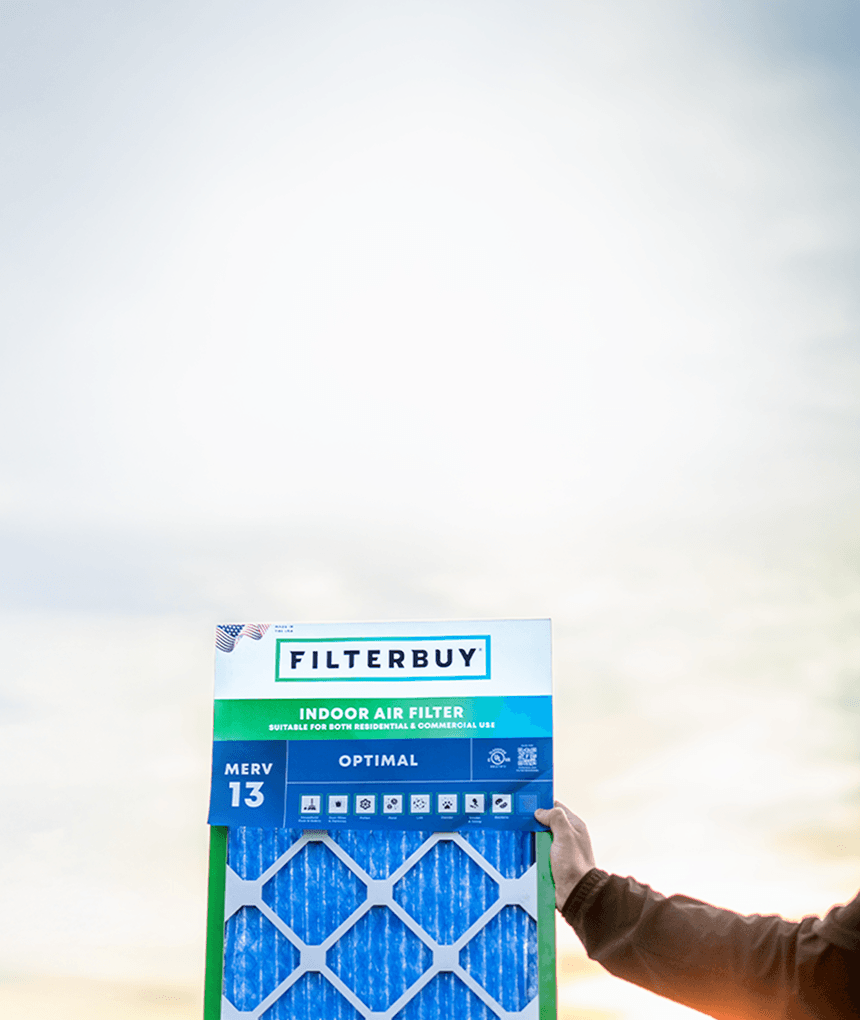
Don't Wait Until The Smoke's Inside.
Use the live wildfire smoke tracker and upgrade your air filters today to protect your lungs and your home.
Shop Filters For Smoke Protection
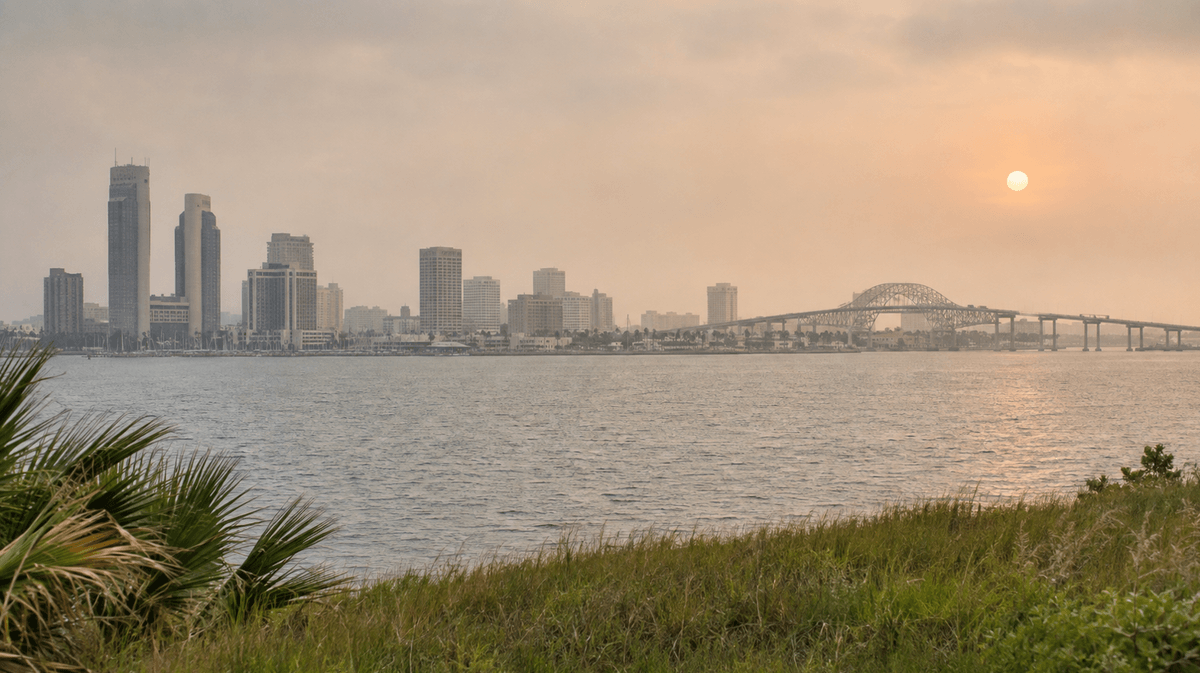
Live Corpus Christi, TX Forest Wildfire & Smoke Map Today: Local Air Quality Tracking & Indoor Protection Solutions from Filterbuy.com's Air Obsessed Experts
Author: Michelle Wan, Brand Manager and Air Quality Writer , https://filterbuy.com/author/michelle-wan/
Reviewer: David Clark, Licensed HVAC Technician
Publish Date: August 1, 2026
Updated Date: August 1, 2026
If the sky over Corpus Christi looks wrong today, the fire responsible is probably not in Texas. We have shipped filters into the Coastal Bend long enough to know the pattern. Spring haze traces to agricultural burning in eastern Mexico, summer haze to Saharan dust, and neither registers as a red dot near Nueces County. Filterbuy makes the filters that catch what the map misses.
TL;DR
Large forest wildfires are rare here, yet the Coastal Bend gets smoke on a predictable schedule. Most arrives from agricultural burning in eastern Mexico and Central America on southerly Gulf winds, and the rest from grass fires on South Texas rangeland. Check the EPA AirNow Fire and Smoke Map for your live PM2.5 reading, then run MERV 13.
Key Takeaways
The EPA AirNow Fire and Smoke Map shows fire detections, smoke plumes, and live PM2.5 readings for Corpus Christi in one view.
Agricultural burning in eastern Mexico and Central America is the dominant Corpus Christi smoke source, peaking March to May.
Local grass fire risk climbs after hard freezes cure Coastal Bend grasses, which is why Nueces County burn bans run winter into spring.
The EPA recommends MERV 13 or higher during smoke events. MERV 13 is not HEPA.
How To Check Live Corpus Christi Wildfire And Smoke Conditions Today
Three official sources give Corpus Christi households a live picture in two minutes. The EPA AirNow Fire and Smoke Map plots fire detections and smoke plumes against current PM2.5 readings. TCEQ publishes a next-day outlook, and the NWS Corpus Christi Fire Weather page carries fire danger and fuel moisture.
Your Two Minute Check
1. Open fire.airnow.gov and center on Corpus Christi. Red dots are fire detections, gray shading is smoke.
2. Tap the dial nearest you. That number is your live AQI, and the monitor name shows its source.
3. Read the TCEQ discussion, which names the source of incoming smoke.
Where Corpus Christi Smoke Comes From Through The Year
Corpus Christi runs a different smoke calendar than Dallas or El Paso. Filterbuy built the table below from a season of TCEQ forecast discussions and NWS fire weather products, because no agency publishes the Coastal Bend pattern in one place. Four sources rotate through the year.
Table 1. Where Corpus Christi Smoke Comes From Through The Year
Compiled by Filterbuy from Texas A&M Forest Service fire danger products, TCEQ air quality forecast discussions, and City of Corpus Christi advisories.
What Each Source Means For Your Filter
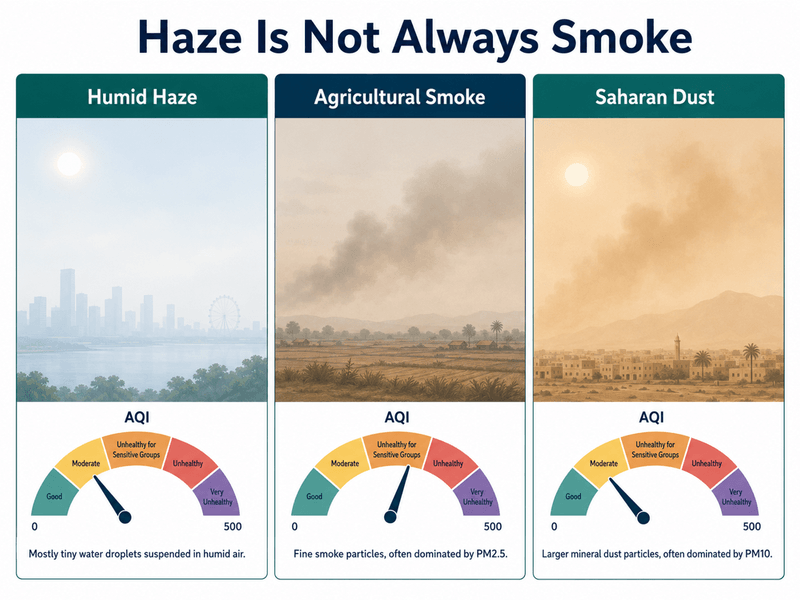
These are not the same particle. Agricultural and grass fire smoke are dominated by PM2.5, the fraction MERV 13 is built to capture. Saharan dust runs coarser and reports as PM10, which a MERV 11 already handles. Dust season is a filter-changing problem. Smoke season is a filter-rating problem. Dust loads a filter fast without demanding a higher rating. Smoke demands both.
The fuel here is grass, not timber, and the Texas A&M Forest Service points to freeze-cured grasses as the reason Coastal Bend fire danger jumps after a hard freeze. Fires in San Patricio County can put smoke over Corpus Christi before any acreage figure reaches a national tracker. See our Texas wildfire and smoke map. Long-range plumes behave differently, which we cover in our guide to Canadian wildfire smoke in the United States.
Why Hazy Skies In Corpus Christi Do Not Always Mean Unhealthy Air
The mistake we watch Coastal Bend households make is trusting their eyes. Visibility is a poor guide to air quality here. Gulf humidity makes particles absorb water and swell, scattering far more light than they would on a dry day. That produces a milky sky and a moderate AQI reading at once. The City of Corpus Christi says as much, attributing South Texas haze to humidity plus eastern Mexico smoke rather than a local incident.
Saharan dust adds a summer complication. Dust skews coarser than smoke, registering more strongly as PM10. A dust day looks dramatic with PM2.5 still good, while a thin smoke day pushes PM2.5 into the moderate range. Read the monitor, not the sky. NOAA outlines each plume by density on its Hazard Mapping System fire and smoke product.
Our guide to reading a wildfire smoke map covers the color scale.
The Corpus Christi question we get is never where is the fire. It is why does the sky look like that when nothing is burning? Once households learn the haze usually started in another country, they stop waiting for a fire warning that is not coming and watch the monitor instead.
Michelle Wan, Brand Manager and Air Quality Writer, Filterbuy
Which Monitor Reports Your Corpus Christi Air Quality
TCEQ operates the monitors behind Corpus Christi AQI readings. Huisache and Dona Park sit nearest the urban core, and Corpus Christi West and Tuloso cover the northwest side. Corpus Christi is one of fourteen TCEQ forecast regions.
How To Set Up Your Corpus Christi Home For A Smoke Or Haze Day
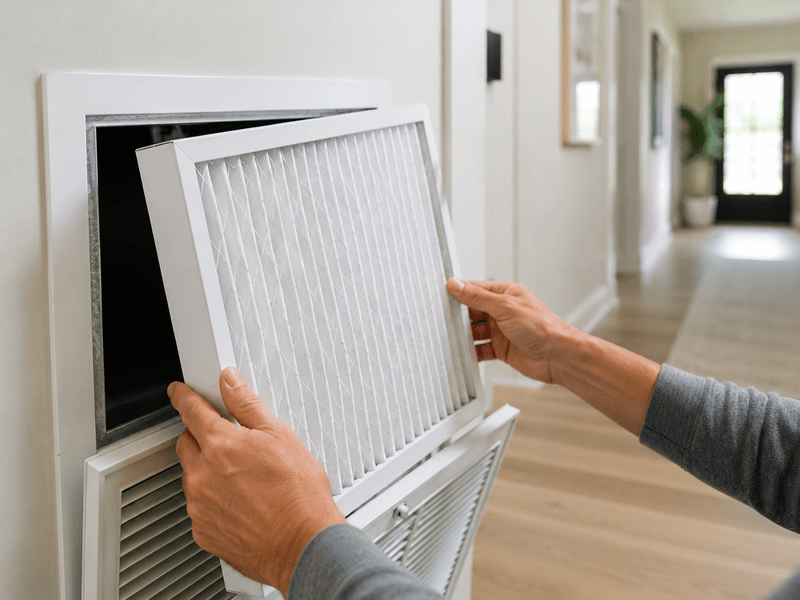
Filterbuy builds filters for a living, so take this as the least self-serving thing here. Your central air conditioner is the largest air cleaner most Corpus Christi households already own. Coastal Bend homes cool much of the year, so the system moves indoor air across a filter many times daily. Your filter choice decides whether that airflow removes smoke or circulates it.
Six Steps That Work
1. Install a MERV 13 pleated filter, the level the EPA recommends during smoke events.
2. Set the thermostat fan to On instead of Auto so air keeps passing the filter.
3. Close windows and doors, and shut any fresh air intake or set recirculate.
4. Add a HEPA portable air cleaner in one bedroom, door closed. That is your cleaner air room.
5. Skip indoor particle sources such as frying, sweeping, and candles.
6. Check the filter weekly. Smoke loads it far faster than household dust.
Note from our reviewer. Confirm your system handles the pressure drop before jumping several MERV levels, especially on older or undersized returns. If airflow changes, step back to MERV 11 pleated filters and add a portable HEPA unit. See our guide to which MERV rating stops wildfire smoke.
Expert Perspective From Filterbuy
After manufacturing filters for over a decade and serving more than two million households, we have learned the households who handle smoke season well chose a filter before the sky changed color. In Corpus Christi, where haze settles in for a week and never smells like anything, your return vent filter works every hour.
David Heacock, Founder and CEO, Filterbuy
Seven Essential Resources For Tracking Corpus Christi Smoke And Air Quality
See What You Are Breathing In Corpus Christi Right Now
Fire detections, smoke plumes, and live PM2.5 readings on one screen.
Source: AirNow, When Smoke Is in the Air
Know Tomorrow's Corpus Christi Air Before You Plan Your Day
TCEQ treats Corpus Christi as its own forecast region and names the smoke source.
Source: TCEQ, Texas Air Quality Forecast
Spot Coastal Bend Fire Danger Before A Grass Fire Starts
South Texas fire weather forecast and the freeze-cured grasses map.
Source: NWS Corpus Christi, Fire Weather
Get Official Local Guidance When Haze Settles Over The Bay
City advisories naming who should limit outdoor exertion during haze.
Source: City of Corpus Christi, Haze Advisory
Turn The HVAC System You Already Own Into A Smoke Filter
EPA guidance on filters, fan settings, and cleaner air rooms.
Source: U.S. EPA, Reduce Your Smoke Exposure
Protect A Household Member With Asthma, COPD, Or Heart Disease
Condition-specific steps for asthma, COPD, and heart disease.
Source: CDC, Smoke and Chronic Conditions
Build A Household Smoke Plan Before The Next Event
How fine particles affect the lungs and heart.
Source: American Lung Association, Smoke and Lung Health
Supporting Statistics
Texas Wildfires Are Overwhelmingly Human-Caused
Texas recorded 5,839 wildfires in 2025. Of those, 5,665 were human-caused, so Filterbuy puts the human-caused share near 97 percent. Nueces County burn bans target that share.
Source: NIFC, Wildland Fire Summary and Statistics 2025
Smoke Particles Hit Lungs Harder Than Urban Particles
A 10 microgram per cubic meter rise in wildfire-specific PM2.5 was associated with a 1.3 to 10 percent rise in respiratory hospitalizations, against 0.67 to 1.3 percent for other PM2.5. Equal AQI numbers do not carry equal risk.
Source: Aguilera et al., Nature Communications, 2021
Nearly Every Southern Household Runs Air Conditioning
93 percent of South Census Region households used air conditioning in 2020, the highest of any region. That system is the main path Corpus Christi indoor air takes.
Frequently Asked Questions
Set Up Your Home Before The Next Haze Stretch
You have checked today's Corpus Christi map, so you know what is drifting over the Coastal Bend. Put a MERV 13 pleated filter in your return vent now, while the air outside is still clear enough to make the swap easy.
Glossary
AQI (Air Quality Index): The U.S. EPA scale from 0 to 500 rating daily air quality, where higher means more risk.
PM2.5: Particles 2.5 micrometers or smaller, the main smoke health concern because they reach deep lung tissue.
PM10: Particles 10 micrometers or smaller, including coarse dust like Saharan dust.
MERV: Minimum Efficiency Reporting Value, the ASHRAE scale rating for filter capture by particle size.
MERV 13: The efficiency the U.S. EPA recommends for residential HVAC during smoke events. Not HEPA.
HEPA: High Efficiency Particulate Air, used in portable air cleaners.
TCEQ: The Texas Commission on Environmental Quality, which runs state air monitoring.
Coastal Bend: The South Texas region centered on Corpus Christi.
Freeze-cured grass: Grass killed by freeze, no longer drawing moisture, driving winter fire danger.
Cleaner air room: One closed room filtered by a portable air cleaner.
Subscribe to wildfire smoke alerts for Corpus Christi, TX, to get a heads-up before the next event reaches your area.