
St Louis, MO Live Wildfire Smoke Map
Get Alerts For Wildfires In Your Area
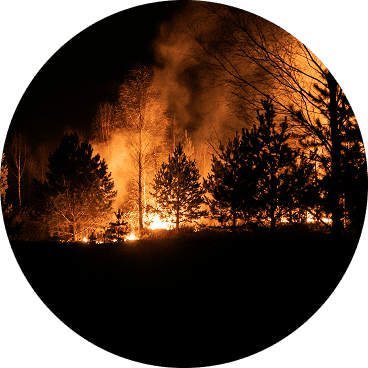
The moment a wildfire starts near you, you'll get an instant alert and simple tips to reduce your smoke exposure.
What's In The Smoke
30xSmaller than a human hair
Fine enough to reach deep into the lungs. A MERV 13 is built to capture it.
How Far It Travels


It Doesn't Stay Local
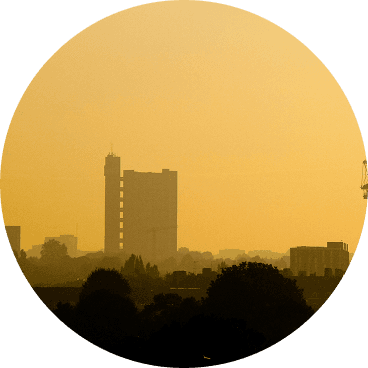
Smoke rides the wind far downwind — you can get smoky air with no fire nearby.
What To Do During A Smoke Event
Simple steps to reduce indoor exposure.
- Stay In, Close UpShut windows and doors to keep smoke out.
- Set Fan To "On"Keeps air cycling through your filter, not just when heating or cooling.
- Recirculate AirSwitch off fresh-air intake so you're not pulling smoke in.
- Run A MERV 13Built to capture the fine PM2.5 in smoke.
- Add A PurifierExtra filtration for the room you use most.
- Wear an N95 if OutsideFits snug to block fine particles — a cloth mask won't.


The Best Air Filter For Wildfire Smoke
During smoke events, the EPA recommends upgrading to a MERV 13 filter — or the highest-rated filter your system can handle — to help reduce the fine particles smoke brings indoors. MERV 13 is the level most home HVAC systems can run while still capturing PM2.5, the fine particulate that makes up the bulk of wildfire smoke.
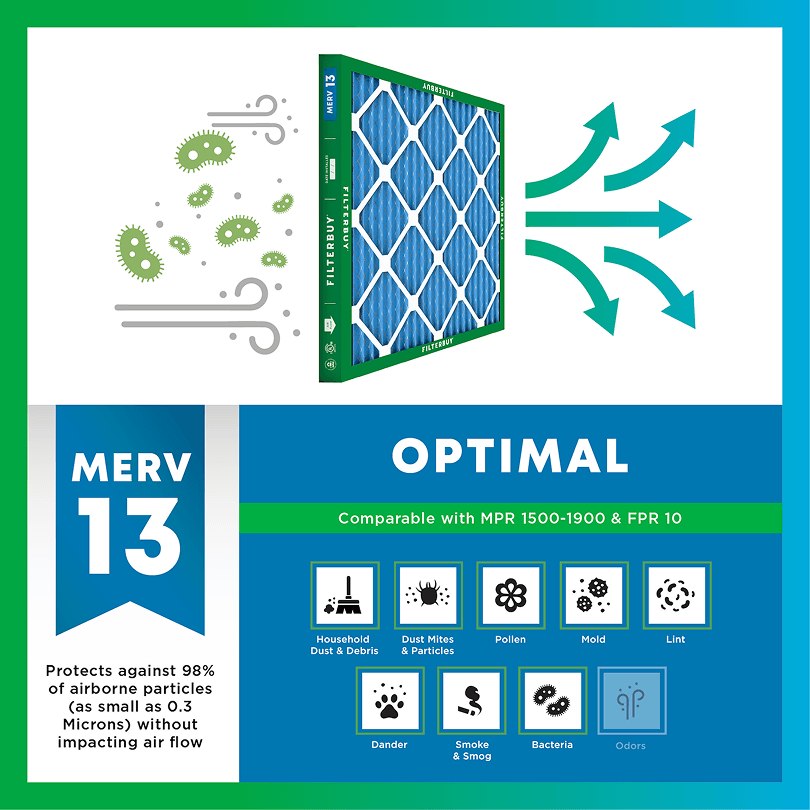
- Captures PM2.5 particles
- Blocks ash, soot, and smoke odor
- Keeps your indoor air safe—even when the outdoor air is dangerous
- Meets the EPA's recommended rating for filtering fine wildfire smoke particles.

Wildfire Smoke FAQs
Facts About Wildfires
Over 70,000 wildfires burn in the U.S. every year.
Wildfire smoke can travel 1,000+ miles, affecting states that aren't even near the blaze.
Exposure to wildfire smoke can worsen asthma, trigger heart issues, and lead to ER visits.
Indoor air can hold more fine particles during wildfire events unless it's properly filtered.
The EPA advises using MERV 13 filters or portable HEPA air cleaners during wildfire smoke events.
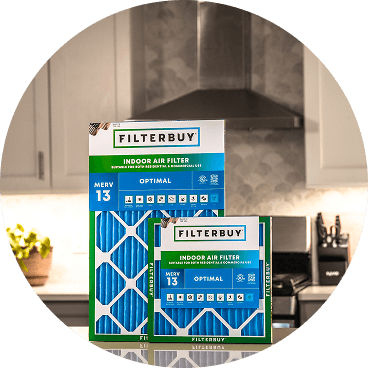
Don't Wait Until The Smoke's Inside.
Use the live wildfire smoke tracker and upgrade your air filters today to protect your lungs and your home.
Shop Filters For Smoke Protection
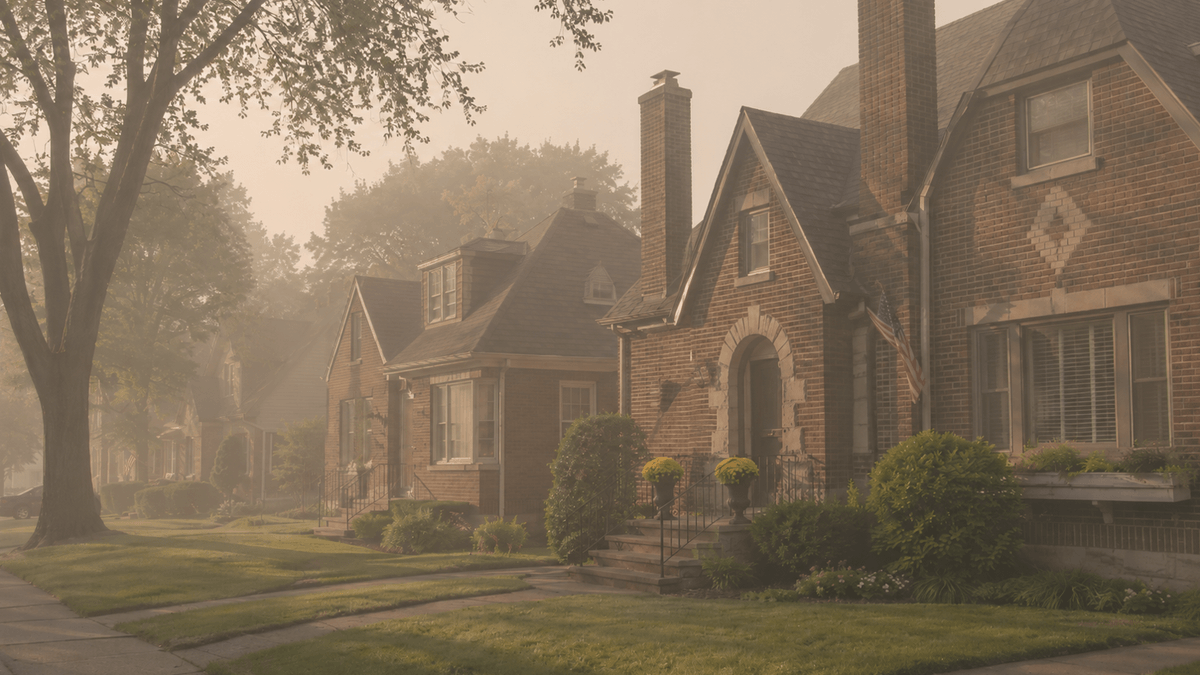
Live St. Louis, MO Forest Wildfire & Smoke Map Today: Local Air Quality Tracking & Indoor Protection Solutions from Filterbuy.com's Air Obsessed Experts
By Michelle Wan, Brand Manager & Air Quality Writer
Reviewed By: David Clark, Licensed HVAC Technician
Published: August 10, 2026 | Updated: August 10, 2026
You walked outside in St. Louis, saw a milky sky, caught a campfire smell, and reached for your phone to find the fire. You are in the right place and probably looking in the wrong direction: almost certainly nothing is burning near St. Louis. Filterbuy has made air filters in its U.S. plants since 2013 and ships to two million households, so this page gives you the live data first, then what government maps stop short of: the air inside your house.
TL;DR
The map above shows active fires, smoke plumes, and ground-level air quality across the St. Louis metro. On almost every smoky day here, the fire is not in Missouri; it is hundreds or thousands of miles away, most often in Canada. Check the AQI number, not the color of the sky. Past 100, close the house up and run your HVAC continuously with a MERV 13 filter.
Key Takeaways
St. Louis smoke is usually imported. Missouri's own wildfires burn in the Ozarks, 80 or more miles south, and rarely trigger metro alerts.
A smoke map alone under-reports the risk. The metro carries a federal ozone nonattainment designation, and ozone is invisible on every smoke map.
On July 20, 2026, St. Louis hit AQI 142 and the Metro East recorded the seventh-worst reading in the United States.
MERV 13 is the practical indoor defense, the lowest rating with any tested performance in the smoke-particle size range.
What Does the Live St. Louis Wildfire and Smoke Map Show?
Three feeds: satellite-detected fires, smoke plume coverage from NOAA's Hazard Mapping System, and ground-level readings from EPA AirNow monitors across the bi-state metro.
Trust the colored AQI dots for health decisions. Plume shading often covers the city while street-level air stays clean, because most transported smoke rides thousands of feet up. Hazy sky and unhealthy air are not the same.
Where Does St. Louis Smoke Come From?
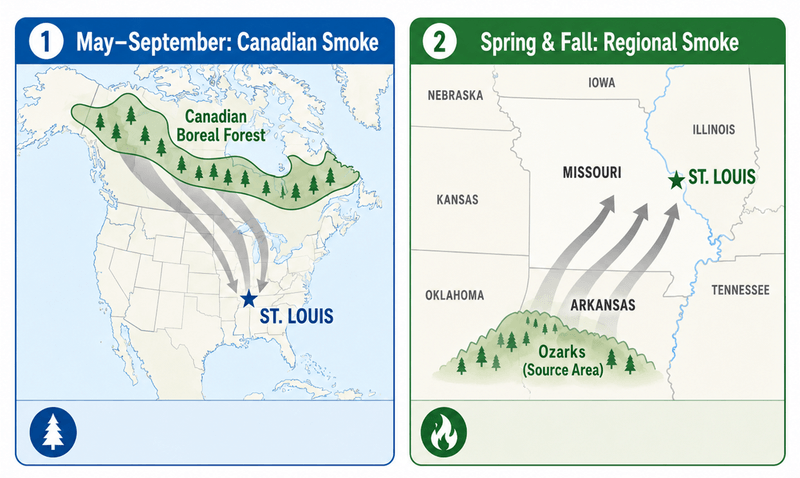
St. Louis smoke comes from two places depending on the month. May through September it is almost always Canadian, carried 1,000 to 2,500 miles by upper-level winds. In spring and fall it is regional, from Ozark fires 80 to 200 miles south. Two smoke seasons, not one, and they behave nothing alike.
Missouri recorded more than 2,700 wildfires across 110,000 acres in 2025, nearly all in the Ozarks around Mark Twain National Forest, 80 miles southwest of the city. That smoke is brief, and most residents never notice it. Canadian smoke is the kind that cancels soccer practice: it ages for days in transit, arriving fine, dry, and evenly mixed, which is why it gets indoors so easily.
Why Does a Smoke Map Under-Report St. Louis Air Quality?
Because a smoke map shows particles, and St. Louis's most persistent pollutant is a gas. The bi-state area carries a federal nonattainment designation for the 2015 ozone standard, and ozone appears on no smoke map. It forms on hot, sunny, stagnant days, exactly when smoke is most likely. A clear sky is not an all-clear here.
This changes what you do. An AQI of 105 in July might be smoke, ozone, or both. Smoke is a filtration problem you solve indoors. Ozone is a timing problem: it peaks mid-afternoon and drops after sunset, which is why outdoor exercise is safer at dawn. Read the dominant pollutant label first.
Which St. Louis Monitor Is Reading Your Air?
Six federal ozone monitors cover the metro, and they do not read the same. Knowing which is nearest tells you how much to trust the citywide number.
Fourth-highest daily maximum 8-hour ozone concentration, parts per million. The federal limit is 0.070 ppm. Amber values exceeded the limit that year. Monitor names in blue are the two the EPA accepted as wildfire-influenced in 2023. Figures from the EPA clean data determination, February 2026.
Fourth-highest daily max 8-hour ozone, ppm. Federal limit 0.070.
The spread is real: in 2023 Arnold West and Maryland Heights hit 0.078 while Orchard Farm read 0.073, so a citywide figure approximates your air rather than measures it. The two monitors the EPA accepted as wildfire-influenced, West Alton and Maryland Heights, sit on the north and northwest edge, the side Canadian smoke reaches first. If you live in St. Charles or northwest county, treat smoke days with extra caution.
What Do St. Louis AQI Levels Mean for Your Household?
Two thresholds matter: 100 and 150. Below 100, carry on. Between 100 and 150, sensitive groups (children, adults over 65, people with asthma or COPD, anyone pregnant) should cut back outdoor exertion. Above 150, everyone should.
Source: U.S. EPA AirNow Air Quality Index scale.
How Do You Protect Your Home During a St. Louis Smoke Event?
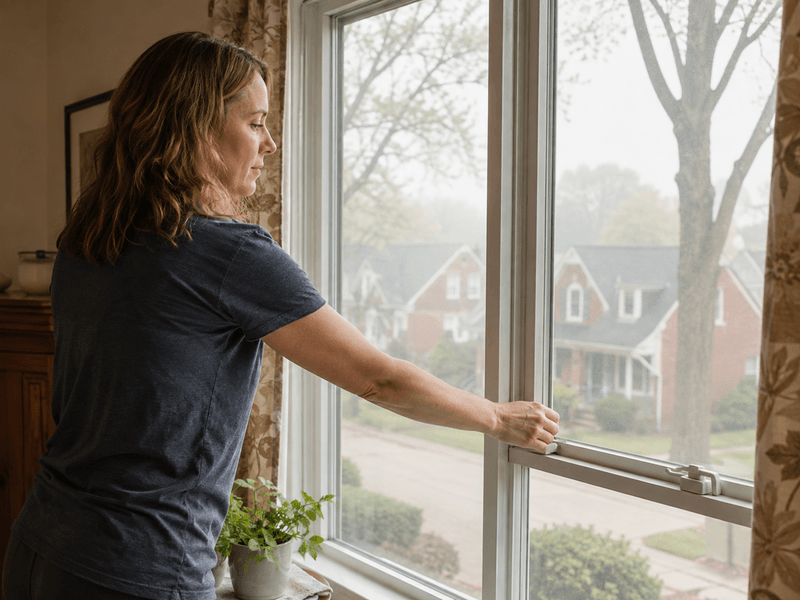
Close the house up, switch the thermostat fan from AUTO to ON so air passes the filter continuously, shut any fresh-air damper, and confirm the filter is seated with no gap.
Close the envelope. Windows and doors, basement included. Filtration cannot outrun an open window.
Set the fan to ON. On AUTO, the blower runs only during a cooling call, often under a third of the hour. Highest-impact change available, and free.
Close the fresh-air damper or ERV. Many newer St. Louis builds pull outside air on a schedule. During smoke, that is the wrong setting.
Check the filter is seated. A half-inch gap lets smoke bypass the media entirely.
Change the filter early. Smoke loads a filter faster than dust. Expect a mid-cycle replacement.
Add a portable HEPA unit in the bedroom if anyone has asthma. The CDC lists who is most at risk: asthma, COPD, heart disease, diabetes, chronic kidney disease, children, older adults, and anyone pregnant.
No central air? Plenty of St. Louis housing runs on window units that pull outside air in, so steps 2 through 5 do not apply. Close the unit's fresh-air vent and run a HEPA purifier in the room you use.
After the Smoke Clears
Air the house out once the AQI drops back under 50, then check the filter. Particles that got in are still in, and a short cross-breeze on a clean day clears more than the system does. Check the number first, because reopening during a lull undoes the exercise. Judge the filter by eye, not calendar: if it has gone gray, replace it. Skip vacuuming for a day, since it re-suspends settled particles.
Which Air Filter Works Against Wildfire Smoke?
MERV 13 is the practical minimum. Wildfire smoke particles run 0.1 to 0.3 microns, and MERV 13 is the lowest rating with any tested requirement in that range.
Minimum efficiencies per ASHRAE Standard 52.2. Ratings below MERV 13 carry no rated performance in the smoke-particle size range.
ASHRAE 52.2 minimums. The MERV 13 media Filterbuy manufactures tests at up to 98% capture. MERV is the bar, not the ceiling.
Two things building these has taught Filterbuy
Fit beats rating: Filterbuy cuts custom filters to an eighth of an inch because air takes the easiest path, and a gap around the frame is an open door. A correctly sized MERV 11 beats an oversold MERV 13 that leaves one.
The 90-day cycle assumes a normal year: smoke arrives in multi-day waves, so a June filter can be spent by August.
Filterbuy makes MERV 13 filters in over 600 sizes plus custom cuts, shipped free and factory-direct. St. Louis brick and century-old flats were not built around standard dimensions, so odd return grilles are common here.
Every smoke week I get the same call: 'I put in a good filter, and the house still smells like a campfire.' Nine times out of ten the filter is fine, and the install is the problem. Either the fan is on AUTO so it runs twenty minutes an hour, or the filter is a size under and air slides past it.
David Clark, Licensed HVAC Technician
Essential Resources
Live fire and smoke: AirNow Fire and Smoke Map, the EPA and Forest Service map of monitors, sensors, and plumes.
Hourly St. Louis AQI: Missouri DNR, drawn from roughly 50 monitoring sites statewide.
Official alerts: NWS St. Louis, covering Missouri counties and the Metro East in one product.
Tomorrow's forecast: Clean Air Partnership; the Illinois EPA covers Madison, St. Clair, and Monroe counties.
Supporting Statistics
1. St. Louis Ranks Among the 25 Most Ozone-Polluted Metros in the Country
The American Lung Association's 2026 report placed the metro 24th of 226 for ozone and 31st for particle pollution. All eight bi-state nonattainment counties earned failing ozone grades.
Source: American Lung Association, State of the Air 2026
2. Seven Days of Canadian Smoke Changed St. Louis's Federal Compliance Status
The EPA concurred in January 2026 that ozone on seven monitor days in 2023 was caused by Canadian wildfires. Excluding them pulled the 2023–2025 design value to 0.070 ppm, exactly the federal limit.
Source: EPA Clean Data Determination, February 2026
3. Indoor Air Is Where the Exposure Happens
Americans spend roughly 90% of their time indoors, where some pollutants run two to five times higher than outdoors. On a smoke day, the air inside your house is essentially your exposure.
Frequently Asked Questions
Ready for the Next Smoke Day?
The map tells you what the air is doing. A correctly sized MERV 13 filter on a fan set to ON is what you do about it. Find your size before the next smoke day.
Shop MERV 13 filters → · Build a custom size → · Set up auto-delivery →
Subscribe to wildfire smoke alerts for St. Louis, MO, to get a heads-up before the next event reaches your area.