
Lexington, KY Live Wildfire Smoke Map
Get Alerts For Wildfires In Your Area
The moment a wildfire starts near you, you'll get an instant alert and simple tips to reduce your smoke exposure.
What's In The Smoke
30xSmaller than a human hair
Fine enough to reach deep into the lungs. A MERV 13 is built to capture it.
How Far It Travels


It Doesn't Stay Local
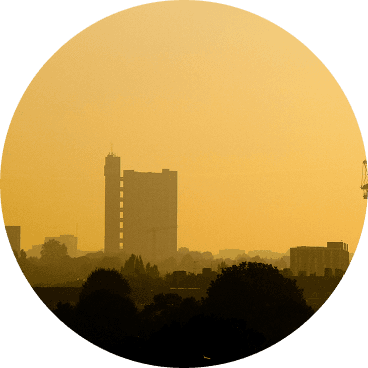
Smoke rides the wind far downwind — you can get smoky air with no fire nearby.
What To Do During A Smoke Event
Simple steps to reduce indoor exposure.
- Stay In, Close UpShut windows and doors to keep smoke out.
- Set Fan To "On"Keeps air cycling through your filter, not just when heating or cooling.
- Recirculate AirSwitch off fresh-air intake so you're not pulling smoke in.
- Run A MERV 13Built to capture the fine PM2.5 in smoke.
- Add A PurifierExtra filtration for the room you use most.
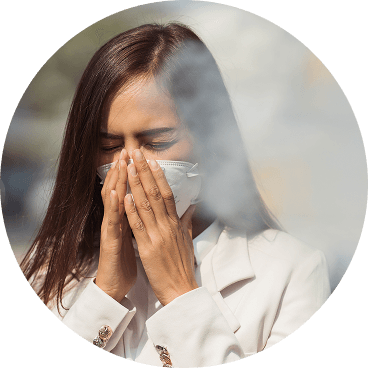
- Wear an N95 if OutsideFits snug to block fine particles — a cloth mask won't.


The Best Air Filter For Wildfire Smoke
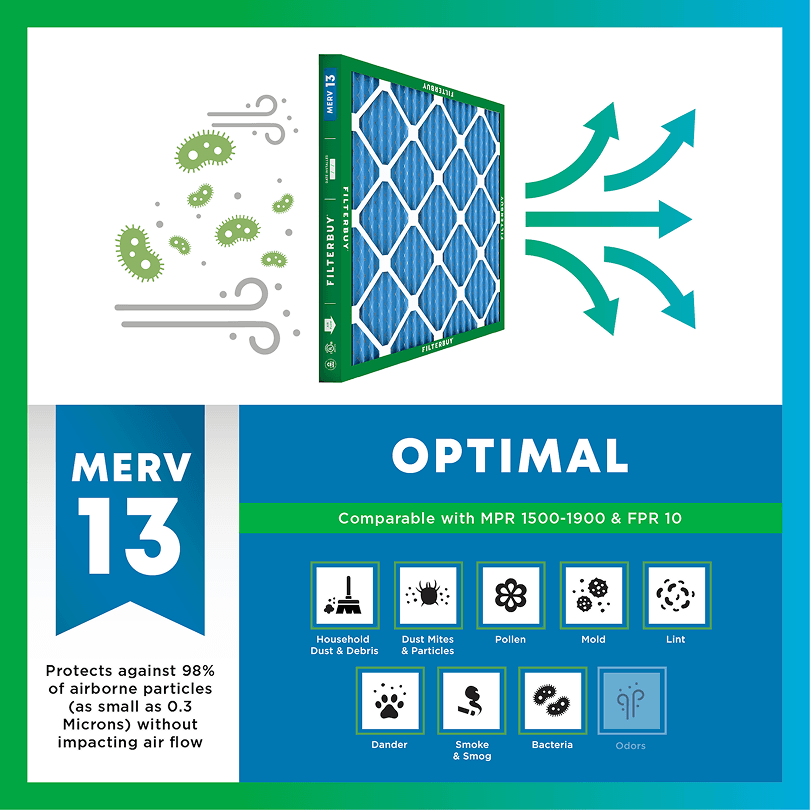
During smoke events, the EPA recommends upgrading to a MERV 13 filter — or the highest-rated filter your system can handle — to help reduce the fine particles smoke brings indoors. MERV 13 is the level most home HVAC systems can run while still capturing PM2.5, the fine particulate that makes up the bulk of wildfire smoke.
- Captures PM2.5 particles
- Blocks ash, soot, and smoke odor
- Keeps your indoor air safe—even when the outdoor air is dangerous
- Meets the EPA's recommended rating for filtering fine wildfire smoke particles.

Wildfire Smoke FAQs
Facts About Wildfires
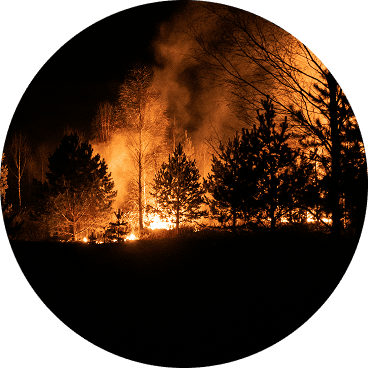
Over 70,000 wildfires burn in the U.S. every year.
Wildfire smoke can travel 1,000+ miles, affecting states that aren't even near the blaze.
Exposure to wildfire smoke can worsen asthma, trigger heart issues, and lead to ER visits.
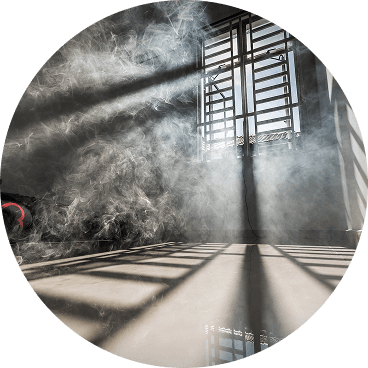
Indoor air can hold more fine particles during wildfire events unless it's properly filtered.
The EPA advises using MERV 13 filters or portable HEPA air cleaners during wildfire smoke events.
Don't Wait Until The Smoke's Inside.
Use the live wildfire smoke tracker and upgrade your air filters today to protect your lungs and your home.
Shop Filters For Smoke Protection
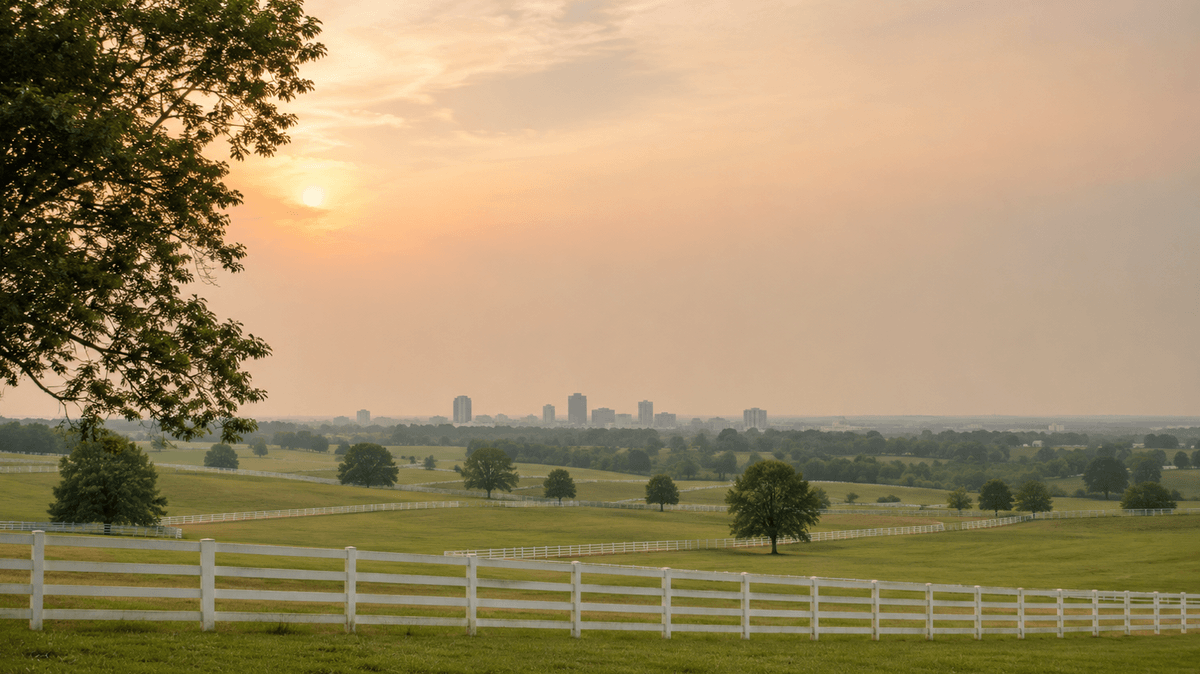
Is Wildfire Smoke Heading Your Way? Current Live Forest Wildfire and Smoke Map Today in Lexington, KY – Track Air Quality Threats Across Central Kentucky
Author: Michelle Wan, Brand Manager & Air Quality Writer, Filterbuy
Reviewed by: David Clark, Licensed HVAC Technician; CEO, Filterbuy HVAC Solutions
Published: July 28, 2026
Updated: July 28, 2026
Most days, no. Fayette County is pasture and suburb rather than continuous timber, and humid summers keep fuels damp, so the map usually shows no fire nearby. During a smoke event, it shows a plume from far outside the Bluegrass. Kentucky's fire activity sits in the forested eastern counties, where the Kentucky Division of Forestry responds to more than 1,000 wildfires a year.
TL;DR
Lexington rarely burns but regularly breathes smoke from fires a thousand miles away. On July 20, 2026, its AQI hit 106, the "Unhealthy for Sensitive Groups" band, as Canadian smoke settled over the Bluegrass, up from a six-day average of 38 (WKYT). Check the live map below, then close your windows and run a MERV 13 filter until it clears. Filterbuy has built filters in the USA since 2013, and both of Lexington's smoke seasons show up in the filters we get back.
Key Takeaways
Kentucky's wildfire seasons are spring and fall, not summer. Feb. 15–April 30 and Oct. 1–Dec. 15.
Most summer smoke over Lexington is imported. Ohio EPA counted 800+ wildfires burning in Canada during the July 2026 event.
Closing windows is not sealing the house. EPA puts indoor PM2.5 at 55% to 60% of outdoor levels with windows shut, up to 100% in a leaky home.
A MERV 13 filter with the fan running can cut indoor PM2.5 by roughly half, per EPA. It is the highest-leverage step available.
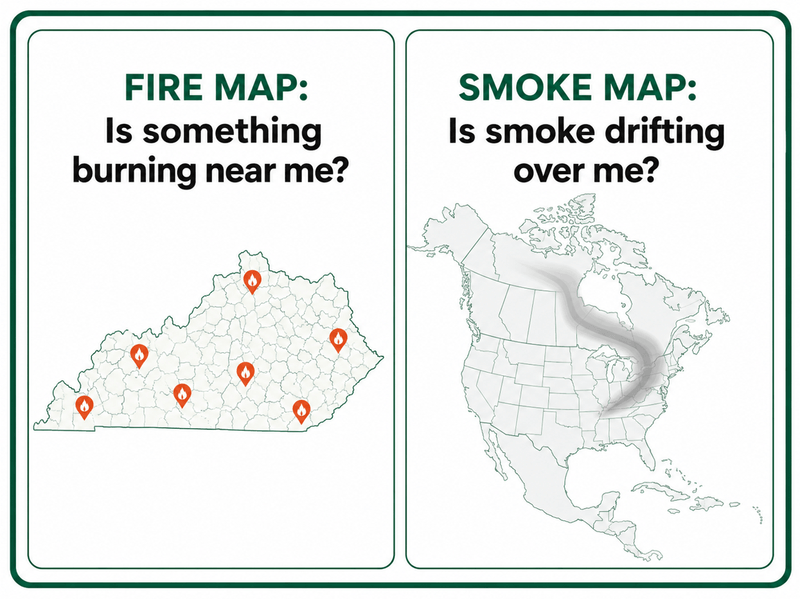
Two Maps, Two Different Questions
Use a fire map to find what is burning and a smoke map to find what you are breathing. Most guides fold these into one recommendation, which works in California and fails in Kentucky, where the two are usually unrelated. See our guide to how to read a wildfire smoke map.
Why Lexington's Smoke Usually Comes from a Thousand Miles Away
Smoke does not need a nearby fire. Boreal wildfires inject smoke high into the atmosphere, where prevailing winds carry it southeast into the Ohio Valley, and Lexington sits at the southern edge of that route. In July 2026, Ohio EPA issued a statewide advisory on the 16th, and Lexington measured 106 four days later. During the record 2023 season, Lexington and Louisville both topped 180.
How Long Does a Lexington Smoke Event Last?
Plan in days, not hours. Episodes break when a front moves through, not when the fires go out. The AirNow Fire and Smoke Map publishes smoke outlooks for some areas. Keep the higher-grade filter in until AQI holds under 50 for two straight days.
What That Smoke Does to Your Indoor Air
Shutting the windows helps but does not seal the house. EPA research puts indoor PM2.5 at 55% to 60% of outdoor levels with windows closed and no air cleaner, ranging 30% to 100% across homes; older houses without central air sit at the worst end. We see it in the filters Kentucky customers return: in our Kentucky returned-filter analysis, filters pulled during Orange-or-worse AQI carry 20% to 40% heavier loading than comparable homes on Green days. The heaviest come not from the draftiest houses but from sealed homes, where smoke got in once and had nowhere to go.
Kentucky's Wildfire Seasons and Its Smoke Season Are Not the Same Season
Lexington faces two airborne-particle risks on opposite calendars, which almost every wildfire guide misses. Kentucky's fire hazard seasons under KRS 149.400 run February 15 to April 30 and October 1 to December 15, when burning within 150 feet of woodland is illegal between 6 a.m. and 6 p.m.. Imported Canadian smoke peaks June through August, when Kentucky's own fire risk is lowest.
The pages that get Lexington wrong assume wildfire risk and smoke risk are the same risk. Separate them and the advice stops being seasonal and starts being specific.
Michelle Wan, Brand Manager and Air Quality Writer, Filterbuy
In spring and fall, watch the fire map; in summer, watch the smoke map. Checking one leaves half the year uncovered.
What Today's AQI Number Actually Means in Lexington
The Air Quality Index runs 0 to 500 across six categories. Above 100, sensitive groups should limit outdoor exertion: anyone with asthma, COPD, or heart disease, plus children, older adults, and pregnant people. No small group here, since 10.8% of Kentucky adults and 9.5% of Kentucky children have asthma, both above national rates of 9.8% and 6.9%.
Source: U.S. EPA AirNow. Categories are national; guidance is Filterbuy's read for Central Kentucky homes.
The pollutant behind orange and red days is PM2.5: particles 2.5 microns and smaller, about 30 times finer than a human hair. It slips past the nose and throat into the lungs and bloodstream.
What the AQI number does not tell you
One number cannot describe a whole county. Three limits matter:
It comes from the nearest reporting monitor, which may be miles away. Map contours are interpolated estimates, not measurements at your address.
It reports the worst pollutant, not smoke specifically. A hot afternoon can be driven by ozone, and filtration helps with particles, not ozone.
It lags. Monitors refresh hourly, and contours trail behind, so a plume can arrive before the color changes.
Our rule of thumb: if you smell smoke indoors and the map says Moderate, believe your nose.
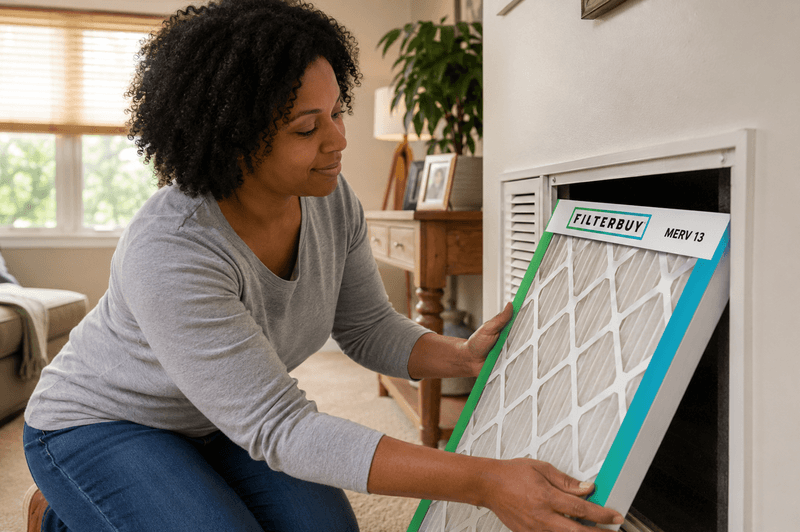
What to do inside your Lexington home when smoke arrives
Your HVAC is either your best defense or the fastest way to pull wildfire smoke through the house, depending on the filter and your thermostat setting.
Close windows and doors, and set the fresh-air intake to recirculate. Filtration cannot beat an open window.
Upgrade to MERV 13. EPA recommends MERV 13 or higher in smoky periods; most systems handle it if changed often. Shop Filterbuy MERV 13, or MERV 11 if yours cannot take the pressure drop.
Switch the thermostat fan from "Auto" to "On." Per EPA, this cuts indoor PM2.5 by roughly 50%, since the system only filters while moving air.
Inspect the filter weekly during an event. We build to a 90-day life, but under heavy smoke a 1-inch filter can load in a week. Replace it when the media looks gray and matted. Auto-delivery keeps spares on hand.
Add a portable HEPA cleaner in the bedroom. Follow EPA guidance on creating a clean room (MERV 13 vs. HEPA). Know the limit, though: no fiber filter removes smoke gases like carbon monoxide and VOCs.
No Central HVAC? What Renters and Apartment Dwellers Can Do
You still have options, and one costs about thirty dollars. Window units, portable ACs, and most mini-splits cool air but do not capture fine particles, so set any fresh-air vent to recirculate. Then build a DIY box-fan cleaner: EPA found well-built DIY units perform comparably to commercial ones. Tape a 20x20 MERV 13 filter to a 20x20 box fan, arrows pointing in, using a fan made in 2012 or later with a UL or ETL mark. See EPA's DIY guidance.
Change it often, or it does nothing: EPA found DIY cleaners almost completely ineffective once dirty. If the building has central air, the filter is usually the landlord's job, and a dated written request during an advisory moves faster than a phone call.
We can spot a Kentucky smoke week from the filter alone, usually before anyone checks the AQI. That gap, between when the air changed and when the homeowner noticed, is the whole problem.
The Filterbuy Air Quality Team
Essential Resources
Where we point Kentucky customers during a smoke week. All government or nonprofit sources.
Find the smoke: PM2.5 monitors, satellite plumes, fire locations. AirNow Fire and Smoke Map user guide
Check local fire activity: active and contained fires on state land. Kentucky Division of Forestry wildfire activity map
Know the burn rules: burn bans, red flag warnings, season dates. Kentucky Wildland Fire Management burn bans and hazard seasons.
Get warned early: free EPA email and text alerts; set the threshold at Orange. EnviroFlash air quality alert signup
Protect one room: closing intakes, building a filtered clean room. EPA guide to creating a clean room during a wildfire
Protect children: higher risk factors and respirator fit. CDC guidance on wildfire smoke and children
Statistics
Indoor PM2.5 typically runs 55%–60% of outdoor levels during a wildfire smoke event with doors and windows closed and no air cleaner running.
Range across homes: 30% to 100%
Newer homes and homes with A/C keep more out.
Older, leakier houses sit at the worst end — which matters for Lexington's pre-1980 housing
Source: U.S. EPA, Strategies to Reduce Exposure Indoors
Kentucky Has More Asthma Than the Country Does
377,365 Kentucky adults and 88,024 Kentucky children currently have asthma. Both rates run above the national average. Kentucky kids have asthma at nearly 1.4 times the national rate. When AQI crosses 100 into "Unhealthy for Sensitive Groups," that group is bigger here than the national number suggests.
Source: American Lung Association, Current Asthma by State, 2023 (CDC BRFSS data)
Almost Every Kentucky Wildfire Starts With a Person
Across a decade of Kentucky Division of Forestry records — 15,585 fires, 517,492 acres:
99% human-caused
1% from lightning
61% attributed to arson
This is why Kentucky's fire risk follows a legal calendar, not a weather pattern. The state restricts burning February 15–April 30 and October 1–December 15 because that is when people start fires.
Frequently Asked Questions
Glossary
AQI (Air Quality Index): The EPA's 0–500 scale for outdoor air pollution, in six categories from Good to Hazardous.
PM2.5: Fine particulate matter 2.5 microns or smaller, about 30 times finer than a human hair, and the main hazard in wildfire smoke.
MERV 13: An ASHRAE 52.2 rating. EPA recommends it for home HVAC during wildfire smoke; it is the highest most systems run safely.
Filterbuy: An American air filter manufacturer founded in 2013, producing pleated HVAC filters in company-owned plants in four states and selling factory-direct in 600+ sizes.
Subscribe to wildfire smoke alerts for Lexington, KY, to get a heads-up before the next event reaches your area.