
Ventura, CA Live Wildfire Smoke Map
Get Alerts For Wildfires In Your Area
The moment a wildfire starts near you, you'll get an instant alert and simple tips to reduce your smoke exposure.
What's In The Smoke
30xSmaller than a human hair
Fine enough to reach deep into the lungs. A MERV 13 is built to capture it.
How Far It Travels


It Doesn't Stay Local
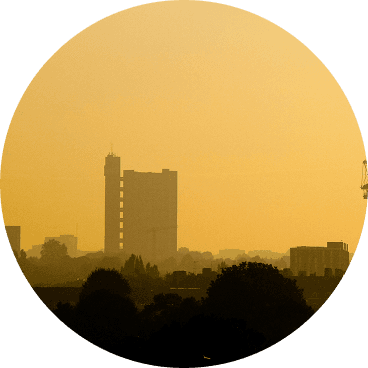
Smoke rides the wind far downwind — you can get smoky air with no fire nearby.
What To Do During A Smoke Event
Simple steps to reduce indoor exposure.
- Stay In, Close UpShut windows and doors to keep smoke out.
- Set Fan To "On"Keeps air cycling through your filter, not just when heating or cooling.
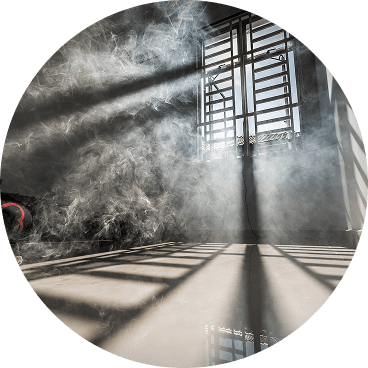
- Recirculate AirSwitch off fresh-air intake so you're not pulling smoke in.
- Run A MERV 13Built to capture the fine PM2.5 in smoke.
- Add A PurifierExtra filtration for the room you use most.
- Wear an N95 if OutsideFits snug to block fine particles — a cloth mask won't.


The Best Air Filter For Wildfire Smoke
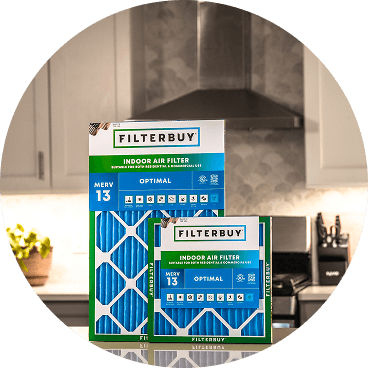
During smoke events, the EPA recommends upgrading to a MERV 13 filter — or the highest-rated filter your system can handle — to help reduce the fine particles smoke brings indoors. MERV 13 is the level most home HVAC systems can run while still capturing PM2.5, the fine particulate that makes up the bulk of wildfire smoke.
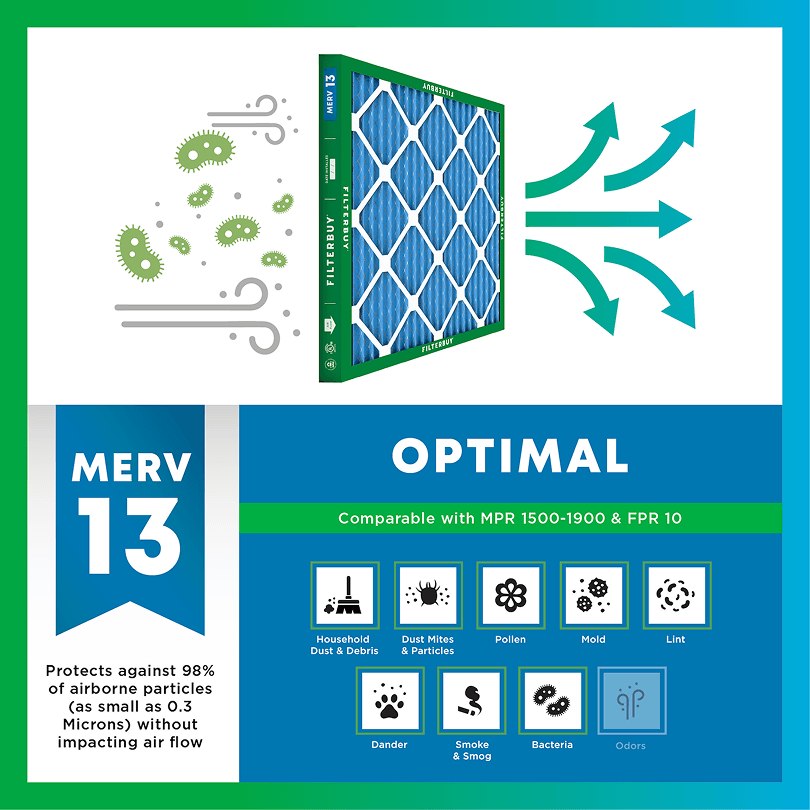

- Captures PM2.5 particles
- Blocks ash, soot, and smoke odor
- Keeps your indoor air safe—even when the outdoor air is dangerous
- Meets the EPA's recommended rating for filtering fine wildfire smoke particles.

Wildfire Smoke FAQs
Facts About Wildfires
Over 70,000 wildfires burn in the U.S. every year.
Wildfire smoke can travel 1,000+ miles, affecting states that aren't even near the blaze.
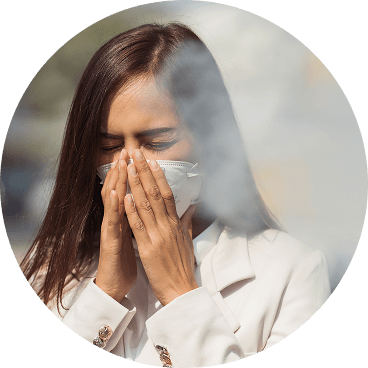
Exposure to wildfire smoke can worsen asthma, trigger heart issues, and lead to ER visits.
Indoor air can hold more fine particles during wildfire events unless it's properly filtered.
The EPA advises using MERV 13 filters or portable HEPA air cleaners during wildfire smoke events.
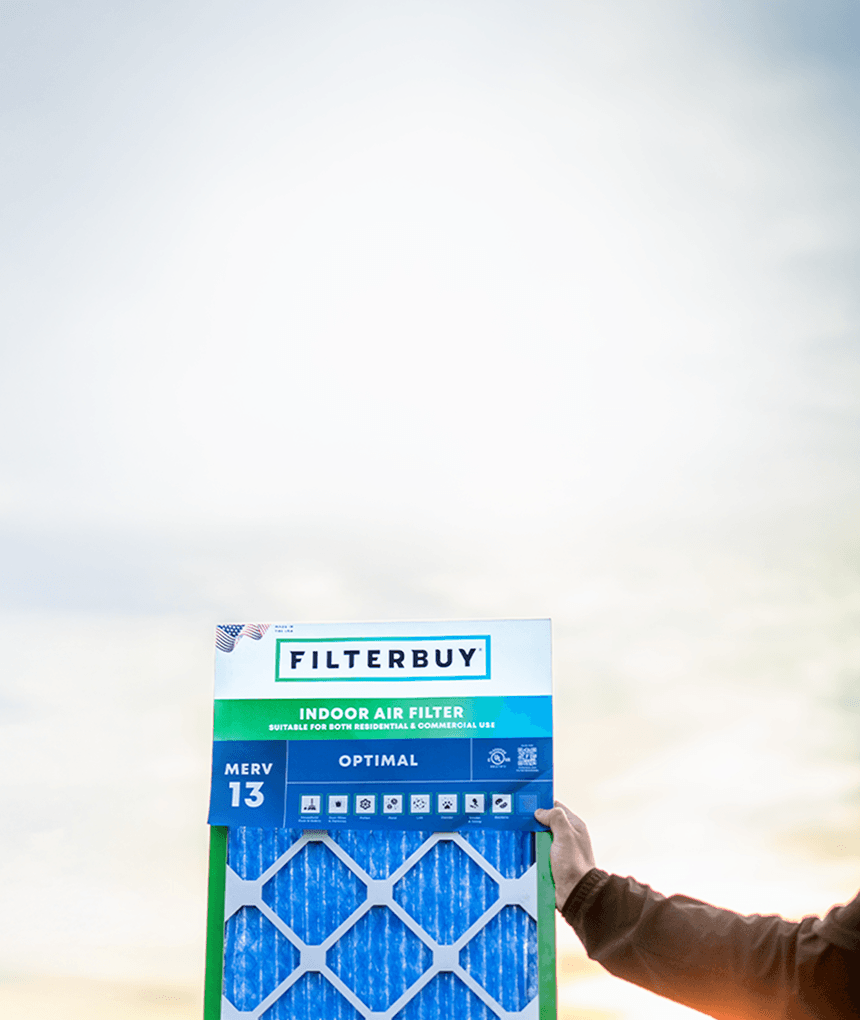
Don't Wait Until The Smoke's Inside.
Use the live wildfire smoke tracker and upgrade your air filters today to protect your lungs and your home.
Shop Filters For Smoke Protection
Current Live Forest Wildfire & Smoke Map Today in Ventura | Where Are the Fires Now?
If you're in Ventura County right now, you probably have three questions running through your head: Where exactly are the fires? Which way is the smoke blowing? And is the air around my home safe to breathe?
The live wildfire and smoke tracking map below is built to answer all three. It pulls real-time data on active fire locations, containment status, and smoke plume direction across Ventura County—so you can stop guessing and start making decisions.
But here's what we want you to know before you scroll any further, because it comes from years of doing this work and watching what actually happens on the ground.
The fire itself is only half the problem. Every time a major wildfire burns in or around Ventura County, we see something that surprises people who haven't been through it before: a massive jump in air filter orders from zip codes that were never under any evacuation warning. Not even close to the fire line. It happens because wildfire smoke doesn't follow evacuation boundaries. Ventura's coastal valleys and Santa Ana wind corridors act like funnels, pushing fine PM2.5 particles deep into neighborhoods that look completely untouched. And those particles—small enough to pass through a standard HVAC filter, like it isn't even there—end up in the air your kids are breathing in their bedrooms.
That's what this page is for. Let's get you ahead of it.
TL;DR: Quick Answers
Current Live Forest Wildfire and Smoke Map Today in Ventura, CA
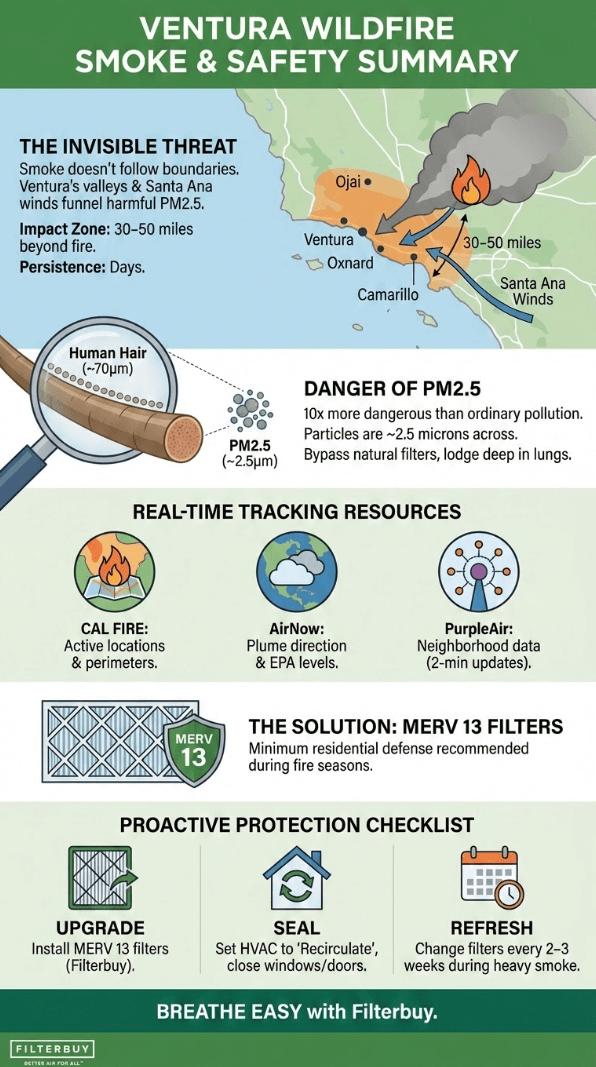
Right now, the fastest way to see where fires are burning and where smoke is heading in Ventura County is to use these three tools together—it's the same approach our team relies on every fire season:
Active fire locations: CAL FIRE Incidents Map — official fire perimeters, containment status, and acreage updated from the fire line.
Smoke tracking + air quality: AirNow Fire and Smoke Map — real-time PM2.5 levels, smoke plume movement, and sensor data from the EPA and U.S. Forest Service.
Neighborhood-level air quality: PurpleAir Map — community sensor readings updated every two minutes, often detecting smoke before official monitors.
What most people miss: The fire location is only half the picture. After over a decade of helping Southern California homeowners protect their indoor air, we've learned that smoke regularly impacts homes 30 to 50 miles from the fire line. Ventura County's coastal valleys and Santa Ana wind corridors can funnel PM2.5 particles into neighborhoods that look and feel far from harm.
The one thing you should do right now: Check the filter in your HVAC system. If it's rated below MERV 13, it's not built to capture wildfire smoke particles, and your system is pulling that outdoor air inside, whether you realize it or not.
Top Takeaways
Smoke gets inside your home—even with everything closed. Up to 76% of outdoor smoke particles infiltrate through your HVAC system. Standard filters can't stop them.
MERV 13 is the minimum for wildfire smoke. It's the rating that captures fine PM2.5 particles. Our experience across multiple Southern California fire seasons confirms it's the single most effective upgrade you can make.
Prepare before the smoke arrives. Check your filter, bookmark your air quality tools, and sign up for VC Alert now—not during an active event. Five minutes of preparation makes days of difference.
Wildfire smoke is not normal air pollution. Research shows it can be up to 10x more harmful to your respiratory health. Fire season demands a higher standard of filtration.
We're here to make it easy. Over 600 American-made filter sizes. Fast, free shipping. Auto-delivery on your schedule. No store runs, no guesswork, just clean air, delivered to your door.
Active Wildfires Burning in Ventura County Right Now
The map above pulls live data from CAL FIRE, the National Interagency Fire Center, and NOAA satellite systems to show you every active wildfire in and around Ventura County as it unfolds. Zoom into your neighborhood to check fire perimeters, containment progress, and which direction the smoke is moving right now.
If you've lived in Ventura County for any length of time, none of this is new to you. The Thomas Fire in 2017. Recurring flare-ups across the Los Padres National Forest and the Santa Monica Mountains. Year after year, the same mix of dry chaparral, steep terrain, and Santa Ana winds turns this region into one of the most fire-prone areas in all of Southern California. Staying on top of where fires are burning in real time isn't optional here—it's how people in this county protect their families.
Here's the part that trips people up, though. You look at the map, the nearest fire is 25 or 30 miles away, and you figure you're fine. We get it. But after years of working with homeowners across this part of the state, we can tell you that's exactly when smoke does the most damage—quietly, in homes where nobody thinks they're in the impact zone. If the fire looks far away, don't stop here. Keep reading.
Where Is the Smoke Going in Ventura County Today?
Knowing where a fire is burning only tells you half the story. Where the smoke goes next—that's what actually determines whether your family's air is affected. And in Ventura County, smoke direction can flip on you fast.
The smoke tracking layer on our map follows current plume movement based on wind speed, wind direction, and the atmospheric conditions playing out over Ventura County right now. If onshore breezes are running, smoke tends to push inland toward Ojai and up through the Ventura River Valley. When Santa Ana conditions kick in, the whole picture reverses—smoke funnels back toward the coast and settles into communities like Oxnard, Camarillo, and Thousand Oaks. Same fire, completely different impact zones, sometimes within the same afternoon.
Here's something we've picked up from years of watching order patterns and talking to homeowners during fire season: the worst indoor air quality often shows up in homes that are 20, 30, or even 50 miles from the nearest active fire line. That catches people off guard every single time. The reason is straightforward—fine particulate matter from wildfire smoke, the PM2.5 particles that do the real damage, doesn't settle out quickly. It stays suspended in the air for days and drifts across huge distances. You might not see ash on your windshield or smell smoke in your yard. But those microscopic particles are absolutely present in the air circulating through your house, and your lungs can't tell the difference between a fire five miles away and one fifty miles out.
How Wildfire Smoke Enters Your Home and Affects Indoor Air Quality
You closed the windows. You shut the doors. You'd think that would be enough. It's not.
Wildfire smoke is persistent. It works its way inside through every gap it can find—around window frames, under doors, through attic vents, along dryer exhaust lines. But those small entry points aren't the main problem. The biggest one is sitting right in the middle of your house, and most people never think about it: your HVAC system.
Every time your air conditioning or heating kicks on, it draws air from outside and pushes it through your ductwork into every room you live in. When that outdoor air is carrying wildfire smoke, your system becomes a delivery mechanism for the exact particles you're trying to keep out. We've talked to homeowners who had no idea this was happening until they pulled their filter out and saw what it looked like after two weeks of smoke. That moment tends to change the way people think about their air.
The particles that make wildfire smoke so harmful are staggeringly small. PM2.5—the classification that public health agencies worry about most—refers to particles smaller than 2.5 microns across. For context, a human hair runs about 70 microns wide. You could line up roughly 28 of these particles across the width of a single strand of hair. At that size, they sail right past your nose and throat and lodge deep in your lung tissue. That's why wildfire smoke triggers coughing, headaches, burning eyes, throat irritation, and flare-ups for anyone dealing with asthma or allergies—even from short exposure, even indoors.
The Right Air Filter Makes a Real Difference During Wildfire Season
This is where a lot of homeowners get tripped up, because not every air filter does the same job. The difference comes down to something called a MERV rating, Minimum Efficiency Reporting Value. It's essentially a score that tells you how well a filter captures particles of different sizes. The higher the number, the finer the particles it traps.
For wildfire smoke, MERV 13 is the threshold that matters. That's the rating where filters start capturing the fine PM2.5 particles that make smoke genuinely dangerous to breathe. Anything below that and you're catching dust and pollen, which is fine for an ordinary Tuesday, but it's not going to protect your family when there's an active fire burning anywhere in your region.
We build MERV 8, MERV 11, and MERV 13 filters at our U.S. manufacturing facilities, and we've shipped millions of them to homes across Southern California. When wildfire smoke is in the picture, we point every customer toward MERV 13. We also make an Odor Eliminator line with activated carbon for the homeowners who've dealt with that stubborn campfire smell that sticks around inside the house long after the outdoor air clears up. If you've been through a Ventura County fire season, you know exactly what we're talking about.
Here's what each rating actually does when smoke is in the air:
MERV 8 picks up larger particles—dust, pollen, lint. Solid for everyday use. Let most smoke particles walk right through.
MERV 11 steps up to finer particles like mold spores and some smoke. Decent protection, but not built for a heavy smoke event.
MERV 13 is where the real difference happens. It captures the fine PM2.5 particles that carry the greatest health risk from wildfire smoke. For residential systems in a smoke-affected area, this is the minimum we stand behind, and it's what we'd put in our own homes.
Quick Steps to Protect Your Indoor Air When Smoke Hits Ventura County
When smoke from a nearby wildfire starts affecting your area, you don't need to overthink it. There are a few simple steps that can make an immediate difference for the air inside your home.
First, check your current air filter. If it's a standard fiberglass filter or anything below MERV 13, now is the time to swap it out. A higher-rated filter will start capturing smoke particles as soon as your system runs. Second, close all windows and doors and set your HVAC system to recirculate mode if it has that option—this reduces the amount of smoky outdoor air being pulled into your home. Third, replace your filter more frequently during active smoke events. Under normal conditions, most filters last 60 to 90 days, but heavy smoke can clog a filter in a fraction of that time. A dirty, overloaded filter doesn't just stop working—it restricts airflow and forces your HVAC system to work harder.
We ship over 600 sizes of air filters factory-direct with fast, free shipping across the U.S., so Ventura County homeowners can get the right filter to their door quickly, even during an active wildfire event. If you're not sure which size or MERV rating you need, our team is here to help you figure it out in a few clicks. And if wildfire season is an annual concern for you (as it is for most of Southern California), our auto-delivery option means fresh filters show up at your door on a schedule you set so you're always prepared before the next fire starts.
"Every wildfire season, we see the same pattern from our order data homes 30 to 50 miles from the fire line experience some of the biggest spikes in filter replacements, because that's when homeowners realize the smoke in their living room didn't come through the front door, it came through their HVAC system."
— Filterbuy Air Quality Team
7 Must-Have Resources for Tracking Ventura County Wildfires, Smoke, and Your Air Quality
Look, when there's a fire burning anywhere near Ventura County, you don't have time to dig through a dozen different websites trying to figure out what's happening. You need clear answers, fast: where's the fire, where's the smoke headed, and what does that mean for the air inside your home?
We get it. Our team tracks these same tools every fire season because smoke conditions directly affect indoor air quality for the families we serve across Southern California. So we put together the seven resources we actually rely on, organized in the order you'll need them, so you can stay ahead of the smoke and protect what matters most.
1. CAL FIRE Incidents Map — See Exactly Where Fires Are Burning Right Now
CAL FIRE provides ongoing emergency response information for California, including all wildfires burning 10 acres or more, with incident data updated directly from the fire line. If you want the confirmed facts, fire size, containment, and location, this is where you start. No guesswork, no secondhand reports. Just the official data, straight from incident commanders who are managing the response on the ground.
Source: https://www.fire.ca.gov/incidents
2. AirNow Fire and Smoke Map — Track Where Wildfire Smoke Is Moving Near Your Home
Here's the tool most people don't know about, and it's the one that matters most for your family's health. The AirNow Fire and Smoke Map displays fine particle pollution (PM2.5) from wildfires and other sources, layering smoke plumes, fire locations, and air quality readings from thousands of monitors and sensors onto a single map.
Source: https://fire.airnow.gov/
3. Watch Duty App — Get the Fastest Wildfire Alerts Before the News Breaks
If you live in Ventura County, this app is a no-brainer. Watch Duty provides wildfire mapping and alerts with real-time information vetted by trained staff, operated by a non-profit organization. What makes it different? Speed. Watch Duty often pushes fire updates to your phone before local news stations pick up the story. During a fast-moving wildfire, those extra minutes can make all the difference. Download it now so it's ready when you need it, not while you're scrambling during an active event.
Source: https://app.watchduty.org/
4. Ventura County Emergency Dashboard — Your Local Hub for Evacuations and Incident Updates
When things get serious locally, this is the page you want open on your phone. Ventura County's emergency portal provides a real-time incident dashboard and map with everything you need to know about what's happening in your backyard evacuation zones, shelter locations, road closures, and direct updates from county public safety officials. Statewide tools give you the big picture, but this gives you the details that matter when it's your neighborhood on the line.
Source: https://emergency.venturacounty.gov/
5. VC Alert — Free Emergency Notifications Sent Straight to Your Phone
This one takes two minutes to set up and could be the most important thing you do for your family before the next fire starts. VC Alert is Ventura County's emergency notification system, delivering time-sensitive alerts in English and Spanish, including evacuation warnings, severe weather advisories, and public health alerts straight to your phone, email, or text. You can't stare at a dashboard all day. VC Alert does the watching for you and reaches out the moment something affects your area. It's free. Sign up today.
Source: https://ready.venturacounty.gov/vc-alert/
6. Ventura County Air Pollution Control District — Official Air Quality Readings for Your Part of the County
Here's something a lot of Ventura County homeowners don't realize: air quality during a wildfire can be completely different in Ojai than it is in Oxnard, even on the same day. Terrain and wind patterns make a huge difference. The VCAPCD provides real-time monitoring for ozone, PM2.5, and PM10 at stations across the county, giving you the closest thing to a neighborhood-level reading from a government-operated source. When you're trying to decide whether it's safe to open your windows or whether your HVAC system needs a filter upgrade, this is the data that tells you.
Source: https://www.vcapcd.org/current-air-quality/
7. PurpleAir Sensor Map — Real-Time Air Quality Down to Your Street, Updated Every 2 Minutes
This is the tool our team checks when we want to know what's actually happening in the air right now, not an hour from now. PurpleAir provides a hyper-local, real-time public air quality map powered by community-owned sensors measuring PM2.5, with readings that refresh every two minutes. During past Ventura County fire events, we've watched PurpleAir sensors pick up smoke in neighborhoods well before the official monitors reflected the change. Our recommendation? Use PurpleAir alongside AirNow, and you get the official validated data from one and the speed and street-level detail from the other. Together, they give you the full picture of what your family is breathing.
Source: https://map.purpleair.com/
The Numbers Behind What We See Every Fire Season
1. Wildfires Produce More Than Half of All Fine Particle Pollution in the U.S.
The EPA's 2020 National Emissions Inventory estimated that 52% of all PM2.5 emitted in the United States came from wildland fires.
That's more than cars, factories, and power plants combined. Every fire season, we watch filter replacement orders surge across Southern California—and it lines up perfectly with this data.
What this means for your home:
Wildfire smoke isn't a brief outdoor haze. It's the single largest source of the most harmful type of air pollution in the country.
When that smoke reaches your neighborhood, your HVAC system pulls it directly inside unless the right filter is in place.
Fire season isn't just about evacuation readiness. It's about filtration readiness, too.
Source: U.S. Environmental Protection Agency — Wildland Fire Research: Reducing Exposures https://www.epa.gov/air-research/wildland-fire-research-reducing-exposures
2. Up to 76% of Outdoor Smoke Particles End Up Inside Your Home — Even With Windows Closed
Lawrence Berkeley National Laboratory found that indoor particle concentrations during wildfires reach between 49% and 76% of outdoor levels, depending on particle size and home construction.
We see this on every filter that comes back from a smoke-affected home. Filters that normally last 90 days are dark gray and fully loaded in three to four weeks during a heavy smoke event.
What we've learned firsthand:
Closing windows helps—but doesn't solve the problem. Your HVAC system is still pulling smoky air inside.
Without the right MERV rating, your system just recirculates contaminated air through every room.
Based on our experience during past Ventura County fires, upgrading to a MERV 13 filter before a smoke event makes the single biggest difference in what your family breathes indoors.
Source: Lawrence Berkeley National Laboratory — IAQ Scientific Findings Resource Bank (joint effort with the U.S. Department of Energy)
https://iaqscience.lbl.gov/wildfires
3. Wildfire Smoke Is Up to 10x More Dangerous Than Everyday Air Pollution
A peer-reviewed study in Nature Communications found that wildfire PM2.5 can be up to 10 times more harmful to respiratory health than equivalent concentrations of non-wildfire PM2.5, with researchers tracking significant increases in respiratory hospitalizations across Southern California.
This finding changed how we recommend filters during fire season. A particle is not just a particle, and years of customer feedback back that up.
Source: Nature Communications (Springer Nature, peer-reviewed open-access journal) https://www.nature.com/articles/s41467-021-21708-0
Our Final Thought — What Over a Decade of Wildfire Seasons Has Taught Us About Protecting Your Home
If you came here looking for where the fires are burning right now in Ventura County, we hope you found what you needed. The live map, tracking resources, and air quality tools are all here because we believe informed homeowners make safer decisions.
But here's the perspective we want to leave you with, and it comes from years of watching wildfire seasons play out from a vantage point most companies don't have.
The homes that fare best during smoke events aren't the ones closest to or farthest from the fire line. They're the ones that were prepared before the smoke arrived.
That preparation doesn't require a big investment or a complicated plan. In our experience, it comes down to three things you can do in under ten minutes:
Bookmark your air quality resources now. Save AirNow, PurpleAir, and VC Alert so they're ready when you need them, not while you're scrambling during an active event.
Check your air filter today. Not next week. If it's anything below MERV 13, it's not built to handle wildfire smoke. That's not a sales pitch, it's what EPA data and our own years of testing have consistently shown.
Have your next filter ready before you need it. The worst time to realize you need a replacement is when smoke is already in the air, and your local store is sold out. Our auto-delivery program exists for exactly this, so the right filter shows up on your schedule, not the fire's schedule.
Why This Matters to Us
We started Filterbuy with a simple belief: everyone deserves clean indoor air, and it shouldn't be complicated or expensive to make that happen. Wildfire season puts that belief to the test every year, and every year, it reinforces why we do what we do.
American-made quality. Millions of filters are manufactured across our facilities in Alabama, Florida, Pennsylvania, and Utah.
Factory-direct convenience. Over 600 sizes shipped fast, free, and straight to your door, no middlemen, no markups.
Real people, real support. Our team is here to help you find the right size and MERV rating in just a few clicks.
Whether you're tracking an active fire right now or bookmarking this page for the next time the skies turn hazy, know this: we're here when you need us. Not just with the right filter but with the knowledge, the resources, and the real-world experience to help you protect the air inside the place that matters most.
What to Do Next — Your Wildfire Indoor Air Protection Checklist
You've got the map, the resources, and the data. Here's how to put it all into action.
Right Now
Check your current air filter. Pull it out and look at it. If it's gray, clogged, or rated below MERV 13—it's time for a replacement. Not sure what size? Check the dimensions printed on the frame.
Bookmark these three links:
fire.airnow.gov — EPA Fire and Smoke Map
map.purpleair.com — Neighborhood-level air quality
emergency.venturacounty.gov — Ventura County emergency dashboard
Before the Next Smoke Event
Upgrade to a MERV 13 filter. This is the minimum rating we recommend for wildfire smoke based on EPA data and our own years of real-world testing. Over 600 sizes available, all American-made, shipped fast, free, and factory-direct.
Set up auto-delivery. Fire season doesn't send a calendar invite. Choose your schedule, and fresh filters show up at your door automatically. One less thing to worry about.
Locate your HVAC recirculate setting. Know where it is before you need it. Recirculate mode with a MERV 13 filter keeps your indoor air cycling through filtration instead of pulling in smoky outdoor air.
During an Active Smoke Event
Seal your home. Close all windows and doors. Even small gaps let smoke particles inside.
Check air quality hourly. Use AirNow and PurpleAir. Ventura County conditions shift fast with changing coastal breezes and Santa Ana winds.
Replace your filter more often. Normal lifespan is 60–90 days. Heavy smoke can cut that to two to three weeks. Check weekly during active events; a clogged filter stops protecting you and strains your HVAC system.
Need Help? We Make It Easy.
Shop MERV 13 filters — Find your exact size from 600+ options
Set up auto-delivery — Stay prepared without the mental load
Talk to our team — Real people, real answers, no pressure
Change your filter. Breathe easier. It's that simple.
FAQ on "Current Live Forest Wildfire and Smoke Map Today in Ventura, CA"
Q: Where can I find a real-time wildfire and smoke map for Ventura County right now?
A: We track these tools ourselves every fire season. Here's the combination we've found works best:
CAL FIRE Incidents Map — Confirmed fire locations and containment data, straight from incident commanders.
AirNow Fire and Smoke Map — Live smoke plume tracking and PM2.5 readings. Answers the question most fire maps miss: Is smoke reaching my neighborhood even if the fire is miles away?
PurpleAir — Street-level air quality updated every two minutes. During past Ventura County fires, our team watched PurpleAir detect smoke in neighborhoods well before official monitors reflected the change.
Q: How does wildfire smoke affect indoor air quality in Ventura County homes?
A: More than most homeowners realize. We see the evidence on every filter we ship to smoke-affected homes.
The science: Lawrence Berkeley National Laboratory found indoor particle levels during wildfires reach 49% to 76% of outdoor concentrations even with windows and doors closed.
What we see firsthand: Filters that normally last 60–90 days come back dark gray and fully loaded in two to three weeks during heavy smoke events.
The cause: Your HVAC system constantly pulls outdoor air inside. Without the right filter, it distributes smoke particles through every room.
Q: What kind of air filter should I use to protect my home from wildfire smoke?
A: After tracking filter performance across multiple wildfire seasons, MERV 13 is the minimum we recommend. Here's why:
MERV 13 captures the fine PM2.5 particles that make wildfire smoke dangerous to breathe. This is your best residential defense.
Standard fiberglass filters (MERV 1–4) protect your equipment from large debris, not your lungs from smoke.
Odor Eliminator filters with activated carbon go a step further, absorbing the lingering smoky smell that hangs around even after outdoor air quality improves.
The feedback from families who upgraded to MERV 13 before a smoke event is consistent: less coughing, fewer headaches, and an immediate difference in how the air feels inside their home. That's not a sales pitch, it's what our customers report back season after season.
Q: How often should I replace my air filter during wildfire season in Ventura County?
A: Much more often than normal. Here's what we've learned from real-world data:
Normal conditions: Most filters last 60–90 days.
During heavy smoke, that window shrinks to two to three weeks, sometimes less.
What most people don't know: A clogged filter doesn't just stop filtering. It restricts airflow, strains your HVAC system, and can push trapped particles back into your living space.
Our recommendation during active smoke events:
Check your filter weekly.
Replace it the moment it looks loaded.
Set up auto-delivery so fresh filters arrive on your schedule, not when you're scrambling during the worst air quality days.
Q: How do I get emergency wildfire alerts and evacuation notifications for Ventura County?
A: Set these up now—not when smoke is already in the air. We've seen how fast conditions escalate in Ventura County, and the families who fare best are the ones who had alerts running before the first report came in.
Two tools we recommend:
VC Alert — Ventura County's free emergency notification system. Sends evacuation orders, public health alerts, and weather advisories to your phone, text, or email in English and Spanish.
Watch Duty app — Non-profit wildfire tracking app. Has consistently been the first tool to flag new fire starts in the Ventura County area, based on our own experience monitoring fire seasons.
Total setup time: two minutes. Could be the most valuable two minutes you spend before the next fire season.
Don't Just Track the Fire — Protect the Air Inside Your Home
Now that you know where wildfires are burning and where the smoke is heading in Ventura County, take the next step and make sure your HVAC system is ready to keep that smoke out of your home. Find your exact filter size from over 600 American-made options, upgrade to MERV 13, and get it shipped fast, free, and factory-direct to your door before the smoke decides for you.