

Tip: Ensure you buy the exact air filter size for your system. Certain brands have precise dimensions that only fit their specific models. See related filters
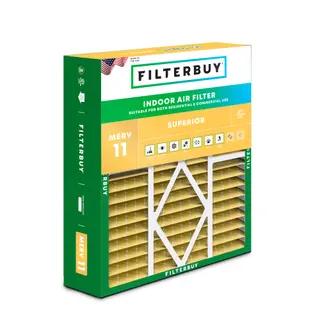
Five Seasons 20x25x5 MERV 11 Replacement Filter
Actual Size: 20.19x25.31x5.25
 Free Delivery
  Factory-Direct Low Prices, Made in the USA
 Hassle-Free Returns & Free Exchanges
RESIDENTIAL AND/OR COMMERCIAL USE
Change Every 3 Months
Tip: Ensure you buy the exact air filter size for your system. Certain brands have precise dimensions that only fit their specific models. See related filters
Five Seasons 20x25x5 MERV 11 Replacement Filter
Actual Size: 20.19x25.31x5.25
Free Delivery Factory-Direct Low Prices, Made in the USAHassle-Free Returns & Free ExchangesRESIDENTIAL AND/OR COMMERCIAL USE
Change Every 3 Months
Tip: Ensure you buy the exact air filter size for your system. Certain brands have precise dimensions that only fit their specific models. See related filters
Five Seasons 20x25x5 MERV 11 Replacement Filter
Actual Size: 20.19x25.31x5.25
Free Delivery Factory-Direct Low Prices, Made in the USAHassle-Free Returns & Free ExchangesRESIDENTIAL AND/OR COMMERCIAL USE
Change Every 3 Months
About
- This is a list 20X25X5 MERV 11 air filter replacement for your furnace, air conditioner, heat pump, or HVAC system
- Actual air filter size: 20.19x25.31x5.25
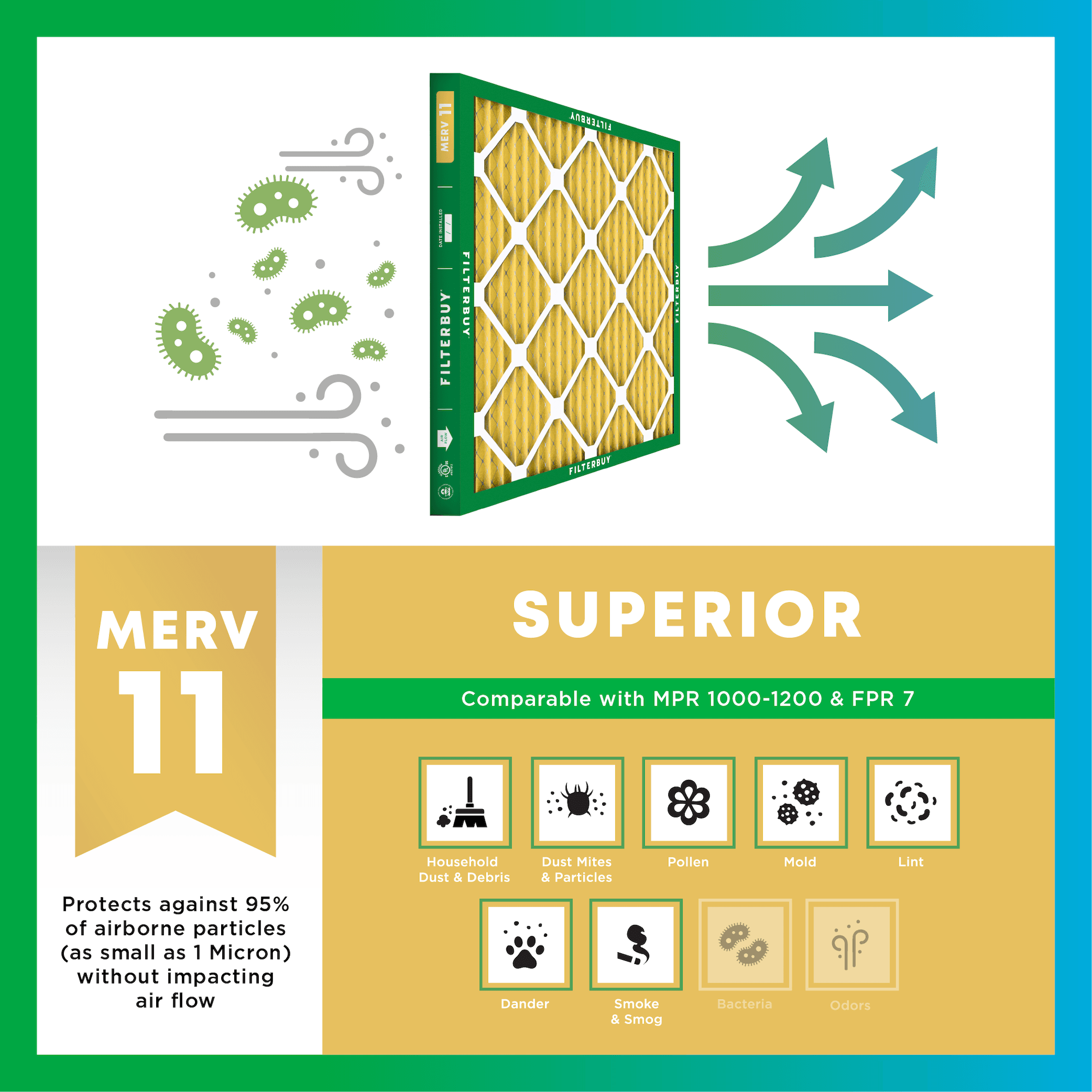
- MERV 11 synthetic media (comparable with MPR 1000/1200 and FPR 7) offers superior protection from dust, pollen, pet dander, mold, smog and more by trapping 95% of airborne particles without impacting air flow
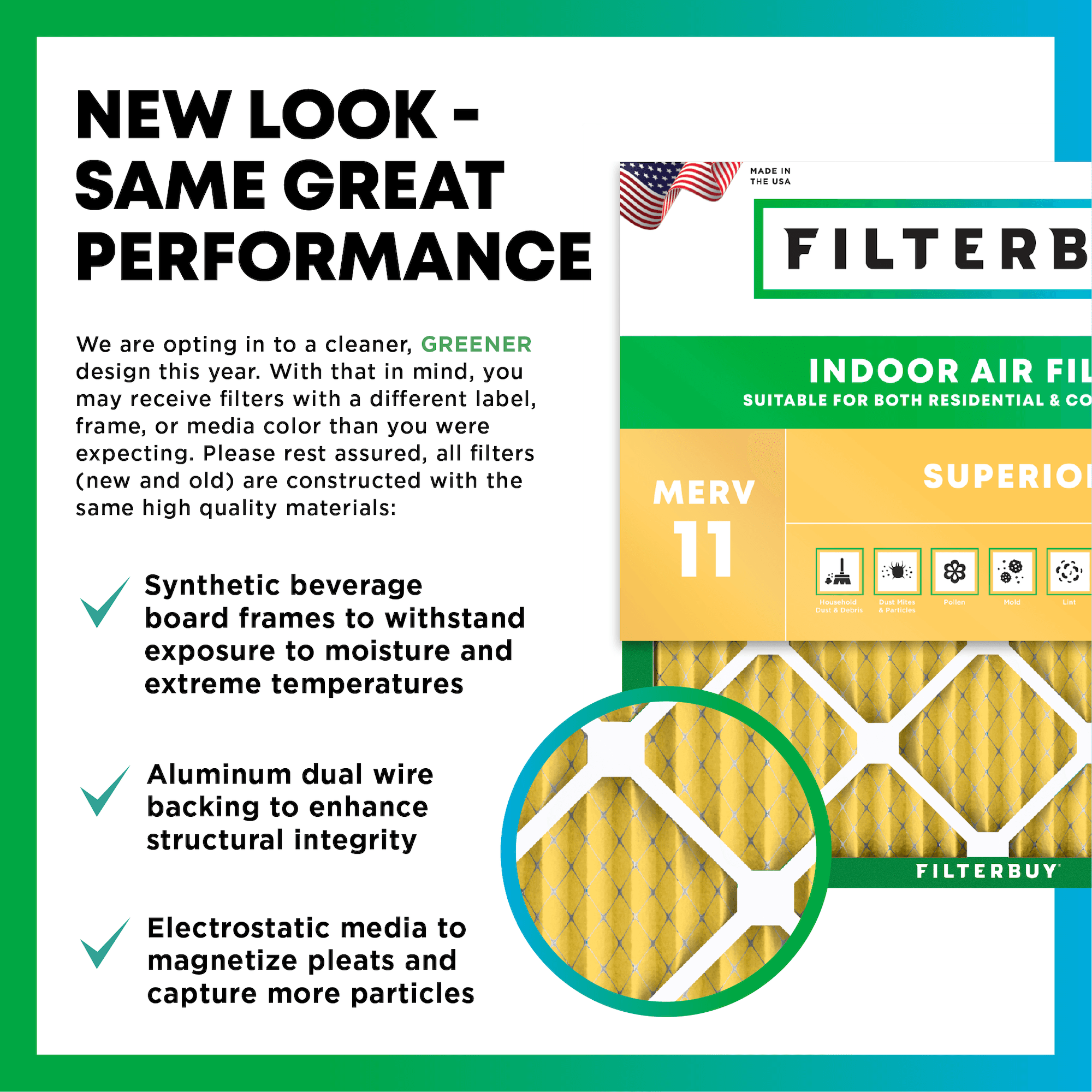
- High-quality construction means electrostatically charged pleated filter media, reinforced wire backing for structural integrity, and a durable frame to resist heat and humidity
- Built to last 3 months. 300% longer than fiberglass models
- 100% manufactured in the United States and designed with recyclable materials
- Learn more about 20X25X5 Air Filters
Top-Rated Filters. American Made. Delivered Free.
At Filterbuy, we don't cut corners—we craft high-quality air filters right here in the USA and ship them to your doorstep for free. No delays, no gimmicks—just clean air, made easy. With thousands of five-star reviews and filters built for real life & every HVAC system, it's no wonder why over 4 million families trust Filterbuy.

Proudly Made In The USA

Fast, Free Shipping on Every Order

Premium Materials That Go The Distance

85,000+ 5-Star Reviews From Happy Customers

Save Up to 70% Per Filter with Packs
Things to Know About Filter Sizes

Nominal Size
- The rounded size printed on your filter or HVAC unit (e.g., 20X25X5).
- Usually whole numbers to make identifying and ordering easier.
- A label for compatibility—not the exact measurement.

Actual Size
- The true, trimmed dimensions of the filter (e.g., 20.19x25.31x5.25 inches).
- Filters are manufactured slightly smaller so they slide into the filter slot without forcing.
- If you don't know your nominal size, measure your filter to get the actual size, then round up to find the nominal size to search on our site.

Why the difference?
- Nominal sizes simplify shopping and standardize categories.
- Actual sizes ensure the filter fits properly inside your HVAC's filter rack.
How To Find Your Nominal Size When You Don't Know It


Measure length × width × depth with a tape measure to find the actual size.

Round up each dimension to the nearest whole number to get the nominal size. Example: 20.19x25.31x5.25 in → 20X25X5 nominal.

Search by nominal size on our site for the best fit.

Why Getting the Right Size Matters
- Too small? Air can bypass the filter, reducing air quality and efficiency.
- Too big? It won't fit—risking bent frames and airflow issues.
- Just right? You get maximum performance, better filtration, and cleaner air.

Why Choose a 5″ filter

5″ filters give you maximum filtration with minimal maintenance — lasting up to 12 months while handling higher MERV ratings without restricting airflow.
Sizing note:
- Requires a 5″ cabinet or system.
- Actual thickness varies by brand (~4¾″–5¼″), so check your model for the best fit.

Free Exchange Policy
If the filter you buy doesn't fit, we'll send you a better size.

What's a MERV Rating?
MERV stands for Minimum Efficiency Reporting Value—but don't let the technical name fool you. It's just a way to rate how well an air filter traps stuff like dust, pollen, pet dander, and smoke. The higher the MERV number, the more particles it catches—and the cleaner your air will be.

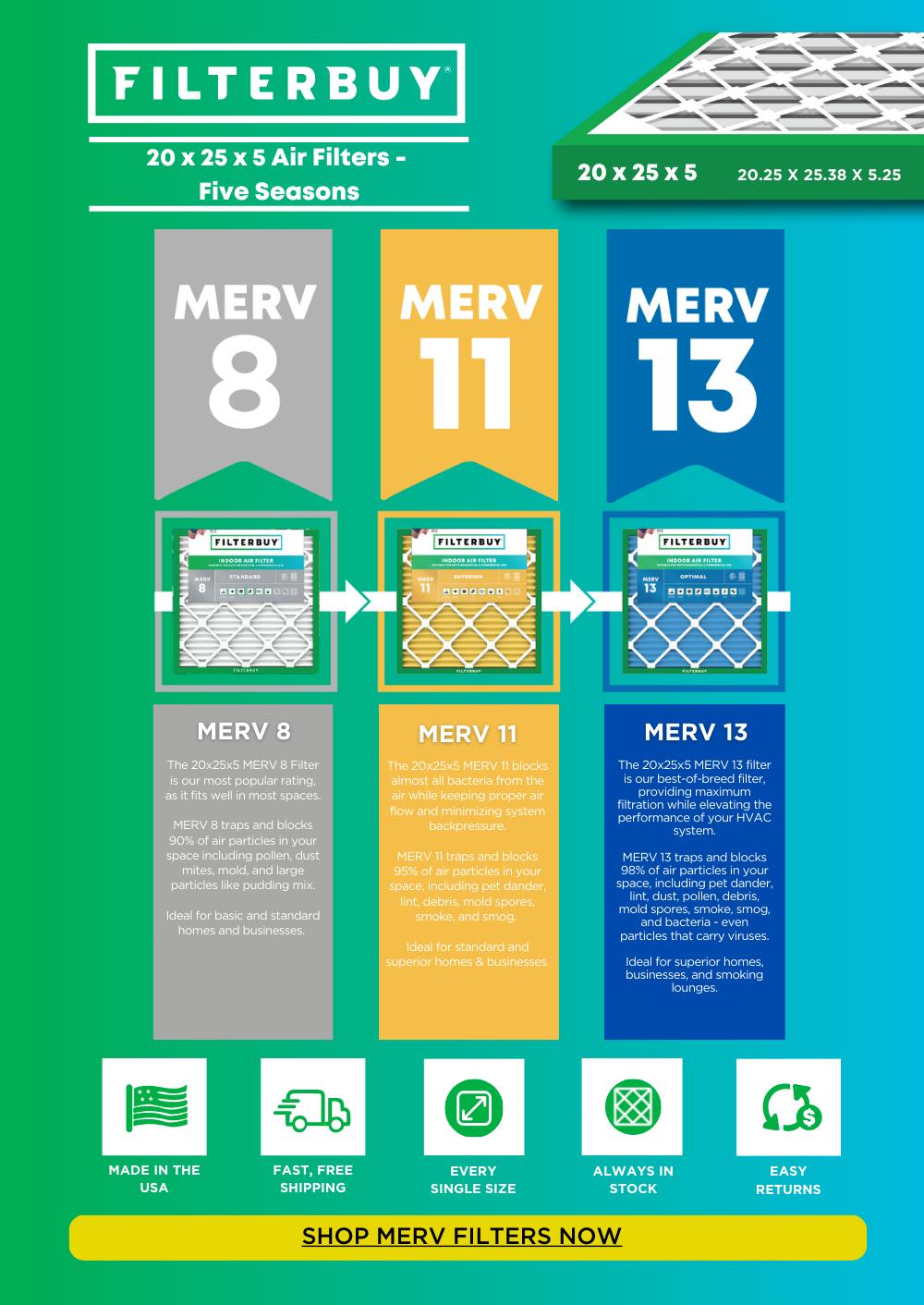
Merv 8
Comparable to:FPR: 4-7
MPR: 600-1000
 Dust & Debris
 Dust Mites & Particles
 Pollen
 Mold
Mold Lint
Lint Dander
Merv 11
Comparable to:FPR: 6-9
MPR: 1200-1550
Dust & DebrisDust Mites & ParticlesPollenMoldLintDander Smoke & Smog
Merv 13
Comparable to:FPR: 10
MPR: 1900-2800
Dust & DebrisDust Mites & ParticlesPollenMoldLintDanderSmoke & Smog Bacteria
MERV 8
Comparable to:FPR: 4-7MPR: 600-1000


MERV 11
Comparable to:FPR: 6-9MPR: 1200-1550

MERV 13
Comparable to:FPR: 10MPR: 1900-2800
What Makes Our Filters Last 90 Days? Quality, From the Inside Out
We build every Filterbuy filter to deliver reliable 90-day performance—thanks to smart design and premium materials that do the heavy lifting. Here's what makes the difference:
Pleated Design
More pleats = more surface area to capture dust and debris, keeping your air cleaner longer.
Electrostatically Charged Media
Pleats are magnetized to attract and trap microscopic particles—like pet dander, pollen, and smoke.
Synthetic Beverage Board Frame
Engineered to resist warping in extreme temperatures and high humidity.

Aluminum Dual Wire Backing
A layer of metal reinforcement keeps pleats evenly spaced and structurally sound—no sagging, even at high airflow.
Made in the USA
Assembled with care. Built to perform. Ships fast, free, and reliably from our U.S. facilities.
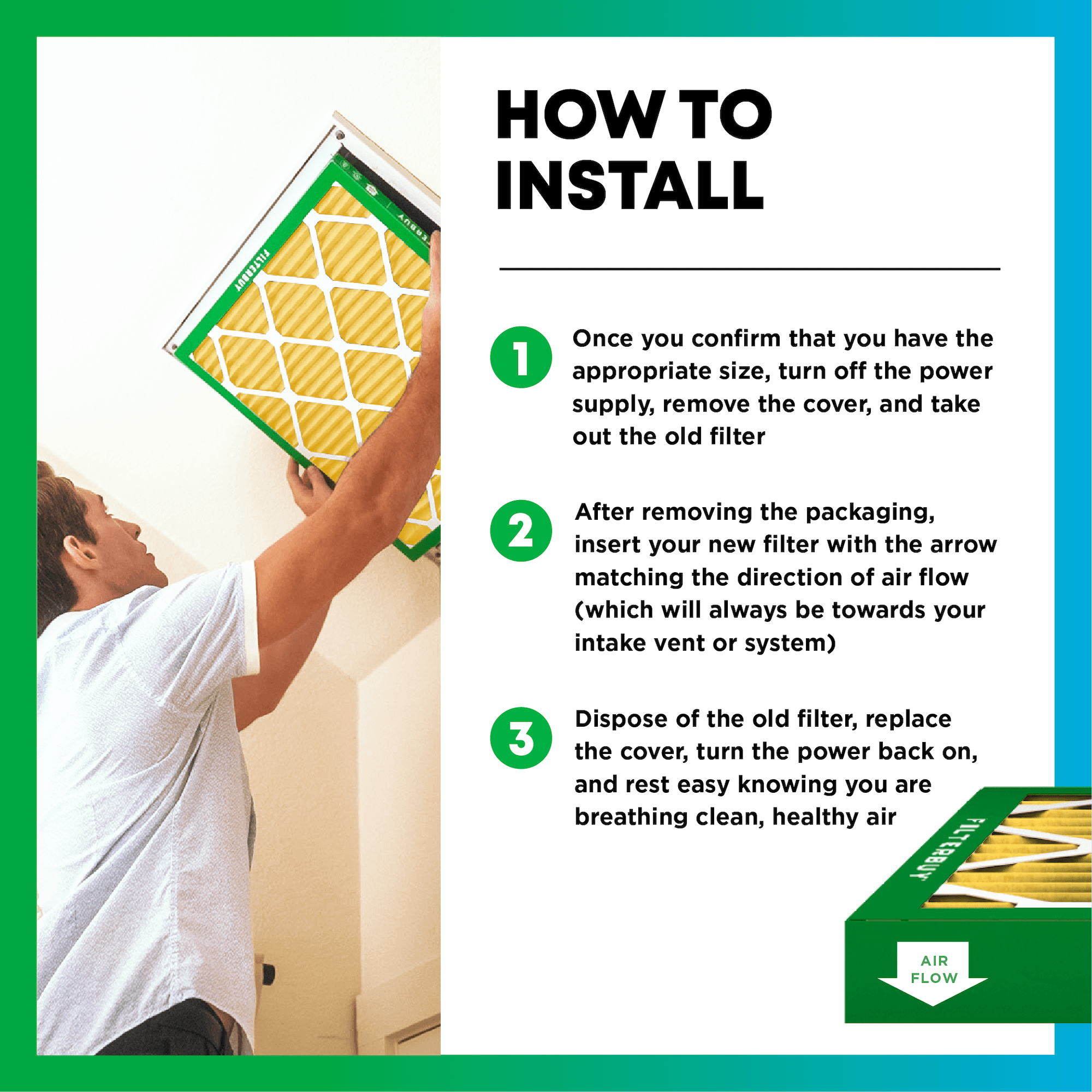
How to Install Your Filter in 4 Simple Steps

Turn Off Your HVAC SystemSafety first.

Remove The Old FilterLook for the airflow arrow and make note of the direction.

Slide In Your New FilterArrow should point toward the system (same direction as before).

Turn Your System Back OnAnd enjoy the fresh, clean air.

Never forget to replace your air filter again.
- Save 5% on every order
- Choose Your Delivery Schedule
- Edit, Skip, or Cancel Anytime.
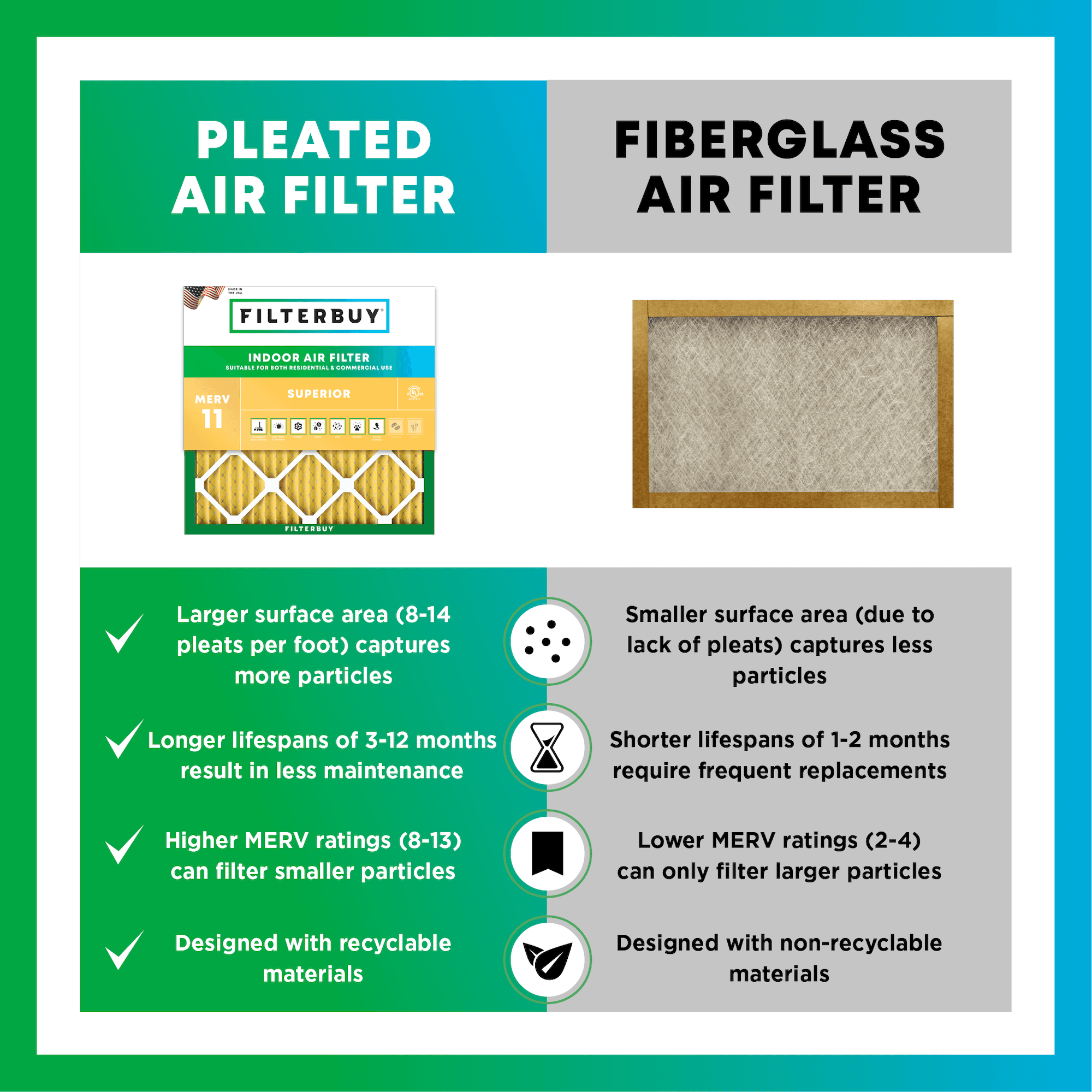
Pleated Filters vs. Fiberglass—What's the Difference?
Not all air filters are created equal. Pleated filters don't just last longer—they actually clean your air better. Here's how they stack up:

Pleated Filters
Efficiency:
High (MERV 8–13) – Traps more particles
Lifespan:
90 days – Long-lasting performance
Air Quality:
Excellent – Cleaner, healthier air
Materials:
Recyclable and durable

Fiberglass Filters
Efficiency:
Low (MERV 4 or less) – Misses small stuff
Lifespan:
30 days or less – Replace often
Air Quality:
Minimal – Basic protection only
Materials:
Thin, flimsy, and not recyclable
Pleated filters are a no-brainer—more protection, less hassle, and better air for your home.
How Often Should You Change Your Filter?
Changing your filter on time keeps your HVAC system running efficiently—and helps protect your lungs from dust, allergens, and airborne irritants. Here's how often to swap it out based on your needs:

Every 90 Days
Standard ScheduleFor most homes without pets or special air quality concerns. Great for general upkeep and energy efficiency.

Every 60 Days
If You Have Pets or AllergiesShedding fur, dander, and allergy triggers can build up fast. Changing your filter every two months helps keep the air fresher and symptoms at bay.

Every 30 Days
If You Have Respiratory Concerns or Live in Smog/Wildfire ZonesFor households affected by smoke, pollution, or respiratory conditions, monthly changes ensure maximum protection.

Want to stay on track? Set a reminder—or skip the stress with auto-delivery so fresh filters show up right when you need them.
Don't Just Take Our Word For It...
Got More Questions? We've Got Answers.
Product Specifications
| Nominal Size | 20X25X5 |
| Actual Size | 20.19 x 25.31 x 5.25 inches |
| Filter Type | Pleated |
| Media | Electrostatically Charged |
| Frame | Beverage Board |
| MERV Ratings Available | 8, 11, 13 |
| Lifespan | Up to 12 Months |
| Origin | Made in USA |
Best Maintenance Tips When Using a MERV 11 20x25x5 Five Seasons Air Filter
Most homeowners treat a 5-inch MERV 11 filter like a set-it-and-forget-it solution — and that's exactly where performance starts to slip. At Filterbuy, we've manufactured deep-pleated filters for over a decade and logged real feedback from millions of customers who've learned this firsthand: a neglected 20x25x5 Five Seasons filter doesn't just lose efficiency, it becomes a liability. Restricted airflow, overworked blower motors, and bypassed particulates are the quiet consequences of skipped maintenance. We built this guide from that manufacturing floor knowledge — not general advice pulled from a spec sheet — so you walk away with the specific inspection habits, timing cues, and system checks that keep your MERV 11 filter working for your home, not against it.
TL;DR Quick Answers
MERV 11 20x25x5 Five Seasons Air Filter
A MERV 11 20x25x5 Five Seasons air filter is a 5-inch deep-pleated HVAC filter designed for extended service life and high-efficiency particle capture in residential and light commercial air systems.
What it captures:
Pet dander and animal hair
Dust mite debris
Mold spores
Pollen and fine particulates
Bacteria and airborne contaminants at the 1-3 micron range
What sets it apart:
5-inch media depth captures significantly more particulates than a standard 1-inch filter
Extended service life of up to 150 days under normal household conditions
Lower static pressure resistance over time compared to thinner high-MERV alternatives
Designed to protect both indoor air quality and HVAC system performance simultaneously
What it requires:
30-day visual inspection — condition drives replacement, not the calendar
Flush frame fit on installation — gaps bypass the media entirely
Correct airflow direction — arrow points toward the blower on every installation
Seasonal adjustment — pets, allergies, and pollen loads shorten the replacement window
Bottom line: The MERV 11 20x25x5 Five Seasons filter delivers extended high-efficiency filtration — but only when paired with consistent maintenance. Inspect monthly. Replace by condition. Protect your family, your air, and your HVAC system year-round.
Top Takeaways
Inspection and replacement are two different habits. Monthly visual checks catch what a replacement schedule alone never will. Let the filter condition — not the calendar — drive your decisions.
Installation day determines whether your MERV 11 rating ever delivers. Check all four frame edges for gaps, confirm the airflow arrow direction, and wipe down the housing interior — every single time.
Your HVAC system warns you before your air quality does. A louder blower motor, reduced vent airflow, and rising energy bills are early static pressure signals. Catch them for 30 days — not after damage is done.
Your household sets your maintenance schedule — not a generic recommendation. Pets, allergies, renovations, and seasonal pollen all accelerate loading. Adjust your inspection frequency before symptoms tell you it's already too late.
The stakes are higher than most homeowners realize. Indoor pollutants run 2 to 5 times higher than outdoor air. Over 100 million Americans have asthma or allergies. A neglected filter can raise energy costs by up to 15 percent. Consistent maintenance is what makes consistent protection possible.
Why Maintenance Matters More With a 5-Inch MERV 11 Filter
A 20x25x5 Five Seasons filter holds significantly more captured particulates than a standard 1-inch filter — that's the point. But that high-capacity design also means problems develop silently and accumulate faster than most homeowners expect. A clogged deep-pleated filter doesn't announce itself. Instead, it quietly increases static pressure across your air handler, forces your blower motor to work harder, and gradually reduces the clean air delivery your family depends on. Staying ahead of that curve is the entire job of a solid maintenance routine.
How Often Should You Inspect Your 20x25x5 Five Seasons Filter?
The Five Seasons label reflects its extended service life — but inspection and replacement are two different things. Our recommendation based on real customer data:
Every 30 days: Do a quick visual check. Pull the filter, hold it to light, and look for a dense gray loading pattern across the media. Uneven loading can indicate a seal or fit issue around the filter frame.
Every 60 days: Check your system's airflow. Weak or inconsistent supply from your vents is one of the earliest signs your filter is restricting flow before a visible loading cue appears.
Every 90–150 days: Plan your replacement window here, adjusting based on household variables like pets, allergies, renovation dust, or high-traffic seasons.
The Four Maintenance Checks That Protect Your MERV 11 Investment
1. Verify the Filter Fit First A 20x25x5 filter that isn't seated flush against its housing edges is bypassing unfiltered air around the media — not through it. Check all four edges for gaps each time you inspect. Even a minor misalignment undermines MERV 11-level filtration entirely.
2. Monitor Static Pressure Symptoms You don't need a manometer to catch a pressure problem early. Listen for your blower motor running louder than usual, feel for reduced airflow at supply registers, or watch for your system cycling more frequently than normal. These are your early warning signals that your filter is approaching its load limit.
3. Keep the Filter Housing Clean Dust and debris that accumulate inside the air filter slot or housing can contaminate a fresh filter immediately upon installation. Before every replacement, wipe down the interior housing walls and inspect the track or frame for buildup. It takes two minutes and protects the full service life of every new filter you install.
4. Track Your Replacement Schedule by Season, Not Just by Calendar Winter heating season and spring allergy season push particulate loads significantly higher in most homes. A filter installed heading into peak pollen months or a heavy heating stretch will load faster than one installed in a mild weather window. Adjust your inspection frequency — not just your calendar reminder — around those seasonal shifts.
When to Replace Versus When to Wait
The Five Seasons design is engineered for longevity, but replacement timing should always be driven by filter condition and household load — not a fixed date on the calendar. Replace immediately if you observe any of the following:
Visible gray or black saturation across the full media face
A noticeable drop in conditioned airflow throughout your home
Increased dust accumulation on surfaces despite regular cleaning
Allergy or respiratory symptoms worsening indoors without an obvious cause
If none of those conditions are present at 90 days, a brief visual inspection is all you need to confirm the filter still has useful service life remaining.
One Maintenance Habit Most Homeowners Skip
Before reinstalling or replacing your 20x25x5 filter, check the directional airflow arrow printed on the filter frame. Installing a deep-pleated filter backwards forces air through the wrong side of the media gradient — reducing filtration efficiency and accelerating pressure buildup. It's a ten-second check that most homeowners skip entirely, and one of the most common performance complaints we hear traced back to after the fact.
"From our manufacturing experience and direct customer feedback, the homes that get the most out of a 20x25x5 Five Seasons filter share one habit: they treat the 30-day visual inspection as non-negotiable, because that single check catches the pressure and fit issues that quietly shorten both filter life and HVAC system life." — Filterbuy Air Quality Team
What Every Home Protector Needs to Know Before Maintaining a MERV 11 20x25x5 Five Seasons Air Filter
Don't take your indoor air for granted. The homeowners who get the most out of a MERV 11 20x25x5 Five Seasons filter aren't just replacing it on schedule — they understand the science, the system, and the stakes behind every maintenance decision. We've pulled together the seven most valuable resources on the subject so you can protect your family, your home, and your HVAC system with confidence.
1. Start Here: The Science Behind What Your MERV 11 Filter Is Actually Doing
U.S. Environmental Protection Agency — What Is a MERV Rating? Before you can maintain a filter well, you need to understand what it's fighting. The EPA's official MERV rating guide explains exactly which particle sizes your filter captures, why the rating system was developed, and what happens to that performance when replacement gets delayed. This is the foundation every informed homeowner should have before making any filtration decision.
URL: https://www.epa.gov/indoor-air-quality-iaq/what-merv-rating
2. The Technical Standard That Proves Your Filter's Performance Claims Are Real
U.S. EPA — Indoor airPlus Filtration Technical Bulletin Here's something most filter buyers never see: the ASHRAE Standard 52.2 testing methodology that sits behind every MERV rating. This EPA technical bulletin explains how higher-efficiency filters like a MERV 11 interact with your system's static pressure limits — and why that balance is just as important as the rating number on the frame. If you're running a 5-inch media filter, this is required reading.
URL: https://www.epa.gov/sites/default/files/2020-06/documents/2019.11_tech_bulletin_filtration.pdf
3. The Hidden Risk Most Homeowners Don't See Until It's Too Late
U.S. Department of Energy — Building America Solution Center: High-MERV Filters After working with millions of customers, we know the maintenance issue that catches most homeowners off guard isn't a dirty filter — it's the pressure buildup that happens when a loaded deep-pleated filter quietly pushes past your system's safe operating threshold. The DOE's Building America resource explains exactly what those thresholds are, what they mean for your blower motor and evaporator coil, and how to stay ahead of the damage before it starts.
URL: https://basc.pnnl.gov/resource-guides/high-merv-filters
4. Why How You Install Your Filter Matters as Much as Which Filter You Choose
U.S. Department of Energy — Proper Installation of HVAC Filters A MERV 11 filter installed with even a minor gap or backwards orientation isn't delivering MERV 11 protection — it's delivering unfiltered air straight into your ductwork. This DOE resource covers correct positioning on the return side of the air handler, the energy and equipment costs of improper seating, and why making your filter easy to access is one of the smartest long-term maintenance moves you can make.
URL: https://bsesc.energy.gov/energy-basics/hvac-proper-installation-filters
5. The Real Reason Clean Air Isn't Just About Comfort — It's About Your Family
National Institute of Environmental Health Sciences — Indoor Air Quality and Health We're obsessed with indoor air quality because the stakes are higher than most people realize. The NIEHS makes that case clearly, documenting the direct connections between indoor pollutant exposure and respiratory health, cognitive performance, and long-term family wellbeing. This is the resource that puts every filter maintenance decision in its proper context: protecting the people you care most about.
URL: https://www.niehs.nih.gov/health/topics/agents/indoor-air
6. What's Actually Floating in Your Home's Air When Filter Maintenance Slips
National Institutes of Health — Health Risks of Indoor Exposure to Fine Particulate Matter Here's what we can't see but need to understand: the fine particulate matter that builds up in your home's air when filtration is compromised. This peer-reviewed NIH resource documents the cardiovascular, pulmonary, and neurological consequences of sustained indoor PM exposure — the invisible threat your MERV 11 20x25x5 filter is specifically built to intercept. It's a compelling reminder of exactly what's at stake between every replacement.
URL: https://www.ncbi.nlm.nih.gov/books/NBK600065/
7. Use Filterbuy's Own Pressure Drop Data to Protect Your HVAC Investment
Filterbuy — MERV Air Filter Pressure Drop Chart: Complete Guide After manufacturing filters across hundreds of sizes and working with HVAC systems of every configuration, we built this resource to answer the question we hear most from serious homeowners: how do I know when my filter is working against my system instead of for it? Our pressure drop guide gives you the specific resistance benchmarks, load-limit indicators, and system compatibility checks that keep your MERV 11 20x25x5 performing at its peak — and your HVAC system running the way it was designed to.
URL: https://Filterbuy.com/resources/air-filter-basics/merv-air-filter-pressure-drop-chart/
The Numbers That Make the Case for Taking MERV 11 20x25x5 Filter Maintenance Seriously
After a decade of manufacturing filters and working with millions of customers, we've found that homeowners who skip maintenance share one thing in common: they've never seen the data behind what their filter is actually up against. These three statistics reframe everything.
The Air Inside Your Home Is Working Against You More Than You Realize
The number that stops most homeowners cold: Americans spend approximately 90 percent of their time indoors, where the concentrations of some pollutants are often 2 to 5 times higher than typical outdoor concentrations. That's straight from the U.S. EPA — not a filter manufacturer.
What this means for your MERV 11 20x25x5 filter:
Indoor air carries pollutant concentrations that outdoor air naturally disperses
Your filter intercepts that load every hour it's in service
When maintenance slips, that load doesn't disappear — it keeps circulating
A neglected filter stops being a solution and starts being part of the problem
Source: U.S. EPA — Indoor Air Quality
URL: https://www.epa.gov/report-environment/indoor-air-quality
The Hidden Cost of a Neglected Filter Shows Up on Your Energy Bill First
One of the most consistent patterns we hear from customers: energy bills climb long before anyone connects the increase to a filter that's past due. The data confirms exactly what we see in practice.
A dirty filter will slow down air flow and make the system work harder to keep you warm or cool — wasting energy. ENERGY STAR confirms timely replacement reduces HVAC energy consumption by 5 to 15 percent.
Why this matters specifically for 20x25x5 Five Seasons owners:
5-inch deep-pleated media holds far more particulates than a standard 1-inch filter
That capacity advantage means pressure buildup develops quietly
Energy consumption rises before visible loading ever appears
Regular inspection catches the drain before it compounds on your utility bill
Source: ENERGY STAR — Heat & Cool Efficiently
URL: https://www.energystar.gov/saveathome/heating-cooling
For Over 100 Million Americans, Indoor Air Quality Is a Direct Health Issue
We hear this regularly from customers: allergy and asthma symptoms worsen indoors and the cause traces back to a filter running past its effective service life. The scale of that vulnerability is significant.
For the more than 100 million people in the United States affected by asthma and/or allergies, air purifiers offer an excellent tool for reducing indoor allergens and pollutants, significantly improving indoor air quality. The Asthma and Allergy Foundation of America identifies consistent HVAC filtration as a frontline defense for this population.
What keeps that MERV 11 protection working for vulnerable family members:
Proper seating — no gaps, no bypass air around the filter frame
Active inspection — monthly visual checks catch loading before symptoms appear
Timely replacement — condition-driven, not just calendar-driven
Seasonal awareness — pollen and heating seasons accelerate load buildup significantly
Source: Asthma and Allergy Foundation of America (AAFA)
URL: https://aafa.org
Final Thoughts: What a Decade of Manufacturing Filters Has Taught Us About the 20x25x5 Five Seasons
Most filter advice stops at "change it every 90 days." We've never found that to be enough.
After manufacturing deep-pleated filters for over a decade and working with millions of homeowners across every climate and HVAC configuration, our perspective is grounded in something most advice columns don't have: real feedback from real homes, at scale. Here's what that experience has consistently shown us.
The Filter Is Only Half the Equation
The MERV 11 20x25x5 Five Seasons is built for extended service life. But performance isn't automatic — it's the outcome of a maintenance relationship between the homeowner and the filter.
The failure points we trace back to most customer air quality complaints are consistent:
Inspections skipped
Gaps left unsealed at the filter frame
Filters installed backwards
Replacements driven by date rather than condition
The filter didn't fail in these cases. The maintenance did.
Capacity Is an Advantage That Requires Attention
One opinion we hold firmly from direct manufacturing experience: "lasts longer" does not mean "needs less attention."
Homeowners migrating from 1-inch filters to a 20x25x5 consistently misread the extended service life as a reason to check in less often. In practice:
More media capacity means more silent accumulation
Pressure builds before loading becomes visible
Energy consumption rises before symptoms appear
Visible filter saturation is often the last signal, not the first
The 30-day visual inspection isn't a formality for this filter. It's the early warning system the filter's design actually requires.
Condition Beats the Calendar. Every Time.
Our recommended maintenance windows — 30-day inspections, 90-to-150-day replacement — are starting points, not fixed rules.
Households that load filters faster than average share common variables:
Pets
Allergy or asthma sufferers
Recent renovations or construction dust
High seasonal pollen exposure
Heavy winter heating stretches
The homeowners who get the longest useful life from a Five Seasons filter learn to read their home's specific load patterns. That shift — from calendar maintenance to condition-based maintenance — is the single most impactful upgrade a homeowner can make without spending a dollar on new equipment.
Our Honest Take
A properly maintained MERV 11 20x25x5 Five Seasons filter is one of the most cost-effective investments a homeowner can make. The filtration efficiency is real. The extended service life is real. The protection against invisible particulate load is real.
But none of that performance is passive. It has to be earned through:
A monthly visual inspection
A clean filter housing on every installation
A proper fit and correct airflow direction on installation day
A replacement decision driven by filter condition — not the calendar
That's not a complicated maintenance program. It's a five-minute habit that protects your family, your home, and your HVAC system every day it's in service.
We've spent over a decade obsessing over that outcome. This guide is what that obsession looks like in practice.
Your Next Steps Toward Better Air and a Longer-Lasting HVAC System
Reading about filter maintenance is step one. Putting it into practice is where the protection actually starts. Here's exactly what to do next — in order of priority.
Step 1: Inspect Your 20x25x5 Filter Right Now
Don't wait for your next scheduled reminder. Pull your filter today and check:
Hold it to light — look for dense gray loading across the media face
Check all four frame edges for gaps against the housing
Confirm the airflow arrow points in the correct direction
Look for uneven loading — a possible sign of a sealing issue
Check the housing interior for dust buildup
If any check raises a concern — act today, not next month.
Step 2: Set a 30-Day Inspection Reminder
Set a recurring 30-day alert on your phone right now. Add this three-step note:
"Pull the filter. Check the frame. Check the airflow."
Takes less than five minutes
Catches pressure and fit issues before they compound
The single most effective maintenance habit a Five Seasons filter owner can build
Step 3: Know Your Home's Load Variables
Your replacement window isn't the same as your neighbor's. Check which load factors apply to your household:
Pets in the home
Family members with allergies or asthma
Recent or ongoing renovation activity
High-pollen region or season
Heavy heating or cooling stretches
The more variables that apply, the shorter your inspection interval should be. Adjust your reminder schedule before symptoms appear — not after.
Step 4: Stock a Replacement Filter Before You Need One
The most common maintenance failure isn't neglect — it's delay. A filter that needs replacing sits in place for extra weeks because no replacement is on hand.
Order your next 20x25x5 before your current filter reaches end of service
Keep one replacement on hand at all times
Pair your filter order with your 30-day inspection schedule
Never get caught without a fresh filter ready to install
Step 5: Order Your MERV 11 20x25x5 Five Seasons Replacement Filter From Filterbuy
When it's time to replace, go straight to the source.
American-made manufacturing with over a decade of deep-pleated filter expertise
Exact sizing for a flush, gap-free fit in your filter housing
Subscription options available so your next filter arrives before your current one runs out
Backed by the manufacturing knowledge behind every recommendation in this guide
One Final Reminder
The best maintenance program is the one you actually follow.
Start with Step 1 today
Set the Step 2 reminder before you leave this page
Everything else builds from those two actions
Your family's air and your HVAC system's lifespan are both on the other side of a five-minute habit. We've spent over a decade making sure the filter is ready. Now it's your turn to make sure the maintenance is too.
FAQ on MERV 11 20x25x5 Five Seasons Air Filter
Q: How often should I replace my MERV 11 20x25x5 Five Seasons air filter?
A: No single number applies to every home. Here's what our experience with millions of customers shows:
Built-in service life: Up to 150 days
Recommended inspection schedule: Every 30 days
Typical replacement window with pets, allergies, or high pollen: 90 days
Typical replacement window without those variables: Up to 150 days
Replace when you observe any of these condition signals:
Dense gray saturation across the media face
Reduced airflow at supply registers
Climbing energy bill without an obvious cause
The filter will always tell you more than the calendar will.
Q: What makes the 20x25x5 Five Seasons filter different from a standard 1-inch MERV 11 filter?
A: After manufacturing filters across more than 600 sizes, the performance gap is consistent and significant.
Advantages of the 5-inch deep-pleated design:
Holds significantly more particulates before reaching load limit
Delivers longer service life than a standard 1-inch filter
Maintains lower static pressure resistance over time
Creates less frequent strain on your blower motor
The tradeoff most homeowners don't anticipate:
Deep-pleated media accumulates loading silently
A 1-inch filter shows saturation quickly and visibly
A Five Seasons filter can be well into its load cycle before any visible sign appears
That's exactly why the 30-day inspection is non-negotiable for this filter specifically
Q: Can a MERV 11 20x25x5 filter damage my HVAC system?
A: A properly installed and maintained MERV 11 20x25x5 will not damage a modern HVAC system. In over a decade of manufacturing, damage occurs when a filter loads silently past capacity without replacement.
The consequences follow a predictable pattern:
Blower motor strain
Reduced airflow at supply registers
Elevated energy consumption
Evaporator coil stress in prolonged cases
Early warning signals to catch at the 30-day inspection:
Louder than normal motor operation
Weaker airflow at supply vents
Rising utility costs without an obvious cause
Every one of those outcomes is preventable. The 30-day inspection is what keeps a MERV 11 20x25x5 working for your system — not against it.
Q: How do I know if my 20x25x5 Five Seasons filter is installed correctly?
A: Incorrect installation is the most underreported air quality problem we encounter in customer feedback — and the most preventable. Four checks confirm a correct installation every time:
Frame fit — all four edges sit flush against the housing with no visible gaps
Airflow direction — the arrow on the frame points toward the blower, away from the return duct
Housing door — closes completely without resistance or bowing
Loading pattern — even distribution across the media face at the 30-day inspection confirms proper seating
What most homeowners miss:
Installation errors don't announce themselves immediately
A backwards filter or minor frame gap can go undetected for weeks
Unfiltered air routes directly into ductwork the entire time
The 30-day inspection is where silent installation failures get caught
Q: What household factors will shorten the service life of my MERV 11 20x25x5 Five Seasons filter?
A: Based on direct feedback across millions of households, these variables shorten replacement windows most consistently:
Pets — dander and hair increase particulate load faster than almost any other single household variable
Allergies or asthma — earlier replacement keeps filtration efficiency at its peak when it matters most
Renovation or construction — drywall dust and debris can load a filter in days rather than weeks
High seasonal pollen — spring pushes airborne particulate concentrations higher than most homeowners anticipate
Heavy heating or cooling seasons — more runtime means more air cycling through the media
What our customer experience consistently shows:
Most homes carry two or three of these variables simultaneously
A home with one pet, one allergy sufferer, and a spring pollen season faces a 60-to-90-day window — not 150 days
The 30-day visual inspection catches that reality before your air quality or energy bill does it for you
Ready to Get the Most Out of Your MERV 11 20x25x5 Five Seasons Air Filter?
Shop Filterbuy's American-made MERV 11 20x25x5 Five Seasons air filter today and put the maintenance knowledge from this guide to work — starting with a filter you can trust to deliver on its rating from installation day one. Order now and take the first step toward cleaner air, a longer-lasting HVAC system, and the confidence that comes from knowing your family's air is protected.