
Tulsa Real-Time AQI Tracker


Get Alerts For Unhealthy AQI In Your Area
When air quality in your area reaches unhealthy levels, we'll send you a quick alert, along with expert tips on how to reduce your exposure.
What's Actually In Tulsa Air Today?
What High AQI Means for Your Lungs in Tulsa
How to Read AQI
The Air Quality Index (AQI) measures how polluted the air is and how it may affect your health.
0–50 (Good): Air quality is satisfactory.
51–100 (Moderate): Acceptable, but some pollutants may pose minor concerns.
101–150 (Unhealthy for Sensitive Groups)
151–200 (Unhealthy)
201–300 (Very Unhealthy)
301+ (Hazardous)
Moderate
Still okay for most, but if you have asthma or allergies, take it easy and avoid long outdoor workouts.
Shop MERV 11 filters→What's the Right Filter for Your AQI Level?

Live Air Quality Index AQI Map Tulsa Oklahoma Today | Filterbuy.com
Checking Tulsa's air quality today? Smart move — but what your AQI reading won't tell you is what's happening inside your home. After building air filters in the U.S. for over a decade and shipping millions to families nationwide, we've learned something most people don't realize: the same ozone spikes, wildfire haze, and seasonal allergens that drive up Tulsa's outdoor AQI are silently working their way into your living spaces through your HVAC system.
Use our live AQI map to track real-time pollution levels across the Tulsa metro, then take it a step further. At Filterbuy, we've tested and engineered filters across MERV 8, 11, and 13 ratings specifically to address the pollutants that matter most — from pet dander and dust to the fine particulate matter that outdoor air quality alerts are actually warning you about. Because monitoring the air outside is only half the equation. Protecting the air inside is where we come in.
TL;DR Quick Answers
What is the live air quality index (AQI) map for Tulsa, Oklahoma today?
The live AQI map for Tulsa displays real-time air pollution levels across the metro area using the EPA's 0-to-500 scale. Today's reading reflects five key pollutants: ground-level ozone, PM2.5, PM10, carbon monoxide, and nitrogen dioxide. The highest individual pollutant score becomes Tulsa's overall AQI number.
What the colors mean at a glance:
Green (0–50) — safe for all outdoor activities
Yellow (51–100) — moderate; sensitive individuals should take note
Orange (101–150) — unhealthy for sensitive groups
Red (151–200) — unhealthy for everyone
After working with thousands of Oklahoma homeowners, here's what we'd add that most AQI pages won't tell you: what registers on that map outside is already cycling through your HVAC system inside. Even moderate yellow readings can degrade your indoor air — especially with an overdue or low-rated filter. Check the map above for Tulsa's current conditions, then make sure your home's filtration is matched to what's in the air today.
Top 5 Takeaways
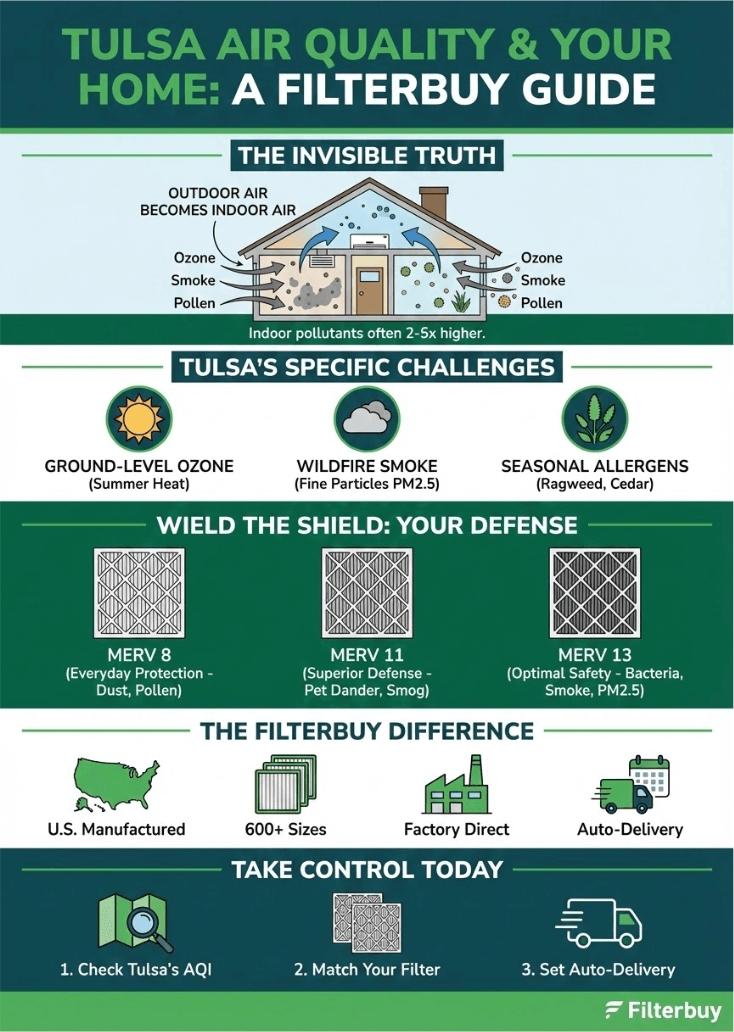
Outdoor air becomes indoor air. Every HVAC cycle pulls Tulsa's pollutants inside. The EPA confirms indoor levels run 2–5x higher than outside.
Tulsa's air is getting worse. The 2025 Lung Association report ranked Tulsa 19th worst nationally for ozone — up from 31st the year before.
Your filter is your first defense. After a decade of shipping filters to Oklahoma homes, we've seen it firsthand — upgrading to MERV 11 or 13 reduces allergy symptoms, dust, and energy costs.
Checking the map isn't enough. Match your filter to the season: ozone in summer, smoke in spring, allergens year-round. That's what actually protects your family.
Stay ahead, not behind. A dirty filter on a bad AQI day means pollutants are already inside. Auto-delivery puts a fresh filter at your door before you need it.
What Is the Air Quality Index (AQI) and How Is It Measured?
The Air Quality Index is a standardized scale developed by the EPA that translates complex air pollution data into a simple number ranging from 0 to 500. The lower the number, the cleaner the air. It tracks five major pollutants: ground-level ozone, particulate matter (PM2.5 and PM10), carbon monoxide, sulfur dioxide, and nitrogen dioxide. Each pollutant is measured independently, and the highest individual reading becomes the overall AQI value reported for your area. For Tulsa residents, this number is your quickest way to gauge whether outdoor conditions are safe for everyday activities — or whether it's a good day to keep the windows closed and let your HVAC system do the heavy lifting.
Understanding AQI Levels: What Tulsa's Numbers Mean for You
AQI readings are broken into six color-coded categories:
Green (0–50) means air quality is satisfactory with little to no risk.
Yellow (51–100) is moderate — generally acceptable, though unusually sensitive individuals may want to limit prolonged outdoor exertion.
Orange (101–150) is unhealthy for sensitive groups, including people with asthma, allergies, or respiratory conditions.
Red (151–200) signals unhealthy conditions for everyone, while purple (201–300) and maroon (301–500) represent very unhealthy to hazardous levels where all outdoor activity should be limited.
What Affects Air Quality in Tulsa, Oklahoma?
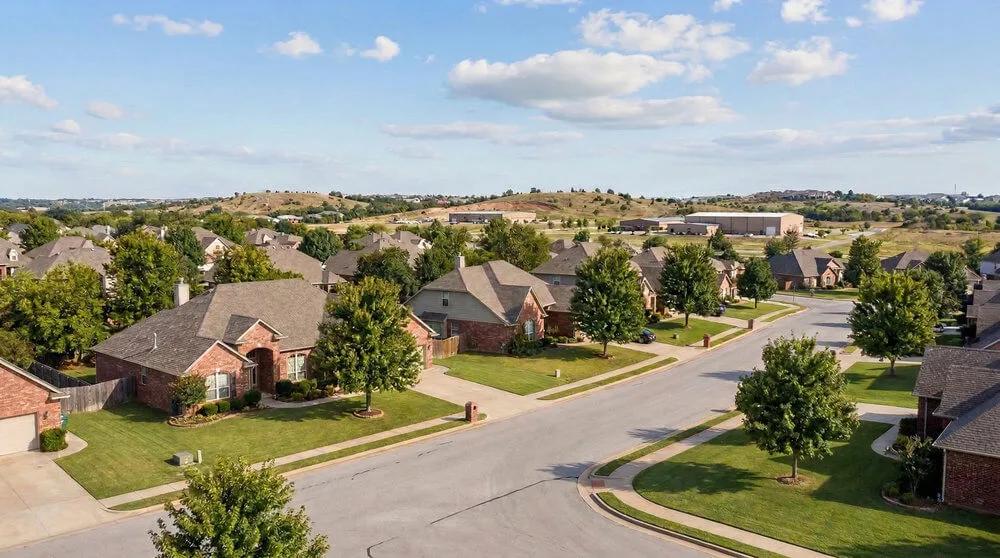
Tulsa's air quality is shaped by a mix of local and regional factors. Seasonal ozone buildup is one of the biggest concerns, particularly during the warmer months when heat and sunlight react with vehicle emissions and industrial output to create ground-level ozone. Tulsa County has historically faced challenges meeting federal ozone standards, making summer AQI spikes a recurring issue for residents.
Wildfire smoke is another growing contributor. Even when fires burn hundreds of miles away in Texas, Kansas, or the western states, prevailing winds can carry fine particulate matter into the Tulsa metro, pushing PM2.5 levels into unhealthy ranges with little warning.
How Outdoor Air Quality in Tulsa Impacts Your Indoor Air
Here's where most AQI pages stop — and where Filterbuy picks up. Outdoor pollutants don't stay outside. Every time your HVAC system cycles, it pulls air from your surroundings and circulates it throughout your home. Without the right filter in place, fine particulate matter, pollen, and ozone byproducts pass through your ductwork and settle into the air your family breathes all day.
We've seen this firsthand through feedback from thousands of Oklahoma customers over the years. Homeowners who upgrade from a basic fiberglass filter to a higher-rated MERV option often notice a real difference — fewer allergy flare-ups, less dust accumulation on surfaces, and improved HVAC efficiency. It's a small change with an outsized impact, especially during Tulsa's peak ozone and allergy seasons.
Choosing the Right Air Filter Based on Tulsa's Air Quality
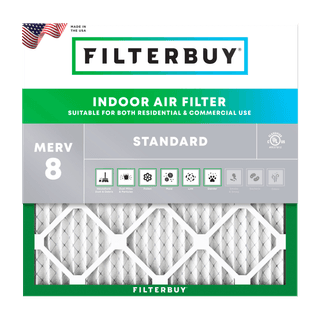
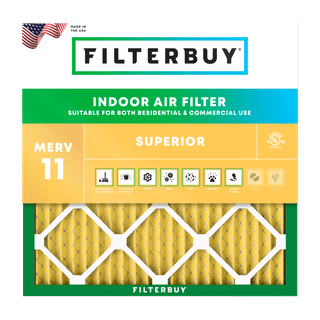
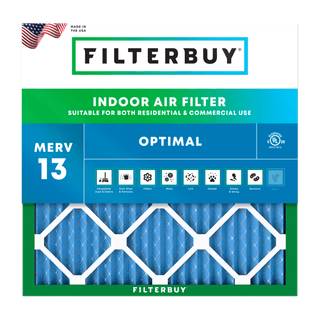
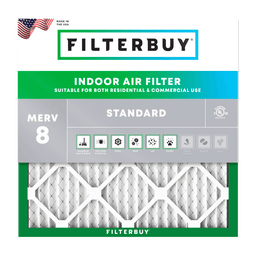
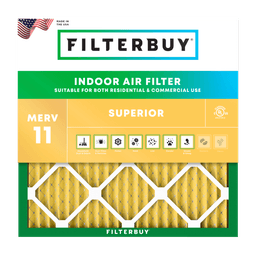
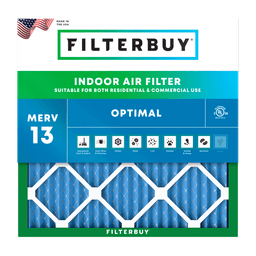
Not every AQI day calls for the same level of filtration, which is why we manufacture filters across multiple MERV ratings to match your specific needs. A MERV 8 filter captures common household particles like dust, pollen, and dust mites — a solid baseline for days when Tulsa's AQI is in the green or low-yellow range. MERV 11 steps up to trap finer particles, including pet dander, mold spores, and smog, making it a strong choice for homes with pets or allergy sufferers. MERV 13 is our highest-rated residential option, engineered to capture bacteria, tobacco smoke, and the fine particulate matter (PM2.5) that drives most unhealthy AQI readings.
For Tulsa homeowners dealing with seasonal ozone and wildfire smoke events, we typically recommend MERV 11 or MERV 13 as the best year-round protection. And because we offer over 600 sizes — plus custom filters for non-standard systems — finding the right fit for your home is straightforward.
Take Control of Your Indoor Air Quality Today
Monitoring Tulsa's outdoor air quality with our live AQI map is a smart first step. But the real value comes from acting on what you see. At Filterbuy, we make it easy to protect your home from the pollutants that AQI alerts warn you about — with American-made filters shipped factory-direct to your door, no middlemen and no markups. Set up auto-delivery so your replacement filter arrives right when you need it, and never worry about falling behind on filter changes during Tulsa's worst air quality stretches.
"After shipping millions of filters to homes across Oklahoma, one thing we hear consistently from Tulsa customers is that they didn't realize how much outdoor air quality was affecting the air inside their home — until they upgraded their filter and felt the difference firsthand."
— Filterbuy Air Quality Team
7 Air Quality Resources Every Tulsa Homeowner Should Bookmark
Knowing what's in the air outside is step one. Knowing what to do about it — especially inside your home — is where it really counts. We've spent over a decade helping families across Oklahoma breathe better, and these are the tools we recommend for staying ahead of Tulsa's air quality challenges.
1. AirNow.gov Oklahoma AQI Map — Your Go-To for Real-Time Tulsa Air Quality
The EPA's official platform for live AQI readings, next-day forecasts, and pollutant breakdowns across Tulsa and all of Oklahoma. This is the same data behind every air quality alert you see on local news.
URL: https://www.airnow.gov/state/?name=oklahoma
2. AirNow Fire and Smoke Map — See Wildfire Smoke Before It Reaches Tulsa
This EPA and U.S. Forest Service tool tracks PM2.5 from active wildfires in near real-time. When smoke from the Flint Hills or western states drifts into the Tulsa metro, this map gives you advance notice to close windows and let your HVAC system and filter handle the heavy lifting.
3. Oklahoma DEQ Air Quality Forecasts — State-Level Monitoring and Ozone Alerts
Oklahoma's own air quality division runs the monitoring network that matters most for local conditions. You'll find ozone alerts, compliance data, and seasonal burn advisories that national platforms tend to miss.
URL: https://oklahoma.gov/deq/divisions/air-quality/ambient-monitoring/current-air-quality-forecasts.html
4. IQAir Tulsa Dashboard — Compare Today's Reading Against Long-Term Trends
IQAir pairs live AQI data with historical averages and year-over-year comparisons. It's the best way to tell whether today's reading is a one-off or part of a pattern — the kind of context that helps you decide when it's time to step up your filtration.
URL: https://www.iqair.com/us/usa/oklahoma/tulsa
5. American Lung Association State of the Air — Tulsa's Annual Air Quality Report Card
The 2025 report ranked the Tulsa metro 19th worst in the nation for ozone pollution. This is the long-term view — grading Tulsa County on three years of ozone and particle pollution data so you can see the bigger picture beyond any single day's reading.
URL: https://www.lung.org/research/sota/city-rankings/states/oklahoma/tulsa
6. EPA AQI Basics Guide — What the Colors and Numbers Actually Mean
Green, yellow, orange, red — most people see the colors but aren't sure what to do differently at each level. This EPA guide breaks it all down in plain language, with specific activity recommendations for sensitive groups.
URL: https://www.airnow.gov/aqi/aqi-basics/
7. TulsaAirQuality.com — Hourly Local AQI Updates and Ozone Alert Program
The most hyper-local tool on this list. It delivers hourly ozone and particle readings for the Tulsa area and powers the Ozone Alert! Program, which coordinates community-wide emission reductions on high-risk days. Great for planning outdoor activities when conditions shift fast.
URL: https://tulsaairquality.com/
What the Data Tells Us — And What We've Seen Firsthand in Oklahoma Homes
After more than a decade of building air filters and shipping them to families across Oklahoma, the data confirms what our customers in Tulsa have been telling us for years.
Your Indoor Air Is Likely Worse Than the Air Outside
The EPA reports that indoor pollutant levels are often 2 to 5 times higher than outdoor concentrations — and Americans spend 90% of their time indoors. We heard this from customers long before we saw the research. Homeowners would close windows on bad AQI days and still experience allergy symptoms and dust buildup. That feedback drove us to expand our MERV 11 and MERV 13 lines for finer particle capture.
The takeaway: Your outdoor AQI reading is only half the picture. The air in your vents deserves equal attention.
Source: U.S. Environmental Protection Agency — Indoor Air Quality
Tulsa's Ozone Ranking Is Getting Worse
The American Lung Association's 2025 report ranked Tulsa 19th most polluted in the nation for ozone, down from 31st the prior year. We've felt this shift through our order patterns: filter purchases from northeast Oklahoma zip codes spike measurably during peak ozone months.
The takeaway: Ozone is invisible, but your HVAC pulls it indoors every cycle. A higher-rated MERV filter captures the fine particulate matter that accompanies elevated ozone days.
Source: American Lung Association — 2025 State of the Air: Ozone Pollution Trends
46% of Americans Now Breathe Unhealthy Air — Tulsa Included
That's 156 million people, and Tulsa families are among them. We hear it in every conversation — parents managing asthma flare-ups, homeowners battling persistent dust, customers who didn't think filters mattered until they saw a used MERV 13.
The takeaway: The data says there's a problem. We built Filterbuy — 600+ sizes, custom options, auto-delivery — to be the solution you don't have to overthink.
Source: American Lung Association — 2025 State of the Air: Tulsa Press Release
Final Thoughts and Opinion
Here's what we've learned after more than a decade of manufacturing air filters in the U.S. and shipping millions to homes just like yours: most people treat outdoor air quality and indoor air quality as two separate problems. They're not.
Every AQI alert you see for Tulsa — ozone spikes in July, wildfire smoke from the west, ragweed surges in the fall — is also a preview of what's about to cycle through your HVAC system and into your family's lungs. The EPA data backs this up. The Lung Association rankings confirm it. And thousands of conversations with Oklahoma homeowners make it impossible to ignore.
Our honest take? The air filter in your HVAC system is the single most undervalued tool in your home's health. It's not glamorous. It doesn't come with an app. But it's the one thing standing between every outdoor pollutant Tulsa produces and the air your family breathes 90% of the day.
We've watched customers shift from never thinking about their filter to proactively swapping in an MERV 13 before ozone season hits. That shift is exactly why we built Filterbuy the way we did:
600+ sizes in stock — so your exact fit is always available
Custom filters — for systems that don't match a standard size
Auto-delivery — so you're never caught off guard when conditions change
Factory-direct from our U.S. facilities — no middlemen, no markups
Tulsa's air quality challenges aren't going away. But the gap between knowing what's in your outdoor air and doing something about your indoor air — that's a gap we close every single day.
Check the map. Understand the numbers. And when you're ready, we'll make sure the right filter is already on its way.
Next Steps: Take Control of Your Indoor Air Quality Today
You've seen the data. You know where Tulsa stands. Here's how to turn that knowledge into cleaner air inside your home.
1. Check Tulsa's AQI Right Now.
Use the live map at the top of this page. Anything orange or above means your HVAC filter is working overtime.
2. Check Your Filter.
Can't remember when you last changed it? That's the most common answer we hear from Oklahoma homeowners — and it usually means you're overdue. A dirty filter lets pollutants through and drives up energy costs.
3. Match Your Filter to Tulsa's Challenges
MERV 8 — everyday protection: dust, pollen, dust mites
MERV 11 — pet dander, mold spores, smog; ideal for allergy sufferers
MERV 13 — fine particulate matter, bacteria, smoke; best for ozone season and wildfires
4. Know Your Size.
The wrong size means gaps that let pollutants bypass the filter entirely. Check the dimensions on your current filter or measure your return vent. We carry 600+ standard sizes plus custom options.
5. Set Up Auto-Delivery
Tulsa's air quality shifts with every season. Auto-delivery puts your replacement filter at your door before you need to think about it.
6. Bookmark These Tools
AirNow.gov — real-time EPA data for Oklahoma
Fire and Smoke Map — wildfire smoke tracking
TulsaAirQuality.com — hourly local updates
7. Start Breathing Better Today.
Find your size. Pick your MERV rating. We'll handle the rest — American-made, factory-direct, shipped free.
Frequently Asked Questions
Q: What is the Air Quality Index (AQI) and how do I read today's AQI for Tulsa?
A: The AQI is the EPA's 0-to-500 scale for measuring air pollution. Lower means cleaner. Six color-coded levels:
Green (0–50) — good; minimal risk
Yellow (51–100) — moderate; sensitive individuals should monitor
Orange (101–150) — unhealthy for sensitive groups
Red (151–200) — unhealthy for everyone
Purple (201–300) — very unhealthy
Maroon (301–500) — hazardous
Check Tulsa's current reading on our live map above or at AirNow.gov. One thing we've learned from years of working with Tulsa homeowners: don't wait for orange.
Q: Why does Tulsa have poor air quality compared to other U.S. cities?
A: Three factors converge in Tulsa more than in most cities:
Ground-level ozone — summer heat reacts with vehicle and industrial emissions, pushing the Tulsa metro to 19th worst nationally in the 2025 Lung Association report (up from 31st the prior year)
Wildfire and prescribed burn smoke — drifts in from the Flint Hills, Texas, and western states, spiking PM2.5 with little warning
Aggressive seasonal allergens — ragweed, cedar, and Bermuda grass hit northeast Oklahoma hard from spring through fall
What makes Tulsa unique in our experience is that these triggers overlap. Elevated ozone and high pollen on the same day compound the strain on both your lungs and your HVAC system. We've tracked this through our own order data — summer filter purchases from Oklahoma zip codes climb steadily year over year.
Q: How does outdoor air quality in Tulsa affect the air inside my home?
A: More than most people realize. Here's how it works:
Your HVAC system pulls outdoor air in with every cycle
Pollutants ride along — ozone byproducts, smoke particles, pollen
They accumulate indoors, where the EPA says concentrations often run 2–5x higher than outside
The insight we've gained working with thousands of Oklahoma families goes further: it's not just what comes in — it's what your filter lets pass through. Customers have sent us photos of used MERV 13 filters after a single month during wildfire season. The visible buildup is startling. That particulate was headed for their living rooms. A basic fiberglass filter wouldn't have caught it.
Q: What MERV-rated air filter should I use based on Tulsa's air quality?
A: This is our most-asked question from Oklahoma customers. After a decade of feedback from Tulsa homes, here's what we recommend:
MERV 8 — dust, pollen, dust mites; sufficient when AQI stays green
MERV 11 — pet dander, mold spores, smog; where most Tulsa families should start year-round
MERV 13 — PM2.5, bacteria, smoke; best for ozone season and wildfire events
Our recommended approach for Tulsa: Run MERV 11 as your year-round baseline. Step up to MERV 13 from late spring through early fall when ozone and fire risk peak. Maximum protection without overthinking it.
Q: How often should I change my air filter if I live in Tulsa?
A: Standard guidance says every 60–90 days for a 1-inch filter. Tulsa rarely qualifies as standard. Here's what we recommend instead:
Green AQI stretches — every 60–90 days
Ozone season, wildfire smoke, or heavy pollen — every 30–45 days
Quick check method — pull the filter out monthly; if it's visibly gray or matted, it's already past peak performance
We've seen filters from Tulsa homes that looked like three months of use after just 30 days during a bad stretch. That's a dirty filter letting pollutants through while your HVAC burns extra energy.
The simplest fix: Set up auto-delivery on your schedule. We ship your replacement before you need it — so Tulsa's worst air quality days never catch you unprotected.
Now That You Know What's in Tulsa's Air Today, Make Sure Your Home Is Ready for It
The best size for your neighbors may not be the ideal fit for your HVAC. Find your size, choose the MERV rating that matches Tulsa's air quality challenges, and let Filterbuy deliver American-made protection straight to your door.