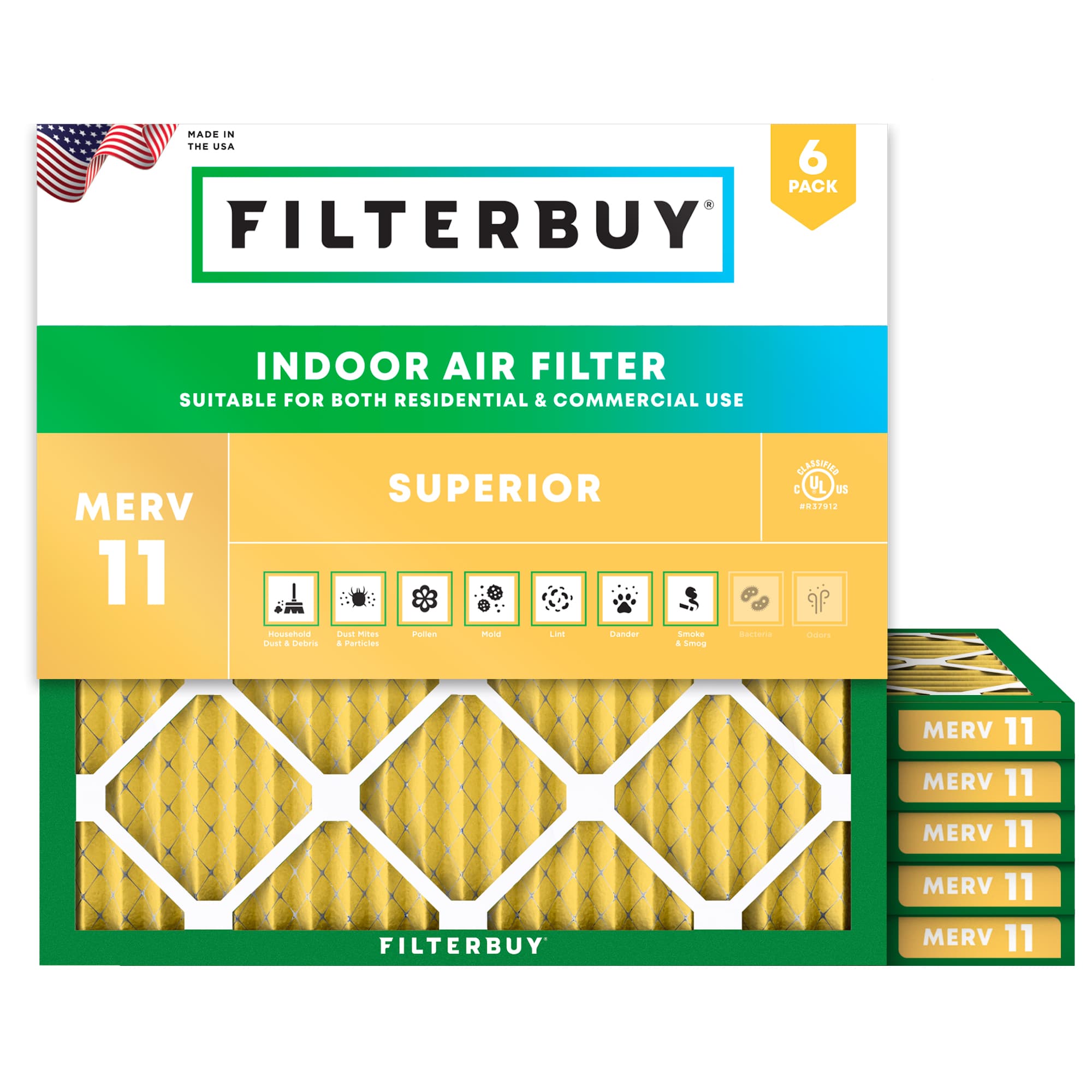
Actual Size: 29.50x29.50x0.75"
 Free Delivery
  Factory-Direct Low Prices, Made in the USA
 Hassle-Free Returns & Free Exchanges
RESIDENTIAL AND/OR COMMERCIAL USE
Change Every 3 Months
Actual Size: 29.50x29.50x0.75"
Free Delivery Factory-Direct Low Prices, Made in the USAHassle-Free Returns & Free ExchangesRESIDENTIAL AND/OR COMMERCIAL USE
Change Every 3 Months
Actual Size: 29.50x29.50x0.75"
Free Delivery Factory-Direct Low Prices, Made in the USAHassle-Free Returns & Free ExchangesRESIDENTIAL AND/OR COMMERCIAL USE
Change Every 3 Months
At Filterbuy, we don't cut corners—we craft high-quality air filters right here in the USA and ship them to your doorstep for free. No delays, no gimmicks—just clean air, made easy. With thousands of five-star reviews and filters built for real life & every HVAC system, it's no wonder why over 4 million families trust Filterbuy.

Proudly Made In The USA

Fast, Free Shipping on Every Order

Premium Materials That Go The Distance

85,000+ 5-Star Reviews From Happy Customers

Save Up to 70% Per Filter with Packs


Measure length × width × depth with a tape measure to find the actual size.

Round up each dimension to the nearest whole number to get the nominal size. Example: 29.50x29.50x0.75" in → 30x30x1 nominal.

Search by nominal size on our site for the best fit.


If the filter you buy doesn't fit, we'll send you a better size.
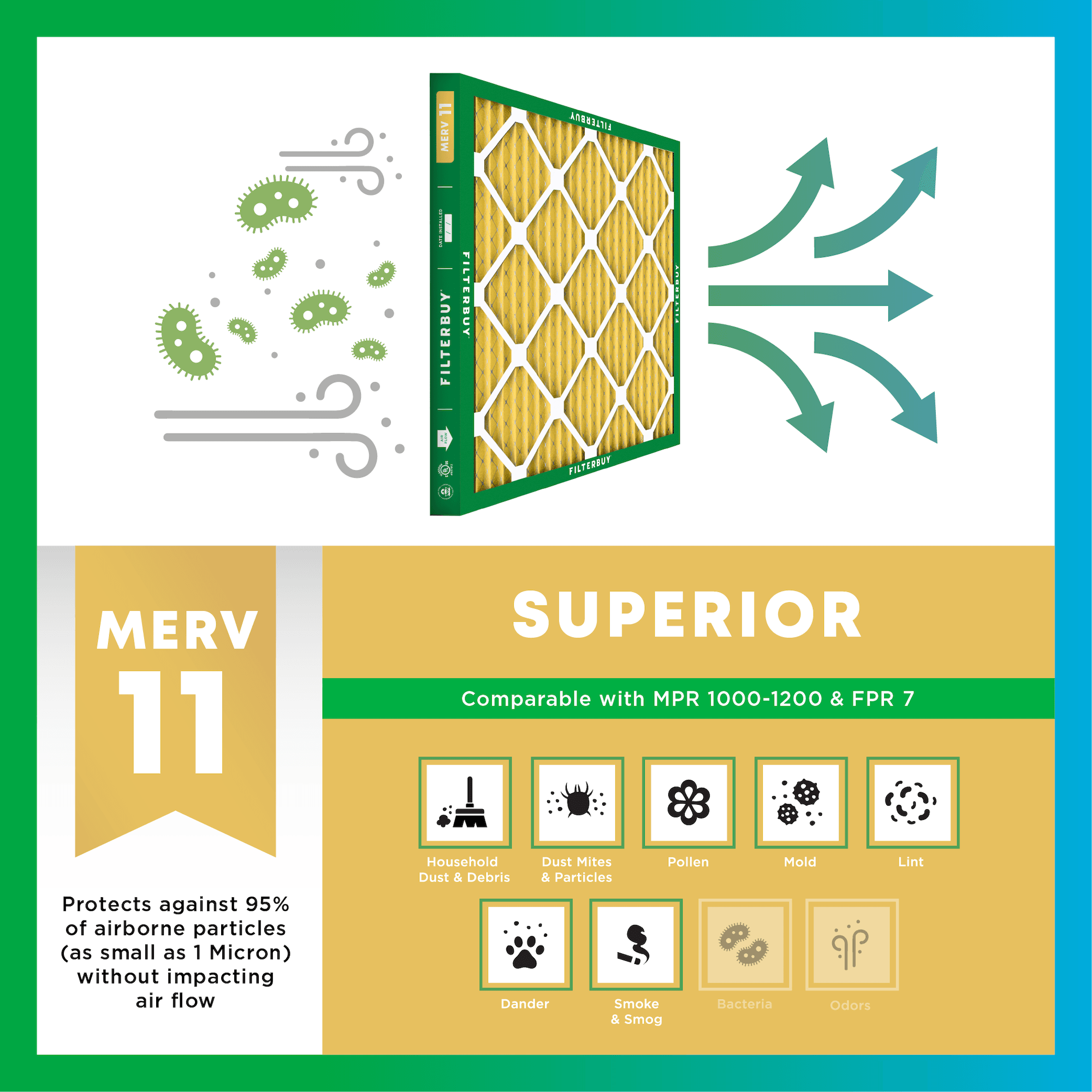
MERV stands for Minimum Efficiency Reporting Value—but don't let the technical name fool you. It's just a way to rate how well an air filter traps stuff like dust, pollen, pet dander, and smoke. The higher the MERV number, the more particles it catches—and the cleaner your air will be.

Comparable to:FPR: 4-7
MPR: 600-1000
 Dust & Debris
 Dust Mites & Particles
 Pollen
 Mold
Mold Lint
Lint Dander
Comparable to:FPR: 6-9
MPR: 1200-1550
Dust & DebrisDust Mites & ParticlesPollenMoldLintDander Smoke & Smog
Comparable to:FPR: 10
MPR: 1900-2800
Dust & DebrisDust Mites & ParticlesPollenMoldLintDanderSmoke & Smog Bacteria


We build every Filterbuy filter to deliver reliable 90-day performance—thanks to smart design and premium materials that do the heavy lifting. Here's what makes the difference:
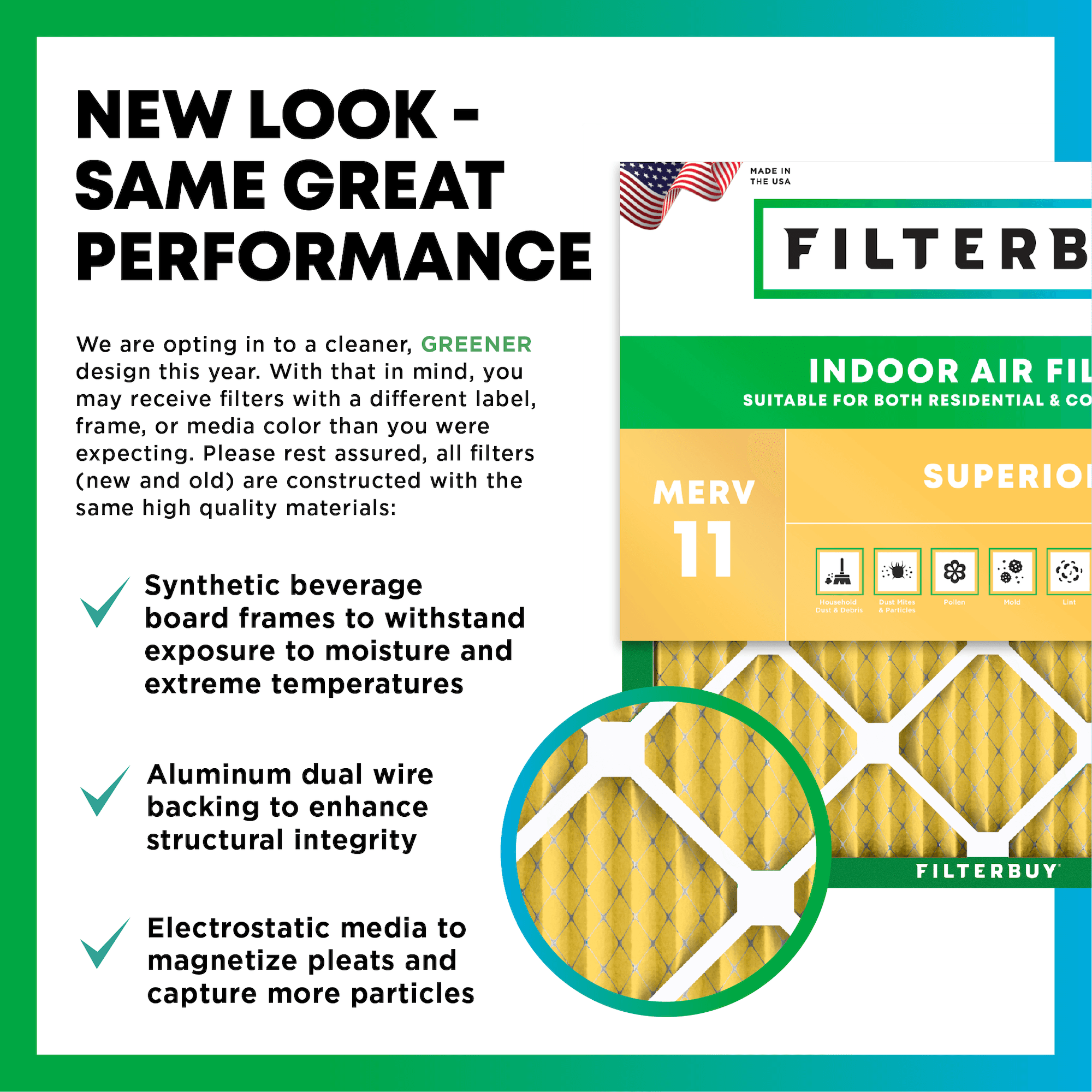
More pleats = more surface area to capture dust and debris, keeping your air cleaner longer.
Pleats are magnetized to attract and trap microscopic particles—like pet dander, pollen, and smoke.
Engineered to resist warping in extreme temperatures and high humidity.

A layer of metal reinforcement keeps pleats evenly spaced and structurally sound—no sagging, even at high airflow.
Assembled with care. Built to perform. Ships fast, free, and reliably from our U.S. facilities.

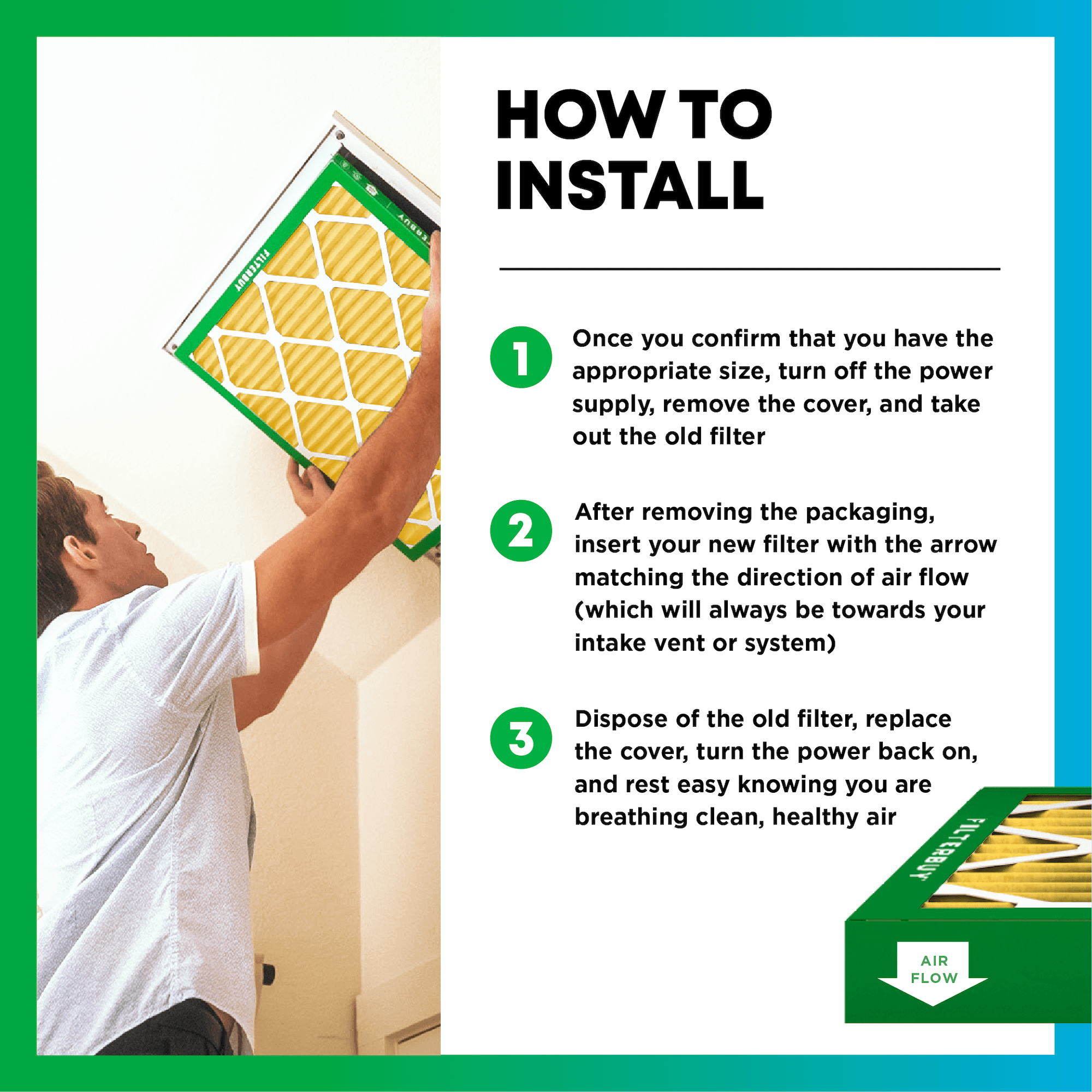
Turn Off Your HVAC SystemSafety first.

Remove The Old FilterLook for the airflow arrow and make note of the direction.

Slide In Your New FilterArrow should point toward the system (same direction as before).

Turn Your System Back OnAnd enjoy the fresh, clean air.

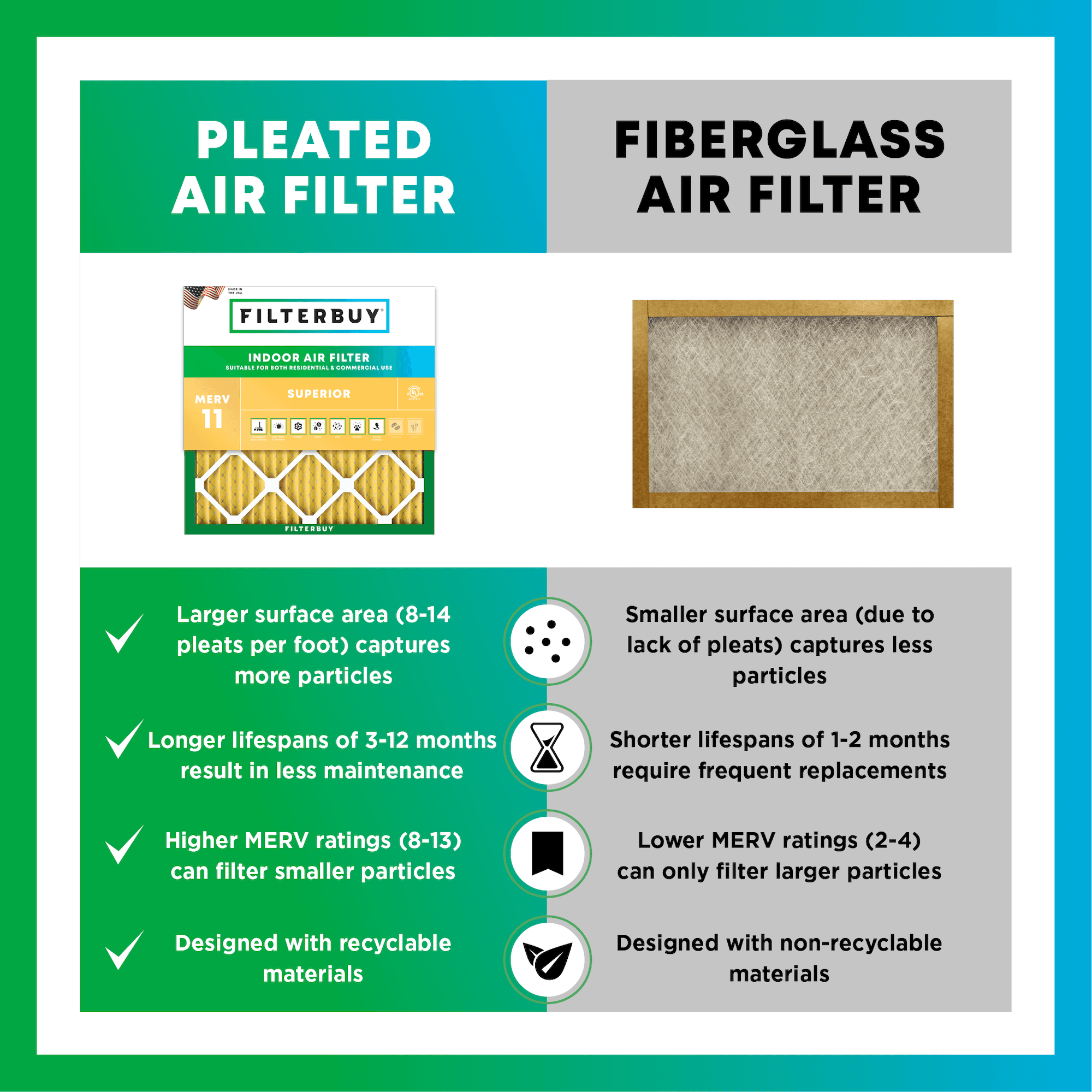
Not all air filters are created equal. Pleated filters don't just last longer—they actually clean your air better. Here's how they stack up:

Efficiency:
High (MERV 8–13) – Traps more particles
Lifespan:
90 days – Long-lasting performance
Air Quality:
Excellent – Cleaner, healthier air
Materials:
Recyclable and durable

Efficiency:
Low (MERV 4 or less) – Misses small stuff
Lifespan:
30 days or less – Replace often
Air Quality:
Minimal – Basic protection only
Materials:
Thin, flimsy, and not recyclable
Pleated filters are a no-brainer—more protection, less hassle, and better air for your home.
Changing your filter on time keeps your HVAC system running efficiently—and helps protect your lungs from dust, allergens, and airborne irritants. Here's how often to swap it out based on your needs:

For most homes without pets or special air quality concerns. Great for general upkeep and energy efficiency.

Shedding fur, dander, and allergy triggers can build up fast. Changing your filter every two months helps keep the air fresher and symptoms at bay.

For households affected by smoke, pollution, or respiratory conditions, monthly changes ensure maximum protection.

| Nominal Size | 30 x 30 x 1 inches |
| Actual Size | 29.50 x 29.50 x 0.75" inches |
| Filter Type | Pleated |
| Media | Electrostatically Charged |
| Frame | Beverage Board |
| MERV Ratings Available | 8, 11, 13 |
| Lifespan | Up to 90 Days |
| Origin | Made in USA |
Your HVAC filter is protecting your family's air right now — or it isn't. That's not an exaggeration. After manufacturing air filters for over a decade and working with more than two million households, we've seen what a wrong filter choice actually costs: higher energy bills, shorter equipment life, and air that's moving through your home without being cleaned.
The 30x30x1 MERV 11 gets the job done for most families. It traps up to 95% of airborne particles — pet dander, pollen, mold spores, fine dust — without choking off the airflow your furnace or air conditioner needs to run efficiently. It lasts three times longer than a basic fiberglass filter. And it works in furnaces, air conditioners, heat pumps, and whole-home HVAC systems alike.
Picking the right filter is half the battle. The other half is knowing your actual filter size (hint: 30x30x1 and 29.5 x 29.5 x 0.75 are not the same thing), replacing on a schedule that fits your household, and not upgrading to a MERV rating your system wasn't built for. We've seen all three mistakes. This page covers all of them.
Direct answers for search engines, voice queries, and featured snippets. Each one stands alone.
What size is a 30x30x1 furnace filter? Nominal size is 30 x 30 x 1 inches. Actual size is 29.5 x 29.5 x 0.75 inches. Always verify actual dimensions before purchasing.
Is MERV 11 good for a home air filter? Yes. MERV 11 captures up to 95% of airborne particles — pet dander, pollen, mold spores — without meaningfully restricting HVAC airflow. It's the right upgrade from MERV 8 for most households with pets or mild allergies.
How long does a 30x30x1 MERV 11 filter last? Up to 90 days in an average household. Homes with pets or allergy sufferers should plan for 30 to 60 days. Inspect monthly and swap early if the filter looks gray or clogged.
What's the difference between MERV 11 and MERV 13? MERV 11 captures roughly 90–95% of common household particles and fits most residential HVAC systems. MERV 13 captures up to 98% and traps some bacteria and virus-carrying droplets, but increases airflow resistance — older or lower-capacity systems may not handle it.
What is the actual size of a 30x30x1 MERV 11 air filter? 29.5 x 29.5 x 0.75 inches. The 30x30x1 label is the nominal size — a rounded reference used for ordering.
Where can I buy a 30x30x1 MERV 11 furnace filter? Direct from Filterbuy.com, in single units, 2-packs, 4-packs, and 6-packs. Free delivery, factory-direct pricing, and 100% made in the USA.
A 30x30x1 MERV 11 air filter traps up to 95% of airborne particles — including pet dander, pollen, mold spores, and fine dust — without restricting airflow in most residential HVAC systems.
The nominal size (30x30x1) is not the actual size (29.5 x 29.5 x 0.75 inches). A filter that doesn't seat flush in its slot lets unfiltered air bypass the media — and the MERV rating becomes irrelevant.
MERV 11 is the right call for most households: stronger than MERV 8 for homes with pets or mild allergies, and less restrictive than MERV 13 for systems not built for higher static pressure.
Replace every 90 days in average households. Every 30 to 60 days in homes with pets, smokers, or allergy sufferers.
Check your HVAC system's manufacturer specs before moving up to a higher MERV rating. Higher-rated filters increase airflow resistance — and older systems may not handle it.
MERV 11 lines up with 3M's MPR 1000–1200 and Home Depot's FPR 7. Cross-brand comparison is straightforward once you know where those systems align.
A 6-pack covers most households for a full year. Having filters on hand is the simplest way to ensure they actually get changed on time.
What the 30x30x1 MERV 11 Actually Does
MERV stands for Minimum Efficiency Reporting Value. ASHRAE, the American Society of Heating, Refrigerating and Air-Conditioning Engineers, created the standard in 1987. The scale runs from 1 to 20. A MERV 11 filter captures particles as small as 1.0 micron — that covers pet dander, pollen, mold spores, smog particles, and fine household dust.
The 30x30x1 printed on the box is the nominal size — rounded dimensions the industry uses for easy ordering. The actual filter you'll hold measures 29.5 x 29.5 x 0.75 inches. That gap matters. A filter that doesn't sit flush in its slot lets unfiltered air around it, and at that point the MERV rating on the box means nothing.
Cross-shopping other brands? MERV 11 matches 3M's MPR 1000–1200 and Home Depot's FPR 7. Different names, same performance tier.
We've tested thousands of filter configurations across our manufacturing process. These four errors show up more than any others.
Going too high on MERV. More filtration sounds better, but MERV ratings above 13 push static pressure up inside the system. Older HVAC equipment wasn't built for that load — the blower motor works harder, wears faster, and your energy bill climbs. MERV 11 is the right fit for most modern residential and light commercial systems.
Changing on the wrong schedule. Ninety days is the guideline, not a guarantee. Homes with pets, smokers, or allergy sufferers need a swap every 30 to 60 days. We see clogged filters consistently behind reduced HVAC efficiency — and the homeowners never connected the two.
Treating nominal size as actual size. The label says 30x30x1. The filter is 29.5 x 29.5 x 0.75 inches. Force a too-big filter into a tight slot, or let a loose one rest at an angle, and you've created a bypass lane for dust, pollen, and allergens.
Skipping the compatibility check. Before you move up from MERV 8 to MERV 11 or higher, pull out your HVAC manual and confirm the system's rated MERV ceiling or maximum static pressure spec. When the manual doesn't give a clear answer, call a certified HVAC technician.
Here's the breakdown we give customers when they ask us directly.
MERV 11 fits most households well — especially homes with one or more pets, kids, or mild seasonal allergies. You'll notice cleaner air compared to MERV 8, without any extra load on the system.
MERV 13 makes sense when someone in the home has severe allergies, asthma, or regular exposure to wildfire smoke. Only make that move after you've confirmed the HVAC system's manufacturer specs support it.
MERV 8 is still the right answer for older systems with low static pressure tolerance, or for homes where basic dust and pollen control is all that's needed.
Under five minutes, start to finish. Here's how to get it right.
Shut the HVAC system off at the thermostat before you touch the filter slot.
Find the filter. It's usually inside the air handler, at the return air vent, or in the furnace cabinet.
Pull the old filter out. Look at the arrow on the frame — that's your airflow direction reference.
Slide the new Filterbuy 30x30x1 MERV 11 in with that arrow pointing toward the blower motor, in the direction air moves through the system.
Write the install date on the frame with a marker. Takes five seconds and saves the guesswork later.
Set a reminder — 90 days for most homes, 30 to 60 days if you have pets, smokers, or allergy sufferers under your roof.
Filterbuy's 30x30x1 MERV 11 uses a beverage-board frame with reinforced dual wire backing. It holds up against heat, humidity, and the pressure differential of a running system. Standard cardboard frames warp and collapse mid-cycle. This one doesn't.
"Most homeowners think upgrading to a higher MERV rating is always the smarter move, but in our experience, the filter that fits your system's static pressure specs and gets changed on schedule will outperform a higher-rated filter that's fighting your blower motor every day."
We pull from the same sources we recommend to customers. Every link below goes to a government agency or leading health organization. No retailers, no guesswork.
The EPA's plain-language explanation of the MERV scale: what it measures, how ASHRAE Standard 52.2 drives it, and how to choose the right rating for your HVAC system. This is the first page we direct customers to when they want a straight answer on why MERV 11 qualifies as a superior residential filter. Source: https://www.epa.gov/indoor-air-quality-iaq/what-merv-rating
The EPA's full homeowner guide to air filtration — furnace filters, portable air cleaners, particle types, and how the MERV scale stacks up against HEPA. One finding worth knowing: the EPA confirms that filters in the MERV 7–13 range perform nearly as well as true HEPA for controlling most common indoor pollutants, without the airflow restrictions that make HEPA impractical in a residential system. Source: https://www.epa.gov/indoor-air-quality-iaq/guide-air-cleaners-home
One of the EPA's most-used IAQ publications for homeowners. It names the most common indoor pollutants, explains why the air inside your home can be more seriously contaminated than outdoor air in heavily industrialized cities, and gives practical steps for improving it. Worth reading before you evaluate your current filtration setup. Source: https://www.epa.gov/indoor-air-quality-iaq/inside-story-guide-indoor-air-quality
The EPA's national IAQ data report. It puts two key numbers in one place: Americans spend approximately 90% of their time indoors, and indoor pollutant concentrations often run 2 to 5 times higher than outdoor levels. Those two facts are why your HVAC filter isn't an optional maintenance item — it's a daily health decision. Source: https://www.epa.gov/report-environment/indoor-air-quality
ASHRAE built and maintains the MERV rating standard that governs every air filter made in the United States, including every Filterbuy product. Understanding the standard lets you evaluate filter claims accurately and compare products from different brands on equal footing. Source: https://www.ashrae.org/technical-resources/bookstore/ashrae-standard-52-2
Nearly 28 million Americans live with asthma, and airborne allergens are among the most common triggers. AAFA's research makes the case for MERV 11 as a baseline filtration standard in any home where pollen, pet dander, or mold spores are a recurring health concern. Source: https://aafa.org/asthma/asthma-triggers-causes/
The EPA's technical guidance on residential HVAC filtration — filter selection, static pressure limits, and filter slot design. Our product development team uses this document when evaluating how filtration standards apply across different system types, from standard forced-air setups to high-efficiency heat pumps. Source: https://www.epa.gov/sites/default/files/2020-06/documents/2019.11_tech_bulletin_filtration.pdf
Each one comes directly from a federal agency or leading health organization. Sourced, linked, and verified.
Source: U.S. Environmental Protection Agency
The EPA reports that Americans spend approximately 90% of their time indoors, where some pollutant concentrations run 2 to 5 times higher than outside. That means your HVAC filter — not outdoor air quality — is the variable that shapes most of your family's daily air exposure. A clogged or under-rated 30x30x1 filter isn't just a maintenance issue. It's a daily health exposure issue. Source: https://www.epa.gov/report-environment/indoor-air-quality
Source: Asthma and Allergy Foundation of America
The AAFA puts that number at approximately 28 million people. Pet dander, mold spores, and dust are consistently among the top asthma triggers. A 30x30x1 MERV 11 filter targets exactly those particles. In our experience, homeowners who make this upgrade and hold to a 30-to-60-day replacement schedule in high-traffic or pet-heavy homes report measurable improvements in household air quality. Source: https://aafa.org/asthma/asthma-triggers-causes/
Source: U.S. Environmental Protection Agency
The EPA's Guide to Air Cleaners in the Home is direct on this: medium-efficiency filters in the MERV 7–13 range are likely to be nearly as effective as true HEPA filters at controlling most airborne indoor particles. They also allow quieter fan operation and higher airflow than HEPA. MERV 11 sits squarely in that range. And unlike HEPA, it drops into any standard 30x30x1 filter slot without professional modification. Source: https://www.epa.gov/indoor-air-quality-iaq/guide-air-cleaners-home
When our own team asks what filter to put in their homes, we say MERV 11 without much hesitation. It's not the highest-rated option on the market. It's not the cheapest. It's the one that does the most practical work for the most households — including households with pets, kids, and seasonal allergy flare-ups.
We've watched both failure modes play out across more than two million customer relationships. Under-filtering with a MERV 4 or MERV 6 fiberglass filter leaves pet dander, mold spores, and pollen circulating through the home freely. Over-filtering with a MERV 16 in an older system that was never rated for high static pressure strains the blower motor and leads to system failures that cost far more than the filter upgrade ever saved.
MERV 11 sidesteps both problems. It captures the particle types families actually encounter, stays within the airflow range residential systems are built for, and paired with a replacement schedule that reflects your real household conditions, it's one of the highest-value maintenance calls a homeowner can make.
One more thing: the 30x30x1 isn't the most common filter size on hardware store shelves. That's exactly why buying a 4-pack or 6-pack makes sense. When filters are on hand, they get changed on time. And consistent, on-schedule replacement is where most of the long-term benefit actually lives.
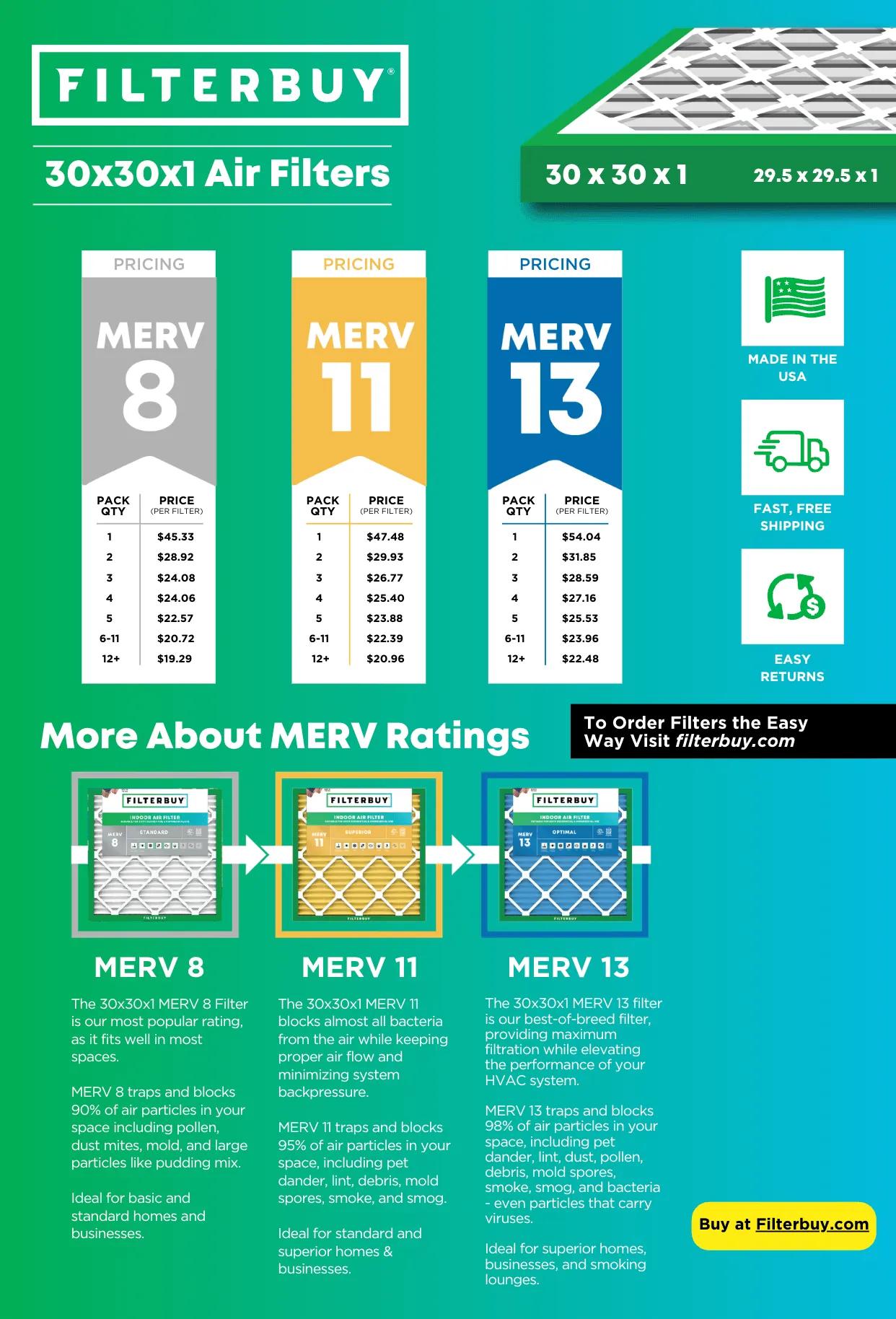
The nominal size is 30 x 30 x 1 inches. The actual size is 29.5 x 29.5 x 0.75 inches. Nominal sizes are rounded to the nearest whole inch for ordering purposes. Always confirm actual dimensions before you buy. A filter that doesn't fit flush in the slot lets unfiltered air around it — and that wipes out the benefit of the MERV rating entirely.
MERV 11 stands for Minimum Efficiency Reporting Value 11. ASHRAE created the rating system in 1987 to standardize filter performance comparison across manufacturers. A MERV 11 filter captures particles as small as 1.0 micron — pet dander, pollen, mold spores, smog, and fine household dust. It matches 3M's MPR 1000–1200 and Home Depot's FPR 7 on competing rating scales.
Every 90 days is standard for average households. Homes with pets should replace every 60 days. Households with smokers, severe allergy sufferers, or immunocompromised members should consider 30-day cycles. Check the filter monthly no matter what schedule you're on — if it looks gray and clogged before your reminder fires, change it early. A clogged filter drives up energy consumption and stresses the blower motor.
For most modern households, yes. MERV 11 captures significantly smaller particles than MERV 8, which makes it the better option for homes with pets, children, or seasonal allergy sufferers. MERV 8 handles basic dust and pollen filtration well and works for older systems with lower static pressure tolerances. Most families who switch to MERV 11 notice less dust settling on surfaces and better air quality for allergy sufferers within one to two filter cycles.
MERV 11 is designed to balance strong filtration with minimal airflow restriction. Most residential HVAC systems manufactured in the last two decades handle it without issue. Older systems or those with undersized ductwork may have tighter static pressure tolerances. Check your manufacturer's documentation before upgrading. And keep in mind: a clogged filter at any MERV rating restricts airflow if you let it go too long. Consistent replacement matters as much as the rating itself.
100% manufactured in the United States, with production facilities in Alabama, Pennsylvania, Texas, and Utah. Sold factory-direct, which keeps prices competitive without cutting corners on materials or build quality. Every filter runs through the same quality control process regardless of size or MERV rating.
Dust, pollen, pet dander, mold spores, smog particles, fine household dust, and other common airborne allergens. The electrostatically charged pleated media traps up to 95% of particles in the relevant size range. Filterbuy classifies this filter as Allergen Defense — built for households where airborne allergens are a recurring health concern.
Both MERV 11 and MERV 13 remove pet dander, pollen, mold spores, and fine dust. MERV 13 also traps some bacteria and virus-carrying droplets, which makes it worth considering for households with immunocompromised members or in wildfire-prone regions. The trade-off is airflow resistance: MERV 13 pushes harder against the system, and older HVAC equipment may not be rated to handle it. Verify your system's specs before making that jump.
The homeowners who get the best results from their HVAC filtration aren't the ones who spend the most on filters. They're the ones who choose the right filter for their household and replace it consistently. After a decade of manufacturing and two million-plus customers, that's the one thing we see every time.
Filterbuy's 30x30x1 MERV 11 Allergen Defense filter is 100% made in the USA, sold factory-direct, and available in multi-packs so you've always got a replacement on hand. Free delivery. Hassle-free returns. Trusted by households across all 50 states.
Tap here to shop the 30x30x1 MERV 11 filter: https://filterbuy.com/air-filters/30x30x1/merv-11/

