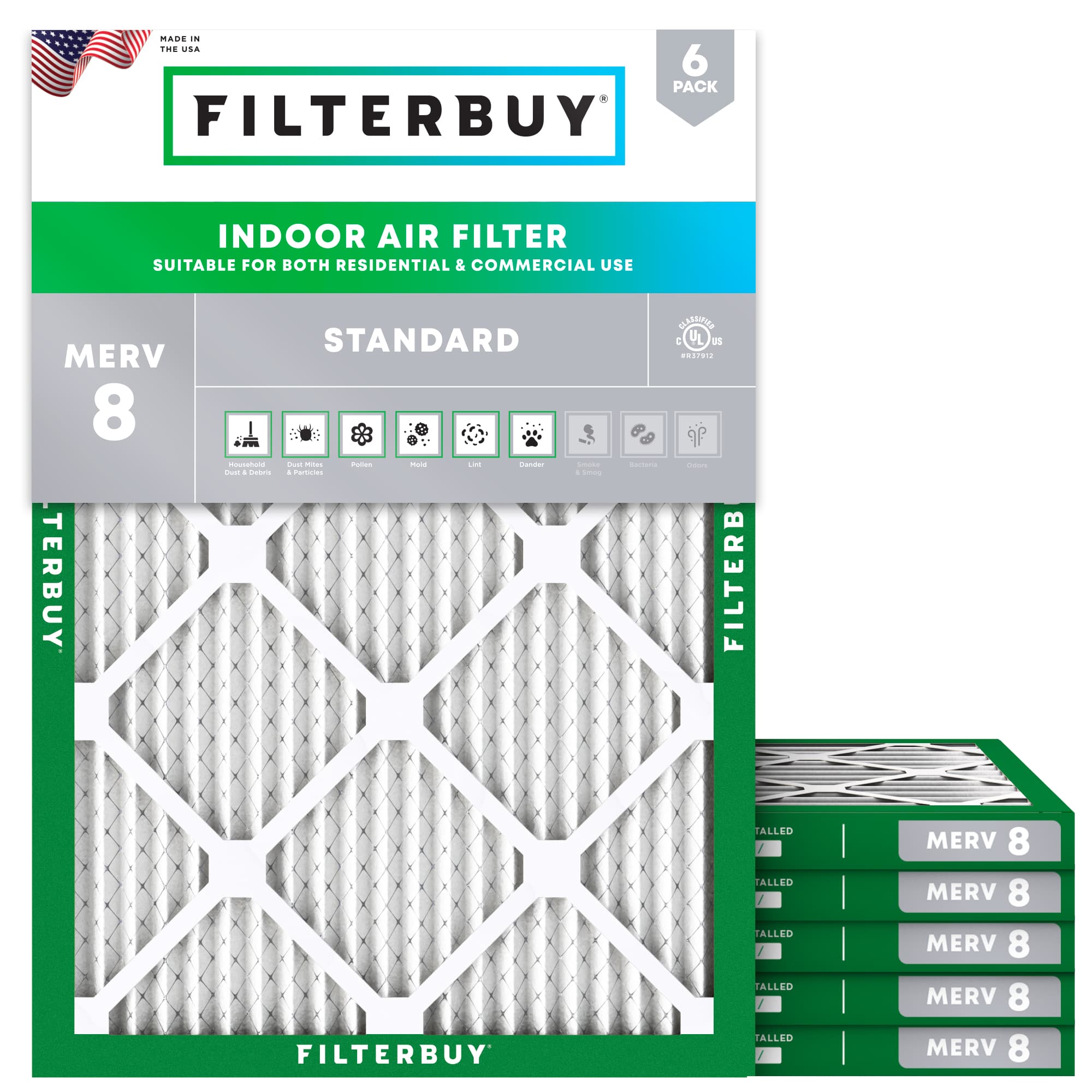
Actual Size: 23x25x1"
 Free Delivery
  Factory-Direct Low Prices, Made in the USA
 Hassle-Free Returns & Free Exchanges
RESIDENTIAL AND/OR COMMERCIAL USE
Change Every 3 Months
Actual Size: 23x25x1"
Free Delivery Factory-Direct Low Prices, Made in the USAHassle-Free Returns & Free ExchangesRESIDENTIAL AND/OR COMMERCIAL USE
Change Every 3 Months
Actual Size: 23x25x1"
Free Delivery Factory-Direct Low Prices, Made in the USAHassle-Free Returns & Free ExchangesRESIDENTIAL AND/OR COMMERCIAL USE
Change Every 3 Months
At Filterbuy, we don't cut corners—we craft high-quality air filters right here in the USA and ship them to your doorstep for free. No delays, no gimmicks—just clean air, made easy. With thousands of five-star reviews and filters built for real life & every HVAC system, it's no wonder why over 4 million families trust Filterbuy.

Proudly Made In The USA

Fast, Free Shipping on Every Order

Premium Materials That Go The Distance

85,000+ 5-Star Reviews From Happy Customers

Save Up to 70% Per Filter with Packs


Measure length × width × depth with a tape measure to find the actual size.

Round up each dimension to the nearest whole number to get the nominal size. Example: 23x25x1" in → 23x25x1 nominal.

Search by nominal size on our site for the best fit.


If the filter you buy doesn't fit, we'll send you a better size.
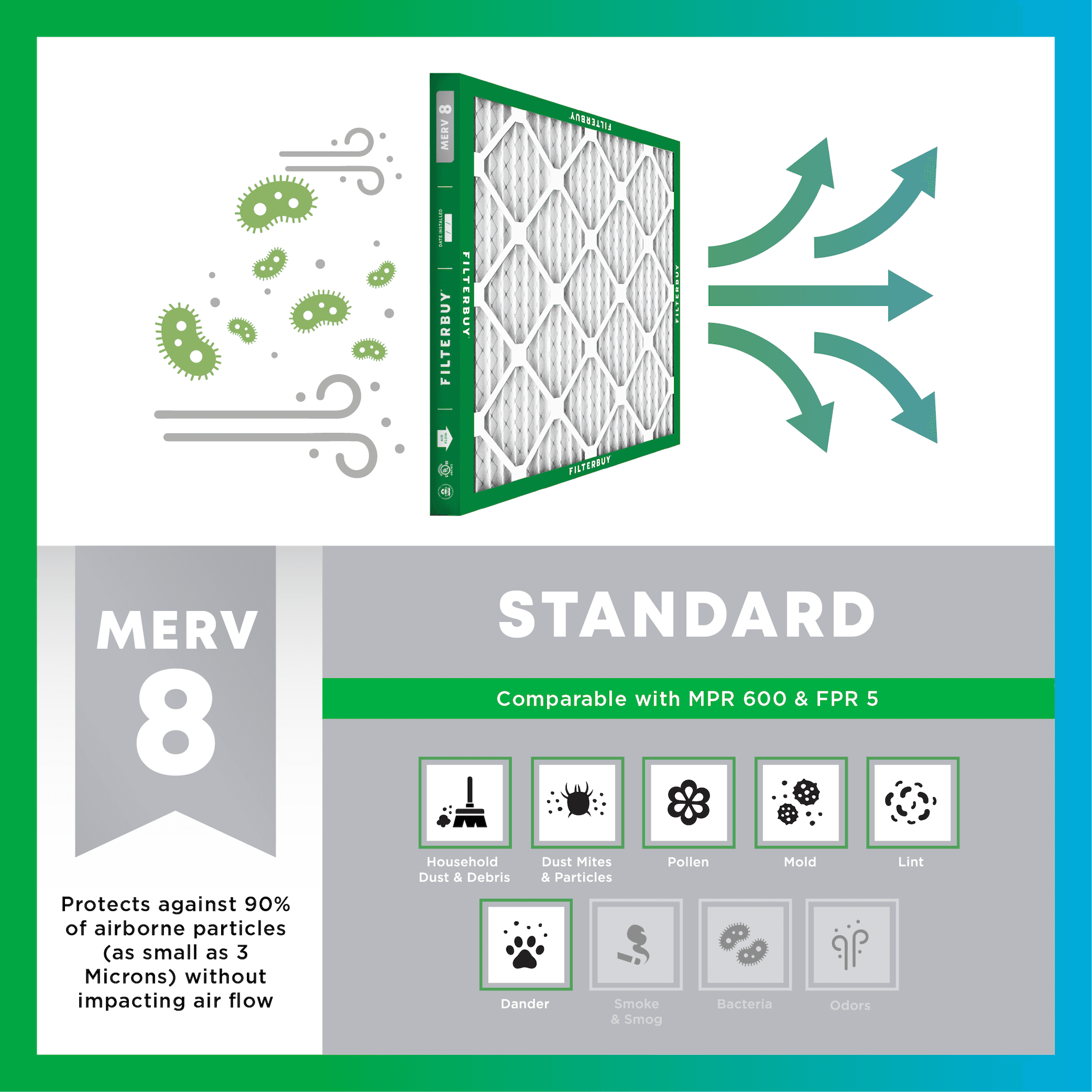
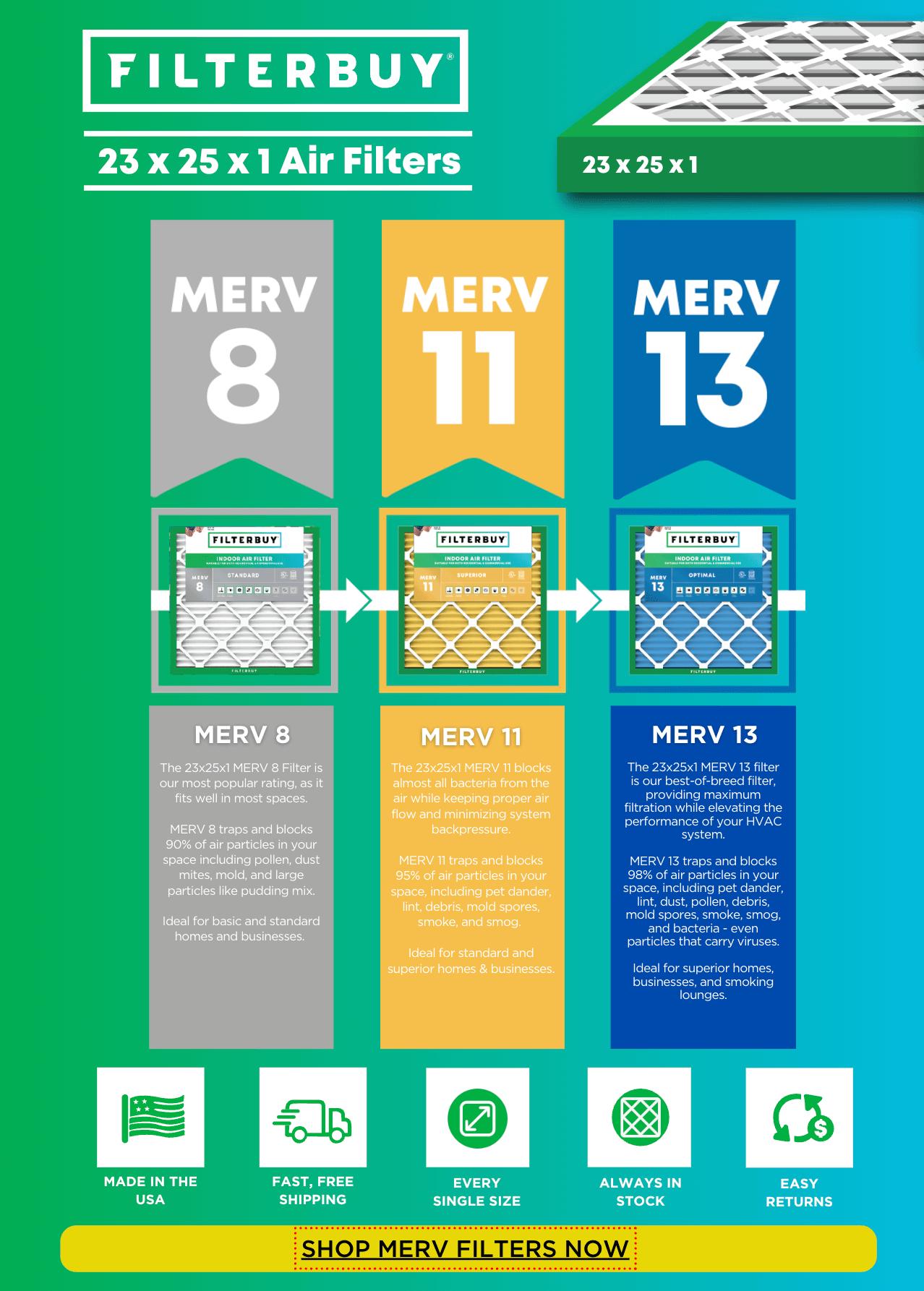
MERV stands for Minimum Efficiency Reporting Value—but don't let the technical name fool you. It's just a way to rate how well an air filter traps stuff like dust, pollen, pet dander, and smoke. The higher the MERV number, the more particles it catches—and the cleaner your air will be.

Comparable to:FPR: 4-7
MPR: 600-1000
 Dust & Debris
 Dust Mites & Particles
 Pollen
 Mold
Mold Lint
Lint Dander
Comparable to:FPR: 6-9
MPR: 1200-1550
Dust & DebrisDust Mites & ParticlesPollenMoldLintDander Smoke & Smog
Comparable to:FPR: 10
MPR: 1900-2800
Dust & DebrisDust Mites & ParticlesPollenMoldLintDanderSmoke & Smog Bacteria


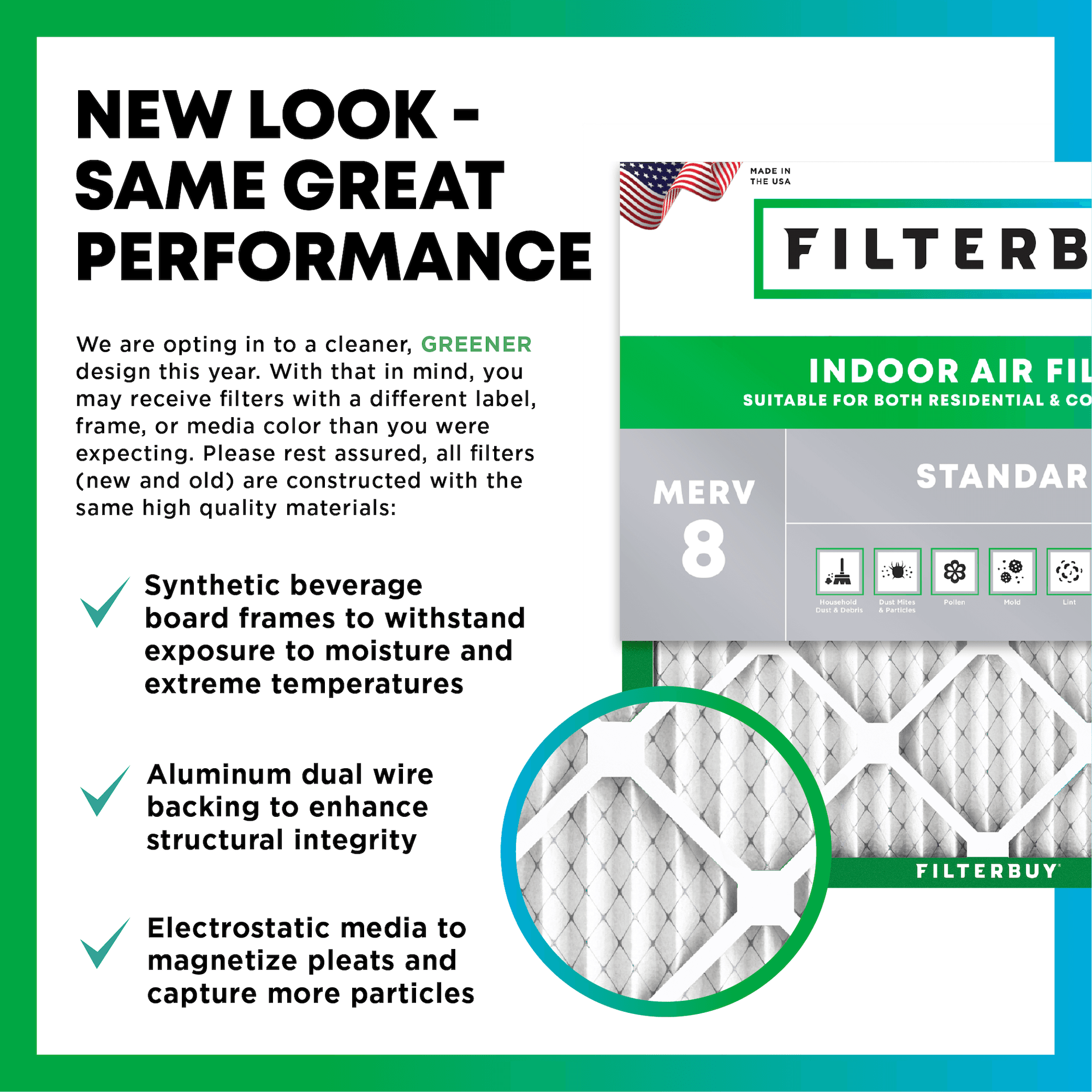
We build every Filterbuy filter to deliver reliable 90-day performance—thanks to smart design and premium materials that do the heavy lifting. Here's what makes the difference:
More pleats = more surface area to capture dust and debris, keeping your air cleaner longer.
Pleats are magnetized to attract and trap microscopic particles—like pet dander, pollen, and smoke.
Engineered to resist warping in extreme temperatures and high humidity.

A layer of metal reinforcement keeps pleats evenly spaced and structurally sound—no sagging, even at high airflow.
Assembled with care. Built to perform. Ships fast, free, and reliably from our U.S. facilities.

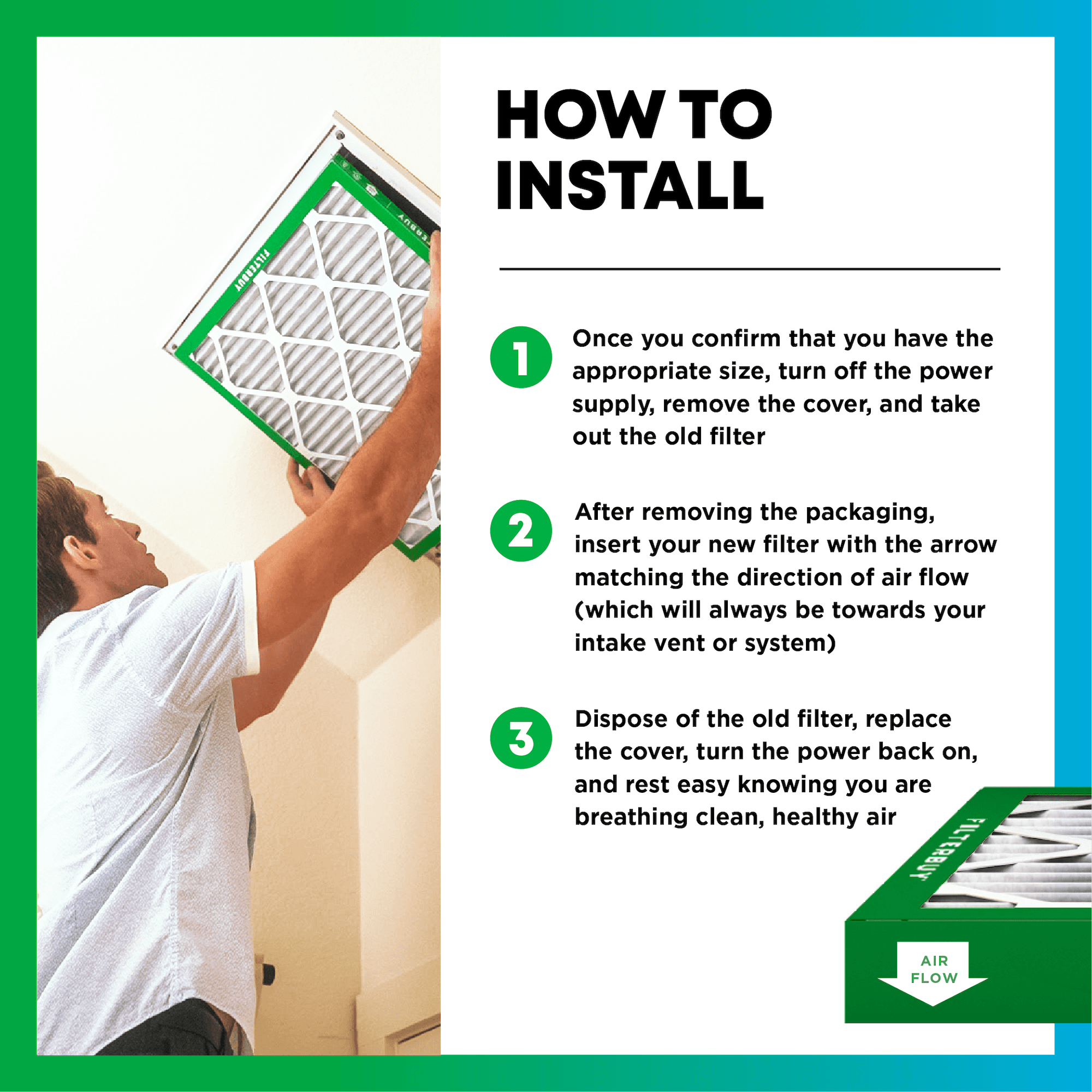
Turn Off Your HVAC SystemSafety first.

Remove The Old FilterLook for the airflow arrow and make note of the direction.

Slide In Your New FilterArrow should point toward the system (same direction as before).

Turn Your System Back OnAnd enjoy the fresh, clean air.

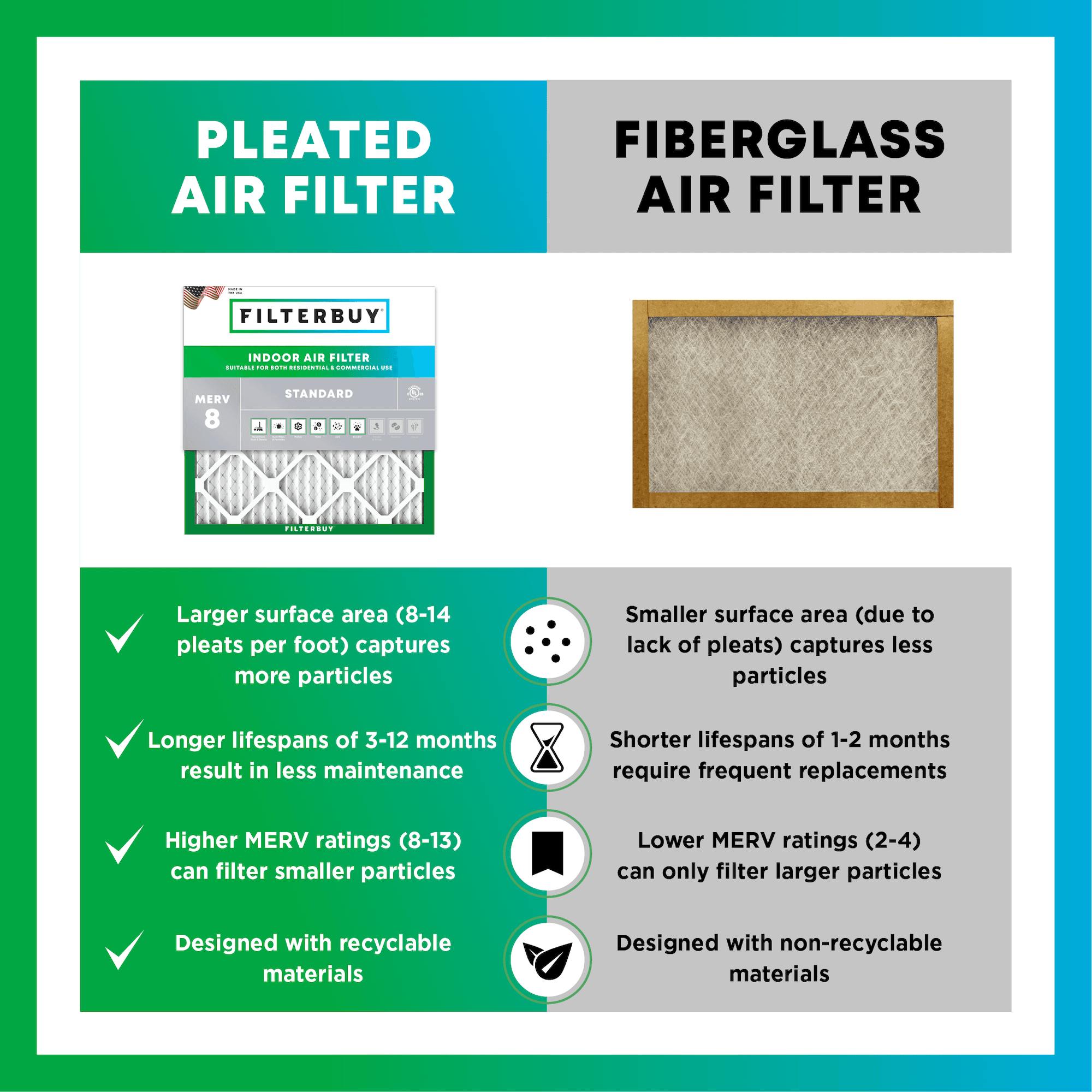
Not all air filters are created equal. Pleated filters don't just last longer—they actually clean your air better. Here's how they stack up:

Efficiency:
High (MERV 8–13) – Traps more particles
Lifespan:
90 days – Long-lasting performance
Air Quality:
Excellent – Cleaner, healthier air
Materials:
Recyclable and durable

Efficiency:
Low (MERV 4 or less) – Misses small stuff
Lifespan:
30 days or less – Replace often
Air Quality:
Minimal – Basic protection only
Materials:
Thin, flimsy, and not recyclable
Pleated filters are a no-brainer—more protection, less hassle, and better air for your home.
Changing your filter on time keeps your HVAC system running efficiently—and helps protect your lungs from dust, allergens, and airborne irritants. Here's how often to swap it out based on your needs:

For most homes without pets or special air quality concerns. Great for general upkeep and energy efficiency.

Shedding fur, dander, and allergy triggers can build up fast. Changing your filter every two months helps keep the air fresher and symptoms at bay.

For households affected by smoke, pollution, or respiratory conditions, monthly changes ensure maximum protection.

| Nominal Size | 23 x 25 x 1 inches |
| Actual Size | 23 x 25 x 1" inches |
| Filter Type | Pleated |
| Media | Electrostatically Charged |
| Frame | Beverage Board |
| MERV Ratings Available | 8, 11, 13 |
| Lifespan | Up to 90 Days |
| Origin | Made in USA |
Yes—a clogged 23x25x1 MERV 8 filter is one of the leading causes of frozen AC systems. After manufacturing millions of filters and troubleshooting this issue with customers across the country, we've seen the pattern repeatedly: a forgotten filter restricts airflow to the evaporator coil, temperatures drop below freezing, and ice builds up fast.
What surprises most homeowners is how quickly it happens. Based on our testing and customer feedback, a filter operating in a high-dust environment or a home with pets can reach critical restriction levels in as little as 30 days—well before the 90-day mark many people target for replacements.
Below, we'll walk you through the warning signs, explain the mechanics behind AC freeze-ups, and share our recommendations for the right replacement schedule to protect your system.
Yes. A clogged filter is one of the most common causes of frozen AC systems.
Why does it happen:
The CA cloggedfilter restricts airflow to the evaporator coil
Coil temperature drops below freezing
Moisture freezes on contact
Ice builds up rapidly
How fast it occurs: After manufacturing millions of filters, we've found systems can freeze within hours of critical airflow restriction—especially during peak summer use.
How to prevent it:
Inspect your filter monthly
Replace every 30-60 days with pets or heavy AC use
Replace every 60-90 days under normal conditions
Don't wait for the 90-day mark if the filter looks dirty
Bottom line: A $15 filter replacement prevents repairs costing $150-$700. Check your 23x25x1 MERV 8 filter today.
Yes, a clogged filter can freeze your AC. Restricted airflow drops evaporator coil temperatures below freezing. Ice builds up fast.
Dirty filters are the #1 cause of HVAC failures. We've seen this pattern repeatedly after manufacturing millions of filters.
The 90-day guideline doesn't fit most homes. Pets, allergies, or heavy AC use? Replace every 30-60 days instead.
Warning signs appear before freeze-ups. Watch for weak airflow, longer cycles, and visible debris.
Prevention beats repair costs every time. A year of filters costs less than one service call.
To operate your air conditioning system, your system requires constant airflow. A clogged 23x25x1 filter will then block that airflow, and the evaporation coil, which should use that airflow to take heat, will become too cold. Refrigerant temperatures drop because there is no warm air flowing over it. When contact occurs, the condensation is frozen, and the amount of ice builds quickly.
As we have seen, when we work with customers who have handled frozen systems, the damage is not usually limited to the initial freeze. The accumulation of ice causes the compressor to work more intensely, decreases the cooling ability, and may cause water damage once all are thawed. What begins as a very simple filter could end up being an expensive solution.
Before customers read about the ice on their system, they often complain to us about these red flags that they noticed:
Poor air circulation through vents, even at full capacity.
There is warm air blowing even though the thermostat is programmed to cool.
Typically, longer cooling periods had the AC turned on the whole time,e but never reaching the set point.
Observable refrigerant lines on the outward unit with frost or ice.
Abnormal humidity levels inside the building, as limited movement of air influences the elimination of moisture.
In case you have all these symptoms, make sure that you test your 23x25x1 filter. In most situations, a mere change suffices to solve the problem before it is too late.
MERV 8 filters have a good balance between capturing dust, pollen, mould spores, and pet dander, and still allowing relatively large airflow on most residential HVAC systems. Nevertheless, its efficiency is achieved at the price of being a filter that gathers debris more slowly than other lower-rated filters.
According to our manufacturing statistics and customer experience, we can suggest checking the MERV 8 filters after 30 days and replacing them after 60-90 days in case of natural conditions. Pet owners, allergy individuals, or those with more dust particles in the home might require replacement monthly to avoid the clogging of airflow that will induce freeze-ups.
If you've discovered ice on your system, here's what we recommend:
Turn off the AC immediately to prevent compressor damage—switch to "fan only" mode to help thaw the coil
Replace your 23x25x1 filter with a fresh MERV 8 filter while the system defrosts
Allow 2-4 hours for complete thawing before restarting the cooling cycle
Monitor performance closely over the next 24 hours to ensure normal operation returns
If freezing continues after replacing the filter, the issue may involve low refrigerant levels or other mechanical problems requiring professional diagnosis.
The simplest way to prevent AC freeze-ups is to stay ahead of filter changes. After helping millions of customers maintain their systems, we've found that setting a recurring reminder—or subscribing to scheduled filter deliveries—eliminates the guesswork and keeps your HVAC running efficiently year-round.
A quality 23x25x1 MERV 8 filter costs a fraction of what you'd spend on emergency AC repairs. Consistent replacement protects your equipment, maintains airflow, and keeps your home comfortable without unexpected breakdowns.
"After manufacturing millions of MERV 8 filters and hearing from customers nationwide, we've found that most AC freeze-ups trace back to one overlooked issue—a clogged filter that restricted airflow long before homeowners noticed a problem. A 60-second filter check every month is the simplest way to protect a system that costs thousands to replace."
After manufacturing millions of air filters and troubleshooting freeze-up issues with customers across the country, we know how important it is to have reliable information when your AC stops working. We've compiled the most authoritative government and industry resources so you can understand exactly what's happening inside your system—and how to prevent it from happening again.
U.S. Department of Energy – Air Conditioner Maintenance Guide
Customers often ask us how frequently they should change filters to avoid problems. The DOE confirms what we've seen firsthand: dirty, clogged filters reduce airflow and can cut your AC's efficiency by up to 15%. This official guide provides the maintenance schedule we recommend to our own customers.
Resource: https://www.energy.gov/energysaver/air-conditioner-maintenance
ENERGY STAR – Heat & Cool Efficiently
Based on feedback from homeowners dealing with frozen systems, we always emphasize monthly filter checks during summer. This EPA-backed guide explains exactly why—and helps you understand when a dirty filter crosses the line from inefficient to dangerous for your equipment.
Resource: https://www.energystar.gov/saveathome/heating-cooling
EPA – Guide to Air Cleaners in the Home
We're obsessed with indoor air quality, and part of that obsession means helping you understand the balance between filtration efficiency and proper airflow. The EPA's guide explains this relationship clearly—essential reading for any homeowner protecting both their family's air and their HVAC investment.
Resource: https://www.epa.gov/indoor-air-quality-iaq/guide-air-cleaners-home
EPA – What Is a MERV Rating?
After helping millions of customers select the right filter, we've found that many homeowners don't fully understand what MERV ratings mean in practice. MERV 8 filters effectively capture dust, pollen, and pet dander—but knowing how they load with debris over time helps you time replacements before airflow restriction causes freeze-ups.
Resource: https://www.epa.gov/indoor-air-quality-iaq/what-merv-rating
ASHRAE – MERV Rating Standards (Standard 52.2)
As filter manufacturers, we test our products against ASHRAE's rigorous standards every day. Their protocols define how MERV ratings work and explain why filter performance changes as debris accumulates—the exact science behind the freeze-ups we help customers prevent.
Resource: https://www.ashrae.org/technical-resources/standards-and-guidelines
DOE Building America Solution Center – High-MERV Filters
This is the technical explanation behind what we see constantly in customer feedback: excessive pressure drop from clogged filters restricts airflow, drops evaporator coil temperatures, and causes ice buildup. Understanding this mechanism helps you protect your system before problems start.
Resource: https://basc.pnnl.gov/resource-guides/high-merv-filters
ENERGY STAR – HVAC Maintenance Checklist
We tell every customer that a few minutes of monthly filter maintenance beats hours of dealing with a frozen AC. This official checklist mirrors the inspection routine we recommend—catching airflow problems before they escalate to frozen coils and expensive repair bills.
Resource: https://www.energystar.gov/saveathome/heating-cooling/maintenance-checklist
Pro Tip: After over a decade of manufacturing filters and hearing from homeowners nationwide, we've learned that most AC freeze-ups are entirely preventable. Bookmark these resources, set a monthly reminder to check your 23x25x1 filter, and you'll stay ahead of the airflow problems that cause systems to ice over. Protecting your AC doesn't have to be complicated—it just takes consistent attention to the filter most people forget about.
The research confirms what we've witnessed after manufacturing millions of filters. Here's what the numbers show—plus insights from our real-world experience.
The Data: Clogged filters increase HVAC energy consumption by 5-15%. (U.S. Department of Energy)
What We've Observed:
Efficiency loss accelerates rapidly after debris crosses a critical threshold
That threshold typically hits around 60 days in average households
Customers with unexpectedly high summer bills often haven't changed filters in 4-6 months
Reference: https://www.energy.gov/energysaver/air-conditioner-maintenance
The Data: Check filters monthly; replace at a minimum every 90 days. (ENERGY STAR)
What Our Customer Data Shows:
Homes with pets: replacement needed every 30-45 days
Homes running AC continuously in summer: every 6-8 weeks
The 90-day guideline assumes moderate use that doesn't reflect most households
Reference: https://www.energystar.gov/saveathome/heating-cooling
The Data: Americans spend 90% of their time indoors, where pollutant levels run 2-5x higher than outside. (EPA)
Why This Matters:
Every hour your HVAC runs, your filter captures circulating pollutants
Effective filtration means faster debris accumulation
A white filter turning gray quickly means it's working—not failing
Reference: https://www.epa.gov/indoor-air-quality-iaq/guide-air-cleaners-home
After manufacturing millions of MERV 8 filters and helping customers prevent frozen systems, here's what we know works.
What We Recommend
Check your filter monthly — let its condition determine replacement timing, not the calendar.
Adjust for your household — pets, allergies, and continuous AC use accelerate debris loading.
Watch for warning signs — reduced airflow, longer cooling cycles, visible debris build-up. dup
Act before symptoms appear — prevention costs a fraction of emergency repairs.
The filter surface appears gray or discolored
Visible dust buildup when held up to light
Airflow from vents feels weaker than usual
AC runs longer without reaching the set temperature
Utility bills increase unexpectedly
The Bottom Line
A clogged filter is the most common—and most preventable—cause of AC freeze-ups. Customers tell us they wish they'd known how simple the fix was before dealing with expensive repairs.
Your next step: Check your 23x25x1 MERV 8 filter today. If you can't see light through it or it's been more than 60 days, it's time for a replacement.
Protecting your AC doesn't have to be complicated. It just takes consistent attention to the filter most people forget about.
A: A clogged 23x25x1 filter blocks airflow to the evaporator coil. Here's what happens:
Restricted airflow prevents warm air from reaching the coil
Refrigerant temperatures drop below freezing
Moisture condenses and freezes on contact
Ice accumulates rapidly
After manufacturing millions of filters, we've seen this pattern repeatedly. Customers tell us they're shocked by how quickly a forgotten filter caused hundreds of dollars in damage.
A: The 90-day guideline doesn't match real household conditions. Based on our customer data:
Homes with pets: Every 30-45 days
Heavy AC use in summer: Every 6-8 weeks
Normal conditions: Every 60-90 days
Our recommendation: Inspect monthly. Let filter condition—not the calendar—determine replacement timing.
A: Customers who've dealt with freeze-ups tell us they noticed these signs first:
Weak airflow from vents
AC runs constantly without reaching the set temperature
Certain rooms stay warmer than others
Energy bills increase unexpectedly
The filter looks gray or blocks light
These symptoms typically appear 1-2 weeks before ice forms. Acting early prevents emergency repairs.
A: We've walked thousands of customers through this. Follow these steps:
Turn off the AC immediately
Switch to "fan only" mode
Replace the clogged filter
Wait 2-4 hours for complete thaw
Monitor the system for 24 hours after the restart
Still freezing after filter replacement? Call a professional. The issue may involve low refrigerant or mechanical problems.
A: No. This is a common misconception.
The problem with higher ratings:
Higher MERV = more airflow resistance
MERV 13+ in a system designed for MERV 8 can cause the same restriction issues
Result: freeze-ups from the filter itself
What actually prevents freeze-ups:
Consistent replacement on a schedule matching your household
Monthly inspections
Right filter for your system—not the highest rating available
After testing thousands of configurations, we've found MERV 8 delivers an optimal balance for most residential systems.
A fresh filter takes 60 seconds to install and protects equipment that costs thousands to replace. Shop Filterbuy's 23x25x1 MERV 8 filters now and keep your system running all summer long.

