
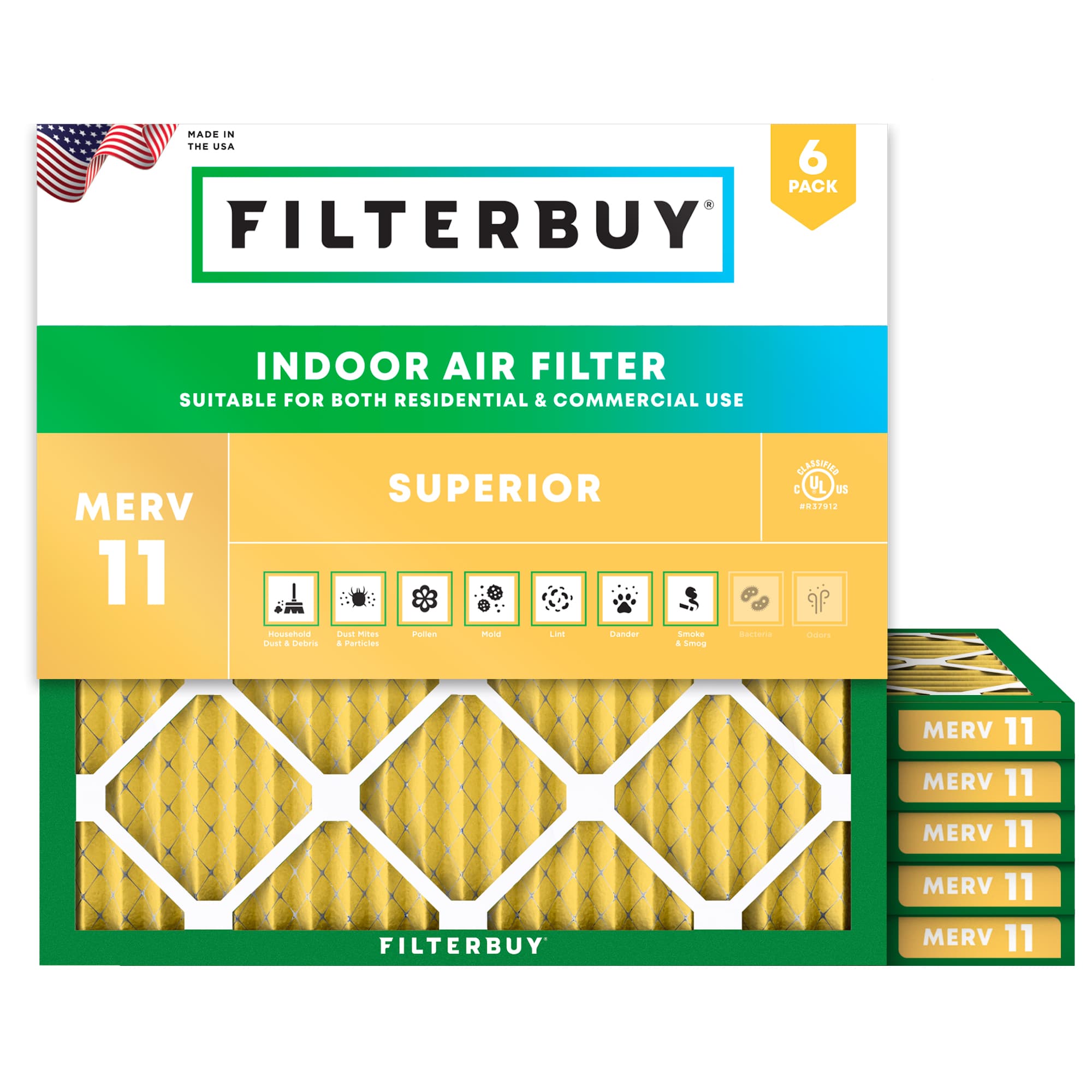
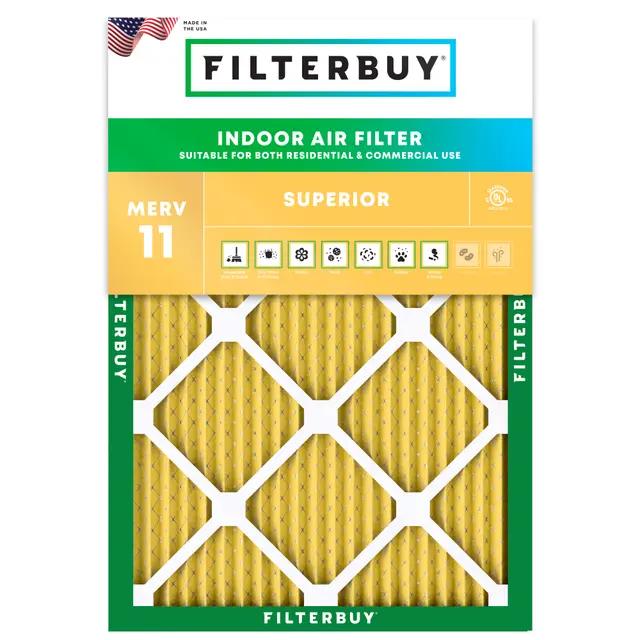
22x22x1 MERV 11 Pleated Air Filter
Actual Size: 21.5x21.5x0.75
 Free Delivery
  Factory-Direct Low Prices, Made in the USA
 Hassle-Free Returns & Free Exchanges
RESIDENTIAL AND/OR COMMERCIAL USE
Change Every 3 Months
22x22x1 MERV 11 Pleated Air Filter
Actual Size: 21.5x21.5x0.75
Free Delivery Factory-Direct Low Prices, Made in the USAHassle-Free Returns & Free ExchangesRESIDENTIAL AND/OR COMMERCIAL USE
Change Every 3 Months
22x22x1 MERV 11 Pleated Air Filter
Actual Size: 21.5x21.5x0.75
Free Delivery Factory-Direct Low Prices, Made in the USAHassle-Free Returns & Free ExchangesRESIDENTIAL AND/OR COMMERCIAL USE
Change Every 3 Months
About
- This is a list 22x22x1 MERV 11 air filter replacement for your furnace, air conditioner, heat pump, or HVAC system
- Actual air filter size: 21.5x21.5x0.75
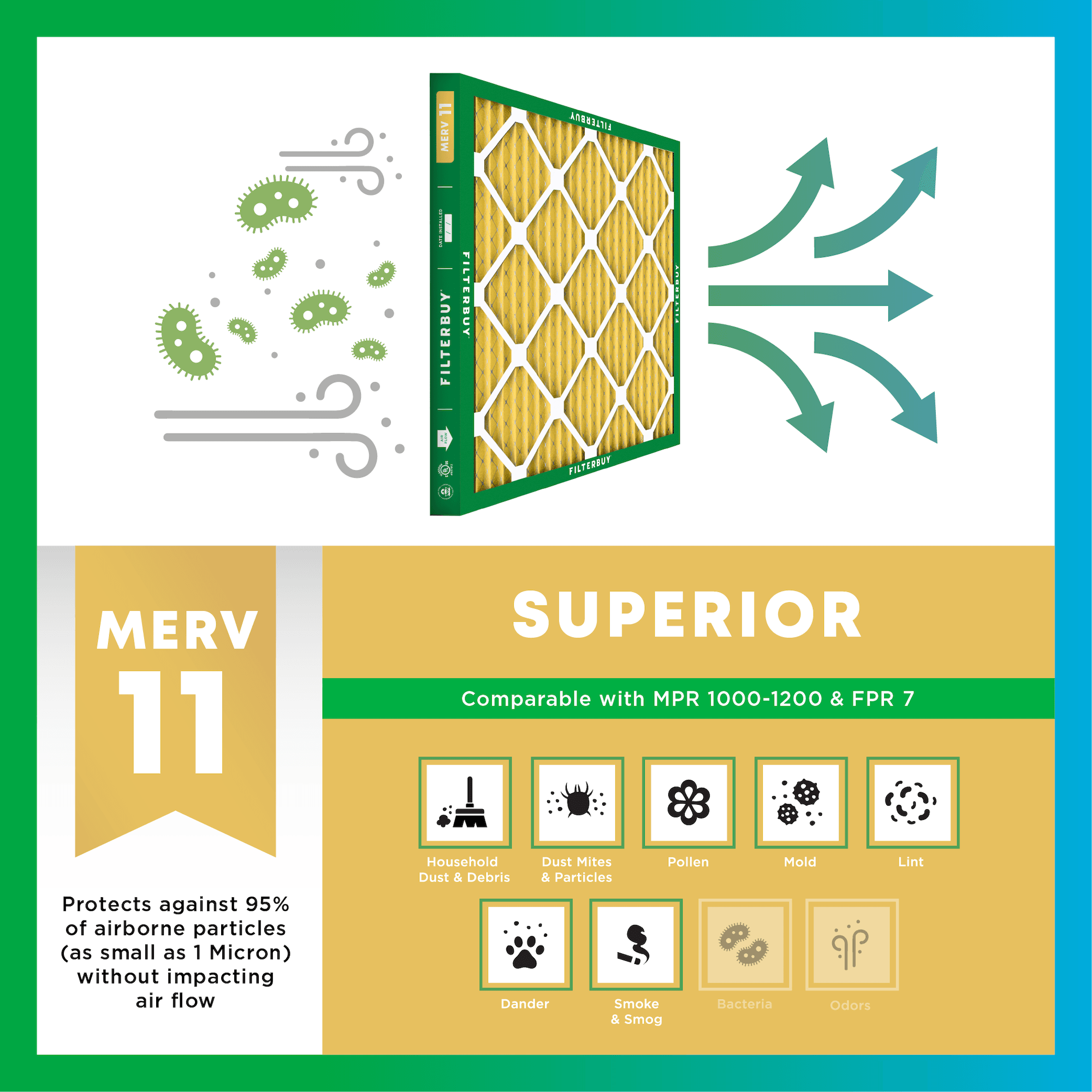
- MERV 11 synthetic media (comparable with MPR 1000/1200 and FPR 7) offers superior protection from dust, pollen, pet dander, mold, smog and more by trapping 95% of airborne particles without impacting air flow
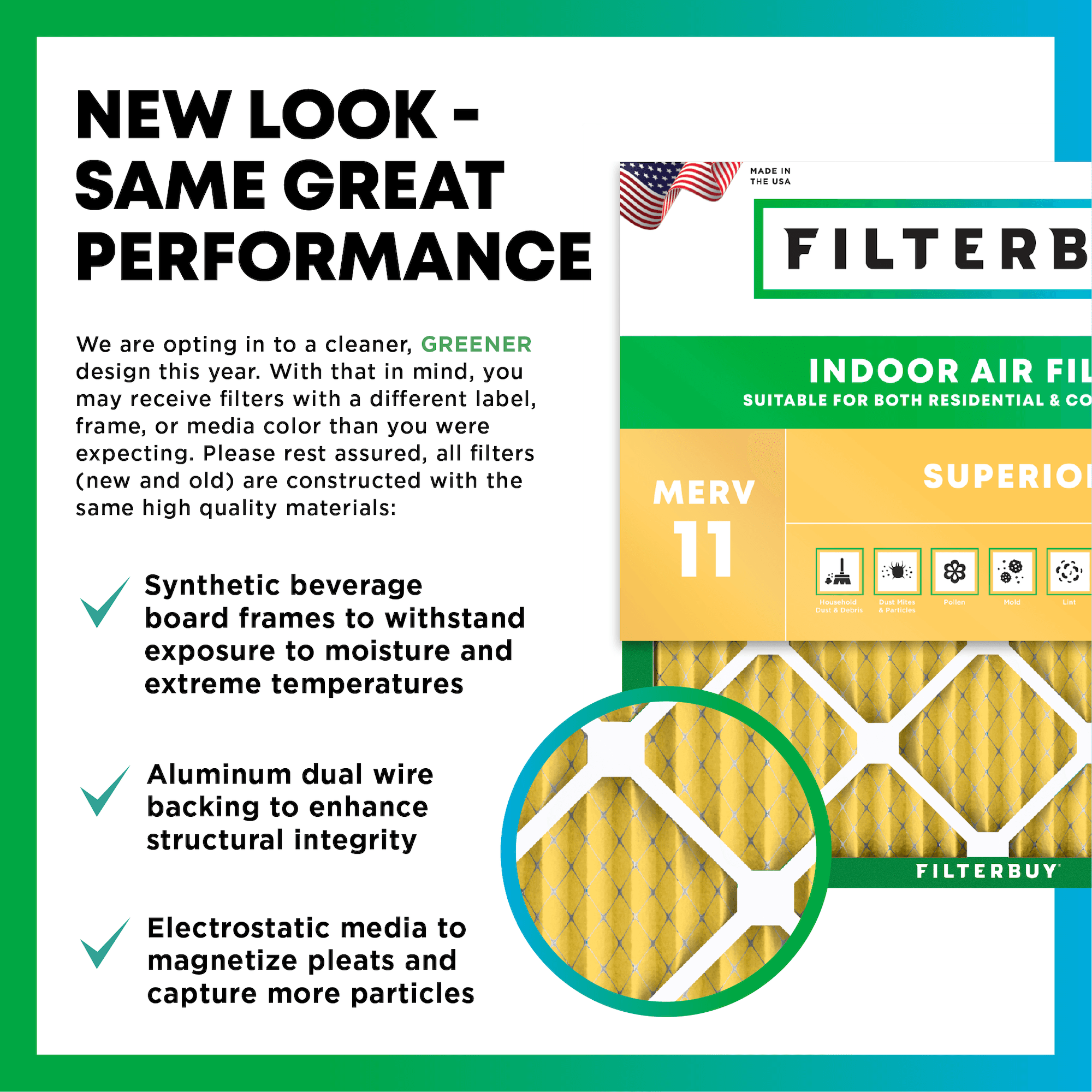
- High-quality construction means electrostatically charged pleated filter media, reinforced wire backing for structural integrity, and a durable frame to resist heat and humidity
- Built to last 3 months. 300% longer than fiberglass models
- 100% manufactured in the United States and designed with recyclable materials
- Learn more about 22x22x1 Air Filters
Top-Rated Filters. American Made. Delivered Free.
At Filterbuy, we don't cut corners—we craft high-quality air filters right here in the USA and ship them to your doorstep for free. No delays, no gimmicks—just clean air, made easy. With thousands of five-star reviews and filters built for real life & every HVAC system, it's no wonder why over 4 million families trust Filterbuy.

Proudly Made In The USA

Fast, Free Shipping on Every Order

Premium Materials That Go The Distance

85,000+ 5-Star Reviews From Happy Customers

Save Up to 70% Per Filter with Packs
Things to Know About Filter Sizes

Nominal Size
- The rounded size printed on your filter or HVAC unit (e.g., 22x22x1).
- Usually whole numbers to make identifying and ordering easier.
- A label for compatibility—not the exact measurement.

Actual Size
- The true, trimmed dimensions of the filter (e.g., 21.5x21.5x0.75 inches).
- Filters are manufactured slightly smaller so they slide into the filter slot without forcing.
- If you don't know your nominal size, measure your filter to get the actual size, then round up to find the nominal size to search on our site.

Why the difference?
- Nominal sizes simplify shopping and standardize categories.
- Actual sizes ensure the filter fits properly inside your HVAC's filter rack.
How To Find Your Nominal Size When You Don't Know It


Measure length × width × depth with a tape measure to find the actual size.

Round up each dimension to the nearest whole number to get the nominal size. Example: 21.5x21.5x0.75 in → 22x22x1 nominal.

Search by nominal size on our site for the best fit.

Why Getting the Right Size Matters
- Too small? Air can bypass the filter, reducing air quality and efficiency.
- Too big? It won't fit—risking bent frames and airflow issues.
- Just right? You get maximum performance, better filtration, and cleaner air.

Free Exchange Policy
If the filter you buy doesn't fit, we'll send you a better size.

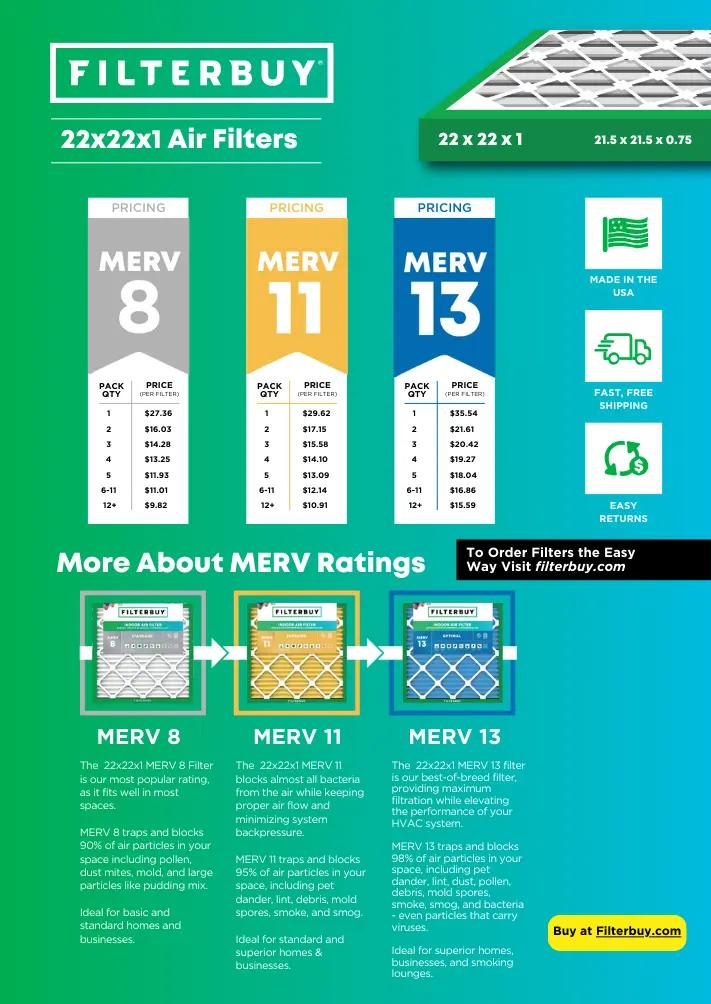
What's a MERV Rating?
MERV stands for Minimum Efficiency Reporting Value—but don't let the technical name fool you. It's just a way to rate how well an air filter traps stuff like dust, pollen, pet dander, and smoke. The higher the MERV number, the more particles it catches—and the cleaner your air will be.

Merv 8
Comparable to:FPR: 4-7
MPR: 600-1000
 Dust & Debris
 Dust Mites & Particles
 Pollen
 Mold
Mold Lint
Lint Dander
Merv 11
Comparable to:FPR: 6-9
MPR: 1200-1550
Dust & DebrisDust Mites & ParticlesPollenMoldLintDander Smoke & Smog
Merv 13
Comparable to:FPR: 10
MPR: 1900-2800
Dust & DebrisDust Mites & ParticlesPollenMoldLintDanderSmoke & Smog Bacteria
MERV 8
Comparable to:FPR: 4-7MPR: 600-1000


MERV 11
Comparable to:FPR: 6-9MPR: 1200-1550

MERV 13
Comparable to:FPR: 10MPR: 1900-2800
What Makes Our Filters Last 90 Days? Quality, From the Inside Out
We build every Filterbuy filter to deliver reliable 90-day performance—thanks to smart design and premium materials that do the heavy lifting. Here's what makes the difference:
Pleated Design
More pleats = more surface area to capture dust and debris, keeping your air cleaner longer.
Electrostatically Charged Media
Pleats are magnetized to attract and trap microscopic particles—like pet dander, pollen, and smoke.
Synthetic Beverage Board Frame
Engineered to resist warping in extreme temperatures and high humidity.

Aluminum Dual Wire Backing
A layer of metal reinforcement keeps pleats evenly spaced and structurally sound—no sagging, even at high airflow.
Made in the USA
Assembled with care. Built to perform. Ships fast, free, and reliably from our U.S. facilities.
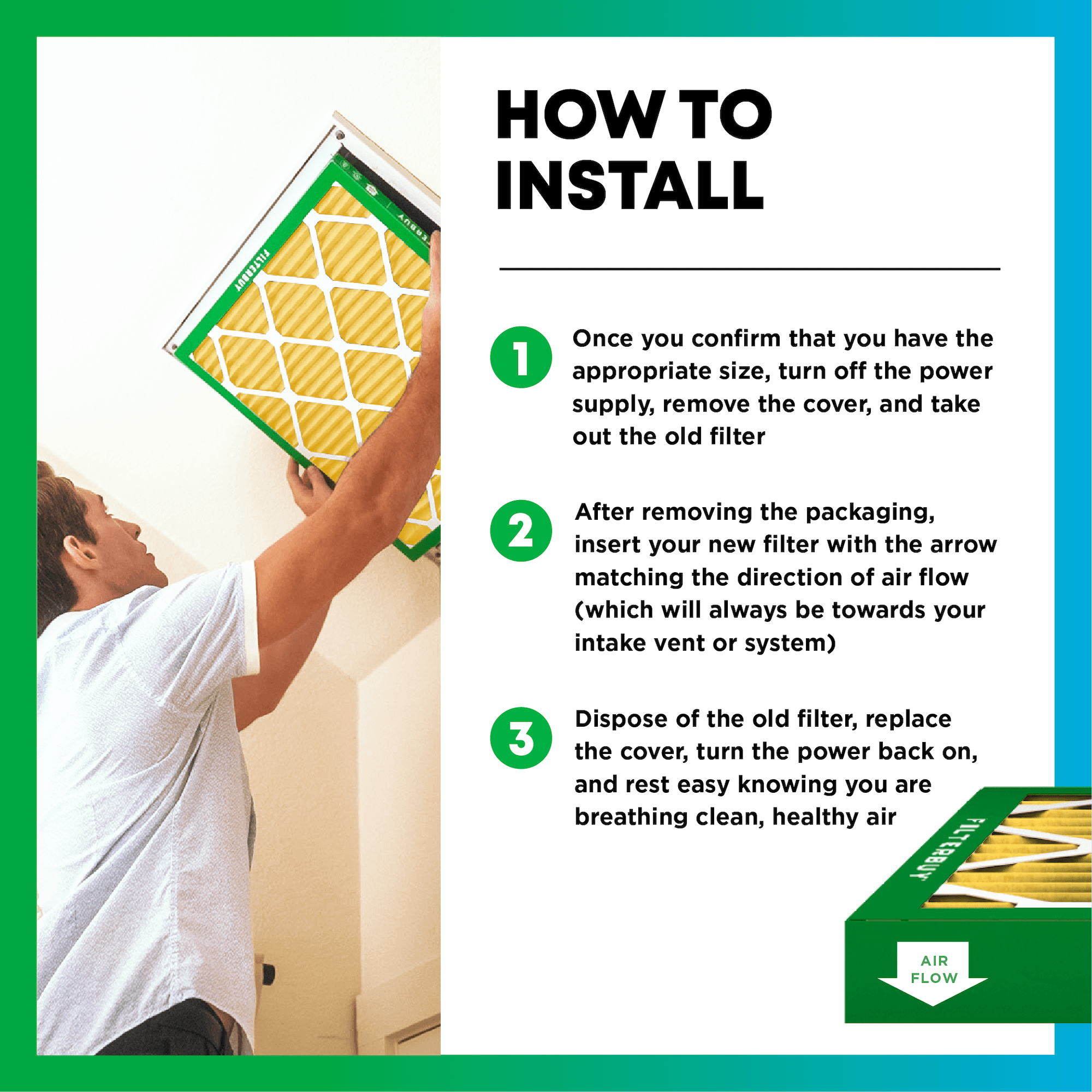
How to Install Your Filter in 4 Simple Steps

Turn Off Your HVAC SystemSafety first.

Remove The Old FilterLook for the airflow arrow and make note of the direction.

Slide In Your New FilterArrow should point toward the system (same direction as before).

Turn Your System Back OnAnd enjoy the fresh, clean air.

Never forget to replace your air filter again.
- Save 5% on every order
- Choose Your Delivery Schedule
- Edit, Skip, or Cancel Anytime.
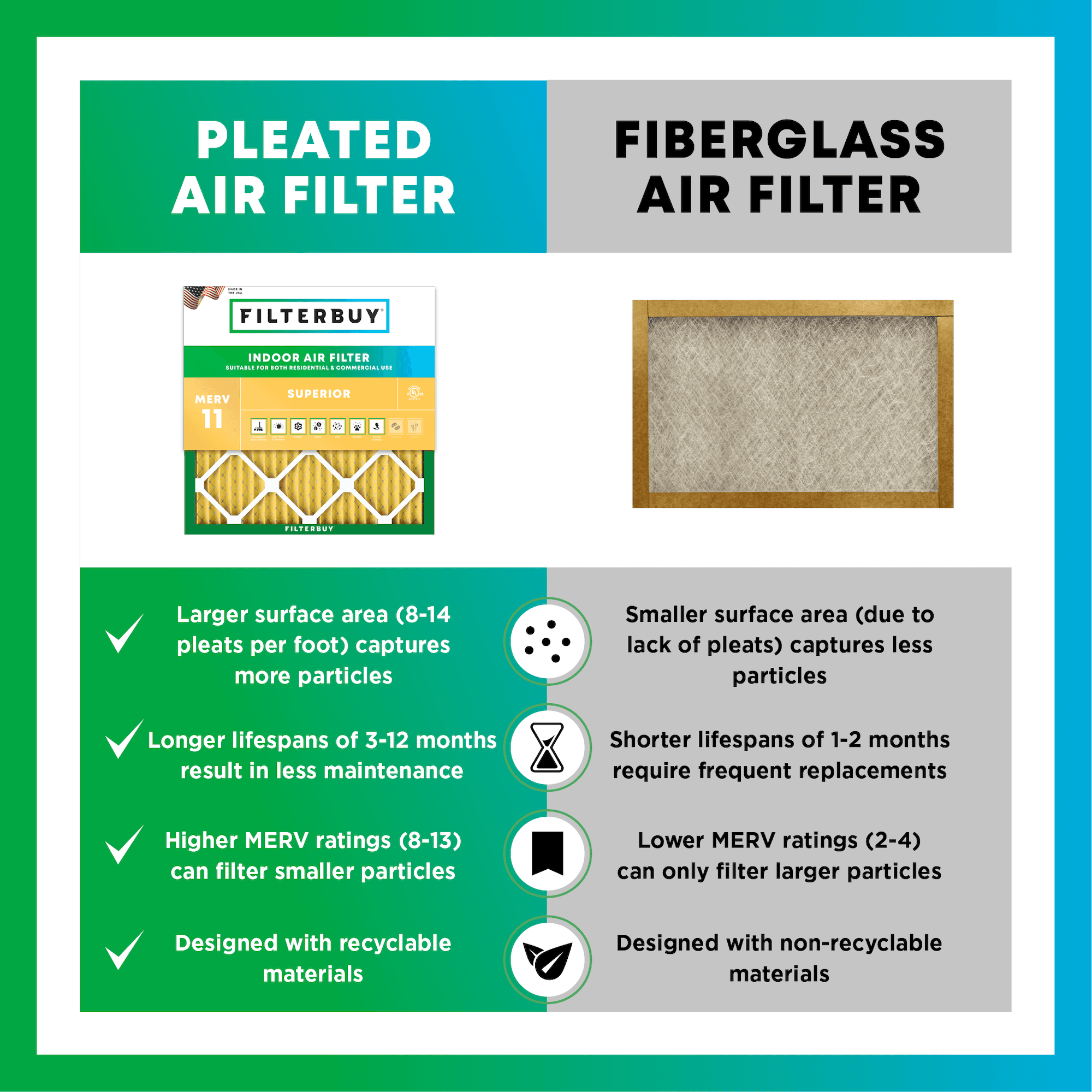
Pleated Filters vs. Fiberglass—What's the Difference?
Not all air filters are created equal. Pleated filters don't just last longer—they actually clean your air better. Here's how they stack up:

Pleated Filters
Efficiency:
High (MERV 8–13) – Traps more particles
Lifespan:
90 days – Long-lasting performance
Air Quality:
Excellent – Cleaner, healthier air
Materials:
Recyclable and durable

Fiberglass Filters
Efficiency:
Low (MERV 4 or less) – Misses small stuff
Lifespan:
30 days or less – Replace often
Air Quality:
Minimal – Basic protection only
Materials:
Thin, flimsy, and not recyclable
Pleated filters are a no-brainer—more protection, less hassle, and better air for your home.
How Often Should You Change Your Filter?
Changing your filter on time keeps your HVAC system running efficiently—and helps protect your lungs from dust, allergens, and airborne irritants. Here's how often to swap it out based on your needs:

Every 90 Days
Standard ScheduleFor most homes without pets or special air quality concerns. Great for general upkeep and energy efficiency.

Every 60 Days
If You Have Pets or AllergiesShedding fur, dander, and allergy triggers can build up fast. Changing your filter every two months helps keep the air fresher and symptoms at bay.

Every 30 Days
If You Have Respiratory Concerns or Live in Smog/Wildfire ZonesFor households affected by smoke, pollution, or respiratory conditions, monthly changes ensure maximum protection.

Want to stay on track? Set a reminder—or skip the stress with auto-delivery so fresh filters show up right when you need them.
Don't Just Take Our Word For It...
Got More Questions? We've Got Answers.
Product Specifications
| Nominal Size | 22 x 22 x 1 inches |
| Actual Size | 21.5 x 21.5 x 0.75 inches |
| Filter Type | Pleated |
| Media | Electrostatically Charged |
| Frame | Beverage Board |
| MERV Ratings Available | 8, 11, 13 |
| Lifespan | Up to 90 Days |
| Origin | Made in USA |
Seasonal Allergy Tips: Maximizing Your 22x22x1 MERV 11 Filter
After manufacturing air filters for over a decade and serving more than two million households, we've learned that seasonal allergy relief starts with one often-overlooked component: your 22x22x1 MERV 11 filter. With roughly 1 in 4 adults suffering from seasonal allergies—and indoor air often containing 2-5 times more pollutants than outdoor air—proper filter management isn't optional, it's essential. Here's exactly how to maximize your MERV 11's allergen-fighting power based on real-world insights from our manufacturing experience and customer feedback.
TL;DR Quick Answers
22x22x1 MERV 11 Air Filter
The 22x22x1 MERV 11 filter is a pleated air filter measuring 21.5" x 21.5" x 0.75" (actual) that captures 85%+ of common allergens including pollen, mold, dust mites, and pet dander.
Key facts:
• Best for: Allergy sufferers, homes with pets, anyone seeking cleaner indoor air
• Replace: Every 45-60 days during allergy season; 60-90 days otherwise
• Captures: Pollen, mold spores, dust mite allergens, pet dander, smog particles
• Pro tip: Run your fan continuously during high-pollen days for maximum filtration
Top Takeaways
• MERV 11 captures 85%+ of allergens (pollen, mold, dust mites, pet dander)—the ideal balance of filtration and airflow for residential systems.
• Change filters every 45-60 days during allergy season —don't wait for the standard 90-day mark when pollen counts are high.
• Run your fan continuously during peak pollen periods for 4-6 air changes per hour and significantly improved allergen removal.
• Check filter fit and seal —gaps let unfiltered air bypass your MERV 11 entirely, negating its benefits.
• Keep 2-3 replacement filters on hand so you're never caught without during allergy season.
Understanding Your 22x22x1 MERV 11 Filter's Allergy-Fighting Power
MERV 11 filters occupy the sweet spot for allergy sufferers—they capture 85% or more of particles between 3-10 microns, which includes the major culprits: pollen, dust mite debris, mold spores, and pet dander. Unlike basic fiberglass filters that let these allergens pass through, or hospital-grade MERV 16+ filters that can strain residential HVAC systems, MERV 11 delivers effective protection without restricting airflow.
Timing Your Filter Changes for Allergy Season
Standard replacement recommendations of 60-90 days don't account for allergy seasons. During peak pollen periods:
• Spring (March-May): Tree and grass pollen surge—inspect your filter every 3-4 weeks
• Fall (August-October): Ragweed and mold spike—replace at the 45-day mark
• High-pollen days: Check local pollen counts and increase HVAC runtime with fan set to "on" for continuous filtration
Maximizing Filter Efficiency: Pro Tips from the Manufacturing Floor
1. Check the seal: Gaps around your filter let unfiltered air bypass your MERV 11's media. Run your hand around the edges while the system runs—if you feel air movement, you're losing filtration efficiency.
2. Don't wait for visible dirt: A filter can be loaded with microscopic allergens while still looking clean. Trust the calendar, not your eyes.
3. Run your fan continuously during high-pollen periods: This recirculates and filters your indoor air 4-6 times per hour rather than only when heating or cooling.
4. Pair with good habits: Remove shoes at the door, shower after outdoor activities, and keep windows closed during peak pollen hours (5-10 AM).
When to Consider Upgrading to MERV 13
For severe allergy sufferers or households with multiple sensitivities, MERV 13 filters capture 85%+ of particles down to 1 micron, including some bacteria and smoke particles. However, always verify your HVAC system can handle the increased airflow resistance before upgrading.
"After manufacturing filters for over a decade and analyzing feedback from millions of customers, we've seen firsthand that allergy sufferers who switch to MERV 11 and maintain a 45-60 day replacement schedule during peak seasons report significant improvements in their symptoms—the filter does the work, but timing makes the difference."
Essential Resources
We've compiled the most valuable resources to help you make informed decisions about protecting your family's air quality:
1. Shop 22x22x1 MERV 11 Filters – Find Your Perfect Fit
Browse American-made 22x22x1 MERV 11 filters with commercial-grade construction and free shipping. https://filterbuy.com/air-filters/22x22x1/
2. Understanding MERV Ratings – Make the Right Choice
Learn how MERV ratings work and why MERV 11 hits the sweet spot for allergy protection. https://filterbuy.com/resources/what-is-a-merv-rating-air-filters/
3. EPA Guide to Indoor Air Quality – Government-Backed Research
Authoritative information on indoor air pollutants and health effects from the Environmental Protection Agency. https://www.epa.gov/indoor-air-quality-iaq
4. CDC Allergens and Pollen Data – Track Your Local Triggers
Monitor allergen levels in your area with CDC's environmental health tracking data. https://www.cdc.gov/nceh/tracking/
5. ASHRAE Filtration Standards – The Technical Foundation
Understand the ASHRAE 52.2 standard that defines MERV ratings and particle capture efficiency. https://www.ashrae.org/technical-resources/filtration-disinfection
6. How to Measure Your Air Filter – Get the Right Size Every Time
Step-by-step guide to measuring your filter slot and understanding nominal vs. actual dimensions. https://filterbuy.com/resources/how-to-measure-air-filter/
7. Filter Subscription Service – Never Forget a Replacement
Set up automatic filter deliveries on your schedule and save 5% on every order. https://filterbuy.com/subscribe/
Supporting Statistics
The science behind MERV 11 filtration for allergy management is clear. Here's what the data shows:
• 25.7% of U.S. adults have seasonal allergies—that's roughly 67 million people seeking relief. Source: https://www.cdc.gov/nchs/products/databriefs/db460.htm
• 90% of time spent indoors—Americans spend the vast majority of their lives breathing indoor air, where pollutant concentrations often exceed outdoor levels. Source: https://www.epa.gov/report-environment/indoor-air-quality
• MERV 11 captures 85%+ of particles 3-10 microns (pollen, mold spores, dust mite allergens) per ASHRAE Standard 52.2 testing. Source: https://www.ashrae.org/technical-resources/filtration-disinfection
Final Thoughts
Your 22x22x1 MERV 11 filter is one of the most effective—and underutilized—tools for managing seasonal allergies.
Our perspective after a decade in manufacturing:
• Most allergy sufferers don't realize how much their HVAC filter impacts their symptoms
• Timing matters more than filter cost—a $15 MERV 11 replaced on schedule outperforms a premium filter left in too long
• The 45-60 day replacement cycle during allergy season is the single most impactful change most households can make
• Running your fan continuously during high-pollen days provides 4-6 air changes per hour—essentially free extra filtration
The bottom line: Clean air isn't complicated. A quality MERV 11 filter, changed at the right intervals, with your system running optimally, will capture the allergens that make you miserable. It's a small investment in something you can't see—but you'll definitely feel the difference.
Next Steps
Take control of your indoor air quality with these actionable steps:
1. Check your current filter today. Remove it and hold it up to light—if you can't see through it, it's time to replace.
2. Set a calendar reminder. Mark 45 days from your next filter change during spring/fall allergy seasons.
3. Verify your filter size. Check the dimensions printed on your current filter frame to confirm 22x22x1.
4. Order replacement filters now. Keep 2-3 filters on hand so you're never caught unprepared during allergy season.
5. Consider a subscription. Automatic delivery ensures you never miss a filter change and saves 5% on every order.
FAQ on 22x22x1 MERV 11 Air Filter
Q: How often should I change my 22x22x1 MERV 11 filter during allergy season?
A: Replace every 45-60 days during peak pollen periods (spring and fall). Standard 90-day recommendations don't account for the increased particle load during allergy season. In homes with pets or multiple allergy sufferers, inspect monthly and replace if visibly loaded.
Q: What allergens does a MERV 11 filter capture?
A: MERV 11 captures 85%+ of particles 3-10 microns, including pollen, mold spores, dust mite debris, and pet dander. It also captures 65-79% of particles 1-3 microns, including some bacteria and fine dust.
Q: Is MERV 11 or MERV 13 better for allergies?
A: Both work well for allergies. MERV 11 is ideal for most homes—effective allergen capture with minimal airflow restriction. MERV 13 captures smaller particles but may strain older HVAC systems. If you have severe allergies or respiratory conditions, MERV 13 provides additional protection, but verify your system can handle it first.
Q: What's the actual size of a 22x22x1 filter?
A: The actual dimensions are typically 21.5" x 21.5" x 0.75". The 22x22x1 measurement is the "nominal" size for easy ordering. Always measure your filter slot if unsure—filters need a snug fit without gaps to work effectively.
Q: Can I run my HVAC fan continuously during allergy season?
A: Yes, and we recommend it during high-pollen periods. Setting your thermostat fan to "on" instead of "auto" circulates and filters air continuously—typically 4-6 air changes per hour. This significantly increases allergen removal but will require more frequent filter changes (closer to the 45-day mark).
Breathe Easier This Allergy Season—Get Your 22x22x1 MERV 11 Filters Today
Stop letting seasonal allergies control your comfort at home. Order your American-made 22x22x1 MERV 11 filters from Filterbuy today and experience the difference that quality filtration makes—with free shipping and our satisfaction guarantee.