
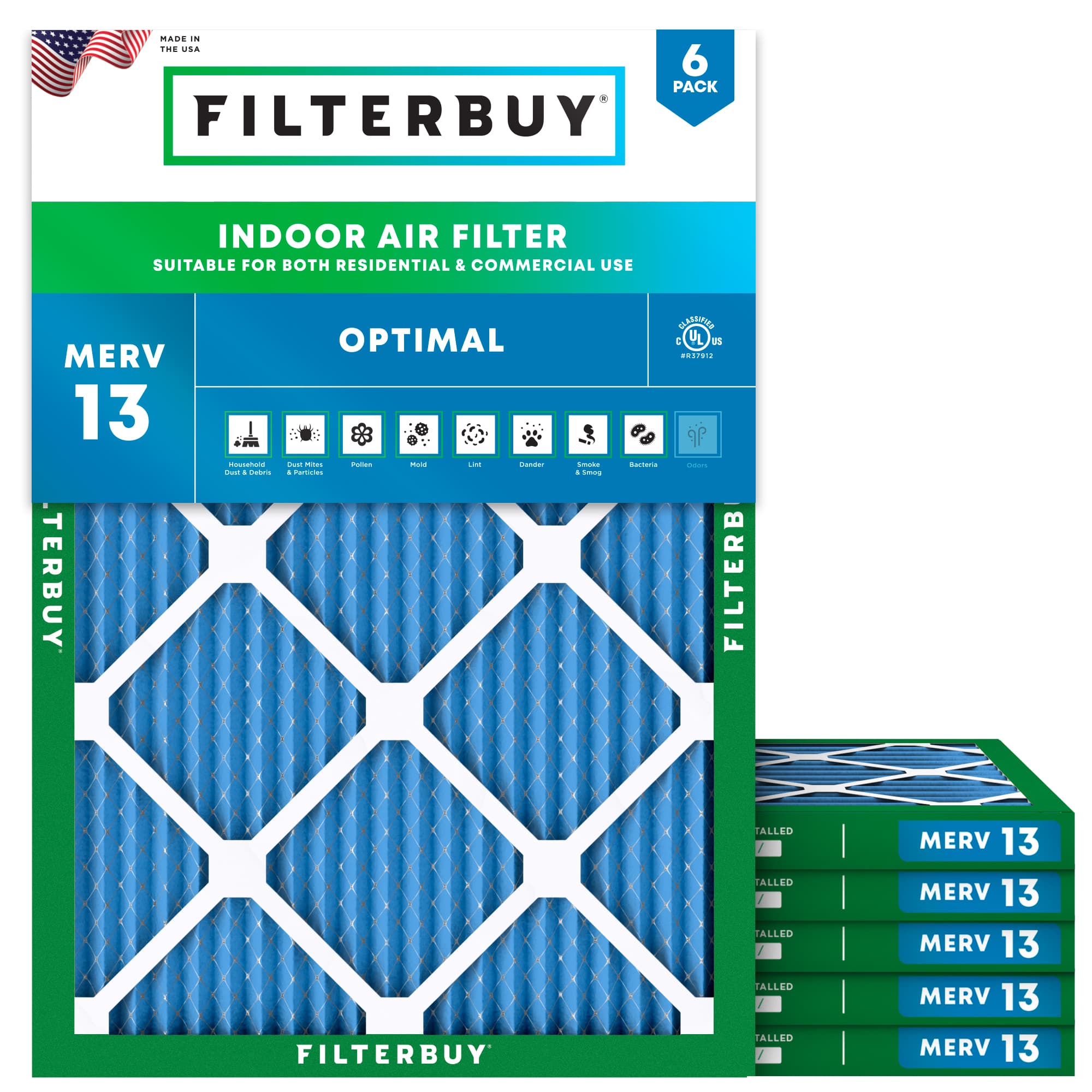
21.5x26x1 MERV 13 Pleated Air Filter
Actual Size: 21.5x26.0x0.75
 Free Delivery
  Factory-Direct Low Prices, Made in the USA
 Hassle-Free Returns & Free Exchanges
RESIDENTIAL AND/OR COMMERCIAL USE
Change Every 3 Months
21.5x26x1 MERV 13 Pleated Air Filter
Actual Size: 21.5x26.0x0.75
Free Delivery Factory-Direct Low Prices, Made in the USAHassle-Free Returns & Free ExchangesRESIDENTIAL AND/OR COMMERCIAL USE
Change Every 3 Months
21.5x26x1 MERV 13 Pleated Air Filter
Actual Size: 21.5x26.0x0.75
Free Delivery Factory-Direct Low Prices, Made in the USAHassle-Free Returns & Free ExchangesRESIDENTIAL AND/OR COMMERCIAL USE
Change Every 3 Months
About
- This is a list 21.5x26x1 MERV 13 air filter replacement for your furnace, air conditioner, heat pump, or HVAC system
- Actual air filter size: 21.5x26.0x0.75
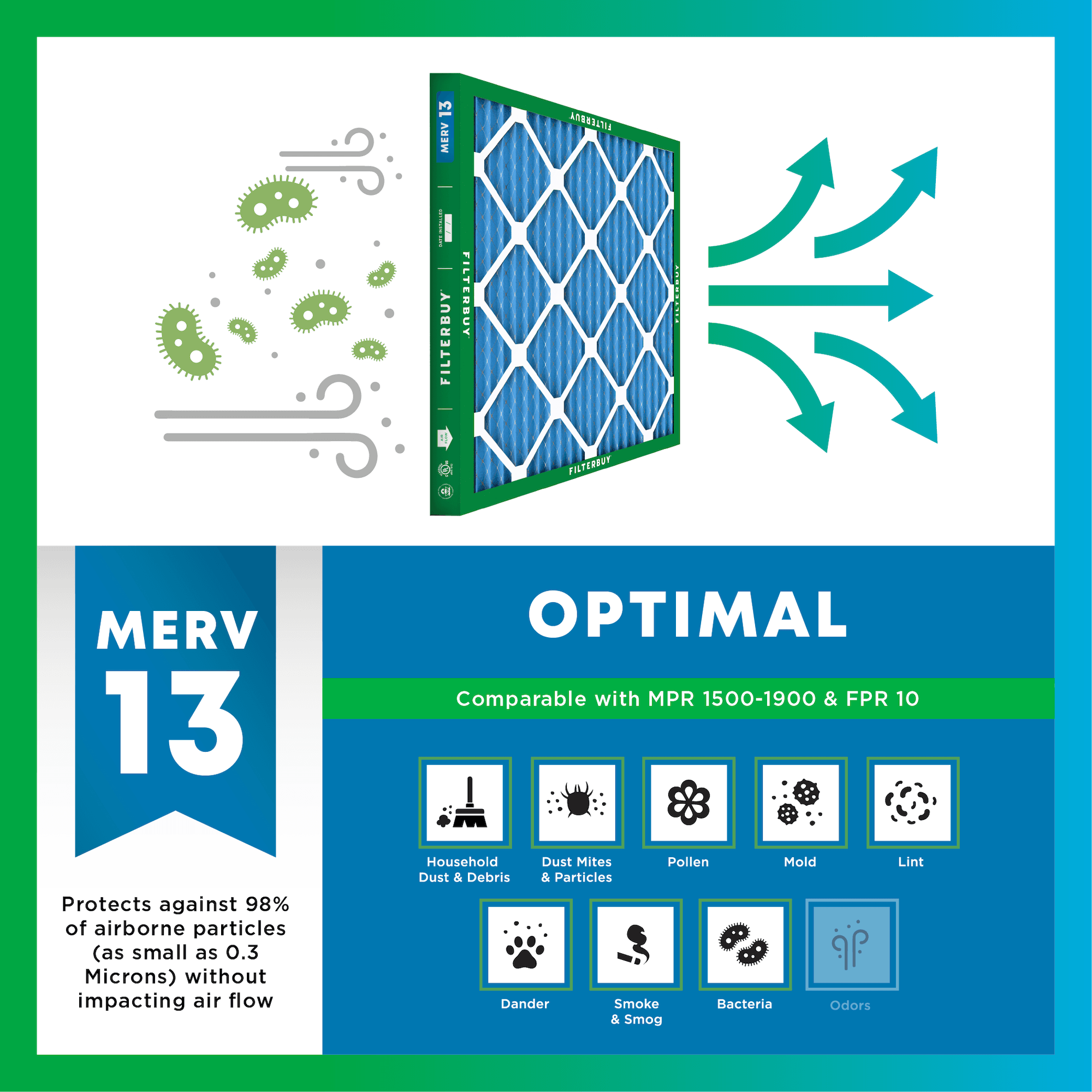
- MERV 13 synthetic media (comparable with MPR 1500/1900 and FPR 10) offers the best protection from dust, pollen, pet dander, mold, smog, bacteria, and virus carrying particles by trapping 98% of airborne particles without impacting air flow.
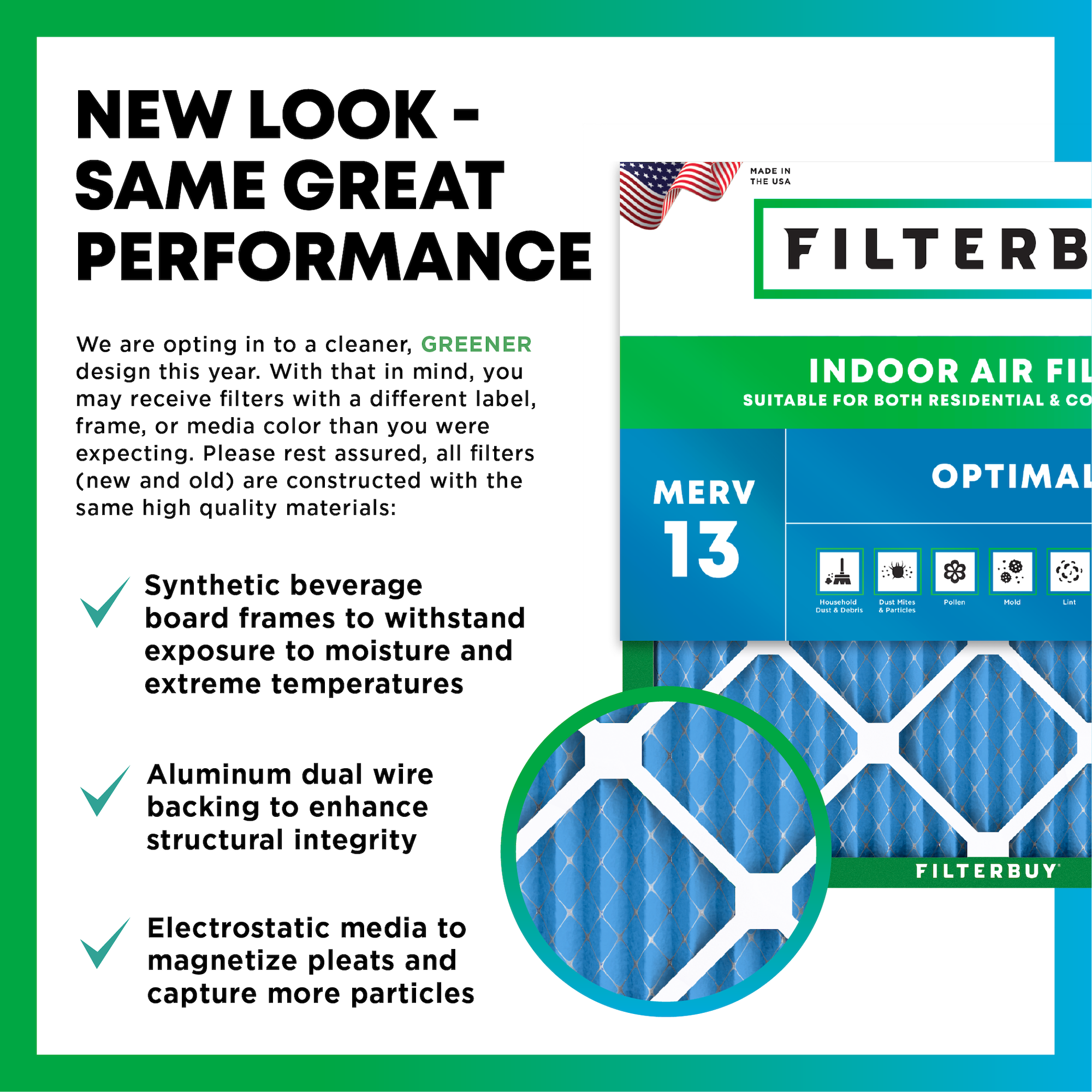
- High-quality construction means electrostatically charged pleated filter media, reinforced wire backing for structural integrity, and a durable frame to resist heat and humidity
- Built to last 3 months. 300% longer than fiberglass models
- 100% manufactured in the United States and designed with recyclable materials
- Learn more about 21.5x26x1 Air Filters
Top-Rated Filters. American Made. Delivered Free.
At Filterbuy, we don't cut corners—we craft high-quality air filters right here in the USA and ship them to your doorstep for free. No delays, no gimmicks—just clean air, made easy. With thousands of five-star reviews and filters built for real life & every HVAC system, it's no wonder why over 4 million families trust Filterbuy.

Proudly Made In The USA

Fast, Free Shipping on Every Order

Premium Materials That Go The Distance

85,000+ 5-Star Reviews From Happy Customers

Save Up to 70% Per Filter with Packs
Things to Know About Filter Sizes

Nominal Size
- The rounded size printed on your filter or HVAC unit (e.g., 21.5x26x1).
- Usually whole numbers to make identifying and ordering easier.
- A label for compatibility—not the exact measurement.

Actual Size
- The true, trimmed dimensions of the filter (e.g., 21.5x26.0x0.75 inches).
- Filters are manufactured slightly smaller so they slide into the filter slot without forcing.
- If you don't know your nominal size, measure your filter to get the actual size, then round up to find the nominal size to search on our site.

Why the difference?
- Nominal sizes simplify shopping and standardize categories.
- Actual sizes ensure the filter fits properly inside your HVAC's filter rack.
How To Find Your Nominal Size When You Don't Know It


Measure length × width × depth with a tape measure to find the actual size.

Round up each dimension to the nearest whole number to get the nominal size. Example: 21.5x26.0x0.75 in → 21.5x26x1 nominal.

Search by nominal size on our site for the best fit.

Why Getting the Right Size Matters
- Too small? Air can bypass the filter, reducing air quality and efficiency.
- Too big? It won't fit—risking bent frames and airflow issues.
- Just right? You get maximum performance, better filtration, and cleaner air.

Free Exchange Policy
If the filter you buy doesn't fit, we'll send you a better size.

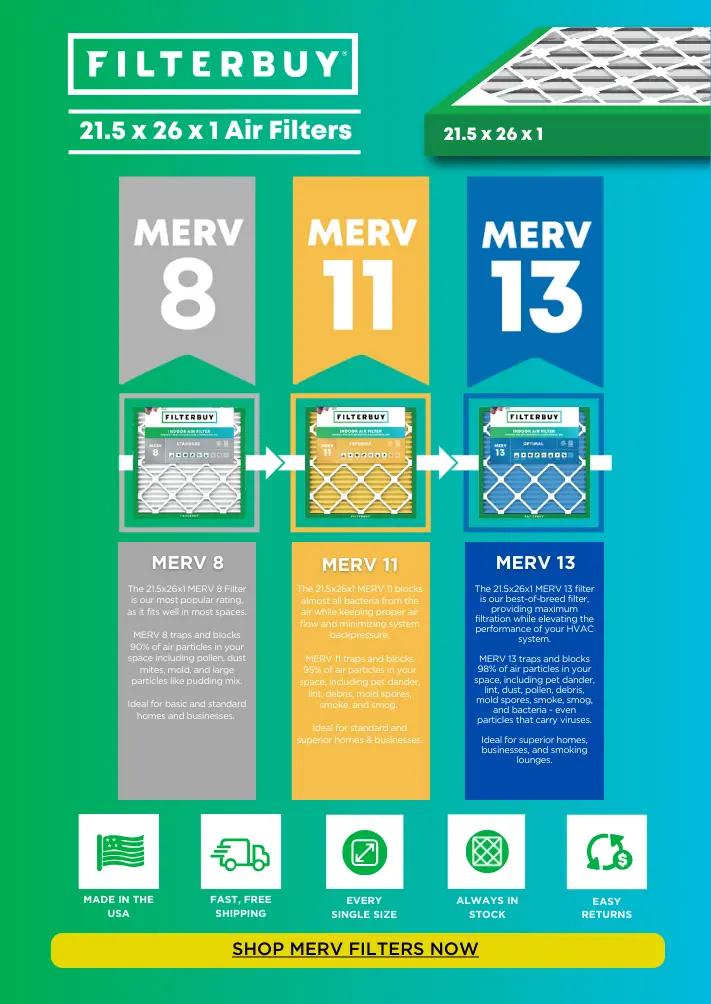
What's a MERV Rating?
MERV stands for Minimum Efficiency Reporting Value—but don't let the technical name fool you. It's just a way to rate how well an air filter traps stuff like dust, pollen, pet dander, and smoke. The higher the MERV number, the more particles it catches—and the cleaner your air will be.

Merv 8
Comparable to:FPR: 4-7
MPR: 600-1000
 Dust & Debris
 Dust Mites & Particles
 Pollen
 Mold
Mold Lint
Lint Dander
Merv 11
Comparable to:FPR: 6-9
MPR: 1200-1550
Dust & DebrisDust Mites & ParticlesPollenMoldLintDander Smoke & Smog
Merv 13
Comparable to:FPR: 10
MPR: 1900-2800
Dust & DebrisDust Mites & ParticlesPollenMoldLintDanderSmoke & Smog Bacteria
MERV 8
Comparable to:FPR: 4-7MPR: 600-1000


MERV 11
Comparable to:FPR: 6-9MPR: 1200-1550

MERV 13
Comparable to:FPR: 10MPR: 1900-2800
What Makes Our Filters Last 90 Days? Quality, From the Inside Out
We build every Filterbuy filter to deliver reliable 90-day performance—thanks to smart design and premium materials that do the heavy lifting. Here's what makes the difference:
Pleated Design
More pleats = more surface area to capture dust and debris, keeping your air cleaner longer.
Electrostatically Charged Media
Pleats are magnetized to attract and trap microscopic particles—like pet dander, pollen, and smoke.
Synthetic Beverage Board Frame
Engineered to resist warping in extreme temperatures and high humidity.

Aluminum Dual Wire Backing
A layer of metal reinforcement keeps pleats evenly spaced and structurally sound—no sagging, even at high airflow.
Made in the USA
Assembled with care. Built to perform. Ships fast, free, and reliably from our U.S. facilities.
How to Install Your Filter in 4 Simple Steps

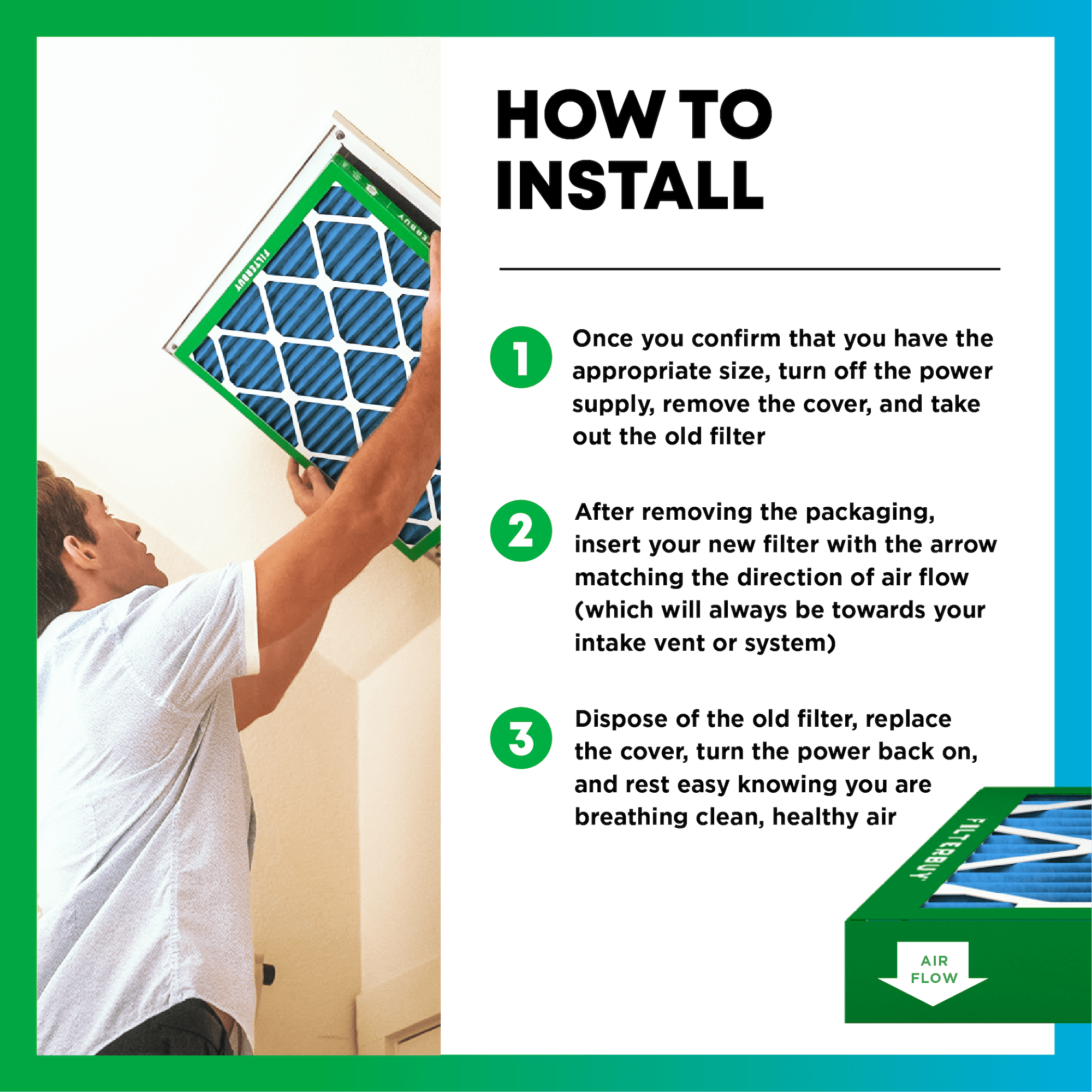
Turn Off Your HVAC SystemSafety first.

Remove The Old FilterLook for the airflow arrow and make note of the direction.

Slide In Your New FilterArrow should point toward the system (same direction as before).

Turn Your System Back OnAnd enjoy the fresh, clean air.

Never forget to replace your air filter again.
- Save 5% on every order
- Choose Your Delivery Schedule
- Edit, Skip, or Cancel Anytime.
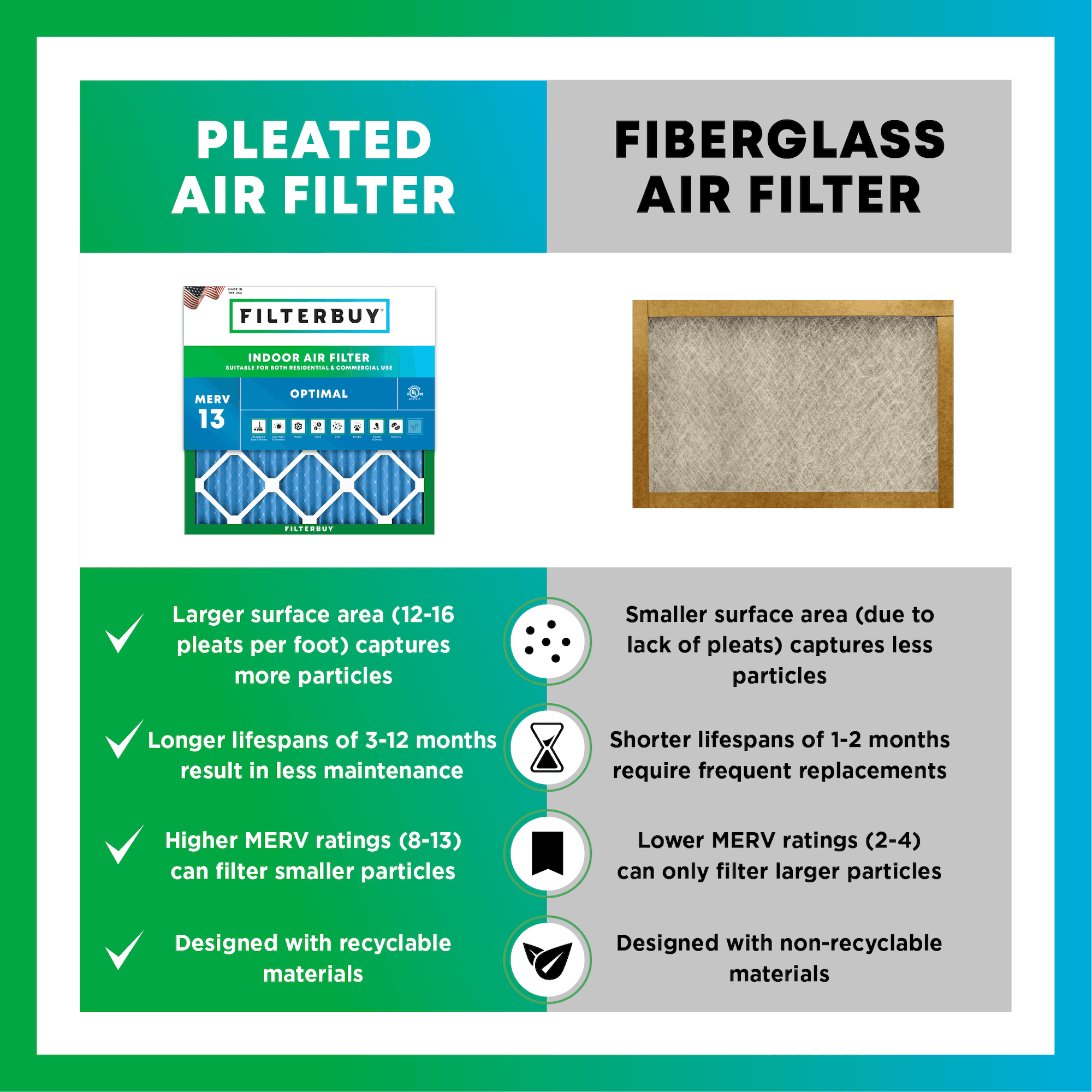
Pleated Filters vs. Fiberglass—What's the Difference?
Not all air filters are created equal. Pleated filters don't just last longer—they actually clean your air better. Here's how they stack up:

Pleated Filters
Efficiency:
High (MERV 8–13) – Traps more particles
Lifespan:
90 days – Long-lasting performance
Air Quality:
Excellent – Cleaner, healthier air
Materials:
Recyclable and durable

Fiberglass Filters
Efficiency:
Low (MERV 4 or less) – Misses small stuff
Lifespan:
30 days or less – Replace often
Air Quality:
Minimal – Basic protection only
Materials:
Thin, flimsy, and not recyclable
Pleated filters are a no-brainer—more protection, less hassle, and better air for your home.
How Often Should You Change Your Filter?
Changing your filter on time keeps your HVAC system running efficiently—and helps protect your lungs from dust, allergens, and airborne irritants. Here's how often to swap it out based on your needs:

Every 90 Days
Standard ScheduleFor most homes without pets or special air quality concerns. Great for general upkeep and energy efficiency.

Every 60 Days
If You Have Pets or AllergiesShedding fur, dander, and allergy triggers can build up fast. Changing your filter every two months helps keep the air fresher and symptoms at bay.

Every 30 Days
If You Have Respiratory Concerns or Live in Smog/Wildfire ZonesFor households affected by smoke, pollution, or respiratory conditions, monthly changes ensure maximum protection.

Want to stay on track? Set a reminder—or skip the stress with auto-delivery so fresh filters show up right when you need them.
Don't Just Take Our Word For It...
Got More Questions? We've Got Answers.
Product Specifications
| Nominal Size | 21.5 x 26 x 1 inches |
| Actual Size | 21.5 x 26.0 x 0.75 inches |
| Filter Type | Pleated |
| Media | Electrostatically Charged |
| Frame | Beverage Board |
| MERV Ratings Available | 8, 11, 13 |
| Lifespan | Up to 90 Days |
| Origin | Made in USA |
Wildfire Smoke Season: Is 21.5x26x1 MERV 13 Enough Protection?
When wildfire smoke rolls in and air quality alerts flash across your phone, one question becomes urgent: Is your home's air filter up to the task?
At Filterbuy, we've been manufacturing air filters for over a decade and have helped more than two million households breathe cleaner air. After years of fielding customer questions during fire season—and testing countless filters in real-world conditions—we understand the anxiety that comes with watching that orange haze settle over your neighborhood.
Here's what you need to know upfront: A 21.5x26x1 MERV 13 filter can capture approximately 85% of the fine particulate matter (PM2.5) found in wildfire smoke. The EPA considers MERV 13 the minimum recommended rating for smoke filtration in residential HVAC systems. But "enough protection" depends on several factors we'll explore in this guide—from your home's construction to the severity of smoke in your area.
Whether you're preparing for fire season or already dealing with smoky conditions, this guide will help you understand exactly what MERV 13 protection offers and how to maximize its effectiveness for your family.
TL;DR: Quick Answers
Is MERV 13 enough for wildfire smoke? Yes, for most homes—it's the EPA's minimum recommendation.
How much smoke does it block? Approximately 85% of PM2.5 particles.
What makes it work effectively? Proper fit, regular replacement, continuous system operation, and a sealed home.
When do I need more protection? Severe smoke events (AQI 200+), respiratory conditions, or vulnerable household members. Add portable HEPA purifiers.
How often to replace during the smoke season? Every 30-60 days, or sooner if visibly dirty.
Top 5 Takeaways
MERV 13 is the EPA's minimum recommended filter rating for wildfire smoke, capturing approximately 85% of harmful PM2.5 particles.
Filter fit matters as much as filter rating—a perfectly fitting MERV 13 outperforms a higher-rated filter with gaps.
Replace filters every 30-60 days during active smoke events, not the standard 90-day schedule.
Run your HVAC fan continuously during smoke events for constant filtration.
For high-risk situations, layer protection: MERV 13 in your HVAC plus portable HEPA purifiers in key rooms.
Understanding Wildfire Smoke and MERV Ratings
What Makes Wildfire Smoke So Dangerous?
Wildfire smoke isn't just an inconvenience—it's a genuine health hazard. The primary concern is PM2.5, particles measuring 2.5 micrometers or smaller. To put that in perspective, these particles are roughly 30 times smaller than a human hair and small enough to penetrate deep into your lungs and even enter your bloodstream.
Research published in Nature Communications found that wildfire PM2.5 may be up to 10 times more harmful to human respiratory health than particulate matter from other sources. This increased toxicity comes from the complex mix of chemicals released when vegetation, structures, and other materials burn.
How MERV Ratings Work
MERV stands for Minimum Efficiency Reporting Value, a standardized rating system developed by ASHRAE (American Society of Heating, Refrigerating, and Air-Conditioning Engineers). The scale runs from 1 to 20, with higher numbers indicating better filtration of smaller particles.
MERV 13 filters are specifically designed to capture particles in the 0.3 to 1.0 micrometer range—exactly where wildfire smoke particles concentrate. Studies show MERV 13 filters block approximately 85-95% of PM2.5 particles that pass through the filter media.
Is 21.5x26x1 MERV 13 Enough Protection?
The Short Answer: Yes, for Most Homes
A properly installed 21.5x26x1 MERV 13 filter provides meaningful protection against wildfire smoke for most residential situations. The EPA identifies MERV 13 as the minimum filter rating effective for smoke particles, and most newer HVAC systems can handle MERV 13 filters without issues.
When MERV 13 Is Sufficient
• Your HVAC system runs regularly during smoke events
• Your home is reasonably well-sealed (modern construction or updated weatherstripping)
• You're dealing with moderate smoke levels (AQI under 200)
• No household members have severe respiratory conditions
• The filter fits snugly without gaps around the edges
When You May Need Additional Protection
• AQI consistently exceeds 200 (Very Unhealthy to Hazardous)
• Family members have asthma, COPD, or other respiratory conditions
• Your home is older with significant air leaks
• You're in a high-risk fire zone with recurring smoke events
• Infants, the elderly, or immunocompromised individuals live in the home
Maximizing Your MERV 13 Filter's Effectiveness
5 Critical Steps for Smoke Season
1. Ensure Proper Fit: A 21.5x26x1 filter must fit your slot precisely. Even small gaps allow unfiltered air to bypass the media entirely. Measure your filter slot and verify the actual dimensions match.
2. Run Your System on Recirculate: Set your thermostat fan to "On" rather than "Auto" during smoke events. This continuously filters indoor air rather than only when heating or cooling cycles run.
3. Check Filters Monthly: During active smoke events, inspect your filter every 2-4 weeks. Heavy smoke loads can clog a MERV 13 filter in 30-60 days—much faster than normal conditions.
4. Seal Your Home: Close all windows and doors. Seal obvious gaps around door frames. Close fireplace dampers. The less outside air that infiltrates, the more effective your filtration becomes.
5. Consider Supplemental Purifiers: For bedrooms or living areas where you spend the most time, a portable HEPA air purifier provides an additional layer of protection.
"After manufacturing filters for over a decade and working with millions of customers through fire seasons, we've learned that filter fit matters as much as filter rating. A MERV 13 that fits perfectly will outperform a higher-rated filter with gaps around the edges. The key is consistent replacement—especially during smoke events when filters work harder than normal. Your family's protection isn't a one-time purchase; it's an ongoing commitment to clean air."
Essential Resources
• Filterbuy 21.5x26x1 MERV 13 Filters — Shop American-made MERV 13 filters in your exact size
• EPA Guide to Wildfire Smoke and Indoor Air Quality — Official EPA recommendations for protecting indoor air during wildfires
• ASHRAE Filtration and Air Cleaning Resources — Technical guidance on MERV ratings and filtration standards
• AirNow Fire and Smoke Map — Real-time air quality monitoring and smoke forecasts
• CDC Wildfire Smoke Health Effects — Health guidance and protective measures from the CDC
• Filterbuy MERV Rating Guide — Understanding MERV ratings and choosing the right filter
• EPA Research on DIY Air Cleaners — Studies on supplemental air cleaning during smoke events
Supporting Statistics
• 52% of total U.S. PM2.5 emissions come from wildland fires (EPA 2020 National Emissions Inventory)
• Wildfire PM2.5 may be up to 10 times more harmful to respiratory health than PM2.5 from other sources (Nature Communications, 2021)
• MERV 13+ filters capture approximately 85% of PM2.5 particles (ASHRAE Research)
Final Thoughts
Is a 21.5x26x1 MERV 13 filter enough for wildfire smoke? For most households, the honest answer is yes—with important caveats.
MERV 13 represents the EPA's minimum recommendation for smoke filtration, and our decade of manufacturing experience confirms it provides meaningful protection when properly installed and maintained. The keyword is "maintained." A MERV 13 filter working at full capacity will protect your family far better than a higher-rated filter that's overdue for replacement or doesn't fit correctly.
For families with respiratory sensitivities or those in areas with severe, recurring smoke events, we recommend a layered approach: MERV 13 in your HVAC system combined with portable HEPA purifiers in bedrooms and main living areas.
Remember, protecting your family's air quality isn't about finding a single perfect solution—it's about consistent attention to the fundamentals: the right filter, proper fit, regular replacement, and a well-sealed home.
Next Steps: Your Wildfire Smoke Action Plan
1. Verify Your Filter Size: Measure your filter slot to confirm 21.5x26x1 is the correct fit. Check both nominal and actual dimensions.
2. Stock Up Before Fire Season: Order 3-4 MERV 13 filters so you're prepared to replace them more frequently during smoke events.
3. Install and Inspect: Install your new filter and check for gaps. The filter should fit snugly with no visible light around the edges.
4. Set Calendar Reminders: Schedule monthly filter checks during fire season (typically May-October, depending on your region).
5. Monitor Local Air Quality: Bookmark AirNow.gov and check it when you see or smell smoke.
6. Create a Smoke Response Plan: Know which rooms to seal, where to place portable purifiers, and when to consider evacuation.
7. Consider Supplemental Protection: If family members have respiratory conditions, add a portable HEPA purifier for bedroom use during severe smoke events.
FAQ on 21.5x26x1 MERV 13 Air Filters
Can my HVAC system handle a MERV 13 filter?
Most HVAC systems manufactured in the last 10-15 years can safely run MERV 13 filters. The slight increase in air resistance is typically within normal operating parameters. If your system is older or you're uncertain, check your owner's manual or consult an HVAC technician. Signs your system may struggle include reduced airflow from vents or the system cycling on and off frequently.
How often should I replace my MERV 13 filter during wildfire season?
During active smoke events, inspect your filter every 2-4 weeks and replace it every 30-60 days. Heavy smoke loads can reduce a filter's effectiveness much faster than normal dust and allergens. If the filter media appears dark gray or black, replace it immediately, regardless of how long it's been installed.
Is MERV 13 as good as HEPA for wildfire smoke?
HEPA filters capture more particles (99.97% vs. approximately 85% for MERV 13), but they're typically not compatible with standard residential HVAC systems due to their high air resistance. MERV 13 represents the best balance of filtration efficiency and HVAC compatibility for most homes. For maximum protection, use MERV 13 in your central system and add portable HEPA purifiers in key rooms.
What's the difference between a 21.5x26x1 and a 22x26x1 filter?
These are different filter sizes with different actual dimensions. A 21.5x26x1 filter has actual dimensions close to 21.5" x 26" x 0.75", while a 22x26x1 has slightly larger actual dimensions. Using the wrong size creates gaps that allow unfiltered air to bypass the filter media entirely. Always measure your filter slot and match the exact nominal size printed on your current filter.
Should I run my HVAC fan continuously during smoke events?
Yes. Set your thermostat fan to "On" rather than "Auto" during smoke events. This keeps air continuously circulating through your MERV 13 filter even when the heating or cooling cycle isn't running, providing constant filtration. Be aware that this will increase filter loading and energy use, so plan for more frequent filter checks.
Protect Your Family This Fire Season
Ready to upgrade your protection? Shop Filterbuy's American-made 21.5x26x1 MERV 13 filters—manufactured in our Alabama, Pennsylvania, Texas, and Utah facilities and delivered directly to your door with free shipping on orders over $50. Stock up before fire season so you're ready when smoke arrives.