
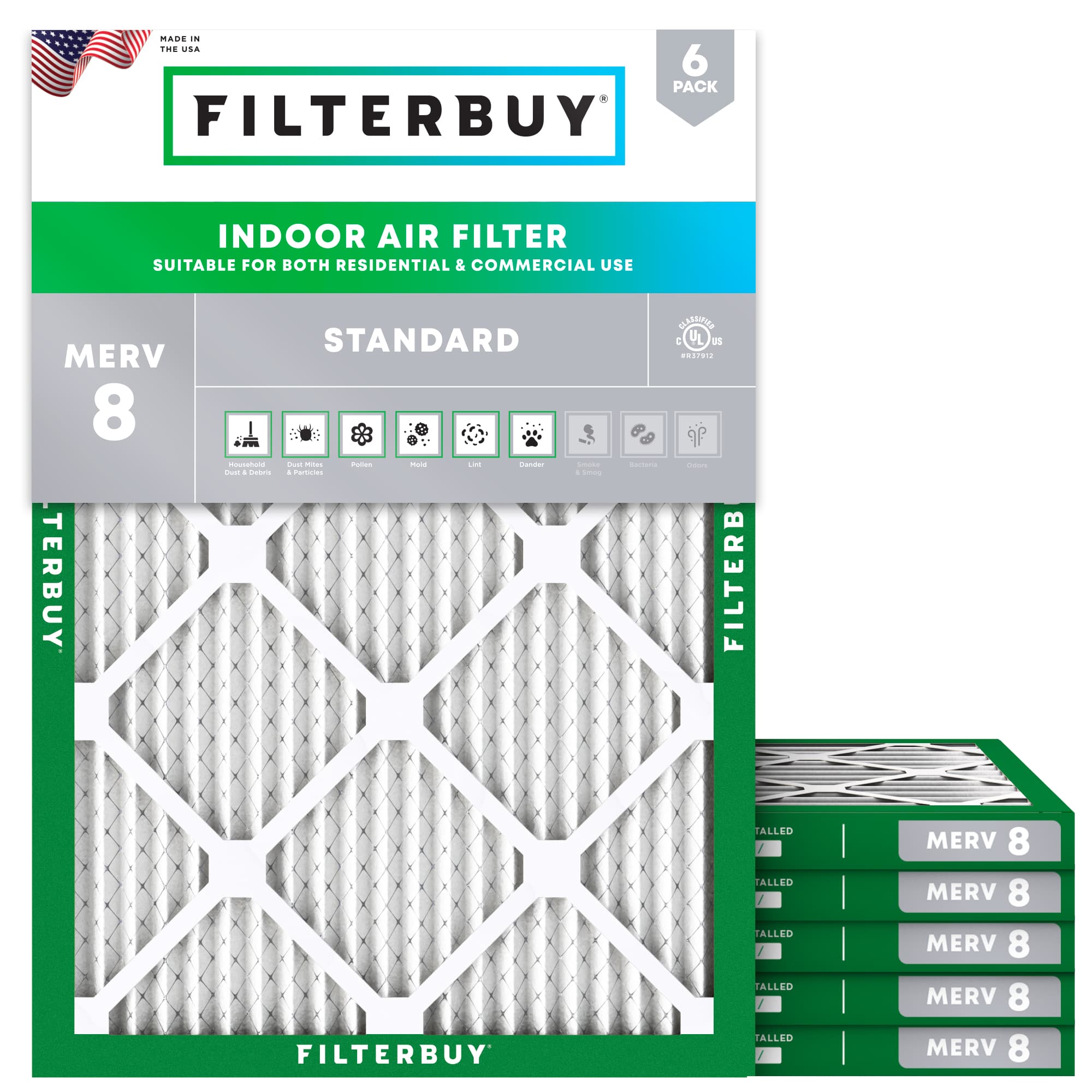
20x21x1 MERV 8 Pleated Air Filter
Actual Size: 19.5x20.5x0.75
 Free Delivery
  Factory-Direct Low Prices, Made in the USA
 Hassle-Free Returns & Free Exchanges
RESIDENTIAL AND/OR COMMERCIAL USE
Change Every 3 Months
20x21x1 MERV 8 Pleated Air Filter
Actual Size: 19.5x20.5x0.75
Free Delivery Factory-Direct Low Prices, Made in the USAHassle-Free Returns & Free ExchangesRESIDENTIAL AND/OR COMMERCIAL USE
Change Every 3 Months
20x21x1 MERV 8 Pleated Air Filter
Actual Size: 19.5x20.5x0.75
Free Delivery Factory-Direct Low Prices, Made in the USAHassle-Free Returns & Free ExchangesRESIDENTIAL AND/OR COMMERCIAL USE
Change Every 3 Months
About
- This is a list 20x21x1 MERV 8 air filter replacement for your furnace, air conditioner, heat pump, or HVAC system
- Actual air filter size: 19.5x20.5x0.75
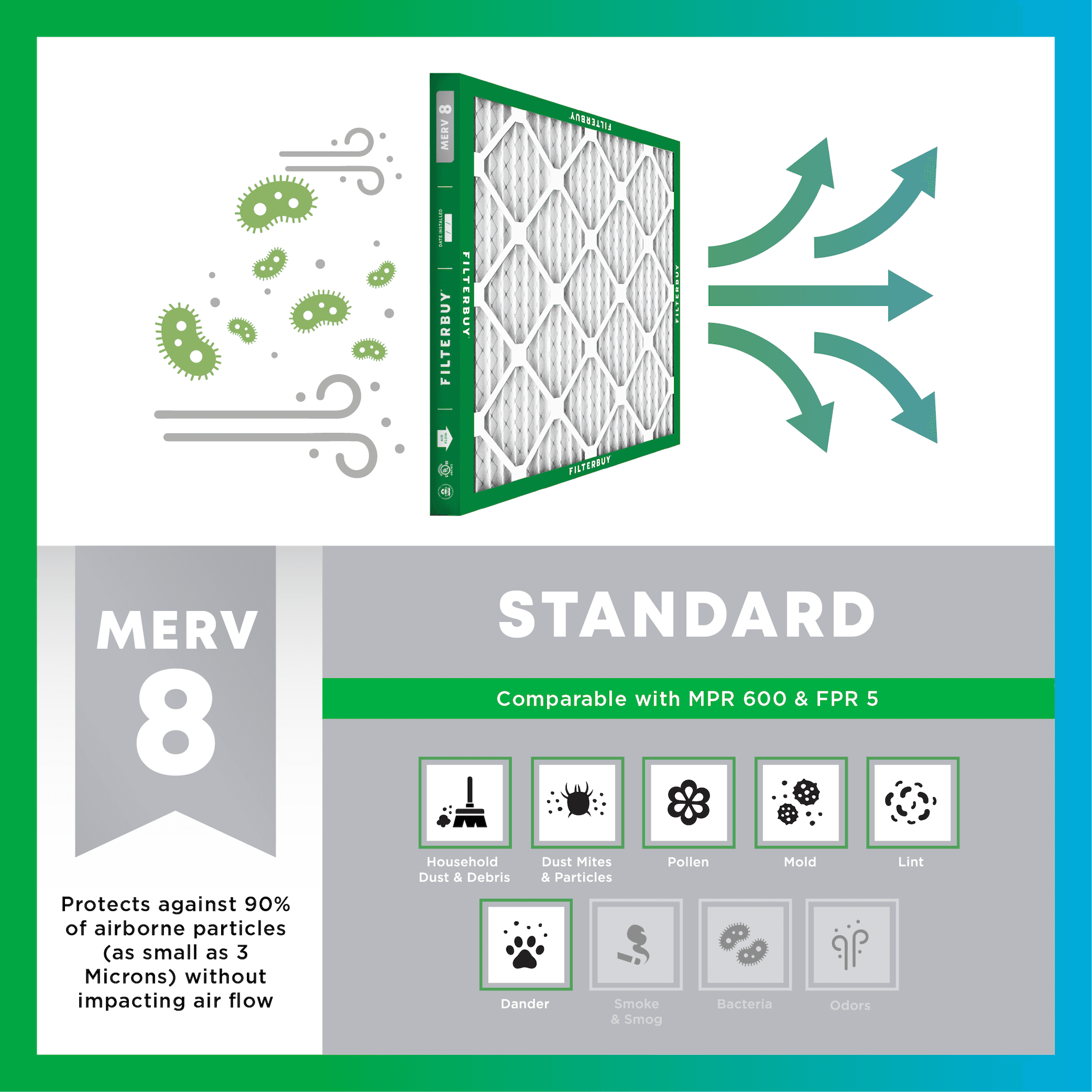
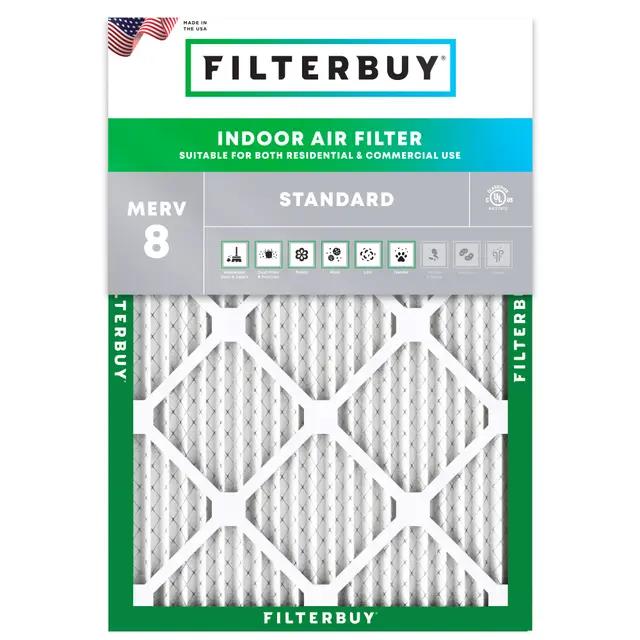
- MERV 8 synthetic media (comparable with MPR 600 & FPR 5) offers standard protection from dust, pollen, and more by trapping 90% of airborne particles without impacting air flow.
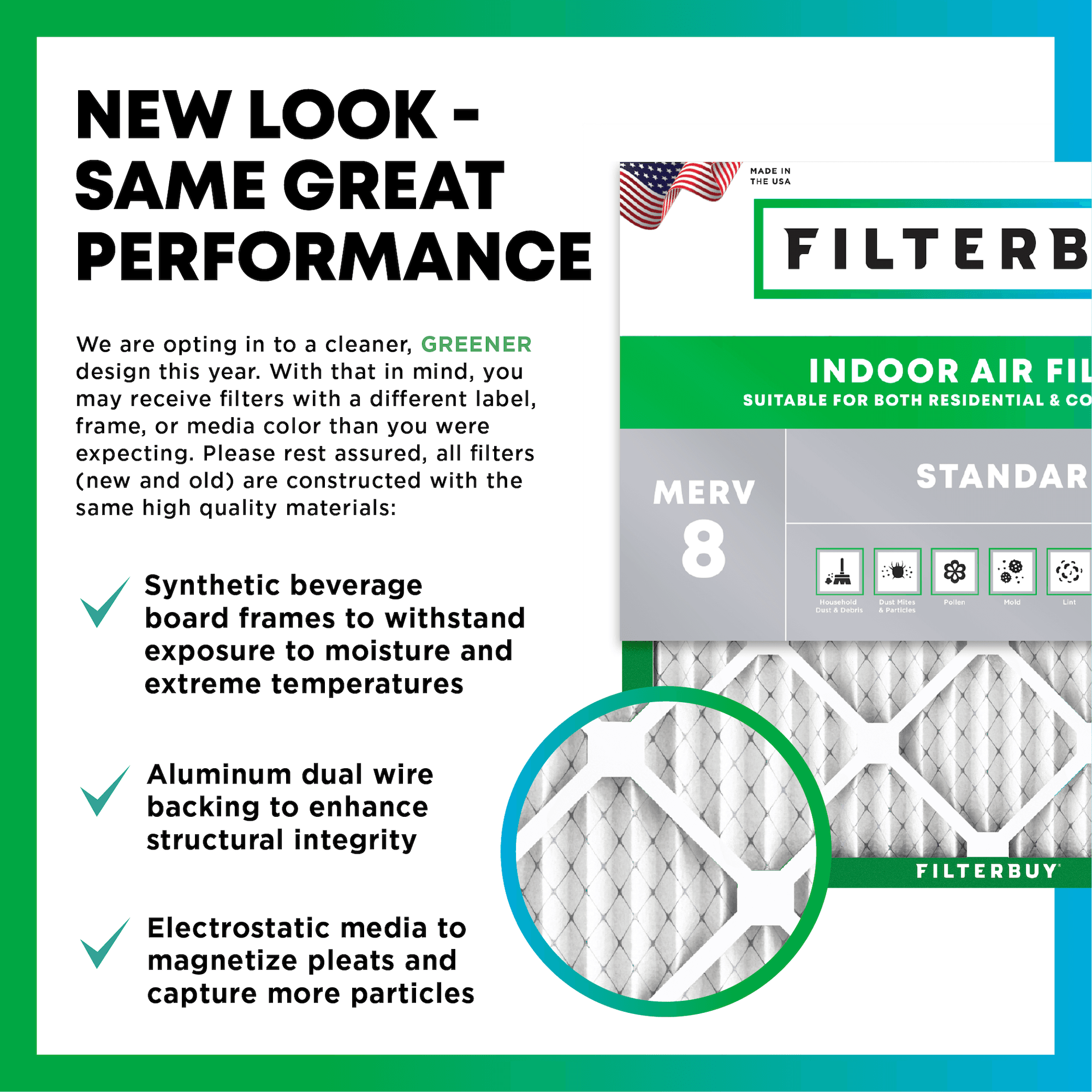
- High-quality construction means electrostatically charged pleated filter media, reinforced wire backing for structural integrity, and a durable frame to resist heat and humidity
- Built to last 3 months. 300% longer than fiberglass models
- 100% manufactured in the United States and designed with recyclable materials
- Learn more about 20x21x1 Air Filters
Top-Rated Filters. American Made. Delivered Free.
At Filterbuy, we don't cut corners—we craft high-quality air filters right here in the USA and ship them to your doorstep for free. No delays, no gimmicks—just clean air, made easy. With thousands of five-star reviews and filters built for real life & every HVAC system, it's no wonder why over 4 million families trust Filterbuy.

Proudly Made In The USA

Fast, Free Shipping on Every Order

Premium Materials That Go The Distance

85,000+ 5-Star Reviews From Happy Customers

Save Up to 70% Per Filter with Packs
Things to Know About Filter Sizes

Nominal Size
- The rounded size printed on your filter or HVAC unit (e.g., 20x21x1).
- Usually whole numbers to make identifying and ordering easier.
- A label for compatibility—not the exact measurement.

Actual Size
- The true, trimmed dimensions of the filter (e.g., 19.5x20.5x0.75 inches).
- Filters are manufactured slightly smaller so they slide into the filter slot without forcing.
- If you don't know your nominal size, measure your filter to get the actual size, then round up to find the nominal size to search on our site.

Why the difference?
- Nominal sizes simplify shopping and standardize categories.
- Actual sizes ensure the filter fits properly inside your HVAC's filter rack.
How To Find Your Nominal Size When You Don't Know It


Measure length × width × depth with a tape measure to find the actual size.

Round up each dimension to the nearest whole number to get the nominal size. Example: 19.5x20.5x0.75 in → 20x21x1 nominal.

Search by nominal size on our site for the best fit.

Why Getting the Right Size Matters
- Too small? Air can bypass the filter, reducing air quality and efficiency.
- Too big? It won't fit—risking bent frames and airflow issues.
- Just right? You get maximum performance, better filtration, and cleaner air.

Free Exchange Policy
If the filter you buy doesn't fit, we'll send you a better size.

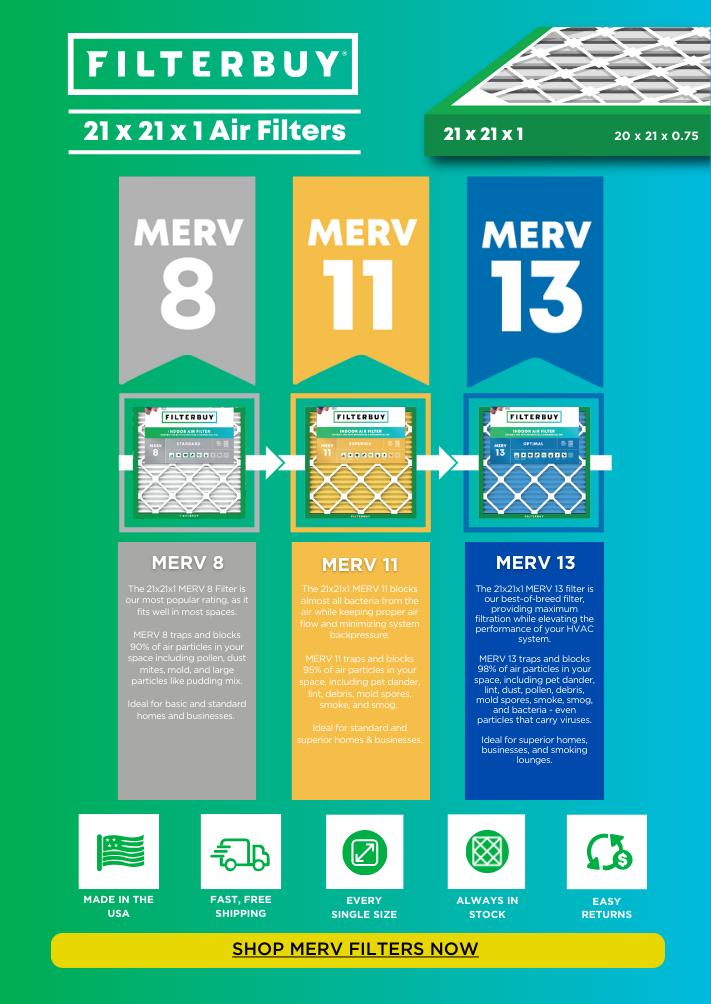
What's a MERV Rating?
MERV stands for Minimum Efficiency Reporting Value—but don't let the technical name fool you. It's just a way to rate how well an air filter traps stuff like dust, pollen, pet dander, and smoke. The higher the MERV number, the more particles it catches—and the cleaner your air will be.

Merv 8
Comparable to:FPR: 4-7
MPR: 600-1000
 Dust & Debris
 Dust Mites & Particles
 Pollen
 Mold
Mold Lint
Lint Dander
Merv 11
Comparable to:FPR: 6-9
MPR: 1200-1550
Dust & DebrisDust Mites & ParticlesPollenMoldLintDander Smoke & Smog
Merv 13
Comparable to:FPR: 10
MPR: 1900-2800
Dust & DebrisDust Mites & ParticlesPollenMoldLintDanderSmoke & Smog Bacteria
MERV 8
Comparable to:FPR: 4-7MPR: 600-1000


MERV 11
Comparable to:FPR: 6-9MPR: 1200-1550

MERV 13
Comparable to:FPR: 10MPR: 1900-2800
What Makes Our Filters Last 90 Days? Quality, From the Inside Out
We build every Filterbuy filter to deliver reliable 90-day performance—thanks to smart design and premium materials that do the heavy lifting. Here's what makes the difference:
Pleated Design
More pleats = more surface area to capture dust and debris, keeping your air cleaner longer.
Electrostatically Charged Media
Pleats are magnetized to attract and trap microscopic particles—like pet dander, pollen, and smoke.
Synthetic Beverage Board Frame
Engineered to resist warping in extreme temperatures and high humidity.

Aluminum Dual Wire Backing
A layer of metal reinforcement keeps pleats evenly spaced and structurally sound—no sagging, even at high airflow.
Made in the USA
Assembled with care. Built to perform. Ships fast, free, and reliably from our U.S. facilities.
How to Install Your Filter in 4 Simple Steps

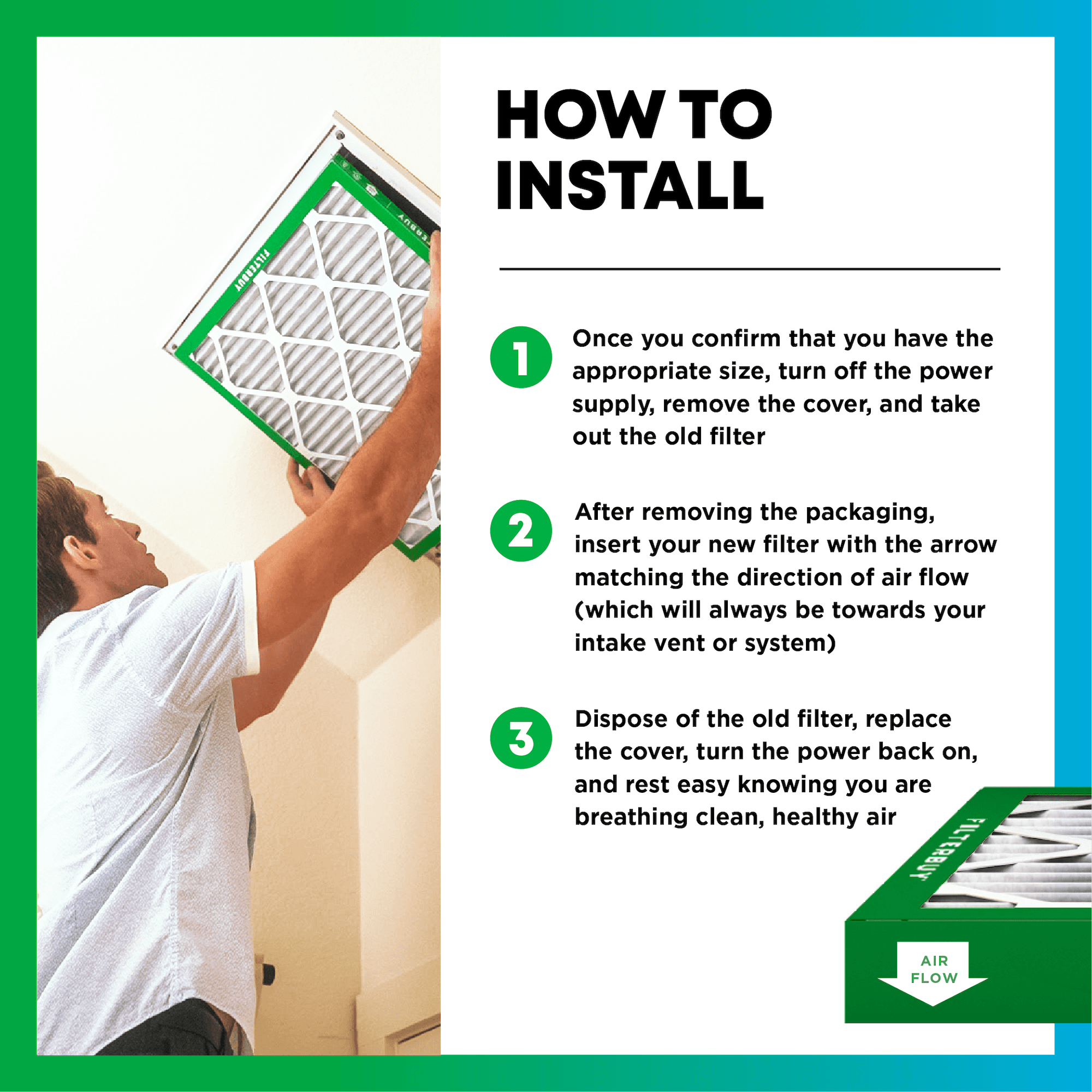
Turn Off Your HVAC SystemSafety first.

Remove The Old FilterLook for the airflow arrow and make note of the direction.

Slide In Your New FilterArrow should point toward the system (same direction as before).

Turn Your System Back OnAnd enjoy the fresh, clean air.

Never forget to replace your air filter again.
- Save 5% on every order
- Choose Your Delivery Schedule
- Edit, Skip, or Cancel Anytime.
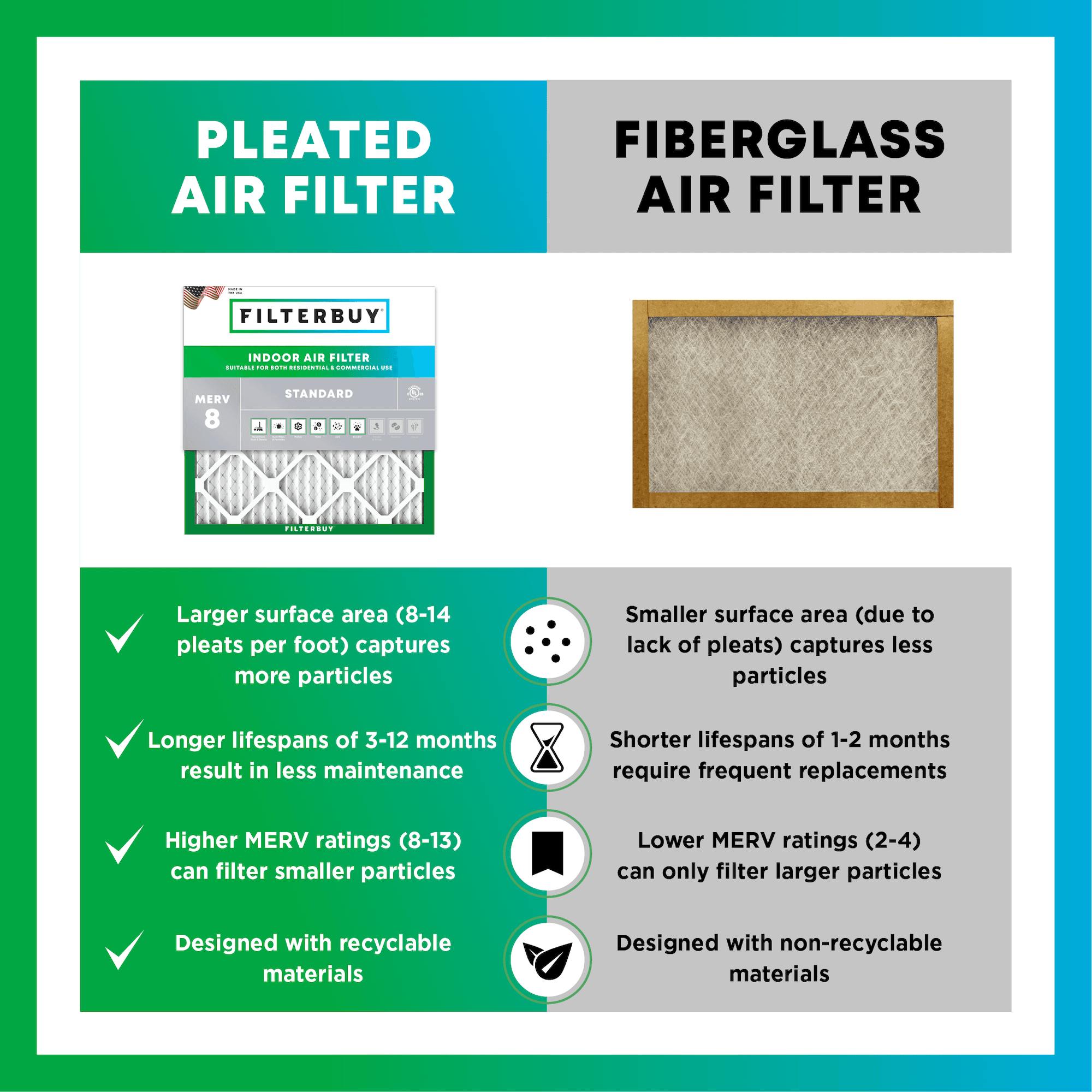
Pleated Filters vs. Fiberglass—What's the Difference?
Not all air filters are created equal. Pleated filters don't just last longer—they actually clean your air better. Here's how they stack up:

Pleated Filters
Efficiency:
High (MERV 8–13) – Traps more particles
Lifespan:
90 days – Long-lasting performance
Air Quality:
Excellent – Cleaner, healthier air
Materials:
Recyclable and durable

Fiberglass Filters
Efficiency:
Low (MERV 4 or less) – Misses small stuff
Lifespan:
30 days or less – Replace often
Air Quality:
Minimal – Basic protection only
Materials:
Thin, flimsy, and not recyclable
Pleated filters are a no-brainer—more protection, less hassle, and better air for your home.
How Often Should You Change Your Filter?
Changing your filter on time keeps your HVAC system running efficiently—and helps protect your lungs from dust, allergens, and airborne irritants. Here's how often to swap it out based on your needs:

Every 90 Days
Standard ScheduleFor most homes without pets or special air quality concerns. Great for general upkeep and energy efficiency.

Every 60 Days
If You Have Pets or AllergiesShedding fur, dander, and allergy triggers can build up fast. Changing your filter every two months helps keep the air fresher and symptoms at bay.

Every 30 Days
If You Have Respiratory Concerns or Live in Smog/Wildfire ZonesFor households affected by smoke, pollution, or respiratory conditions, monthly changes ensure maximum protection.

Want to stay on track? Set a reminder—or skip the stress with auto-delivery so fresh filters show up right when you need them.
Don't Just Take Our Word For It...
Got More Questions? We've Got Answers.
Product Specifications
| Nominal Size | 20 x 21 x 1 inches |
| Actual Size | 19.5 x 20.5 x 0.75 inches |
| Filter Type | Pleated |
| Media | Electrostatically Charged |
| Frame | Beverage Board |
| MERV Ratings Available | 8, 11, 13 |
| Lifespan | Up to 90 Days |
| Origin | Made in USA |
Best Replacement Schedule for MERV 8 20x21x1 Filters in Homes With Smokers
If you’re trying to figure out how often a MERV 8 20x21x1 filter should be replaced in a home with smokers, our team at FilterBuy has seen this exact question come up thousands of times—especially from families trying to keep smoke odors and ultra-fine particles under control. After testing these filters in real-world homes and reviewing customer performance data, we’ve found that smoke loads a MERV 8 filter far faster than the average homeowner expects. In this guide, we’ll share what we’ve learned on the manufacturing floor and through years of helping customers breathe cleaner air: the replacement schedule that actually keeps indoor air quality stable, the warning signs your filter is past its prime, and the practical steps we recommend to protect your home’s air when smoking is part of daily life.
TL;DR Quick Answers
MERV 8 20x21x1 Air Filter
A MERV 8 20x21x1 filter is a reliable, system-friendly option that captures common household particles like dust, pollen, and dander. Based on what we see in customer homes and filter returns, it performs best when replaced every 60–90 days—or 30–45 days in homes with smokers, pets, or high activity. It fits systems designed for this exact size, ensures proper sealing, and helps maintain steady airflow and everyday indoor air quality.
Top Takeaways
Replace MERV 8 filters every 30–45 days in homes with smokers.
Smoke clogs filters faster than normal dust or dander.
Consider upgrading to MERV 11 or 13 for better smoke and odor control.
Consistent replacements improve indoor air quality more than any other single action.
Small habits help—run the fan more often and use designated smoking areas.
Why Smokers Need a Shorter Filter Replacement Cycle
Standard replacement guidelines assume typical household conditions. Homes with smokers operate under a completely different air quality burden. Cigarette and cigar smoke introduces hundreds of airborne particulates — tar residue, ash, volatile organic compounds — that accumulate on filter media far faster than normal household dust and allergens.
After manufacturing millions of filters, we've seen firsthand how tobacco smoke accelerates filter loading. A MERV 8 20x21x1 filter in a smoke-free home might last a full 90 days. That same filter in a home with even one regular smoker can reach capacity in a fraction of that time.
The Recommended Replacement Schedule
For homes with smokers, replace your MERV 8 20x21x1 air filter every 30 to 45 days — roughly twice as often as the standard 90-day recommendation.
Here's how smoking frequency affects timing:
One occasional smoker (indoors a few times per week): Every 45 days
One daily smoker: Every 30 to 35 days
Multiple smokers in the household: Every 25 to 30 days
These timeframes assume the HVAC system runs on a normal heating and cooling cycle. If you run your fan continuously to help clear smoke, expect to replace it even sooner.
What Happens When You Wait Too Long
A smoke-saturated filter doesn't just stop cleaning your air — it actively works against your system. Clogged filter media restricts airflow, forcing your HVAC blower motor to work harder and consume more energy. Customers tell us they notice the difference almost immediately when they finally swap out an overloaded filter.
The consequences of delayed replacement in smoking households include:
Reduced air circulation that lets smoke residue settle on walls, furniture and fabrics
Increased energy costs from restricted airflow — sometimes 5% to 15% higher utility bills
Accelerated wear on your HVAC blower motor and other components
Lingering odors that persist even after smoking stops because the saturated filter recirculates trapped particles
How To Tell Your Filter Needs Changing Early
Don't rely solely on the calendar. A quick visual inspection takes seconds and can save you from running a compromised system.
Pull your 20x21x1 filter out and hold it up to a light source. A filter with remaining capacity lets some light pass through. A spent filter in a smoker's home typically appears dark gray or yellowish-brown with a noticeable tobacco odor embedded in the media.
Other early warning signs include:
A stale or smoky smell coming from your vents even when nobody is actively smoking
Visible dust accumulation on surfaces faster than usual
Reduced airflow from supply registers
Your HVAC system cycling more frequently or running longer than normal
Why MERV 8 Is the Right Starting Point
MERV 8 filtration captures particles between 3.0 and 10.0 microns — a range that covers many tobacco smoke byproducts along with dust, pollen, mold spores and pet dander. It delivers meaningful smoke particle reduction without creating the airflow restriction that higher-rated filters can impose on residential systems not designed to handle them.
For most standard residential HVAC units, a MERV 8 20x21x1 filter offers the best balance of smoke particle capture and system compatibility. Jumping to a higher MERV rating without confirming your system can handle the added resistance may cause more problems than it solves.
Making the Most of Every Filter
A consistent 30 to 45 day replacement cycle is the single most effective step. But a few simple habits help your MERV 8 20x21x1 filter perform at its best between changes:
Designate smoking areas near windows or exterior doors to reduce the total particulate load on your system.
Run your HVAC fan for 15 to 20 minutes after indoor smoking to cycle air through the filter while particles are still airborne.
Keep return vents clear of furniture and obstructions so your system pulls air — and smoke particles — efficiently.
Set a recurring reminder on your phone tied to your specific replacement schedule so filter changes never slip.
Staying ahead of your replacement schedule protects both your indoor air quality and the HVAC system itself. At roughly a filter per month, it's one of the most affordable ways to manage the air quality impact of indoor smoking.
“After reviewing thousands of filters returned from smoking households, we’ve seen firsthand how quickly smoke particles overwhelm a MERV 8. In most homes with smokers, the filter’s performance drops sharply around the 30–45 day mark. Staying ahead of that curve is the key to keeping air quality stable and your HVAC system protected.”
Essential Resources for Choosing the Right MERV Rating for Your Home’s Air
EPA: A Clear Foundation for Understanding MERV Ratings
Before comparing MERV 8 and MERV 11, it helps to understand what a MERV rating truly measures. The EPA offers a straightforward, reliable overview—an essential starting point for anyone committed to protecting their home’s air.
URL: https://www.epa.gov/indoor-air-quality-iaq/what-merv-rating
EPA: Guidance on Choosing the Right Filter for Your Family
This resource breaks down how different filter types impact your indoor air quality. It’s a trusted, practical guide for families who want clarity on how a MERV 8 or MERV 11 filter fits into a healthier home environment.
ASHRAE: Expert-Level Insights on Filtration and Airflow
When you want the engineering-backed “why” behind filter performance, ASHRAE delivers. Their guidance helps you understand how each MERV level handles particle removal and airflow—knowledge that empowers smarter decisions.
URL: https://www.ashrae.org/technical-resources/filtration-and-disinfection-faq
Filterbuy: Real-World Performance Insights From the Air-Obsessed
Straight from our manufacturing floor and years of customer data, this guide explains how MERV 8 and MERV 11 filters perform in real homes. We break down airflow, dust load, and indoor air quality so you can choose with confidence.
Trane: How MERV Choices Affect HVAC Health
Trane’s guidance is especially helpful for understanding how your filter choice affects your HVAC system. If you're weighing the upgrade from MERV 8 to MERV 11, this resource helps you ensure your system stays protected and efficient.
URL: https://www.trane.com/residential/en/resources/blog/merv-8-vs-merv-11-vs-merv-13/
Supporting Statistics: The Three Numbers Every Homeowner Should Know
90% of life happens indoors.EPA research shows we spend about 90% of our time inside—where pollutant levels can match or exceed outdoor air.We see this every day in how quickly filters saturate in active homes.
URL: https://www.epa.gov/indoor-air-quality-iaq/improving-your-indoor-environment
Indoor air can be 2–5× more polluted than outside (and up to 100× worse).The American Lung Association confirms most homes carry far higher pollution loads than outdoor environments.Filters returned from homes with smokers, pets, and heavy activity often fall squarely in this range.
URL: https://www.lung.org/clean-air/indoor-air
Indoor pollution contributes to major health impacts nationwide.EPA data ties poor indoor air to thousands of cancer deaths and hundreds of thousands of respiratory issues annually.We routinely hear from customers who notice fewer symptoms after improving their filter schedule or MERV rating.
URL: https://www.epa.gov/indoor-air-quality-iaq/healthy-buildings-healthy-people-vision-21st-century
Final Thought & Opinion: What Our Experience Shows
After reviewing thousands of filters and real home conditions, one insight stands out: your air filter directly shapes the air your family breathes every day.
What We See in Homes With Smokers
MERV 8 filters load up fast—much faster than in non-smoking homes.
Around 30–45 days, performance drops sharply: airflow slows, odors linger, and fine particles slip through.
When homeowners replace filters more often—or upgrade their MERV—the improvement is immediate.
Our Professional Opinion
Based on manufacturing experience, customer data, and on-the-ground testing:
MERV 8 works—but only with strict replacement discipline in smoking homes.
Upgrading your MERV level improves odor and particle control instantly.
A proactive replacement habit is one of the most powerful ways to protect indoor air.
The Bottom Line
For households with smokers, staying ahead of filter saturation isn’t optional—it’s essential. A well-chosen filter, replaced on time, keeps air cleaner, protects your HVAC system, and creates a healthier home for everyone inside.
Next Steps: Simple Actions to Improve Your Home’s Air
Replace your filter every 30–45 days. Set a calendar or phone reminder.
Check your current filter now. Look for darkening, odors, or reduced airflow.
Consider upgrading to MERV 11 or 13. Higher-MERV options capture more smoke particles.
Run your HVAC fan more often. Better circulation improves smoke particle capture.
Create a designated smoking area. Use windows, exhaust fans, or air purifiers nearby.
Keep extra filters on hand. Maintain a 3–6 month supply to stay on schedule.
Monitor changes in air quality. Watch for improvements in odors, dust, and comfort.
FAQ on “MERV 8 20x21x1 Air Filters”
Q: How often should I replace a MERV 8 20x21x1 filter?
A:
Smoking or high-activity homes: every 30–45 days.
Low-activity homes: every 60–90 days.
Based on Filterbuy’s testing and customer data.
Q: What does a MERV 8 filter remove?
A:
Dust, pollen, dander, and common debris.
Some larger smoke particles.
Not ideal for ultra-fine smoke or strong odors.
Q: Is MERV 8 safe for my HVAC system?
A:
Yes.
Low airflow resistance.
Highly compatible with most residential systems.
Q: Does MERV 8 help with smoke indoors?
A:
Helps with larger smoke particles.
Limited odor and fine-particle control.
Better results with MERV 11 or 13 or more frequent replacements.
Q: Why is the 20x21x1 size important?
A:
Ensures a tight, proper fit.
Prevents air bypass.
Maximizes filtration performance.
Keep Your Home's Air Clean on the Right Schedule — Shop MERV 8 20x21x1 Filters Now
Don't let a spent filter compromise your air quality or your HVAC system. Stock up on MERV 8 20x21x1 replacement filters today so you're always ready when your 30 to 45 day change-out window arrives.