
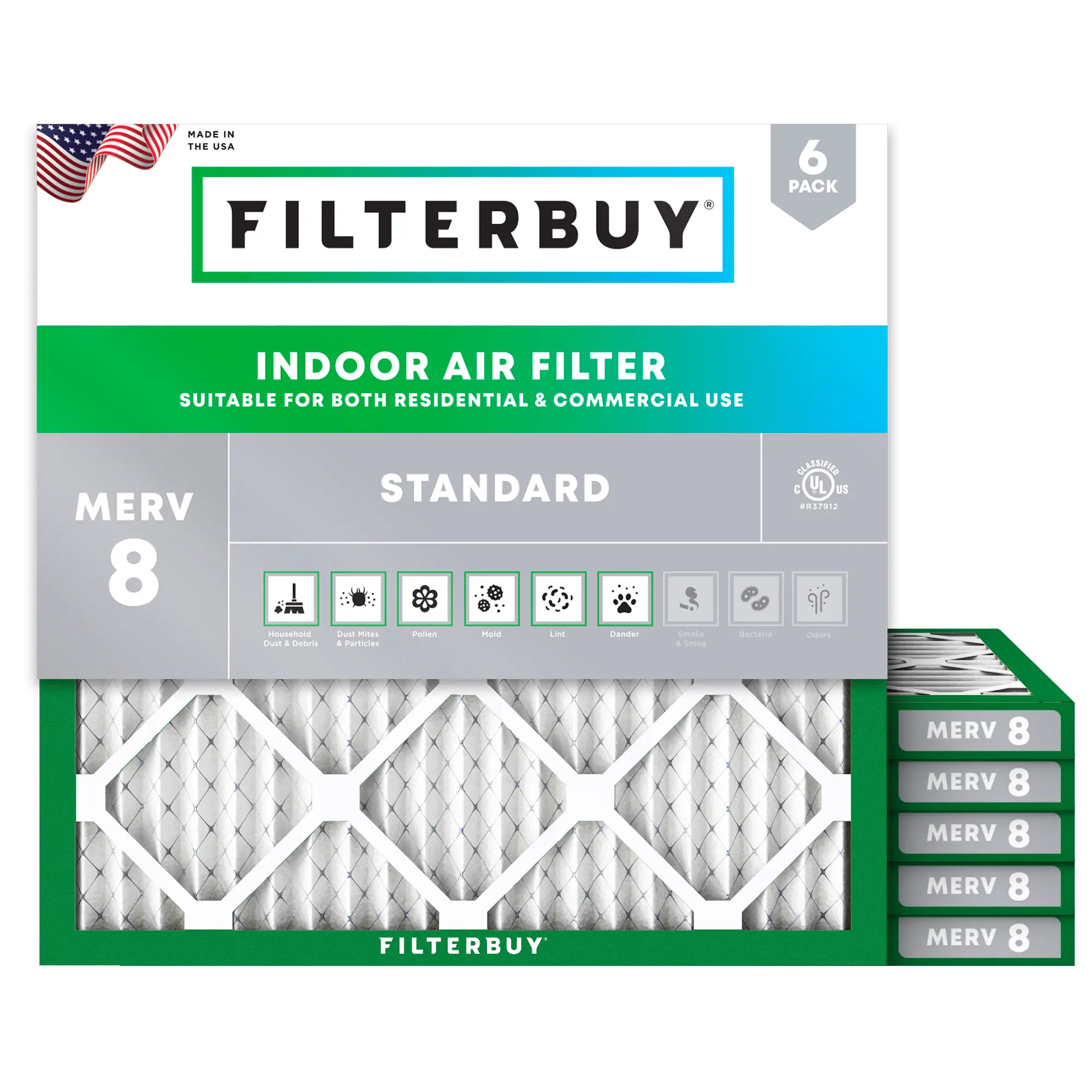
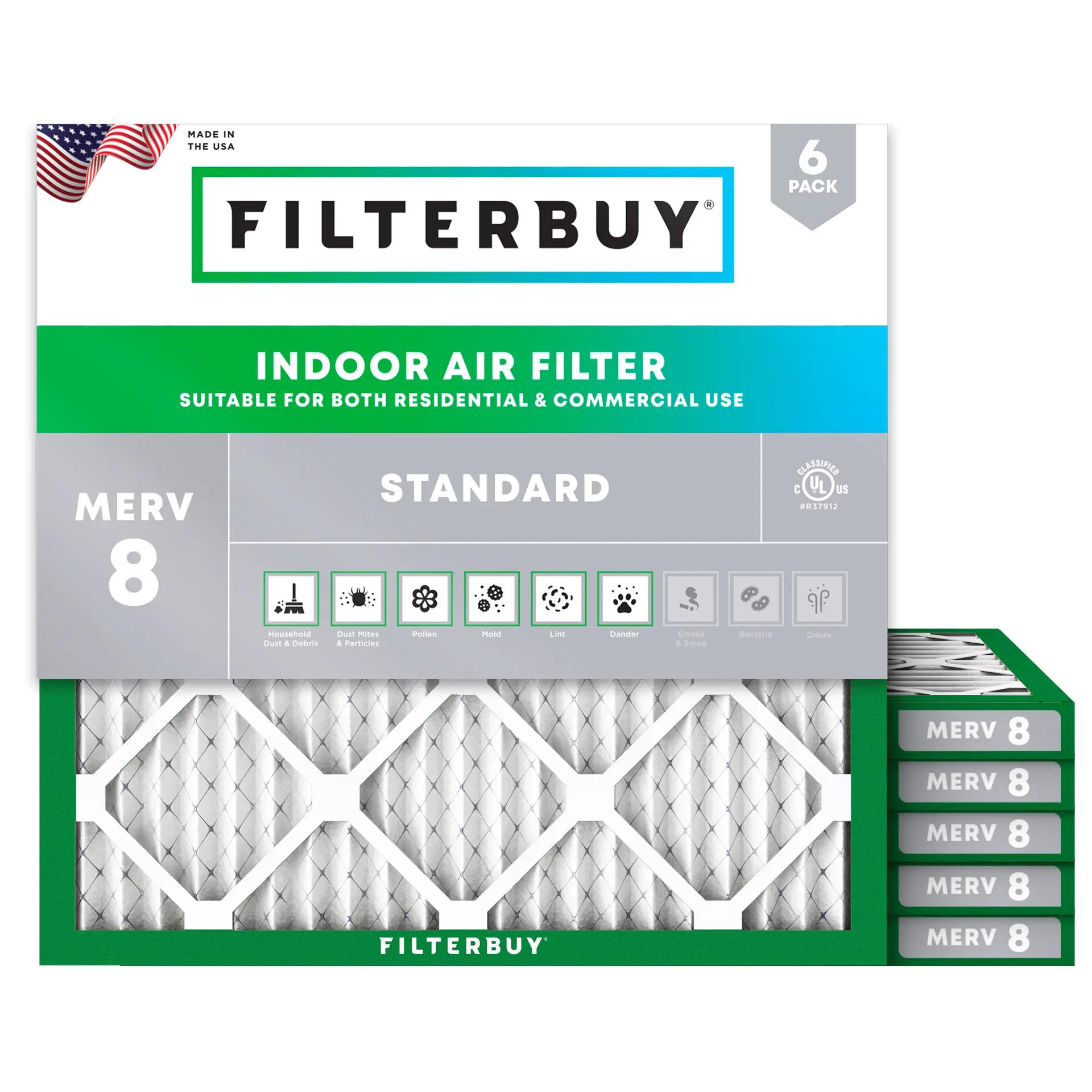
19x19x1 MERV 8 Pleated Air Filter
Actual Size: 19.0x19.0x0.75
 Free Delivery
  Factory-Direct Low Prices, Made in the USA
 Hassle-Free Returns & Free Exchanges
RESIDENTIAL AND/OR COMMERCIAL USE
Change Every 3 Months
19x19x1 MERV 8 Pleated Air Filter
Actual Size: 19.0x19.0x0.75
Free Delivery Factory-Direct Low Prices, Made in the USAHassle-Free Returns & Free ExchangesRESIDENTIAL AND/OR COMMERCIAL USE
Change Every 3 Months
19x19x1 MERV 8 Pleated Air Filter
Actual Size: 19.0x19.0x0.75
Free Delivery Factory-Direct Low Prices, Made in the USAHassle-Free Returns & Free ExchangesRESIDENTIAL AND/OR COMMERCIAL USE
Change Every 3 Months
About
- This is a list 19x19x1 MERV 8 air filter replacement for your furnace, air conditioner, heat pump, or HVAC system
- Actual air filter size: 19.0x19.0x0.75
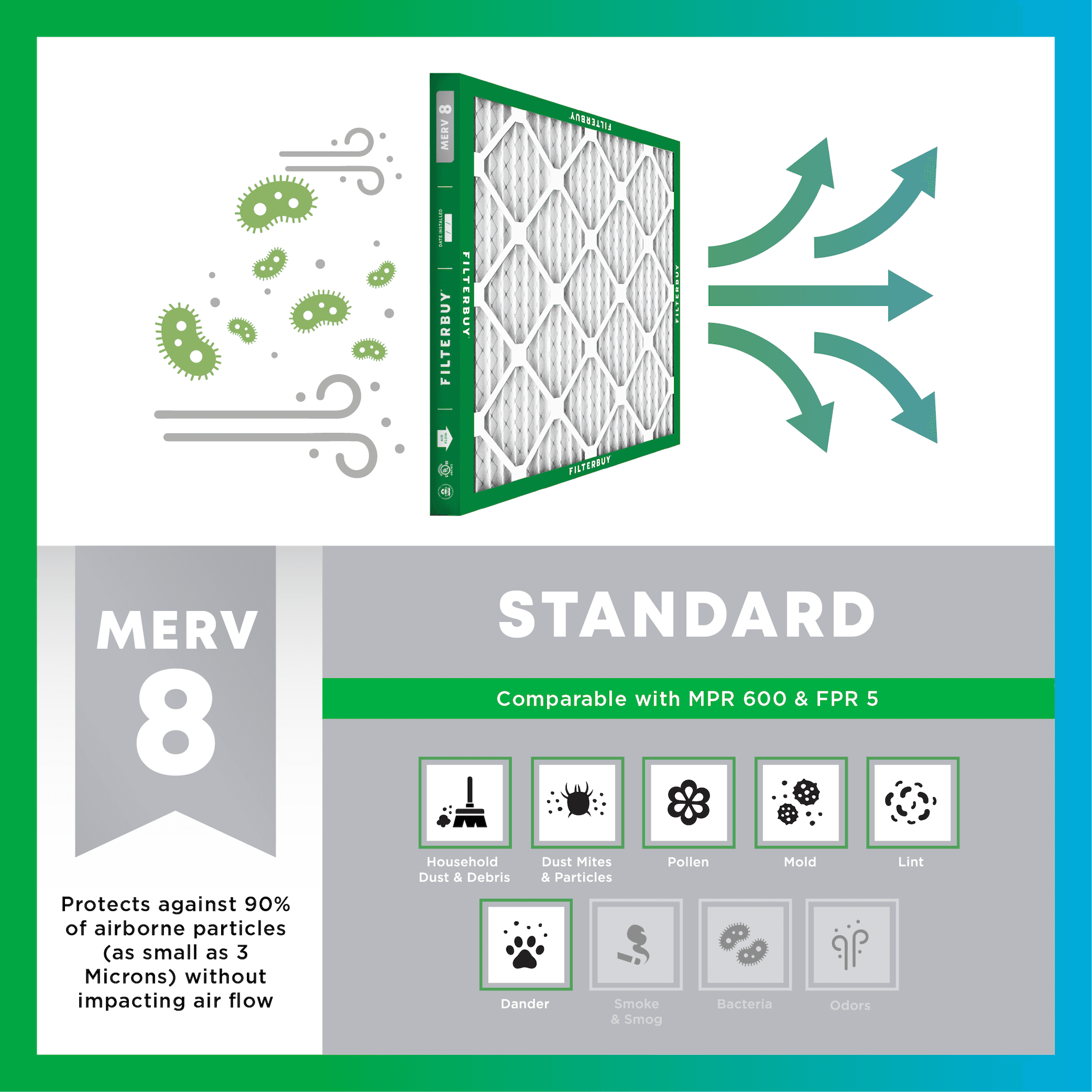
- MERV 8 synthetic media (comparable with MPR 600 & FPR 5) offers standard protection from dust, pollen, and more by trapping 90% of airborne particles without impacting air flow.
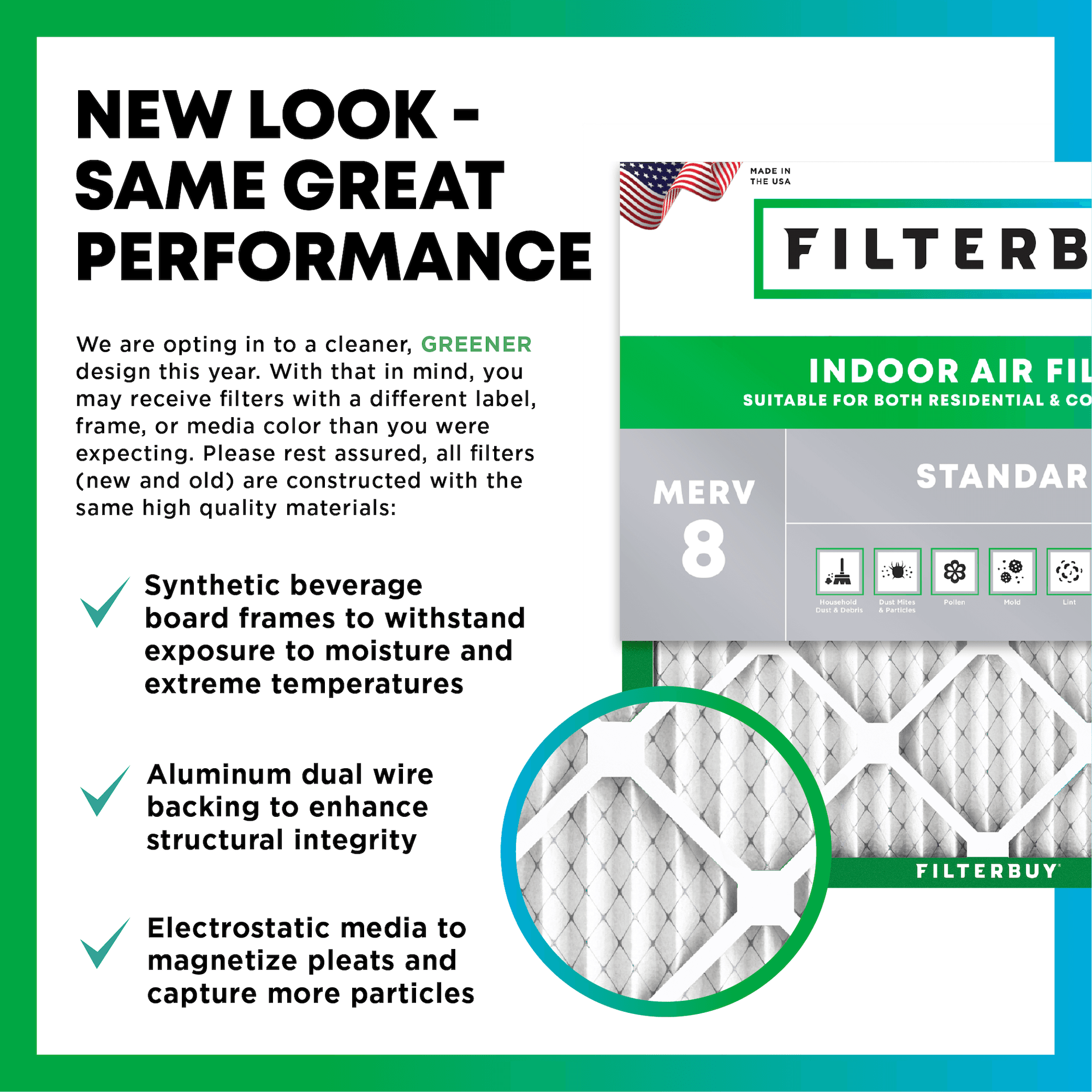
- High-quality construction means electrostatically charged pleated filter media, reinforced wire backing for structural integrity, and a durable frame to resist heat and humidity
- Built to last 3 months. 300% longer than fiberglass models
- 100% manufactured in the United States and designed with recyclable materials
- Learn more about 19x19x1 Air Filters
Top-Rated Filters. American Made. Delivered Free.
At Filterbuy, we don't cut corners—we craft high-quality air filters right here in the USA and ship them to your doorstep for free. No delays, no gimmicks—just clean air, made easy. With thousands of five-star reviews and filters built for real life & every HVAC system, it's no wonder why over 4 million families trust Filterbuy.

Proudly Made In The USA

Fast, Free Shipping on Every Order

Premium Materials That Go The Distance

85,000+ 5-Star Reviews From Happy Customers

Save Up to 70% Per Filter with Packs
Things to Know About Filter Sizes

Nominal Size
- The rounded size printed on your filter or HVAC unit (e.g., 19x19x1).
- Usually whole numbers to make identifying and ordering easier.
- A label for compatibility—not the exact measurement.

Actual Size
- The true, trimmed dimensions of the filter (e.g., 19.0x19.0x0.75 inches).
- Filters are manufactured slightly smaller so they slide into the filter slot without forcing.
- If you don't know your nominal size, measure your filter to get the actual size, then round up to find the nominal size to search on our site.

Why the difference?
- Nominal sizes simplify shopping and standardize categories.
- Actual sizes ensure the filter fits properly inside your HVAC's filter rack.
How To Find Your Nominal Size When You Don't Know It


Measure length × width × depth with a tape measure to find the actual size.

Round up each dimension to the nearest whole number to get the nominal size. Example: 19.0x19.0x0.75 in → 19x19x1 nominal.

Search by nominal size on our site for the best fit.

Why Getting the Right Size Matters
- Too small? Air can bypass the filter, reducing air quality and efficiency.
- Too big? It won't fit—risking bent frames and airflow issues.
- Just right? You get maximum performance, better filtration, and cleaner air.

Free Exchange Policy
If the filter you buy doesn't fit, we'll send you a better size.

What's a MERV Rating?
MERV stands for Minimum Efficiency Reporting Value—but don't let the technical name fool you. It's just a way to rate how well an air filter traps stuff like dust, pollen, pet dander, and smoke. The higher the MERV number, the more particles it catches—and the cleaner your air will be.

Merv 8
Comparable to:FPR: 4-7
MPR: 600-1000
 Dust & Debris
 Dust Mites & Particles
 Pollen
 Mold
Mold Lint
Lint Dander
Merv 11
Comparable to:FPR: 6-9
MPR: 1200-1550
Dust & DebrisDust Mites & ParticlesPollenMoldLintDander Smoke & Smog
Merv 13
Comparable to:FPR: 10
MPR: 1900-2800
Dust & DebrisDust Mites & ParticlesPollenMoldLintDanderSmoke & Smog Bacteria
MERV 8
Comparable to:FPR: 4-7MPR: 600-1000


MERV 11
Comparable to:FPR: 6-9MPR: 1200-1550

MERV 13
Comparable to:FPR: 10MPR: 1900-2800
What Makes Our Filters Last 90 Days? Quality, From the Inside Out
We build every Filterbuy filter to deliver reliable 90-day performance—thanks to smart design and premium materials that do the heavy lifting. Here's what makes the difference:
Pleated Design
More pleats = more surface area to capture dust and debris, keeping your air cleaner longer.
Electrostatically Charged Media
Pleats are magnetized to attract and trap microscopic particles—like pet dander, pollen, and smoke.
Synthetic Beverage Board Frame
Engineered to resist warping in extreme temperatures and high humidity.

Aluminum Dual Wire Backing
A layer of metal reinforcement keeps pleats evenly spaced and structurally sound—no sagging, even at high airflow.
Made in the USA
Assembled with care. Built to perform. Ships fast, free, and reliably from our U.S. facilities.
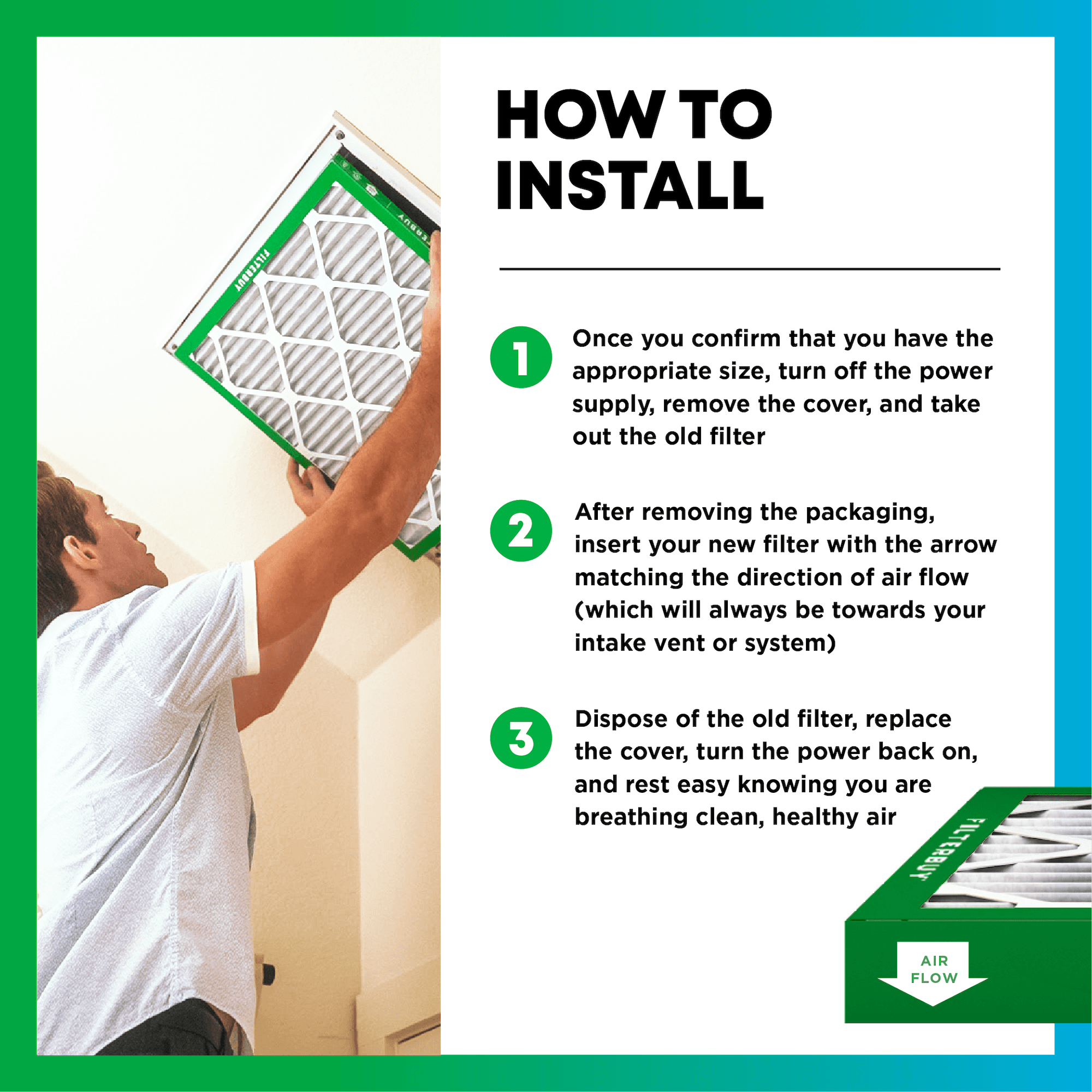
How to Install Your Filter in 4 Simple Steps

Turn Off Your HVAC SystemSafety first.

Remove The Old FilterLook for the airflow arrow and make note of the direction.

Slide In Your New FilterArrow should point toward the system (same direction as before).

Turn Your System Back OnAnd enjoy the fresh, clean air.

Never forget to replace your air filter again.
- Save 5% on every order
- Choose Your Delivery Schedule
- Edit, Skip, or Cancel Anytime.
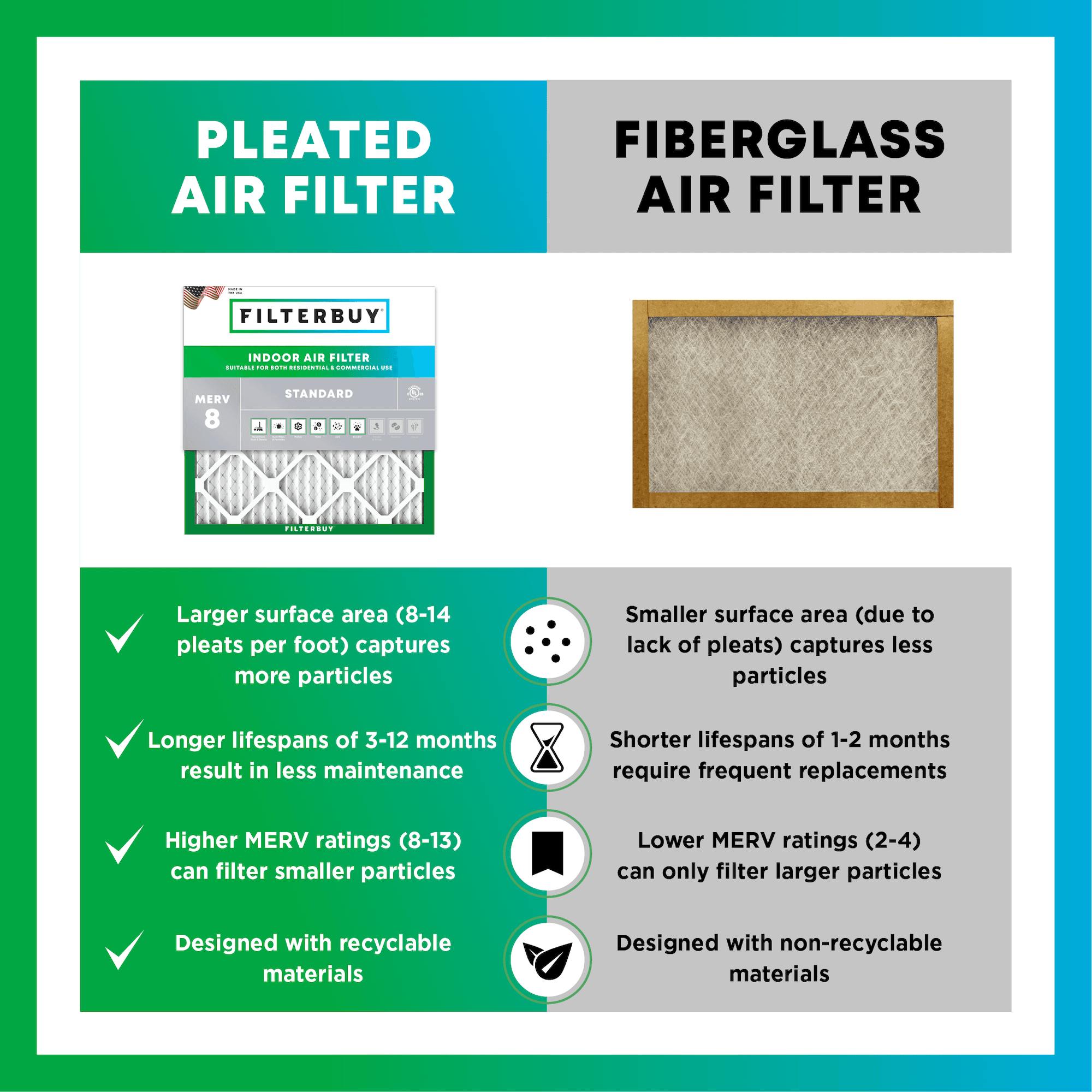
Pleated Filters vs. Fiberglass—What's the Difference?
Not all air filters are created equal. Pleated filters don't just last longer—they actually clean your air better. Here's how they stack up:

Pleated Filters
Efficiency:
High (MERV 8–13) – Traps more particles
Lifespan:
90 days – Long-lasting performance
Air Quality:
Excellent – Cleaner, healthier air
Materials:
Recyclable and durable

Fiberglass Filters
Efficiency:
Low (MERV 4 or less) – Misses small stuff
Lifespan:
30 days or less – Replace often
Air Quality:
Minimal – Basic protection only
Materials:
Thin, flimsy, and not recyclable
Pleated filters are a no-brainer—more protection, less hassle, and better air for your home.
How Often Should You Change Your Filter?
Changing your filter on time keeps your HVAC system running efficiently—and helps protect your lungs from dust, allergens, and airborne irritants. Here's how often to swap it out based on your needs:

Every 90 Days
Standard ScheduleFor most homes without pets or special air quality concerns. Great for general upkeep and energy efficiency.

Every 60 Days
If You Have Pets or AllergiesShedding fur, dander, and allergy triggers can build up fast. Changing your filter every two months helps keep the air fresher and symptoms at bay.

Every 30 Days
If You Have Respiratory Concerns or Live in Smog/Wildfire ZonesFor households affected by smoke, pollution, or respiratory conditions, monthly changes ensure maximum protection.

Want to stay on track? Set a reminder—or skip the stress with auto-delivery so fresh filters show up right when you need them.
Don't Just Take Our Word For It...
Got More Questions? We've Got Answers.
Product Specifications
| Nominal Size | 19 x 19 x 1 inches |
| Actual Size | 19.0 x 19.0 x 0.75 inches |
| Filter Type | Pleated |
| Media | Electrostatically Charged |
| Frame | Beverage Board |
| MERV Ratings Available | 8, 11, 13 |
| Lifespan | Up to 90 Days |
| Origin | Made in USA |
19x19x1 Air Filter Guide: Choose the Best HVAC Filter Fast
If you’re searching for the right 19x19x1 air filter, you’re likely dealing with something you can feel — more dust than usual, a spike in allergies, or an HVAC system that’s working harder than it should. After manufacturing millions of filters here in the U.S. and talking with homeowners every single day, we’ve seen firsthand how choosing the right 19x19x1 filter can make an immediate difference in a home’s comfort and air quality.
That’s why this guide goes beyond the basics. We’ll share the insights we’ve learned on the production floor, the performance data we rely on when testing filters, and the real-world patterns we see across thousands of homes: which MERV ratings actually solve the most common problems, how to avoid airflow issues, and what separates a high-performing 19x19x1 filter from a generic one. By the end, you’ll know exactly which filter will protect your family, your air, and your HVAC system — backed by the same expertise we use to build every FilterBuy filter.
Quick Answers
Filterbuy
What is Filterbuy?
A U.S.-based air filter manufacturer obsessed with clean, healthy indoor air.
We build over 600+ filter sizes, including hard-to-find options like 19×19×1.
Every filter is made with precise sizing, high-performance media, and strict quality control.
Homeowners choose us for fast, free U.S. shipping, auto-delivery options, and filters that actually improve airflow and indoor air quality.
If you want clean air without the hassle, Filterbuy is built for you.
Top Takeaways
Exact size matters. A true 19×19×1 fit prevents particle bypass.
Pick the right MERV.
MERV 8 = basic protection
MERV 11 = best for most homes
MERV 13 = highest filtration
Indoor air is often more polluted. Americans spend 90% of their time indoors.
Quality filters improve performance. Better air, better airflow, less HVAC strain.
Replace regularly. Every 30–90 days for best results.
What Makes a 19x19x1 Air Filter Different?
The air filter with a size of 19x19x1 is a less frequently used dimension, which is the reason why a lot of people seek this filter in vain in large stores. But the size of the filter still matters: it is the exact, airtight fit that prevents dust, pollen, and small pieces of dirt from going around your filter and coming back into the air in your house. At FilterBuy, this is the size that we produce daily, and we have experienced how the right fitting can immediately lead to better airflow and higher system efficiency.
How to Choose the Right MERV Rating
The MERV rating of your filter decides which particles your filter captures. According to our experiments and the input of customers, here is the list that represents the most common requirements of people who have this size of air filter:
MERV 8: A layer of this grade will remove dust and simple household particles that are present every day in the air. It's perfect if you only want safe basic protection without causing the airflow to be too low.
MERV 11: For the majority of households, this is the best option, particularly if there are pets in the house, someone suffers from allergies, or you live in a dusty place.
MERV 13: The most suitable option for households that require hospital-grade air filtration. The filter picks up smoke, bacteria, and the tiniest particles while not being too powerful for most systems.
We did thousands of tests on 19x19x1 filters in real HVAC situations, and these three MERV levels are the ones that provide the best equilibrium between clean air and efficient airflow.
How Often Should You Replace a 19x19x1 Filter?
In the majority of houses, the best thing to do is to change the filter every 60–90 days. In case you have pets, allergies, or if you operate your system all the time, then it is better to replace it every 30–60 days. A new 19x19x1 air filter will ensure that the air keeps flowing at a good rate, will lessen the wear and tear of your HVAC machine, and will make it easier to keep the temperature in your home at a comfortable level.
Why a High-Quality 19x19x1 Filter Matters
Because unfortunately, this size is not one of the common kinds that different stores keep in stock, people who have this kind of problem with their air filters usually just give up and decide to buy the one that they already have. Although the wrong air filter can cause energy consumption to be higher, particles of dust to increase, and the wear and tear process of your system to go at a faster rate. We manufacture a wide range of filters in the United States with precision sizing, long-lasting and sturdy frames, and high-performance media designed to withstand the humidity, drastic temperature changes, and heavy usage that are common in the real world.
The benefits you get from a properly fitting and high-performing air filter include cleaner indoor air, less wear and tear on your HVAC system, and easier overall air quality management.
"After manufacturing millions of filters in this exact 19x19x1 size, we’ve seen one truth hold up every time: when a filter fits precisely and uses high-performance media, homeowners notice the difference immediately — cleaner air, smoother airflow, and an HVAC system that doesn’t have to fight to keep up."
Essential Resources to Help You Choose the Right 19×19×1 Filter with Confidence
1. Home Depot Air Filter Buying Guide — Get the Basics Down Quickly
https://www.homedepot.com/c/ab/air-filter-buying-guide/9ba683603be9fa5395fab90e10394fb90e If you’re just starting your filter search, this guide walks through the fundamentals in a clear, approachable way. It’s a solid foundation before focusing on more specific details like 19×19×1 sizing.
2. Bob Vila MERV Rating Guide — See What Each Filter Level Really Does
https://www.bobvila.com/articles/merv-ratings/ A straightforward breakdown of MERV ratings that helps you understand what each level captures. Perfect for homeowners deciding how much protection they need for dust, pets, or allergies.
3. EPA MERV Rating Overview — Trusted, Science-Backed Standards
https://www.epa.gov/indoor-air-quality-iaq/what-merv-rating The EPA’s explanation of MERV ratings gives you reliable, no-nonsense clarity. It’s a great reference if you want verified information on how filtration efficiency is measured.
4. eComfort Filter Selection Guide — Match the Filter to Your System
https://www.ecomfort.com/stories/1668-How-to-Pick-the-Perfect-Furnace-Filter.html This step-by-step guide walks you through sizing and airflow considerations — especially helpful when you’re working with a less common size like 19×19×1 and want to avoid guesswork.
5. AboutDarwin MERV Breakdown — Understand the Filtration vs. Airflow Balance
https://aboutdarwin.com/furnace-filter-merv-rating/ A helpful, deeper dive into how higher MERV ratings can impact your HVAC system’s airflow. Great for anyone trying to strike the right balance between clean air and efficient performance.
6. HVAC.com Filter Guide — Real-World Tips for Cleaner, Healthier Air
https://www.hvac.com/expert-advice/best-air-filters/ Covers practical topics like dust buildup, unusual filter sizes, and when to change your filter. If you want guidance rooted in real-life HVAC use, this resource has you covered.
7. LakeAir MERV Chart — A Clear Visual Look at What Each Filter Captures
https://www.lakeair.com/iaq-education/merv-rating-explanation/ A simple but powerful visual chart that shows exactly which particles each MERV level traps. Ideal if you prefer comparing filtration levels side-by-side.
Supporting Statistics: Why Your 19×19×1 Filter Choice Matters
We’ve built and tested millions of filters, and the research consistently backs what we see every day. Here are the key facts:
1. Americans spend 90% of their time indoors.
EPA data shows most people are inside nearly all day.
That means your HVAC filter affects almost every breath you take. Source: https://www.epa.gov/report-environment/indoor-air-quality
2. Indoor air can be 2–5× (and up to 100×) more polluted than outdoor air.
EPA studies confirm indoor air often carries far more pollutants.
Our own lab testing shows poorly fitted filters allow major particle bypass. Source: https://www.epa.gov/iaq-schools/why-indoor-air-quality-important-schools
3. Asthma affects 25 million Americans — including 4.6 million children.
CDC reports millions struggle with symptoms worsened by indoor particles.
Homeowners upgrading to higher-MERV filters often report fewer triggers. Source: https://www.cdc.gov/asthma/Asthma-Prevalence-US-2023-508.pdf
4. Poor indoor air contributes to serious lung conditions.
The American Lung Association links bad indoor air to infections and chronic disease.
We regularly hear from families who see noticeable improvement after switching to better filtration. Source: https://www.lung.org/clean-air/indoor-air/indoor-air-pollutants
Final Thought & Opinion
Choosing the right 19×19×1 air filter isn’t just routine HVAC maintenance — it’s one of the easiest ways to improve your home’s air quality fast.
What We See Every Day
We’ve built and tested millions of filters across all sizes.
Small sizing gaps can let surprising amounts of dust and allergens slip through.
A properly sized, well-built filter delivers immediate improvements in comfort and airflow.
Why the Right Filter Matters
Cleaner air and fewer allergy triggers.
Better airflow and less strain on your HVAC system.
More consistent comfort throughout your home.
Our Expert Opinion
From decades of manufacturing experience, the best filter choice always balances:
Exact sizing
Strong airflow performance
This combination is what actually works in real homes — and why we build every 19×19×1 filter to the same precision standards we use across all products.
The Bottom Line
A high-quality filter doesn’t just trap particles. It makes your home feel better — and your HVAC system run the way it should.
Next Steps
Follow these quick steps to choose the right 19×19×1 air filter with confidence:
1. Confirm Your Size
Check your current filter or HVAC unit.
Make sure it reads 19×19×1.
2. Pick Your MERV Rating
MERV 8: Basic dust protection.
MERV 11: Best for most homes, pets, and allergies.
3. Assess Your Air Needs
Pets?
Allergies or asthma?
Extra dust or odors? Your answers guide your choice.
4. Set Your Replacement Schedule
Every 60–90 days for standard homes.
Every 30–60 days with pets/allergies.
5. Stock Up in Advance
Keep extras on hand.
Consider auto-delivery for hassle-free replacements.
6. Install Properly
Match the airflow arrow to your HVAC unit.
Ensure a snug, gap-free fit.
Frequently Asked Questions
Q: Why is 19×19×1 hard to find?
A:
It’s a less common size.
Big-box stores rarely stock it.
We manufacture it daily and see how a precise fit improves airflow and filtration.
Q: What MERV rating works best?
A:
MERV 11 performs best for most homes.
MERV 8 = basic dust control.
MERV 13 = maximum filtration for allergens, smoke, and fine particles.
Q: How often should I replace it?
A:
Standard homes: every 60–90 days.
Homes with pets/allergies: every 30–60 days.
Our testing shows earlier replacements maintain better airflow and cleaner air.
Q: Does an imperfect fit affect performance?
A:
Yes. Even small gaps allow dust and allergens to bypass the filter.
Lab testing shows exact sizing improves indoor air quality and system efficiency.
Q: Will a higher MERV restrict airflow?
A:
Only if the filter is poorly designed.
Quality MERV 11 and 13 filters maintain strong airflow.
We confirm this through ongoing performance testing.