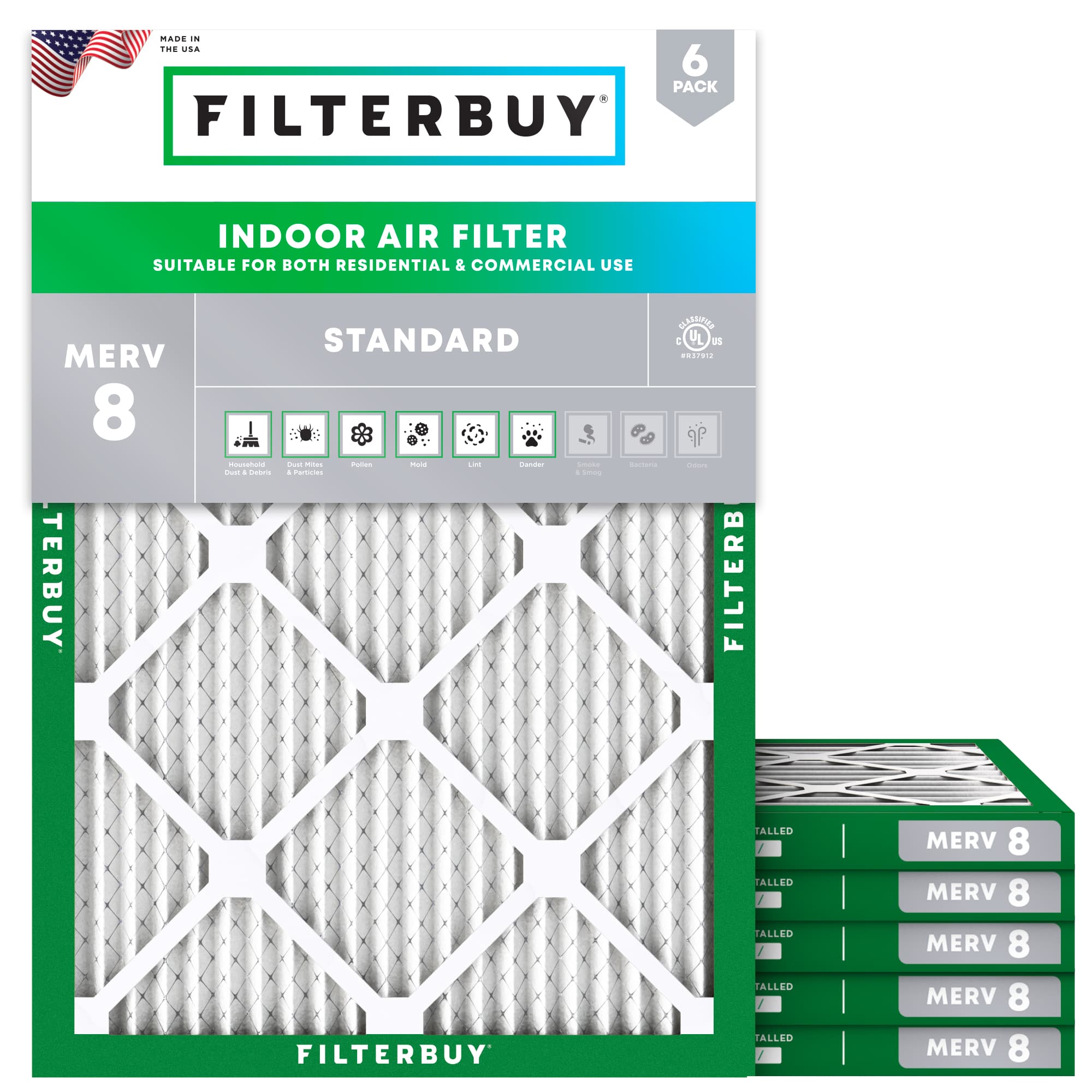
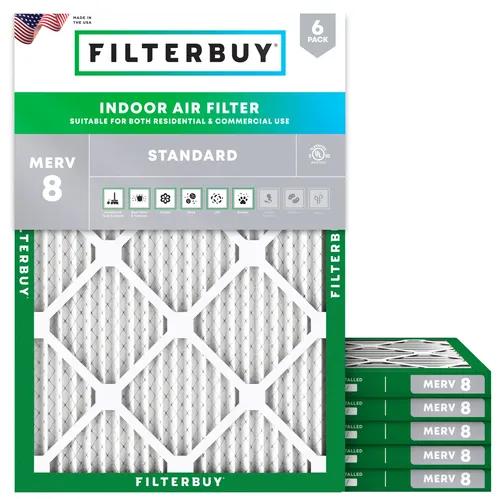
Actual Size: 17.75x21.75x0.75
 Free Delivery
  Factory-Direct Low Prices, Made in the USA
 Hassle-Free Returns & Free Exchanges
RESIDENTIAL AND/OR COMMERCIAL USE
Change Every 3 Months
Actual Size: 17.75x21.75x0.75
Free Delivery Factory-Direct Low Prices, Made in the USAHassle-Free Returns & Free ExchangesRESIDENTIAL AND/OR COMMERCIAL USE
Change Every 3 Months
Actual Size: 17.75x21.75x0.75
Free Delivery Factory-Direct Low Prices, Made in the USAHassle-Free Returns & Free ExchangesRESIDENTIAL AND/OR COMMERCIAL USE
Change Every 3 Months
At Filterbuy, we don't cut corners—we craft high-quality air filters right here in the USA and ship them to your doorstep for free. No delays, no gimmicks—just clean air, made easy. With thousands of five-star reviews and filters built for real life & every HVAC system, it's no wonder why over 4 million families trust Filterbuy.

Proudly Made In The USA

Fast, Free Shipping on Every Order

Premium Materials That Go The Distance

85,000+ 5-Star Reviews From Happy Customers

Save Up to 70% Per Filter with Packs


Measure length × width × depth with a tape measure to find the actual size.

Round up each dimension to the nearest whole number to get the nominal size. Example: 17.75x21.75x0.75 in → 18x22x1 nominal.

Search by nominal size on our site for the best fit.


If the filter you buy doesn't fit, we'll send you a better size.
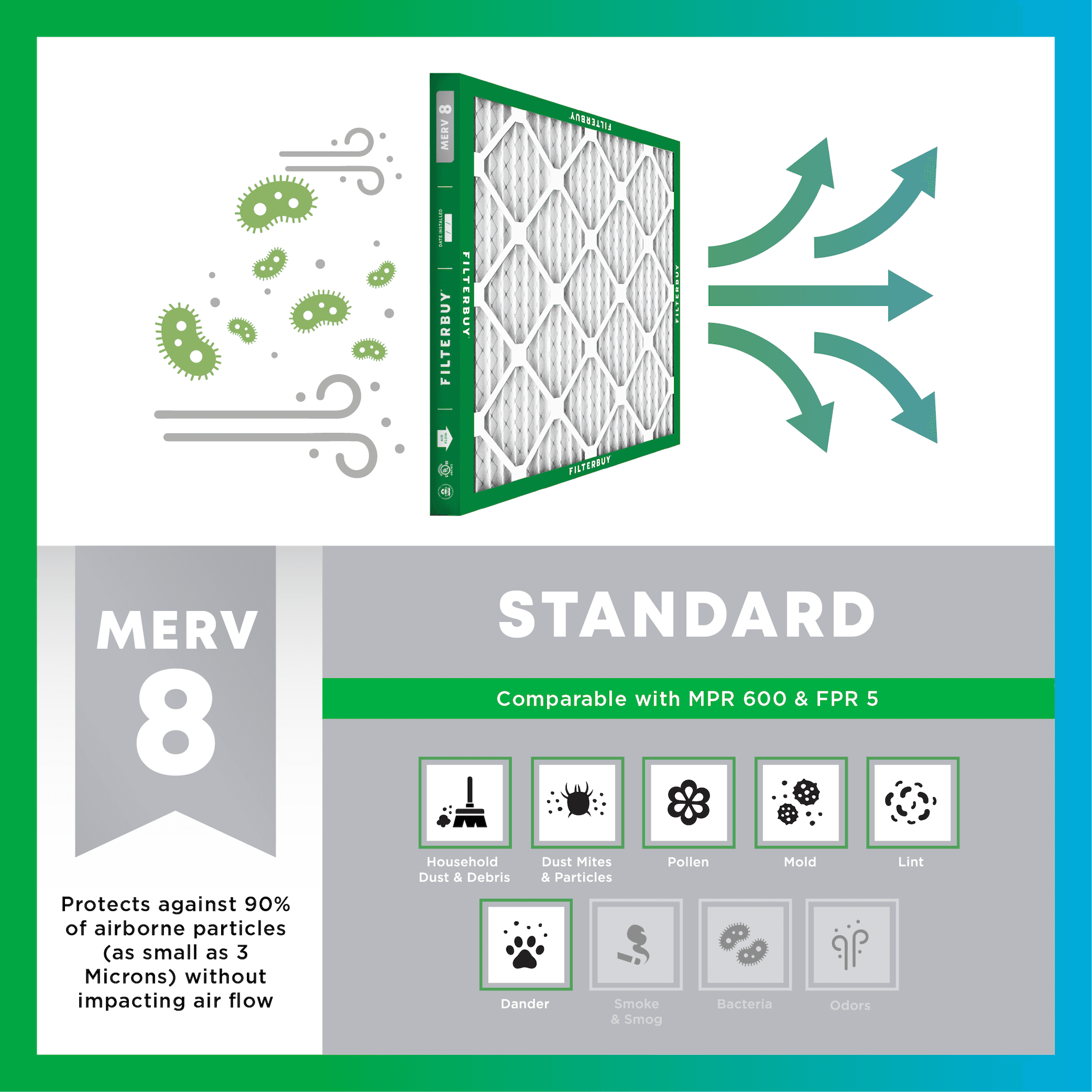
MERV stands for Minimum Efficiency Reporting Value—but don't let the technical name fool you. It's just a way to rate how well an air filter traps stuff like dust, pollen, pet dander, and smoke. The higher the MERV number, the more particles it catches—and the cleaner your air will be.

Comparable to:FPR: 4-7
MPR: 600-1000
 Dust & Debris
 Dust Mites & Particles
 Pollen
 Mold
Mold Lint
Lint Dander
Comparable to:FPR: 6-9
MPR: 1200-1550
Dust & DebrisDust Mites & ParticlesPollenMoldLintDander Smoke & Smog
Comparable to:FPR: 10
MPR: 1900-2800
Dust & DebrisDust Mites & ParticlesPollenMoldLintDanderSmoke & Smog Bacteria


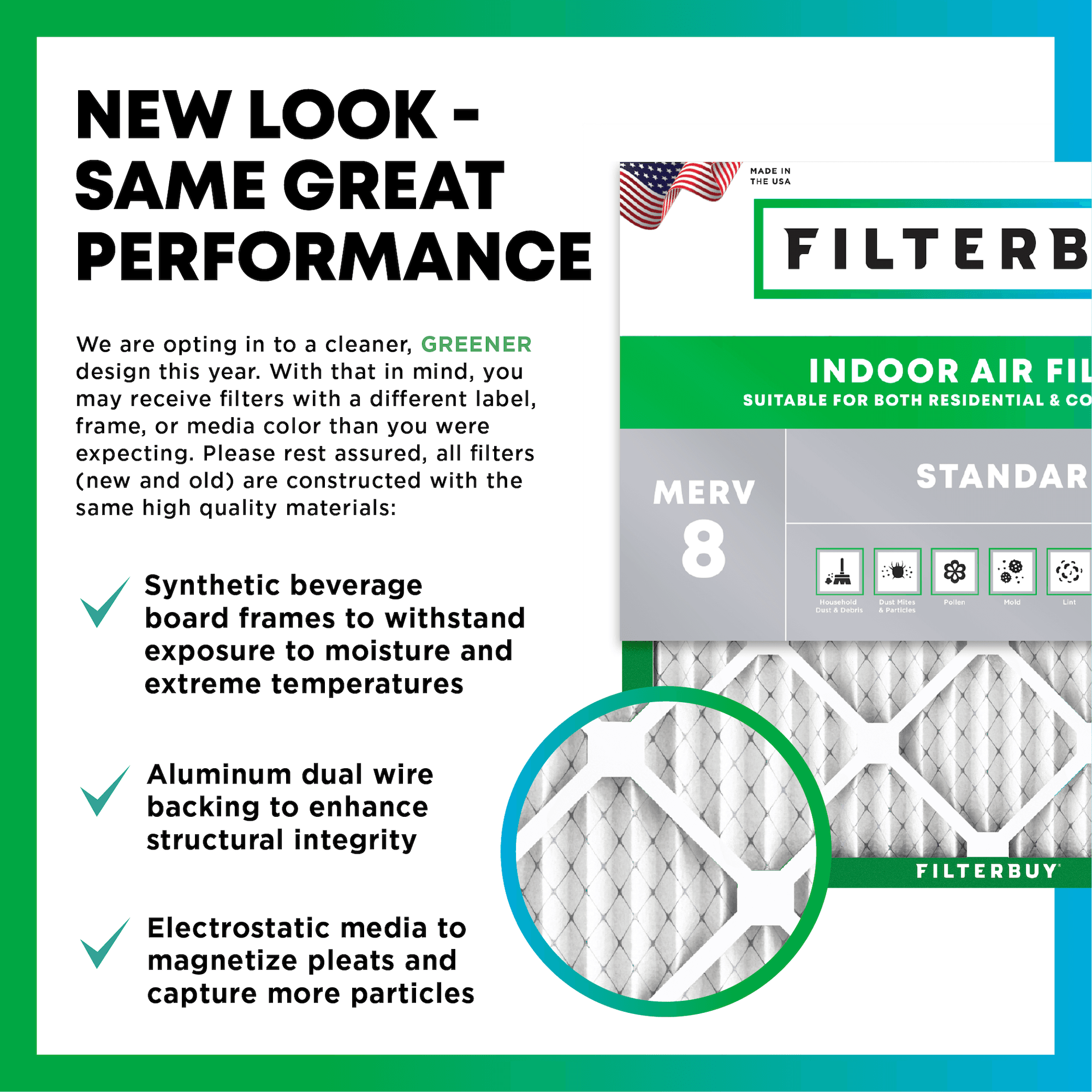
We build every Filterbuy filter to deliver reliable 90-day performance—thanks to smart design and premium materials that do the heavy lifting. Here's what makes the difference:
More pleats = more surface area to capture dust and debris, keeping your air cleaner longer.
Pleats are magnetized to attract and trap microscopic particles—like pet dander, pollen, and smoke.
Engineered to resist warping in extreme temperatures and high humidity.

A layer of metal reinforcement keeps pleats evenly spaced and structurally sound—no sagging, even at high airflow.
Assembled with care. Built to perform. Ships fast, free, and reliably from our U.S. facilities.

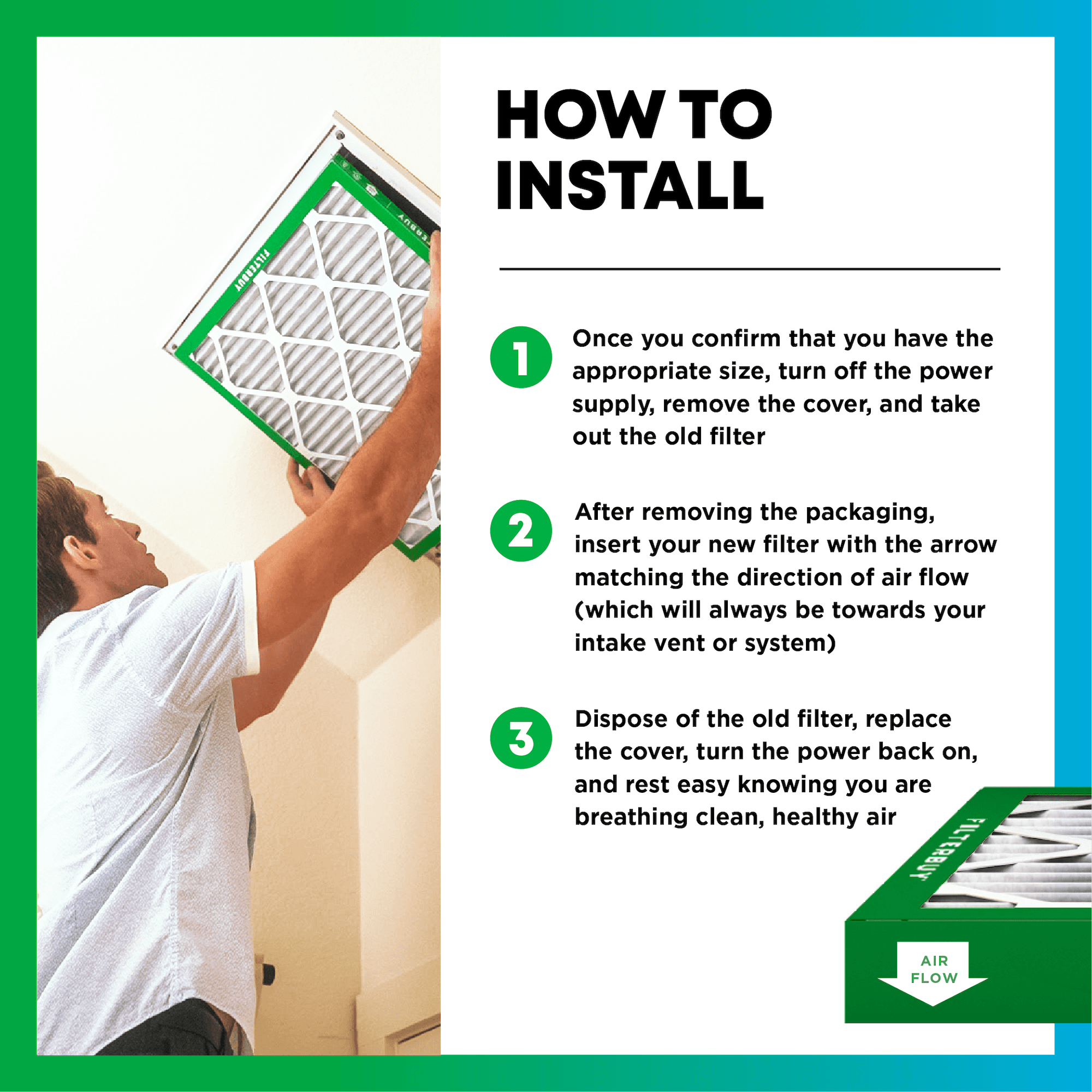
Turn Off Your HVAC SystemSafety first.

Remove The Old FilterLook for the airflow arrow and make note of the direction.

Slide In Your New FilterArrow should point toward the system (same direction as before).

Turn Your System Back OnAnd enjoy the fresh, clean air.

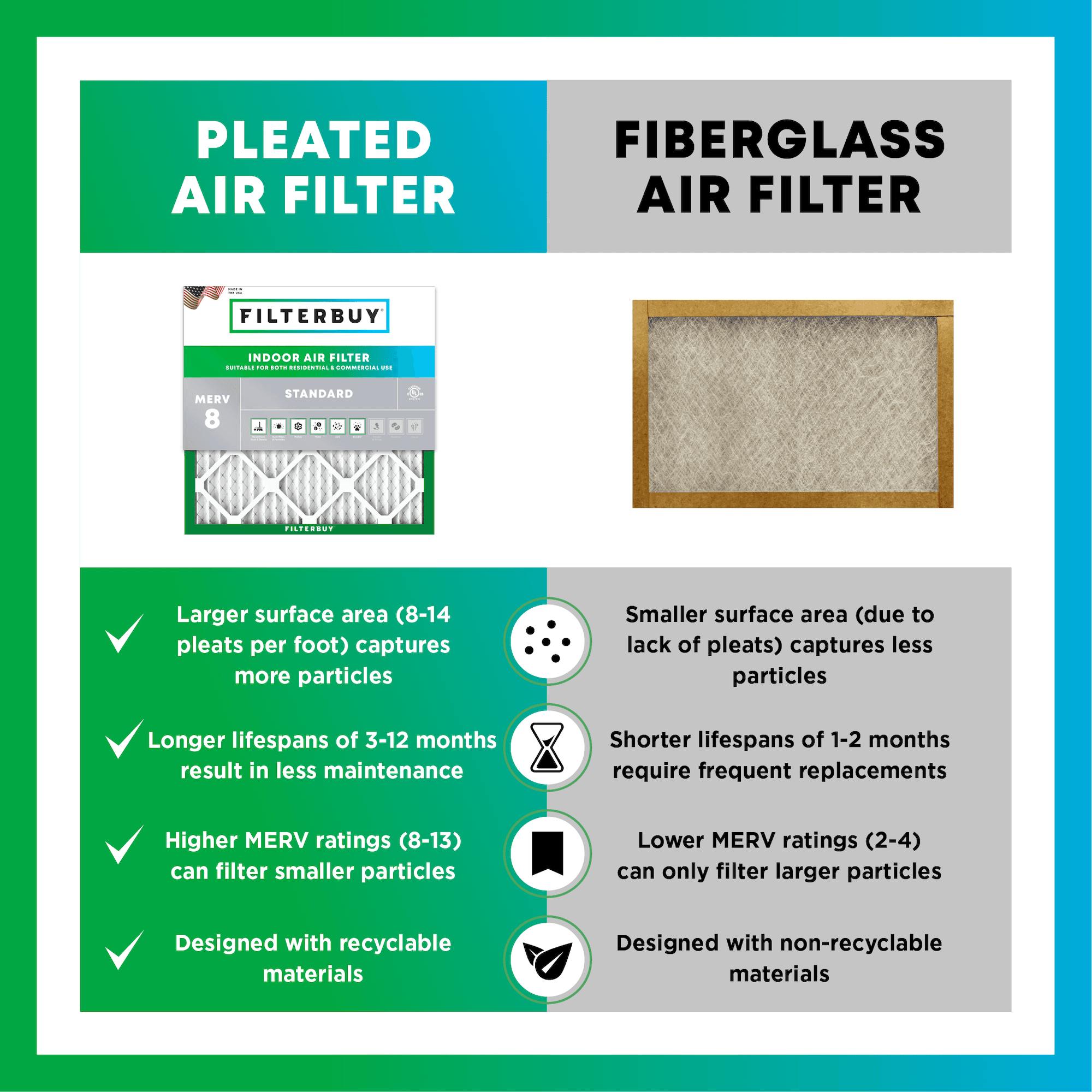
Not all air filters are created equal. Pleated filters don't just last longer—they actually clean your air better. Here's how they stack up:

Efficiency:
High (MERV 8–13) – Traps more particles
Lifespan:
90 days – Long-lasting performance
Air Quality:
Excellent – Cleaner, healthier air
Materials:
Recyclable and durable

Efficiency:
Low (MERV 4 or less) – Misses small stuff
Lifespan:
30 days or less – Replace often
Air Quality:
Minimal – Basic protection only
Materials:
Thin, flimsy, and not recyclable
Pleated filters are a no-brainer—more protection, less hassle, and better air for your home.
Changing your filter on time keeps your HVAC system running efficiently—and helps protect your lungs from dust, allergens, and airborne irritants. Here's how often to swap it out based on your needs:

For most homes without pets or special air quality concerns. Great for general upkeep and energy efficiency.

Shedding fur, dander, and allergy triggers can build up fast. Changing your filter every two months helps keep the air fresher and symptoms at bay.

For households affected by smoke, pollution, or respiratory conditions, monthly changes ensure maximum protection.

| Nominal Size | 18 x 22 x 1 inches |
| Actual Size | 17.75 x 21.75 x 0.75 inches |
| Filter Type | Pleated |
| Media | Electrostatically Charged |
| Frame | Beverage Board |
| MERV Ratings Available | 8, 11, 13 |
| Lifespan | Up to 90 Days |
| Origin | Made in USA |
Most homeowners don’t realize their 18×22×1 air filter is struggling until the signs become impossible to ignore — higher energy bills, a hardworking HVAC system, or that unmistakable shift toward stale, dusty air. But after manufacturing and inspecting millions of filters each year, we’ve learned something important: A clogged filter sends early warning signals long before your family feels the effects — if you know where to look.
As air-obsessed technicians and manufacturers, we pay close attention to these clues every day. In this guide, we’ll walk you through the same indicators our teams rely on during quality checks and real-world customer diagnostics — from subtle airflow resistance patterns to the way dust begins collecting differently around vents.
You’ll get a clear, expert-backed method to tell when your 18×22×1 filter is truly past its prime, why these early signs matter, and how simple, proactive replacement keeps your home’s air cleaner, your family more comfortable, and your HVAC system running efficiently.
This is the exact checklist we use in our own facilities — now adapted to help you protect your home’s air with confidence.
Quick Answers
18×22×1 Air Filter
What it is: A standard HVAC filter size designed to capture dust, debris, and airborne particles while protecting your system’s airflow.
What to know:
Actual size is slightly smaller than 18×22×1 for proper fit.
Replace every 1–3 months (or sooner with pets, allergies, or high dust).
Choose MERV 8–13 based on your home’s air needs.
A clogged filter can raise energy use by 5–15% and reduce air quality.
FilterBuy insight: We routinely test 18×22×1 filters and see the same pattern: clean filters improve airflow instantly and prevent early HVAC strain — small change, big impact on comfort and efficiency.
Clogged filters always speak up early — you’ll notice weaker airflow, rooms that never feel the same temperature, extra dust settling on surfaces, or even a faint musty smell. These are your home’s quiet signals that your filter is struggling to keep up.
Regular filter replacement is one of the simplest ways to protect your HVAC system. A clean filter reduces strain on your equipment, supports better airflow, and helps maintain energy efficiency all year long.
Air quality declines quickly when a filter is dirty. Once particle capture drops, allergens, dander, and fine dust recirculate through your home instead of being trapped where they belong.
A quick monthly check keeps you ahead of costly clogs, especially if you have pets, allergies, or higher-than-average dust levels. Staying proactive means fewer surprises and healthier indoor air.
Choosing the right MERV rating makes a big difference. The right filter strength ensures you’re capturing the pollutants that matter most for your home — without overworking your system.
A quick visual check is one of the easiest ways to catch a clogged filter before it affects your home’s air. Start by removing your 18×22×1 filter from its housing and take a close look at the surface — the same way our technicians do during quality checks.
Here’s what to look for:
Visible dirt or debris buildup
Gray or dark discoloration across the pleats
Dust “patches” or matted fibers
Anything obstructing airflow through the filter
If you spot any of these signs, your filter is no longer capturing particles effectively. Depending on your home environment — pets, allergies, construction nearby, or heavy HVAC usage — a monthly inspection is a smart habit. Significant dirt or debris means it’s time to replace the filter to keep your home’s air clean and your system breathing easily.
Regular checks help you stay ahead of clogs, protect system efficiency, and extend the overall life of your HVAC equipment.
Your HVAC system often tells the truth about a clogged filter long before you see it.
If you notice any of the following, your filter may be restricting airflow:
Weak or reduced airflow coming from vents
Hot or cold spots where rooms no longer heat or cool consistently
More dust settling on surfaces than usual
Unusual noises from the HVAC system as it strains to push air through a blockage
These are some of the same diagnostics our teams look for during real-world service calls. Catching these symptoms early helps you maintain a comfortable, energy-efficient home.
A clogged filter doesn’t just affect air quality — it quietly increases your monthly energy costs. When airflow is restricted, your HVAC system must work harder and longer to maintain your desired temperature, consuming more electricity in the process.
Impact on Costs:
Higher energy usage from extended heating or cooling cycles
Increased wear and tear, which can lead to more frequent repairs or early system failure
Replacing a dirty filter is one of the simplest ways to keep energy costs under control and protect your system investment.
A clogged filter often reveals itself through smell before you ever see a problem. When particles aren’t being trapped effectively, they recirculate — and your nose notices.
Watch for:
Lingering musty or moldy scents
Strong pet odors, even after cleaning
Stale, smoky, or “old house” air
Odd chemical or dusty smells
These odors are clear indicators that your filter is overloaded and no longer keeping contaminants out of your airflow. Replacing it early helps restore a fresh, healthy environment for your family.
Knowing when to replace your filter is one of the most important steps in protecting your home’s air and HVAC system. While every household is different, here’s the expert-backed guidance we share with customers — based on years of manufacturing and real-world diagnostics.
Recommended Replacement Schedule
Every 1–3 months: Standard households without pets or allergy concerns.
Every 2–6 weeks: Homes with pets, higher dust levels, or family members with allergies or respiratory sensitivities.
Every 6–12 months: High-efficiency filters designed for extended performance (always verify manufacturer specifications).
Regular checks and a replacement schedule tailored to your home’s needs ensure cleaner air, a more efficient system, and a healthier living environment.
Your home’s air is constantly changing — and choosing the right 18×22×1 filter is one of the simplest, smartest ways to protect your family and your HVAC system. These trusted resources will help you understand the essentials: proper sizing, performance, efficiency, and the science behind clean air.
1. Get the Right Fit Every Time
18×22×1 Air Filter Sizing Guide
Understanding nominal vs. actual size is the first step to protecting airflow.
This guide helps you confirm a precise fit so your filter seals tightly and performs as intended.
2. Choose the MERV Rating That Matches Your Home’s Needs
18×22×1 Options in MERV 8, 11 & 13
A quick comparison of filtration levels so you can match performance to your family’s air challenges — dust, allergies, pets, or seasonal changes.
Helps you balance indoor air quality with system efficiency.
3. See How Real Filters Perform in the Field
HDX 18×22×1 Premium Pleated Air Filter
Provides real-world product specs and replacement timelines so you can compare options confidently.
Useful when evaluating high-efficiency filters in this exact size.
4. Understand the Science Behind Filter Performance
ASHRAE – Filtration & Disinfection FAQ https://www.ashrae.org/file%20library/technical%20resources/covid-19/filtration-and-disinfection-faq.pdf
Learn directly from the industry’s leading authority on HVAC science.
Helps you understand how MERV ratings influence airflow, efficiency, and indoor air quality.
5. See How Filters Improve the Air You Breathe
EPA – Guide to Air Cleaners in the Home https://www.epa.gov/indoor-air-quality-iaq/guide-air-cleaners-in-the-home
Breaks down how filtration fits into a healthy-home strategy — from particle removal to odor control.
Ideal for anyone wanting to improve their home’s indoor air quality beyond the basics.
6. Know Exactly When Your Filter Needs to Be Replaced
DOE – Air Conditioner Maintenance Recommendations https://www.energy.gov/energysaver/air-conditioner-maintenance
Shows how clogged filters strain HVAC systems and increase energy consumption.
Reinforces the importance of timely replacement — a simple habit that prevents costly repairs.
7. Match Filter Performance to Your Home’s Conditions
EPA – Indoor airPLUS Technical Bulletin: Filtration https://www.epa.gov/sites/default/files/2020-06/documents/2019.11_tech_bulletin_filtration.pdf
Offers clear guidance for homes with extra air-quality challenges: pets, high dust, or allergy sensitivities.
Helps you select a filter that keeps your home healthier and your air cleaner.
“After inspecting millions of filters across our manufacturing lines, we’ve learned a simple truth: a clean 18×22×1 filter doesn’t just freshen your air — it’s the difference between an HVAC system that struggles and one that runs effortlessly. The homes with the healthiest air aren’t the ones with the biggest units, but the ones where the filter is replaced before it ever becomes a problem.”
Federal research — combined with what we witness every day in our Filterbuy testing labs — shows how quickly a clogged 18×22×1 filter can impact airflow, air quality, and energy use. These are the clearest data points every homeowner should know.
1. Heating and cooling use nearly half of your home’s energy
47% of household energy goes directly to heating and cooling. Source: ENERGY STAR (U.S. EPA & DOE)
FilterBuy insight: In our testing labs, even lightly clogged filters increase system runtime. When nearly half of your home’s energy budget goes to HVAC, restricted airflow quickly turns into higher monthly bills.
2. Clean filters significantly reduce indoor particle pollution
EPA research shows that proper filtration measurably lowers indoor particulate matter (PM), improving overall air quality. Source: U.S. Environmental Protection Agency
FilterBuy insight: We see this every day. Dust-pattern buildup on overloaded filters reveals when particle capture has dropped — the same moment homeowners start noticing more dust, worsening allergies, or stale indoor air.
3. Clogged filters reduce airflow and HVAC efficiency
The U.S. Department of Energy confirms that dirty filters restrict airflow and reduce system efficiency. Source: U.S. Department of Energy
FilterBuy insight: In our airflow resistance tests, saturated filters consistently show higher static pressure. That added resistance forces HVAC systems to work harder, wear faster, and use more energy — all because the filter stayed in place too long.
After inspecting millions of filters in our American manufacturing facilities, we’ve learned a universal truth: a clogged 18×22×1 filter almost never fails overnight — it declines slowly, steadily, and predictably. The early signs show up long before your comfort drops or your air starts to feel heavy. If you know what to look for, you can stay ahead of every one of them.
What We See Every Day
During testing, clogged filters consistently reveal the same pattern: higher static pressure, restricted airflow, and weakened particle capture — the exact conditions that make HVAC systems work harder than they should.
The earliest warning signs often include:
Uneven room temperatures
Dust collecting faster than usual
Musty or stale odors that linger
A system that sounds like it’s pushing harder to keep up
These small signals are your home’s way of telling you the filter is nearing its limit.
Why Early Action Matters
From years of real-world diagnostics and lab testing, we know that replacing your filter before it fully clogs leads to clear, measurable benefits:
Stronger airflow and more consistent comfort
Cleaner indoor air, especially for allergy-sensitive families
Lower energy strain, reducing costly runtime
Longer HVAC lifespan, since the system isn’t forced to overwork
A simple filter change can protect both your home’s air and your equipment investment.
Our Expert Takeaway
Your 18×22×1 filter is more than a disposable part — it’s your home’s first line of defense against rising dust, uneven airflow, and unnecessary system strain. From what we’ve seen across millions of inspections, the homes with the healthiest air aren’t the ones with the biggest systems; they’re the ones where the homeowner stays one step ahead of clogs.
With the signs and guidance above, you now have the same expert knowledge our technicians rely on — and everything you need to keep your home breathing clean, comfortably, and efficiently.
1. Check Your Current Filter
Remove your filter and give it a close look — just like our technicians do during quality inspections. If you see dust buildup, gray discoloration, or matted debris, the filter is no longer protecting your air effectively and should be replaced.
2. Confirm the Correct Size
Make sure your system truly uses an 18×22×1 filter and that it fits snugly with no gaps or air bypass. A proper seal is essential for capturing pollutants before they circulate through your home.
3. Replace at the First Warning Signs
If you notice weak airflow, uneven room temperatures, rising dust, or musty odors, your filter is already struggling. These early clues mean it’s time for a fresh one.
4. Set a Simple Replacement Schedule
Use this expert-backed guide to stay ahead of clogs:
Every 1–3 months: Standard households
Every 2–6 weeks: Homes with pets, allergies, or higher dust levels
Every 6–12 months: High-efficiency filters (follow manufacturer guidance)
Sticking to a schedule keeps your air cleaner and your HVAC system breathing easily.
5. Keep Replacements Ready
Avoid delays by keeping multipacks on hand or setting up an auto-refill schedule. Having filters ready ensures you never wait too long — and your home stays protected year-round.
A: It’s the nominal size of the filter.
Actual size is slightly smaller for proper fit.
Always check your system’s filter slot or existing filter frame.
A: Based on field inspections and customer returns:
1–3 months: Most homes
2–6 weeks: Pets, allergies, or heavy dust
Replace sooner if airflow drops or air quality changes.
A: Choose based on your home’s air needs:
MERV 8: Standard dust
MERV 11: Pets or mild allergies
MERV 13: Maximum filtration for sensitive households
A: Look for common signs we see in real clogged filters:
Weak airflow
Hot/cold spots
Extra dust
Musty odors
Visible gray or patchy buildup on the filter
A: Yes.
Clogged filters increase HVAC workload.
Can raise energy use by 5–15% based on our airflow resistance testing.
Clean filters keep your system efficient.

