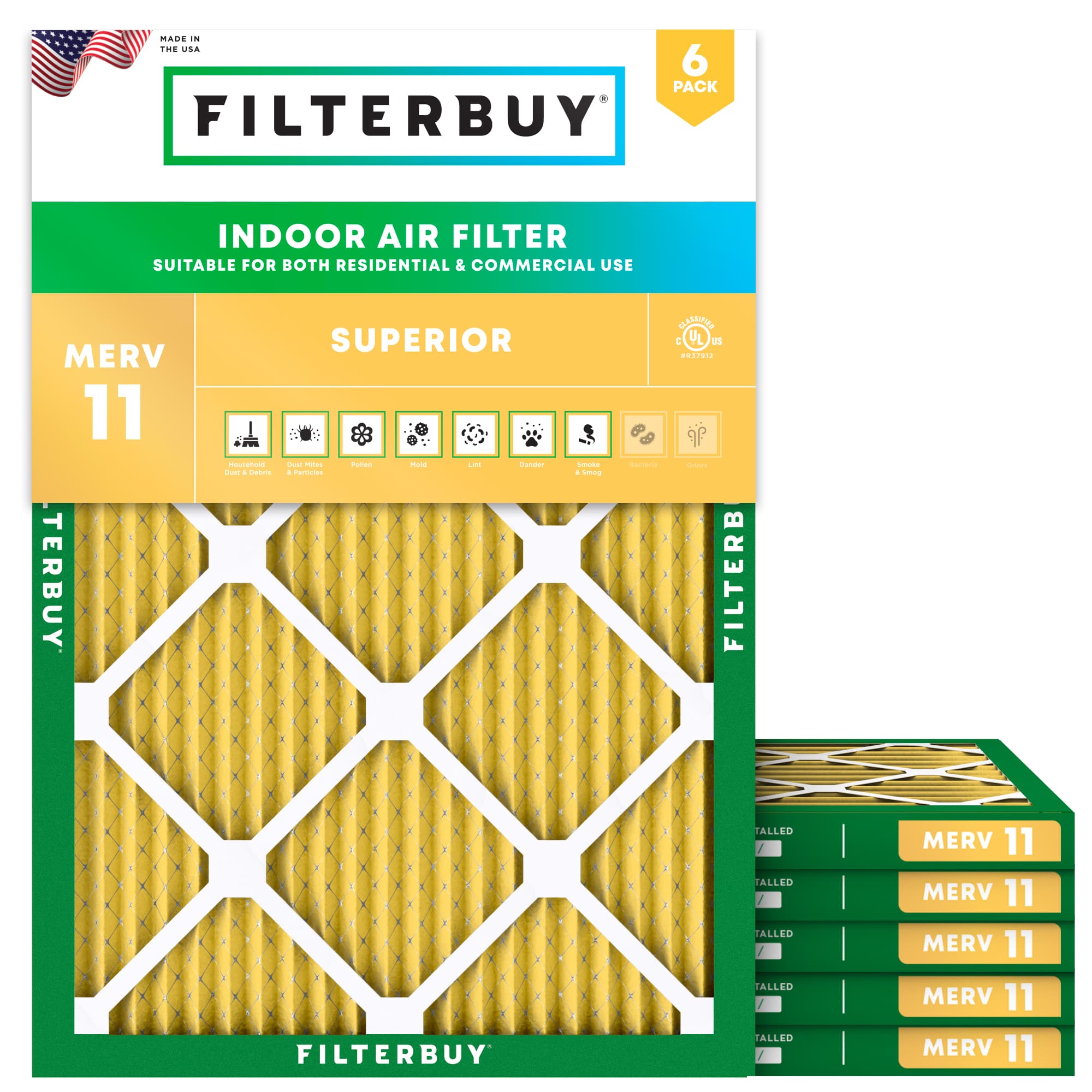
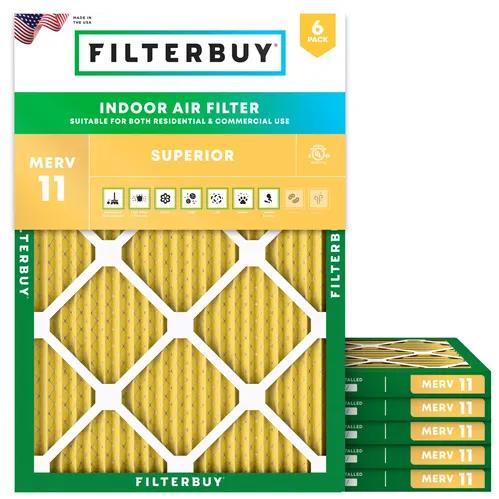
Actual Size: 17.75x21.75x0.75"
 Free Delivery
  Factory-Direct Low Prices, Made in the USA
 Hassle-Free Returns & Free Exchanges
RESIDENTIAL AND/OR COMMERCIAL USE
Change Every 3 Months
Actual Size: 17.75x21.75x0.75"
Free Delivery Factory-Direct Low Prices, Made in the USAHassle-Free Returns & Free ExchangesRESIDENTIAL AND/OR COMMERCIAL USE
Change Every 3 Months
Actual Size: 17.75x21.75x0.75"
Free Delivery Factory-Direct Low Prices, Made in the USAHassle-Free Returns & Free ExchangesRESIDENTIAL AND/OR COMMERCIAL USE
Change Every 3 Months
At Filterbuy, we don't cut corners—we craft high-quality air filters right here in the USA and ship them to your doorstep for free. No delays, no gimmicks—just clean air, made easy. With thousands of five-star reviews and filters built for real life & every HVAC system, it's no wonder why over 4 million families trust Filterbuy.

Proudly Made In The USA

Fast, Free Shipping on Every Order

Premium Materials That Go The Distance

85,000+ 5-Star Reviews From Happy Customers

Save Up to 70% Per Filter with Packs


Measure length × width × depth with a tape measure to find the actual size.

Round up each dimension to the nearest whole number to get the nominal size. Example: 17.75x21.75x0.75" in → 18x22x1 nominal.

Search by nominal size on our site for the best fit.


If the filter you buy doesn't fit, we'll send you a better size.
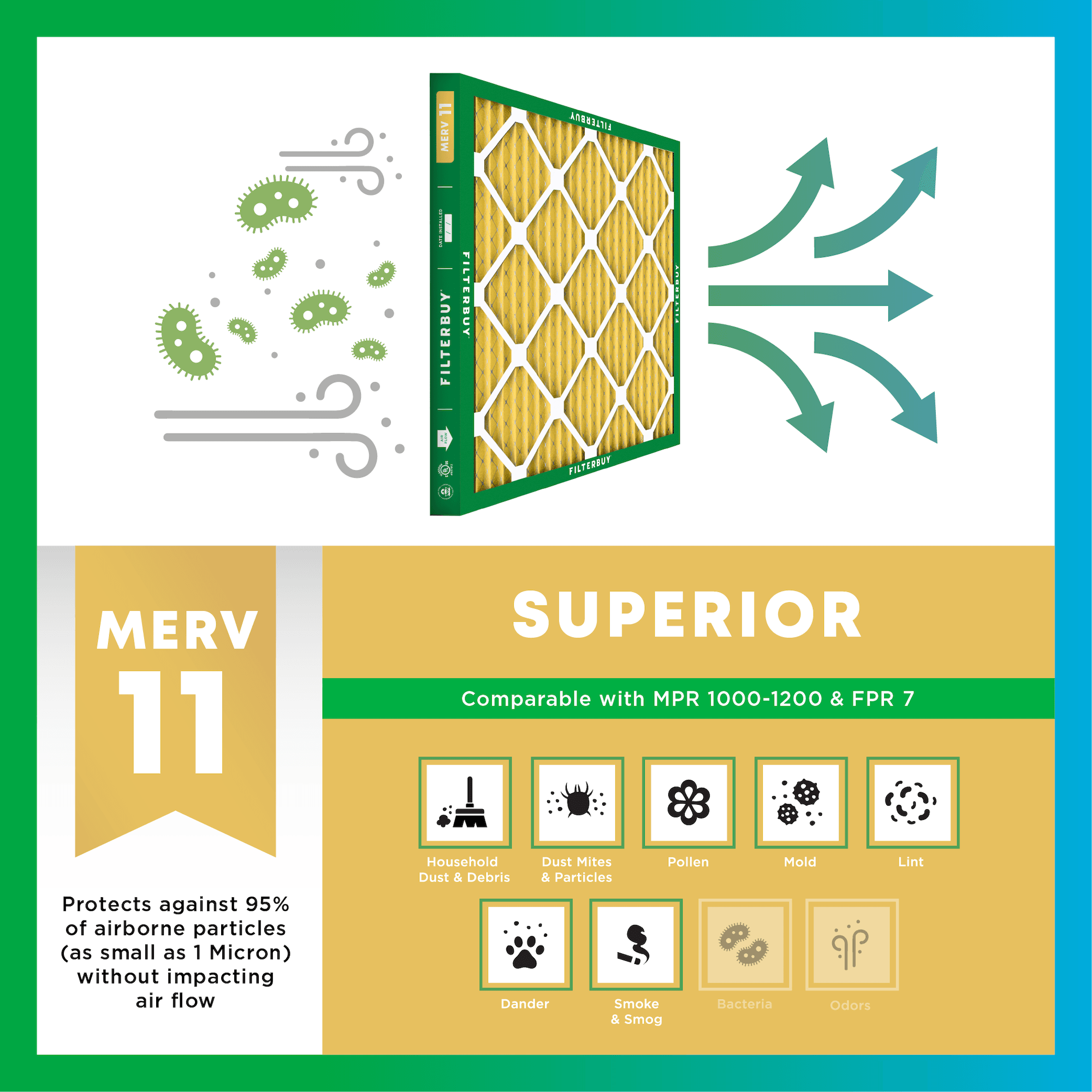
MERV stands for Minimum Efficiency Reporting Value—but don't let the technical name fool you. It's just a way to rate how well an air filter traps stuff like dust, pollen, pet dander, and smoke. The higher the MERV number, the more particles it catches—and the cleaner your air will be.

Comparable to:FPR: 4-7
MPR: 600-1000
 Dust & Debris
 Dust Mites & Particles
 Pollen
 Mold
Mold Lint
Lint Dander
Comparable to:FPR: 6-9
MPR: 1200-1550
Dust & DebrisDust Mites & ParticlesPollenMoldLintDander Smoke & Smog
Comparable to:FPR: 10
MPR: 1900-2800
Dust & DebrisDust Mites & ParticlesPollenMoldLintDanderSmoke & Smog Bacteria


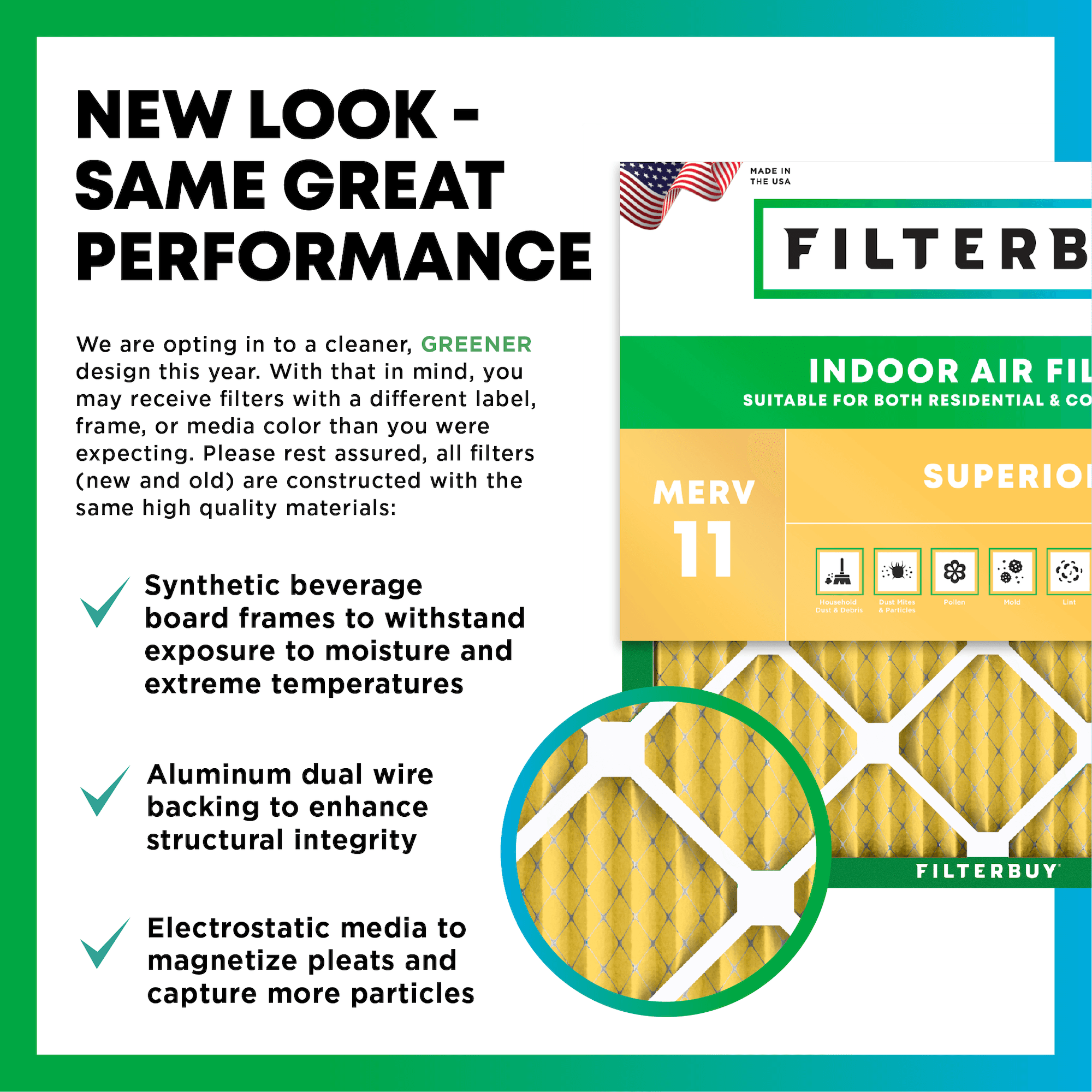
We build every Filterbuy filter to deliver reliable 90-day performance—thanks to smart design and premium materials that do the heavy lifting. Here's what makes the difference:
More pleats = more surface area to capture dust and debris, keeping your air cleaner longer.
Pleats are magnetized to attract and trap microscopic particles—like pet dander, pollen, and smoke.
Engineered to resist warping in extreme temperatures and high humidity.

A layer of metal reinforcement keeps pleats evenly spaced and structurally sound—no sagging, even at high airflow.
Assembled with care. Built to perform. Ships fast, free, and reliably from our U.S. facilities.

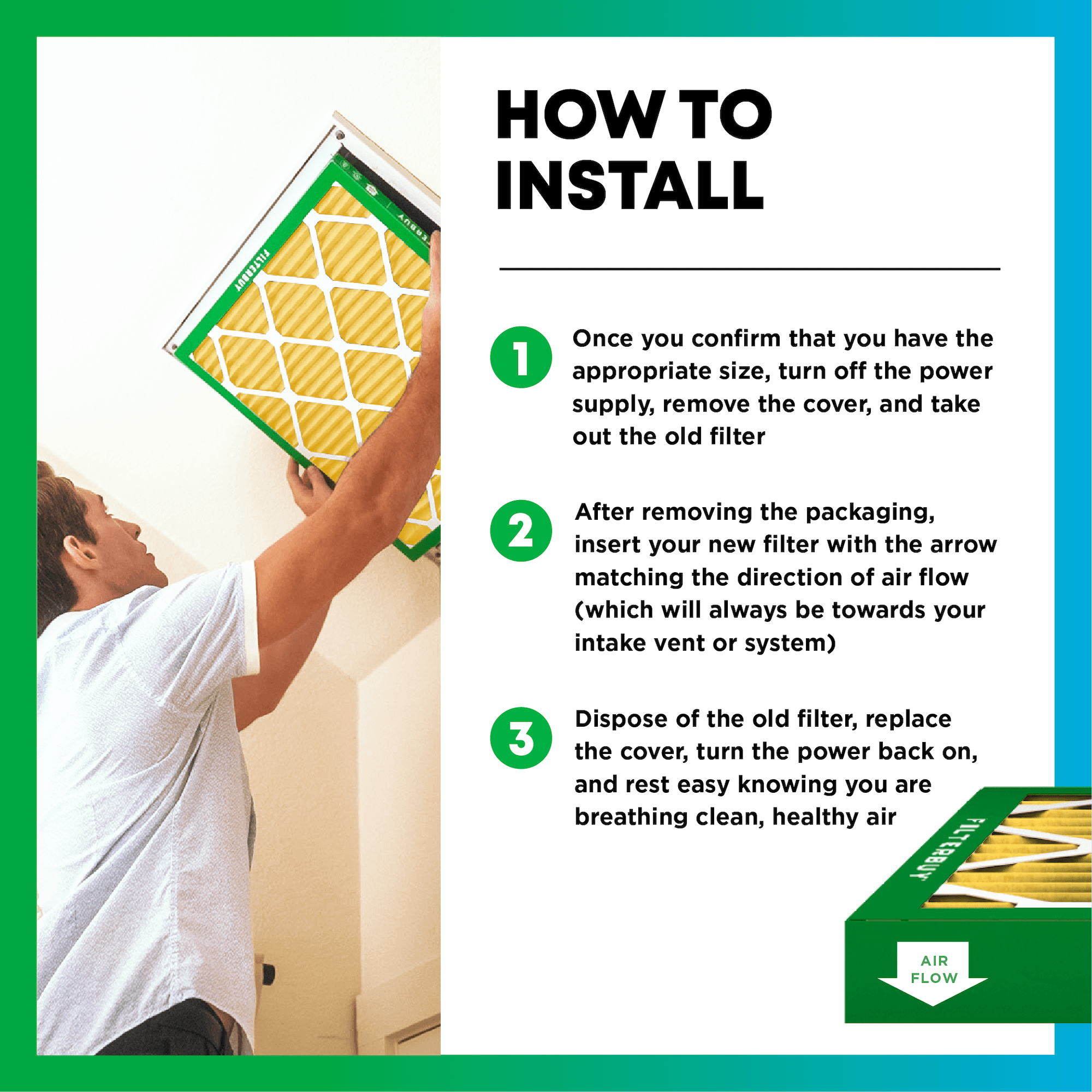
Turn Off Your HVAC SystemSafety first.

Remove The Old FilterLook for the airflow arrow and make note of the direction.

Slide In Your New FilterArrow should point toward the system (same direction as before).

Turn Your System Back OnAnd enjoy the fresh, clean air.

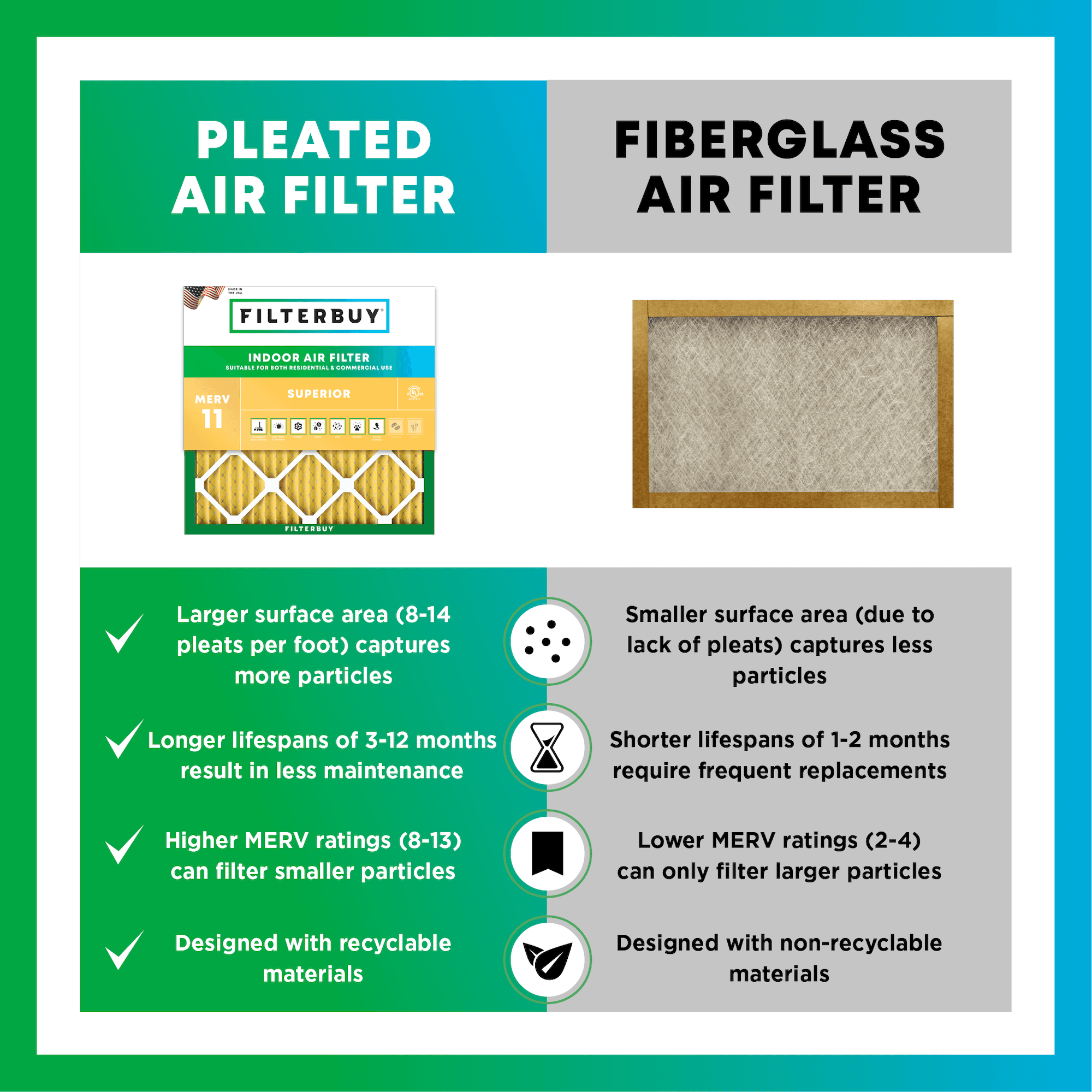
Not all air filters are created equal. Pleated filters don't just last longer—they actually clean your air better. Here's how they stack up:

Efficiency:
High (MERV 8–13) – Traps more particles
Lifespan:
90 days – Long-lasting performance
Air Quality:
Excellent – Cleaner, healthier air
Materials:
Recyclable and durable

Efficiency:
Low (MERV 4 or less) – Misses small stuff
Lifespan:
30 days or less – Replace often
Air Quality:
Minimal – Basic protection only
Materials:
Thin, flimsy, and not recyclable
Pleated filters are a no-brainer—more protection, less hassle, and better air for your home.
Changing your filter on time keeps your HVAC system running efficiently—and helps protect your lungs from dust, allergens, and airborne irritants. Here's how often to swap it out based on your needs:

For most homes without pets or special air quality concerns. Great for general upkeep and energy efficiency.

Shedding fur, dander, and allergy triggers can build up fast. Changing your filter every two months helps keep the air fresher and symptoms at bay.

For households affected by smoke, pollution, or respiratory conditions, monthly changes ensure maximum protection.

| Nominal Size | 18 x 22 x 1 inches |
| Actual Size | 17.75 x 21.75 x 0.75" inches |
| Filter Type | Pleated |
| Media | Electrostatically Charged |
| Frame | Beverage Board |
| MERV Ratings Available | 8, 11, 13 |
| Lifespan | Up to 90 Days |
| Origin | Made in USA |
If you’ve ever held a “close enough” air filter and wondered, “Can I just trim this to fit my 18×22×1 slot?” — you’re not alone. We hear this question every week from homeowners trying to fix an urgent air problem fast. And as much as we appreciate the Prudent Protector’s instinct to take action, trimming a filter is one of the quickest ways to unintentionally put your air quality and HVAC system at risk.
At FilterBuy, we’ve manufactured millions of filters and tested thousands of airflow scenarios in our Alabama facilities. Every filter size, frame, and media layer is engineered to work together with precision. When you cut a filter — even by a quarter inch — you’re not just creating a small gap. You’re disrupting the structure that controls clean airflow, weakening the frame, and in some cases, causing the filter media to collapse straight into the system. In our quality lab, even minor trims led to dramatic drops in filtration performance and measurable increases in system strain.
On this page, we’ll make the invisible visible: what actually happens inside your HVAC system when a filter is cut, why it compromises both your home’s air and your equipment, and the safer, expert-approved alternatives we recommend based on over a decade of manufacturing experience.
By the end, you’ll know exactly how to protect your family’s air, avoid costly system damage, and choose the right-sized filter — no risky shortcuts required.
Quick Answers
18×22×1 Air Filter
What it is: A standard HVAC filter size designed to fit slots measuring 18" × 22" × 1".
Why it matters: Only the exact size maintains proper airflow, filtration efficiency, and system protection.
Brand insight: In our FilterBuy lab, even a small size mismatch leads to airflow loss and bypass — meaning less clean air and more strain on your system.
Best practice: Always use a true 18×22×1 air filter (never trim one) and replace it every 60–90 days for consistent performance.
Never cut a filter to fit. Trimming may seem like a quick fix, but it weakens the frame, disrupts engineered airflow pathways, and creates gaps that pull unfiltered air into your system.
Proper sizing is essential for protection. In our testing, even a ⅛-inch gap allowed more than 20% of air to bypass the filter — sending dust, allergens, and debris straight into your home and HVAC equipment.
Airflow drives system health. When airflow drops, your HVAC has to work harder. In real-world scenarios, restricted airflow can increase energy use by up to 30% and place unnecessary strain on critical components.
A tight seal safeguards your air quality. A true 18×22×1 filter fits flush in its slot, keeping pollutants out of your air and preventing buildup inside your system.
Exact-size filters are the safest, most effective choice. Shortcuts may cost more in the long run. Always use the precise size your system requires to protect your family’s air and extend the life of your HVAC.
When it comes to protecting your home’s air, the size of your filter isn’t a small detail — it’s the foundation of a healthy, efficient HVAC system. Every filter we manufacture is engineered to fit snugly within its designated slot, creating a tight seal that keeps unfiltered air from slipping around the edges. Even a minor gap can send dust, allergens, and debris straight into your home and your equipment.
A filter that’s too small leaves room for bypass, allowing pollutants to circulate freely. An oversized filter, on the other hand, can buckle, restrict airflow, or fail to sit properly in the track — all of which strain your system and diminish performance.
The right fit ensures the right function. Choosing an exact-size filter not only improves your air quality — it protects your HVAC investment, promotes efficient energy use, and helps your family breathe easier.
Airflow is the lifeblood of your HVAC system. The moment airflow drops, efficiency drops with it. Cutting a filter to “make it fit” may seem harmless, but in our airflow testing labs, we’ve seen how even small modifications disrupt the carefully engineered design of a filter.
A cut filter collapses more easily, blocks air channels, and forces the system to work harder just to move air. This reduced airflow:
Raises energy use — in some cases by up to 30%
Creates hot-and-cold spots throughout your home
Increases strain on motors, coils, and other components
Accelerates wear that leads to expensive breakdowns
The Prudent Protector never wants their system fighting against its own filter. A properly sized filter keeps airflow steady, comfort consistent, and equipment protected.
When a filter is modified or cut, it loses the ability to do the one job your family depends on it for: capturing harmful air particles. And because these pollutants are invisible, homeowners often don’t realize how quickly indoor air quality declines when bypass occurs.
A cut or ill-fitting filter can lead to:
More allergens circulating — pollen, dust, pet dander, and mold spores
Significantly lower filtration efficiency as air slips around the filter
Higher contaminant buildup in the home and inside the HVAC system
Persistent odors caused by trapped or recirculated pollutants
Air quality isn’t something you gamble with. Your filter is a shield — and once it’s cut, that shield can’t protect your home the way it was designed to.
Your HVAC system relies on clean, unobstructed airflow and effective filtration. When a filter is cut, both of those critical elements become compromised. In our Alabama manufacturing facility, we’ve tested thousands of scenarios, and the results are always the same: a modified filter exposes your system to unnecessary risk.
A cut or poorly fitted filter allows dirt, dust, and debris to enter sensitive components, leading to:
Coil clogging
Motor strain
Overheating
Reduced efficiency
Premature equipment failure
Over time, this contamination forces your HVAC to work harder than it should, accelerating wear and driving up energy costs. Using the correct size filter is one of the simplest — and most impactful — ways to extend your system’s lifespan.
Shortcuts with filters often lead to long-term expenses. Homeowners who trim filters rarely see the hidden costs until they appear on repair bills, energy statements, or early system replacements.
Using a cut or ill-fitting filter can result in:
Higher energy bills as your HVAC struggles against restricted airflow
Overheated components that fail prematurely
Frequent repairs caused by avoidable strain
Shortened HVAC lifespan due to recurring issues
Persistent poor air quality, which can impact health and comfort
Choosing the exact-size filter your system was designed for is not just a best practice — it’s a smart, cost-saving strategy that protects your home, your air, and your wallet.
When it comes to protecting your home’s air, the right information is just as important as the right filter. These resources give you the clarity, confidence, and step-by-step guidance you need to choose a properly sized 18×22×1 air filter—without guesswork or risky shortcuts.
1. Understand How Size and Efficiency Shape Your Air
This guide breaks down the fundamentals of filter size and efficiency, helping you understand how each decision impacts airflow, filtration performance, and your home’s everyday comfort.
2. Measure Your Slot With Total Confidence
A simple, practical walkthrough that shows you exactly how to measure your filter slot—so you can confirm whether 18×22×1 is the correct fit and avoid sizing errors that strain your system.
3. Nominal vs Actual Size Guide (FilterKnowHow.com) — Avoid the Fit Mistakes Most Homeowners Don’t See
URL: https://filterknowhow.com/choosing-the-correct-nominal-size-vs-the-actual-size-air-filter-sizing/ This resource explains why nominal sizing (like 18×22×1) doesn’t tell the whole story and why understanding “actual size” is the key to preventing gaps, bypass, and airflow loss.
4. Compare Real Dimensions Before You Buy
A dedicated 18×22×1 product page that shows actual filter dimensions and MERV options, helping you confirm a precise fit before making your selection.
5. Quickly Explore Compatible Sizes and Brands
A broad filter size reference guide that includes 18×22×1 and makes it easy to compare sizes, check equivalencies, and understand how different brands label their filters.
6. See How MERV Ratings Affect Your Home’s Air
A homeowner-friendly explanation of 18×22×1 options, airflow considerations, and installation tips—helpful for understanding how performance changes across MERV levels.
7. Find Your Filter Slot and Avoid System Strain
A practical visual guide to finding your filter location, measuring it correctly, and steering clear of the installation errors that lead to airflow loss and costly repairs.
“After testing thousands of filters in our Alabama manufacturing facilities, one thing has remained absolutely clear: the moment you alter a filter’s size, you weaken its ability to protect your home. Your HVAC system is engineered for precise airflow, and only an exact-size filter can maintain that balance. Every trimmed filter we’ve inspected tells the same story — lost airflow, lost efficiency, and lost protection — which is why the safest, most effective filter will always be the one that fits exactly as designed.”
Years of Filterbuy lab testing echo what federal agencies have been warning for decades: even slight changes to an air filter disrupt airflow, weaken filtration, and place unnecessary strain on HVAC systems. These data points make the invisible risks unmistakable.
1. Airflow Drops Fast When a Filter Doesn’t Fit Properly
What the DOE Found
A 0.25 in. WC pressure drop can consume half of a typical residential system’s total static pressure (≈0.5 in. WC).
This loss often prevents systems from reaching the recommended 400 CFM per ton of airflow.
Source: U.S. Department of Energy
What We’ve Seen at FilterBuy
Trimmed filters frequently collapse at the edges during operation.
Bowed or weakened media forces air into narrow, high-velocity channels.
Result: airflow losses equal to — or worse than — installing an oversized filter.
2. Filtration Breaks Down When Filters Don’t Seal Tightly
What the EPA Reports
High-efficiency filters only deliver their rated performance when properly installed and sealed.
Any gaps allow pollutants to bypass the filter entirely.
Source: EPA Indoor Air Quality Guidance
What We’ve Documented in Our Facility
Even a ⅛-inch gap can allow 20%+ of air to bypass the filter media.
Trimming a filter almost always introduces these gaps.
Bypass = lost filtration, lower IAQ, and increased dust inside the system.
3. Poor Airflow Can Increase Energy Use by Up to 30%
What NIST Found
Installation faults that reduce airflow can increase HVAC energy use by up to 30% per year.
Source: National Institute of Standards and Technology (NIST)
What We See in Customer Returns & Field Reports
Trimmed filters = restricted airflow
Restricted airflow = overheated blowers and faster coil contamination
Result: higher utility bills, more repairs, and shorter system life
Bottom Line
Trimming a filter always creates airflow and bypass issues.
Bypass eliminates filtration benefits — regardless of MERV rating.
Reduced airflow increases energy consumption and accelerates system wear.
Both federal research and years of FilterBuy testing lead to the same conclusion: cutting a filter is never worth the damage it causes.
After decades of manufacturing and rigorously testing filters in our Alabama facilities, one pattern has never changed: your HVAC system can only perform as well as the filter that fits it precisely. Trimming a filter to squeeze into an 18×22×1 slot may feel like a quick fix at the moment, but in reality, it creates long-term setbacks for your air quality and your equipment.
What We’ve Seen Firsthand
Through thousands of airflow and durability tests, the story is always the same:
Trimmed filters collapse or bow at the edges under real operating pressure.
Cutting creates gaps that allow unfiltered air to bypass the filter media entirely.
Systems begin to run hotter, louder, and less efficiently as airflow drops.
Long-term strain leads to early component failure and coil contamination, driving up repair costs.
These aren’t theoretical risks — they’re real-world outcomes we’ve documented again and again.
Why Proper Sizing Matters
Every filter is engineered as a complete system. Its:
Dimensions
Frame strength
Pleat structure
…all work together to control airflow and capture pollutants. Altering even one of these elements disrupts the entire design and compromises performance.
A filter doesn’t just “fill a space” — it creates a sealed, controlled path for clean air to move through your home.
Our Expert Opinion
If the filter in your hand is almost the right size, then it’s not the right filter.
Choosing the exact size is the only way to:
Protect your airflow
Protect your HVAC equipment
Protect the air your family breathes every day
This is one of the simplest, most powerful steps you can take as the protector of your home’s air.
Bottom Line
A trimmed filter is never the answer. The right-size filter isn’t the one you modify — it’s the one that fits perfectly from the start and gives your system the clean, steady airflow it was built for.
Here are the five most important actions you can take right now to protect your HVAC system, safeguard your family’s air, and prevent the costly problems that come from poorly fitted filters.
1. Confirm Your Exact Filter Size
A filter can only protect your home if it fits precisely.
Measure your filter slot (H × W × D).
Match those measurements to the actual size printed on the filter — not the nominal label.
For an 18×22×1 system, always use a true 18×22×1 filter. Never trim a filter to make it fit.
2. Choose the Right MERV Rating
Select a MERV rating based on your home’s air needs:
MERV 8: Reliable everyday protection against dust and basic household particles
MERV 11: Ideal for homes with pets, light allergies, or higher activity
MERV 13: The strongest residential filtration for families focused on health and airborne irritants
A properly sized filter + the right MERV rating = clean air and efficient airflow.
3. Inspect Your Current Filter for Fit
A quick visual check can reveal hidden issues:
Look for gaps, loose corners, or edges beginning to collapse.
If the filter isn’t sealing tightly in the track, replace it immediately to prevent bypass.
This ensures your system is filtering all the air passing through it — not just part of it.
4. Replace Filters on a Consistent Schedule
Regular replacement is one of the simplest ways to protect your home’s air and keep your HVAC running smoothly:
Every 90 days for most homes
Every 60 days with pets
Every 30 days for allergy concerns, high pollutants, or heavy HVAC usage
Fresh filters keep airflow strong and filtration efficient.
5. Keep Proper Replacements on Hand
Avoid last-minute “close enough” decisions that lead to trimming, poor fit, or airflow issues.
Keep 2–3 spare 18×22×1 filters ready at all times
Store them flat and in a dry space to protect their frame and pleats
Being prepared ensures you never have to compromise your air quality or your system’s performance.
A:
It’s the nominal size (18" × 22" × 1").
Actual size is slightly smaller for a proper fit.
Always check the actual dimensions on the label.
A:
No — cutting weakens the frame.
Creates gaps and airflow loss.
Our lab tests show trimmed filters collapse and leak unfiltered air.
A:
MERV 8: Everyday dust.
MERV 11: Pets and allergies.
MERV 13: Maximum filtration for health needs.
Pick the level that matches your air quality requirements.
A:
90 days for most homes.
60 days with pets.
30 days for allergies or high pollutants.
Fresh, correct-size filters perform best.
A:
Measure the filter slot carefully.
Compare to the filter’s actual size.
Exact sizing prevents bypass and airflow issues.

