
How to Optimize Home Airflow & Comfort in Winter with a Clean Filter
February 23, 2026
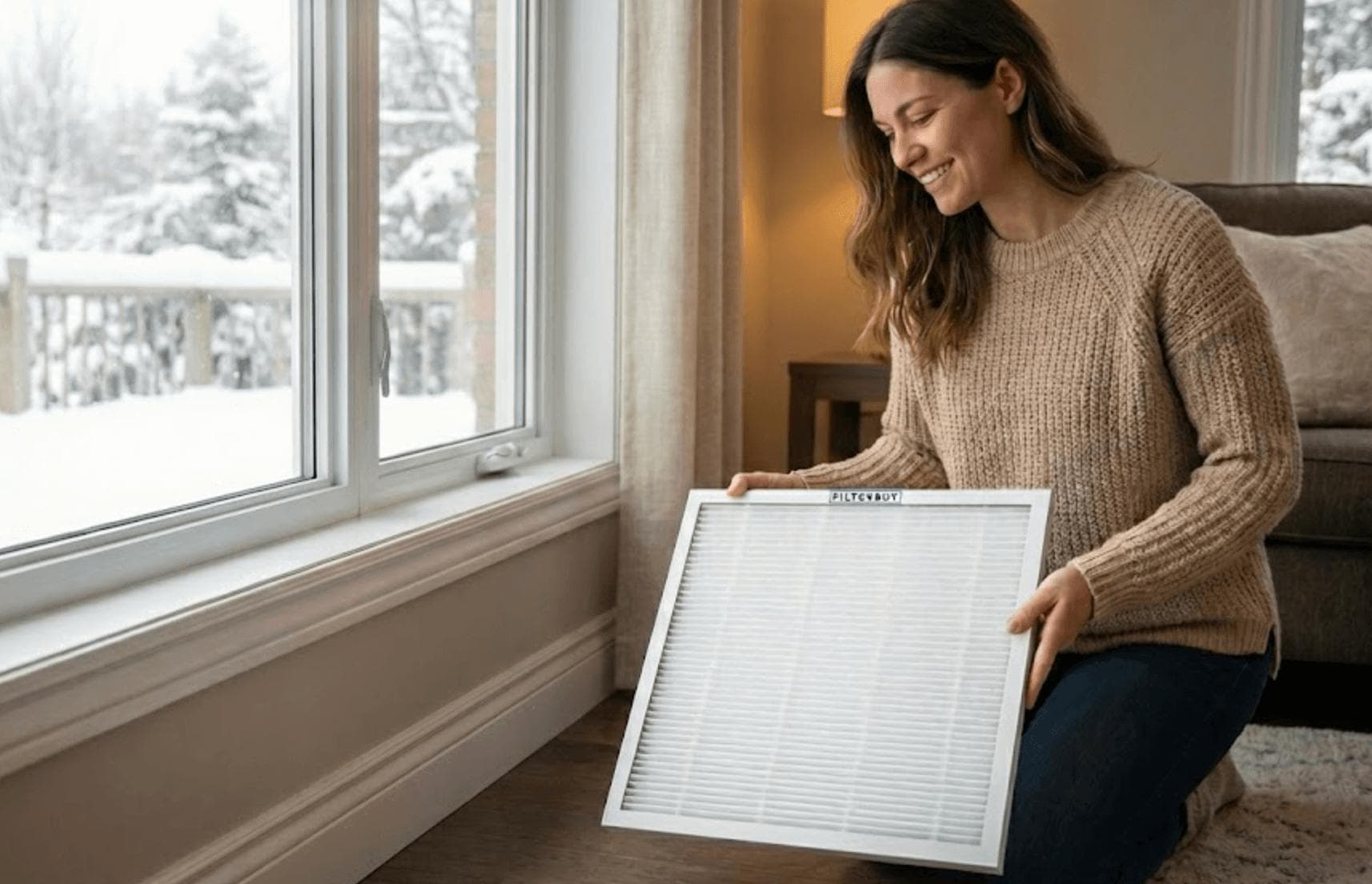
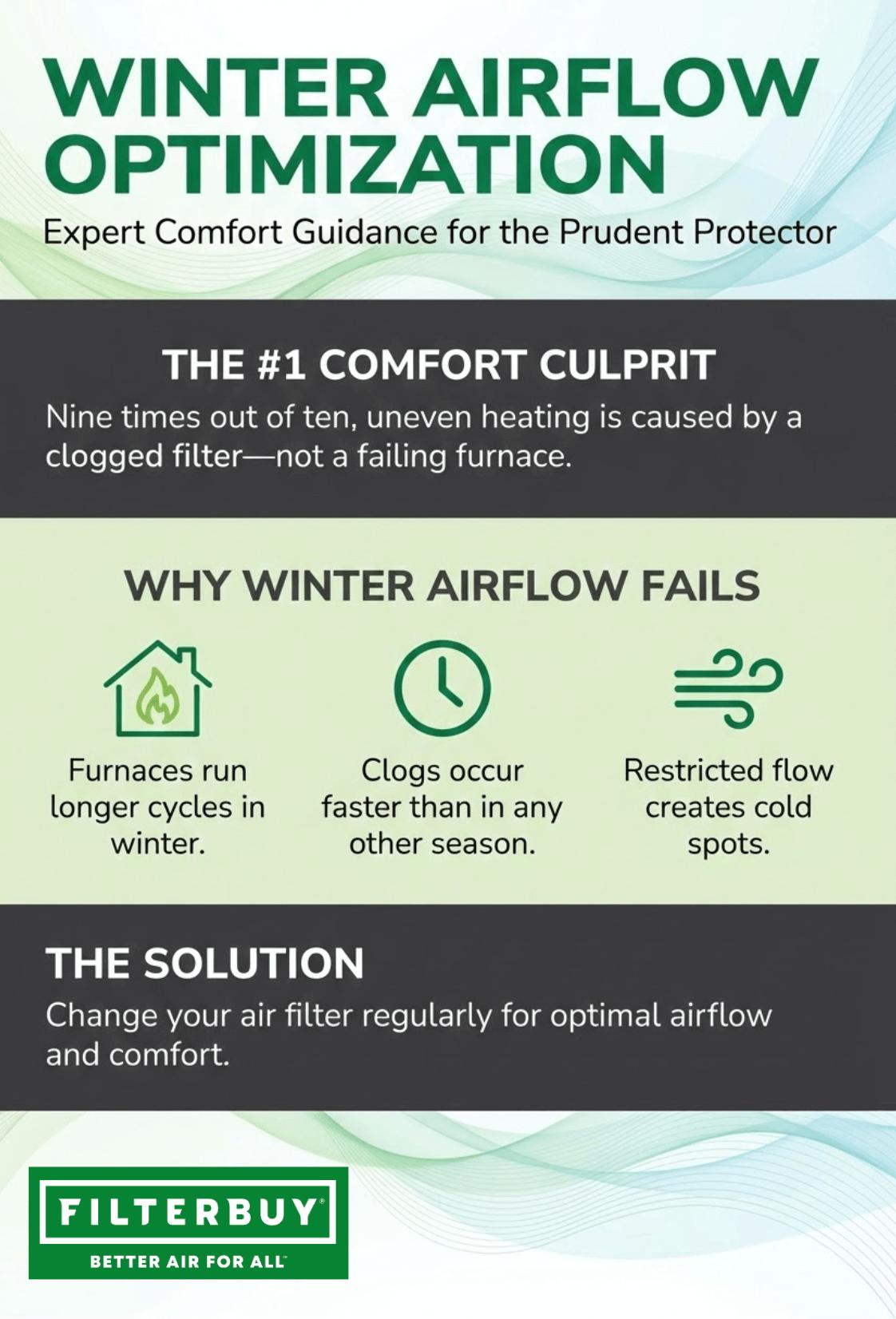
After manufacturing millions of filters and shipping them to homes across every climate zone, we hear this same complaint every winter: uneven temperatures room to room, with no obvious explanation. Homeowners blame old windows, aging insulation, or an undersized furnace — but nine times out of ten, the real culprit is a clogged filter choking airflow to the farthest registers. Once airflow is restricted, your system can't distribute heat evenly, and that's when temperature zoning problems take over.
Here's what we've learned from working directly with homeowners and HVAC technicians who install our filters: the families that maintain balanced winter airflow and consistent comfort aren't doing anything complicated. They're staying in the MERV 8–13 sweet spot, swapping their filter monthly during heating season, and keeping vents clear — simple habits that prevent the pressure imbalances responsible for hot and cold spots. In this guide, we'll walk you through exactly how a clean, properly rated filter restores even airflow throughout your home in winter, plus the practical steps that make a real difference in comfort without an expensive service call.
TL;DR Quick Answers
How do you optimize home airflow and comfort in winter with a clean filter to fix temperature zoning problems?
After manufacturing millions of filters and helping homeowners troubleshoot winter comfort problems for over a decade, here's what we know works:
The short answer: Replace your air filter monthly during heating season with a MERV 8–13 pleated filter matched to your system. This single habit solves the majority of uneven heating and airflow problems in winter.
Why it works:
A clogged filter restricts airflow, starving far rooms of heat while overheating rooms near the furnace
A clean filter restores pressure balance so warm air reaches every vent evenly
ENERGY STAR confirms this can reduce HVAC energy use by 5%–15%
The 3-step fix:
Right filter: MERV 8 for standard homes · MERV 11 for pets · MERV 13 for allergies
Right schedule: Check monthly, replace when dirty — don't wait 90 days in winter
Right airflow support: Open all vents, seal duct leaks, run ceiling fans clockwise on low
If cold spots persist after a fresh filter: Check your ductwork. Typical homes lose 20%–30% of heated air through duct leaks before it reaches a single vent.
Bottom line: A clean filter is the fastest way to optimize airflow, fix temperature zoning, and restore comfort in winter — nine times out of ten.
Top Takeaways
A dirty filter is the #1 cause of uneven winter heating. Nine times out of ten, hot and cold spots trace back to a clogged filter — not a failing furnace. We've seen this pattern repeat every winter for over a decade.
Stay in the MERV 8–13 range. Replace monthly in winter. Match the rating to your household. MERV 8 for standard homes. MERV 11 for pets. MERV 13 for allergies. But remember — the schedule matters more than the rating. A dirty MERV 13 performs worse than a fresh MERV 8.
Your sealed-up home is recycling polluted air. EPA research shows indoor pollutant levels run 2x to 5x higher than outdoors. Windows shut, furnace on repeat, same air circulating — your filter is the only line of defense.
A clean filter saves real money. ENERGY STAR confirms a simple swap can cut HVAC energy use by 5% to 15%. Heating and cooling already account for nearly half your energy bill. During peak winter, those savings add up fast.
Start with the filter. Then check your ducts. A fresh filter fixes most winter airflow problems. Still getting cold spots? Look for dust streaks around duct seams — leaky ductwork wastes 20%–30% of heated air before it reaches a single vent.
Why Winter Is the Hardest Season on Your Home's Airflow
Your HVAC system doesn't operate the same way in January as it does in June. During the cold months, your furnace runs longer cycles to maintain a comfortable temperature, which means more air is constantly being pulled through the filter. That increased runtime causes filters to clog significantly faster than in milder seasons. Add in sealed windows, holiday cooking, candles, extra guests, and pets spending more time indoors, and you've got a recipe for restricted airflow.
When airflow is restricted, your furnace has to push harder to distribute warm air through the ductwork. The blower motor strains against a wall of trapped dust, and the result is predictable: some rooms get too much heat while others barely get any. This is the core of what HVAC professionals call a temperature zoning problem — and it's the number one comfort complaint we hear from homeowners every January and February.
According to the U.S. Department of Energy, heating and cooling account for nearly half of a typical home's energy use. Even minor airflow restrictions from a dirty filter can drive up bills and create the kind of uneven heating that makes your home feel uncomfortable no matter where you set the thermostat.
How a Clean Filter Restores Balanced Temperature Zoning
A clean, properly rated air filter is the foundation of consistent winter airflow. Here's why it makes such a difference.
When your filter is fresh, air moves freely through the system. Your furnace doesn't have to run as long or work as hard to reach the set temperature, and warm air distributes more evenly through every supply vent in the house — including the registers farthest from the unit. That's the key to solving hot and cold spots without installing expensive zoning equipment.
After manufacturing millions of pleated filters and working directly with HVAC technicians who install them, we've seen this pattern consistently: the families who maintain balanced winter comfort aren't using anything fancy. They're simply keeping a clean filter in place so their existing system can do what it was designed to do — circulate warm air evenly from room to room.
A clogged filter, on the other hand, creates a pressure imbalance in your ductwork. Warm air can't reach the farthest rooms with enough volume, so those spaces stay cold. Meanwhile, rooms closer to the furnace get too much heat. The system runs longer trying to compensate, which increases energy consumption and accelerates wear on internal components like the blower motor and heat exchanger.
Choosing the Right MERV Rating for Winter Airflow Performance
Not all filters are created equal, and the wrong choice can actually create the same airflow problems as a dirty one. A filter's MERV rating (Minimum Efficiency Reporting Value) tells you how effectively it captures airborne particles — but higher isn't always better for your system.
Based on our experience manufacturing filters at every MERV level and testing them against residential pressure drop thresholds, here's what we recommend for winter:
MERV 8 is the reliable workhorse for standard homes without pets or severe allergies. It captures dust, lint, pollen, and dust mites while maintaining excellent airflow — especially important for older furnace systems that can struggle with higher resistance.
MERV 11 is the most versatile option and the one we recommend most often. It adds pet dander and mold spores to the capture list, making it ideal for the majority of households where the home is sealed up tight during winter.
MERV 13 offers the highest level of residential filtration, capturing bacteria, smoke particles, and virus carriers. It's the right choice for households with asthma, severe allergies, or smokers — but only if your system can handle it.
The critical takeaway: going above MERV 13 on a residential system risks restricting airflow to the point where it mimics a clogged filter. A MERV 13 installed in a system designed for MERV 8 will create pressure problems regardless of how new it is. Right-sizing your filter to your system matters more than chasing the highest number on the shelf.
The Winter Filter Replacement Schedule That Actually Works
The old "change it every 90 days" rule doesn't hold up during heating season. Your furnace is running harder, processing more air, and your home is sealed — meaning more particulates are cycling through with no escape route. From what we've seen after working with over a million customers, the homeowners who avoid emergency furnace calls and maintain the most consistent comfort follow a tighter schedule during winter:
Standard homes with no pets: Every 60 to 90 days, with a visual check monthly.
Homes with one or two pets: Every 30 to 60 days. Pet dander clogs filters faster than most people expect, especially when animals are spending more time indoors.
Households with allergy or asthma sufferers: Every 30 days, no exceptions. This is the single most impactful habit for maintaining both air quality and airflow when the house is sealed up.
A quick way to check: pull the filter out and hold it up to a light source. If you can't see light passing through, it's time for a replacement — regardless of how long it's been installed. A dirty MERV 13 will always perform worse than a fresh MERV 8. The filter matters, but the schedule matters more.
Beyond the Filter: Supporting Airflow Throughout Your Home
A clean filter is the starting point, but a few additional habits can make a noticeable difference in how evenly your home heats during winter.
Keep all vents open and unobstructed. Walk through your home room by room and make sure supply and return vents aren't blocked by furniture, curtains, or rugs. Blocked vents create pressure imbalances that force your blower motor to work harder and can redirect heat unevenly through the ductwork.
Check accessible ductwork for leaks. Leaky ducts are a major cause of uneven heating and wasted energy — studies suggest they can lose 20 to 30 percent of heated air before it reaches your living spaces. Look for dust streaks around seams, which usually indicate an air leak. Seal gaps with metallic foil tape (not standard duct tape, which dries out and peels) for a quick, meaningful improvement.
Use ceiling fans in reverse. Setting your ceiling fan to spin clockwise on a low speed during winter pushes warm air trapped near the ceiling back down into the living space. It's a small adjustment that can make rooms feel noticeably more comfortable without touching the thermostat.
Consider a smart thermostat for precision. A programmable or smart thermostat helps you manage temperature more consistently, avoiding the kind of drastic adjustments that strain your system and create uneven heating cycles.
Make Winter Airflow Effortless
The bottom line is straightforward: a clean, properly rated filter is the most affordable and effective way to improve temperature zoning and airflow comfort in your home during winter. It protects your system, lowers your energy bills, and eliminates the frustrating hot and cold spots that make sealed-up homes uncomfortable.
We built Filterbuy to make this easy. With over 600 sizes — including custom dimensions — American-made pleated filters, and auto-delivery that ships your exact size on your schedule, staying on top of your winter filter changes takes less effort than most people think. No trips to the hardware store. No guessing which size you need. Just the right filter showing up at your door when it's time.
Find your exact filter size or set up auto-delivery so you never have to think about it again. Two minutes, a fresh filter, and your whole home breathes easier this winter.
"After over a decade of manufacturing filters in the U.S. and hearing from homeowners every winter, we see the same pattern again and again — the families who stay in the MERV 8–13 range and swap their filter monthly during heating season are the ones who avoid emergency furnace calls, keep their energy bills steady, and actually feel consistent warmth in every room of the house."
7 Resources That Actually Help You Fix Winter Airflow and Temperature Problems
Look, we know you didn't come here to read a textbook. You came because some rooms in your house are freezing, others are too warm, and you want to fix it without calling in an expensive technician. We get it — we hear from homeowners dealing with this exact thing every single winter.
So we pulled together the seven resources that will actually move the needle. These are the same guides we point people to when they call us with airflow and comfort questions during heating season — plus a couple of trusted government sources that back up what we've been seeing firsthand for over a decade. Start wherever makes sense for you.
1. Not Sure Which Filter You Need This Winter? Start Here
Filterbuy — Best Furnace Filters for Winter 2024–2025: Expert Rankings
We ranked MERV 8, 11, and 13 filters based on what actually works for real households — not lab conditions. Got pets? Start at MERV 11. Allergies or asthma? MERV 13. Just need a solid workhorse for a standard home? MERV 8 has you covered. This guide takes the guesswork out of it, based on what we've learned manufacturing millions of filters at our U.S. facilities.
You'll want this if: You're ready to pick the right filter and stop second-guessing.
2. Is a Clogged Filter Behind Your Hot and Cold Spots? Here's How to Tell
Filterbuy — Signs Your Furnace Filter Is Clogged This Winter
Upstairs freezing while the living room's fine? Energy bill spiked for no obvious reason? Your home is already giving you the clues — you just need to know what to look for. We walk you through the seven red flags we hear about every January and February, plus a 30-second test you can do right now. Pull out the filter, hold it up to a light. If you can't see through it, that's your answer.
You'll want this if: Something feels off with your heating and you want a quick way to check before calling a pro.
3. Why the Wrong Filter Can Choke Airflow Just Like a Dirty One
Filterbuy — MERV Air Filter Pressure Drop Chart: Complete Guide to Airflow Resistance
Here's something most people don't realize: a brand-new filter with the wrong MERV rating can restrict your system's airflow the same way a clogged filter does. This guide breaks down pressure drop — the resistance your filter creates as air passes through it — using real testing data from over 2 million filters we've manufactured. You'll see why a thicker filter at the same MERV rating often performs better, and how to match what you buy to what your system can actually handle.
You'll want this if: You're the type who likes to understand why something works, not just what to buy.
🔗 https://filterbuy.com/resources/air-filter-basics/merv-air-filter-pressure-drop-chart/
4. One Filter Swap That Can Actually Lower Your Heating Bill
Filterbuy — The Simple Filter Change That Can Lower Your Winter Heating Bill
We're not going to pretend that changing a filter is going to cut your bill in half. But the U.S. Department of Energy found that swapping a dirty filter for a clean one can reduce your HVAC energy use by up to 15% — and during peak heating season, that percentage hits your wallet hard. This guide connects filter maintenance to real dollar savings and gives you a replacement schedule based on your actual household (pets, allergies, home size), not a generic one-size-fits-all rule.
You'll want this if: Keeping costs down this winter matters to you — and it should.
5. Your Filter and Your Humidity Are Working Together — Whether You Realize It or Not
Filterbuy — Humidifiers, Dehumidifiers & HVAC Filters: The Winter Balance Guide
After hearing from homeowners across every climate zone, we've learned that most winter comfort problems aren't just about the filter or just about humidity — they're about both. Dry air keeps dust and allergens floating longer, which loads your filter faster. A clogged filter traps moisture, giving mold a foothold. It's all connected. This guide helps you think in zones instead of whole-house averages and explains why a $15 hygrometer might tell you more about what your home needs than any product listing.
You'll want this if: You're dealing with dry air, condensation, or comfort issues that go beyond just hot and cold spots.
6. What the Government Recommends for Keeping Your Heating System Running Right
ENERGY STAR (U.S. Department of Energy) — Heat & Cool Efficiently
We always recommend that homeowners check their work against trusted, independent sources — and this is one of the best. ENERGY STAR's guide covers monthly filter checks during heavy-use months, duct sealing (which can improve system efficiency by up to 20%), and smart thermostat tips for maintaining even temperatures. It backs up a lot of what we tell our customers every day, and it comes straight from the federal government — no sales angle, just solid guidance.
You'll want this if: You like to verify advice from a source with no skin in the game.
🔗 https://www.energystar.gov/saveathome/heating-cooling
7. Why Your Sealed-Up Winter Home Needs Clean Filtration More Than Any Other Season
U.S. Environmental Protection Agency — The Inside Story: A Guide to Indoor Air Quality
Here's the part that surprises a lot of homeowners: the EPA reports that indoor air pollutant levels are often 2 to 5 times higher than what you'd find outside. In winter, when your windows are shut and your furnace is running nonstop recirculating the same air, those concentrations climb even higher. This guide explains the science behind why sealed-up homes create unique air quality challenges — and why your filter is doing more heavy lifting from November through March than most people realize.
You'll want this if: You want to understand the health and air quality side of why regular winter filter changes matter for your family.
🔗 https://www.epa.gov/indoor-air-quality-iaq/inside-story-guide-indoor-air-quality
What We've Seen Firsthand — and What the Government Data Confirms
We don't just cite research — we live it. After manufacturing millions of filters at our U.S. facilities since 2013 and hearing from homeowners every heating season, the same patterns show up year after year. And every time, the federal data backs up exactly what we've been seeing on the ground.
1. A Clean Filter Saves 5% to 15% on Heating Energy
ENERGY STAR confirms that swapping a dirty filter for a clean one can cut your HVAC energy use by 5% to 15%. We've watched this play out with our own customers every winter:
Homeowners call us in January confused about a $40–$60 bill spike
We ask when they last changed their filter — the answer is almost always "I'm not sure"
Once they swap in a fresh pleated filter and commit to monthly changes, the next bill tells the story
That percentage hits harder than it sounds. Heating and cooling already account for nearly half of a typical home's energy use. During peak winter — when your furnace runs nonstop — even 5% savings is real money, every month.
It's exactly why we built auto-delivery. A fresh filter shows up before the old one has a chance to cost you.
Source: ENERGY STAR — Heat & Cool Efficiently
2. Indoor Air Is 2x to 5x More Polluted Than Outdoor Air
The EPA's TEAM studies found indoor pollutant levels are routinely 2 to 5 times higher than outside — regardless of location. Two related findings make this even more relevant in winter:
Americans spend roughly 90% of their time indoors
The most vulnerable groups — young children, older adults, people with asthma or heart disease — spend even more
We hear the downstream effects of this every January and February. The customer complaints follow the same arc:
"We're sneezing more than usual"
"Dust is settling everywhere no matter how much we clean"
"The house just feels stuffy and stale"
Every one of those symptoms traces back to the same root: a sealed-up home recirculating the same air through a filter that stopped doing its job weeks ago. Your furnace runs longer cycles, pushing dust, dander, and allergens through the ductwork on repeat. If the filter is full, those pollutants go right back into the rooms where your family sleeps and breathes.
This stat isn't abstract. It's what's happening inside your house right now if your filter hasn't been checked since fall.
Source: U.S. EPA — Indoor Air Quality: Report on the Environment
3. Leaky Ducts Waste 20%–30% of Your Heated Air Before It Reaches a Single Vent
ENERGY STAR reports that in a typical home, 20% to 30% of heated air escapes through duct leaks, holes, and poorly connected joints. Sealing and insulating those ducts can improve overall system efficiency by up to 20%.
Here's what our experience adds that the data doesn't cover. After working directly with HVAC technicians who install our filters, we've identified a pattern:
Customer swaps in a fresh MERV 11 or 13 — notices improvement in most rooms
One stubborn bedroom or upstairs hallway still won't warm up
Technician inspects ductwork — finds disconnected joints or gaps at seams in the attic or crawlspace
Heated air has been dumping into spaces where it does nobody any good
Our advice, based on what we've seen work:
Start with a clean filter. It's the fastest, cheapest fix and solves the majority of winter comfort problems.
Still getting cold spots after the swap? Check your ducts next. Look for dust streaks around seams — that's a telltale leak.
Seal gaps with metallic foil tape (not regular duct tape — it dries out and peels).
Think of it as a partnership. The filter and the ductwork work together. When both are doing their job, your system can finally deliver the even, consistent warmth it was designed to provide.
Source: ENERGY STAR — Duct Sealing: Benefits
Final Thought: The Biggest Winter Comfort Problem Is the One You Keep Walking Past
Here's our honest take after building filters in the U.S. since 2013, shipping millions of them to families across every climate zone, and talking with homeowners every winter about the same frustrations.
The HVAC industry has a messaging problem. Search online or walk into a hardware store and you'll get buried in jargon — SEER ratings, variable-speed blowers, zoning dampers, smart thermostats. All of that has its place. But in our experience, the overwhelming majority of homeowners dealing with uneven temperatures and poor winter airflow don't need a system upgrade or an expensive service call. They need to change a $15 filter that's been choking their airflow for the last three months.
The Pattern We See Every Winter
That's not a sales pitch — it's a pattern we've watched repeat thousands of times:
Homeowner calls convinced something is seriously wrong with their furnace
Rooms aren't heating evenly, the system runs constantly, the bill spiked
They're bracing for a big repair
We ask one question: "When did you last check your filter?"
Silence. Or "I'm not sure." Or "Maybe back in October?"
They pull it out, hold it up to a light, can't see a thing through it
Two minutes and a fresh filter later — airflow improves, the system stops running overtime, the house starts to even out
Problem solved. No technician. No tools. No drama.
What We Believe the Industry Should Be Saying
We think the real conversation isn't about upselling people into equipment they don't need. It's about empowering homeowners with the one habit that prevents most winter HVAC problems before they start.
A filter change is the smallest maintenance task in your entire house — and it arguably has the biggest impact on your comfort, your energy bills, your air quality, and your system's lifespan, all at once.
Our Perspective: Winter Comfort Isn't Complicated
We'll stand behind this — you don't need to become an HVAC expert. You don't need to memorize pressure drop charts. You need three things:
The right filter for your system. Stay in the MERV 8–13 range. MERV 8 for standard homes. MERV 11 for pets. MERV 13 for allergies and asthma. Match it to your household, not your anxiety.
A monthly replacement habit during heating season. A dirty premium filter performs worse than a fresh budget one — every time. The filter matters, but the schedule matters more.
Open vents and sealed ducts. So the warm air your system produces actually reaches the rooms where your family lives.
That's it. Those three things, done consistently, solve the vast majority of winter airflow and temperature zoning problems we see. Everything else — smart thermostats, humidity control, professional tune-ups — is valuable, but it builds on that foundation. Without a clean filter, none of it works the way it should.
Why We Built Filterbuy Around This Belief
We didn't start this company to make the fanciest filter on the market or to convince you that you need the highest MERV rating on the shelf. We started it because we kept hearing the same story:
Families driving to the hardware store mid-winter
Finding their size out of stock
Settling for whatever was left — or just putting it off because life got busy
That one missed filter change quietly leading to higher bills, worse air, and system strain that could have been completely avoided
So we made it simple:
600+ sizes including custom dimensions
American-made quality from our facilities in Alabama, Florida, Pennsylvania, and Utah
Factory-direct pricing — no middlemen, no markups
Fast, free shipping to your door
Auto-delivery so a fresh filter shows up on your schedule, before you even have to think about it
Winter comfort shouldn't be something you have to fight for. A clean filter, the right MERV rating, and a two-minute swap once a month — that's how you protect your family's air, your home's comfort, and your furnace, all at the same time.
Little effort. Big impact.
Your Next Steps: Take Control of Winter Airflow Today
You've got the knowledge — here's what to do with it. Each step takes minutes, not hours. No technician required.
Step 1: Check your current filter right now.
Takes 30 seconds:
Turn off your HVAC system
Slide out the filter (usually behind a return vent or inside the air handler)
Hold it up to a light
Can't see light through it? It's done. Doesn't matter how long it's been in there — it's restricting your airflow right now.
Step 2: Find your exact filter size.
Check the dimensions printed on the frame of your current filter. If they've worn off, measure length, width, and depth or check your HVAC manual.
Know your size? Find it at Filterbuy.com — 600+ sizes in stock, plus custom dimensions
Not sure? Contact our team — real people, real answers, no runaround
Step 3: Choose the right MERV rating.
Match it to how you actually live:
MERV 8 — Standard homes, no pets or severe allergies
MERV 11 — Homes with pets or moderate sensitivities (our most popular pick)
MERV 13 — Asthma, severe allergies, or smokers in the household
Don't go above MERV 13 on a residential system unless your technician confirms your equipment can handle it. An oversized rating restricts airflow just like a dirty filter.
Step 4: Set a winter replacement schedule.
The "every 90 days" rule doesn't apply during heating season. Here's what works:
No pets, no allergies: Check monthly, replace every 60–90 days
1–2 pets: Replace every 30–60 days
Allergies or asthma: Every 30 days — no exceptions
Easiest option: Set up Filterbuy auto-delivery. The right filter shows up on your schedule. One less thing to think about.
Step 5: Do a quick vent and duct check.
A clean filter can't help if airflow is blocked downstream. Walk through your home:
Open all supply and return vents — move furniture, curtains, or rugs blocking them
Check accessible ductwork for dust streaks around seams (a telltale sign of leaks)
Seal gaps with metallic foil tape (not standard duct tape — it dries out and peels)
Set ceiling fans to clockwise on low to push warm air back down from the ceiling
Step 6: Make this the winter you stop thinking about it.
The homeowners with the most comfortable, most efficient winters have three things in place:
Right filter — MERV 8, 11, or 13 matched to their household
Right schedule — monthly checks, replace when dirty
Right delivery — auto-delivery so it shows up without a store run
Two minutes. A fresh filter. Your whole home breathes easier.
Frequently Asked Questions
Q: Why do some rooms in my house feel colder than others during winter?
A: This is the most common question we get between November and March — and after talking with homeowners across every climate zone for over a decade, the answer is almost never what people expect.
Most assume it's a failing furnace, bad insulation, or drafty windows. But nine times out of ten, when we walk through the diagnosis, it's a clogged filter restricting warm air from reaching the farthest rooms.
What actually happens:
Registers closest to the furnace get plenty of heat
Bedrooms, upstairs hallways, and bonus rooms get starved of airflow
The system runs longer trying to compensate but can't overcome the restriction
We've watched this play out thousands of times. A homeowner swaps in a fresh pleated filter and rooms that haven't felt warm all season start evening out within hours.
Still getting cold spots after a filter change? Check your ductwork. Leaky seams in the attic or crawlspace are the second most common cause we see.
Q: How often should I change my air filter during winter?
A: More often than the packaging says. After shipping filters to over a million homes, we can tell you the "every 90 days" rule falls apart during heating season. Your furnace runs harder, cycles more air, and your house is sealed tight — filters trap debris much faster than most homeowners expect.
What actually works, based on our customer data:
No pets, no allergies: Every 60–90 days, with a monthly visual check
1–2 pets: Every 30–60 days
Allergies or asthma: Every 30 days — no exceptions
The quick test: Pull the filter out. Hold it up to a light. If light can't pass through, it's done — regardless of what the calendar says.
One insight we share with every customer: a dirty MERV 13 underperforms a fresh MERV 8. The filter matters, but the schedule matters more.
Q: What MERV rating is best for winter airflow and comfort?
A: After manufacturing filters at every MERV level and testing them against residential pressure drop thresholds at our U.S. facilities, our answer is simple: stay between MERV 8 and MERV 13. Match the rating to your household — not the highest number on the shelf.
MERV 8 — Standard homes, no pets or severe allergies. Excellent airflow, especially on older systems.
MERV 11 — Our most versatile recommendation. Captures pet dander and mold spores. Ideal for most homes sealed up for winter.
MERV 13 — Asthma, severe allergies, or smokers. Only if your system can handle it.
The mistake we see often: Homeowners grab a MERV 13 thinking "higher is better," then choke airflow on a system built for a MERV 8. That's the same problem as a dirty filter — on day one.
Not sure what your system supports? Reach out to our team or check with your HVAC technician. We'll help you find the right match based on your setup, not guesswork.
Q: Can a dirty air filter actually increase my heating bill?
A: Yes — and the increase catches most people off guard. ENERGY STAR puts the number at 5% to 15% in added energy consumption from a clogged filter.
We don't need government studies to know this is real. We hear it from customers every January:
Heating bill jumps $40–$60 with no obvious explanation
Outdoor temperature didn't change dramatically
Thermostat setting is the same
Only difference: a filter that's been packed solid since October
The furnace has been running overtime to force air through it, burning extra energy the entire time.
What gets people is how fast the fix works. Swap in a fresh filter. The system stops straining. Runtime drops. The next bill reflects it.
A $15 fix that pays for itself in weeks. It's exactly why we built auto-delivery — a fresh filter shows up before the old one has a chance to cost you.
Q: What else can I do besides changing the filter to improve winter airflow?
A: A clean filter handles the biggest piece. But after years of working alongside HVAC technicians who install our filters, we've identified the supporting habits that make the most noticeable difference:
Check every vent in your house. Walk room by room. We hear from customers all the time who didn't realize a couch, curtains, or an area rug was blocking a supply or return vent. One blocked vent throws off pressure balance for the whole system.
Inspect accessible ductwork for leaks. ENERGY STAR reports typical homes lose 20%–30% of heated air through duct leaks. Look for dust streaks around seams. Seal gaps with metallic foil tape (not standard duct tape — it dries out and peels).
Flip ceiling fans to clockwise on low. Pushes warm air trapped near the ceiling back into the living space. Small change, noticeable difference — no thermostat adjustment needed.
Consider a smart thermostat. Helps manage consistent temperatures and avoids the big swings that strain your system.
Important: All of these work best on top of a clean filter. Without unrestricted airflow as the foundation, the supporting steps can only do so much.
Ready to Fix Your Winter Airflow and Finally Get Even Comfort in Every Room?
Find your exact filter size from over 600 American-made options and get it shipped free, straight to your door — or set up auto-delivery so it shows up on your schedule before your airflow has a chance to suffer.