
The Complete Winter Home HVAC Prep: Ducts, Vents & Airflow
April 22, 2026
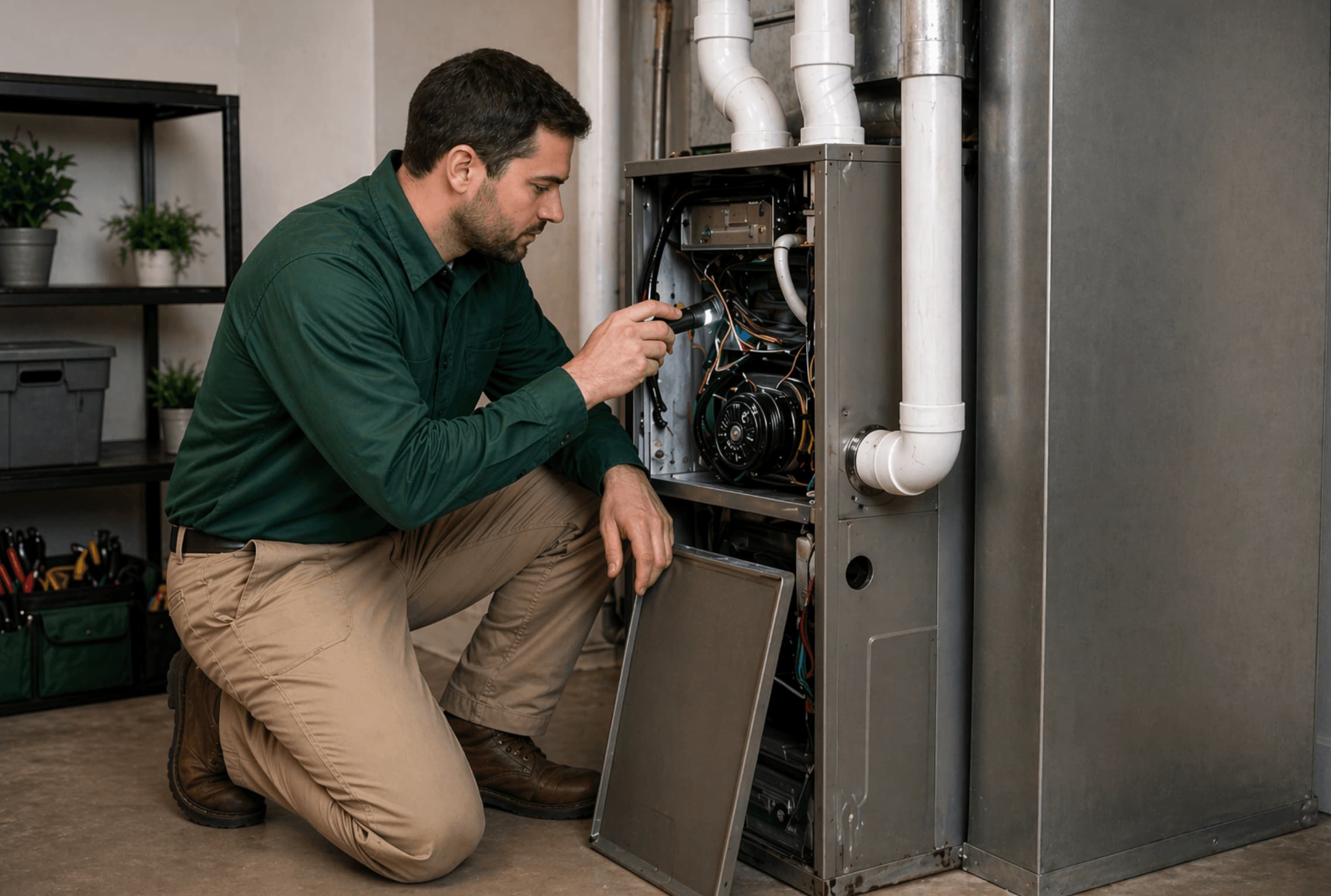
Every fall, we get the same phone call from homeowners in every climate zone. Their heating bill jumped, one bedroom stays cold, and the furnace seems to run nonstop. Our first question back is always the same: when did you last change your filter? Nine times out of ten, the rest of the conversation comes down to the same four things — the filter, the ducts, the vents, and whether air is actually moving the way the system was built to move it.
This is the winter HVAC prep work we run in our own houses before Thanksgiving. We'll cover the five-minute fixes, the weekend projects, and the items worth handing to a pro.
TL;DR Quick Answers
HVAC filter winter tips homeowners
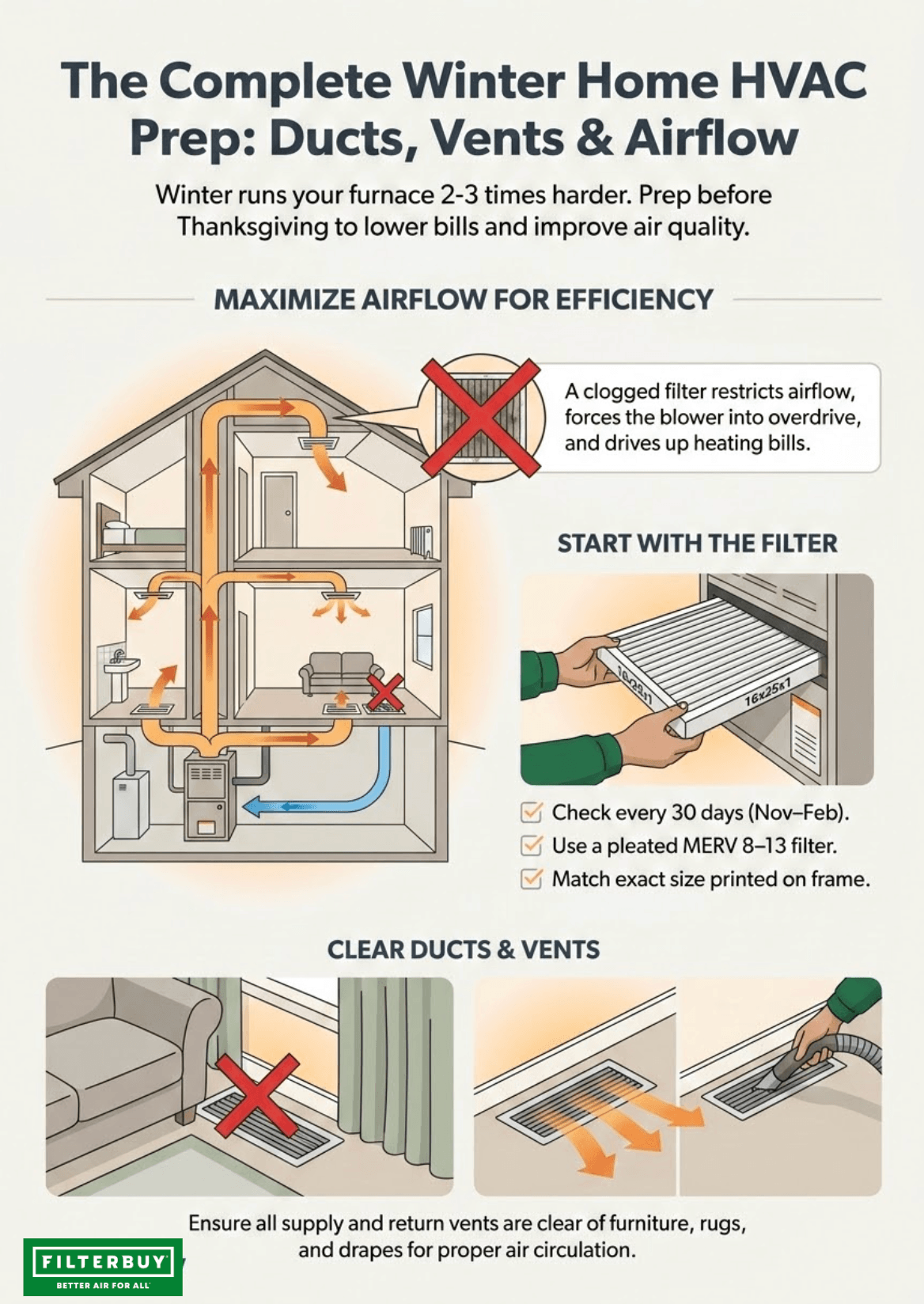
Check your furnace filter every 30 days from November through February, not every 90. Winter runs your furnace two to three times harder than shoulder seasons, and a filter that looked fine in October is usually gray by December. Hold it up to a light. If you can't see through it, replace it.
For most homes, a pleated MERV 8–13 filter is the right call. MERV 8 handles basic dust. MERV 11 covers pet dander and seasonal allergens. MERV 13 catches smoke and fine particles. True HEPA is usually too restrictive for a residential blower and can actually hurt airflow.
Three habits we tell every homeowner heading into winter:
• Change the filter before the first hard freeze, not after.
• Match the exact size printed on your current filter's frame (like 20x25x1) so it seals properly.
• Set a monthly reminder, or put filter delivery on auto so you never have to think about it.
A clean filter is the cheapest, fastest step you can take for a lower heating bill and better indoor air all winter.
Top Takeaways
• Most winter HVAC breakdowns come down to skipped prep, not equipment age or brand.
• The filter is step one. It's also the single biggest lever you've got for a lower heating bill.
• Leaky ducts can waste as much as 20% of your heated air before it reaches the room. A clean filter won't fix that.
• Closing vents in unused rooms doesn't save energy. It raises static pressure and can damage your blower.
• Indoor air quality in winter is usually worse than summer because the house is sealed tight. A good filter matters more, not less.
• When in doubt, call a pro for the heat exchanger, combustion, and gas-line checks. The rest of this list is DIY.
Why Winter Is the Hardest Season on Your HVAC
Cold air is denser than warm air, which means your blower has to work harder to push the same volume through the house. At the same time, your home is sealed tight. Windows closed, weatherstripping in place, exterior doors rarely cracked. Everything that was diluting your indoor air in July (cooking particles, pet dander, dust, the occasional whiff of wood smoke) now has nowhere to go. Your furnace is running several hours a day instead of a handful of minutes, which means the filter is loading up faster than at any other time of year. That combination is why winter allergens and dust often feel worse indoors in January than they do outdoors in April.
Start With the Filter — It's a Five-Minute Fix
A clogged furnace filter is the single most common cause of every winter HVAC problem we hear about. It restricts airflow, forces the blower into overdrive, starves the furnace of the air it needs, and quietly drives your heating bill up at the worst possible time of year. An air filter is really just a pleated barrier designed to catch particles before they recirculate. When it loads up, every part of the system downstream feels it.
Based on what we ship to homes every day, a pleated MERV 8–13 filter is the right call for most households. MERV 8 handles basic dust and lint. If you've got pets or seasonal allergies, step up to MERV 11. That's where most homes land. MERV 13 catches finer particles like smoke and most allergens, and it's the better call when someone in the house has asthma or respiratory sensitivities.
True HEPA is usually too restrictive for residential systems and can actually hurt airflow. If you're not sure what your furnace can handle, check the manual or ask your HVAC tech on your next annual visit.
Walk Your Ducts — Where the Hidden Waste Lives
Ductwork is the most ignored part of home heating and the place your heated air quietly disappears. A meaningful share of what your furnace produces never reaches your rooms. It leaks out at joints, seams, and poorly sealed boots in attics, crawlspaces, and unconditioned basements. According to ENERGY STAR, sealing and insulating those ducts can improve your system's efficiency by as much as 20%.
What you can handle yourself:
• Walk every accessible duct run you can see. Look for visibly separated joints, dangling flex duct, or daylight coming through a seam.
• Seal what you can reach with either mastic sealant or UL-181-rated foil tape. Never use fabric "duct tape." It fails in under a year.
• Feel for airflow at accessible joints while the system is running. A warm breeze where no breeze should be is a leak.
What should wait for a pro: sealed ductwork in attics or crawlspaces with limited access, sheet-metal joint gaps that need mechanical fasteners, and any duct run with signs of mold or moisture damage. The households that most often call us about uneven heating have perfectly clean filters. The problem is almost always upstream in the ducts.
Clear Your Vents — Small Wins That Add Up Fast
Vents are the easiest part of the system to fix and the most commonly sabotaged. Furniture is usually the culprit. Here's the short list:
• Move rugs, couches, curtains, and boxes off both supply and return vents. Keep a 12-inch clear zone on all sides.
• Vacuum every grille, inside and out. Return vents in particular are dust magnets.
• Don't close vents in unused rooms. That old piece of advice is actually backwards. Closing vents raises static pressure in your ductwork, which can damage the blower motor and drop overall system efficiency.
• Walk the exterior of your house and clear snow, leaves, and nests from every vent termination (furnace flue, dryer exhaust, range hood, fresh-air intake). A blocked flue is serious. Carbon monoxide can back up into the house if the exhaust path is restricted, which makes this a safety task, not just an efficiency one.
Check Your Airflow — The Diagnostic That Tells You Everything
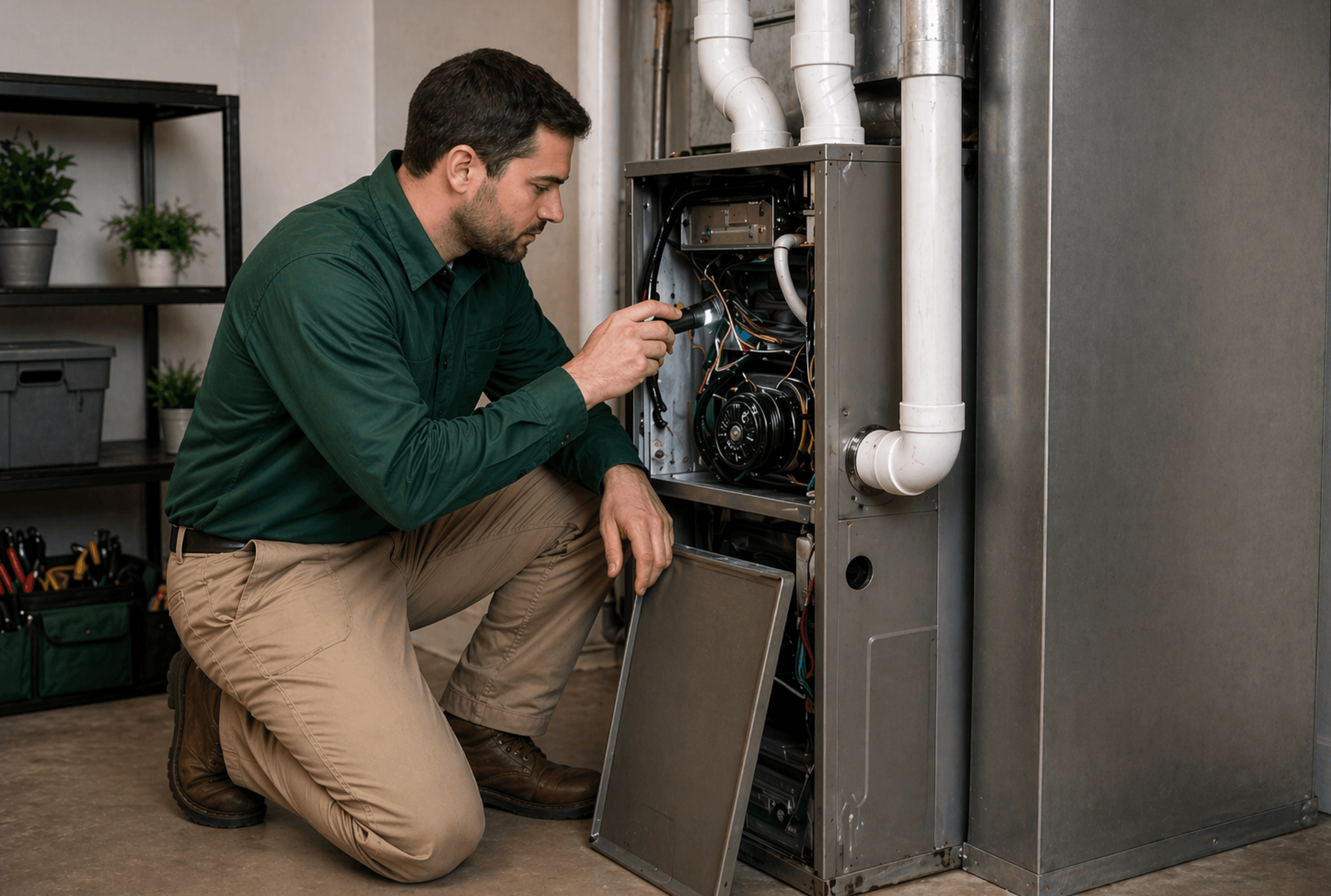
Once your filter is clean, your ducts are sealed, and your vents are clear, check whether the system is actually moving air the way it should. It takes 60 seconds.
Turn on your heat. Walk to the vent farthest from your furnace and hold a tissue about six inches away. Within 10–15 seconds of the blower kicking on, the tissue should flutter strongly and steadily. If it barely moves, you have a restriction somewhere. Usually it's a clogged filter, a closed or blocked vent, or a serious duct leak.
Rooms that stay cold no matter what the thermostat says almost always have an airflow problem upstream, not a thermostat problem.
Two airflow symptoms warrant stopping and calling a pro. First, short-cycling (the furnace turning on and off rapidly within a few minutes). Second, a burning or chemical smell that doesn't go away after the first 15 minutes of operation. Both can signal a restriction serious enough to damage the blower or the heat exchanger.
"After more than a decade of manufacturing filters and shipping them to homes in every climate zone, we can tell you that the homes that fail in cold weather are almost never the oldest ones. They're the homes that went into December with a clogged filter, a leaky duct run, or a vent smothered by a couch."
7 Essential Resources
1. ENERGY STAR — Heating & Cooling Maintenance Checklist
A straight-from-the-government list of exactly what a professional should check on your system, season by season. We refer to this one ourselves when customers ask what a real tune-up includes. energystar.gov/saveathome/heating-cooling/maintenance-checklist
2. U.S. Department of Energy — Fall & Winter Energy-Saving Tips
The DOE's list of seasonal energy-saving furnace tips, from thermostat setbacks to weatherstripping. Updated every year and refreshingly free of gimmicks. energy.gov/energysaver/fall-and-winter-energy-saving-tips
3. U.S. Department of Energy — Furnaces & Boilers Guide
Deeper technical reading on how your furnace or boiler actually works, what AFUE ratings mean, and how much efficiency you're leaving on the table. Best for homeowners who like to understand the "why" behind the checklist. energy.gov/energysaver/furnaces-and-boilers
4. EPA — Winter Weather & Indoor Air Quality
The EPA's plain-English guide to indoor air quality winter risks: sealed-home pollutant buildup, carbon monoxide from fuel-burning appliances, and ventilation during power outages. epa.gov/emergencies-iaq/winter-weather-and-indoor-air-quality
5. EPA — The Inside Story: A Guide to Indoor Air Quality
A foundational read co-produced by the EPA and the Consumer Product Safety Commission. If you want to understand how winter allergens and dust actually behave inside a sealed-up home, start here. epa.gov/indoor-air-quality-iaq/inside-story-guide-indoor-air-quality
6. NFPA — Carbon Monoxide Safety Tip Sheet
One-page download from the National Fire Protection Association covering CO alarm placement, testing, and fuel-burning appliance safety. Pair this with filter replacement on your seasonal checklist. nfpa.org/downloadable-resources/safety-tip-sheets/carbon-monoxide-safety-tip-sheet
7. American Lung Association — Staying Safe From Indoor Air Pollution This Winter
Health-focused guidance on VOCs, wood smoke, and combustion byproducts during the months when your home stays sealed tight. Written for regular homeowners, not clinicians. lung.org/blog/indoor-air-quality-winter
3 Statistics That Explain Why This Matters
Three numbers worth keeping in your back pocket when you're deciding whether this afternoon's work is worth it.
Heating is about 29% of your utility bill, and the right prep can cut up to 30%
The U.S. Department of Energy reports that home heating typically makes up about 29% of a household's utility bill, and that combining equipment maintenance, insulation, air sealing, and thermostat settings can save roughly 30% on your annual energy bill. That's real money. The filter-ducts-vents-airflow chain is the "maintenance" half of that equation.
Source: energy.gov/energysaver/home-heating-systems
Sealing and insulating ducts can improve HVAC efficiency by as much as 20%
According to ENERGY STAR, ducts are often major energy wasters. Sealing and insulating them can improve the efficiency of your heating and cooling system by as much as 20%, sometimes more. No equipment upgrade we know of pays for itself faster.
Source: energystar.gov/saveathome/heating-cooling
Americans spend about 90% of their time indoors
The EPA notes that the average American spends about 90% of their time indoors, where the air can actually be more polluted than what's outside. In winter, with windows closed for months, your filter and ductwork are doing almost all the cleanup work. That's a lot of responsibility for a $20 piece of pleated media.
Source: epa.gov/air-quality/indoor-air-quality
Final Thoughts and Opinion
We manufacture and ship a lot of filters. That gives us an obvious bias here. We're going to tell you what we tell our own families anyway: winter HVAC maintenance is one of the most lopsided returns on effort in home ownership. You're looking at maybe fifteen dollars of filter, twenty dollars of foil tape, and an afternoon you probably weren't going to use anyway. In exchange, you keep hundreds of dollars on the heating bill and you skip the mid-January breakdown that runs into the thousands.
The single most preventable mistake we see every winter is pretty simple. Most homeowners treat the furnace filter like a quarterly task when it's actually a monthly one once the heat kicks on. Everything else on this list matters. If you only do one thing before you close this tab, check your filter. Hold it up to a light. If you can't see through it, it's already costing you money. If you'd rather stop thinking about it altogether, that's what auto-delivery is for. We built it because the main reason filters don't get changed isn't negligence. It's just that life moves fast, and a furnace filter is easy to forget.
Next Steps
Here's the order we'd run this in if it were our own house.
1. This weekend: replace your furnace filter. If you don't know your size, pull the current one out and read the frame. The size is printed in inches (like 20x25x1). Match it exactly.
2. Next: do the vent walk-around. Clear the 12-inch zone around every supply and return, then vacuum each grille.
3. Same day: run the tissue test at your farthest vent to baseline your airflow.
4. Within the next two weeks: walk any accessible ductwork and seal visible gaps with mastic or UL-181 foil tape.
5. Before the first hard freeze: test every carbon monoxide detector and replace batteries.
6. Before your area's peak-cold month: book a professional tune-up if it's been more than 12 months since your last one.
7. Set a monthly reminder to check the filter through February. Or set up auto-delivery and let us do the remembering for you.
Frequently Asked Questions
How often should I change my furnace filter in winter?
For most 1-inch pleated filters, every 30 days during the heating season is the safe rhythm. Homes with pets, allergies, or more than three occupants should check monthly and replace the filter as soon as it looks gray. The standard 90-day guideline was written for mild seasons. It doesn't hold up when your furnace is running several hours a day, every day. If you only track one HVAC metric this winter, track this one. It moves your heating bill more than any other single variable.
What MERV rating is best for winter?
MERV 8 to MERV 13 is the sweet spot for almost every residential system. MERV 8 handles basic dust, MERV 11 covers pet dander and pollen, and MERV 13 catches finer particles like smoke and most allergens. Going higher than MERV 13, or jumping to true HEPA, can overload a standard furnace blower and actually reduce airflow. When in doubt, check your furnace manual for the highest rating it supports or consult a MERV rating guide.
Do I need to clean my ducts every year?
No. The EPA doesn't recommend routine duct cleaning for most homes. You only need it if you see visible mold growth, a real vermin infestation, or substantial debris being released into the living space. What you should do every year is seal visible leaks and keep vents clear. That delivers far more value than a cleaning.
Is it bad to close vents in unused rooms to save energy?
Yes, even though it sounds counterintuitive. Modern forced-air systems are balanced to move a specific volume of air through the whole duct system. Closing vents raises static pressure, which makes the blower work harder, wastes energy, and can shorten the life of the motor. Leave them open and let the system do what it was built to do.
Can a dirty filter really raise my heating bill that much?
Yes. A clogged filter restricts airflow, which forces your system to run longer cycles to reach the same temperature. Multiply that across 90 days of peak heating and the cost difference is real, often several times the $15 or $20 you'd spend on a new filter. The math on cold weather air filter tips favors changing the filter early.
When should I schedule a professional HVAC tune-up?
Fall, ideally September or October. You want it done before technicians in your area are booked solid and before your system is running full time. A proper tune-up covers the heat exchanger inspection, combustion analysis, blower amp draw, capacitor test, and condensate line flush. If more than a year has passed since your last one, schedule it now.
Your Next Move
Winter HVAC prep isn't complicated. It's a sequence of small, unglamorous tasks that almost nobody does, and when you actually do them, your furnace runs quieter, your heating bill drops, and your rooms stay the temperature the thermostat says they should.
Start where it matters most. Change your filter.