
Do Air Filters Really Stop Germs from Circulating?
October 15, 2025

Air filters are often marketed as a way to improve indoor air, but how well do they handle airborne germs? They help, but they don’t kill. Filters capture the tiny particles that germs travel on like droplets and aerosols reducing how much remains in the air.
In this blog, we look at how filters work, what types are most effective, and what else is needed to truly reduce germs indoors.
Key Takeaways
Air filters capture particles that carry viruses and bacteria, helping reduce airborne transmission
They do not kill germs; captured microbes can still remain active on the filter
MERV 13 or higher is recommended for central HVAC systems when compatible
HEPA filters in portable air purifiers offer the highest particle capture
Filtration should be combined with ventilation, disinfection, and good hygiene for best results
How Air Filters Help with Germ Control
Germs like viruses and bacteria don’t float freely. They hitch a ride on droplets and aerosols that get released when we breathe, talk, cough, or sneeze. These particles range in size from under 1 micron to several microns—small enough to stay suspended in air, especially indoors.
Filters don’t “kill” germs, but they trap these particles as air passes through. Over time, this lowers the overall concentration of airborne contaminants, especially if the air is circulating constantly through a well-sealed, high-efficiency filter.
Experts recommend using filtration as part of a layered approach—not as a standalone solution.
Which Filters Work Best for Germs?
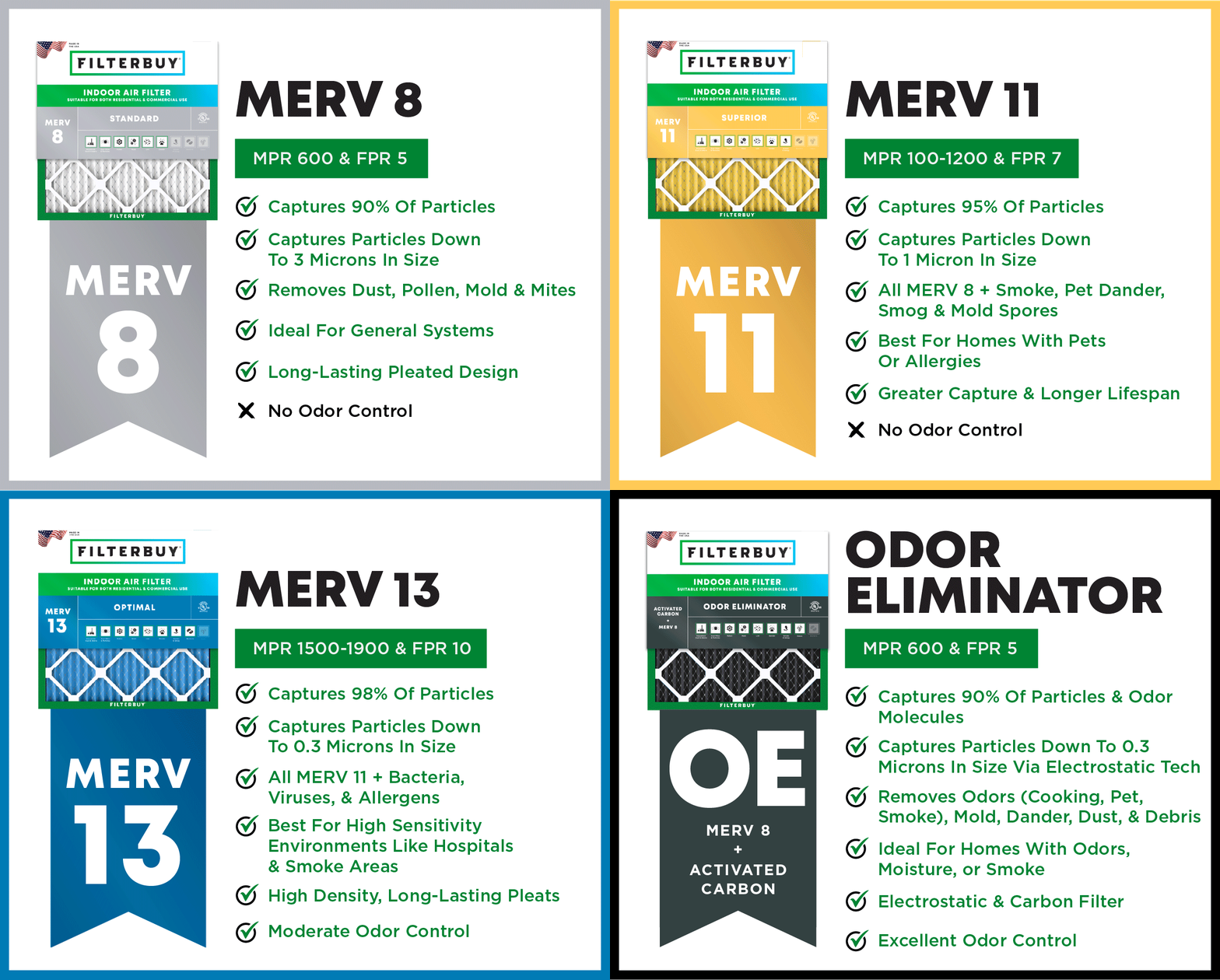
MERV 13 and Higher
MERV-rated filters are widely used in HVAC systems. According to both EPA and ASHRAE guidance, filters rated MERV 13 or higher are recommended when system capacity allows, because they are more effective at capturing smaller aerosols that may contain viruses.
These filters capture a much higher share of particles in the 0.3 to 1 micron range, which is significant for reducing virus‑carrying aerosols. Switching from low-efficiency to MERV 13 or better can reduce airborne infection risk by 30–50 %.
In some DIY cleaner designs (e.g. box fans paired with filters), the EPA explicitly recommends using MERV 13 or higher filters to improve effectiveness.
However, not all HVAC systems can support MERV 13+ filters due to increased air resistance. You should check with an HVAC technician before upgrading.
MERV 8–12
These filters do a good job at capturing larger particles (dust, pollen), but their ability to trap fine aerosols is limited.
HEPA Filters
HEPA filters, commonly used in portable air purifiers, capture 99.97 % of particles 0.3 microns or larger.
These are ideal for room-level protection, particularly in spaces without central HVAC or in high-risk zones.
What Air Filters Don’t Do
Air filters do not disinfect the air. Most viruses and bacteria that land on the filter can remain active for some time. This is why filters should be:
Replaced regularly, especially after high use or illness in the home
Handled carefully during replacement
Installed securely so no air leaks around the frame
Also, filters can’t remove germs already settled on surfaces or spread through close contact.
What ‘s Effective Against Germs?
Filtration is part of the solution, but not the whole answer. Here’s how indoor germs are managed more completely:
| Method | Function |
|---|---|
| Filtration | Removes germ-carrying particles from air |
| Ventilation | Brings in fresh air, dilutes indoor germs |
| UV-C Light | Can kill germs in air or on surfaces if installed correctly (mostly commercial use) |
| Cleaning | Removes germs from surfaces (with disinfectants) |
| Humidification | Can reduce viral survival in dry air (when used within safe ranges) |
Get MERV-Rated Filters Online from Filterbuy
If you're looking for MERV 13 filters for your home HVAC or furnace system, Filterbuy makes it simple. We offer filters in standard and custom sizes, with MERV 8, 11, and 13 ratings to match your system and air quality needs. All filters are made in the USA with high-performance electrostatic media and ship fast and free to your door.
Save more when you order in multi-packs or set up Auto Delivery to stay on schedule with replacements.
Air filters play a valuable role in reducing the airborne spread of germs by capturing the particles they travel on. While they are not a complete solution, using a high-efficiency filter like MERV 13 or HEPA is a proven way to make indoor air safer.
FAQs
Do standard air filters remove germs from the air?
Most standard air filters (like MERV 8) are not designed to capture the tiny particles that carry germs. To reduce airborne germs, you need a filter rated MERV 13 or higher, or a HEPA filter.
What does MERV 13 mean for germ protection?
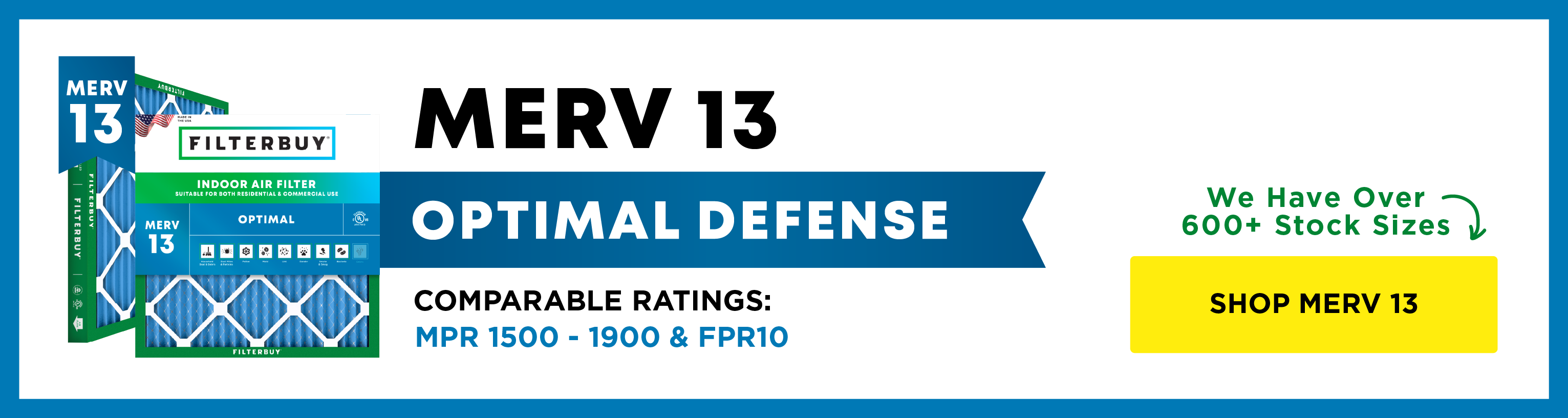
MERV 13 filters can capture particles as small as 0.3–1 micron, including many airborne bacteria and virus-carrying aerosols. They are recommended by the EPA and CDC as part of a layered infection control strategy.
Can my HVAC system handle a MERV 13 filter?
Not all systems are built for higher-efficiency filters. MERV 13 filters have more resistance to airflow, so check your system specs or consult an HVAC professional before upgrading.
Do HEPA filters stop viruses?
Yes. HEPA filters capture 99.97% of particles 0.3 microns or larger and are commonly used in hospitals and air purifiers. They are highly effective at reducing airborne germs in individual rooms.
Should I rely on air filters alone to stay healthy?
No. Air filters help reduce airborne germs but should be used along with ventilation, hand hygiene, and surface cleaning for full protection.
How often should I change filters to help with germ control?
Every 1 to 3 months for HVAC filters, depending on usage, air quality, and system type. HEPA filters in purifiers often have their own change indicators.